
Basic of anatomy
Reading File
The query is broad - "basics of anatomy" could mean many different things. Let me clarify before diving in.
Asking for Preferences
Which area of anatomy basics are you interested in? · What is your level?
Searching sources...
Finding Sources
Finding Sources
Finding Sources
Finding Sources
Finding Sources
Reading File
Reading File
Finding Sources
Loading Image
Reading File
Reading File
Finding Sources
Reading File
Reading File
Reading File
Reading File
Reading File
I now have rich content from Gray's Anatomy for Students to put together a thorough beginner-level overview of gross anatomy. Let me compile this into a well-structured answer.
Basics of Gross Anatomy
Based on Gray's Anatomy for Students
What is Anatomy?
Anatomy is the study of the structure of the body. When used alone, the term typically refers to gross (macroscopic) anatomy - structures you can see with the naked eye. There is also microscopic anatomy (histology), which uses a microscope to study cells and tissues.
Anatomy is the foundation of all medicine. It allows physicians to understand disease, perform physical examinations, and interpret imaging. The key skill is not just memorizing names, but being able to visualize where structures are and how they relate to one another.
The Anatomical Position
All anatomical descriptions use a standard reference called the anatomical position:
- Body standing upright, feet together, toes pointing forward
- Face looking forward (eyes open, neutral expression)
- Hands at the sides, palms facing forward, fingers straight and together
Every directional term in anatomy assumes the person is in this position.
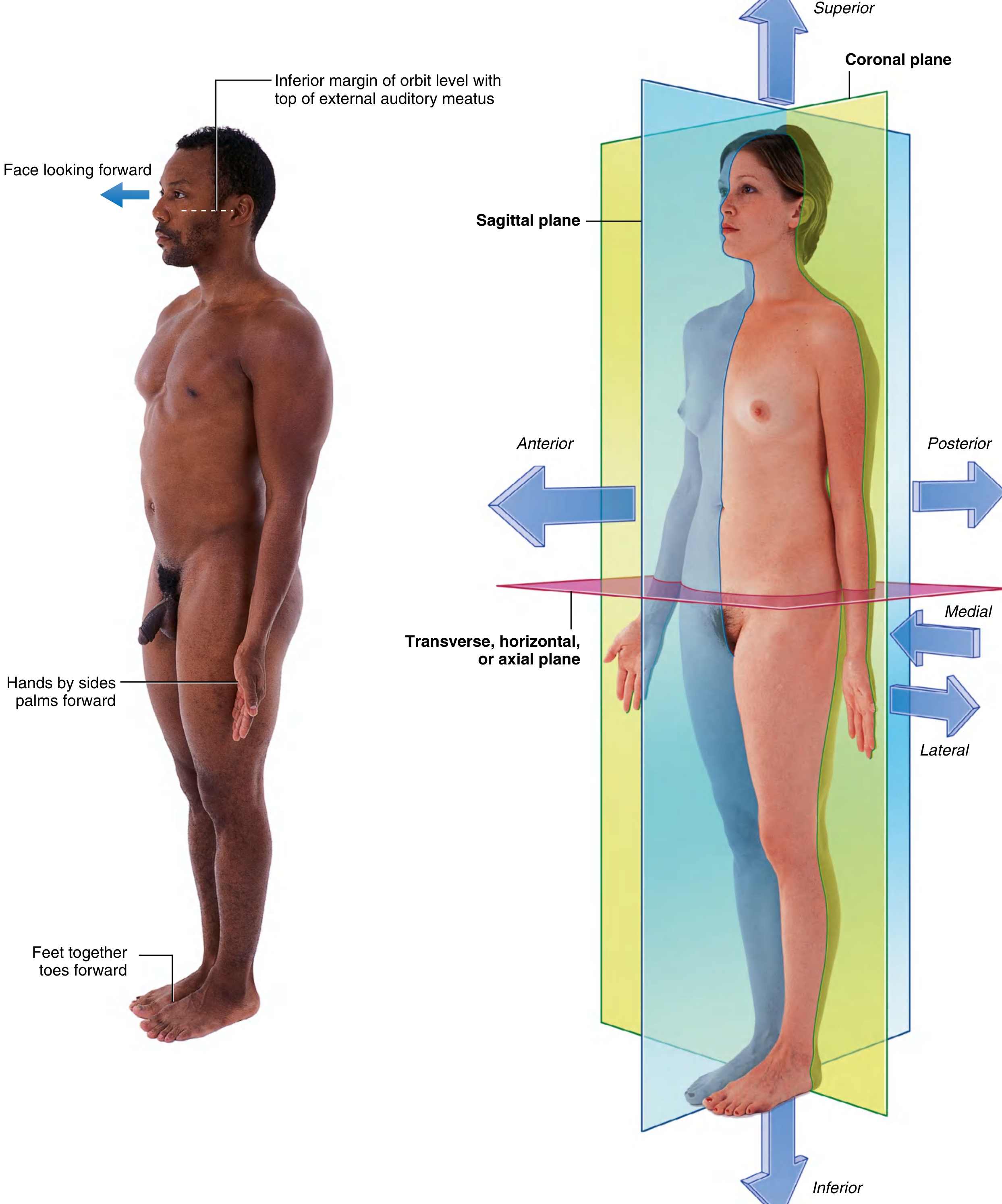
Fig. 1.1 from Gray's Anatomy for Students - The Anatomical Position, Planes, and Terms of Location
Anatomical Planes
Three major planes divide the body:
| Plane | Orientation | Divides into |
|---|---|---|
| Coronal (Frontal) | Vertical | Anterior (front) & Posterior (back) |
| Sagittal | Vertical, perpendicular to coronal | Right & Left halves; the midline version is the median sagittal plane |
| Transverse (Axial/Horizontal) | Horizontal | Superior (upper) & Inferior (lower) |
Directional Terms
| Term | Meaning | Example |
|---|---|---|
| Anterior / Ventral | Toward the front | The sternum is anterior to the spine |
| Posterior / Dorsal | Toward the back | The spine is posterior to the sternum |
| Medial | Toward the midline | The nose is medial to the eyes |
| Lateral | Away from the midline | The ears are lateral to the nose |
| Superior | Toward the head | The head is superior to the shoulders |
| Inferior | Toward the feet | The knee is inferior to the hip |
| Proximal | Closer to the point of origin (limbs) | The elbow is proximal to the wrist |
| Distal | Farther from the origin (limbs) | The hand is distal to the elbow |
| Superficial | Closer to the body surface | Skin is superficial to muscle |
| Deep | Farther from the surface | Bone is deep to muscle |
| Cranial / Caudal | Toward head / toward tail | Sometimes used instead of superior/inferior |
How Anatomy is Studied
There are two approaches:
- Regional approach: Each body region (thorax, abdomen, upper limb, etc.) is studied completely at once - bones, muscles, nerves, and vessels together. Works well with cadaver dissection.
- Systemic approach: One body system (e.g., cardiovascular, nervous) is followed throughout the entire body. Good for understanding how a system connects everywhere.
Body Systems Overview
1. Skeletal System
The skeleton is divided into two parts:
- Axial skeleton: Skull, vertebral column, ribs, sternum - the central axis of the body
- Appendicular skeleton: Bones of the upper and lower limbs
Functions of bone:
- Supports the body structurally
- Protects vital organs (e.g., skull protects brain, ribs protect lungs/heart)
- Acts as a reservoir for calcium and phosphorus
- Provides levers for muscle movement
- Contains bone marrow (red marrow makes blood cells; yellow marrow is largely fat)
Types of bone by shape:
- Long - tubular (e.g., femur, humerus)
- Short - cuboidal (e.g., wrist/ankle bones)
- Flat - two compact plates around spongy bone (e.g., skull)
- Irregular - variable shape (e.g., facial bones, vertebrae)
- Sesamoid - develop within tendons (e.g., patella/kneecap)
Cartilage (also part of this system) is avascular (no blood supply) and comes in three types:
- Hyaline - smooth articular surfaces at joints
- Elastic - pliable (e.g., external ear)
- Fibrocartilage - strong, compressive (e.g., intervertebral discs)
2. Joints (Articulations)
A joint is wherever two skeletal elements meet. Two main categories:
Synovial joints (have a cavity):
- Articular surfaces covered by hyaline cartilage
- Surrounded by a joint capsule with an inner synovial membrane (produces lubricating synovial fluid) and outer fibrous membrane
- Reinforced by ligaments
- Most movable joints - e.g., knee, shoulder, hip
Solid joints (no cavity):
- Fibrous joints - held by fibrous tissue (e.g., skull sutures)
- Cartilaginous joints - two types:
- Synchondroses: growth plates in developing bone
- Symphyses: midline joints connected by cartilage, e.g., pubic symphysis, intervertebral discs
3. Muscular System
Three types of muscle:
| Type | Location | Control | Features |
|---|---|---|---|
| Skeletal (striated) | Attached to bones | Voluntary | Produces body movement; named by shape, size, origin/insertion |
| Cardiac | Heart wall & proximal great vessels | Involuntary | Branching network, resistant to fatigue |
| Smooth | Blood vessel walls, gut, airways, skin | Involuntary | Slow, sustained contractions |
4. Cardiovascular System
- The heart pumps blood around a closed network of blood vessels
- Arteries carry blood away from the heart (typically oxygenated)
- Veins return blood to the heart (typically deoxygenated)
- Capillaries connect arteries to veins at the tissue level - this is where gas/nutrient exchange happens
- Veins contain valves to prevent backflow; if these fail, varicose veins can develop
5. Lymphatic System
- A network of channels that begin as blind-ended capillaries in tissues
- Collects excess interstitial fluid and returns it to the venous system (at large neck veins)
- Also transports lymphocytes (immune cells), dietary fats (chylomicrons from gut), and cellular debris
- Contains lymph nodes that filter the fluid and house immune cells
6. Nervous System
Divided into two major parts:
Central Nervous System (CNS):
- Brain + Spinal cord
- Brain has: cerebral hemispheres (gray matter/white matter/ventricles), cerebellum (balance/coordination), brainstem (midbrain + pons + medulla)
- Covered by three connective tissue layers = meninges: dura mater (outer), arachnoid mater (middle), pia mater (inner). The subarachnoid space contains cerebrospinal fluid (CSF)
Peripheral Nervous System (PNS):
- All neural structures outside the CNS
- Includes spinal nerves, cranial nerves, visceral nerve plexuses, and the enteric (gut) nervous system
Functionally:
- Somatic nervous system - controls skin and skeletal muscle (conscious, voluntary)
- Visceral (autonomic) nervous system - controls internal organs, glands, smooth muscle (involuntary)
Key Takeaway: Body Regions Studied in Gross Anatomy
| Region | Contents |
|---|---|
| Back | Vertebral column, spinal cord, back muscles |
| Thorax | Heart, lungs, great vessels, ribs |
| Abdomen | Stomach, intestines, liver, kidneys, aorta |
| Pelvis & Perineum | Bladder, reproductive organs, rectum |
| Lower Limb | Hip, thigh, knee, leg, foot |
| Upper Limb | Shoulder, arm, elbow, forearm, hand |
| Head & Neck | Brain, cranial nerves, eyes, ears, throat |
Source: Gray's Anatomy for Students (ISBN 9780323934237), pp. 17-50
This covers the foundational framework every pre-med student needs before diving into regional anatomy. Each body system above has its own deep specialization - once you're comfortable with this overview, you can begin exploring each region in detail.
This is a shared conversation. Sign in to Orris to start your own chat.