
Difference between kwashiorkar and marasmus according to park
kwashiorkor marasmus comparison children malnutrition
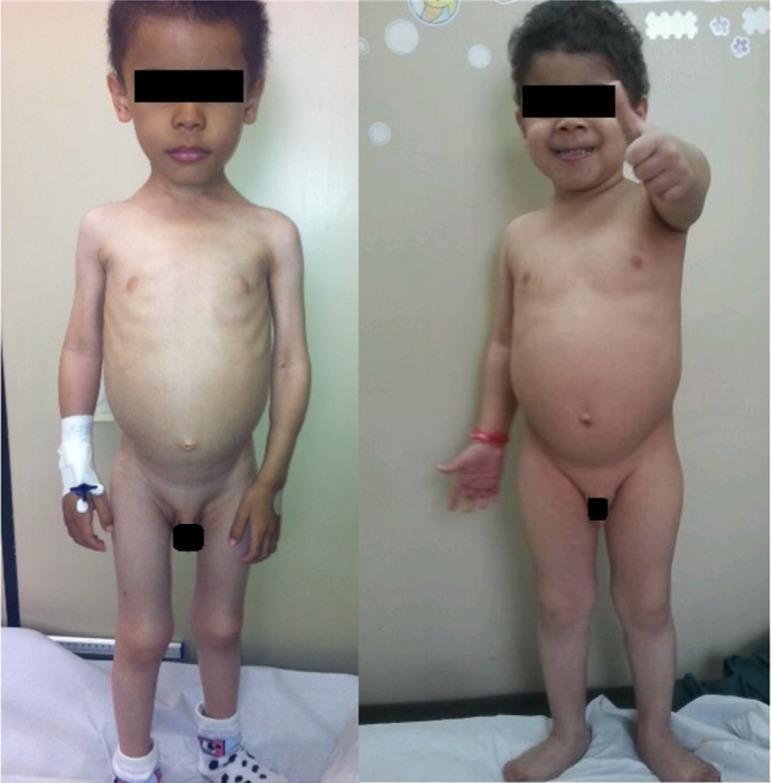
A clinical comparison photograph demonstrating the progression of nutritional recovery in a pediatric patient with severe protein-calorie malnutrition. The left image (initial consultation) shows a male child exhibiting signs of marasmus/kwashiorkor-like features: severe wasting of the limbs, prominent ribcage (skeletal prominence), and a distended, protuberant abdomen. The patient appears apathetic with an intravenous catheter in the right hand. The right image (two months post-intervention) shows the same patient after a high-calorie, high-protein dietary regimen. Visible clinical improvements include significant weight gain, replenishment of subcutaneous fat and muscle mass (limbs appear fuller, ribs no longer visible), and improved postural muscle tone. The patient's facial expression and a 'thumbs-up' gesture indicate improved mood and neurological status. This comparison illustrates the physical manifestations of successful nutritional rehabilitation in cases of severe malnutrition or neglect, serving as an educational example of catch-up growth and clinical recovery in pediatrics.
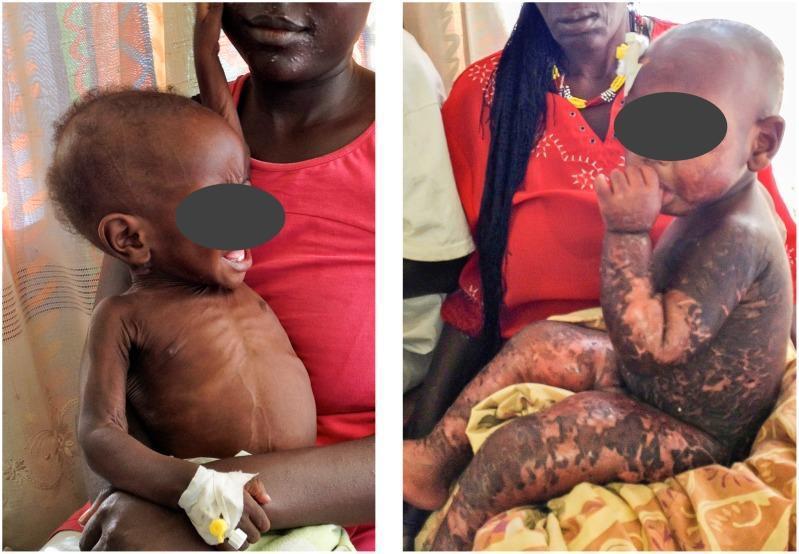
A side-by-side clinical photograph comparing two distinct presentations of severe acute malnutrition (SAM) in pediatric patients. The child on the left demonstrates non-oedematous malnutrition, also known as marasmus. Visual features include marked muscular wasting, loss of subcutaneous fat, and prominent skeletal structures, particularly the ribs. A peripheral venous cannula is secured to the child's left wrist. The child on the right demonstrates oedematous malnutrition, often referred to as kwashiorkor. Key clinical signs include generalized bilateral pitting oedema and extensive dermatological changes. These skin lesions present as a 'flaky paint' dermatosis, characterized by hyperpigmented patches with areas of desquamation, peeling, and underlying hypopigmentation distributed across the limbs and torso. The image serves as a teaching tool for distinguishing between marasmic wasting and the oedematous/skin-involved manifestations of kwashiorkor in global health and pediatric nutrition contexts.
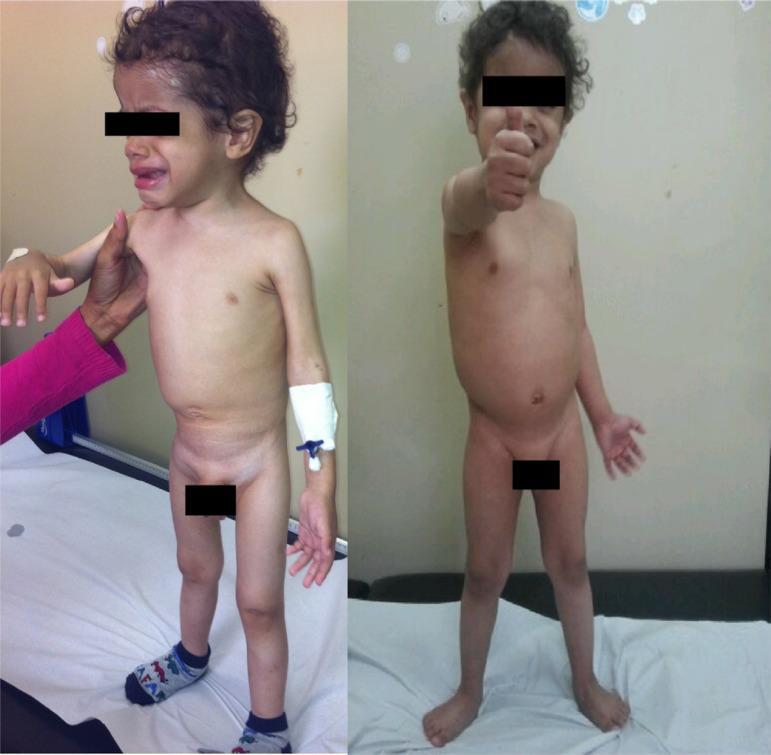
Clinical photograph comparison of a pediatric patient (Patient 2) demonstrating recovery from severe protein-calorie malnutrition (PCM). The left panel shows the initial consultation, depicting clinical signs of marasmus: profound emaciation, loss of subcutaneous fat, visible rib cage, sunken abdomen, and thin extremities. The child exhibits distressed affect (crying) and is seen with a peripheral intravenous catheter on the left arm. The right panel, taken two months later following a high-calorie and high-protein diet, shows significant nutritional recovery. Notable changes include increased muscle mass, restoration of subcutaneous fat stores across the torso and limbs, a healthy abdominal contour, and an improved emotional state (smiling and giving a thumbs-up). This comparison serves as a clinical illustration of therapeutic response to nutritional intervention in cases of severe malnutrition, often secondary to malabsorption or psychosocial factors like child neglect.
Kwashiorkor vs. Marasmus - According to Park's Textbook of Preventive and Social Medicine
Comparison Table
| Feature | Kwashiorkor | Marasmus |
|---|---|---|
| Definition | Severe undernutrition from a diet with a low protein/energy ratio | Severe malnutrition from inadequate intake of BOTH protein and energy |
| Protein deficit | Predominantly protein deficient | Deficiency of both protein and energy (calories) |
| Oedema | Present - a hallmark feature (generalized) | Absent or minimal |
| Wasting | Present | Severe wasting - the dominant feature |
| Subcutaneous fat | May be relatively preserved | Severely depleted |
| Muscle wasting | Present | Severe |
| Liver | Enlarged (hepatomegaly with fatty change / steatosis) | Not typically enlarged |
| Serum albumin | Hypoalbuminaemia (markedly low) | Not normal but less severely affected |
| Skin changes | Depigmentation of skin possible; "flaky paint" dermatosis | Usually absent |
| Hair changes | Depigmentation of hair (reddish/pale hair) | Usually absent |
| Overall appearance | Child may look "plump" due to oedema but is malnourished | Classic "skin and bones" - emaciated cachexic appearance |
Key Points from Park's
- Kwashiorkor = low protein/energy ratio diet → oedema, liver enlargement, hypoalbuminaemia, steatosis, and possible skin/hair depigmentation.
- Marasmus = inadequate intake of both protein AND energy → severe cachexia, weight loss due to wasting in infancy and childhood, severe muscle wasting, little or no oedema, minimal subcutaneous fat, non-normal serum albumin levels.
- The presence or absence of oedema is the single most important distinguishing feature clinically.
"Kwashiorkor and marasmus are the two different forms of protein and energy malnutrition." - Park's Textbook of Preventive and Social Medicine
Clinical Image - Marasmus vs. Kwashiorkor
Mnemonic
- Kwashiorkor = Kid who looks "OK" (puffy/oedematous) but has protein deficiency
- Marasmus = Muscle and fat gone - pure starvation (wasted, no oedema)
Reference protein according to protein
Reference Protein - According to Park's Textbook of Preventive and Social Medicine
What is Reference Protein?
"The quality of a protein is assessed by comparison to the 'reference protein' which is usually egg protein."
Why Egg Protein?
- It is of animal origin (animal source proteins - milk, meat, eggs, cheese, fish, fowl - contain all EAAs in adequate amounts)
- Among all animal proteins, egg protein specifically has the highest biological value and digestibility
- It is therefore used in nutrition studies as the "reference protein"
How Reference Protein is Used - Assessment of Protein Quality
(i) Amino Acid Score (Chemical Score)
- Starches: amino acid score = 50-60
- Animal foods: amino acid score = 70-80
- Reference protein (egg): 100 (by definition)
(ii) Net Protein Utilization (NPU)
- NPU = Digestibility coefficient × Biological Value ÷ 100
- 1 g of protein = 6.25 g of Nitrogen (used in calculations)
- NPU of Indian diets: varies between 50 and 80
- If NPU is low → protein requirement is high, and vice versa
Key Points Summary
| Parameter | Reference Protein (Egg) |
|---|---|
| Protein type | Animal protein |
| Biological value | Highest (reference = 100) |
| Digestibility | Highest among food proteins |
| EAA content | All EAAs in adequate amounts |
| Use | Standard to score other dietary proteins |
Clinical Relevance - "Limiting" Amino Acids
- Cereal proteins are deficient in lysine and threonine
- Pulse proteins are deficient in methionine