
A 12-year-old boy came to STAMCH with the complaints of fever and rapidly growing painful swelling on the right side of face. He also noticed that pain increases while taking food. On examination the physician found congestion (redness due to inflammation) in mucous membrane of vestibule of mouth, opposite the crown of upper second molar tooth on right side. 1+2+2=5 a) Name the organ which is most likely involved in this case? b) Why this condition is so much painful? c) Why does pain increase during eating?
Clinical Case Analysis
a) The Organ Involved: The Parotid Gland (1 mark)
"The major duct of the parotid gland is called Stensen's duct, which opens into the vestibule of the mouth opposite the crown of the upper second molar tooth..."
- Bailey and Love's Short Practice of Surgery, 28th Ed.
"The parotid duct leaves the anterior edge of the parotid gland midway between the zygomatic arch and the corner of the mouth. It crosses the face in a transverse direction and, after crossing the medial border of the masseter muscle, turns deeply into the buccal fat pad and pierces the buccinator muscle. It opens into the oral cavity near the second upper molar tooth."
- Gray's Anatomy for Students
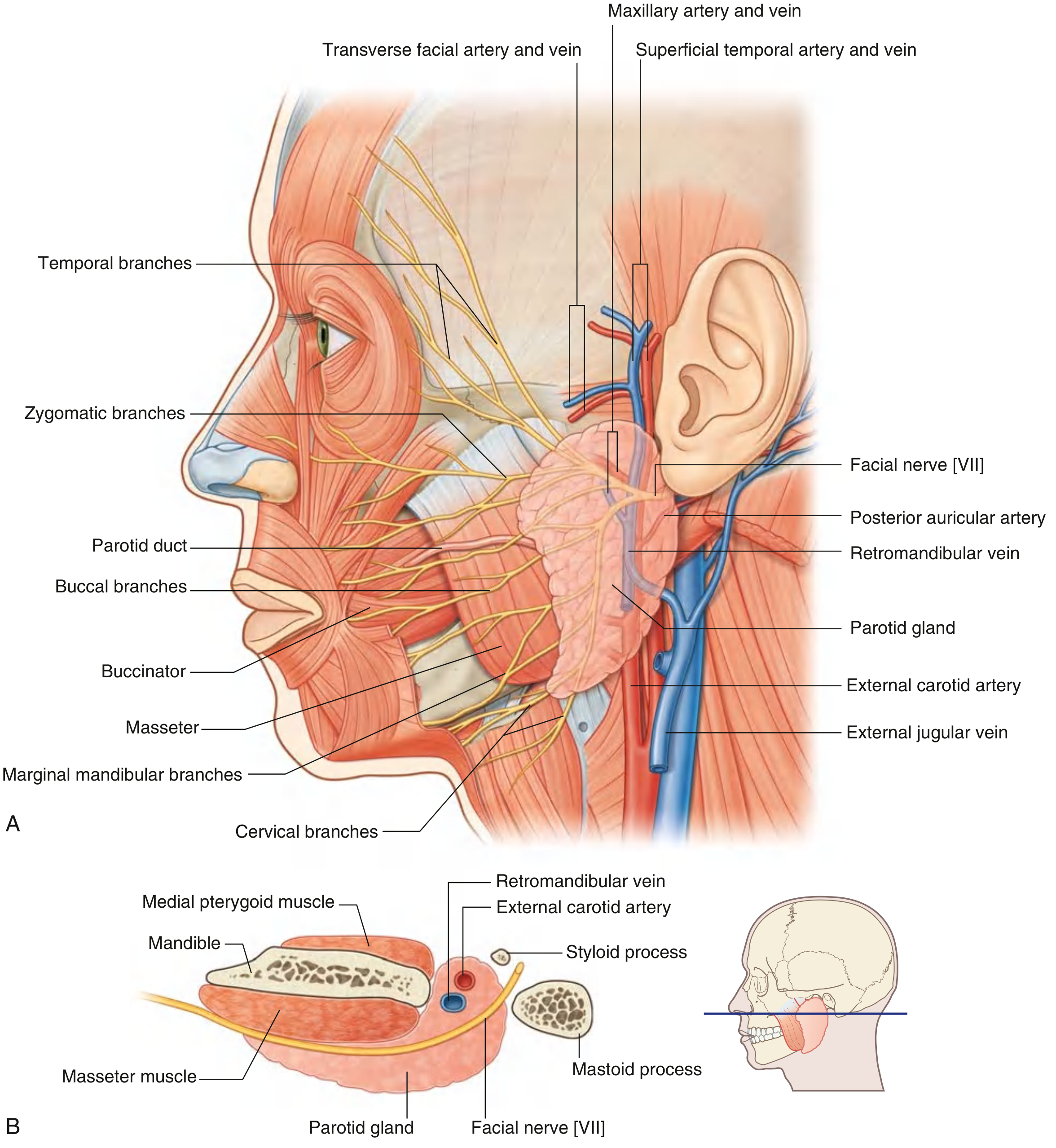
b) Why is this condition so painful? (2 marks)
- Inflammatory swelling increases the pressure within the confined space of the capsule
- This raised intracapsular pressure compresses the nerve endings within and around the gland
- The result is severe, throbbing pain - the harder the capsule, the more intense the pain
"Chewing movements are very painful because the tough capsule enclosing the parotid gland is unable to stretch."
- Color Atlas of Human Anatomy Vol. 2, Internal Organs
c) Why does pain increase during eating? (2 marks)
"Chewing movements are very painful because the tough capsule enclosing the parotid gland is unable to stretch."
- Color Atlas of Human Anatomy Vol. 2, Internal Organs
Summary Table
| Feature | Explanation |
|---|---|
| Organ involved | Right parotid gland (Stensen's duct opens opposite upper 2nd molar) |
| Why painful | Tough fibrous capsule cannot stretch - raised intracapsular pressure compresses nerve endings |
| Why worse on eating | Chewing compresses the gland via masseter; eating also reflexly stimulates salivary secretion, increasing intraglandular pressure further |
A 14-year-old boy came to STAMCH with the complaints of fever and rapidly growing painful swelling on the right side of face. On examination the physician found congestion in mucous membrane of vestibule of mouth opposite the crown of upper second molar tooth on right side. a) Name the organ which is involved in this case? b) Why this condition is painful? c) How does mucous membrane congested in this case?
Clinical Case Analysis
a) The Organ Involved: The Parotid Gland (Right Side)
"The major duct of the parotid gland is called Stensen's duct, which opens into the vestibule of the mouth opposite the crown of the upper second molar tooth."
- Bailey and Love's Short Practice of Surgery, 28th Ed.
"The duct then briefly runs caudally before exiting the papilla at the buccal mucosa opposite the second maxillary molar."
- Cummings Otolaryngology Head and Neck Surgery
b) Why is this condition so painful?
- Inflammatory swelling rapidly builds raised intracapsular pressure
- This pressure directly compresses the rich network of nerve endings (auriculotemporal nerve branches) within the gland
- The confined expansion causes intense, throbbing pain that cannot be relieved until the inflammation subsides
"Chewing movements are very painful because the tough capsule enclosing the parotid gland is unable to stretch."
- Color Atlas of Human Anatomy Vol. 2, Internal Organs
c) How is the mucous membrane congested in this case?
-
Origin: The parotid duct (Stensen's duct) originates within the parotid gland, emerging from its anterior border. It is approximately 5 cm long with an internal calibre of ~0.6 mm.
-
Course across the face: It travels horizontally across the masseter muscle, then turns medially at the anterior border of the masseter.
-
Piercing the buccinator: The duct pierces the buccinator muscle and runs obliquely between the buccinator and the oral mucosa - this is the key segment.
-
Opening at the papilla: It enters the oral cavity at the parotid papilla - a small elevation on the mucous membrane of the vestibule, directly opposite the crown of the upper second molar tooth.
"It pierces buccinator and runs obliquely between buccinator and the oral mucosa before entering the oral cavity at the parotid papilla opposite the second upper molar tooth."
- Scott-Brown's Otorhinolaryngology Head & Neck Surgery
- Vasodilation of mucosal blood vessels around the papilla
- Increased blood flow to the mucosa (hyperemia)
- Visible redness and congestion of the vestibular mucosa at the exact site of the duct's opening - opposite the upper second molar
Summary
| Question | Answer |
|---|---|
| Organ involved | Right parotid gland (Stensen's duct opens at upper 2nd molar) |
| Why painful | Tough inextensible fibrous capsule cannot accommodate inflammatory swelling - raised intracapsular pressure compresses nerve endings |
| Why mucosa is congested | Inflammation tracks along Stensen's duct to its papilla; the duct's distal segment runs between buccinator and oral mucosa, so peri-ductal inflammation directly congests the overlying vestibular mucosa opposite the upper 2nd molar |