
Why we cannot do gym while we have pilonidal sinus sow with image
Reading File
Now let me search the medical library and web simultaneously for pilonidal sinus and exercise restrictions.
Finding Sources
Searching the Web
pilonidal sinus why avoid gym exercise physical activity
Searching PubMed
pilonidal sinus exercise physical activity restriction
Now let me fetch the textbook content on pilonidal sinus and the anatomy/clinical image found in the database, plus the athlete image from the web.
Reading File
Reading File
Loading Image
Now let me fetch the anatomical illustration from the textbook database.
Loading Image
I now have all the information needed for a comprehensive answer. Here it is:
Why You Cannot Go to the Gym with a Pilonidal Sinus
What is a Pilonidal Sinus?
A pilonidal sinus is a small tunnel or pit in the skin located in the natal cleft (the midline crease between the buttocks), approximately 5 cm above the anus. It forms when hair follicles are traumatized, creating pores that collect debris and hair. Bacteria invade, and an abscess or chronic sinus tract develops in the sacrococcygeal region.
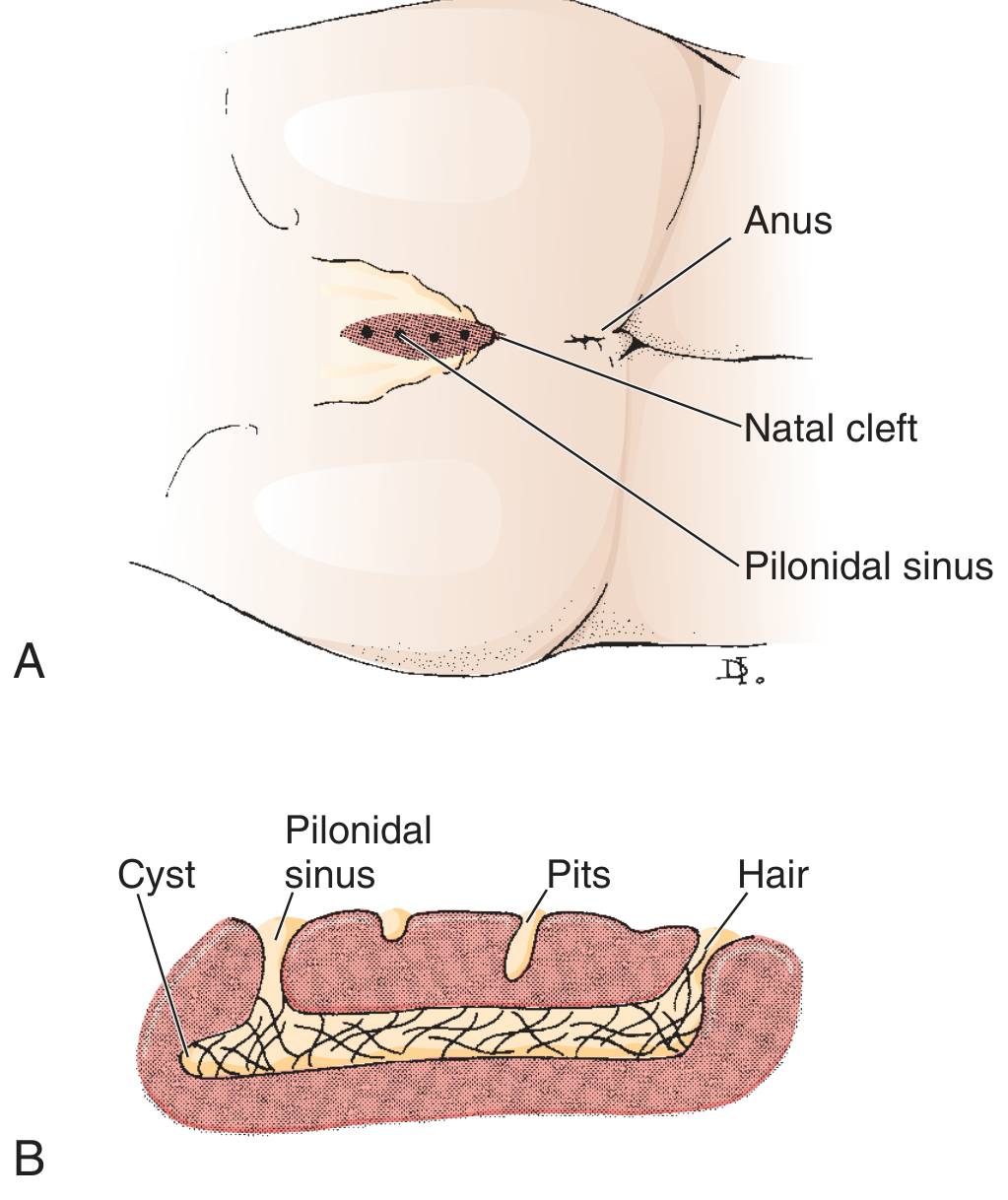
Why Gym / Exercise Must Be Avoided
Here are the specific mechanical and biological reasons, backed by the textbook pathophysiology:
1. Movement Directly Drives the Disease Mechanism
The textbook explains this clearly:
"As a person sits or bends, the natal cleft stretches, traumatizing hair follicles and thus creating pores... As the skin is drawn taut over the natal cleft with movement, negative pressure is created in the subcutaneous space drawing hair deeper into the pore, and the friction causes the hairs to form a sinus."
- Roberts and Hedges' Clinical Procedures in Emergency Medicine
Every time you squat, deadlift, lunge, or do any hip-hinge movement at the gym, the natal cleft stretches repeatedly. This is literally the mechanical process that creates and worsens the sinus. You are feeding the disease with every rep.
2. Friction Pushes More Hair Into the Pits
Gym exercises - especially weightlifting, running on a treadmill, cycling, and rowing - cause constant rubbing of the buttock skin. This friction:
- Pushes loose hairs deeper into existing sinus pits
- Creates new micro-trauma to the surrounding hair follicles
- Enlarges the existing tract and can open new ones
3. Sweating Creates a Perfect Infection Environment
Heavy exercise causes profuse sweating in the natal cleft. Sweat and moisture in this region:
- Soften the skin, making hair penetration easier
- Provide a warm, moist environment that is ideal for bacterial overgrowth
- Pilonidal abscesses typically grow mixed fecal flora with anaerobes - sweat adds to this risk
4. Heavy Lifting Increases Pressure on the Abscess/Cyst
Exercises like deadlifts, squats, leg press, and heavy rows dramatically increase intra-abdominal and pelvic pressure. This pressure is transmitted directly to the gluteal region and can:
- Rupture or burst the pilonidal cyst
- Force pus/debris deeper into the sinus tract
- Convert a simple chronic sinus into an acute abscess requiring emergency drainage
5. Specific Exercises That Are Most Dangerous
| Exercise | Why It's Harmful |
|---|---|
| Squats / Deadlifts | Maximum natal cleft stretching + high pelvic pressure |
| Cycling / Spinning | Direct pressure on the sinus + friction |
| Running / Treadmill | Repetitive friction and bouncing |
| Leg press | Extreme hip flexion = maximum cleft stretching |
| Rowing machine | Hip hinge repeated hundreds of times |
| Core/Ab exercises | Bending stretches the cleft repeatedly |
6. After Surgery - Even Stricter Restrictions
Post-operatively (after pilonidal excision), guidelines from Boston Children's Hospital and the NHS recommend:
- No strenuous activity, exercise, or lifting for 4-6 weeks
- No cycling for 6-8 weeks
- No swimming until the wound is fully healed
- No running or heavy lifting for at least the first week
What You CAN Do Instead
If you must stay active, these low-impact alternatives do not stretch the natal cleft or create friction:
- Slow walking on flat ground
- Upper body light exercises (seated dumbbell curls, shoulder press - nothing that engages the glutes)
- Light stretching of upper body only
Summary
Gym workouts are contraindicated with pilonidal sinus because:
- Movement mechanics - natal cleft stretching with every squat/bend literally drives hair deeper and worsens the sinus (this is the core pathophysiology)
- Friction - pushes more hair into pits
- Sweating - promotes bacterial infection
- Pressure - can rupture cysts or worsen abscesses
- Post-surgery - the healing wound can be torn open
Always consult your surgeon before resuming any physical activity. Surgery (excision) is the definitive treatment for pilonidal disease, and proper rest after surgery is the most important factor in preventing recurrence.
This is a shared conversation. Sign in to Orris to start your own chat.