
from Guyton and Hall textbook of medical physiology, 4th South Asia edition write a 5 mark short note on Growth Hormone-metabolic action
Reading File
Finding Sources
Finding Sources
Reading File
Reading File
Loading Image
Here is the complete 5-mark short note based exclusively on Guyton and Hall Textbook of Medical Physiology:
Growth Hormone - Metabolic Actions
(Guyton and Hall Textbook of Medical Physiology, 4th South Asia Edition)
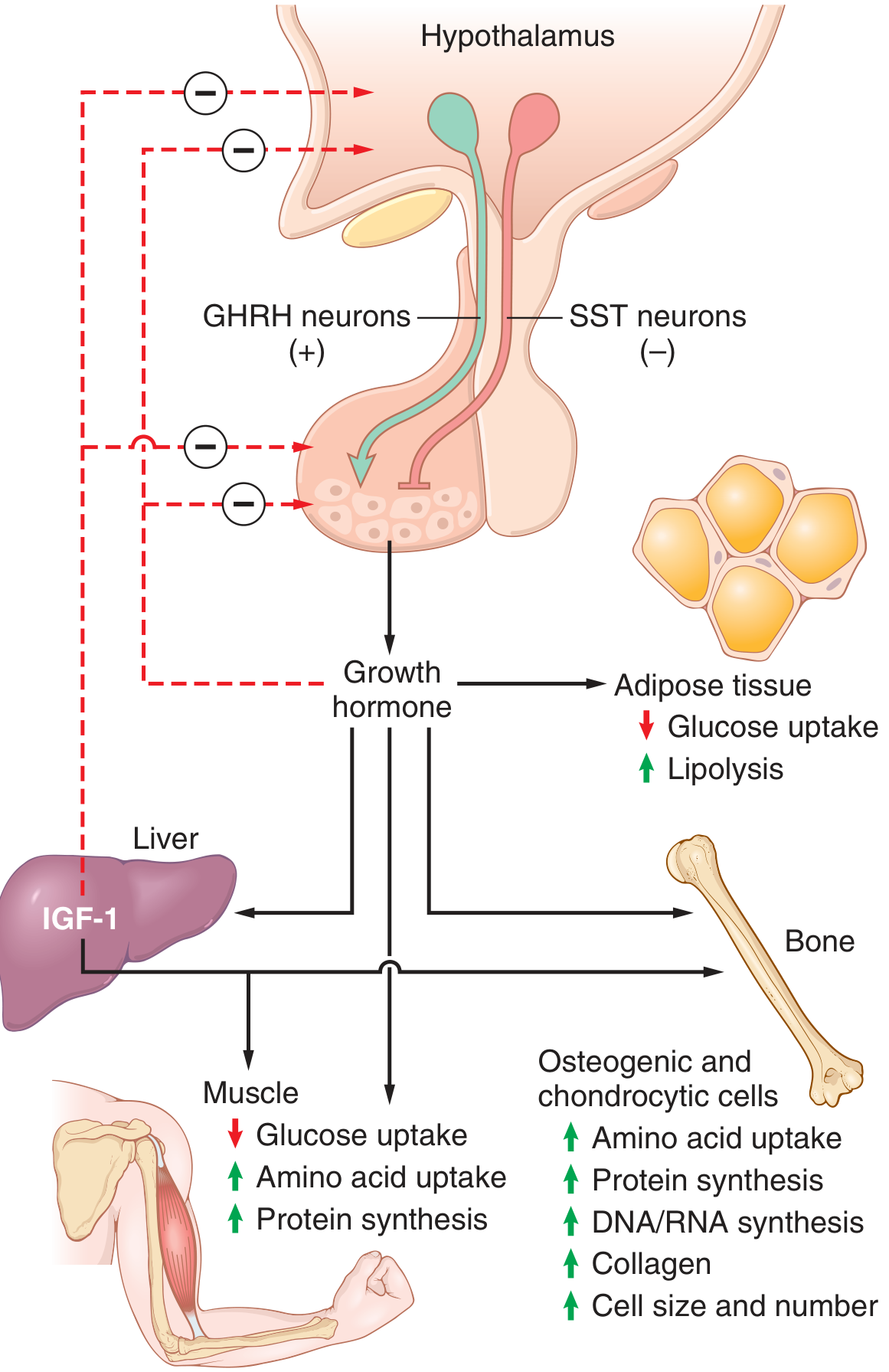
Fig. 76.6 - Effects of growth hormone and IGF-1 on growth and metabolism
Growth Hormone (GH), also called somatotropin, is a 191-amino acid protein (MW 22,005) secreted by the anterior pituitary. Apart from its general growth-promoting effect, GH exerts three major metabolic actions that collectively enhance body protein, decrease fat stores, and conserve carbohydrates.
1. Effects on Protein Metabolism (Anabolic)
GH exerts a powerful protein anabolic effect through multiple mechanisms:
- Enhanced amino acid transport: GH directly increases transport of most amino acids through cell membranes into the intracellular compartment, raising intracellular amino acid concentrations. This is analogous to insulin's control of glucose transport.
- Enhanced RNA translation: GH stimulates ribosomes to translate RNA into protein at a greater rate, even without a rise in intracellular amino acid levels.
- Increased DNA transcription: Over 24-48 hours, GH stimulates nuclear transcription of DNA, forming increased quantities of RNA - considered the most important long-term growth-promoting mechanism.
- Decreased protein catabolism: GH reduces breakdown of cellular proteins. This "protein-sparing" effect is partly mediated by the concomitant mobilization of fatty acids, which are preferentially used for energy, sparing protein from being oxidized.
Net result: GH enhances all facets of amino acid uptake and protein synthesis while reducing protein breakdown.
2. Effects on Fat Metabolism (Lipolytic)
- GH causes release of fatty acids from adipose tissue, raising free fatty acid (FFA) concentrations in body fluids.
- In peripheral tissues, GH enhances conversion of fatty acids to acetyl-CoA for energy, so fat is preferentially used for fuel over carbohydrates and proteins.
- This increases lean body mass while reducing fat stores.
- "Ketogenic" effect of excess GH: With excessive GH, fat mobilization may be so pronounced that large quantities of acetoacetic acid are formed by the liver, leading to ketosis and a fatty liver.
3. Effects on Carbohydrate Metabolism (Diabetogenic)
GH has several effects that raise blood glucose:
- Decreased glucose uptake in skeletal muscle and adipose tissue.
- Increased hepatic glucose production (gluconeogenesis).
- Increased insulin secretion (compensatory).
All three effects stem from GH-induced insulin resistance - GH attenuates insulin's ability to stimulate glucose uptake and inhibit gluconeogenesis. This leads to hyperglycemia, and the overall picture is described as "diabetogenic." Excess GH secretion (as in acromegaly) can produce metabolic disturbances similar to type 2 diabetes mellitus.
Summary Table
| Substrate | Effect of GH |
|---|---|
| Proteins | Increased synthesis; decreased catabolism |
| Fats | Increased lipolysis; increased FFA utilization for energy |
| Carbohydrates | Decreased uptake; increased hepatic production (diabetogenic) |
Key point: The three metabolic effects of GH act in a coordinated manner - fat is mobilized as the primary fuel source, protein is built up and spared from catabolism, and glucose utilization is reduced. This produces a net effect of increased lean body mass, reduced adiposity, and relative hyperglycemia.
(Guyton and Hall Textbook of Medical Physiology, Chapter 76, pp. 920-922)
This is a shared conversation. Sign in to Orris to start your own chat.