
pneumonia
Reading File
The query is broad. Let me clarify what aspect of pneumonia the user needs before diving deep.
Asking for Preferences
What aspect of pneumonia are you interested in?
I'll provide a comprehensive overview covering all major aspects of pneumonia. Let me pull from the textbook library and recent evidence simultaneously.
Finding Sources
Searching PubMed
"pneumonia"[MeSH Terms] AND "community-acquired"[MeSH Terms]
Searching the Web
pneumonia overview types causes diagnosis treatment 2025
Good — I have the key textbook sources. Let me read the most comprehensive pneumonia sections in parallel.
Reading File
Reading File
Reading File
Searching PubMed
"community-acquired pneumonia" AND management
The Family Medicine textbook gave excellent clinical content. Let me read more of it for diagnosis and treatment details, and also pull the Rosen's Emergency Medicine pneumonia section.
Reading File
Reading File
I now have comprehensive content from the textbooks. Let me read more of the Family Medicine chapter specifically on pneumonia diagnosis and treatment, which appeared very rich.
Finding Sources
Searching Images
pneumonia chest X-ray consolidation
I have extensive content from the textbooks and images. Now let me compile a comprehensive answer.
Pneumonia
Pneumonia is an infection of the lung parenchyma causing inflammation and consolidation of the normally air-filled alveoli. It affects all age groups and causes more than 1 million hospitalizations per year in the United States, with an in-hospital mortality of ~3.3%.
Classification
| Type | Setting | Common Pathogens |
|---|---|---|
| Community-acquired (CAP) | Acquired outside hospital | S. pneumoniae, Mycoplasma, H. influenzae, respiratory viruses |
| Hospital-acquired (HAP) | ≥48 h after admission | Gram-negatives (Pseudomonas, Klebsiella), MRSA |
| Ventilator-associated (VAP) | Intubated patients | Same as HAP, often MDR organisms |
| Aspiration pneumonia | Aspiration of oropharyngeal/gastric contents | Anaerobes (Peptostreptococcus, Bacteroides), gram-negatives |
| Opportunistic | Immunocompromised host | P. jirovecii (PCP), Cryptococcus, Aspergillus, atypical mycobacteria |
Etiology
Bacteria:
- Streptococcus pneumoniae — most common bacterial cause across all ages beyond neonates
- Haemophilus influenzae — especially in COPD, smokers
- Mycoplasma pneumoniae, Chlamydophila pneumoniae, Legionella pneumophila — "atypical" CAP
- Staphylococcus aureus (including MRSA) — post-influenza, HAP
- Gram-negatives (Pseudomonas, Klebsiella) — nosocomial, nursing home, chronic lung disease
Viruses: Influenza A/B, RSV, SARS-CoV-2, parainfluenza, adenovirus, rhinovirus
Fungi: Pneumocystis jirovecii (immunocompromised), Histoplasma, Coccidioides, Aspergillus
Pathophysiology
Organisms reach the lower respiratory tract via microaspiration (most common), inhalation of droplets, or hematogenous spread. Host defenses — mucociliary clearance, alveolar macrophages, secretory IgA — are overwhelmed, triggering an inflammatory response. Neutrophil influx leads to exudate filling alveoli (consolidation), impairing gas exchange and causing hypoxemia.
Clinical Presentation
Classic (bacterial) pattern:
- Abrupt onset of high fever, rigors, pleuritic chest pain
- Productive cough (rust-colored sputum in pneumococcal pneumonia)
- On exam: decreased breath sounds, dullness to percussion, egophony, bronchial breathing over consolidated lobe
- WBC often >15,000/mm³ with neutrophilia
Atypical pattern (Mycoplasma, Chlamydophila, Legionella, viruses):
- Gradual onset, lower-grade fever, dry cough
- Headache, myalgia, extrapulmonary features (GI symptoms with Legionella)
- Less impressive chest findings on exam
In children:
- Tachypnea disproportionate to fever is often the earliest clue
- Intercostal retractions, nasal flaring in infants
- Viral pneumonia: less toxic, low-grade fever, wheeze
- Bacterial pneumonia: high fever, chills, dyspnea, toxic appearance
In neonates: Group B streptococci and gram-negatives (early); Chlamydia trachomatis at 3–19 weeks of age causes afebrile pneumonia with staccato cough
Diagnosis
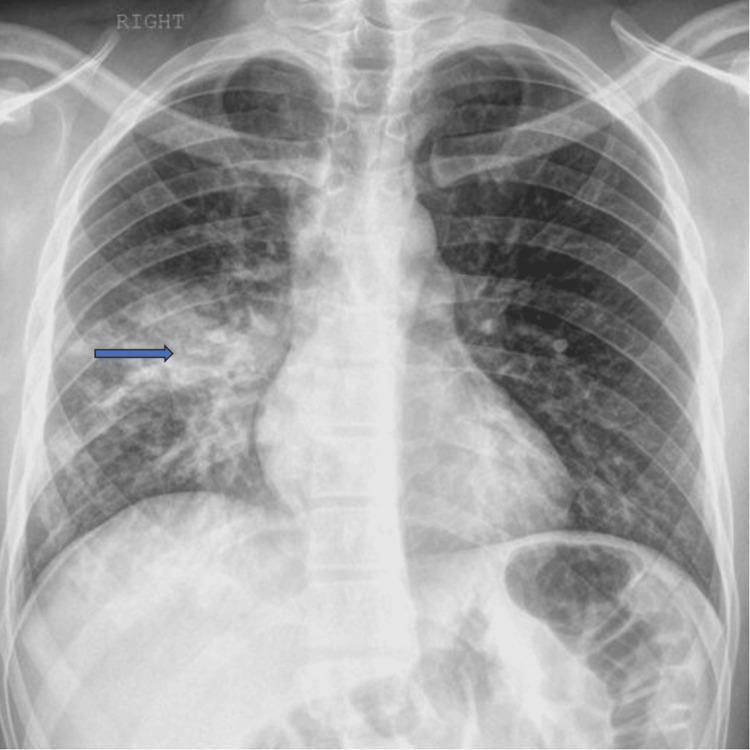
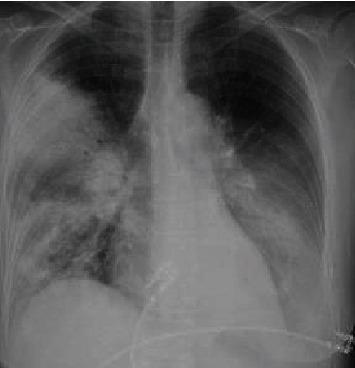
Chest X-ray is the cornerstone — infiltrates, lobar consolidation, or interstitial pattern. Below are characteristic CXR appearances:
Lab investigations:
- CBC (leukocytosis with neutrophilia in bacterial; lymphocytosis in viral)
- BMP, LFTs (Legionella causes hyponatremia and elevated LFTs)
- Blood cultures (2 sets) — positive in ~10–15% of hospitalized CAP
- Sputum Gram stain + culture (low sensitivity/specificity)
- Urinary antigen tests — highly specific for S. pneumoniae and Legionella
- Procalcitonin — helps distinguish bacterial from viral; guides antibiotic stewardship
Severity scoring (CAP):
- PSI (Pneumonia Severity Index) — classes I–V based on 20 variables; determines outpatient vs. inpatient care
- CURB-65 — simpler: Confusion, Urea >7 mmol/L, RR ≥30, BP <90/60, Age ≥65; score 0–1 = outpatient, 2 = consider admission, ≥3 = ICU consideration
Treatment
Outpatient CAP (low severity, no comorbidities)
- Amoxicillin 1 g TID or doxycycline (if atypical suspected)
- Macrolide monotherapy (azithromycin) where local S. pneumoniae resistance <25%
Outpatient CAP (with comorbidities — COPD, DM, heart disease, recent antibiotics)
- Respiratory fluoroquinolone (levofloxacin, moxifloxacin) OR
- β-lactam + macrolide combination
Hospitalized, non-ICU
- β-lactam (ampicillin-sulbactam, ceftriaxone) + macrolide OR
- Respiratory fluoroquinolone monotherapy
Severe CAP / ICU
- β-lactam + azithromycin or β-lactam + fluoroquinolone
- Add anti-MRSA coverage (vancomycin or linezolid) if risk factors present
- Add anti-Pseudomonas coverage if structural lung disease, prior broad-spectrum antibiotics, or immunocompromise
HAP / VAP
- Broad-spectrum coverage targeting gram-negatives (piperacillin-tazobactam, cefepime, or carbapenem) ± MRSA coverage
Duration
- Typically 5–7 days for mild-moderate CAP
- Guided by clinical response (afebrile ≥48–72 h, improving O₂)
- Procalcitonin-guided de-escalation reduces antibiotic exposure without worse outcomes
⚠️ Note on β-lactams vs. atypical coverage: Despite the prevalence of atypical pathogens in CAP, controlled trials show β-lactam antibiotics are as effective as macrolides or quinolones in most cases. — Textbook of Family Medicine 9e
Complications
| Complication | Details |
|---|---|
| Parapneumonic effusion | Exudative pleural effusion; ~40% of hospitalized patients |
| Empyema | Infected pleural fluid — requires drainage |
| Lung abscess | Cavitation; common with aspiration, anaerobes, S. aureus |
| Bacteremia / sepsis | Drives mortality, especially in elderly |
| ARDS | Severe bilateral pneumonia → inflammatory lung injury |
| Respiratory failure | Requires mechanical ventilation |
Prevention
- Pneumococcal vaccines:
- PCV15 or PCV20 for adults ≥65 and high-risk groups
- PCV13/15/20 primary series in infants (2, 4, 6 months + booster at 12–15 months)
- PPSV23 revaccination after 10 years if first dose given before age 65
- Influenza vaccine: Annually for everyone ≥6 months; especially important in patients >50, chronic lung disease, diabetes, immune dysfunction
- Hib vaccine: Has markedly reduced pediatric H. influenzae pneumonia since 1985
Key Recent Evidence
- A 2025 network meta-analysis (PMID 40404065) compared antibiotic regimens for hospitalized adults with CAP, informing optimal β-lactam vs. combination therapy choices.
- A 2025 systematic review (PMID 40107661) identified risk factors for drug-resistant pathogens in CAP, supporting targeted empiric coverage decisions.
- A 2024 consensus statement (PMID 39427174) (Italian pediatric intersociety) guided antibiotic therapy for mild-moderate CAP in previously healthy children.
Sources: Textbook of Family Medicine 9e, Rosen's Emergency Medicine 9e, Murray & Nadel's Textbook of Respiratory Medicine.
This is a shared conversation. Sign in to Orris to start your own chat.