
Hi
Hi there! How can I help you today?
Can you explain labor with diagram
Labor (childbirth) is the process by which the baby moves from the uterus through the birth canal. It has 3 main stages: cervical dilation, delivery of the baby, and delivery of the placenta. Uterine contractions drive the process, regulated by oxytocin and prostaglandins.
Searching sources...
Reading File
Finding Sources
Finding Sources
Reading File
Reading File
Finding Sources
I found great diagrams and content. Let me now fetch the key images from the textbooks.
Reading File
Loading Image
Loading Image
Loading Image
Loading Image
Here is a complete explanation of Labor (Parturition) with textbook diagrams.
Labor (Parturition)
Labor is defined as regular uterine contractions that produce progressive cervical change, ultimately resulting in delivery of the baby and placenta. It is divided into 4 stages.
Hormonal Initiation of Labor
The fetal hypothalamus triggers a hormonal cascade:
- Fetal hypothalamus → corticotropin-releasing hormone (CRH)
- CRH → anterior pituitary → ACTH
- ACTH → adrenal cortex → cortisol
- Cortisol stimulates estrogen synthesis
- Estrogens increase myometrial contractility and stimulate release of oxytocin and prostaglandins
- Oxytocin (from posterior pituitary) drives peristaltic uterine smooth muscle contractions
The 4 Stages of Labor
The diagram below shows cervical dilation over time, with each stage labeled:
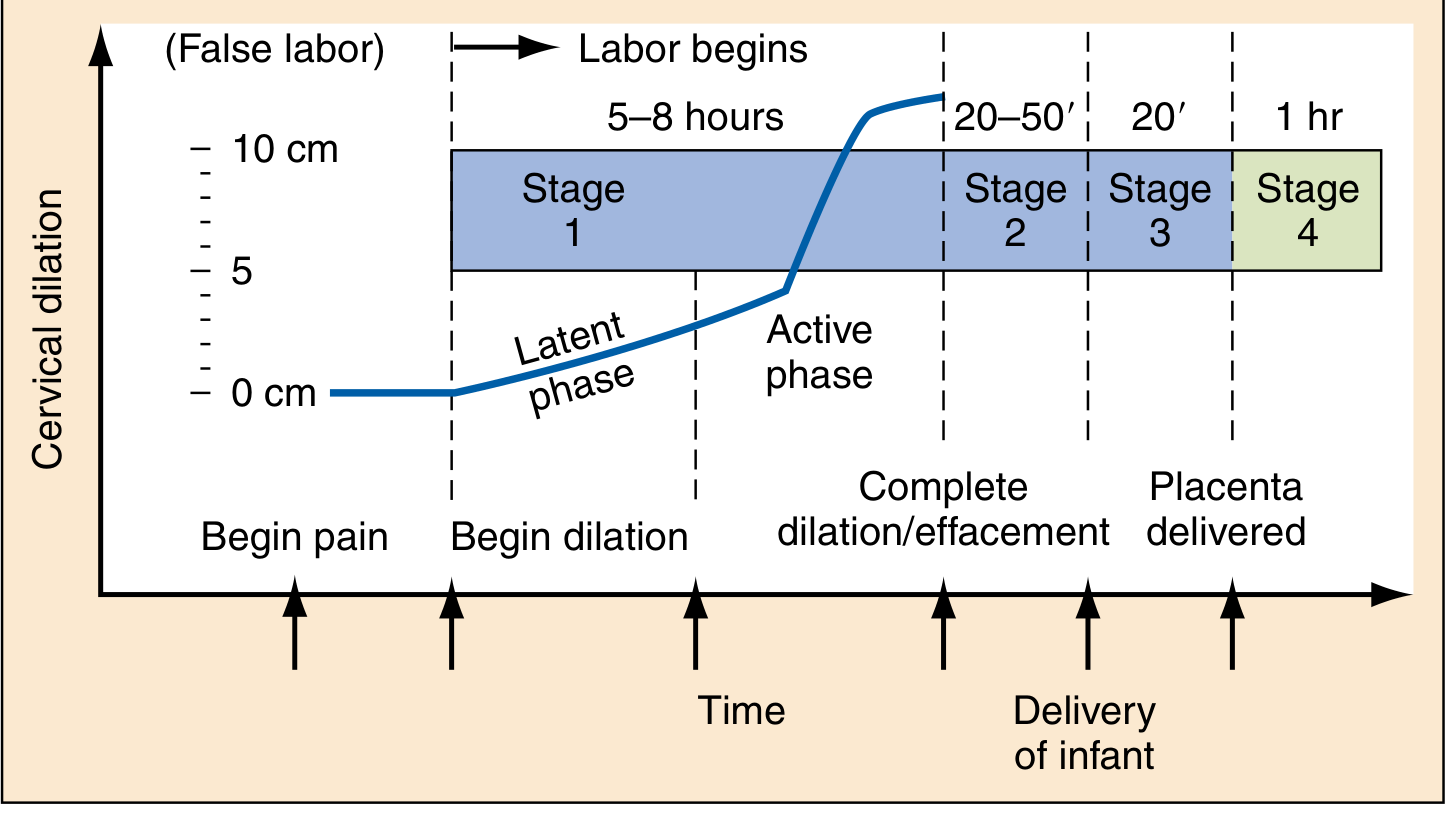
Fig. 176.1 - Rosen's Emergency Medicine: Stages of labor and delivery plotted as cervical dilation vs. time
Stage 1 - Cervical Stage (5-8 hours)
- Begins: Onset of regular uterine contractions
- Ends: Full cervical dilation (10 cm) and complete effacement
- Divided into two phases:
| Phase | Cervical Dilation | Characteristics |
|---|---|---|
| Latent phase | 0-3 cm | Slow; irregular contractions; cervix softens and effaces |
| Active phase | 3-10 cm | Rapid dilation ~1.2 cm/hr (nulliparous), ~1.5 cm/hr (multiparous) |
The image below shows the fetus in utero just before dilation begins, with the placenta, vagina, and anus labeled:
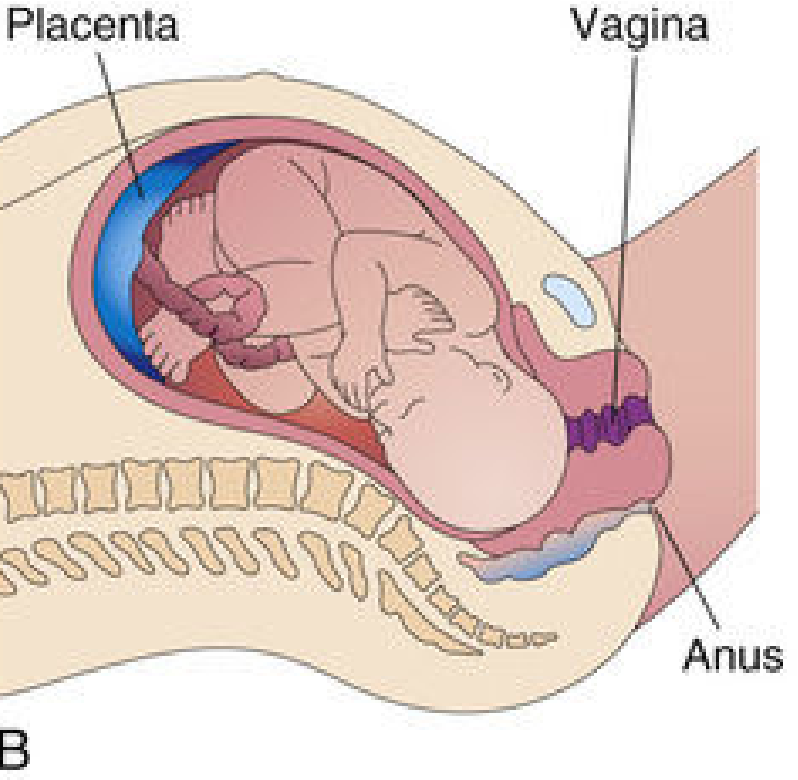
The fetus in the uterus at the onset of labor - The Developing Human (Moore)
Stage 2 - Fetal Expulsion (20-54 minutes)
- Begins: Full cervical dilation (10 cm)
- Ends: Delivery of the infant
- Average duration: 20 min (multiparous) to 54 min (nulliparous)
- The fetus descends through the birth canal; the head typically presents first (vertex presentation)
Stage 3 - Placental Expulsion (~20 minutes)
- Begins: Delivery of the infant
- Ends: Delivery of the placenta
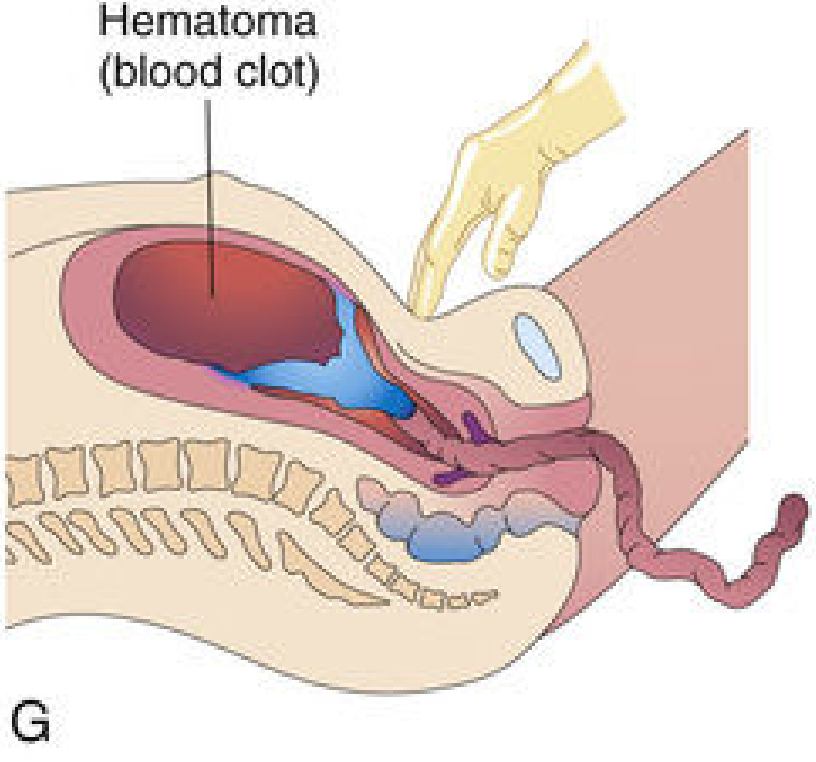
- The uterus contracts, the placenta separates from the uterine wall, causing bleeding and hematoma formation
- Usually complete within 10 minutes; intervention considered after 30 minutes
The image below shows placental separation with hematoma formation (Stage 3 - G):
And the final expulsion of the placenta with a contracted uterus (Stage 3 - H):
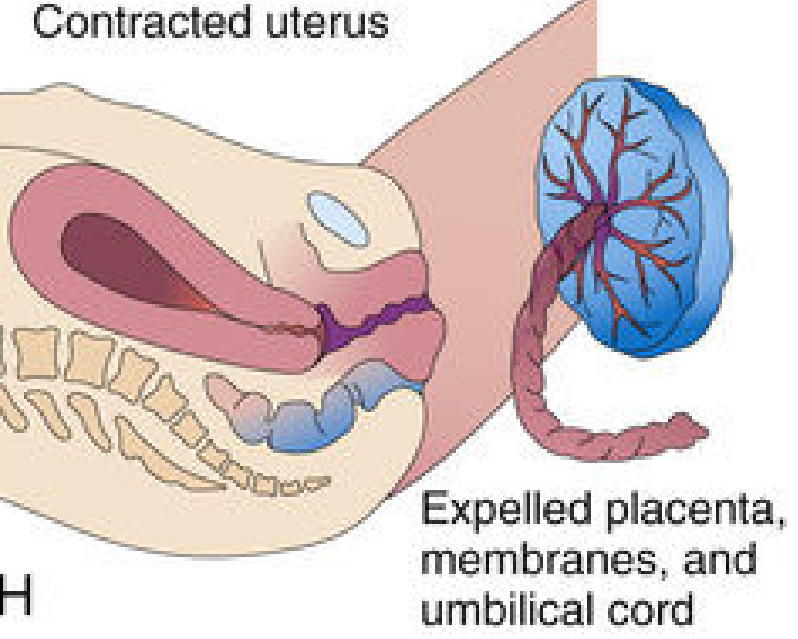
Figs. G and H from The Developing Human (Moore): placental separation and expulsion
Stage 4 - Recovery (1 hour postpartum)
- The uterus continues to contract to prevent hemorrhage
- Vital signs are monitored closely
- This stage is not always listed in all classifications but is important clinically
True vs. False Labor (Braxton Hicks)
| Feature | True Labor | False Labor |
|---|---|---|
| Contraction rhythm | Regular | Irregular |
| Intervals | Gradually shorten | Unchanged |
| Intensity | Gradually increases | Unchanged |
| Discomfort location | Back AND abdomen | Lower abdomen only |
| Effect of sedation | No relief | Usually relieved |
| Cervical dilation | Yes | No |
Key Terms
- Effacement - thinning/shortening of the cervix (0% = thick, 100% = paper-thin)
- Dilation - opening of the cervix (0-10 cm; full dilation = 10 cm)
- Bloody show - expulsion of the cervical mucous plug at labor onset; slight dark-red bleeding mixed with mucus
- Station - position of the fetal presenting part relative to the ischial spines
Sources: The Developing Human - Clinically Oriented Embryology (Moore), p. 369 | Rosen's Emergency Medicine, p. 3408 | Tintinalli's Emergency Medicine, p. 1944
This is a shared conversation. Sign in to Orris to start your own chat.