
Hii
Hey! How can I help you today?
I just came to know about you.. can you explain who are you
Hey! Great to meet you. Here's a quick intro:
I'm Orris 👋
I'm a knowledgeable AI assistant built to help you across a wide range of topics. Think of me as a smart research and task companion. Here's what I can do:
What I'm good at:
-
Medical & Clinical questions - I have access to a library of medical textbooks and peer-reviewed research (PubMed), so I can answer questions on drugs, diagnoses, anatomy, physiology, and more with real citations.
-
Research & Web Search - I can search the web for current, up-to-date information on almost any topic.
-
Documents & Files - I can create, read, and edit Word docs (.docx), PowerPoint presentations (.pptx), Excel spreadsheets (.xlsx), and PDFs.
-
Tax & Finance (India) - I have specialized knowledge on Indian taxation (GST, direct taxes, CA/CMA exams) through expert materials.
-
Coding & Data - I can write and run code, analyze data, and help with technical problems in a live sandbox environment.
-
General Knowledge - History, science, math, technology, current events - ask away.
What makes me different:
- I give you a quick answer first, then back it up with deeper research from real sources.
- I cite my sources so you can verify what I say.
- I'm honest - if I don't know something, I'll tell you rather than guessing.
What would you like to explore? I'm ready to help! 😊
Provoked vs unprovoked seizures
A provoked seizure has an identifiable acute cause (fever, drugs, metabolic disturbance), while an unprovoked seizure occurs without such a trigger and implies a lasting predisposition. Two unprovoked seizures more than 24 hours apart generally meet the definition of epilepsy.
Searching sources...
Reading File
Finding Sources
Searching PubMed
provoked unprovoked seizure definition epilepsy
Finding Sources
Finding Sources
Reading File
Reading File
Reading File
Loading Image
Now I have excellent textbook content and a classification diagram. Let me compile the full answer.
Provoked vs. Unprovoked Seizures
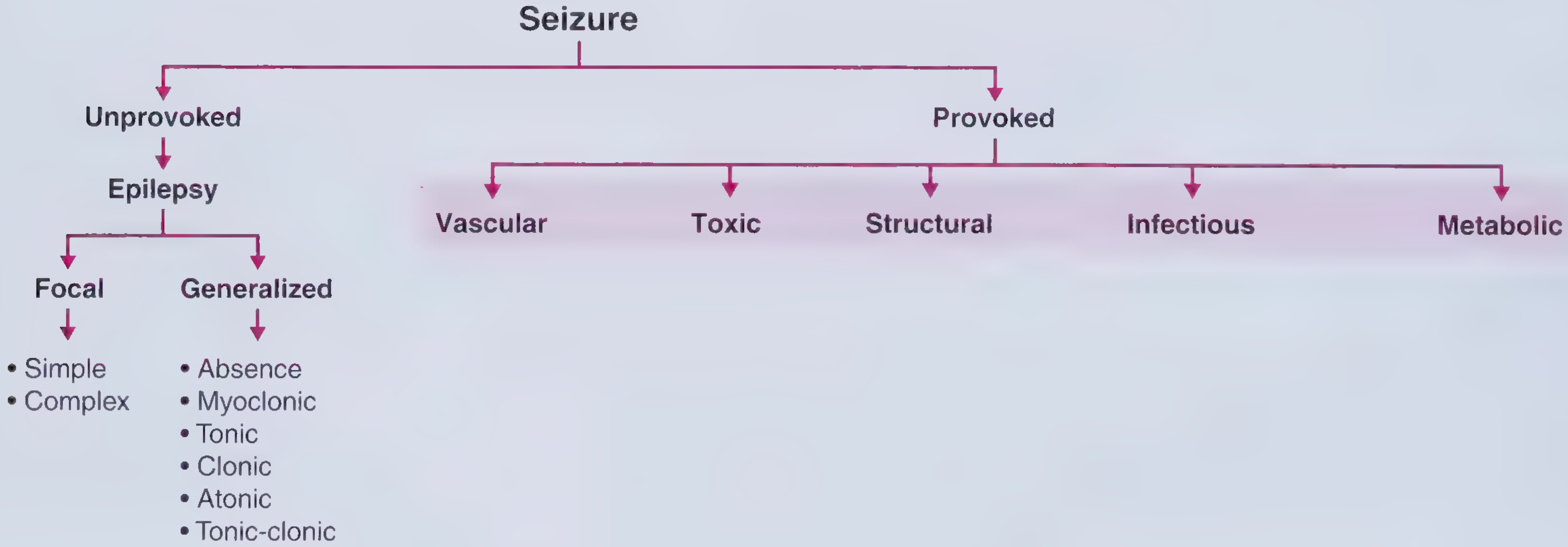
Definitions
Unprovoked Seizure
A seizure that occurs in the absence of a temporary or reversible associated condition. There is no identifiable acute precipitant - it implies a lasting predisposition of the brain to generate seizures.
Provoked Seizure (= Acute Symptomatic Seizure)
A seizure that occurs in close temporal relationship with an acquired precipitating condition. It is also called an "acute symptomatic seizure." The seizure is a symptom of an underlying acute process, not a primary brain disorder.
Frameworks for Internal Medicine
Key Distinction: What Happens After the Acute Cause Resolves?
This is an important nuance:
- If a condition (e.g., head trauma, stroke, brain tumor) causes residual brain alteration or is irreversible, it can lead to a long-term predisposition for seizures - these are then classified as "remote symptomatic seizures" (a subtype of unprovoked seizures), not provoked seizures.
- In other words, provoked = seizure during the acute phase. Once the acute phase is over, any subsequent seizures are unprovoked.
Causes of Provoked Seizures
Provoked seizures account for almost half of all first seizures. Causes fall into 5 subcategories:
| Category | Examples |
|---|---|
| Vascular | Stroke, subarachnoid hemorrhage, cerebral venous thrombosis, PRES, vasculitis, moyamoya disease |
| Toxic | Alcohol withdrawal, cocaine, bupropion, isoniazid, organophosphates |
| Structural | Head trauma, brain tumor, cerebral abscess, subdural hematoma |
| Infectious | Meningitis, encephalitis (HSV, bacterial), neurocysticercosis |
| Metabolic | Hypoglycemia, hyponatremia, hypocalcemia, uremia, hepatic encephalopathy, hypomagnesemia |
Seizure Type in Provoked Seizures
- Non-structural causes (e.g., metabolic, toxic) → typically generalized seizures (e.g., hypoglycemia causes generalized tonic-clonic seizures)
- Structural causes (e.g., cerebral aneurysm, focal stroke) → typically focal seizures
Risk of Recurrence
| Scenario | Risk of Next Seizure |
|---|---|
| Single unprovoked seizure | ~40-50% risk over the next 2-8 years |
| Two unprovoked seizures | ~60-90% risk of a third within 4 years |
Connection to Epilepsy
Epilepsy is defined as:
- At least 2 unprovoked seizures occurring more than 24 hours apart, OR
- 1 unprovoked seizure with a ≥60% probability of a second seizure over the next 10 years (based on risk factors like permanent structural brain disease)
Important: Epilepsy is NOT diagnosed after provoked seizures alone - it requires the unprovoked seizure criterion.
Epilepsy is considered resolved when:
- A patient with an age-related epilepsy syndrome is outside the applicable age range, OR
- The patient has been seizure-free for ≥10 years without antiepileptic medication for the most recent 5 years.
Seizure Threshold in Epileptics
Patients with epilepsy have a lower seizure threshold - this means they are at higher risk for provoked seizures too (compared to non-epileptic patients under identical precipitating conditions). The two categories are not mutually exclusive.
Source: Frameworks for Internal Medicine
This is a shared conversation. Sign in to Orris to start your own chat.