
Explain me complete digestion system anatomy with diagrams . Explain definition topography boundaries anterior and posterior, external and internal boundaries nerve supply and functions. Take reference from grays and moore’s anatomy
Reading File
Now let me search the library for comprehensive digestive system anatomy content from Gray's and Moore's anatomy books.
Finding Sources
Finding Sources
Finding Sources
Finding Sources
Finding Sources
Finding Sources
Finding Sources
Finding Sources
I found Gray's Anatomy for Students has the abdomen chapter. Let me read key sections in parallel.
Reading File
Reading File
Reading File
Reading File
Excellent - I'm finding the right content. Let me read the abdominal viscera section and the specific organs in detail.
Reading File
Reading File
I found the organs section. Let me read the details on all digestive organs and images.
Reading File
Reading File
Reading File
I now have extensive content from Gray's Anatomy for Students. Let me fetch the key diagrams while reading more content.
Loading Image
Loading Image
Reading File
I have extensive content. Let me now fetch key diagrams and read the nerve supply section in parallel.
Loading Image
Loading Image
Reading File
I now have comprehensive content from Gray's Anatomy for Students. Let me fetch two more key diagrams and then compile the full answer.
Loading Image
Loading Image
I now have all the key diagrams and extensive textbook content. Let me compile the complete, comprehensive answer.---
Complete Digestive System Anatomy
References: Gray's Anatomy for Students (GAFS), Chapter 4 - Abdomen; supplemented with Moore's Clinically Oriented Anatomy principles
1. DEFINITION
The digestive (gastrointestinal) system is a continuous muscular tube extending from the oral cavity to the anus, approximately 9 meters in total length, designed to ingest food, break it down mechanically and chemically, absorb nutrients, and eliminate waste. It includes both the alimentary canal proper and accessory digestive organs (liver, gallbladder, pancreas, salivary glands) that contribute secretions.
The abdominal portion - the focus of this review - runs from the abdominal esophagus to the rectum. The system is divided embryologically into:
- Foregut - supplied by the celiac artery (abdominal esophagus to mid-duodenum)
- Midgut - supplied by the superior mesenteric artery (mid-duodenum to two-thirds of the transverse colon)
- Hindgut - supplied by the inferior mesenteric artery (distal transverse colon to upper anal canal)
2. TOPOGRAPHY OF THE ABDOMEN
The abdomen is the region of the trunk below the thorax and above the pelvis.
Regions of the Abdomen (9-Region Grid)
| Right Hypochondrium | Epigastrium | Left Hypochondrium |
|---|---|---|
| Right Lumbar (Lateral) | Umbilical | Left Lumbar (Lateral) |
| Right Iliac (Inguinal) | Hypogastrium (Pubic) | Left Iliac (Inguinal) |
Key visceral positions:
- Epigastric region: Stomach, duodenum (superior part), liver (left lobe), pancreas (head and body)
- Umbilical region: Transverse colon, jejunum and ileum loops, duodenum (inferior and ascending parts)
- Left hypochondrium: Stomach (fundus and body), spleen, pancreatic tail, left colic flexure
- Right hypochondrium: Right lobe of liver, gallbladder, right colic flexure
- Right iliac fossa: Cecum, appendix, terminal ileum
- Left iliac fossa: Sigmoid colon, descending colon
Key Vertebral Reference Planes (from GAFS, p. 329)
- Transpyloric plane (LI): Passes through the pyloric orifice (just right of LI), head and body of pancreas, hilum of kidneys, and 9th costal cartilage laterally
- Transtubercular plane (LV): Level of iliac tubercles
- Subcostal plane (LIII): Lower margin of 10th costal cartilage
3. BOUNDARIES OF THE ABDOMEN
Anterior Boundary
- Skin and superficial fascia (Camper's and Scarpa's fasciae)
- External oblique muscle and its aponeurosis
- Internal oblique muscle
- Transversus abdominis muscle
- Transversalis fascia
- Extraperitoneal (preperitoneal) fat
- Parietal peritoneum
The anterolateral wall is reinforced centrally by the rectus abdominis enclosed within the rectus sheath (formed by aponeuroses of the three flat muscles). The linea alba runs in the midline.
Posterior Boundary
- Vertebral column (lumbar region, vertebrae LI-LV)
- Psoas major muscles (flanking the vertebral column)
- Iliacus muscles
- Quadratus lumborum
- Posterior abdominal wall peritoneum
- Retroperitoneal fat and fascia
The retroperitoneal space contains kidneys, ureters, suprarenal glands, aorta, and inferior vena cava.
Superior Boundary
- Diaphragm - the dome-shaped musculotendinous partition separating the thorax from the abdomen. The GI tract communicates through three diaphragmatic openings:
- Esophageal hiatus (T10): esophagus + vagal trunks pass through
- Aortic hiatus (T12): aorta + thoracic duct
- Vena caval foramen (T8): inferior vena cava
Inferior Boundary
- Pelvic inlet (demarcated by the pelvic brim/linea terminalis)
- The abdominal cavity is continuous with the pelvic cavity below
Internal Boundaries - Peritoneal Anatomy
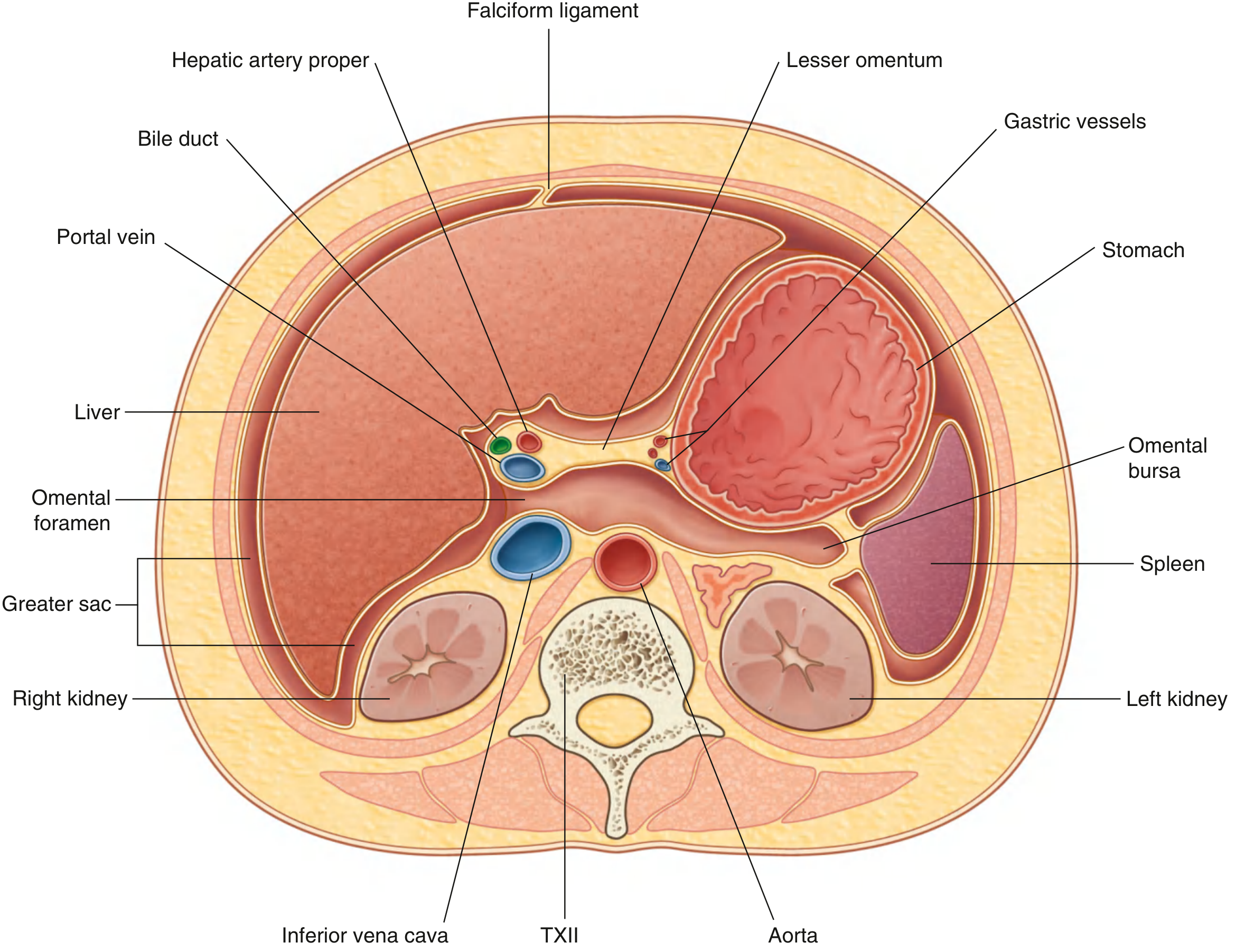
Fig: Transverse Section Illustrating the Peritoneal Cavity - Gray's Anatomy for Students
The peritoneum divides the abdominal cavity into internal compartments:
- Parietal peritoneum: Lines the walls of the abdominal cavity. Innervated by somatic afferents (spinal nerves) - pain from it is sharp and well-localized.
- Visceral peritoneum: Covers the abdominal organs. Innervated by autonomic (visceral) afferents - pain is dull, diffuse, and poorly localized.
- Peritoneal cavity: The potential space between the two layers, containing a small amount of lubricating serous fluid.
- Greater sac: The main peritoneal cavity
- Lesser sac (omental bursa): A smaller space posterior to the stomach and lesser omentum; communicates with the greater sac through the omental (epiploic) foramen (of Winslow), which is bounded anteriorly by the hepatoduodenal ligament, posteriorly by the inferior vena cava, superiorly by the caudate lobe of liver, and inferiorly by the duodenum.
Organs classified by peritoneal relation:
| Intraperitoneal (suspended by mesentery) | Retroperitoneal (posterior, no mesentery) |
|---|---|
| Stomach, spleen | Kidneys, suprarenal glands |
| Liver, gallbladder | Abdominal aorta, IVC |
| Jejunum, ileum | Duodenum (2nd-4th parts) |
| Transverse colon, sigmoid colon | Ascending & descending colon (secondary) |
| Cecum, appendix | Pancreas (except tail) |
4. ORGAN-BY-ORGAN ANATOMY
4.1 ABDOMINAL ESOPHAGUS
Definition: The short distal segment of the esophagus within the abdominal cavity, approximately 1.25 cm long.
Topography: Emerges through the right crus of the diaphragm at the esophageal hiatus (level T10), then curves anteriorly and to the left to join the stomach at the cardia (cardioesophageal junction).
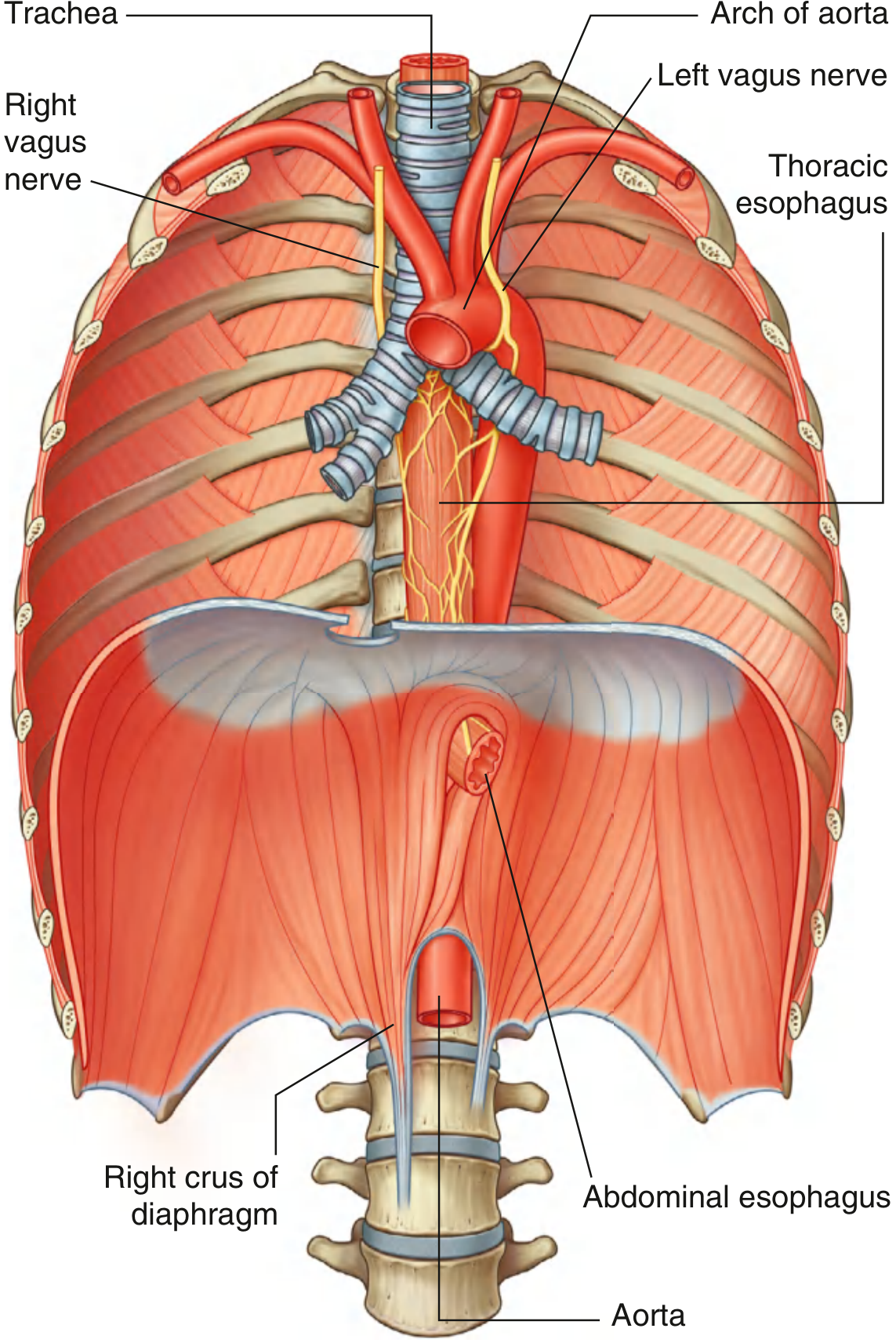
Fig: Esophagus, Vagus Nerves and Diaphragm - Gray's Anatomy for Students
Relations:
- Anterior: Left lobe of liver
- Posterior: Abdominal aorta
- Right: Caudate lobe of liver
- Left: Fundus of stomach, left inferior phrenic artery
Nerve supply:
- Anterior vagal trunk (mainly left vagus nerve fibers)
- Posterior vagal trunk (mainly right vagus nerve fibers)
- Due to gut rotation during development, the left vagus becomes anterior and the right becomes posterior.
- Sympathetic supply via thoracic splanchnic nerves through the celiac plexus.
Blood supply: Left gastric artery (branch of celiac trunk) and left inferior phrenic artery.
Function: Conveys food bolus from thorax to stomach via peristalsis. The lower esophageal sphincter (physiological) prevents gastroesophageal reflux.
4.2 STOMACH
Definition: The most dilated part of the GI tract. J-shaped (or C-shaped in supine position) muscular organ lying between the abdominal esophagus and the duodenum.
Topography: Located in the epigastric, umbilical, and left hypochondriac regions. Empty stomach lies mainly in the epigastrium; when full it expands into the left hypochondrium.
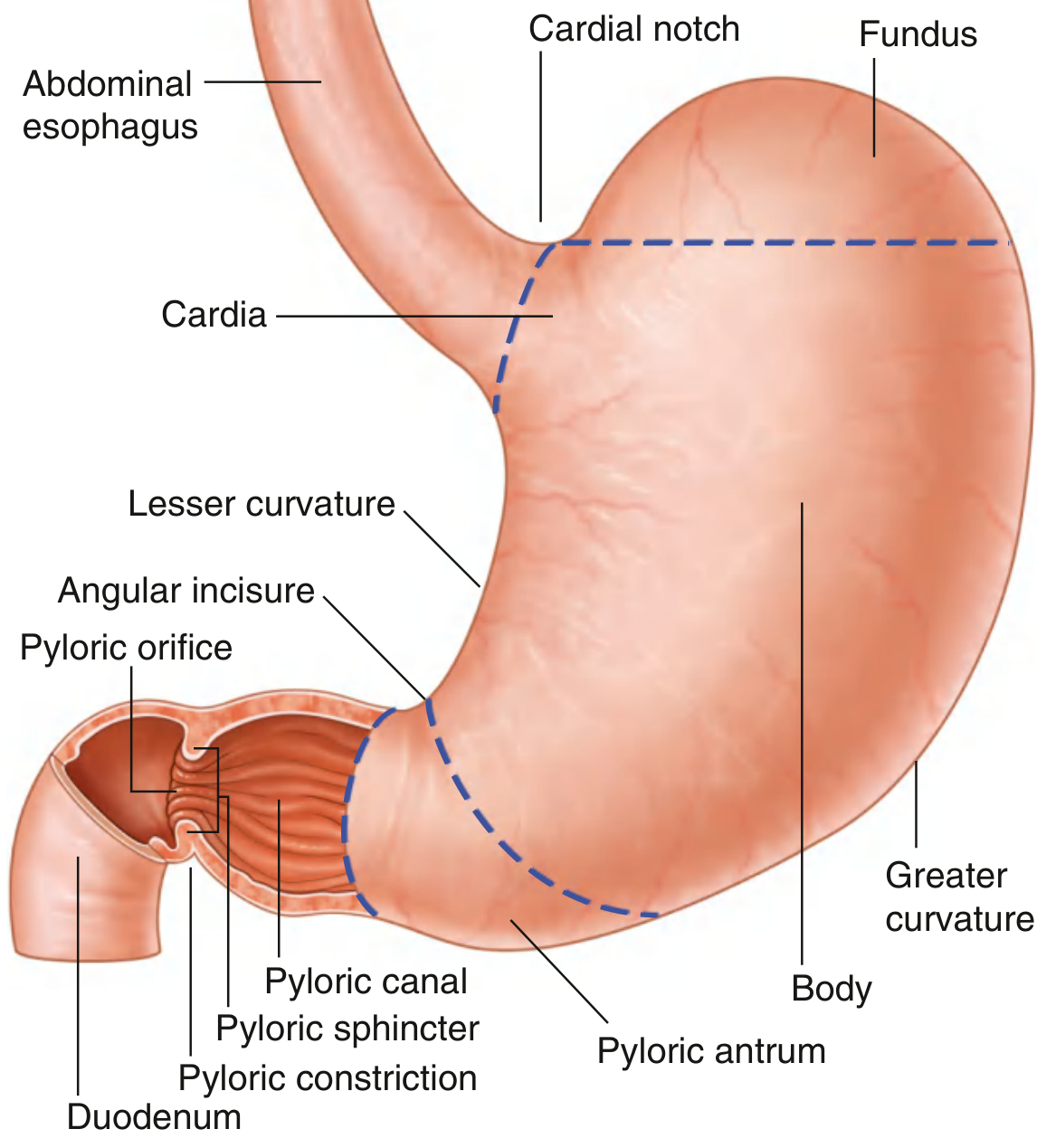
Fig: Stomach Anatomy - Gray's Anatomy for Students
Parts of the Stomach (GAFS, p. 370):
- Cardia - surrounds the cardial orifice (gastroesophageal junction)
- Fundus - dome-shaped superior portion above the cardial orifice; contains swallowed air
- Body - the largest central region
- Pyloric part - divided into:
- Pyloric antrum - wider proximal portion
- Pyloric canal - narrow distal portion leading to the pylorus
- Pylorus - the distal end, marked by the pyloric sphincter (thickened circular muscle) and the pyloric orifice, located just right of the midline at the transpyloric plane (LI)
Curvatures:
- Lesser curvature: Right concave border; attachment of lesser omentum; the angular incisure (incisura angularis) marks the junction of the body and pyloric antrum
- Greater curvature: Left convex border; attachment of greater omentum and gastrosplenic ligament
Boundaries/Relations:
- Anterior: Anterior abdominal wall (epigastrium), left lobe of liver, diaphragm
- Posterior: Lesser sac (omental bursa), pancreas, left kidney, left suprarenal gland, spleen, transverse colon - these form the "stomach bed"
- Superior: Diaphragm (fundus), cardiac orifice
- Inferior: Transverse mesocolon
Nerve supply:
- Parasympathetic: Anterior vagal trunk (mainly left vagus - motor to muscles, secretomotor to gastric glands) and posterior vagal trunk (mainly right vagus)
- Sympathetic: Greater splanchnic nerves (T5-T9) via celiac plexus and celiac ganglia; these are vasomotor and carry pain afferents
- Enteric nervous system: Submucosal (Meissner's) and myenteric (Auerbach's) plexuses intrinsic to the wall
Blood supply:
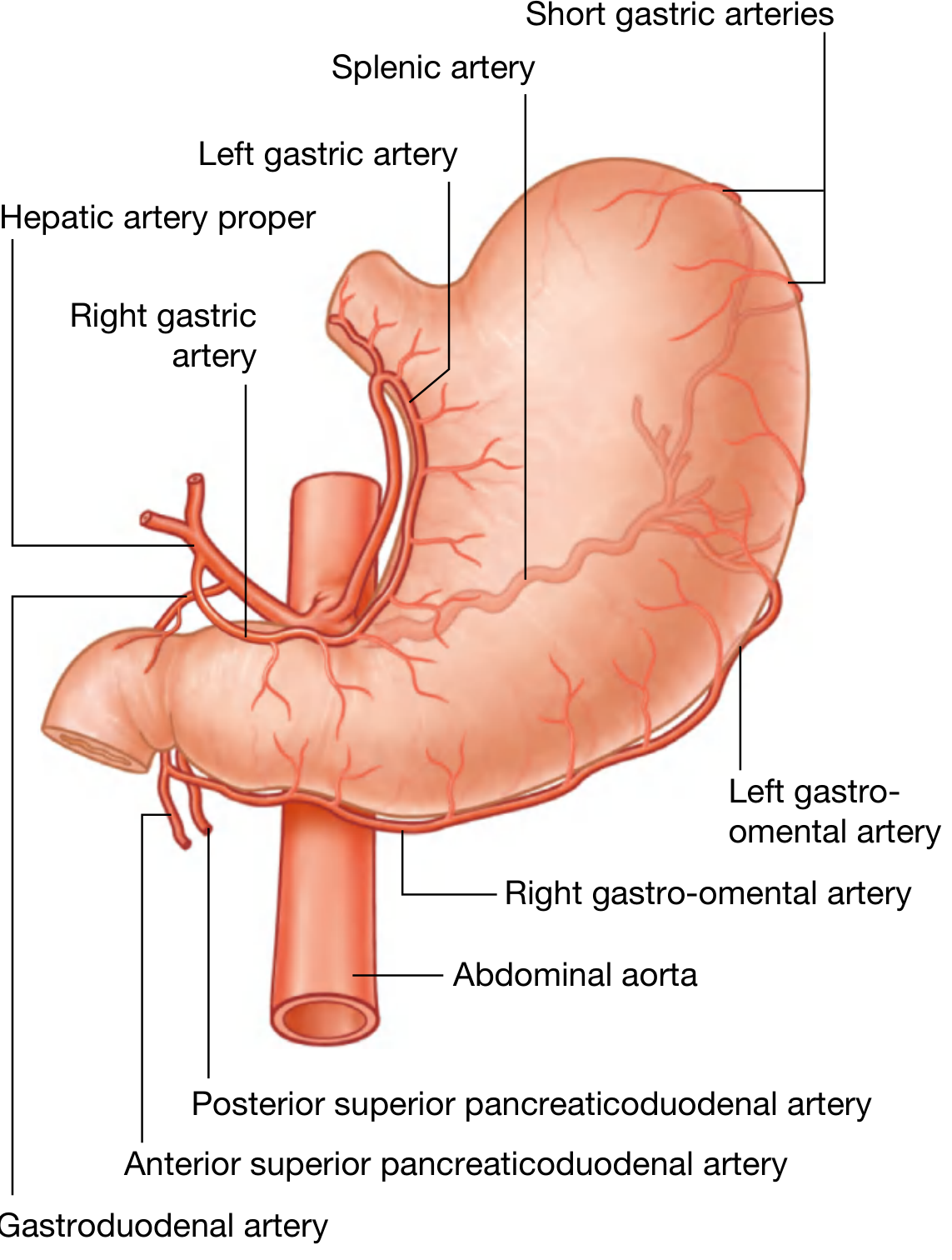
Fig: Arterial Supply to the Stomach - Gray's Anatomy for Students
- Lesser curvature: Left gastric artery (from celiac trunk) + Right gastric artery (from hepatic artery proper)
- Greater curvature: Right gastro-omental artery (from gastroduodenal artery) + Left gastro-omental artery (from splenic artery)
- Fundus: Short gastric arteries (from splenic artery)
- Venous drainage: Portal vein (via left gastric, right gastric, gastro-omental veins)
Function:
- Mechanical digestion (churning, mixing)
- Chemical digestion via HCl (parietal cells) and pepsinogen (chief cells)
- Secretion of intrinsic factor (needed for B12 absorption)
- Gastric emptying via pyloric sphincter coordination
- Endocrine function: secretion of gastrin (G cells), ghrelin, somatostatin
4.3 SMALL INTESTINE
The small intestine is approximately 6-7 meters long and extends from the pyloric orifice to the ileocecal fold. It consists of the duodenum, jejunum, and ileum (GAFS, p. 372).
4.3a DUODENUM
Definition: The first, shortest (20-25 cm), and widest part of the small intestine. C-shaped, enclosing the head of the pancreas. Mostly retroperitoneal.
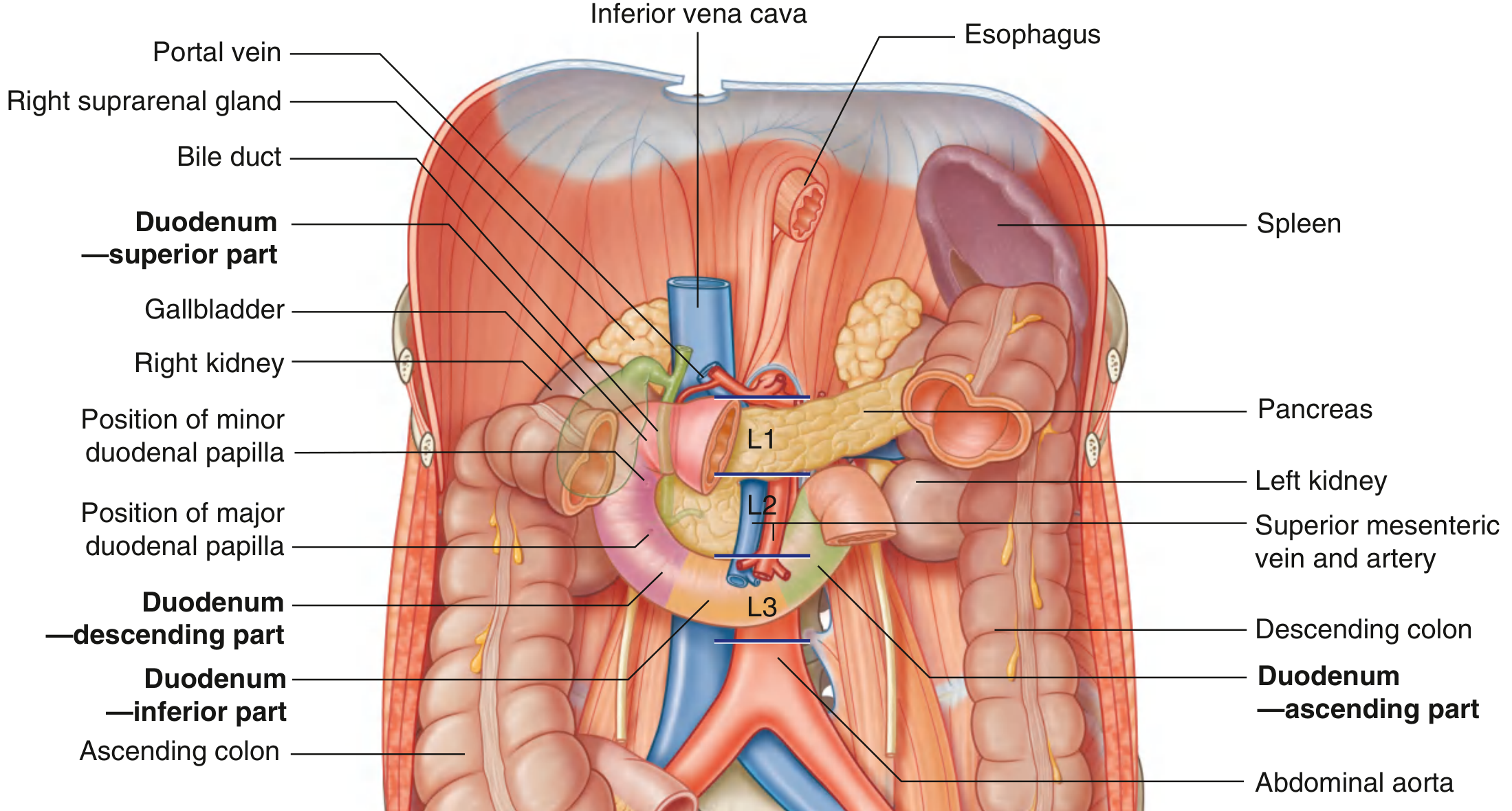
Fig: Duodenum and Surrounding Structures - Gray's Anatomy for Students
Four Parts:
| Part | Length | Level | Key Relations |
|---|---|---|---|
| Superior (1st) | 5 cm | LI | Anterosuperior; "duodenal cap"; most ulcers here |
| Descending (2nd) | 7-10 cm | LI-LIII | Contains major duodenal papilla (ampulla of Vater) and minor papilla |
| Inferior/Horizontal (3rd) | 6-8 cm | LIII | Crosses midline; superior mesenteric artery and vein cross anteriorly |
| Ascending (4th) | 5 cm | LII-LIII | Ascends to duodenojejunal junction at the ligament of Treitz |
Boundaries (2nd part / descending duodenum):
- Anterior: Transverse colon (right colic flexure)
- Posterior: Right kidney (hilum)
- Medial: Head of pancreas; major and minor duodenal papillae
- Lateral: Right lobe of liver, gallbladder
Nerve supply:
- Parasympathetic: Vagus nerve (CN X) via celiac and superior mesenteric plexuses
- Sympathetic: Greater splanchnic nerves (T5-T9) via celiac ganglia (foregut up to major papilla); lesser splanchnic nerves (T10-T11) via superior mesenteric plexus (below major papilla = midgut)
- Enteric plexuses intrinsic to the wall
Function: Receives bile and pancreatic juice at the major duodenal papilla; primary site for iron and calcium absorption; secretes secretin and CCK (cholecystokinin); most active site for chemical digestion.
4.3b JEJUNUM AND ILEUM
Definition: The mobile portions of the small intestine suspended by the mesentery. Jejunum occupies the upper left abdomen; ileum occupies the lower right abdomen.
Topography & Differences:
| Feature | Jejunum | Ileum |
|---|---|---|
| Length | ~2.5 m (proximal 2/5) | ~3.5 m (distal 3/5) |
| Wall thickness | Thicker, more vascular (redder) | Thinner, less vascular (paler) |
| Circular folds (plicae circulares) | Prominent, tall, numerous | Fewer, shorter |
| Villi | Tall, finger-like | Shorter |
| Peyer's patches | Absent or few | Prominent (lymphoid aggregates) |
| Vascular arcades | Few, long loops | Many, short loops |
| Windows in mesentery | Clear fat-free areas | More fat (mesentery opaque) |
Mesentery: A large fan-shaped peritoneal fold connecting jejunum and ileum to the posterior abdominal wall. Its root runs obliquely from the duodenojejunal junction (just left of LII) to the ileocecal junction (near right sacroiliac joint). Contains arteries, veins, nerves, and lymphatics between its two peritoneal layers.
Boundaries:
- Anterior: Anterior abdominal wall; greater omentum
- Posterior: Retroperitoneal structures, posterior abdominal wall
- Superior: Transverse mesocolon
- Lateral and inferior: Colon frames the loops of small bowel
Nerve supply:
- Parasympathetic: Vagus nerve (CN X) - stimulates peristalsis and secretion
- Sympathetic: T9-T11 (lesser and least splanchnic nerves) via superior mesenteric plexus - inhibits motility, vasoconstriction
- The vagus nerve supplies the gut only as far as the left colic flexure (Cannon's point); beyond this, parasympathetic supply is from S2-S4 (pelvic splanchnic nerves)
Function: Major site of nutrient absorption. Jejunum absorbs most carbohydrates, proteins, fat, and fat-soluble vitamins. Terminal ileum specifically absorbs vitamin B12 (bound to intrinsic factor) and bile salts.
4.4 LARGE INTESTINE
The large intestine extends from the ileocecal valve to the anus, approximately 1.5 meters long. It consists of the cecum, appendix, colon (ascending, transverse, descending, sigmoid), rectum, and anal canal.
Distinguishing features of the large intestine:
- Taeniae coli: Three longitudinal bands of condensed outer muscular layer
- Haustra: Sacculations between taeniae
- Omental (epiploic) appendices: Fatty peritoneal tags on the surface
4.4a CECUM AND APPENDIX
Cecum: The blind pouch (6 x 9 cm) at the commencement of the large intestine in the right iliac fossa. Intraperitoneal but with no mesentery. The ileocecal valve controls flow from the ileum.
Appendix (Vermiform Appendix): A narrow, worm-shaped tube 2-20 cm long (average 9 cm) attached to the posteromedial wall of the cecum. Its tip is most commonly retrocecal (65%) or pelvic (30%).
- Surface marking: McBurney's point - junction of lateral 1/3 and medial 2/3 of a line from the right anterior superior iliac spine to the umbilicus
- Taenia coli of the cecum converge on the base of the appendix - useful surgically
- Blood supply: Appendicular artery (from ileocolic artery, branch of SMA)
- Nerve supply: Sympathetic T10 via superior mesenteric plexus (visceral pain referred to periumbilical region)
4.4b COLON
Ascending Colon:
- Extends from the cecum to the right colic (hepatic) flexure
- Retroperitoneal (secondarily)
- Anterior: Anterior abdominal wall, greater omentum, loops of ileum
- Posterior: Iliacus, right kidney, quadratus lumborum
- Right colic flexure: Just inferior to the right lobe of liver
Transverse Colon:
- Extends from right colic flexure to left colic (splenic) flexure
- Intraperitoneal - suspended by transverse mesocolon
- Anterior: Anterior abdominal wall, greater omentum
- Posterior: Pancreas, duodenum, left kidney; transverse mesocolon root runs along anterior surface of pancreas
- Left colic flexure: Higher, more posterior than right; attached to diaphragm by phrenicocolic ligament
Descending Colon:
- Extends from left colic flexure to the pelvic brim
- Retroperitoneal (secondarily)
- Right/lateral paracolic gutter: Potential pathway for spread of peritoneal fluid or infection
Sigmoid Colon:
- S-shaped; extends from left iliac fossa at pelvic brim to the level of SII where it becomes the rectum
- Intraperitoneal - suspended by sigmoid mesocolon (inverted V-shape attachment)
- Smallest luminal diameter - highest intraluminal pressure - most common site for diverticula
Nerve supply of the colon:
| Region | Parasympathetic | Sympathetic |
|---|---|---|
| Cecum to left colic flexure (midgut) | Vagus nerve (CN X) via superior mesenteric plexus | T10-L1 via superior mesenteric ganglion and plexus |
| Left colic flexure to rectum (hindgut) | Pelvic splanchnic nerves (S2, S3, S4) via hypogastric plexus | L1-L2 via inferior mesenteric ganglion and plexus |
4.5 RECTUM AND ANAL CANAL
Rectum: Extends from SII to the level of the pelvic floor (anorectal junction), about 12 cm long. Has three lateral curves (Houston's valves internally). No taeniae coli (longitudinal muscle forms complete coat), no haustra, no epiploic appendices.
Boundaries (rectum):
- Anterior (male): Rectovesical pouch (peritoneal), bladder, seminal vesicles, prostate, ductus deferens
- Anterior (female): Rectouterine pouch (pouch of Douglas), posterior vagina
- Posterior: Sacrum, coccyx, piriformis, coccygeus muscles, median sacral vessels, sacral nerve roots
Anal Canal (~4 cm long):
- External boundary: Surrounded by the external anal sphincter (voluntary, skeletal muscle; innervated by inferior rectal nerve from pudendal nerve S2-S4)
- Internal boundary: Lined by internal anal sphincter (involuntary, smooth muscle; innervated by sympathetic fibers causing contraction and parasympathetic causing relaxation)
- Pectinate (dentate) line: Transition between columnar epithelium (above) and stratified squamous epithelium (below); important boundary for:
- Above pectinate line: visceral pain (poorly localized), portal venous drainage, superior rectal lymphatics
- Below pectinate line: somatic pain (well-localized via inferior rectal nerve), systemic venous drainage, inguinal lymphatics
4.6 LIVER
Definition: The largest solid organ, weighing ~1.5 kg in an adult. Located in the right hypochondrium and epigastrium.
Topography:
- Upper border: Right 5th intercostal space (midclavicular line); left 5th intercostal space
- Lower border: Follows right costal margin to the tip of the 9th costal cartilage, then crosses the epigastrium to meet the left costal margin at the left 8th costal cartilage
External Boundaries (surfaces):
- Diaphragmatic surface (superior, anterior, and posterior): Smooth convex surface; attached to the diaphragm by the coronary and triangular ligaments
- Visceral surface (inferior): Irregular; bears the porta hepatis (transverse fissure containing the portal vein, hepatic artery, and bile ducts - components of the hepatic portal triad)
- H-shaped fissure on the visceral surface:
- Left sagittal fissure: Contains ligamentum teres (anteriorly) and ligamentum venosum (posteriorly)
- Right sagittal fissure: Contains gallbladder fossa (anteriorly) and IVC groove (posteriorly)
- Transverse fissure: Porta hepatis
Lobes:
- Anatomical: Right (large) and Left (small) lobes, plus Caudate and Quadrate lobes on visceral surface
- Functional (Couinaud): 8 segments based on hepatic venous drainage and portal supply - surgically relevant
Peritoneal Ligaments:
- Falciform ligament: Attaches liver to anterior abdominal wall; contains ligamentum teres in its free edge
- Lesser omentum: Connects liver to lesser curvature of stomach (hepatogastric ligament) and duodenum (hepatoduodenal ligament)
- Coronary ligament: Attaches superior liver to diaphragm; forms bare area of liver (not covered by peritoneum)
Nerve supply:
- Sympathetic: T7-T10 via celiac plexus and hepatic plexus (vasoconstriction)
- Parasympathetic: Anterior vagal trunk and right vagus nerve (hepatic branches)
- Phrenic nerve (right, C3-C5): Carries afferents from the liver/diaphragm - explains referred pain to right shoulder tip in liver/diaphragm irritation
Function: Bile production, metabolism of carbohydrates/lipids/proteins, detoxification, coagulation factor synthesis, storage of glycogen/vitamins/iron, immune function (Kupffer cells).
4.7 GALLBLADDER AND BILIARY SYSTEM
Gallbladder: Pear-shaped sac lying in a fossa on the visceral surface of the right lobe of liver. Divided into fundus (projects beyond the inferior margin of the liver at the tip of the 9th costal cartilage), body, and neck (continues as the cystic duct).
Cystic Duct: Contains the spiral valve of Heister; joins the common hepatic duct to form the common bile duct (CBD).
CBD: Descends in the hepatoduodenal ligament (anterior to portal vein, right of hepatic artery), passes posterior to the first part of the duodenum, grooves the posterior head of the pancreas, and joins the main pancreatic duct at the ampulla of Vater (hepatopancreatic ampulla), which opens at the major duodenal papilla on the posteromedial wall of the second part of the duodenum.
Nerve supply: Right phrenic nerve (C3-C5) carries referred pain to right shoulder. Sympathetic via celiac plexus; parasympathetic via vagus nerve.
Function: Gallbladder concentrates bile (10-fold) and stores it between meals. CCK causes gallbladder contraction and relaxation of the sphincter of Oddi for bile release.
4.8 PANCREAS
Definition: An elongated (12-20 cm) retroperitoneal exocrine and endocrine gland.
Parts (from right to left):
- Head: Nestled in the C-curve of the duodenum; projects inferiorly as the uncinate process which hooks behind the superior mesenteric vessels
- Neck: Narrow portion anterior to the portal vein and superior mesenteric vessels
- Body: Crosses the vertebral column; anterior surface covered by peritoneum of the omental bursa
- Tail: The only intraperitoneal part; lies in the splenorenal ligament and reaches the hilum of the spleen
Topography: Lies at the level of L1-L2. The body crosses at the transpyloric plane (L1).
Boundaries:
- Anterior: Stomach (body and tail), transverse colon and mesocolon (head)
- Posterior: IVC, aorta, portal vein, left kidney, left suprarenal gland (body and tail)
- Superior: Splenic artery (along superior border), celiac trunk
- Inferior: Superior mesenteric vessels emerge from behind the neck
Ducts:
- Main pancreatic duct (Wirsung): Runs the full length; joins CBD at the hepatopancreatic ampulla
- Accessory pancreatic duct (Santorini): Opens separately at the minor duodenal papilla, 2 cm above the major papilla
Nerve supply:
- Sympathetic: Splanchnic nerves via celiac and superior mesenteric plexuses (pain afferents - severe epigastric pain radiating to the back in pancreatitis)
- Parasympathetic: Vagus nerve via celiac plexus (stimulates exocrine secretion)
- Hormonal control: Secretin (bicarbonate secretion) and CCK (enzyme secretion) from duodenal mucosa
Function:
- Exocrine: Secretes pancreatic juice (lipase, amylase, proteases, bicarbonate) via the pancreatic duct into the duodenum
- Endocrine: Islets of Langerhans secrete insulin (beta cells), glucagon (alpha cells), somatostatin (delta cells), pancreatic polypeptide
5. NERVE SUPPLY SUMMARY TABLE
| Region | Parasympathetic | Sympathetic | Pain Afferents |
|---|---|---|---|
| Abdominal esophagus | Vagus (CN X) | Greater splanchnic (T5-T9) via celiac plexus | T5-T9 |
| Stomach | Vagus (CN X) anterior and posterior trunks | Greater splanchnic (T5-T9) via celiac plexus | T6-T9 |
| Duodenum (foregut portion) | Vagus (CN X) | Greater splanchnic (T5-T9) via celiac plexus | T5-T9 |
| Duodenum (midgut portion) + jejunum + ileum | Vagus (CN X) via SMA plexus | Lesser splanchnic T10-T11 via SMA plexus | T10-T11 |
| Cecum, appendix, ascending + transverse colon | Vagus (CN X) via SMA plexus | T11-L1 via SMA plexus | T10 (appendix - periumbilical pain) |
| Descending + sigmoid colon | Pelvic splanchnic (S2-S4) | Lumbar splanchnic L1-L2 via IMA plexus | L1-L2 |
| Rectum + upper anal canal | Pelvic splanchnic (S2-S4) | Hypogastric plexus | S2-S4 |
| Lower anal canal | Inferior rectal nerve (somatic, S2-S4) | - | S2-S4 (sharp pain) |
| Liver, gallbladder | Vagus (CN X); right phrenic | T7-T10 via celiac plexus | Right phrenic (C3-C5) → right shoulder tip |
| Pancreas | Vagus (CN X) | Splanchnic T5-T10 via celiac + SMA | T5-T10 → epigastric, back |
6. THREE MAJOR ARTERIES OF THE GI TRACT
As described in Gray's Anatomy for Students (p. 329): "Three large unpaired arteries branch from the anterior surface of the abdominal aorta to supply the abdominal part of the gastrointestinal tract."
| Artery | Origin | Vertebral Level | Territory |
|---|---|---|---|
| Celiac trunk | Anterior aorta | Upper border of LI | Foregut: abdominal esophagus, stomach, proximal duodenum, liver, gallbladder, pancreas, spleen |
| Superior mesenteric artery (SMA) | Anterior aorta | Lower border of LI | Midgut: distal duodenum, jejunum, ileum, cecum, appendix, ascending colon, proximal 2/3 transverse colon |
| Inferior mesenteric artery (IMA) | Anterior aorta | ~LIII | Hindgut: distal 1/3 transverse colon, descending colon, sigmoid colon, rectum, upper anal canal |
Venous Drainage: All venous blood from the GI tract (inferior to the diaphragm) passes through the hepatic portal vein to the liver before entering the systemic circulation. The portal vein is formed posterior to the neck of the pancreas by the union of the superior mesenteric vein and splenic vein (the inferior mesenteric vein typically joins the splenic vein).
7. PERITONEAL FOLDS AND REFLECTIONS
| Structure | Connection | Contents |
|---|---|---|
| Greater omentum | Stomach/duodenum to transverse colon (drooping "apron") | Fat, lymphatics; immune defense |
| Lesser omentum | Liver to stomach (hepatogastric) and duodenum (hepatoduodenal) | Hepatoduodenal: portal vein, hepatic artery, bile duct |
| Mesentery | Jejunum/ileum to posterior abdominal wall | SMA, SMV, nerves, lymphatics |
| Transverse mesocolon | Transverse colon to posterior abdominal wall | Middle colic vessels |
| Sigmoid mesocolon | Sigmoid colon to posterior abdominal wall (inverted V) | Sigmoid vessels |
| Gastrosplenic ligament | Stomach (greater curvature) to spleen | Short gastric and left gastro-omental vessels |
| Splenorenal ligament | Spleen to left kidney | Splenic vessels, tail of pancreas |
8. FUNCTIONS OF THE DIGESTIVE SYSTEM - SUMMARY
| Function | Primary Site |
|---|---|
| Ingestion | Mouth |
| Mechanical digestion | Mouth (chewing), Stomach (churning), Small intestine (segmentation) |
| Chemical digestion | Stomach (HCl, pepsin), Duodenum (pancreatic enzymes, bile), Small intestine (brush border enzymes) |
| Absorption of nutrients | Duodenum (iron, Ca), Jejunum (most nutrients, fat-soluble vitamins), Ileum (B12, bile salts) |
| Water absorption | Large intestine (colon absorbs ~1.5 L/day) |
| Propulsion | Peristalsis throughout (coordinated by enteric nervous system) |
| Bile production | Liver |
| Bile concentration and storage | Gallbladder |
| Enzyme production | Pancreas (exocrine), salivary glands |
| Endocrine | Pancreas (insulin, glucagon), GI enteroendocrine cells (gastrin, secretin, CCK, GIP, motilin) |
| Detoxification | Liver (first-pass metabolism) |
| Immune surveillance | Peyer's patches (ileum), MALT, Kupffer cells (liver) |
| Defecation | Rectum, anal canal (coordinated by voluntary and involuntary sphincters) |
9. EMBRYOLOGICAL DIVISIONS (for clinical correlation)
| Division | Extent | Artery | Congenital anomalies |
|---|---|---|---|
| Foregut | Pharynx to major duodenal papilla (2nd part duodenum) | Celiac trunk | Pyloric stenosis, annular pancreas, biliary atresia |
| Midgut | Major papilla to left colic flexure | SMA | Meckel's diverticulum (2 feet from ileocecal valve, 2% population), malrotation, volvulus |
| Hindgut | Left colic flexure to upper anal canal | IMA | Hirschsprung disease (absent enteric ganglia) |
*Sources: Gray's Anatomy for Students, Chapter 4 - Abdomen (ISBN: 9780323934237); Histology A Text and Atlas with Correlated Cell and Molecular Biology (ISBN: 9781975181512); Moore's Clinically Oriented Anatomy principles (structural-clinical correlations). All diagrams sourced directly from Gray's Anatomy for Students textbook.*This completes a comprehensive, textbook-referenced coverage of the entire digestive system anatomy. Here is a summary of what was covered:
What Was Covered
The guide above draws directly from Gray's Anatomy for Students (Chapter 4 - Abdomen) and is organized as follows:
1. Definition
The digestive system as a continuous tube plus accessory organs, divided into foregut/midgut/hindgut by embryological arterial supply.
2. Topography
Nine-region abdominal grid with specific organs mapped to each region, plus key vertebral reference planes (transpyloric plane at LI, transumbilical at LIV).
3. Boundaries
- Anterior wall: External oblique - internal oblique - transversus abdominis - transversalis fascia - peritoneum
- Posterior wall: Vertebral column, psoas, iliacus, quadratus lumborum
- Superior: Diaphragm (esophageal hiatus T10, aortic T12, IVC foramen T8)
- Inferior: Pelvic inlet
- Internal: Parietal vs visceral peritoneum; greater sac vs lesser sac (omental bursa); intraperitoneal vs retroperitoneal organs
4. Organ-by-Organ Detail
Each organ (esophagus, stomach, duodenum, jejunum, ileum, colon, rectum, liver, gallbladder/biliary tree, pancreas) is covered with:
- Definition and shape
- Topography (regions, vertebral levels)
- External and internal boundaries/relations (anterior, posterior, superior, inferior, medial, lateral)
- Nerve supply (parasympathetic, sympathetic, somatic, enteric)
- Function
5. Nerve Supply Summary Table
Complete table mapping each GI region to its parasympathetic source (vagus vs pelvic splanchnic), sympathetic level, and pain afferent pathway.
6-9. Supporting Sections
- Three unpaired aortic arteries (celiac, SMA, IMA) and portal venous drainage
- Peritoneal folds and mesenteries with their contents
- Functions summary table
- Embryological divisions with clinical correlations
Include oral cavity as well in the same way
Your credits are exhausted. Your daily credits reset tomorrow, or you can purchase a top-up for more.
This is a shared conversation. Sign in to Orris to start your own chat.