
ABG
Reading File
"ABG" is broad - it could mean interpretation, normal values, acid-base disorders, clinical use, or something else. Let me clarify before diving in.
Asking for Preferences
What aspect of ABG (Arterial Blood Gas) are you looking for?
Searching sources...
Finding Sources
Finding Sources
Reading File
Reading File
Reading File
Reading File
Reading File
Reading File
Reading File
Reading File
Loading Image
Now I have all the content needed for a thorough answer. Let me compile it.
ABG: Acid-Base Disorders
Normal ABG Values
| Parameter | Normal Range |
|---|---|
| pH | 7.35 - 7.45 |
| PaCO2 | 35 - 45 mmHg |
| HCO3- | 22 - 26 mEq/L |
| PaO2 | 80 - 100 mmHg |
| Base excess | -2 to +2 mEq/L |
- pH < 7.35 = Acidemia
- pH > 7.45 = Alkalemia
The HCO3- on an ABG is a calculated value (via Henderson-Hasselbalch); the measured serum bicarb from a simultaneous chemistry panel should match within 2-3 mEq/L. A discrepancy suggests a lab error or non-simultaneous draws.
The Henderson-Hasselbalch Framework
Blood pH is determined by the ratio of HCO3- to CO2:
pH = 6.1 + log([HCO3-] / 0.03 × PaCO2)
This means pH is disturbed by changes in either HCO3- (metabolic) or PaCO2 (respiratory).
The Four Primary Disorders
| Disorder | Primary Change | pH | Compensatory Response |
|---|---|---|---|
| Metabolic Acidosis | HCO3- falls | Falls | Hyperventilation (PCO2 falls) |
| Metabolic Alkalosis | HCO3- rises | Rises | Hypoventilation (PCO2 rises) |
| Respiratory Acidosis | PCO2 rises | Falls | Renal HCO3- retention |
| Respiratory Alkalosis | PCO2 falls | Rises | Renal HCO3- excretion |
Key rule: The compensatory response always goes in the same direction as the original disturbance. Compensation normalizes pH but does not overcorrect it.
- Respiratory disorders: compensated renally (hours to days)
- Metabolic disorders: compensated respiratorily (minutes to hours)
Step-by-Step ABG Interpretation
Step 1 - pH: Is the patient acidemic (< 7.35) or alkalemic (> 7.45)?
Step 2 - Identify the primary process:
- pH ↓ + PaCO2 ↑ = Respiratory acidosis
- pH ↓ + PaCO2 ↓ = Metabolic acidosis
- pH ↑ + PaCO2 ↓ = Respiratory alkalosis
- pH ↑ + PaCO2 ↑ = Metabolic alkalosis
Step 3 - Assess compensation (is it appropriate?):
- Metabolic acidosis: expected PaCO2 = (1.5 × HCO3 + 8) ± 2 (Winter's formula)
- Metabolic alkalosis: expected PaCO2 = 40 + 0.7 × (HCO3 - 24)
- Acute respiratory acidosis: HCO3 rises ~1 mEq/L per 10 mmHg rise in PaCO2
- Chronic respiratory acidosis: HCO3 rises ~3.5 mEq/L per 10 mmHg rise in PaCO2
If compensation is not appropriate, a mixed disorder is likely.
Step 4 - Anion gap (for any metabolic acidosis or suspected mixed disorder):
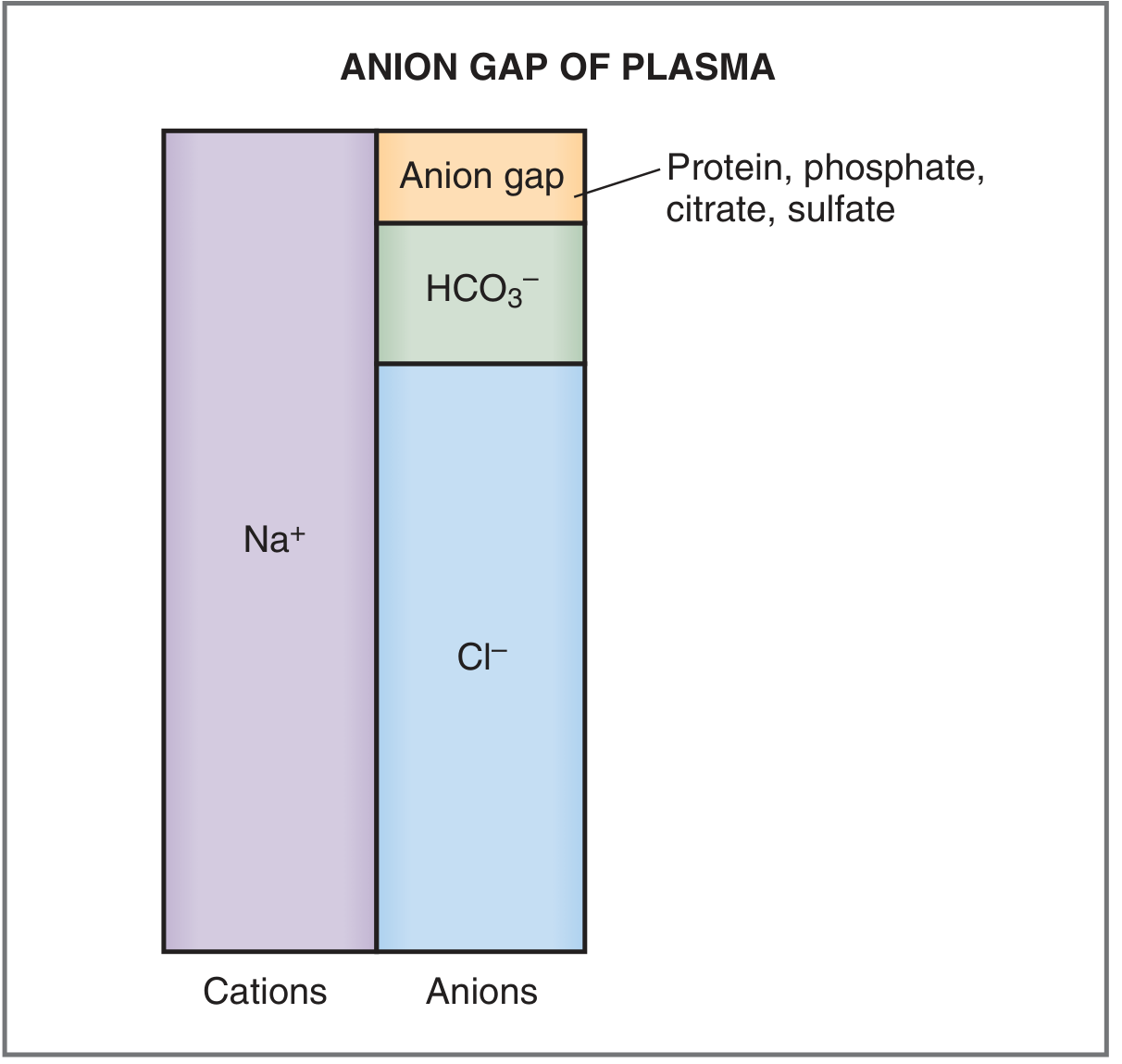
AG = Na+ - (HCO3- + Cl-) Normal = 8-12 mEq/L
Correct for albumin: Add 2.5 × (4 - observed albumin) to the measured AG. Always calculate the AG even when pH and PaCO2 appear near-normal, as a high AG may unmask a mixed disorder.
Step 5 - If AG is elevated, calculate the Delta-Delta ratio (Δ/Δ):
Δ/Δ = (AG - 12) / (24 - HCO3)
| Δ/Δ | Interpretation |
|---|---|
| < 1.0 | Concurrent non-AG metabolic acidosis |
| 1.0 - 2.0 | Pure AG metabolic acidosis |
| > 2.0 | Concurrent metabolic alkalosis (or chronic resp. acidosis) |
The Four Disorders in Detail
1. Metabolic Acidosis (HCO3- < 22)
High AG causes - MUDPILES:
- M - Methanol
- U - Uremia (renal failure)
- D - DKA / ketoacidosis
- P - Propylene glycol / Paraldehyde
- I - Isoniazid, Iron
- L - Lactic acidosis (most common perioperatively)
- E - Ethylene glycol
- S - Salicylates, Short gut
If osmol gap is elevated (measured osmolality - calculated osmolality > 10), consider methanol or ethylene glycol poisoning.
Normal AG (hyperchloremic) causes:
- Diarrhea / GI bicarbonate loss
- Renal tubular acidosis (RTA)
- Excessive normal saline administration (dilutional hyperchloremic acidosis)
- GI fistulas, nasogastric suctioning
Treatment: Correct the underlying cause. Bicarbonate administration is reserved for severe acidosis (pH < 7.15) as a bridge only - it does not address the root cause.
2. Metabolic Alkalosis (HCO3- > 26)
Causes:
- Vomiting / nasogastric suctioning (loss of H+ as HCl)
- Diuretics
- Hypovolemia (contraction alkalosis - renal Na+/H+ exchange retains HCO3-)
- Hypokalemia
- Classic example: Hypochloremic, hypokalemic metabolic alkalosis in pyloric stenosis
Treatment: Address the underlying cause; chloride repletion (normal saline) for chloride-responsive alkalosis; potassium supplementation; stop offending diuretics.
3. Respiratory Acidosis (PaCO2 > 45)
Causes:
- Hypoventilation: CNS depression (sedatives, opioids, stroke, trauma)
- Airway obstruction
- Neuromuscular failure (paralysis, hypophosphatemia)
- Chronic: COPD, obesity hypoventilation, neuromuscular disorders
Treatment: Increase minute ventilation (raise tidal volume or respiratory rate on ventilator); treat the underlying cause. Non-invasive ventilation (BiPAP) for COPD exacerbations. Caution: do not overcorrect a patient with chronic hypercapnia to a "normal" PaCO2 - this causes a sudden metabolic alkalosis.
4. Respiratory Alkalosis (PaCO2 < 35)
Causes:
- Hyperventilation (anxiety, pain, fever)
- Hypoxemia (stimulates respiratory drive)
- Pulmonary embolism
- Salicylate toxicity (early stage)
- Iatrogenic (ventilator settings)
- Hepatic encephalopathy
- Classic use: intentional hyperventilation to induce cerebral vasoconstriction in acute TBI (short-term only)
Treatment: Correct the underlying trigger.
Buffering Systems
The body has three layers of defense against pH changes:
- Chemical buffers (immediate, minutes): Bicarbonate-CO2 system (ECF), phosphate, proteins, and hemoglobin (ICF)
- Respiratory compensation (minutes to hours): Adjusts PaCO2
- Renal compensation (hours to days): Adjusts HCO3- reabsorption/excretion and H+ secretion
Sources: Costanzo Physiology 7th Ed., p. 330-331; Current Surgical Therapy 14e, p. 1607; Barash Clinical Anesthesia 9e, p. 1158-1159
This is a shared conversation. Sign in to Orris to start your own chat.