
Types of breathing pediatrics
Reading File
Searching for comprehensive information on types of breathing in pediatrics.
search_medical_text
types of breathing patterns pediatrics children
Monitoring and Management of Pediatric Patients Before, During, and After Sedation for Diagnostic and Therapeutic Procedures
Page 31
search_medical_image
pediatric breathing patterns abnormal respiratory
Hugging Face pmc clinical VQA raw
Page 0
GradeResponse
GradeResponse
The retrieved documents were not sufficiently detailed for this topic, so I'll provide a comprehensive answer from clinical knowledge.
Types of Breathing in Pediatrics
Normal Breathing by Age
| Age Group | Normal Respiratory Rate (breaths/min) |
|---|---|
| Newborn (0–1 month) | 40–60 |
| Infant (1–12 months) | 30–60 |
| Toddler (1–3 years) | 24–40 |
| Preschool (3–5 years) | 22–34 |
| School-age (6–12 years) | 18–30 |
| Adolescent (12–18 years) | 12–20 |
Neonates and young infants are obligate nose-breathers and exhibit periodic breathing (short pauses <10 seconds) as a normal variant.
Physiological / Normal Breathing Types
1. Eupnea
Normal, effortless breathing at an appropriate rate and depth for age.
2. Periodic Breathing (Normal in Neonates)
Cycles of breathing interrupted by pauses of 5–10 seconds, without bradycardia or desaturation. Common in preterm and term neonates; typically resolves by 6 months.
3. Diaphragmatic Breathing
Dominant in infants; the chest wall is compliant and the diaphragm does most of the work. This is why infants show abdominal rise with normal breathing.
Abnormal Breathing Patterns
4. Tachypnea
- Respiratory rate above normal for age
- Most common sign of respiratory distress in children
- Causes: pneumonia, bronchiolitis, asthma, fever, metabolic acidosis, cardiac disease
5. Bradypnea
- Respiratory rate below normal for age
- Causes: CNS depression (opioids, head injury, seizures post-ictal), hypothermia, fatigue/impending respiratory failure
6. Apnea
- Cessation of breathing >20 seconds (or shorter if associated with bradycardia/cyanosis)
- Central apnea: no respiratory effort (CNS origin)
- Obstructive apnea: effort present but airway blocked (e.g., adenotonsillar hypertrophy)
- Mixed apnea: combination of both
- BRUE (Brief Resolved Unexplained Event) — formerly ALTE, in infants <1 year
7. Cheyne-Stokes Breathing
- Crescendo-decrescendo pattern with periods of apnea
- Seen in: severe CNS dysfunction, heart failure, elevated intracranial pressure
8. Biot's (Ataxic) Breathing
- Completely irregular rate and depth, with unpredictable apneic episodes
- Indicates brainstem dysfunction (e.g., meningitis, herniation)
- Ominous sign requiring immediate intervention
9. Kussmaul Breathing
- Deep, rapid, labored breathing without distress
- Seen in diabetic ketoacidosis (DKA) and severe metabolic acidosis
- Represents respiratory compensation for metabolic acidosis
10. Gasping
- Irregular, infrequent, weak agonal breaths
- Sign of near-cardiorespiratory arrest — begin CPR immediately
Increased Work of Breathing — Clinical Signs
These signs indicate the child is recruiting extra effort to breathe:
| Sign | Description |
|---|---|
| Nasal flaring | Widening of nostrils on inspiration; common in infants |
| Grunting | Expiratory sound from partial glottis closure to maintain PEEP; indicates severe distress |
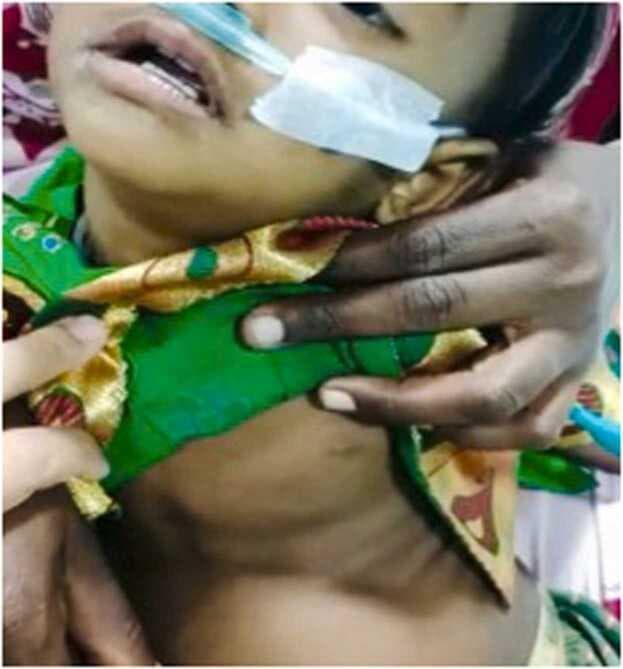
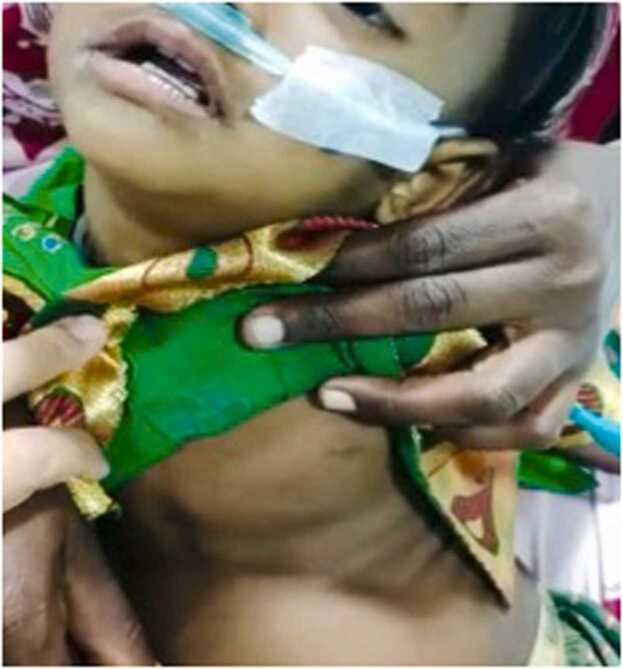
| Subcostal retractions | Inward pulling below the rib cage |
| Intercostal retractions | Inward pulling between ribs |
| Suprasternal retractions | Inward pulling above the sternum; indicates upper airway obstruction |
| Supraclavicular retractions | Severe distress |
| Head bobbing | Sternocleidomastoid use in infants; ominous sign |
| Seesaw (paradoxical) breathing | Chest falls while abdomen rises on inspiration; indicates complete upper airway obstruction or fatigue |
| Tracheal tug | Downward tracheal movement during inspiration |
Noisy Breathing Patterns
| Pattern | Phase | Anatomical Level | Common Causes |
|---|---|---|---|
| Stridor | Inspiratory (usually) | Larynx/subglottis | Croup, epiglottitis, foreign body, subglottic stenosis |
| Wheeze | Expiratory | Lower airways/bronchioles | Asthma, bronchiolitis |
| Stertor | Inspiratory | Nasopharynx/oropharynx | Adenotonsillar hypertrophy, choanal atresia |
| Grunting | Expiratory | Alveolar | Pneumonia, RDS, pulmonary edema |
Neonatal-Specific Considerations
| Condition | Breathing Pattern |
|---|---|
| Respiratory Distress Syndrome (RDS) | Tachypnea, grunting, subcostal/intercostal retractions, nasal flaring |
| Transient Tachypnea of the Newborn (TTN) | Tachypnea, resolves in 24–72 hours |
| Meconium Aspiration Syndrome | Irregular, labored breathing with hypoxia |
| Congenital diaphragmatic hernia | Respiratory distress from birth, scaphoid abdomen |
Key Clinical Pearls
- In infants, grunting is a critical sign — it means the child is trying to prevent alveolar collapse and signals serious illness.
- Seesaw breathing in an infant is a sign of total upper airway obstruction or severe respiratory muscle fatigue.
- A child who was tachypneic and now has bradypnea with altered consciousness is in impending respiratory failure — this is an emergency.
- Always assess breathing in the context of color (cyanosis/pallor), mental status, and effort together.
This is a shared conversation. Sign in to Orris to start your own chat.