
Stye and clazion treatment
I'll look up the medical library skill first, then search for comprehensive information on stye and chalazion treatment.
Reading File
Now I'll search the medical library and PubMed in parallel for stye and chalazion treatment.
Finding Sources
Searching PubMed
chalazion hordeolum treatment
Excellent! Now I'll read the most comprehensive sources in parallel - Wills Eye Manual, Tintinalli's, and the Goldman-Cecil section.
Reading File
Reading File
Reading File
Now let me get the full Wills Eye Manual treatment section and the Pfenninger procedures section for detailed management.
Reading File
Reading File
Let me get the rest of the Pfenninger chalazion/hordeolum treatment section.
Reading File
Loading Image
Loading Image
I now have comprehensive information to write a detailed, well-structured answer. Let me also fetch the external hordeolum image for completeness.
Loading Image
Here is a comprehensive, textbook-based guide to stye and chalazion treatment.
Stye (Hordeolum) and Chalazion: Treatment Guide
Definitions and Key Differences
| Feature | Hordeolum (Stye) | Chalazion |
|---|---|---|
| Nature | Acute bacterial infection (usually Staphylococcus) | Focal sterile/lipogranulomatous inflammation |
| Gland involved | Glands of Zeis (external) or meibomian gland (internal) | Meibomian gland or gland of Zeis - from obstruction |
| Pain | Acutely tender, tense, fluctuant | Often painless or mildly tender; chronic lump |
| Pus | Yes - clear abscess/pustule | No frank pus (may have liquefied center) |
| Course | Acute; often drains spontaneously at 5-7 days | Subacute to chronic |
| Cellulitis | Frequent associated eyelid cellulitis | Minimal surrounding erythema |
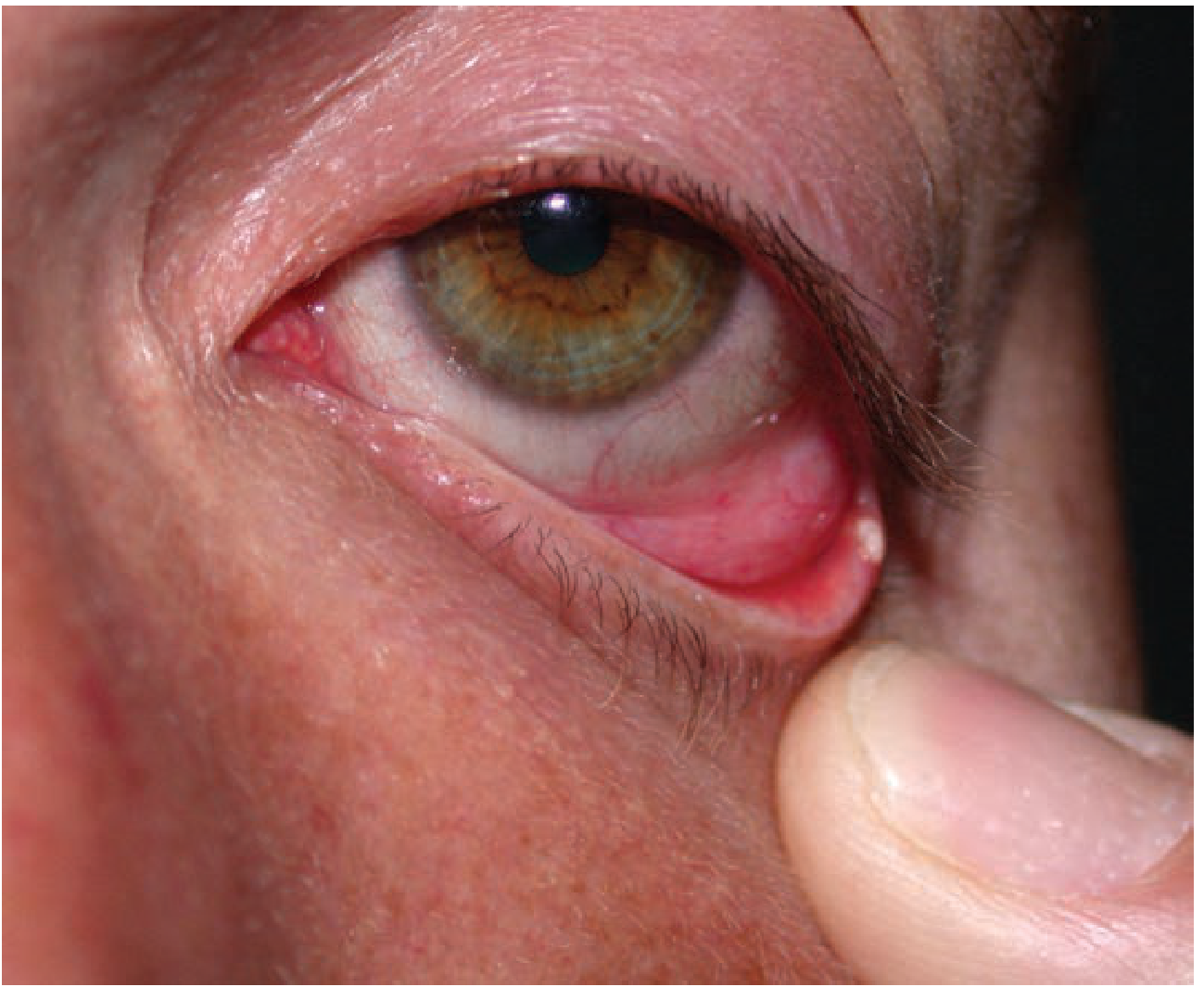
External hordeolum = abscess at the eyelash follicle/lid margin
Internal hordeolum = abscess deeper in tarsal plate (meibomian gland), pustule visible on inner conjunctival surface of eyelid
Internal hordeolum = abscess deeper in tarsal plate (meibomian gland), pustule visible on inner conjunctival surface of eyelid
External Hordeolum (Stye):
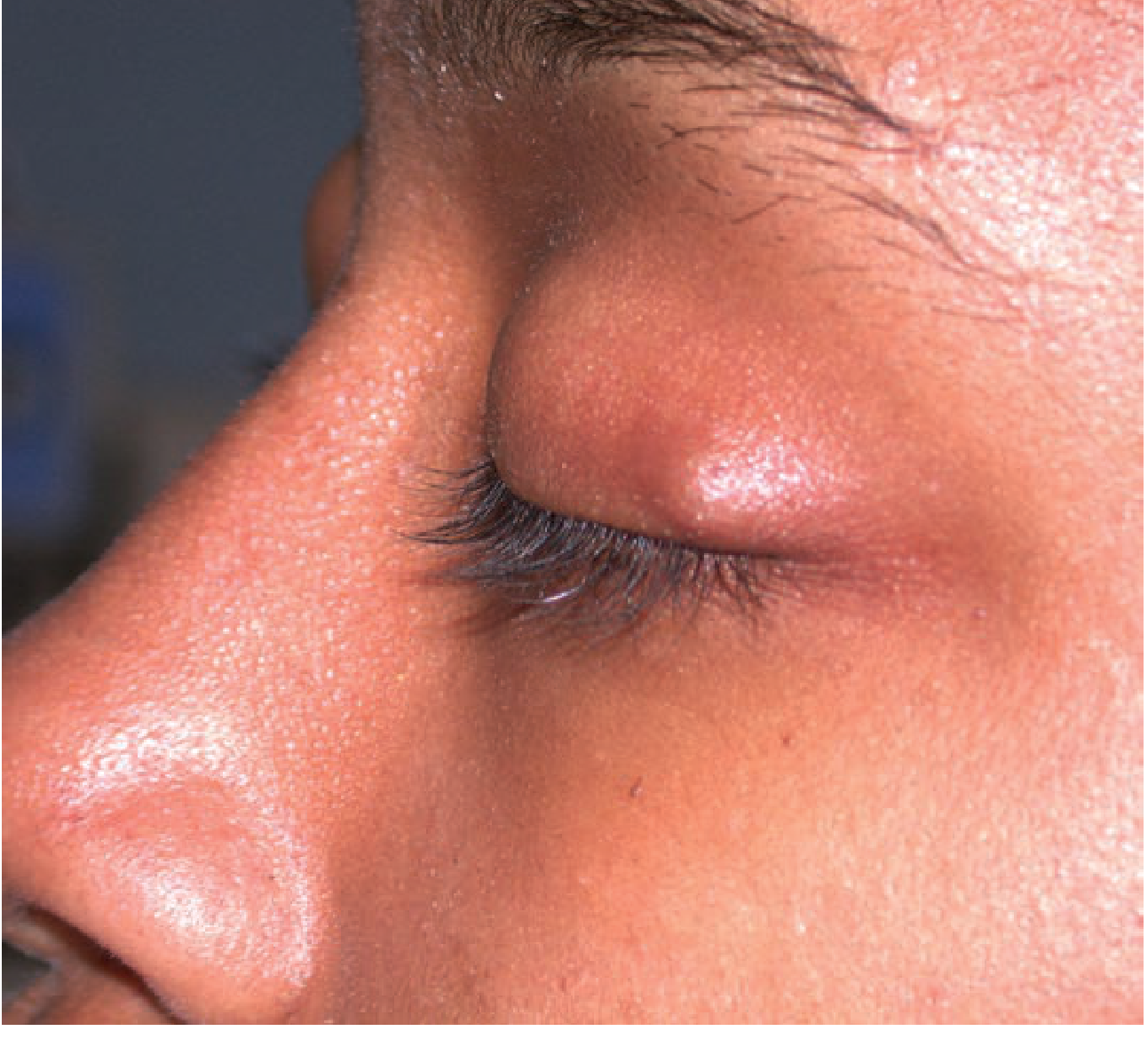
Chalazion:
Treatment
1. Warm Compresses (Both Conditions - First Line)
- Apply warm compresses for 10-15 minutes, 4 times per day with gentle massage over the lesion
- One practical method: fill a sink with hot water and alternate wet washcloths for 15-20 minutes
- This promotes spontaneous drainage for hordeola and helps unclog meibomian glands in chalazia
2. Topical Antibiotics (Primarily for Hordeolum)
- Erythromycin ophthalmic ointment - most commonly recommended; apply b.i.d. to the eyelid margin for 7-10 days
- Bacitracin or tobramycin ointment - b.i.d. for 1-2 weeks
- For chalazion, a short course of topical antibiotic/steroid combination (e.g., neomycin/polymyxin B/dexamethasone ointment b.i.d. for 1-2 weeks) may help
- Monitor IOP if using topical steroids
3. Eyelid Hygiene (Especially for Chalazion)
- Eyelid scrubs at the lid margins nightly - use commercially available ocular cleansing pads or diluted baby shampoo (50:50 with water) applied with a cotton swab or washcloth
- Addresses associated blepharitis, which is a common predisposing factor
4. Eyelash Removal
- Removing the offending eyelash can be considered for external hordeolum to facilitate drainage
5. Incision and Drainage
For hordeolum:
- If a visible pustule is present, it can be nicked with a 25-gauge needle to express pus - this produces a faster cure
- The lid can be inverted to find and nick a pustule on the inner surface (for internal hordeolum)
- More formal I&D if unresponsive to conservative therapy
- If worsening cellulitis develops, manage as preseptal cellulitis and refer to ophthalmology
For chalazion:
- Incision and curettage (I&C) is performed if it fails to resolve after 3-4 weeks of medical therapy and the patient desires intervention
- Approach: through the inner (conjunctival) surface of the eyelid using a chalazion clamp, no. 15 blade, and curette
- All excised chalazia (especially recurrent or atypical ones) should be sent for histopathology to rule out sebaceous carcinoma
Contraindications to chalazion excision:
- Chalazion that has recently drained through skin (risk of "buttonhole" defect)
- Markedly inflamed or crusted skin
- Anticoagulated patient (relative)
- Location near the lacrimal punctum - refer to ophthalmology
6. Intralesional Steroid Injection (Chalazion)
- Used as an alternative or adjunct to surgery
- Triamcinolone acetonide 40 mg/mL, 0.2-1.0 mL mixed 1:1 with 2% lidocaine with epinephrine
- Injected through the conjunctival (inner) surface with a 30-gauge needle after topical anesthetic drops (tetracaine)
- Alternative steroids: betamethasone sodium phosphate/acetate 6 mg/mL, or dexamethasone sodium phosphate 4 mg/mL
- Caution: Risk of permanent skin depigmentation or atrophy, especially in dark-skinned individuals. Rarely, vigorous injection can cause retrograde intra-arterial infiltration and central retinal artery occlusion. Discuss off-label use with patient.
7. Systemic Antibiotics
- Reserved for cases with significant surrounding cellulitis
- Use antistaphylococcal agents: dicloxacillin, cephalosporins
- For multiple/recurrent chalazia or associated ocular rosacea: doxycycline 20-50 mg orally daily to b.i.d. (low-dose for its anti-inflammatory and antibacterial properties)
Follow-up
- Patients are not routinely seen after starting medical therapy unless the lesion persists beyond 3-4 weeks
- Recurrent, large, or atypical chalazia in older patients warrant biopsy to exclude sebaceous carcinoma
Red Flags / When to Refer to Ophthalmology
| Concern | Reason |
|---|---|
| Swelling nasal to medial canthus | Possible dacryocystitis (not chalazion/stye) - can spread to cavernous sinus |
| Recurrent chalazia in older patients, with madarosis or lid thickening | Rule out sebaceous carcinoma |
| Worsening despite treatment / developing preseptal cellulitis | Needs systemic antibiotics + ophthalmology |
| Chalazion near lacrimal punctum needing excision | Risk of canalicular damage |
| I&D not responding | Formal ophthalmology referral |
Differential Diagnosis to Keep in Mind
- Preseptal cellulitis - diffuse eyelid erythema/edema/warmth
- Sebaceous carcinoma - recurrent, atypical, older patient
- Pyogenic granuloma - deep red pedunculated conjunctival lesion; treat with topical antibiotic-steroid combo
- Dacryocystitis - swelling at medial canthus, not lateral lid
- Forniceal foreign body - especially in contact lens wearers
Sources: Wills Eye Manual 6e (6.2), Tintinalli's Emergency Medicine, Roberts and Hedges' Clinical Procedures in Emergency Medicine, Pfenninger and Fowler's Procedures for Primary Care - Goldman-Cecil Medicine
This is a shared conversation. Sign in to Orris to start your own chat.