
Parotidectomy Whipple surgery Orchidectomy and orchidopexy Thyroidectomy Modified Radical mastectomy Splenectomy In brief operation note For exam With indication and contraindications
- Parotidectomy - superficial or total; facial nerve preservation and complications
- Whipple surgery - pancreaticoduodenectomy; reconstruction and postoperative leaks
- Orchidectomy and orchidopexy - approaches, indications in torsion/malignancy/undescended testis
- Thyroidectomy - extent of resection, recurrent laryngeal nerve and parathyroid preservation
- Modified radical mastectomy - breast removal with axillary clearance while preserving pectoralis major
- Splenectomy - open/laparoscopic steps, vascular control, accessory spleens, vaccination
- Indications and contraindications - procedure-specific, including absolute versus relative contraindications.
Give all seven procedures as exam-ready operation notes
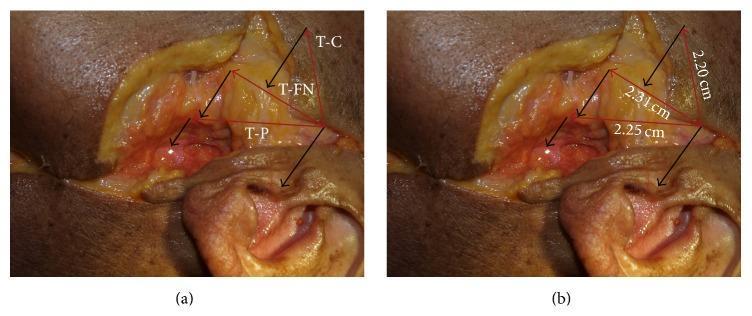
- Parotidectomy - superficial/total parotidectomy, facial nerve identification and preservation
- Whipple surgery - pancreaticoduodenectomy and reconstruction
- Orchidectomy - inguinal radical and simple scrotal approaches
- Orchidopexy - management of undescended testis or torsion
- Thyroidectomy - total/subtotal thyroidectomy with protection of recurrent laryngeal nerves and parathyroids
- Modified radical mastectomy - breast excision with axillary dissection
- Splenectomy - open or laparoscopic removal, hilar control, search for accessory spleens
Make a quick-reference PDF for these exam notes
parotidectomy thyroidectomy splenectomy
pancreaticoduodenectomy orchidopexy mastectomy
operative notes parotidectomy pancreaticoduodenectomy thyroidectomy modified radical mastectomy splenectomy orchidopexy indications contraindications
~/
~/
~/operation-notes-pdf/src_generate.py
from reportlab.lib import colors
from reportlab.lib.enums import TA_CENTER
from reportlab.lib.pagesizes import A4
from reportlab.lib.styles import getSampleStyleSheet, ParagraphStyle
from reportlab.lib.units import cm
from reportlab.platypus import SimpleDocTemplate, Paragraph, Spacer, Table, TableStyle, PageBreak, KeepTogether
from reportlab.pdfbase.pdfmetrics import stringWidth
from reportlab.lib.colors import HexColor
from pathlib import Path

OUT = Path('/tmp/workspace/operation-notes-pdf/output/Quick_Reference_Operation_Notes.pdf')
OUT.parent.mkdir(parents=True, exist_ok=True)

NAVY = HexColor('#163A5F'); BLUE = HexColor('#EAF2F8'); TEAL = HexColor('#0B6E69'); RED = HexColor('#9B2226'); GREY = HexColor('#4B5563')
styles = getSampleStyleSheet()
styles.add(ParagraphStyle(name='TitleX', parent=styles['Title'], fontName='Helvetica-Bold', fontSize=24, leading=29, textColor=NAVY, alignment=TA_CENTER, spaceAfter=12))
styles.add(ParagraphStyle(name='SubX', parent=styles['Normal'], fontName='Helvetica', fontSize=10, leading=14, textColor=GREY, alignment=TA_CENTER))
styles.add(ParagraphStyle(name='Proc', parent=styles['Heading1'], fontName='Helvetica-Bold', fontSize=16, leading=20, textColor=NAVY, spaceBefore=1, spaceAfter=7))
styles.add(ParagraphStyle(name='H2X', parent=styles['Heading2'], fontName='Helvetica-Bold', fontSize=9.3, leading=11.5, textColor=TEAL, spaceBefore=5, spaceAfter=2))
styles.add(ParagraphStyle(name='BodyX', parent=styles['BodyText'], fontName='Helvetica', fontSize=8.25, leading=10.6, spaceAfter=2))
styles.add(ParagraphStyle(name='SmallX', parent=styles['BodyText'], fontName='Helvetica', fontSize=7.7, leading=9.4, textColor=GREY))
styles.add(ParagraphStyle(name='FootX', parent=styles['Normal'], fontSize=7.2, textColor=GREY, alignment=TA_CENTER))


def p(t, style='BodyX'):
    return Paragraph(t, styles[style])

def bullet(items):
    return [p('• ' + x) for x in items]

def section(title, text):
    return [p(title, 'H2X'), p(text)]

def note_page(name, subtitle, indication, contraindications, prep, position, incision, steps, specimen, postop, dangers):
    out = [p(name, 'Proc'), p(subtitle, 'SmallX')]
    out += section('Indications', indication)
    out += section('Contraindications / when to defer', contraindications)
    out += section('Preparation', prep)
    out += section('Anaesthesia, position and incision', f'<b>Anaesthesia/position:</b> {position}<br/><b>Incision:</b> {incision}')
    out += [p('Operation note - essential steps', 'H2X')]
    out += bullet([f'<b>{i+1}.</b> {s}' for i, s in enumerate(steps)])
    out += section('Specimen, closure and immediate plan', f'<b>Specimen:</b> {specimen}<br/><b>Closure:</b> {postop}')
    out += section('Exam alerts / major complications', dangers)
    out += [Spacer(1, 7), p('Exam format: write the procedure performed, key structures preserved, haemostasis, drain, specimen sent, counts correct, and condition at completion.', 'SmallX'), PageBreak()]
    return out

story=[]
story += [Spacer(1, 3*cm), p('QUICK-REFERENCE', 'TitleX'), p('Exam-ready operation notes', 'TitleX'), Spacer(1, 0.35*cm), p('Parotidectomy | Whipple surgery | Orchidectomy | Orchidopexy | Thyroidectomy | Modified radical mastectomy | Splenectomy', 'SubX'), Spacer(1, 0.9*cm)]
cover_data=[[p('<b>How to use this sheet</b><br/>For a short surgical answer, state: indication, contraindications, preparation, position/incision, decisive operative steps, specimen/drains/closure, and complications. Adapt the operation to pathology, anatomy and local protocol.', 'BodyX')],
            [p('<b>Safety note</b><br/>These are examination summaries, not instructions for independent clinical performance. Major surgery requires supervised specialist training, consent, perioperative optimisation, and institutional protocols.', 'BodyX')]]
t=Table(cover_data, colWidths=[16.2*cm]); t.setStyle(TableStyle([('BACKGROUND',(0,0),(-1,0),BLUE),('BACKGROUND',(0,1),(-1,1),HexColor('#FFF4E5')),('BOX',(0,0),(-1,-1),0.5,NAVY),('INNERGRID',(0,0),(-1,-1),0.4,colors.white),('LEFTPADDING',(0,0),(-1,-1),12),('RIGHTPADDING',(0,0),(-1,-1),12),('TOPPADDING',(0,0),(-1,-1),10),('BOTTOMPADDING',(0,0),(-1,-1),10)]))
story += [t, Spacer(1,1.2*cm), p('Includes common open approaches. “Contraindication” often means a relative contraindication or a reason to choose an alternative treatment/approach.', 'SubX'), PageBreak()]

story += note_page('1. PAROTIDECTOMY', 'Usually superficial parotidectomy for a benign superficial-lobe lesion; total conservative parotidectomy when deep-lobe disease requires removal with facial-nerve preservation.',
'Benign or malignant parotid neoplasm; diagnostic/therapeutic excision of selected persistent or symptomatic parotid lesions; recurrent tumour. The extent is guided by tumour location and oncologic need.',
'Unfit for general anaesthesia or uncorrected coagulopathy. For malignancy, unresectable skull-base/carotid involvement or distant disease may preclude curative resection. Active infection is treated first unless drainage is required.',
'Clinical facial-nerve examination and documented consent for weakness, Frey syndrome and salivary fistula. Imaging and cytology/core biopsy as indicated. Antibiotic and VTE prophylaxis per protocol; cross-match if extensive/revision surgery.',
'General anaesthesia; supine with shoulder roll, head turned to opposite side, facial nerve monitoring where used.','Preauricular incision curving around lobule into an upper neck crease, modified Blair incision.',
['Raise skin flap in correct plane, preserving greater auricular nerve where feasible; expose parotid fascia and anterior border of sternocleidomastoid.', 'Identify the facial-nerve trunk using accepted landmarks, for example tragal pointer, posterior belly of digastric and tympanomastoid suture; confirm with nerve stimulation if available.', 'Dissect branches carefully and remove superficial lobe, or dissect deep lobe between/around branches for total conservative parotidectomy. Avoid tumour breach.', 'Secure haemostasis, inspect facial-nerve integrity, irrigate and insert closed suction drain if needed.'],
'Parotid specimen, orient/label; frozen section only when it changes management.','Layered closure without tension; pressure dressing. Record facial-nerve function and monitor drain output.',
'Facial-nerve paresis or palsy, haematoma, salivary fistula/seroma, infection, auricular numbness and Frey syndrome. In a malignant tumour, nerve sacrifice may be necessary only for proven invasion, with reconstruction considered.')

story += note_page('2. WHIPPLE SURGERY', 'Pancreaticoduodenectomy: resection of pancreatic head, duodenum, distal bile duct, gallbladder and usually distal stomach or pylorus-preserving variant, followed by reconstruction.',
'Resectable periampullary, pancreatic-head, distal bile-duct or duodenal cancer; selected benign or premalignant lesions and chronic pancreatitis complications.',
'Distant metastases, unreconstructible major arterial encasement, medically unfit patient, or prohibitive frailty. Severe uncontrolled sepsis, malnutrition or coagulopathy require optimisation. Venous involvement may be resectable in specialist units.',
'Pancreas-protocol staging CT, bilirubin/liver and nutritional assessment, cardiopulmonary risk assessment. Correct coagulopathy; manage biliary sepsis. Consent for leak, delayed gastric emptying, diabetes and pancreatic insufficiency.',
'General anaesthesia; supine, often with epidural/arterial access as appropriate.','Upper midline or bilateral subcostal laparotomy.',
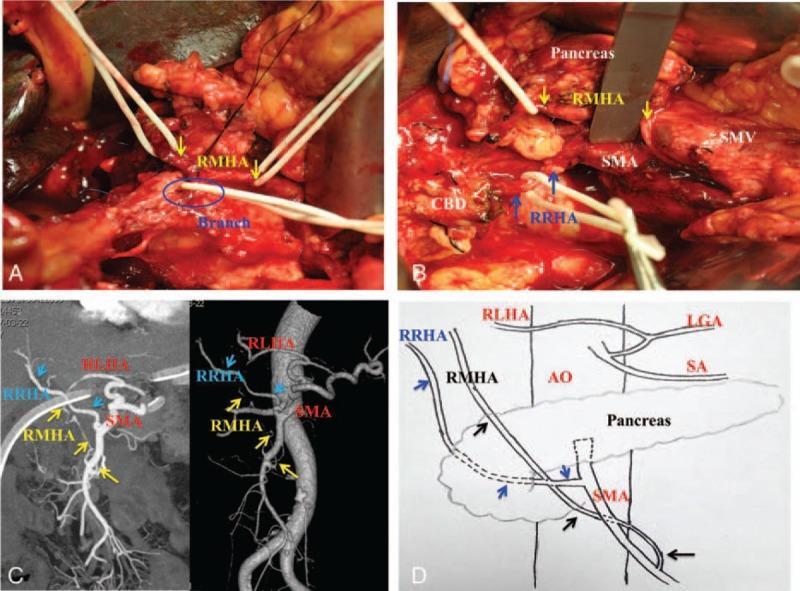
['Explore liver, peritoneum and nodes for occult metastatic disease before irreversible resection.', 'Kocher manoeuvre and assess resectability. Cholecystectomy, division of common hepatic duct, gastric antrum or duodenum, jejunum, and pancreatic neck; remove specimen with regional lymphadenectomy.', 'Control and divide/repair portal-superior mesenteric venous tributaries as needed; undertake venous resection/reconstruction only if planned and feasible.', 'Reconstruct sequentially: pancreaticojejunostomy (or pancreaticogastrostomy), hepaticojejunostomy, then gastrojejunostomy/duodenojejunostomy. Check anastomoses and haemostasis.'],
'Pancreaticoduodenectomy specimen with margins/orientation.','Selective drains near pancreatic/biliary anastomoses according to unit practice; layered closure. Postoperative ERAS, glucose monitoring, drain amylase and surveillance for leak/bleeding.',
'Pancreatic fistula, post-pancreatectomy haemorrhage, bile leak, delayed gastric emptying, abscess/sepsis, VTE and later exocrine/endocrine insufficiency.')

story += note_page('3. RADICAL INGUINAL ORCHIDECTOMY', 'Standard operation for a suspected testicular germ-cell tumour: removal of testis, tunica vaginalis and spermatic cord to the internal inguinal ring via an inguinal approach.',
'Solid intratesticular mass suspicious for malignancy. Also a non-viable testis after torsion/trauma or atrophic undescended testis when indicated, though the approach may differ with pathology.',
'No absolute contraindication when removal is essential. Relative: uncorrected coagulopathy or inability to tolerate anaesthesia. A scrotal biopsy/incision is avoided in suspected malignancy because it disrupts lymphatic drainage.',
'Examine contralateral testis; ultrasound and serum AFP, beta-hCG and LDH before surgery when cancer suspected. Discuss sperm banking, endocrine/fertility implications and testicular prosthesis. Staging follows diagnosis.',
'General or regional anaesthesia; supine.','Oblique inguinal incision above and parallel to inguinal ligament.',
['Deliver testis through the inguinal wound without violating scrotal skin or tumour.', 'Open inguinal canal; mobilise spermatic cord to the internal ring, taking care of ilioinguinal nerve.', 'Clamp, divide and securely ligate cord at or near internal ring. Remove testis and cord en bloc. Do not transgress tumour.', 'Achieve haemostasis, optional prosthesis when appropriate, and close external oblique, subcutaneous tissue and skin.'],
'Whole testis with tunica vaginalis and cord, labelled and sent for histopathology.','No drain routinely; scrotal support and analgesia. Review tumour markers and final histology for staging/oncology plan.',
'Haematoma, infection, chronic groin pain/numbness, prosthesis problems and psychological/fertility effects. Testicular cancer management requires specialist multidisciplinary care.')

story += note_page('4. ORCHIDOPEXY', 'Fixation of a viable testis in the scrotum. Used for a palpable undescended testis and urgently after detorsion of viable testicular torsion.',
'Palpable undescended testis, commonly elective surgery in infancy; viable testis after torsion, with contralateral fixation usually performed in torsion because of bilateral bell-clapper risk.',
'Non-viable/atrophic testis or suspected malignancy may require orchidectomy rather than fixation. Defer elective surgery for uncontrolled infection, instability or uncorrected bleeding risk. A high intra-abdominal testis may need laparoscopy or staged Fowler-Stephens procedure.',
'Locate testis clinically and with specialist assessment. Counsel fertility, malignancy risk and atrophy/re-ascent. In suspected torsion, do not delay exploration for imaging if it causes delay.',
'General anaesthesia; supine.','For palpable inguinal testis: groin incision plus transverse scrotal incision. For torsion: transverse scrotal exploration incision.',
['Expose testis and cord; mobilise cremasteric fibres and divide/ligate patent processus vaginalis or hernia sac, preserving vas and vessels.', 'Achieve adequate cord length by proximal retroperitoneal mobilisation so the testis reaches dependent scrotum without tension.', 'Create subdartos pouch, place viable testis in it, and fix it with absorbable sutures according to local technique. Close groin and scrotal wounds.', 'For torsion: detorse, warm and assess reperfusion; fix viable affected testis and perform contralateral orchidopexy. Remove a non-viable testis after appropriate assessment/consent.'],
'None for routine orchidopexy; orchidectomy specimen if non-viable testis removed.','No drain usually; scrotal support, analgesia and follow-up for position, perfusion, atrophy and re-ascent.',
'Testicular atrophy, re-ascent, haematoma, infection, vas/vessel injury, persistent infertility risk and recurrent torsion if fixation fails.')

story += note_page('5. TOTAL THYROIDECTOMY', 'Complete extracapsular removal of both thyroid lobes and isthmus, preserving recurrent laryngeal nerves and parathyroid blood supply whenever possible.',
'Thyroid carcinoma; toxic multinodular goitre or Graves disease when surgery is selected; large compressive/retrosternal goitre; recurrent symptomatic multinodular goitre; selected indeterminate nodules.',
'Unfit for anaesthesia, uncontrolled thyrotoxicosis, or uncorrected coagulopathy. In advanced cancer, unresectability or disproportionate morbidity may alter extent. Pre-existing bilateral vocal-cord paralysis requires special airway planning.',
'TSH/free hormones, calcium and vitamin D as needed; euthyroid state for elective toxic disease. Ultrasound and cytology, laryngoscopy when voice symptoms/prior neck surgery/malignancy risk. Consent for bleeding, voice change, hypocalcaemia and thyroxine replacement.',
'General anaesthesia; supine, neck extended with shoulder roll.','Low transverse collar incision two fingerbreadths above sternal notch.',
['Raise subplatysmal flaps; separate strap muscles in midline and retract or divide selectively.', 'Mobilise lobe, ligate superior pole vessels close to thyroid to protect external branch of superior laryngeal nerve.', 'Identify recurrent laryngeal nerve in tracheo-oesophageal groove and preserve it. Identify parathyroids and preserve vascular pedicles; autotransplant clearly devascularised glands if needed.', 'Control inferior thyroid vessels close to capsule, divide Berry ligament under direct nerve view, remove both lobes and isthmus. Perform nodal dissection only when indicated.'],
'Thyroid gland, orient if malignancy suspected; node specimen separately if dissected.','Meticulous haemostasis, Valsalva check, close straps/platysma/skin. Drain selectively. Observe airway, neck swelling, voice and calcium symptoms; start levothyroxine as appropriate.',
'Expanding neck haematoma causing airway compromise, recurrent laryngeal nerve palsy, external laryngeal nerve injury, transient/permanent hypocalcaemia, thyrotoxic crisis and wound complications.')

story += note_page('6. MODIFIED RADICAL MASTECTOMY', 'Removal of the entire breast with axillary lymph-node dissection while preserving pectoralis major, and usually pectoralis minor.',
'Breast cancer requiring mastectomy with clinically positive axilla or when axillary dissection is indicated. It may be used after neoadjuvant therapy for selected locally advanced/inflammatory cancers. Current axillary management is individualised by multidisciplinary team.',
'Absolute contraindications are uncommon. Unfit patient, uncontrolled infection, uncorrected coagulopathy, or metastatic disease where local surgery gives no benefit are reasons to defer/alter intent. If breast-conserving therapy is feasible and preferred, MRM may not be needed.',
'Triple assessment, staging and MDT decision. Mark incision with patient upright; assess reconstruction options. Discuss arm morbidity/lymphedema, drains and adjuvant treatment. Antibiotic/VTE prophylaxis per protocol.',
'General anaesthesia; supine, ipsilateral arm abducted carefully on arm board.','Elliptical transverse incision incorporating nipple-areola complex and tumour/biopsy tract where appropriate.',
['Raise skin flaps in correct plane: superiorly to clavicle, medially sternum, inferiorly inframammary fold, laterally anterior border of latissimus dorsi.', 'Remove breast with pectoral fascia, preserving pectoralis major.', 'Perform level I and II axillary clearance as indicated. Identify and preserve long thoracic nerve, thoracodorsal bundle and, where feasible, intercostobrachial nerve. Clear within anatomical boundaries; level III only when indicated.', 'Secure lymphatics and haemostasis, place closed suction drain(s), and close flaps without tension.'],
'Breast and axillary nodal contents sent separately and orientated for pathology.','Closed suction drain(s), layered closure and compression/support dressing. Early shoulder mobilisation and drain/wound review.',
'Seroma, flap necrosis, haematoma, infection, shoulder stiffness, lymphoedema, numbness, long thoracic nerve injury causing winged scapula, thoracodorsal injury and local recurrence.')

story += note_page('7. SPLENECTOMY', 'Removal of spleen, open or laparoscopic. This note describes a common open approach; laparoscopy is preferred for many elective indications in experienced units.',
'Traumatic splenic injury with haemodynamic instability or failed non-operative management; haematological disease refractory to medical treatment, hypersplenism, splenic tumour/cyst/abscess, and selected portal-hypertension or staging indications.',
'No absolute contraindication when life-saving. Relative: uncorrected coagulopathy, severe portal hypertension/large varices, hostile abdomen or massive splenomegaly for laparoscopy, and poor fitness for elective surgery. Consider splenic preservation where feasible.',
'Vaccinate against encapsulated organisms before elective surgery where possible: pneumococcal, meningococcal and Hib per local schedule. CBC/coagulation, blood available and correct thrombocytopenia/coagulopathy where possible. Counsel lifelong infection risk and urgent fever assessment.',
'General anaesthesia; supine, often with left side elevated.','Upper midline or left subcostal incision for open surgery.',
['Enter abdomen, evaluate injury/pathology and control active haemorrhage. Pack left upper quadrant; early splenic-artery control may reduce blood loss in elective surgery.', 'Divide splenocolic, splenorenal and splenophrenic attachments. Divide short gastric vessels carefully, protecting stomach.', 'Control hilar vessels individually or with stapler, staying close to splenic capsule to avoid pancreatic-tail injury. Remove spleen.', 'Inspect haemostasis and pancreatic tail; search common sites for accessory spleens, especially in haematological disease. Irrigate and drain selectively.'],
'Whole spleen to histopathology/microbiology when indicated.','Secure haemostasis and close abdomen; drain selectively. Provide vaccinations, documented asplenia plan, patient education and thrombosis surveillance.',
'Haemorrhage, pancreatic-tail injury/fistula, gastric/colonic injury, subphrenic abscess, atelectasis/pleural effusion, portal or splenic-vein thrombosis, thrombocytosis and overwhelming post-splenectomy infection.')

# footer/header
def header_footer(canvas, doc):
    canvas.saveState()
    canvas.setStrokeColor(HexColor('#CBD5E1')); canvas.setLineWidth(0.35)
    canvas.line(doc.leftMargin, A4[1]-1.15*cm, A4[0]-doc.rightMargin, A4[1]-1.15*cm)
    canvas.setFont('Helvetica', 7.2); canvas.setFillColor(GREY)
    canvas.drawString(doc.leftMargin, 0.8*cm, 'Quick-reference operation notes | Educational exam aid')
    canvas.drawRightString(A4[0]-doc.rightMargin, 0.8*cm, f'Page {doc.page}')
    canvas.restoreState()

doc=SimpleDocTemplate(str(OUT), pagesize=A4, rightMargin=1.25*cm, leftMargin=1.25*cm, topMargin=1.55*cm, bottomMargin=1.2*cm, title='Quick-Reference Operation Notes')
doc.build(story, onFirstPage=header_footer, onLaterPages=header_footer)
print(OUT)
~/operation-notes-pdf
mkdir -p "/tmp/workspace/operation-notes-pdf/output" && python "/tmp/workspace/operation-notes-pdf/src_generate.py" && ls -lh "/tmp/workspace/operation-notes-pdf/output/Quick_Reference_Operation_Notes.pdf"
python -c "from pypdf import PdfReader; p='/tmp/workspace/operation-notes-pdf/output/Quick_Reference_Operation_Notes.pdf'; r=PdfReader(p); print('pages',len(r.pages)); text='\n'.join((x.extract_text() or '') for x in r.pages); print('chars',len(text)); print('all_sections', all(s in text for s in ['PAROTIDECTOMY','WHIPPLE SURGERY','RADICAL INGUINAL ORCHIDECTOMY','ORCHIDOPEXY','TOTAL THYROIDECTOMY','MODIFIED RADICAL MASTECTOMY','SPLENECTOMY'])); print(text[:1200])"
Quick Reference Operation Notes
PDF Document · PDF
Add figures and viva
~/operation-notes-pdf
inguinal orchidectomy orchidopexy surgical anatomy diagram
total thyroidectomy recurrent laryngeal nerve parathyroid anatomy diagram
modified radical mastectomy axillary lymph node dissection anatomy diagram
splenectomy surgical anatomy splenic hilum diagram
parotidectomy pancreaticoduodenectomy thyroidectomy splenectomy
site:nih.gov surgical anatomy parotidectomy whipple thyroidectomy splenectomy figures
~/operation-notes-pdf/src_add_figures_viva.py
from reportlab.lib.pagesizes import A4
from reportlab.lib import colors
from reportlab.lib.colors import HexColor
from reportlab.lib.styles import getSampleStyleSheet, ParagraphStyle
from reportlab.lib.enums import TA_CENTER
from reportlab.lib.units import cm
from reportlab.pdfgen.canvas import Canvas
from reportlab.platypus import SimpleDocTemplate, Paragraph, Spacer, Table, TableStyle, PageBreak, KeepTogether
from pypdf import PdfReader, PdfWriter
from pathlib import Path

ROOT=Path('/tmp/workspace/operation-notes-pdf')
OUT=ROOT/'output'
SUP=OUT/'Figures_and_Viva_Appendix.pdf'
FINAL=OUT/'Quick_Reference_Operation_Notes_Illustrated_with_Viva.pdf'
NAVY=HexColor('#163A5F'); TEAL=HexColor('#0B6E69'); PALE=HexColor('#EAF2F8'); RED=HexColor('#9B2226'); GREY=HexColor('#4B5563')
styles=getSampleStyleSheet()
styles.add(ParagraphStyle(name='T',parent=styles['Title'],fontName='Helvetica-Bold',fontSize=22,leading=27,textColor=NAVY,alignment=TA_CENTER,spaceAfter=10))
styles.add(ParagraphStyle(name='H',parent=styles['Heading1'],fontName='Helvetica-Bold',fontSize=15,leading=19,textColor=NAVY,spaceAfter=6))
styles.add(ParagraphStyle(name='S',parent=styles['Heading2'],fontName='Helvetica-Bold',fontSize=10,leading=12,textColor=TEAL,spaceBefore=5,spaceAfter=2))
styles.add(ParagraphStyle(name='B',parent=styles['BodyText'],fontName='Helvetica',fontSize=8.6,leading=11))
styles.add(ParagraphStyle(name='C',parent=styles['BodyText'],fontName='Helvetica',fontSize=8,leading=10,textColor=GREY,alignment=TA_CENTER))
def P(txt,st='B'): return Paragraph(txt,styles[st])

def footer(c, doc):
    c.saveState(); c.setFont('Helvetica',7); c.setFillColor(GREY); c.drawCentredString(A4[0]/2,0.55*cm,'Illustrated quick-reference operation notes | Educational exam aid'); c.restoreState()

def figure(kind, caption):
    # Draw original simplified, non-operative schematic. All labels are anatomical orientation aids.
    from reportlab.platypus import Flowable
    class Fig(Flowable):
        def __init__(self): super().__init__(); self.width=15.5*cm; self.height=7.1*cm
        def draw(self):
            c=self.canv; w,h=self.width,self.height
            c.setStrokeColor(NAVY); c.setLineWidth(1.2); c.roundRect(0,0,w,h,8,stroke=1,fill=0)
            c.setFillColor(PALE); c.roundRect(0,0,w,h,8,stroke=0,fill=1)
            c.setFillColor(NAVY); c.setFont('Helvetica-Bold',11); c.drawString(12,h-18,kind)
            c.setFillColor(colors.white); c.setStrokeColor(TEAL); c.setLineWidth(2)
            if kind=='Parotidectomy: facial nerve landmark schematic':
                c.circle(90,110,48,stroke=1,fill=1); c.setFillColor(HexColor('#F4C7A1')); c.circle(90,110,48,stroke=0,fill=1)
                c.setFillColor(HexColor('#F5B7B1')); c.ellipse(100,70,155,145,stroke=1,fill=1)
                c.setStrokeColor(TEAL); c.setLineWidth(2.5); c.line(113,106,175,110); c.line(145,110,175,140); c.line(145,110,175,80); c.line(125,108,155,60)
                labels=[('Parotid gland',158,126),('Facial nerve trunk',178,106),('Branches',178,143),('Tragus',38,156)]
            elif kind=='Whipple surgery: resection and reconstruction':
                c.setFillColor(HexColor('#F8D7A8')); c.roundRect(25,85,88,38,8,stroke=1,fill=1); c.setFillColor(HexColor('#F1C40F')); c.circle(45,142,15,stroke=1,fill=1); c.setFillColor(HexColor('#FADBD8')); c.ellipse(92,135,150,166,stroke=1,fill=1)
                c.setStrokeColor(TEAL); c.setLineWidth(3); c.line(160,135,280,135); c.line(210,135,210,80); c.line(210,80,330,80); c.line(280,135,330,165)
                labels=[('Pancreatic remnant',110,174),('Pancreaticojejunostomy',216,61),('Hepaticojejunostomy',310,170),('Gastrojejunostomy',310,73),('Resection: pancreatic head, duodenum, distal bile duct',25,42)]
            elif kind=='Orchidectomy / orchidopexy: spermatic cord route':
                c.setFillColor(HexColor('#F4C7A1')); c.roundRect(82,145,45,28,6,stroke=1,fill=1); c.setFillColor(HexColor('#D6EAF8')); c.ellipse(90,45,122,82,stroke=1,fill=1); c.setStrokeColor(TEAL); c.setLineWidth(3); c.line(105,145,105,82)
                labels=[('Inguinal canal',132,157),('High cord control for radical inguinal orchidectomy',130,120),('Testis',130,62),('Orchidopexy: mobilise, place tension-free in dartos pouch',160,42)]
            elif kind=='Thyroidectomy: preservation landmarks':
                c.setFillColor(HexColor('#F5B7B1')); c.ellipse(75,90,130,142,stroke=1,fill=1); c.ellipse(170,90,225,142,stroke=1,fill=1); c.setFillColor(HexColor('#F9E79F')); c.rect(128,112,44,12,stroke=1,fill=1)
                c.setFillColor(HexColor('#D5F5E3')); [c.circle(x,y,5,stroke=1,fill=1) for x,y in [(102,104),(105,133),(199,104),(196,133)]]
                c.setStrokeColor(TEAL); c.setLineWidth(2); c.line(76,91,126,101); c.line(224,91,174,101)
                labels=[('Thyroid lobes',82,155),('Parathyroids',235,130),('RLN in tracheo-oesophageal groove',232,93),('Isthmus',128,80)]
            elif kind=='Modified radical mastectomy: axillary levels':
                c.setFillColor(HexColor('#FADBD8')); c.circle(105,112,54,stroke=1,fill=1); c.setStrokeColor(TEAL); c.setLineWidth(2); c.line(160,65,160,160); c.line(205,65,205,160); c.line(245,65,245,160)
                c.setFillColor(HexColor('#D5F5E3')); [c.circle(x,y,5,stroke=1,fill=1) for x,y in [(175,110),(186,125),(218,110),(230,128),(260,110)]]
                labels=[('Breast removed with skin ellipse',35,47),('Pectoralis major preserved',140,174),('Level I',164,72),('Level II',208,72),('Level III',247,72),('Axillary nodes',266,126)]
            else:
                c.setFillColor(HexColor('#A9DFBF')); c.ellipse(85,65,175,155,stroke=1,fill=1); c.setStrokeColor(TEAL); c.setLineWidth(3); c.line(172,110,270,110); c.setStrokeColor(RED); c.line(164,126,260,145); c.line(164,95,260,75)
                labels=[('Spleen',88,48),('Splenic hilum',178,125),('Splenic artery',270,145),('Splenic vein',270,74),('Search common sites for accessory spleen',230,42)]
            c.setFillColor(NAVY); c.setFont('Helvetica',8)
            for lab,x,y in labels: c.drawString(x,y,lab)
    return [Fig(),Spacer(1,3),P('<b>Figure:</b> '+caption,'C')]

figures=[
('Parotidectomy: facial nerve landmark schematic','Facial nerve identification and preservation are central in conservative parotid surgery.'),
('Whipple surgery: resection and reconstruction','Concept diagram of pancreatic, biliary and gastric reconstruction after pancreaticoduodenectomy.'),
('Orchidectomy / orchidopexy: spermatic cord route','Use an inguinal approach for suspected testicular malignancy; fix a viable torsed testis or an undescended testis without tension.'),
('Thyroidectomy: preservation landmarks','Protect recurrent laryngeal nerves and preserve parathyroid vascularity.'),
('Modified radical mastectomy: axillary levels','MRM removes breast and performs axillary dissection with preservation of pectoralis major.'),
('Splenectomy: hilum and vessels','Control the hilar vessels carefully and identify accessory spleens when relevant.')]

vivas={
'Parotidectomy': [('Name common facial nerve landmarks.','Tragal pointer, posterior belly of digastric, tympanomastoid suture and stylomastoid foramen.'),('What is Frey syndrome?','Gustatory sweating/flushing from aberrant parasympathetic reinnervation of sweat glands.'),('Why not enucleate a pleomorphic adenoma?','Capsular pseudopodia/spillage increases local recurrence risk.')],
'Whipple surgery': [('What is removed in a standard Whipple?','Pancreatic head, duodenum, distal common bile duct, gallbladder and usually distal stomach; pylorus preservation is a variant.'),('Name the usual three anastomoses.','Pancreaticojejunostomy, hepaticojejunostomy and gastrojejunostomy.'),('Important early complication?','Postoperative pancreatic fistula, bleeding, delayed gastric emptying, bile leak and sepsis.')],
'Orchidectomy and orchidopexy': [('Why is radical orchidectomy inguinal rather than scrotal?','It permits high cord control and avoids scrotal violation when malignancy is suspected.'),('When is orchidectomy considered for an undescended testis?','Atrophic or suspicious testis, especially after puberty with a normal contralateral testis.'),('Why fix the contralateral testis in torsion?','The usual predisposing bell-clapper deformity may be bilateral.')],
'Thyroidectomy': [('Name the nerves at risk.','External branch of superior laryngeal nerve and recurrent laryngeal nerve.'),('What causes postoperative stridor?','Bilateral recurrent laryngeal nerve palsy, compressive neck haematoma, laryngeal oedema or tracheomalacia.'),('How is hypocalcaemia managed?','Check calcium and symptoms; give calcium, with calcitriol when indicated, according to local protocol.')],
'Modified radical mastectomy': [('Define MRM.','Total mastectomy with axillary lymph-node dissection while preserving pectoral muscles.'),('Give axillary node levels.','I lateral to pectoralis minor, II posterior to it, III medial to it.'),('Nerves to protect?','Long thoracic, thoracodorsal and intercostobrachial nerves, where oncologically appropriate.')],
'Splenectomy': [('Why vaccinate before elective splenectomy?','To reduce risk from encapsulated organisms and overwhelming post-splenectomy infection.'),('Name organisms in OPSI.','Streptococcus pneumoniae, Haemophilus influenzae type b and Neisseria meningitidis.'),('Where do you search for accessory spleens?','Hilar region, pancreatic tail, gastrosplenic/splenorenal ligaments and omentum/mesentery.')]
}

story=[Spacer(1,1.7*cm),P('FIGURES AND VIVA','T'),P('Addendum to quick-reference operation notes','C'),Spacer(1,0.5*cm),P('These are simplified orientation schematics designed for examination revision, not anatomical-scale drawings or operative instructions. Viva answers should be brief, safe and linked to the stated operation.','B'),PageBreak()]
for title,cap in figures:
    story += [P(title,'H')] + figure(title,cap) + [PageBreak()]
story += [P('HIGH-YIELD VIVA: MODEL SHORT ANSWERS','T'),P('Answer in three parts where possible: identify the risk or principle, state the action, then name the consequence prevented.','C'),Spacer(1,8)]
for proc,qs in vivas.items():
    story += [P(proc,'H')]
    rows=[[P('<b>Question</b>','B'),P('<b>Model answer</b>','B')]]
    for q,a in qs: rows.append([P(q,'B'),P(a,'B')])
    tab=Table(rows,colWidths=[5.0*cm,11.0*cm],repeatRows=1)
    tab.setStyle(TableStyle([('BACKGROUND',(0,0),(-1,0),PALE),('GRID',(0,0),(-1,-1),0.35,HexColor('#B0BEC5')),('VALIGN',(0,0),(-1,-1),'TOP'),('LEFTPADDING',(0,0),(-1,-1),6),('RIGHTPADDING',(0,0),(-1,-1),6),('TOPPADDING',(0,0),(-1,-1),5),('BOTTOMPADDING',(0,0),(-1,-1),5)]))
    story += [tab,Spacer(1,7)]
doc=SimpleDocTemplate(str(SUP),pagesize=A4,rightMargin=1.25*cm,leftMargin=1.25*cm,topMargin=1.2*cm,bottomMargin=1.2*cm)
doc.build(story,onFirstPage=footer,onLaterPages=footer)
writer=PdfWriter()
for src in [OUT/'Quick_Reference_Operation_Notes.pdf',SUP]:
    r=PdfReader(str(src))
    for pg in r.pages: writer.add_page(pg)
writer.add_metadata({'/Title':'Illustrated Quick-Reference Operation Notes with Viva'})
with open(FINAL,'wb') as f: writer.write(f)
print(FINAL)
python "/tmp/workspace/operation-notes-pdf/src_add_figures_viva.py" && ls -lh "/tmp/workspace/operation-notes-pdf/output/Quick_Reference_Operation_Notes_Illustrated_with_Viva.pdf"
python -c "from pypdf import PdfReader; p='/tmp/workspace/operation-notes-pdf/output/Quick_Reference_Operation_Notes_Illustrated_with_Viva.pdf'; r=PdfReader(p); text='\n'.join(pg.extract_text() or '' for pg in r.pages); keys=['PAROTIDECTOMY','WHIPPLE SURGERY','RADICAL INGUINAL ORCHIDECTOMY','ORCHIDOPEXY','TOTAL THYROIDECTOMY','MODIFIED RADICAL MASTECTOMY','SPLENECTOMY','FIGURES AND VIVA','HIGH-YIELD VIVA','Facial nerve landmark schematic','Model answer']; print('pages=',len(r.pages)); print('chars=',len(text)); print('keys_ok=',all(k in text for k in keys)); print('metadata=',r.metadata.title)"
python -c "from pypdf import PdfReader; p='/tmp/workspace/operation-notes-pdf/output/Quick_Reference_Operation_Notes_Illustrated_with_Viva.pdf'; r=PdfReader(p); text='\n'.join(pg.extract_text() or '' for pg in r.pages); print(text[-5000:])"
Quick Reference Operation Notes Illustrated with Viva
PDF Document · PDF

Now make for all this topics
1. Parotidectomy 2. Modified Radical Mastectomy 3. Cholecystectomy – Laparoscopic & Open 4. Splenectomy 5. Hemicolectomy – Right / Left 6. Radical Nephrectomy 7. Abdominoperineal Resection (APR) 8. Whipple’s Surgery 9. Nissen’s Fundoplication 10. Colectomy 11. Bariatric Surgery 12. Esophagectomy 13. Endovenous Laser Ablation (EVLA) 14. Orchiectomy & Orchiopexy 15. Inguinal Hernia Surgery 16. Incisional Hernia Surgery 17. Thyroid Surgery 18. Low Anterior Resection (LAR) 19. CBD Exploration 20. Choledochal Cyst Surgery 21. Hepaticojejunostomy
Which section should I prepare first as an illustrated exam PDF with operation note, indications/contraindications, key steps, complications, and viva?
- Parotidectomy - superficial or total; facial nerve preservation and complications
- Whipple surgery - pancreaticoduodenectomy; reconstruction and postoperative leaks
- Orchidectomy and orchidopexy - approaches, indications in torsion/malignancy/undescended testis
- Thyroidectomy - extent of resection, recurrent laryngeal nerve and parathyroid preservation
- Modified radical mastectomy - breast removal with axillary clearance while preserving pectoralis major
- Splenectomy - open/laparoscopic steps, vascular control, accessory spleens, vaccination
- Indications and contraindications - procedure-specific, including absolute versus relative contraindications.
- Parotidectomy - superficial/total parotidectomy, facial nerve identification and preservation
- Whipple surgery - pancreaticoduodenectomy and reconstruction
- Orchidectomy - inguinal radical and simple scrotal approaches
- Orchidopexy - management of undescended testis or torsion
- Thyroidectomy - total/subtotal thyroidectomy with protection of recurrent laryngeal nerves and parathyroids
- Modified radical mastectomy - breast excision with axillary dissection
- Splenectomy - open or laparoscopic removal, hilar control, search for accessory spleens
Quick Reference Operation Notes
PDF Document · PDF
Quick Reference Operation Notes Illustrated with Viva
PDF Document · PDF
-
Head, neck and breast
- Parotidectomy
- Modified radical mastectomy
- Thyroid surgery
-
Hepatobiliary and pancreatic
- Laparoscopic and open cholecystectomy
- Whipple's surgery
- CBD exploration
- Choledochal cyst excision with hepaticojejunostomy
- Hepaticojejunostomy
-
Colorectal and upper gastrointestinal
- Right and left hemicolectomy
- Colectomy
- Abdominoperineal resection
- Low anterior resection
- Nissen fundoplication
- Bariatric surgery
- Esophagectomy
-
Urology, hernia and vascular
- Radical nephrectomy
- Orchiectomy and orchiopexy
- Inguinal hernia repair
- Incisional hernia repair
- Endovenous laser ablation
- Indications and contraindications
- Preoperative preparation
- Anaesthesia, position, and incision/ports
- Exam-ready key operative steps
- Specimen, drain, closure, and postoperative plan
- Important complications and safety points
- A labelled schematic figure
- High-yield viva questions with short model answers
Create the complete 21-topic exam-notes PDF
gastrointestinal surgery systematic review
current guidelines operative surgery cholecystectomy colectomy thyroidectomy hernia repair
~/
~/operation-notes-pdf/create_complete_21_topic_pdf.py
from reportlab.lib.pagesizes import A4
from reportlab.lib import colors
from reportlab.lib.colors import HexColor
from reportlab.lib.styles import getSampleStyleSheet, ParagraphStyle
from reportlab.lib.enums import TA_CENTER
from reportlab.lib.units import cm
from reportlab.platypus import SimpleDocTemplate, Paragraph, Spacer, PageBreak, Table, TableStyle, KeepTogether
from reportlab.graphics.shapes import Drawing, Rect, String, Line, Circle
from pathlib import Path

OUT=Path('/tmp/workspace/operation-notes-pdf/output/Complete_21_Topic_Operative_Exam_Notes_Illustrated_Viva.pdf')
OUT.parent.mkdir(parents=True,exist_ok=True)
NAVY=HexColor('#163A5F'); TEAL=HexColor('#087E8B'); PALE=HexColor('#EAF4F5'); GOLD=HexColor('#E9B44C'); RED=HexColor('#9B2226'); GREY=HexColor('#4B5563')
ss=getSampleStyleSheet()
ss.add(ParagraphStyle(name='Title2',parent=ss['Title'],fontName='Helvetica-Bold',fontSize=23,leading=28,textColor=NAVY,alignment=TA_CENTER,spaceAfter=10))
ss.add(ParagraphStyle(name='Sub2',parent=ss['Normal'],fontSize=10,leading=14,textColor=GREY,alignment=TA_CENTER))
ss.add(ParagraphStyle(name='Proc2',parent=ss['Heading1'],fontName='Helvetica-Bold',fontSize=15,leading=18,textColor=NAVY,spaceAfter=4))
ss.add(ParagraphStyle(name='Head2',parent=ss['Heading2'],fontName='Helvetica-Bold',fontSize=8.7,leading=10.5,textColor=TEAL,spaceBefore=4,spaceAfter=1))
ss.add(ParagraphStyle(name='Body2',parent=ss['BodyText'],fontName='Helvetica',fontSize=7.7,leading=9.2,spaceAfter=1))
ss.add(ParagraphStyle(name='Tiny2',parent=ss['BodyText'],fontName='Helvetica',fontSize=6.8,leading=8.2,textColor=GREY))
ss.add(ParagraphStyle(name='Fig2',parent=ss['BodyText'],fontName='Helvetica-Oblique',fontSize=6.9,leading=8,textColor=GREY,alignment=TA_CENTER))
ss.add(ParagraphStyle(name='Foot2',parent=ss['Normal'],fontName='Helvetica',fontSize=7,alignment=TA_CENTER,textColor=GREY))
def P(txt,sty='Body2'): return Paragraph(txt,ss[sty])

def bullets(items): return [P('• '+x) for x in items]

def schematic(labels, caption):
    d=Drawing(500,74)
    n=len(labels); w=76; gap=(490-n*w)/(n-1) if n>1 else 0
    for i,lab in enumerate(labels):
        x=5+i*(w+gap); y=27
        d.add(Rect(x,y,w,25,rx=5,ry=5,fillColor=PALE,strokeColor=TEAL,strokeWidth=1))
        parts=lab.split('|')
        for j,z in enumerate(parts): d.add(String(x+w/2,y+15-j*8,z,fontName='Helvetica-Bold' if j==0 else 'Helvetica',fontSize=6.8,textAnchor='middle',fillColor=NAVY))
        if i<n-1:
            nx=x+w+gap
            d.add(Line(x+w,y+12,nx,y+12,strokeColor=GOLD,strokeWidth=2))
            d.add(Line(nx-5,y+16,nx,y+12,strokeColor=GOLD,strokeWidth=2)); d.add(Line(nx-5,y+8,nx,y+12,strokeColor=GOLD,strokeWidth=2))
    return [d,P('Figure: '+caption,'Fig2')]

def topic_page(num, title, definition, indications, contraind, prep, approach, steps, closure, complications, figlabels, figcap, viva):
    a=[P(f'{num}. {title}','Proc2'),P(definition,'Tiny2')]
    a += [P('Indications','Head2'), P(indications)]
    a += [P('Contraindications / defer or modify','Head2'), P(contradict)]
    a += [P('Preparation and approach','Head2'), P('<b>Preparation:</b> '+prep+'<br/><b>Approach:</b> '+approach)]
    a += [P('Exam-ready operative sequence','Head2')]+bullets([f'<b>{i+1}.</b> {x}' for i,x in enumerate(steps)])
    a += [P('Specimen, closure and postoperative focus','Head2'), P(closure)]
    a += [P('Key complications / examiner alerts','Head2'),P(complications)]
    a += schematic(figlabels,figcap)
    data=[[P('Viva question','Tiny2'),P('Short model answer','Tiny2')]]+[[P(q,'Tiny2'),P(ans,'Tiny2')] for q,ans in viva]
    t=Table(data,colWidths=[5.0*cm,11.3*cm]); t.setStyle(TableStyle([('BACKGROUND',(0,0),(-1,0),NAVY),('TEXTCOLOR',(0,0),(-1,0),colors.white),('VALIGN',(0,0),(-1,-1),'TOP'),('GRID',(0,0),(-1,-1),0.25,HexColor('#B8C5CC')),('BACKGROUND',(0,1),(-1,-1),HexColor('#F7FAFB')),('LEFTPADDING',(0,0),(-1,-1),4),('RIGHTPADDING',(0,0),(-1,-1),4),('TOPPADDING',(0,0),(-1,-1),3),('BOTTOMPADDING',(0,0),(-1,-1),3)]))
    a += [Spacer(1,3),P('HIGH-YIELD VIVA','Head2'),t,PageBreak()]
    return a

T=[
('PAROTIDECTOMY','Superficial or total conservative removal of parotid tissue, normally preserving the facial nerve unless it is involved by cancer.','Benign superficial/deep-lobe tumour; salivary malignancy; selected chronic inflammatory disease.','Uncorrected coagulopathy, unfit patient, or unresectable disease where surgery cannot achieve a meaningful aim.','Imaging and cytology where appropriate; assess/document facial function; consent for nerve injury and Frey syndrome.','General anaesthesia, supine with head turned; modified Blair/preauricular-cervical incision.',['Raise skin flap in correct plane; expose gland and landmarks.','Identify facial nerve trunk using reliable landmarks and dissect branches carefully.','Remove superficial lobe or total gland as indicated, maintaining an oncologic margin.','Secure haemostasis; consider interposition flap to reduce contour defect/Frey syndrome.'],'Send labelled specimen; suction drain and layered closure. Monitor facial movements and drain output.','Temporary/permanent facial weakness, salivary fistula, haematoma, Frey syndrome, numb ear lobule, recurrence.',['Tragus|facial nerve','Nerve trunk|branches','Gland|specimen'],'Facial-nerve preservation is the decisive safety step.', [('Name facial nerve landmarks.','Tragal pointer, posterior belly of digastric, tympanomastoid suture and stylomastoid foramen.'),('What is Frey syndrome?','Gustatory sweating/flushing from aberrant parasympathetic reinnervation of sweat glands.')]),
('MODIFIED RADICAL MASTECTOMY','Total mastectomy plus axillary lymph-node dissection, preserving pectoral muscles.','Breast cancer needing mastectomy with clinically involved axilla; selected inflammatory or locally advanced disease after systemic therapy.','Unfit for major surgery; uncontrolled infection; unresectable metastatic/local disease when no local symptom-control aim exists.','Triple assessment, staging, consent for arm morbidity; antibiotic/VTE prophylaxis.','General anaesthesia, supine, ipsilateral arm abducted safely; transverse/elliptical incision.',['Create skin flaps of adequate thickness and remove entire breast with pectoral fascia as indicated.','Dissect axilla by defined levels; identify/protect long thoracic and thoracodorsal nerves.','Achieve haemostasis and preserve pectoralis major.'],'Orient specimen; place closed suction drains, close flaps without tension, examine arm/nerve function.','Seroma, flap necrosis, bleeding, infection, lymphoedema, shoulder stiffness, nerve injury.',['Breast|removed','Pectoralis major|preserved','Axilla|nodes'],'MRM combines breast removal with axillary clearance while preserving pectoral muscles.', [('Define MRM.','Total mastectomy with axillary dissection and preservation of pectoral muscles.'),('Name nerves at risk.','Long thoracic and thoracodorsal nerves; intercostobrachial nerve may be affected.')]),
('CHOLECYSTECTOMY - LAPAROSCOPIC & OPEN','Removal of gallbladder. Laparoscopy is standard when feasible; open operation is chosen or converted for safety.','Symptomatic gallstones, acute cholecystitis after optimisation, gallstone pancreatitis after recovery, gallbladder polyp/suspicion of cancer.','Unfit for anaesthesia; uncorrectable coagulopathy. Severe inflammation/distorted anatomy may require deferral, drainage or open approach.','Ultrasound/liver tests; antibiotics for infection; consent for bile-duct injury and conversion.','Laparoscopic ports with reverse Trendelenburg, left tilt; open right subcostal incision.',['Expose Calot/hepatocystic triangle and clear fat/fibrosis.','Obtain the <b>critical view of safety</b>: cystic duct and artery only entering gallbladder, lower gallbladder separated from liver bed.','Clip/divide cystic artery and duct only when anatomy is certain; dissect gallbladder from liver bed.','If anatomy remains unsafe, stop and use a bail-out strategy rather than persist.'],'Retrieve specimen, haemostasis and inspect for bile leak. Drain selectively, not routinely.','Bile-duct/vascular injury, leak, bleeding, retained stones, bowel injury, port-site infection.',['Fundus|retract','Critical view|confirm','Cystic duct/artery|divide','Gallbladder|remove'],'The critical view is a safety confirmation, not simply a view of Calot triangle.', [('State the critical view of safety.','Only two structures enter the gallbladder and the lower gallbladder is separated from the liver bed.'),('When convert to open?','When safe progress cannot be achieved, anatomy is uncertain, bleeding occurs, or a complication requires control.')]),
('SPLENECTOMY','Removal of the spleen by laparoscopic or open technique.','Trauma when non-operative management fails; haematological disease refractory to medical treatment; hypersplenism, splenic tumour/abscess.','No absolute contraindication when lifesaving; relative concerns include severe portal hypertension, uncorrected coagulopathy and poor physiological reserve.','Vaccinate electively against pneumococcus, meningococcus and Hib; blood availability; imaging for accessory spleens.','General anaesthesia; right lateral or supine position; laparoscopic access or left subcostal incision.',['Mobilise splenic flexure and divide splenocolic/splenorenal attachments.','Control short gastric vessels carefully.','Control hilar vessels close to spleen, protecting pancreatic tail.','Search common sites for accessory spleens when relevant.'],'Remove specimen safely; haemostasis, drain only selectively. Ensure infection-prevention counselling and vaccination plan.','Bleeding, pancreatic-tail injury/fistula, subphrenic collection, thrombosis, atelectasis and overwhelming post-splenectomy infection.',['Spleen|mobilise','Short gastrics|divide','Hilum|control','Accessory spleen|search'],'Protecting the pancreatic tail and preventing OPSI are key exam points.', [('Why vaccinate?','To lower the risk of severe infection from encapsulated organisms after splenectomy.'),('Name common OPSI organisms.','Streptococcus pneumoniae, Haemophilus influenzae type b and Neisseria meningitidis.')]),
('RIGHT / LEFT HEMICOLECTOMY','Segmental colon resection with vascular pedicle division, regional lymphadenectomy and anastomosis or stoma as appropriate.','Colon cancer; complicated Crohn disease/diverticular disease; ischaemia or obstruction/perforation in selected cases.','Unfit patient or unresectable disease without symptom-control benefit; unstable patient may need damage-control/staged surgery.','Staging, bowel preparation selectively, antibiotic/VTE prophylaxis, stoma marking if possible.','General anaesthesia; open midline or laparoscopic approach. Right: ileocolic/right colic territory. Left: inferior mesenteric branches.',['Explore abdomen and decide resectability.','Mobilise the affected colon in correct embryological plane.','Ligate appropriate vascular pedicle with nodal clearance for cancer.','Divide bowel with viable, well-perfused ends; construct tension-free anastomosis or stoma.'],'Send oriented specimen; check anastomosis/perfusion and haemostasis; enhanced-recovery care.','Anastomotic leak, bleeding, ileus, ureter/duodenal injury, wound infection, stoma problems, VTE.',['Affected colon|mobilise','Vascular pedicle|ligate','Bowel ends|divide','Anastomosis/stoma|create'],'Right and left resections differ mainly in segment and vascular pedicle.', [('What makes an anastomosis safe?','Good perfusion, no tension, healthy bowel ends, correct orientation and secure technique.'),('Why identify the ureter in left colectomy?','It is vulnerable during medial/lateral mobilisation and pelvic dissection.')]),
('RADICAL NEPHRECTOMY','Removal of kidney with perinephric fat and Gerota fascia, usually with proximal ureter; adrenal removal only when indicated.','Localized renal malignancy not suitable for nephron-sparing surgery; selected large/symptomatic tumours.','Solitary functioning kidney or poor contralateral function without a renal-replacement plan; unresectable/metastatic disease without indication for cytoreduction/palliation.','Renal function and contralateral kidney assessment; staging; blood and VTE preparation.','General anaesthesia, flank or modified lateral position; open, laparoscopic or robotic approach.',['Mobilise colon and expose retroperitoneum.','Identify ureter and renal hilum; obtain early vascular control with appropriate sequence.','Remove kidney with perinephric tissue intact, avoiding tumour breach.','Inspect haemostasis and protect bowel, pancreas, adrenal and major vessels.'],'Specimen for histopathology; drain selectively; monitor renal function and bleeding.','Haemorrhage, adjacent organ/vascular injury, ileus, pneumothorax, AKI or chronic renal impairment.',['Colon|mobilise','Renal hilum|control','Kidney + Gerota|remove'],'Confirm contralateral renal function before removing a kidney.', [('What is removed in radical nephrectomy?','Kidney with perinephric fat and Gerota fascia, often proximal ureter; adrenal only when indicated.'),('Why is early hilar control useful?','It controls haemorrhage and facilitates safe tumour dissection.')]),
('ABDOMINOPERINEAL RESECTION (APR)','En bloc removal of rectum, anal canal and sphincter complex, leaving a permanent end colostomy.','Very low rectal cancer invading/too close to sphincters or levators; selected recurrent disease.','Unresectable pelvic disease without palliative purpose; inability to tolerate major pelvic surgery.','Pelvic staging, MDT decision, neoadjuvant plan if needed, stoma marking, bowel/antibiotic/VTE preparation.','Combined abdominal and perineal operation, commonly lithotomy then prone/jackknife perineal phase.',['Abdominal phase: mobilise left colon and rectum with oncologic vascular control.','Divide colon and fashion permanent end colostomy.','Perineal phase: wide cylindrical excision around anus and sphincters, maintaining tumour-free planes.','Close/reconstruct perineal defect, sometimes with flap.'],'Specimen orientation and margin assessment; pelvic/perineal drainage selectively; stoma education.','Perineal wound infection/dehiscence, pelvic sepsis, sexual/urinary dysfunction, stoma complications, recurrence.',['Rectum + anus|remove','Sphincters|included','End colostomy|permanent'],'APR has no coloanal anastomosis: it results in a permanent colostomy.', [('When choose APR rather than LAR?','When a clear distal margin and sphincter preservation cannot be achieved or sphincters are involved.'),('Why is stoma marking important?','It reduces appliance problems and helps choose a visible, flat, accessible site.')]),
('WHIPPLE\'S SURGERY (PANCREATICODUODENECTOMY)','Resection of pancreatic head, duodenum, distal bile duct, gallbladder and usually distal stomach, followed by reconstruction.','Resectable periampullary/pancreatic-head/distal bile duct/duodenal malignancy; selected benign disease.','Metastatic or unreconstructable vascular disease; poor performance status; uncontrolled sepsis.','Pancreas-protocol imaging, biliary drainage only when indicated, nutrition, blood products and specialist MDT care.','General anaesthesia, supine; upper midline/bilateral subcostal incision or minimally invasive approach in expert centres.',['Explore first for metastases and assess vascular resectability.','Perform resection with lymphadenectomy and clear margins.','Reconstruct with pancreaticojejunostomy, hepaticojejunostomy and gastrojejunostomy, or equivalent sequence.','Check perfusion and haemostasis; manage drains selectively per local protocol.'],'Label specimen/margins; intensive postoperative monitoring for leak, bleeding and delayed gastric emptying.','Pancreatic fistula, post-pancreatectomy haemorrhage, bile leak, delayed gastric emptying, abscess, diabetes/exocrine insufficiency.',['Pancreatic head|resect','Pancreaticojejunostomy|reconstruct','Hepaticojejunostomy|reconstruct','Gastrojejunostomy|reconstruct'],'The three reconstructions are a classic viva question.', [('Name the three usual anastomoses.','Pancreaticojejunostomy, hepaticojejunostomy and gastrojejunostomy.'),('Important early complication?','Pancreatic fistula, haemorrhage, bile leak, sepsis and delayed gastric emptying.')]),
('NISSEN\'S FUNDOPLICATION','A 360-degree fundic wrap around distal oesophagus, usually laparoscopic, for reflux/hiatal hernia in selected patients.','Objective reflux with symptoms despite optimised medication, medication intolerance/preference, or reflux-related large hiatal hernia.','Major oesophageal motility disorder unsuitable for full wrap; unfit patient; symptoms without objective reflux diagnosis.','Endoscopy, pH testing when required, manometry, barium study for selected patients.','General anaesthesia, supine split-leg/reverse Trendelenburg; laparoscopic upper-abdominal ports.',['Mobilise distal oesophagus and reduce hernia if present.','Preserve vagal nerves and obtain adequate intra-abdominal oesophageal length.','Repair crura without undue narrowing.','Create short, floppy 360-degree wrap over a calibrating bougie according to local practice.'],'Close port sites; early fluids/diet progression; advise on dysphagia and gas symptoms.','Dysphagia, gas-bloat, wrap migration/slippage, oesophageal/gastric injury, recurrent reflux.',['Hiatus|repair','Fundus|mobilise','360° wrap|floppy'],'A correct Nissen wrap is short and floppy, not tight.', [('Why perform manometry?','To assess motility and help avoid an inappropriate full wrap in significant dysmotility.'),('What is gas-bloat?','Difficulty belching/vomiting with bloating after an effective fundoplication.')]),
('COLECTOMY (TOTAL / SUBTOTAL)','Removal of all or most colon, with ileorectal anastomosis, ileal pouch-anal anastomosis, or ileostomy according to disease and rectal status.','Ulcerative colitis, familial adenomatous polyposis, colonic inertia, synchronous/multifocal disease, fulminant colitis in staged strategy.','Unfit patient; uncontrolled sepsis/instability may require staged subtotal colectomy rather than restorative reconstruction.','Define indication and rectal involvement; nutrition, stoma marking, VTE/antibiotic prophylaxis.','Open or laparoscopic abdominal approach.',['Mobilise colon while protecting ureters, duodenum and autonomic nerves.','Control mesenteric vessels as appropriate to pathology.','Resect colon, preserving rectum if planned ileorectal anastomosis.','Choose safe reconstruction or diversion based on patient condition and contamination.'],'Check anastomosis/ileostomy perfusion; fluid/electrolyte monitoring is essential.','High-output ileostomy, dehydration, leak, ileus, small-bowel obstruction, pelvic sepsis, nutritional deficits.',['Colon|mobilise','Mesentery|control','Colon|remove','Ileostomy/pouch|reconstruct'],'Colectomy is not a single reconstruction: specify what remains and where bowel is joined.', [('What is a high-output ileostomy risk?','Dehydration, electrolyte disturbance and acute kidney injury.'),('When favour staged surgery?','Sepsis, malnutrition, steroid use, unstable physiology or high anastomotic-risk setting.')]),
('BARIATRIC SURGERY','Metabolic and weight-loss operations, commonly sleeve gastrectomy or Roux-en-Y gastric bypass, within a multidisciplinary programme.','Severe obesity meeting local BMI/comorbidity criteria after non-operative treatment; selected metabolic disease.','Untreated major psychiatric/eating disorder or substance misuse, inability to engage with lifelong follow-up, prohibitive operative risk.','Multidisciplinary assessment, nutrition/psychology review, screen/treat deficiencies, consent for lifelong supplementation.','Usually laparoscopic under general anaesthesia; procedure-specific port placement.',['Confirm procedure and anatomy.','Sleeve: calibrate stomach and divide along greater curvature to create tube.','Bypass: create small gastric pouch, Roux limb and gastrojejunostomy with mesenteric-defect closure.','Perform leak/haemostasis checks according to procedure and protocol.'],'Early mobilisation, VTE prevention, staged diet and lifelong nutritional surveillance.','Bleeding, leak, VTE, stricture, internal hernia (bypass), reflux (sleeve), deficiencies and weight regain.',['Assessment|MDT','Sleeve|gastric tube','Bypass|pouch + Roux limb'],'Bariatric surgery requires lifelong nutritional and follow-up commitment.', [('Name two common operations.','Sleeve gastrectomy and Roux-en-Y gastric bypass.'),('Why close mesenteric defects in bypass?','To reduce risk of internal hernia and bowel obstruction.')]),
('ESOPHAGECTOMY','Resection of oesophagus with gastric conduit reconstruction and lymphadenectomy, using transthoracic, transhiatal or minimally invasive routes.','Resectable oesophageal cancer after MDT staging; selected high-grade dysplasia/benign strictures.','Distant metastases or unresectable local disease; inadequate cardiopulmonary reserve; poor nutritional status not optimised.','Endoscopic biopsy, staging CT/PET/EUS as appropriate, cardiopulmonary and nutritional optimisation, neoadjuvant plan.','General anaesthesia; approach depends on Ivor Lewis, McKeown, transhiatal or minimally invasive strategy.',['Mobilise stomach and construct well-perfused gastric conduit.','Resect oesophagus with appropriate lymphadenectomy and margin control.','Deliver conduit and create intrathoracic or cervical anastomosis.','Protect recurrent laryngeal nerves in cervical/upper mediastinal work.'],'Critical-care monitoring, feeding plan, respiratory physiotherapy and leak surveillance.','Anastomotic leak, conduit ischaemia, pneumonia/respiratory failure, chyle leak, atrial arrhythmia, RLN palsy, stricture.',['Oesophagus|resect','Stomach|conduit','Anastomosis|chest/neck'],'Respiratory complications and anastomotic leak dominate postoperative risk.', [('What is the usual conduit?','Stomach, fashioned into a gastric tube; colon/jejunum are alternatives when needed.'),('Name two serious complications.','Anastomotic leak and respiratory failure/pneumonia.')]),
('ENDOVENOUS LASER ABLATION (EVLA)','Ultrasound-guided thermal ablation of an incompetent superficial truncal vein, usually great or small saphenous vein.','Symptomatic primary varicose veins with documented truncal reflux; venous ulcer disease after arterial assessment.','Acute DVT, significant arterial insufficiency, pregnancy, infection at access site or inability to ambulate/compress.','Duplex mapping; assess DVT/arterial status; consent for thrombosis, nerve symptoms and pigmentation.','Local tumescent anaesthesia, ambulatory procedure under ultrasound guidance.',['Cannulate target vein under ultrasound.','Position fibre at safe distance from deep-vein junction.','Infiltrate tumescent fluid to protect tissue and compress vein.','Withdraw fibre under protocolled energy delivery; confirm closure and deep-vein patency.'],'Compression and early walking as locally advised; follow-up duplex when indicated.','Endothermal heat-induced thrombosis/DVT, phlebitis, bruising, skin burn, nerve injury, recanalisation.',['Duplex|map','Fibre|position','Tumescent|protect','Vein|ablate'],'EVLA is image-guided and depends on duplex confirmation.', [('Why use tumescent fluid?','It provides anaesthesia, protects surrounding tissue and compresses the vein around the fibre.'),('What must be excluded before EVLA?','Acute DVT and clinically significant arterial disease.')]),
('ORCHIECTOMY & ORCHIOPEXY','Radical inguinal orchiectomy removes a testis for suspected cancer; orchiopexy fixes a viable torsed or undescended testis.','Orchiectomy: suspected testicular malignancy, nonviable testis. Orchiopexy: cryptorchidism or torsion after detorsion.','Orchiectomy: unfit patient where no benefit. Orchiopexy: atrophic/suspicious postpubertal undescended testis may be better removed; nonviable torsed testis requires orchiectomy.','Ultrasound/tumour markers where appropriate, but do not delay torsion surgery; counsel fertility/prosthesis.','Inguinal incision for suspected cancer; inguinal/scrotal approach for orchiopexy according to pathology.',['Cancer: expose cord through groin, obtain high control, remove testis and cord en bloc without scrotal violation.','Undescended testis: mobilise cord/vessels, ligate sac, bring testis tension-free into dartos pouch.','Torsion: detorse, assess viability, fix affected and contralateral testis.'],'Send specimen; scrotal support and pain control; review pathology/oncology or testicular position.','Bleeding, haematoma, infection, testicular atrophy, infertility; tumour seeding risk if scrotal approach in cancer.',['Inguinal route|high cord control','Testis|remove/fix','Dartos pouch|orchiopexy'],'Suspected testicular cancer is approached through the groin, not scrotum.', [('Why inguinal orchiectomy?','It permits high cord control and avoids scrotal violation in suspected malignancy.'),('Why fix the opposite testis in torsion?','The predisposing bell-clapper deformity is often bilateral.')]),
('INGUINAL HERNIA SURGERY','Repair of groin hernia by open mesh repair or laparo-endoscopic preperitoneal mesh repair.','Symptomatic hernia, enlarging hernia, or emergency obstruction/strangulation. Watchful waiting may suit selected minimally symptomatic men.','Unfit elective patient, active local/systemic infection, or contamination where permanent mesh requires careful case-specific choice.','Examine both groins; consent for chronic pain, recurrence and testicular injury; treat obstruction urgently.','Open anterior Lichtenstein or laparoscopic TEP/TAPP approach under appropriate anaesthesia.',['Reduce contents and assess viability; deal with sac according to indirect/direct defect.','Open: reinforce posterior wall with tension-free mesh, protecting cord structures/nerves.','Laparo-endoscopic: create preperitoneal plane, reduce sac and cover myopectineal orifice with adequate mesh overlap.'],'Haemostasis, avoid excessive dissection, close layers/ports; support and mobilise.','Seroma, haematoma, urinary retention, chronic groin pain, recurrence, testicular ischaemia, mesh infection.',['Hernia sac|reduce','Myopectineal orifice|cover','Mesh|tension-free'],'Mesh should cover the full weak area, not simply plug the visible defect.', [('Name the common open repair.','Lichtenstein tension-free mesh repair.'),('Name a danger triangle in lap repair.','Triangle of doom contains major iliac vessels; avoid fixation/dissection there.')]),
('INCISIONAL HERNIA SURGERY','Repair of fascial defect at a previous abdominal incision, often with mesh reinforcement and abdominal-wall reconstruction.','Symptomatic, enlarging, obstructing, incarcerated or cosmetically disabling incisional hernia.','Active infection/contamination, uncontrolled risk factors such as smoking/poor diabetes control where elective repair can be delayed, unfit patient.','CT for complex defects; optimise weight, smoking, glycaemia/nutrition; plan mesh plane and component separation if needed.','Open, laparoscopic or robotic, selected by defect and surgeon expertise.',['Adhesiolysis with meticulous bowel protection.','Define fascial edges and reduce contents.','Close fascial defect if feasible without undue tension; use adequate mesh overlap in an appropriate plane.','Use component separation selectively for large defects.'],'Drain selectively; abdominal support, wound surveillance and recurrence-risk counselling.','Enterotomy, mesh infection, seroma, wound infection, chronic pain, recurrence, respiratory compromise after tight closure.',['Hernia sac|dissect','Fascia|approximate','Mesh|overlap'],'Preoperative optimisation is part of hernia repair, not an optional extra.', [('Why obtain CT in complex hernia?','It defines defect size, contents, loss of domain and helps plan mesh/reconstruction.'),('Why avoid a tensioned closure?','It increases pain, respiratory compromise, tissue failure and recurrence risk.')]),
('THYROID SURGERY (TOTAL THYROIDECTOMY)','Removal of both thyroid lobes and isthmus while protecting recurrent laryngeal nerves and parathyroid glands.','Thyroid cancer, toxic goitre/Graves refractory to other therapy, large compressive multinodular goitre, selected indeterminate nodules.','Uncontrolled thyrotoxicosis, uncorrected coagulopathy, or unfit patient. Ensure preoperative vocal-cord assessment when indicated.','Thyroid function optimisation, ultrasound/cytology, calcium baseline, vocal assessment, consent for hypocalcaemia/voice change.','General anaesthesia, supine with neck extension; transverse collar incision.',['Develop subplatysmal flaps and divide strap muscles as needed.','Control superior pole close to gland to protect external branch of superior laryngeal nerve.','Identify and preserve recurrent laryngeal nerve and parathyroid vascularity; autotransplant devascularised parathyroid when appropriate.','Remove gland and obtain meticulous haemostasis.'],'Check haemostasis before closure; drain selectively. Monitor airway, voice and calcium symptoms.','Neck haematoma/airway compromise, RLN palsy, external laryngeal nerve injury, hypocalcaemia, thyrotoxic crisis.',['Superior pole|control','Parathyroids|preserve','RLN|identify','Thyroid|remove'],'Any expanding postoperative neck swelling is an airway emergency.', [('What causes post-thyroidectomy stridor?','Bilateral RLN palsy, neck haematoma, laryngeal oedema or tracheomalacia.'),('What are the key structures to preserve?','Recurrent laryngeal nerves, external branch of superior laryngeal nerves and parathyroid glands/blood supply.')]),
('LOW ANTERIOR RESECTION (LAR)','Oncologic rectal resection with restoration of bowel continuity by colorectal/coloanal anastomosis, often with protective diversion.','Mid/upper rectal cancer amenable to sphincter preservation; selected benign rectosigmoid disease.','Tumour involving sphincters/levator where clear margin cannot be achieved, unresectable disease, unfit patient.','Pelvic MRI/MDT, neoadjuvant treatment plan, bowel/antibiotic/VTE preparation, stoma marking.','Open/laparoscopic/robotic pelvic operation in lithotomy position.',['Mobilise left colon and splenic flexure as needed for tension-free reach.','Perform total mesorectal excision in correct plane for rectal cancer.','Divide rectum at appropriate distal margin and construct perfused, tension-free anastomosis.','Test anastomosis; consider diverting loop ileostomy for low/high-risk anastomosis.'],'Specimen/margins, drain selectively, ERAS care and stoma teaching when present.','Anastomotic leak, pelvic sepsis, low anterior resection syndrome, urinary/sexual dysfunction, ureter injury, stoma complications.',['Left colon|mobilise','Mesorectum|excise','Colorectal anastomosis|create','Loop ileostomy|protect'],'TME and anastomotic-leak prevention are central to LAR viva.', [('What is TME?','Sharp dissection of rectum and mesorectum intact within the mesorectal fascia.'),('Why divert a low anastomosis?','To reduce clinical consequences of leakage, although it does not eliminate leak risk.')]),
('COMMON BILE DUCT (CBD) EXPLORATION','Operative removal of CBD stones, usually by laparoscopic transcystic or choledochotomy approach when endoscopic clearance is unsuitable/unavailable.','Confirmed duct stones with obstruction/cholangitis where operative clearance is planned; failed or unavailable ERCP in selected cases.','Unfit patient; severe instability needing urgent decompression by most appropriate local method; uncorrectable coagulopathy.','Liver tests, ultrasound/MRCP/IOC as appropriate; antibiotics for cholangitis; define stone burden and anatomy.','Usually laparoscopic with intraoperative cholangiography; open approach for selected cases.',['Achieve safe gallbladder/CBD exposure and confirm stones/anatomy.','Use transcystic extraction for suitable small stones; choledochotomy for larger/multiple stones.','Clear stones with basket/balloon/choledochoscopy and confirm free flow/duct clearance.','Close duct primarily or use drainage selectively according to duct, inflammation and local practice.'],'Document clearance; postoperative liver tests and monitoring for leak/cholangitis/pancreatitis.','Bile leak, retained stones, cholangitis, pancreatitis, bile-duct injury/stricture, bleeding.',['Cystic duct|transcystic route','CBD|explore','Cholangiogram/choledochoscopy|confirm clearance'],'Confirming duct clearance is as important as stone extraction.', [('When prefer transcystic exploration?','With favourable cystic duct anatomy and small, limited distal duct stones.'),('Why perform cholangiography/choledochoscopy?','To define anatomy, confirm stones and document duct clearance.')]),
('CHOLEDOCHAL CYST SURGERY','Complete excision of extrahepatic choledochal cyst with cholecystectomy and Roux-en-Y hepaticojejunostomy, usually for type I/IVa disease.','Choledochal cyst due to risks of cholangitis, pancreatitis, stones, progressive liver disease and malignancy.','Unfit patient or severe active sepsis until controlled; extensive intrahepatic disease may need modified/hepatic strategy.','MRCP to define anatomy, liver tests, treat cholangitis/pancreatitis, assess portal hypertension and malignancy.','Open or minimally invasive upper abdominal operation in specialist unit.',['Expose hepatoduodenal ligament and define proximal/distal cyst extent.','Excise gallbladder and extrahepatic cyst completely, including distal intrapancreatic component as safely feasible.','Divide proximally at healthy hepatic duct and distally towards pancreaticobiliary junction.','Create wide Roux-en-Y hepaticojejunostomy with mucosa-to-mucosa anastomosis.'],'Specimen for histology; monitor bile leak/cholangitis and provide long-term surveillance.','Bile leak, anastomotic stricture/cholangitis, pancreatitis, portal injury, residual cyst and later malignancy.',['Choledochal cyst|excise','Hepatic duct|healthy margin','Roux limb|construct','HJ|wide anastomosis'],'Complete cyst excision reduces but does not abolish later biliary malignancy risk.', [('What is standard treatment for type I cyst?','Complete extrahepatic cyst excision with cholecystectomy and Roux-en-Y hepaticojejunostomy.'),('Why not simple cyst drainage?','It leaves diseased epithelium with risks of cholangitis, stones and malignancy.')]),
('HEPATICOJEJUNOSTOMY','Bilioenteric anastomosis between hepatic duct(s) and Roux-en-Y jejunum for benign or malignant biliary obstruction or reconstruction.','Bile-duct injury reconstruction, benign stricture, choledochal cyst after excision, selected hilar obstruction and biliary-enteric reconstruction.','Uncontrolled sepsis before source control, uncorrectable coagulopathy, or inadequate healthy duct/jejunal reach without a reconstruction plan.','Define biliary anatomy with imaging; control cholangitis; plan level of duct division and Roux limb.','Open or minimally invasive approach depending on context; upper abdominal exposure.',['Expose healthy, well-vascularised hepatic duct above diseased segment.','Create a tension-free Roux limb with good blood supply.','Fashion wide, mucosa-to-mucosa hepaticojejunostomy without tension.','Assess for leak and ensure biliary drainage strategy where indicated.'],'Drain selectively; follow bilirubin, sepsis and later stricture symptoms.','Bile leak, cholangitis, anastomotic stricture, recurrent stones, haemorrhage and hepatic dysfunction.',['Healthy hepatic duct|prepare','Roux limb|tension-free','Mucosa-to-mucosa|anastomose'],'A high, wide, well-vascularised, tension-free anastomosis is the key principle.', [('What makes a good HJ?','Healthy duct mucosa, wide opening, good blood supply, mucosa-to-mucosa suturing and no tension.'),('Major late complication?','Anastomotic stricture causing cholangitis or obstructive jaundice.')])
]

def header_footer(c,doc):
    c.saveState(); c.setStrokeColor(TEAL); c.setLineWidth(.6); c.line(1.5*cm,1.1*cm,A4[0]-1.5*cm,1.1*cm)
    c.setFont('Helvetica',7); c.setFillColor(GREY); c.drawCentredString(A4[0]/2,.7*cm,f'Complete operative exam notes | Educational aid | Page {doc.page}')
    c.restoreState()

story=[Spacer(1,2.4*cm),P('COMPLETE OPERATIVE SURGERY','Title2'),P('21-topic quick-reference exam notes with concept figures and high-yield viva','Sub2'),Spacer(1,14),P('Topics covered','Head2')]
cols=[['1. Parotidectomy','2. Modified radical mastectomy','3. Cholecystectomy','4. Splenectomy','5. Right/left hemicolectomy','6. Radical nephrectomy','7. APR'],['8. Whipple surgery','9. Nissen fundoplication','10. Colectomy','11. Bariatric surgery','12. Esophagectomy','13. EVLA','14. Orchiectomy & orchiopexy'],['15. Inguinal hernia repair','16. Incisional hernia repair','17. Thyroid surgery','18. LAR','19. CBD exploration','20. Choledochal cyst surgery','21. Hepaticojejunostomy']]
story += [Table([[P('<br/>'.join(x),'Body2') for x in cols]],colWidths=[5.4*cm]*3,style=[('BACKGROUND',(0,0),(-1,-1),PALE),('BOX',(0,0),(-1,-1),.6,TEAL),('VALIGN',(0,0),(-1,-1),'TOP'),('LEFTPADDING',(0,0),(-1,-1),8),('TOPPADDING',(0,0),(-1,-1),8),('BOTTOMPADDING',(0,0),(-1,-1),8)]),Spacer(1,15),P('How to answer an operation note','Head2'),P('State the operation and indication; preparation; anaesthesia, position and incision/ports; decisive safe steps; specimen, drain and closure; then major complications. These are concise exam summaries, not operative instructions. Actual surgery requires supervised specialist training, consent, local protocols and patient-specific planning. “Contraindication” often means a relative reason to defer, optimise or select an alternative approach.','Body2'),Spacer(1,12),P('Current-evidence caution','Head2'),P('Recent systematic reviews reinforce that major pancreatic surgery benefits from specialist service pathways and that perioperative choices are procedure- and patient-specific. Do not substitute this educational guide for current institutional guidance.','Body2'),PageBreak()]
for i,x in enumerate(T,1): story += topic_page(i,*x)
doc=SimpleDocTemplate(str(OUT),pagesize=A4,rightMargin=1.5*cm,leftMargin=1.5*cm,topMargin=1.25*cm,bottomMargin=1.4*cm,title='Complete 21-Topic Operative Exam Notes',author='Orris')
doc.build(story,onFirstPage=header_footer,onLaterPages=header_footer)
print(OUT)
python "/tmp/workspace/operation-notes-pdf/create_complete_21_topic_pdf.py" && ls -lh "/tmp/workspace/operation-notes-pdf/output/Complete_21_Topic_Operative_Exam_Notes_Illustrated_Viva.pdf"
~/operation-notes-pdf/create_complete_21_topic_pdf.py
Successfully replaced 1 instance(s) of the string in '/tmp/workspace/operation-notes-pdf/create_complete_21_topic_pdf.py'
python "/tmp/workspace/operation-notes-pdf/create_complete_21_topic_pdf.py" && ls -lh "/tmp/workspace/operation-notes-pdf/output/Complete_21_Topic_Operative_Exam_Notes_Illustrated_Viva.pdf"
python -c "from pypdf import PdfReader; p='/tmp/workspace/operation-notes-pdf/output/Complete_21_Topic_Operative_Exam_Notes_Illustrated_Viva.pdf'; r=PdfReader(p); text='\n'.join(pg.extract_text() or '' for pg in r.pages); keys=['PAROTIDECTOMY','MODIFIED RADICAL MASTECTOMY','CHOLECYSTECTOMY','SPLENECTOMY','HEMICOLECTOMY','RADICAL NEPHRECTOMY','ABDOMINOPERINEAL RESECTION','WHIPPLE','NISSEN','COLECTOMY','BARIATRIC','ESOPHAGECTOMY','ENDOVENOUS LASER','ORCHIECTOMY','INGUINAL HERNIA','INCISIONAL HERNIA','THYROID SURGERY','LOW ANTERIOR RESECTION','COMMON BILE DUCT','CHOLEDOCHAL CYST','HEPATICOJEJUNOSTOMY','HIGH-YIELD VIVA']; missing=[k for k in keys if k not in text]; print('pages:',len(r.pages)); print('characters:',len(text)); print('missing:',missing); print('title:',r.metadata.title)"
- Indications and contraindications
- Preparation, approach, and exam-ready operative steps
- Closure and postoperative focus
- Major complications
- A simplified concept figure
- High-yield viva questions with model answers
Complete 21 Topic Operative Exam Notes Illustrated Viva
PDF Document · PDF