
2 image for cellulitis
Reading File
Now searching the library for cellulitis images.
Finding Sources
Reading File
Reading File
Found 2 great images. Let me fetch them both.
Loading Image
Loading Image
Here are 2 clinical images of cellulitis from the medical textbooks:
Image 1 - Cellulitis of the lower leg
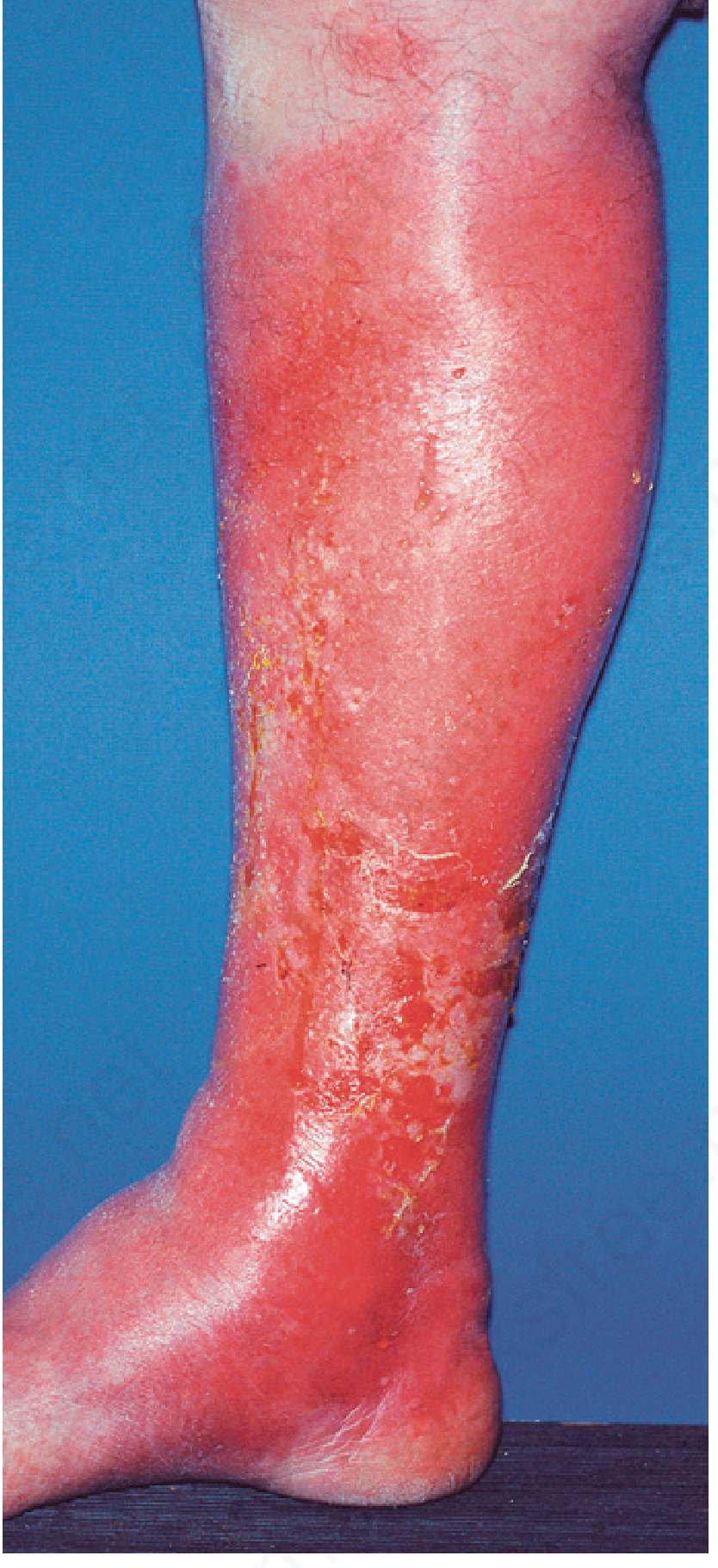
Fig. 14.17 Cellulitis - Shows intense erythema, edema, blistering, and skin breakdown extending from the ankle up the lower leg. The erythema is diffuse and non-demarcated, with areas of vesicle rupture and discharge - classic for suppurative subcutaneous inflammation. Source: Andrews' Diseases of the Skin - Clinical Dermatology
Image 2 - MRSA Abscess with Cellulitis
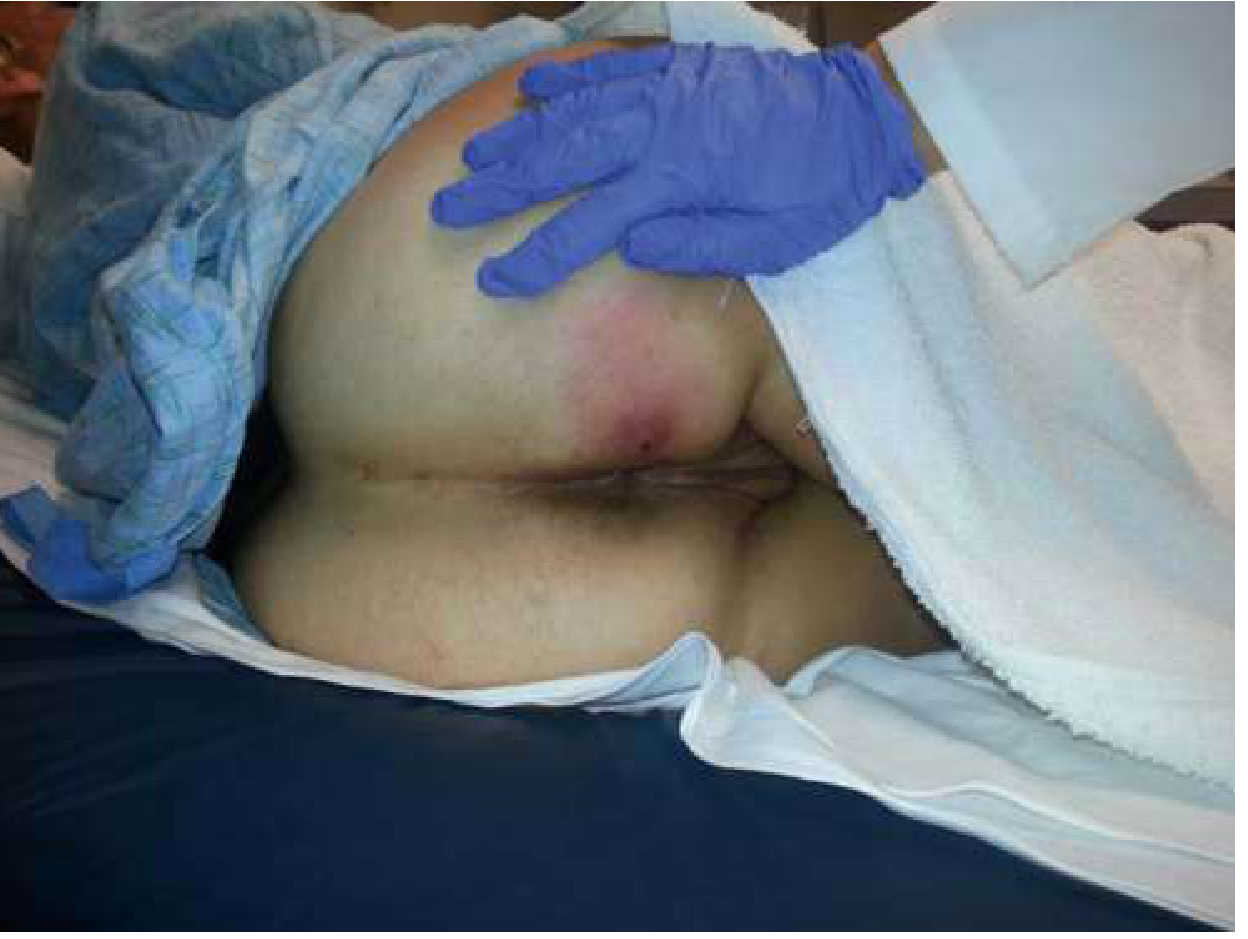
Fig. 107.5 MRSA Abscess With Cellulitis - Demonstrates a central fluctuant abscess (staphylococcal) surrounded by the erythematous, swollen soft tissue characteristic of cellulitis. This combination pattern - central pus collection with peripheral spreading infection - is a common MRSA presentation. Source: Rosen's Emergency Medicine: Concepts and Clinical Practice
Key clinical features visible in these images:
- Erythema, warmth, and swelling of soft tissue
- Ill-defined (non-demarcated) borders in classic cellulitis (Image 1), vs. well-demarcated abscess center with surrounding cellulitis (Image 2)
- Blistering/vesicle formation in severe cases
- Most common causative organisms: Streptococcus (~75%) and Staphylococcus (including MRSA)
Give more images
Finding Sources
Finding Sources
Reading File
Reading File
Reading File
Reading File
Now let me look for more images - the Fitzpatrick's eosinophilic cellulitis image (Fig 7.9), Rosen's block 25, dissecting cellulitis, and orbital cellulitis.
Reading File
Reading File
Reading File
Reading File
Found several more images. Let me also grab the orbital cellulitis image and the Rosen's block 25 figure, then fetch them all.
Reading File
Reading File
Let me find the orbital cellulitis figure image and the erysipelas figure, then fetch all the images.
Finding Sources
Finding Sources
Reading File
Reading File
The orbital cellulitis and erysipelas figures in the Textbook of Family Medicine are text captions only (no embedded image URLs). Now let me fetch the 3 images I did find URLs for, plus look for more in other dermatology sources.
Loading Image
Loading Image
Finding Sources
Let me check the Fitzpatrick's skin/soft-tissue infection section and the dissecting folliculitis section for more cellulitis images:
Reading File
Reading File
I now have 4 more images to fetch. Let me get them all:
Loading Image
Loading Image
Here are 4 more clinical images related to cellulitis, covering different types and anatomical locations:
Image 3 - Giant Cellulitis-like Sweet Syndrome (thigh)
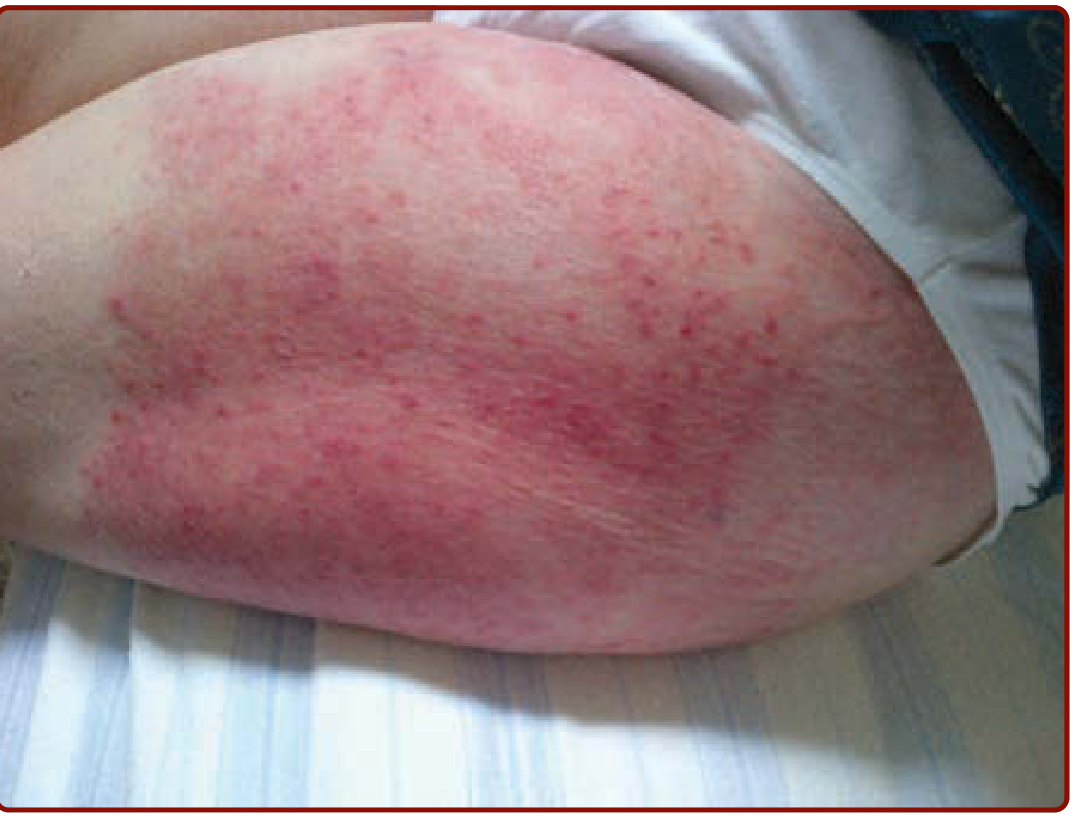
Fig. 36-4 Histiocytoid Giant Cellulitis-like Sweet Syndrome - Widespread erythematous plaque on the lateral thigh in a 72-year-old woman with myelodysplastic syndrome. This is a rare neutrophilic dermatosis that closely mimics true bacterial cellulitis. Source: Fitzpatrick's Dermatology, Vol. 1-2
Image 4 - Dissecting Cellulitis of the Scalp (Andrews')
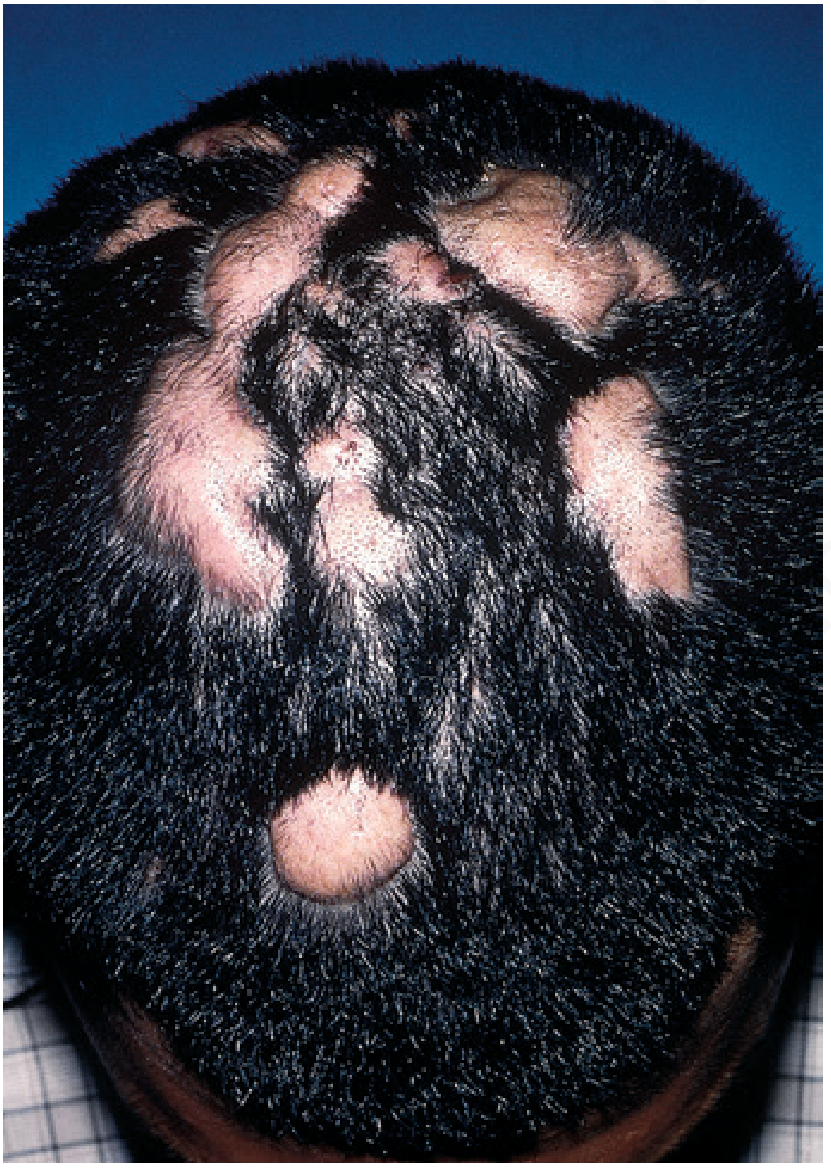
Fig. 13.21 Dissecting Folliculitis (Dissecting Cellulitis of the Scalp) - Shows patchy alopecia with perifollicular inflammation on the scalp. This chronic suppurative condition forms intercommunicating sinus tracts and predominantly affects adult Black men at the vertex and occiput. Source: Andrews' Diseases of the Skin - Clinical Dermatology
Image 5 - Dissecting Cellulitis of the Scalp (Fitzpatrick's)
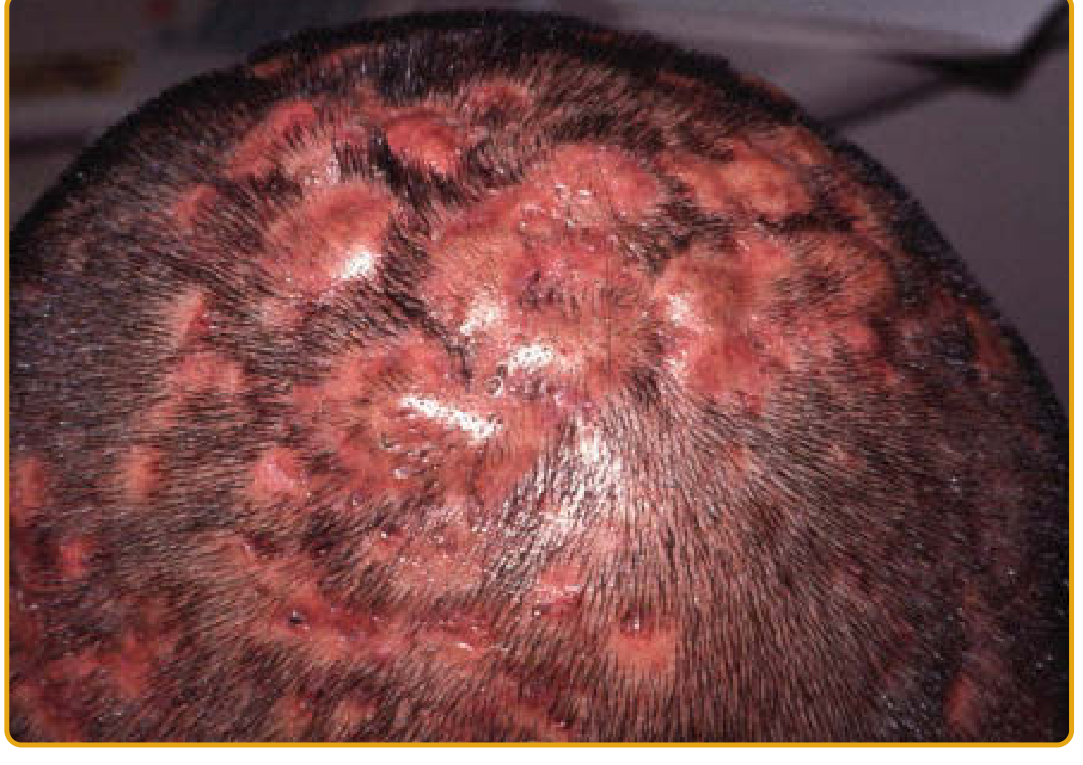
Figure 88-7 Dissecting Cellulitis - More advanced disease showing confluent suppurative, crusted nodules over the scalp vertex. Follicular occlusion leads to abscesses and deep dermal sinus tracts, ultimately causing scarring alopecia. Source: Fitzpatrick's Dermatology, Vol. 1-2
Image 6 - Facial Cellulitis (H. influenzae / Buccal Cellulitis)
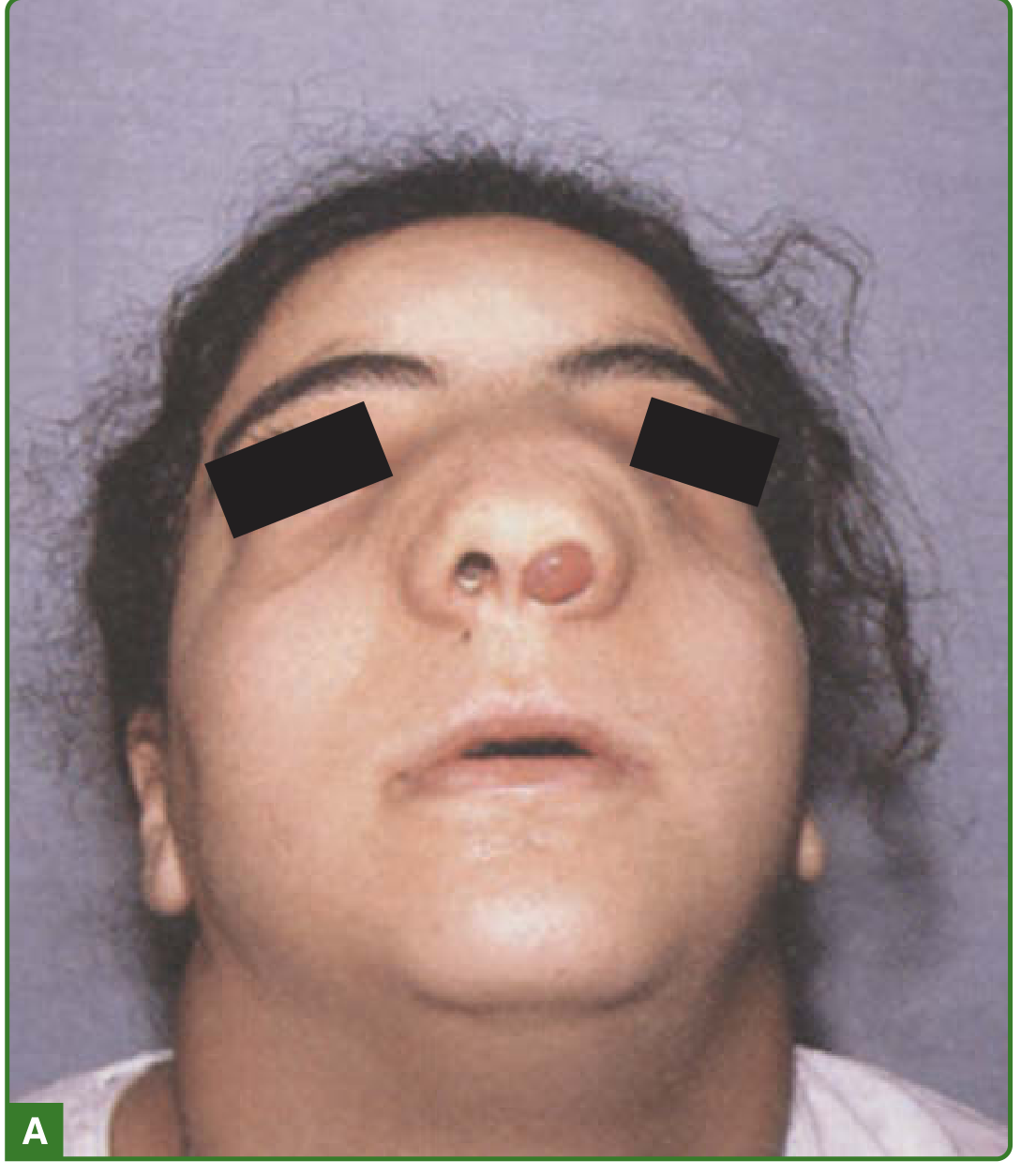
Figure 154-11 (A) - Facial/Buccal Cellulitis - Unilateral facial swelling with erythema and warmth around the nose/buccal region, characteristic of Haemophilus influenzae type b cellulitis seen in young children (3-24 months). The affected area classically has a violaceous hue and is associated with bacteremia. Source: Fitzpatrick's Dermatology, Vol. 1-2
Summary of images shown (all 6):
| # | Type | Location | Source |
|---|---|---|---|
| 1 | Classic cellulitis with blistering | Lower leg | Andrews' Diseases of the Skin |
| 2 | MRSA abscess + cellulitis | Lower back/buttock | Rosen's Emergency Medicine |
| 3 | Giant cellulitis-like Sweet syndrome | Thigh | Fitzpatrick's Dermatology |
| 4 | Dissecting cellulitis of the scalp (early) | Scalp | Andrews' Diseases of the Skin |
| 5 | Dissecting cellulitis of the scalp (advanced) | Scalp | Fitzpatrick's Dermatology |
| 6 | Facial/buccal cellulitis (H. influenzae) | Face | Fitzpatrick's Dermatology |
Urticaria and angioedema images
Finding Sources
Reading File
Reading File
Reading File
Reading File
Excellent! Found several great images. Let me also check Fitzpatrick's angioedema section and Harrison's for more, then fetch all images in parallel.
Reading File
Reading File
Now I have all the image URLs. Let me fetch all 4 in parallel:
Loading Image
Loading Image
Loading Image
Loading Image
Here are the clinical images for urticaria and angioedema from the medical textbooks:
Image 1 - Multiple Urticaria & Angioedema Subtypes (5-panel)
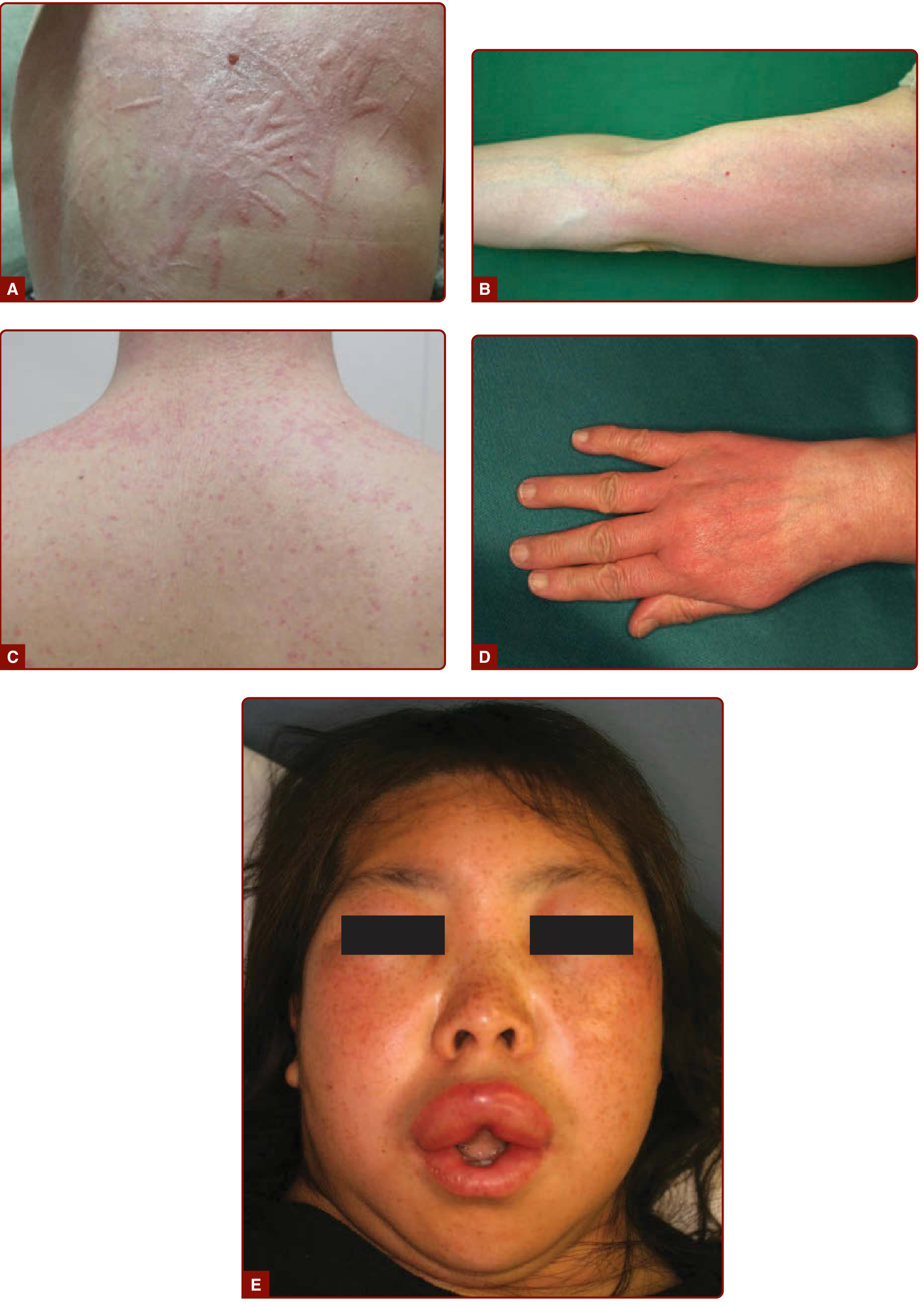
Figure 41-1 - A composite showing:
- (A) Symptomatic dermographism - linear wheal formation on skin following scratching
- (B) Dermographism on the forearm - smooth, pale raised wheal on erythematous background
- (C) Cholinergic urticaria - small pinpoint wheals on the back following exercise/sweating
- (D) Local contact urticaria from hot water immersion (hand)
- (E) Hereditary angioedema (HAE) - classic facial swelling with marked lip/cheek edema in a child
Source: Fitzpatrick's Dermatology, Vol. 1-2
Image 2 - Urticaria Morphological Variants (4-panel)
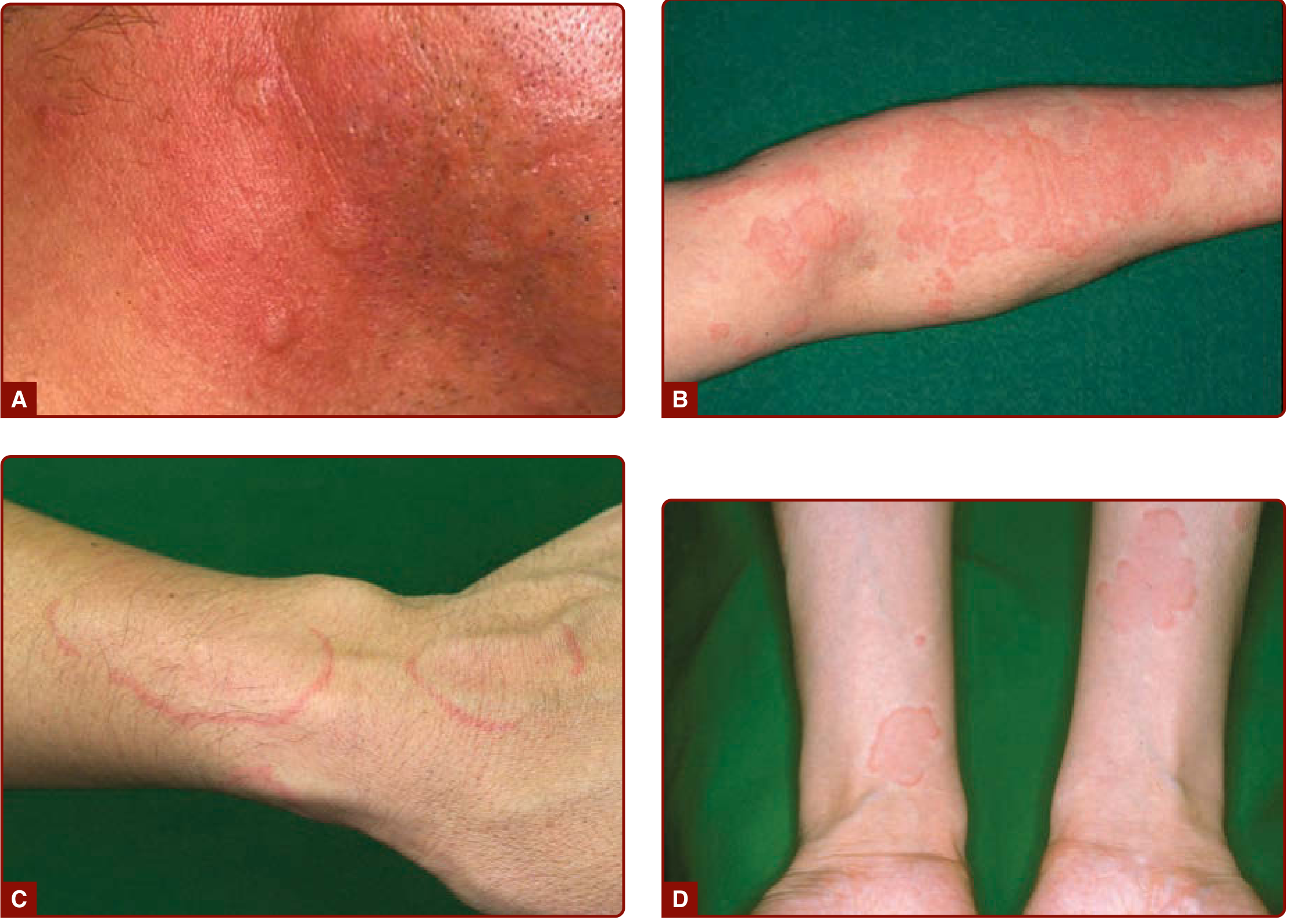
Figure 41-2 - Showing the range of urticarial presentations:
- (A) Acute urticaria - confluent erythematous wheals with irregular borders
- (B) Chronic spontaneous urticaria (CSU) - discrete elevated wheals on the forearm
- (C) CSU with annular (ring) shape - classic serpiginous/circular wheal pattern on the wrist
- (D) CSU with flower shape - polycyclic wheal configuration on the legs
Source: Fitzpatrick's Dermatology, Vol. 1-2
Image 3 - Angioedema of the foot (drug-induced)
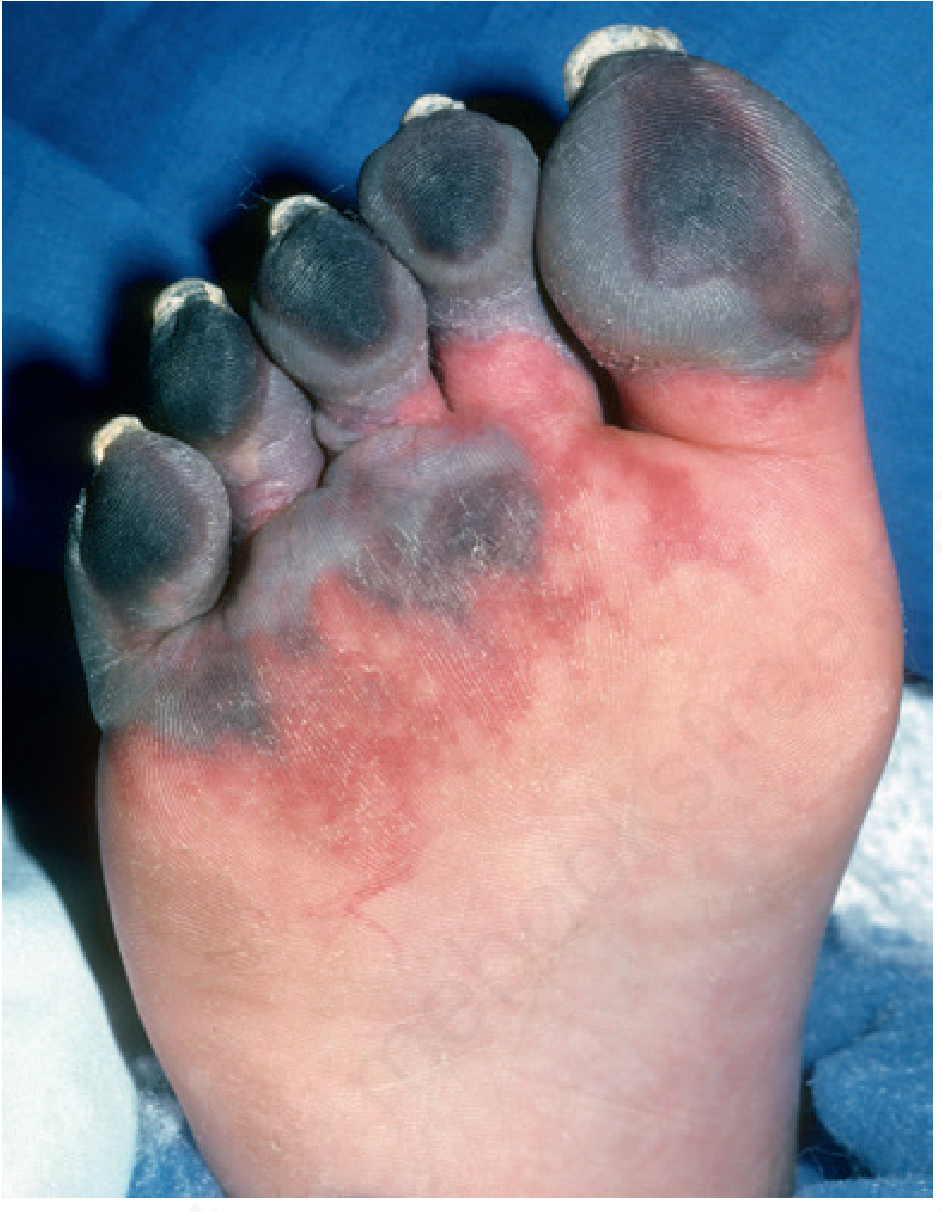
Fig. 6.29 Angioedema - Severe angioedema of the foot showing marked swelling with dusky/ecchymotic discoloration of the toes and diffuse erythema of the dorsum - a deep dermal/subcutaneous edema pattern. Can be drug-induced (e.g., NSAIDs, ACE inhibitors). Source: Andrews' Diseases of the Skin - Clinical Dermatology
Image 4 - Angioedema of the lips (tongue angioedema)
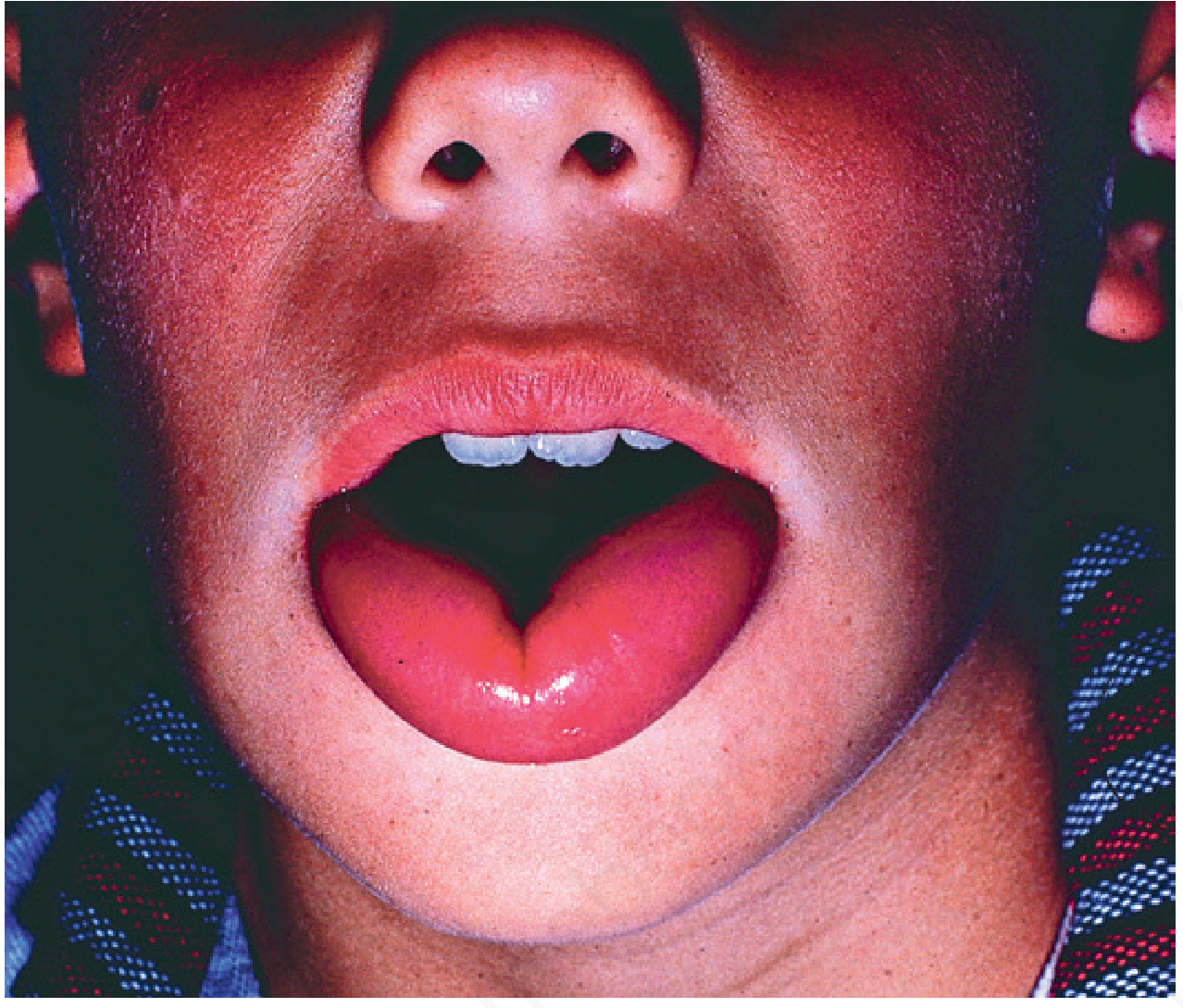
Fig. 7.19 Angioedema of the lips - Classic angioedema showing massive swelling of the lower lip and protruding tongue. This is a potentially life-threatening presentation when involving the tongue/larynx, causing airway obstruction. Commonly associated with ACE inhibitors (Blacks are ~5x higher risk), penicillin allergy, or HAE. Source: Andrews' Diseases of the Skin - Clinical Dermatology
Key clinical distinctions visible in these images:
| Feature | Urticaria | Angioedema |
|---|---|---|
| Depth | Superficial dermis | Deep dermis/subcutaneous |
| Pruritus | Prominent | Absent or mild (pain > itch) |
| Duration | <24 hrs per wheal | Hours to days |
| Location | Anywhere on skin | Lips, tongue, eyelids, genitalia |
| Danger | Anaphylaxis risk | Airway obstruction (laryngeal) |
This is a shared conversation. Sign in to Orris to start your own chat.