
Barometer psm importance 3rd mbbs
barometer PSM community medicine 3rd MBBS importance examination
barometer instrument PSM community medicine uses measurement atmospheric pressure health
Barometer - PSM Importance (3rd MBBS)
What is a Barometer?
Atmospheric Pressure - Key Facts (Park's PSM)
| Parameter | Value |
|---|---|
| Normal atmospheric pressure at sea level | 760 mm of Hg ("one atmosphere") |
| Effect of altitude | Pressure falls as altitude increases |
| Effect of depth below sea level | Pressure rises - increases at the rate of one atmosphere for every 33 feet of depth |
| At 100,000 feet above sea level | Pressure is < 10 mm Hg |
Types of Barometers (as per Park's PSM)
- Fortin's Barometer - A standard mercury barometer
- Kew Pattern Station Barometer - Widely used by the Indian Meteorological Department for measuring atmospheric pressure; this is the most important one for exam purposes
- Barograph - Records atmospheric pressure continuously. It is a circular box whose walls collapse or distend when atmospheric pressure rises or falls, giving a continuous record
Health Effects of Altered Atmospheric Pressure
A. High Altitude (Low Pressure)
- Increase in respiration
- Increase in concentration of haemoglobin
- Increase in cardiac output
-
Acute Mountain Sickness (AMS)
- Common, harmless, transient
- Features: headache, insomnia, breathlessness, nausea, vomiting, impaired vision
- Due to hypoxia and biochemical/hormonal disturbances
-
High Altitude Pulmonary Oedema (HAPO)
- A serious, potentially fatal condition
- Can develop in some individuals ascending rapidly to high altitude
B. High Pressure (Low Altitude / Underwater)
- Workers in compressed air environments (tunnels, caissons) are exposed to high pressure
- Rapid decompression causes Caisson Disease / Decompression Sickness ("The Bends")
- Dissolved nitrogen comes out of solution and forms bubbles in tissues and blood
- Features: joint pains, neurological symptoms, skin mottling
Meteorological Environment - Overview (PSM Context)
- Atmospheric pressure (measured by Barometer)
- Air temperature (measured by various thermometers)
- Humidity
- Rainfall
- Direction and speed of wind
- Movement of clouds and character of weather
- Kata thermometer - measures cooling power of air/wind velocity
- Globe thermometer / Wet Globe thermometer - measures radiant heat / mean radiant temperature
- Six's maximum-minimum thermometer
- Silvered thermometer
Exam High-Yield Points
- Barometer measures atmospheric pressure
- Normal: 760 mm Hg at sea level
- Kew Pattern Station Barometer - used by Indian Meteorological Department
- Barograph - gives a continuous record of atmospheric pressure
- Pressure falls with altitude, rises with depth
- 33 feet depth = one atmosphere increase in pressure
- Caisson disease = decompression sickness from rapid ascent in high-pressure environments
DNA translocation
chromosomal translocation reciprocal Philadelphia chromosome diagram
DNA Translocation
PART 1 - Translocation in Protein Synthesis (Biochemistry)
Mechanism (per Harper's & Basic Medical Biochemistry)
- The deacylated tRNA moves from the P site to the E site (exit site) on the large ribosomal subunit
- The newly formed peptidyl-tRNA moves from the A site to the P site
- The mRNA advances by one codon (3 nucleotides) so the next codon now occupies the empty A site
- This movement is driven by Elongation Factor 2 (EF2) in eukaryotes (EF-G in prokaryotes), which binds GTP and undergoes a conformational change
- GTP is hydrolyzed to GDP during this step, providing the energy
Energy Cost
- 1 GTP is hydrolyzed per translocation step
- Overall, 4 high-energy bonds are used per amino acid added (2 ATP equivalent for aminoacyl-tRNA charging + 1 GTP for EF1A at A site + 1 GTP for translocation by EF2)
Diphtheria Toxin and EF2 - Classic Exam Connection
- Diphtheria toxin (from Corynebacterium diphtheriae, encoded by a bacteriophage gene) inhibits translocation
- The A-subunit of the toxin catalyzes ADP-ribosylation of a modified histidine residue ("diphthamide") on EF2
- This irreversibly inactivates EF2, halting protein synthesis and causing cell death
PART 2 - Chromosomal Translocation (Genetics / Pathology)
Types
1. Reciprocal Translocation
- A segment from chromosome A moves to chromosome B, AND simultaneously a segment from chromosome B moves to chromosome A
- Two-way exchange between two non-homologous chromosomes
- The total amount of genetic material is unchanged (balanced)
- Carriers are usually phenotypically normal but have problems with meiosis - can produce unbalanced gametes leading to miscarriages, stillbirths, or offspring with partial trisomies/monosomies
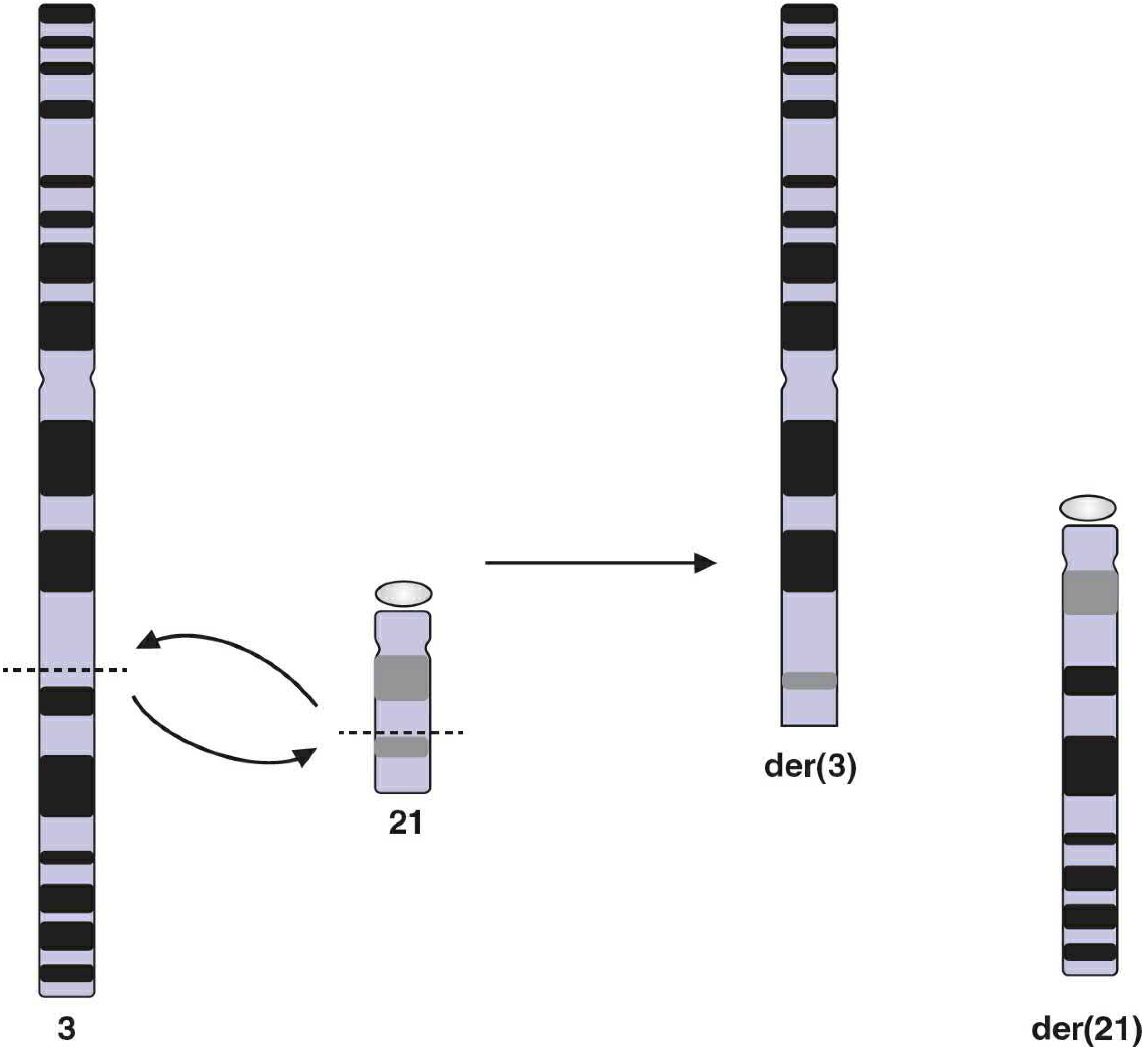
2. Robertsonian Translocation
- Occurs only between acrocentric chromosomes (chromosomes 13, 14, 15, 21, 22 - those with very short "satellite" short arms)
- The short arms (p arms) are lost and the long arms fuse at the centromere
- The carrier has only 45 chromosomes (instead of 46) but is phenotypically normal because the genes on the short arms (mainly rRNA genes) are redundant
- Clinically important: carrier of Robertsonian translocation involving chromosome 21 can produce offspring with Down syndrome (trisomy 21)
- This is called "familial Down syndrome" - Down syndrome that runs in families (unlike sporadic trisomy 21 from non-disjunction)
PART 3 - Chromosomal Translocations in Cancer (Oncology / Pathology)
Mechanism 1: Creation of a Fusion (Chimeric) Protein
Mechanism 2: Oncogene Placed Under a Strong Promoter
Major Cancer-Associated Translocations (High-Yield Table)
| Cancer | Translocation | Genes Involved | Mechanism | Result |
|---|---|---|---|---|
| Chronic Myelogenous Leukemia (CML) | t(9;22)(q34;q11) | ABL1 (chr 9) + BCR (chr 22) | Fusion protein | BCR-ABL1 = constitutively active tyrosine kinase; drives cell proliferation via Ras pathway |
| Burkitt Lymphoma | t(8;14)(q24;q32) | MYC (chr 8) + IgH locus (chr 14) | Oncogene under Ig promoter | Unregulated MYC expression → uncontrolled B-cell proliferation |
| Acute Promyelocytic Leukemia (APL/AML-M3) | t(15;17)(q22;q11) | PML + RARA | Fusion protein | PML-RARA blocks myeloid differentiation |
| Follicular Lymphoma | t(14;18)(q32;q21) | IgH + BCL2 | BCL2 overexpression | Inhibits apoptosis |
| Ewing Sarcoma | t(11;22)(q24;q12) | EWS + FLI1 | Fusion protein | EWS-FLI1 fusion gene |
| ALL | t(9;22) | BCR-ABL1 | Same as CML | Philadelphia chromosome-positive ALL |
The Philadelphia Chromosome - Must Know
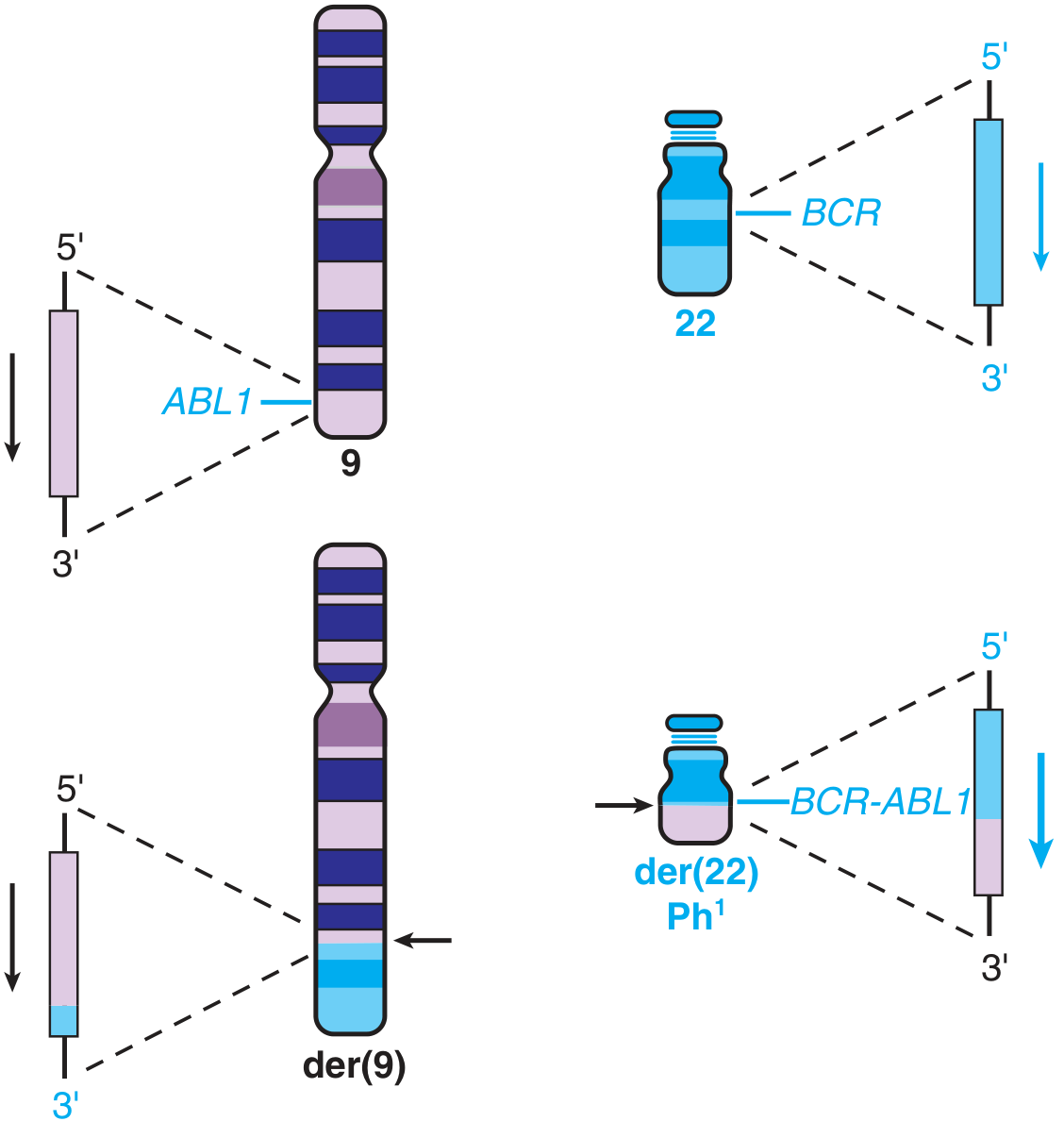
- t(9;22)(q34;q11) - reciprocal translocation between chromosomes 9 and 22
- ABL1 (tyrosine kinase, normally on chr 9) fuses with BCR (chr 22)
- The derivative chromosome 22 (shortened) = Philadelphia chromosome (Ph1)
- The chimeric BCR-ABL1 protein has constitutive tyrosine kinase activity - no longer regulated
- Activates Ras signaling → uncontrolled proliferation
- Present in 90-95% of CML cases and 10-15% of ALL
- Targeted by imatinib (Gleevec) - a BCR-ABL1 tyrosine kinase inhibitor - one of the first successful targeted cancer therapies
Summary - Exam High-Yield Points
| Context | Key Fact |
|---|---|
| Protein synthesis | Translocation = movement of peptidyl-tRNA from A site to P site; requires EF2 + GTP |
| Energy cost | 1 GTP hydrolyzed per translocation step |
| Diphtheria toxin | ADP-ribosylates EF2 at "diphthamide" → blocks translocation → stops protein synthesis |
| Reciprocal translocation | Equal exchange between two non-homologous chromosomes; balanced |
| Robertsonian | Acrocentric chromosomes only; 45 chromosomes in carrier; short arms lost |
| Down syndrome | Robertsonian translocation involving chr 21 → familial Down syndrome |
| CML | Philadelphia chromosome = t(9;22) → BCR-ABL1 fusion → target of imatinib |
| Burkitt lymphoma | t(8;14) → MYC overexpression by Ig enhancer |
| APL | t(15;17) → PML-RARA fusion |
Bitot's spot psm importance for 2 marks summery
Bitot's spot conjunctiva vitamin A deficiency eye
Bitot's Spots - PSM 2-Mark Summary
- In young children - indicate active Vitamin A deficiency
- In older individuals - often inactive sequelae (remnants) of earlier disease
| WHO Grade | Lesion |
|---|---|
| XN | Night blindness |
| X1A | Conjunctival xerosis |
| X1B | Bitot's spots |
| X2 | Corneal xerosis |
| X3A | Corneal ulceration/keratomalacia (<1/3 cornea) |
| X3B | Keratomalacia (≥1/3 cornea) |
- WHO prevalence criterion: Bitot's spots in >0.5% of preschool children (6 months to 6 years) = community-level xerophthalmia problem requiring intervention
- Used as an indicator in nutritional surveys to assess Vitamin A deficiency status in a population
- 200,000 IU of Vitamin A orally on two successive days
- Children with corneal ulcers should receive Vitamin A regardless
- 200,000 IU orally every 6 months for children aged 1-6 years
- 100,000 IU every 6 months for infants aged 6-12 months
- Strategy developed by National Institute of Nutrition, Hyderabad
Give psm importance for 2 mark summery for all the pictures given in this pdf
cd /tmp/workspace/attachments/5f923019-897b-4b73-bd62-fcb5c4e4221c/ && python3 -c " import pdfplumber with pdfplumber.open('print Exam.pdf') as pdf: print(f'Total pages: {len(pdf.pages)}') for i, page in enumerate(pdf.pages): print(f'--- PAGE {i+1} ---') text = page.extract_text() if text: print(text[:500]) print() "
python3 -c " from pypdf import PdfReader import os pdf_path = '/tmp/workspace/attachments/5f923019-897b-4b73-bd62-fcb5c4e4221c/print Exam.pdf' reader = PdfReader(pdf_path) output_dir = '/tmp/workspace/exam_images' os.makedirs(output_dir, exist_ok=True) total_images = 0 for page_num, page in enumerate(reader.pages): if '/XObject' in page['/Resources']: xobjects = page['/Resources']['/XObject'].get_object() for obj_name, obj_ref in xobjects.items(): obj = obj_ref.get_object() if obj.get('/Subtype') == '/Image': total_images += 1 width = obj.get('/Width', 'unknown') height = obj.get('/Height', 'unknown') colorspace = obj.get('/ColorSpace', 'unknown') print(f'Page {page_num+1}: Image {obj_name} - {width}x{height} - CS:{colorspace}') print(f'Total images found: {total_images}') "
python3 -c " from pypdf import PdfReader from PIL import Image import io, os pdf_path = '/tmp/workspace/attachments/5f923019-897b-4b73-bd62-fcb5c4e4221c/print Exam.pdf' reader = PdfReader(pdf_path) output_dir = '/tmp/workspace/exam_images' os.makedirs(output_dir, exist_ok=True) count = 0 for page_num, page in enumerate(reader.pages): if '/XObject' in page['/Resources']: xobjects = page['/Resources']['/XObject'].get_object() for obj_name, obj_ref in xobjects.items(): obj = obj_ref.get_object() if obj.get('/Subtype') == '/Image': count += 1 width = obj.get('/Width', 0) height = obj.get('/Height', 0) # Only save larger images (skip tiny icons) if width > 200 and height > 200: try: data = obj.get_data() img = Image.frombytes('RGB', (width, height), data) fname = f'page{page_num+1}_{obj_name.strip(\"/\")}.png' img.save(os.path.join(output_dir, fname)) print(f'Saved: {fname}') except Exception as e: print(f'Error on page {page_num+1} {obj_name}: {e}') print(f'Done. Total images processed: {count}') "
python3 -c " from pypdf import PdfReader import io, os from PIL import Image pdf_path = '/tmp/workspace/attachments/5f923019-897b-4b73-bd62-fcb5c4e4221c/print Exam.pdf' reader = PdfReader(pdf_path) output_dir = '/tmp/workspace/exam_images' for page_num, page in enumerate(reader.pages): if '/XObject' in page['/Resources']: xobjects = page['/Resources']['/XObject'].get_object() for obj_name, obj_ref in xobjects.items(): obj = obj_ref.get_object() if obj.get('/Subtype') == '/Image': width = obj.get('/Width', 0) height = obj.get('/Height', 0) fname_base = f'page{page_num+1}_{obj_name.strip(\"/\")}' fname = os.path.join(output_dir, fname_base + '.png') if os.path.exists(fname): continue # already saved if width < 200 or height < 200: continue # Try as JPEG try: data = obj.get_data() img = Image.open(io.BytesIO(data)) img.save(fname) print(f'Saved (auto): {fname_base}') except Exception as e: # Try raw data as JPEG directly try: raw = obj._data img = Image.open(io.BytesIO(raw)) img.save(fname) print(f'Saved (raw): {fname_base}') except Exception as e2: print(f'Failed {fname_base}: {e2}') "
ls /tmp/workspace/exam_images/ | sort | head -40
python3 -c " from pypdf import PdfReader from PIL import Image import io, os pdf_path = '/tmp/workspace/attachments/5f923019-897b-4b73-bd62-fcb5c4e4221c/print Exam.pdf' reader = PdfReader(pdf_path) output_dir = '/tmp/workspace/exam_images' # Get image sizes to identify the largest (main clinical) images per page page_images = {} for page_num, page in enumerate(reader.pages): imgs = [] if '/XObject' in page['/Resources']: xobjects = page['/Resources']['/XObject'].get_object() for obj_name, obj_ref in xobjects.items(): obj = obj_ref.get_object() if obj.get('/Subtype') == '/Image': width = obj.get('/Width', 0) height = obj.get('/Height', 0) area = width * height imgs.append((area, width, height, obj_name.strip('/'))) imgs.sort(reverse=True) page_images[page_num+1] = imgs print(f'Page {page_num+1}: {[(w,h,n) for a,w,h,n in imgs[:4]]}') "
python3 -c " from PIL import Image import os img_dir = '/tmp/workspace/exam_images' out_dir = '/tmp/workspace/exam_sheets' os.makedirs(out_dir, exist_ok=True) # Get all images sorted by page number import re files = sorted(os.listdir(img_dir), key=lambda x: (int(re.search(r'page(\d+)', x).group(1)), x)) print(f'Total images: {len(files)}') # Create sheets of 20 images each (4 cols x 5 rows), thumbnail 300x200 THUMB_W, THUMB_H = 300, 220 COLS, ROWS = 4, 5 SHEET_W = COLS * THUMB_W SHEET_H = ROWS * THUMB_H chunks = [files[i:i+20] for i in range(0, len(files), 20)] for sheet_idx, chunk in enumerate(chunks): sheet = Image.new('RGB', (SHEET_W, SHEET_H), (255,255,255)) for i, fname in enumerate(chunk): try: img = Image.open(os.path.join(img_dir, fname)).convert('RGB') img.thumbnail((THUMB_W-10, THUMB_H-30)) col = i % COLS row = i // COLS x = col * THUMB_W + 5 y = row * THUMB_H + 25 sheet.paste(img, (x, y)) # Label from PIL import ImageDraw, ImageFont draw = ImageDraw.Draw(sheet) label = fname.replace('.png','') draw.text((col*THUMB_W+5, row*THUMB_H+2), label[:25], fill=(0,0,0)) except Exception as e: print(f'Error with {fname}: {e}') out_path = os.path.join(out_dir, f'sheet_{sheet_idx+1}.jpg') sheet.save(out_path, quality=85) print(f'Sheet {sheet_idx+1}: {out_path}') print('Done') "
# Upload sheet images to a web-accessible location using base64 or save to workspace # Let me check the sheet file sizes ls -la /tmp/workspace/exam_sheets/
analyse_media tool requires a URL. Let me instead use the PDF pages directly as visual input since the PDF was provided as an attachment. I'll use the read_file tool to read the PDF as multimodal content (pages are images), or better - let me create per-page composite images and use analyse_media with sandbox file paths converted to the attachment URL pattern.analyse_media calls. Let me use them on 4 composite sheets (one per sheet covering ~20 images each). But analyse_media needs a URL, not a local path.python3 -c " # Create per-page composite images (one large image per page showing all 4 imgs on that page) # Then I can use analyse_media on the most informative ones from PIL import Image, ImageDraw import os, re img_dir = '/tmp/workspace/exam_images' out_dir = '/tmp/workspace/exam_pages' os.makedirs(out_dir, exist_ok=True) files = sorted(os.listdir(img_dir), key=lambda x: (int(re.search(r'page(\d+)', x).group(1)), x)) # Group by page from collections import defaultdict by_page = defaultdict(list) for f in files: page_num = int(re.search(r'page(\d+)', f).group(1)) by_page[page_num].append(f) # Create 2x2 grid per page THUMB_W, THUMB_H = 400, 300 for page_num in sorted(by_page.keys()): imgs_on_page = by_page[page_num] cols = 2 rows = 2 sheet = Image.new('RGB', (cols*THUMB_W, rows*THUMB_H + 30), (255,255,255)) draw = ImageDraw.Draw(sheet) draw.text((5, 5), f'PAGE {page_num}', fill=(200,0,0)) for i, fname in enumerate(imgs_on_page[:4]): try: img = Image.open(os.path.join(img_dir, fname)).convert('RGB') img.thumbnail((THUMB_W-10, THUMB_H-10)) col = i % cols row = i // cols sheet.paste(img, (col*THUMB_W+5, row*THUMB_H+25)) draw.text((col*THUMB_W+5, row*THUMB_H+10), f'{i+1}:{fname[:20]}', fill=(0,0,200)) except Exception as e: pass out_path = os.path.join(out_dir, f'page_{page_num:02d}.jpg') sheet.save(out_path, quality=90) print('Pages created:', sorted(os.listdir(out_dir))) "
read_file on the individual saved images (which can render as multimodal) OR use the 4 composite sheets via analyse_media with the attachment URL.read_file on the composite sheet images since they are saved locally - read_file can return images as multimodal content.- Mosquito (Aedes/Anopheles), Barometer (aneroid), Chromosomal translocation diagram, Eye with corneal opacity (keratomalacia/Bitot's), Head louse, Mosquito larva (Culex)
PSM 2-Mark Summaries - All Pictures
1. Mosquito (Aedes/Anopheles) - Pages 1, 10
- Anopheles = vector of Malaria (Plasmodium spp.), also filariasis
- Aedes aegypti = vector of Dengue, Chikungunya, Yellow fever, Zika
- Control measures: source reduction (eliminate breeding sites), larvicides (Temephos), biological control, insecticide-treated nets (ITNs), IRS (Indoor Residual Spraying)
- Key fact: Anopheles breeds in clean, slow-moving or stagnant water; Aedes breeds in artificial containers (flower pots, tyres)
2. Barometer (Aneroid) - Page 2
- Measures atmospheric pressure - normal = 760 mm Hg at sea level
- Three types: Fortin's Barometer, Kew Pattern Station Barometer (used by Indian Meteorological Dept), Barograph (continuous record)
- Part of Meteorological Environment in PSM
- Pressure falls with altitude (high altitude = hypoxia → mountain sickness); pressure rises with depth (→ Caisson disease)
- Used to predict weather changes relevant to disease outbreaks
3. Chromosomal Translocation Diagram - Page 3
- Reciprocal translocation: Balanced exchange between two non-homologous chromosomes; carrier phenotypically normal but risks abnormal offspring
- Robertsonian translocation: Between acrocentric chromosomes (13,14,15,21,22); 45 chromosomes; associated with familial Down syndrome
- Key: Robertsonian t(21;14) → carrier can produce child with Down syndrome (trisomy 21)
- Relevant to genetic counselling and prenatal diagnosis (amniocentesis, CVS)
4. Mosquito Larva / Culex Larva - Pages 3, 5
- Culex = vector of Japanese Encephalitis, Filariasis (W. bancrofti), West Nile virus
- Breeds in polluted/dirty stagnant water (drains, cesspools)
- Control: Gambusia fish (biological larvicide), Paris green/Temephos, oiling of water surfaces
- Larval stage lasts 7-14 days; key target for vector control
5. Eye with Corneal Opacity (Keratomalacia/Bitot's Spot) - Page 4
- Bitot's spots (X1B) - triangular, foamy, pearly-white spots on bulbar conjunctiva = Vitamin A deficiency
- Keratomalacia (X3B) - corneal melting = grave emergency, causes irreversible blindness
- WHO prevalence criterion: Bitot's spots >0.5% in preschool children = community problem
- Treatment: 200,000 IU Vitamin A orally on 2 successive days
- Prevention: 200,000 IU every 6 months for children 1-6 years (National Programme)
6. Head Louse (Pediculus humanus capitis) - Page 5
- Pediculus humanus corporis (body louse) = vector of Epidemic Typhus (Rickettsia prowazekii), Relapsing Fever (Borrelia recurrentis), Trench Fever
- Head louse = not a significant vector but causes pediculosis/itching
- Control: DDT dusting, permethrin shampoo, fine-tooth combing, hygiene
- PSM relevance: Index of poverty, overcrowding, poor sanitation
7. Anemometer (Digital Wind Speed Meter) - Page 6
- Measures wind velocity/speed - part of meteorological environment
- Normal comfortable wind speed for ventilation: 0.5-1.0 m/s in indoor settings
- Kata thermometer also measures cooling power (which accounts for wind, temperature, humidity together)
- Used in occupational health to assess ventilation in factories and mines
- Excessive wind = increases heat loss; inadequate wind = leads to heat exhaustion
8. Cyclops (Water Flea) - Page 6
- Cyclops = intermediate host of Dracunculus medinensis (Guinea worm)
- Also intermediate host of Diphyllobothrium latum (fish tapeworm) and Spirometra
- Guinea worm disease control: filtering drinking water through fine cloth/nylon filter, boiling water, killing Cyclops with Temephos (Abate)
- India declared free of Guinea worm disease
- WHO eradication target disease
9. Karyotype (Normal / Trisomy 21 / Down Syndrome) - Pages 7, 8, 9
- Down syndrome (Trisomy 21): most common chromosomal disorder; prevalence 1 in 700 births
- Risk increases with maternal age (>35 years)
- Karyotype types: Trisomy 21 (95%), Translocation (4%), Mosaicism (1%)
- Prenatal diagnosis: Amniocentesis (15-18 weeks), CVS (10-12 weeks), maternal serum screening (Triple test), NIPT
- Indication for karyotyping: maternal age >35, previous Down's baby, family history
10. Centrifuge Tube / Falcon Tube - Page 7
- Used in water analysis (bacteriological and chemical)
- Part of Imhoff cone - conical glass vessel used to measure sludge volume in water/sewage treatment
- Used in laboratory diagnosis of waterborne diseases
- Winkler's method equipment for measuring dissolved oxygen in water
- Relevant to environmental health surveillance and water quality testing
11. Tick (Hard Tick - Ixodes/Dermacentor) - Pages 10, 18
- Hard ticks (Ixodidae) = vectors of:
- Kyasanur Forest Disease (KFD) - Haemaphysalis spinigera - India
- Rocky Mountain Spotted Fever - Dermacentor
- Lyme Disease - Ixodes
- Q fever - Coxiella burnetii
- Tick-borne Encephalitis
- Control: acaricides, protective clothing, personal protection, animal treatment
- 3-host tick life cycle: larva → nymph → adult (each stage feeds on different host)
12. Tick/Mite on Skin (Scabies Mite - Sarcoptes) - Pages 10, 13
- Sarcoptes scabiei = causes Scabies
- Spreads by direct skin contact, overcrowding, poor hygiene
- Treatment: Benzyl benzoate (25%) application; Permethrin 5% cream; Ivermectin (oral)
- All family members treated simultaneously
- Index of poverty, overcrowding, poor sanitation
- Common in institutions, refugee camps
13. Collection Jars / Water Sample Bottles - Page 11
- Water sampling for bacteriological analysis
- Sterile glass bottles used for bacteriological samples; plastic for chemical
- Standard method: Collect 500 mL (bacteriological), 2L (chemical)
- Tests: MPN (Most Probable Number) test for E. coli (coliform count)
- Whittaker Presumptive test: detects coliforms in water
- WHO standard: 0 coliform organisms per 100 mL of drinking water
14. Housefly (Musca domestica) - Page 11
- Mechanical vector of typhoid, cholera, dysentery, food poisoning, polio, trachoma, anthrax
- Breeds in garbage, human excreta, decaying organic matter
- Life cycle: egg → larva (3 instars) → pupa → adult (10-14 days at 25°C)
- Control: sanitary disposal of excreta (most important), refuse disposal, food protection, insecticides, fly traps
- Fly density = indicator of sanitation status of community
15. Six's Maximum-Minimum Thermometer / Clinical Thermometer - Page 12
- Measures maximum and minimum air temperature
- Six's thermometer = records both max and min temperature in a single instrument
- Maximum thermometer: uses mercury; index pushed to highest point
- Minimum thermometer: uses spirit with dumb-bell index
- Used in meteorological stations to study temperature variations
- Relevant to heat-related illness prevention (heat exhaustion, heat stroke), cold injuries
16. Infantometer / Child Height Measurement (Stadiometer) - Page 12
- Anthropometric measurement of children - key indicator of nutritional status
- Length: measured lying down (children <2 years) using infantometer
- Height: measured standing (>2 years) using stadiometer
- Used to calculate: Height-for-age (stunting), Weight-for-height (wasting), Weight-for-age (underweight)
- WHO growth standards (2006) used as reference
- Part of ICDS (Integrated Child Development Services) monitoring
17. Kata Thermometer - Page 13
- Measures cooling power of the air (combination of temperature + humidity + wind)
- Two types: Dry kata and Wet kata (bulb covered with wet muslin)
- Kata value = milliCalories/cm²/second lost by the instrument
- Normal cooling power for comfort: Dry kata 5-8 mcal/cm²/sec
- Used in industrial/occupational health to assess thermal comfort in workplaces
- Low kata value = poor ventilation/hot environment → risk of heat stroke
18. Marasmus / Severely Malnourished Child - Pages 14, 20
- Marasmus: severe protein-energy malnutrition (PEM); calorie deficiency; < 60% expected weight
- Features: gross muscle wasting, "old man face," irritable, alert
- Vs Kwashiorkor: protein deficiency, oedema, skin/hair changes, apathy
- ICDS Programme: addresses child malnutrition through supplementary nutrition
- WHO criteria for SAM: Weight/Height <-3 SD OR MUAC <11.5 cm
- Treatment: F-75 and F-100 formulas (WHO protocol), therapeutic feeding
19. Lux Meter / Light Meter - Page 14
- Measures illumination levels in workplace/homes
- Unit: Lux (1 lux = 1 lumen/m²)
- Recommended illumination levels:
- Ordinary tasks: 100-200 lux
- Fine work (tailoring): 300-500 lux
- Very fine work (watchmaking): >1000 lux
- Inadequate lighting = eye strain, occupational accidents, myopia
- Part of occupational health and housing standards in PSM
20. Fly Larvae (Maggots) - Page 15
- Myiasis: infestation of living tissues by fly larvae
- Housefly larvae in refuse/excreta = indicator of poor solid waste management
- Maggot therapy: used in wound debridement (clinical use)
- Forensic entomology: time since death estimation
- Control of larval breeding = key sanitation measure
- Larvae of Cordylobia/Dermatobia cause cutaneous myiasis
21. Mosquito Pupa (Culex/Aedes) - Page 15
- Pupal stage: non-feeding, comma-shaped; lasts 2-4 days
- Breathing through trumpets (siphon tubes on thorax)
- Culex pupa = actively motile when disturbed
- No feeding occurs at pupal stage - oiling of water surface kills pupae
- Understanding life cycle essential for vector control timing
- Biological control: Bacillus thuringiensis israelensis (Bti) kills larvae
22. Patient with Rash / Skin Lesions (Scabies / Leprosy) - Page 16
- Leprosy: caused by Mycobacterium leprae; paucibacillary (PB) vs multibacillary (MB)
- National Leprosy Eradication Programme (NLEP): MDT (Multi-Drug Therapy) - Dapsone + Rifampicin (PB); + Clofazimine (MB)
- Elimination target: <1 case/10,000 population (achieved in India 2005)
- Disability grading: Grade 0 (no disability), Grade 1 (loss of sensation), Grade 2 (visible deformity)
- Notification mandatory; contact tracing essential
23. Flea (Pulex irritans / Xenopsylla cheopis) - Page 16
- Xenopsylla cheopis (rat flea) = vector of Bubonic Plague (Yersinia pestis), Murine Typhus (Rickettsia typhi)
- Pulex irritans (human flea) = vector of Plague, Dipylidium caninum (tapeworm)
- Spreads when rats die - fleas jump to humans
- Control: Rat control first, then dusting with insecticides (DDT/Malathion)
- "Blocked flea" = critical mechanism in plague transmission - regurgitates infected blood into bite wound
24. Salter's Spring Balance / Weighing Scale - Page 17
- Used for weighing infants and young children in community settings
- Salter's spring balance (25 kg capacity) - standard for field nutrition surveys
- Records child weight for Road to Health Card / growth monitoring
- Part of ICDS programme - monthly weighing of children 0-6 years
- Underweight: Weight-for-age <-2 SD (WHO)
- Simple, portable, inexpensive - ideal for rural/field use
25. Sandfly (Phlebotomus) - Page 17
- Phlebotomus = vector of Visceral Leishmaniasis (Kala-azar), Cutaneous Leishmaniasis, Sandfly Fever (Phlebotomus fever)
- Breeds in cracks in walls, loose soil, rubble
- Active at dusk and dawn, does not fly in wind
- Control: DDT spraying (most effective), bed nets with fine mesh (<0.6 mm pore), repellents
- National Kala-azar Elimination Programme: target <1 case/10,000 population at block level
26. Skinfold Calipers - Page 18
- Measures subcutaneous fat thickness = indicator of body fat and nutritional status
- Sites measured: Triceps, Biceps, Subscapular, Suprailiac (4-site formula)
- Triceps skinfold normal: Males 12.5 mm; Females 16.5 mm
- Part of anthropometric assessment for nutritional surveys
- Used in obesity assessment and PEM grading in community health
- Body fat% calculated using Durnin-Womersley or other equations
27. Engorged Female Tick - Page 18
- Engorged female tick = fed on blood, greatly enlarged
- Lays thousands of eggs after dropping off host
- Relevant to tick-borne disease transmission
28. Stadiometer (Adult Height Measurement) - Page 19
- Measures standing height in adults and children >2 years
- Used in BMI calculation: BMI = Weight(kg)/Height(m)²
- Normal BMI: 18.5-24.9; Overweight: 25-29.9; Obese: ≥30
- Asian cut-offs: Overweight ≥23; Obese ≥27.5 (WHO Asia-Pacific)
- Used in nutritional surveys, school health, occupational fitness assessment
- Stunting = Height-for-age <-2 SD = chronic undernutrition
29. Cup Anemometer (Weather Station) - Page 19
- Measures wind speed - meteorological parameter
- Part of meteorological environment monitoring
- Wind direction measured by wind vane
- Beaufort Scale - descriptive scale of wind force (0-12)
- Relevant to air pollution dispersal - wind helps dilute/disperse pollutants
- High wind speeds increase evaporative cooling; relevant to heat stress assessment
30. Pellagra / Facial Rash (Casal's Necklace) - Page 20
- Pellagra: Niacin (Vitamin B3) deficiency; classically in maize-eating populations
- "4 D's": Dermatitis + Diarrhoea + Dementia + Death
- Casal's Necklace = ring of skin lesions around neck (pathognomonic)
- Skin lesions on sun-exposed areas (photosensitive dermatitis)
- Treatment: Nicotinamide/Niacin supplementation; balanced diet
- Common in areas where maize is staple (corn lacks tryptophan)
Summary Table
| # | Image | Topic | Key PSM Fact |
|---|---|---|---|
| 1 | Aedes mosquito | Dengue/Malaria vector | Breeds in clean water containers |
| 2 | Barometer | Atmospheric pressure | Normal = 760 mm Hg |
| 3 | Chromosomal translocation | Genetics/Down syndrome | Robertsonian → familial Down's |
| 4 | Mosquito larva | Culex/filariasis | Breeds in dirty water |
| 5 | Eye lesion | Bitot's spot/Vit A | >0.5% = community problem |
| 6 | Head louse | Typhus/relapsing fever | Body louse is vector |
| 7 | Anemometer | Wind speed | 0.5-1 m/s comfortable indoors |
| 8 | Cyclops | Guinea worm host | Filter water to control |
| 9 | Karyotype | Down syndrome | Trisomy 21, maternal age risk |
| 10 | Centrifuge tube | Water quality/MPN test | 0 coliforms/100 mL standard |
| 11 | Tick | KFD, Lyme disease | Ixodidae - 3 host life cycle |
| 12 | Sarcoptes mite | Scabies | Benzyl benzoate treatment |
| 13 | Sample bottles | Water bacteriology | MPN test, WHO standards |
| 14 | Housefly | Typhoid, cholera vector | Mechanical vector |
| 15 | Max-min thermometer | Meteorology | Six's thermometer |
| 16 | Infantometer | Child anthropometry | Lying length <2 years |
| 17 | Kata thermometer | Cooling power | 5-8 mcal/cm²/sec normal |
| 18 | Marasmus child | PEM/SAM | MUAC <11.5 cm = SAM |
| 19 | Lux meter | Illumination | 100-500 lux workplaces |
| 20 | Maggots | Myiasis, sanitation | Poor solid waste management |
| 21 | Mosquito pupa | Vector life cycle | Non-feeding stage |
| 22 | Skin lesion | Leprosy/Scabies | MDT - NLEP |
| 23 | Flea | Plague, murine typhus | Xenopsylla cheopis |
| 24 | Salter's scale | Child weighing | ICDS programme |
| 25 | Sandfly | Kala-azar vector | Phlebotomus, DDT control |
| 26 | Skinfold calipers | Body fat/nutrition | Triceps normal 12.5/16.5 mm |
| 27 | Engorged tick | Tick-borne diseases | Drops off after feeding |
| 28 | Stadiometer | Adult height/BMI | BMI = wt/ht² |
| 29 | Cup anemometer | Wind speed/direction | Air pollution dispersal |
| 30 | Facial rash | Pellagra | Niacin deficiency, 4 D's |


Give solution of these psm sums According to third year mbbs psm subject
GATHER approach family planning counselling steps
JNC 8 blood pressure goal age under 60 hypertension guideline
PSM Practical Exam Solutions — All 4 Papers
PAPER 1 — Epidemiology & Case Scenarios
Q1. Malariometric Indices
| Index | Formula | Calculation | Result |
|---|---|---|---|
| ABER | (Slides examined/Population)×100 | 3000/40000×100 | 7.5% |
| SPR | (Positive slides/Slides examined)×100 | 150/3000×100 | 5% |
| SFR | (Falciparum-positive slides/Slides examined)×100 | 80/3000×100 | 2.67% |
| API | (Confirmed cases/Population)×1000 | 150/40000×1000 | 3.75 per 1000 |
| AFI | (Falciparum cases/Population)×1000 | 80/40000×1000 | 2.0 per 1000 |
| Infant Parasite Rate | (Infants positive/Infants examined)×100 | 20/400×100 | 5% |
Q2. Diabetes graph
- a. Type: Simple bar diagram showing rising trend of diabetes prevalence (millions) in India, 2000-2045 (projected).
- b. Description: Progressive rise from ~32 million (2000) to ~73 million (2017), projected to reach ~134 million by 2045 - roughly a 4-fold increase over 45 years.
- c. Reasons: Urbanization and sedentary lifestyle; dietary transition (refined carbs, high-calorie processed food); rising obesity; increasing life expectancy/ageing population; genetic predisposition combined with environmental triggers; improved screening/detection.
- d. Strategies (any 2): (1) Population-based opportunistic screening for diabetes/hypertension under NPCDCS (National Programme for Prevention & Control of Cancer, Diabetes, CVD & Stroke) at sub-centre/PHC level. (2) IEC/BCC for lifestyle modification - promotion of physical activity, healthy diet, tobacco/alcohol cessation.
Q3. Fatty liver study
| BMI | Fatty liver + (Cases) | Fatty liver − (Controls) | Total |
|---|---|---|---|
| >25 (exposed) | 53 | 102 | 155 |
| <25 (unexposed) | 32 | 33 | 65 |
| Total | 85 | 135 | 220 |
Case A - Mr Naman (52 yrs, hypertension)
- Any 4 risk factors: Chronic smoking; obesity (BMI = 84/1.6² = 32.8 kg/m², obese); sedentary IT desk job; family history of stroke (father).
- Level of prevention: Secondary prevention - early detection (opportunistic BP check finding Stage 2 HTN) and prompt treatment to prevent complications (stroke/MI) before they occur.
- JNC-8 BP goal: Age <60 years without diabetes/CKD → target <140/90 mmHg.
- Special diet: DASH diet (Dietary Approaches to Stop Hypertension) - low sodium (<2.4 g/day, ideally 1.5 g), rich in fruits/vegetables, low-fat dairy, reduced saturated fat, limited alcohol.
Case B - 7-year-old girl (fever, cough, conjunctivitis, rash)
- Diagnosis: Measles - classical 3 C's (cough, coryza, conjunctivitis) followed by cephalocaudal maculopapular rash.
- 2 measures to prevent spread: (1) Isolate case for 4 days after rash onset (respiratory droplet precaution). (2) Outbreak-response immunization of susceptible contacts + case notification/surveillance.
- Vaccine schedule: MR (Measles-Rubella) vaccine - MR-1 at 9-12 completed months (0.5 ml, subcutaneous, right upper arm), MR-2 at 16-24 months (booster).
Case C - Newly married couple (spacing 3 years, unprotected intercourse yesterday)
- Emergency Contraceptive Pill (Levonorgestrel 1.5 mg, single dose within 72 hours) - covers yesterday's exposure.
- Cu-IUCD (380A) - can double as emergency contraception if inserted within 5 days, and gives up to 10 years of spacing.
- Combined Oral Contraceptive Pills - for ongoing spacing from next cycle.
Case A - Anita (twin pregnancy, high-risk)
- High-risk pregnancy - justification: Twin pregnancy; previous LSCS (scarred uterus); past gestational diabetes; past gestational hypertension; current BP 142/90 with pedal oedema and headache (impending pre-eclampsia).
- Immunization (UIP): Td-1 as early as possible in pregnancy, Td-2 four weeks later (0.5 ml IM, upper arm); Td booster only if 2 doses were received within last 3 years.
- Extra nutrition: As per ICMR-RDA, +350 kcal/day and +22 g protein/day above normal adult requirement (higher for twins clinically, but 350/22 is the standard RDA figure taught).
Case B - Mrs Gomtiben (chronic diarrhoea, lymphadenopathy, thrush)
- Probable diagnosis: HIV/AIDS - chronic diarrhoea >1 month + weight loss + persistent generalized lymphadenopathy + oral candidiasis are WHO clinical staging features; husband (IV drug user) died of a similar illness = high-risk exposure history.
- Routes of transmission: Sexual (unprotected intercourse with infected husband); Parenteral (blood/needles); Perinatal (mother-to-child) - most relevant here is sexual transmission.
- Referral: ICTC (Integrated Counselling and Testing Centre) for HIV testing and counselling.
Case C - Family housing (overcrowding)
- Type of family: Nuclear family (parents + unmarried children).
- Overcrowding - 3 criteria: (i) Floor space: 110 sq ft ÷ 4 persons = 27.5 sq ft/person, far below the WHO norm of 100 sq ft/person. (ii) Persons per room: 4 persons in 1 room exceeds the accepted norm of ≤2 persons/room. (iii) Opposite-sex children over 10 years (14-yr son, 16-yr daughter) sharing the same room as parents - violates privacy/sex-separation criterion.
- Ventilation: Window area (24 sq ft) is 21.8% of floor area, which would meet the ⅕ (20%) rule if open - but since it is permanently closed, actual ventilation is nil. Grossly inadequate, raising risk of airborne infection (TB, ARI) transmission.
PAPER 2 — Prelim Exam
Epidemiology
- a. Design: Prospective cohort study - exposure (obesity) defined at baseline in disease-free adults, followed forward 10 years to observe outcome (diabetes).
- b. 2×2 table:
| DM+ | DM− | Total | |
|---|---|---|---|
| Obese | 90 | 210 | 300 |
| Normal BMI | 50 | 450 | 500 |
- c. Risk measures: RR = (90/300)/(50/500) = 0.30/0.10 = 3.0. Attributable Risk = 0.30 − 0.10 = 0.20 (20%).
- Interpretation: Obese individuals have 3 times the risk of developing Type 2 DM compared to normal-BMI individuals; 20% of diabetes incidence among the obese is directly attributable to obesity.
| Indicator | Formula | Result |
|---|---|---|
| Crude Birth Rate | (3576/136000)×1000 | 26.3/1000 population |
| Infant Mortality Rate | (59/3576)×1000 | 16.5/1000 live births |
| Neonatal Mortality Rate | (49/3576)×1000 | 13.7/1000 live births |
| Early Neonatal Mortality Rate | (39/3576)×1000 | 10.9/1000 live births |
| Perinatal Mortality Rate | [(24+39)/(3576+24)]×1000 | 17.5/1000 total births |
| Maternal Mortality Ratio | (7/3576)×100000 | 195.7/1,00,000 live births |
| Under-5 Mortality Rate | (170/3576)×1000 | 47.5/1000 live births |
Biostatistics
- Sorted: 3,3,4,6,8,9,12,14,14,15
- Mean = 88/10 = 8.8 years
- Median = average of 5th & 6th values = (8+9)/2 = 8.5 years
- Mode = Bimodal (3 and 14), each occurring twice
- SD (sample, n−1): Σ(x−x̄)² = 201.6 → SD = √(201.6/9) = 4.73 years
- Coefficient of Variation = (4.73/8.8)×100 = 53.8%
- a. Null hypothesis: There is no significant difference in mean Hb between ANC women who received IFA and those who did not (μ₁ = μ₂).
- b. Test: Since both n>30, use Z-test for difference between two means.
- SE = √[(2.2²/75)+(2.8²/130)] = √(0.0645+0.0603) = √0.1248 = 0.353
- Z = (13.7−11.2)/0.353 = 7.08
- Inference: Since calculated Z (7.08) >> table value 1.96 (p<0.001), reject H0. IFA supplementation produces a statistically highly significant increase in Hb (+2.5 g%).
Case scenarios
- a. Diagnosis: Measles outbreak.
- b. Is it an outbreak? Justify: Yes - occurrence of cases (75, concentrated in Oct-Nov) far exceeds the endemic baseline (1-2/month), fulfilling the epidemiological definition of an outbreak (excess over normal expectancy in a defined time/place).
- c. Preventive measures: Case isolation + Vitamin A + supportive treatment; outbreak-response/ring immunization of susceptible children with MR vaccine plus case-based surveillance.
- a. Management of diarrhoea: ORS after every loose stool; continue breastfeeding/feeding; zinc supplementation (20 mg/day × 14 days); counsel on danger signs needing referral.
- b. Catch-up vaccines at 1 year: BCG (if missed), full catch-up of OPV/Pentavalent/IPV/PCV/RVV doses, plus MR-1 + Vitamin A (both due from 9 months).
- a/b. ECP (within 72 hrs) or Cu-IUCD (within 5 days) for the previous day's exposure; OCP/condoms going forward.
- c. Cafeteria approach: Offering the full range of available contraceptive methods so the client can freely choose the one best suited to her needs/preferences/medical condition, rather than promoting a single method - improves acceptance and continuation.
PAPER 3 — Tutorial Evaluation
Epidemiology
- a. Design: Prospective cohort study.
- b. Table:
| Lung CA+ | Lung CA− | Total | |
|---|---|---|---|
| Smokers | 50 | 450 | 500 |
| Non-smokers | 10 | 490 | 500 |
- c. RR = (50/500)/(10/500) = 5.0 (smokers have 5× the risk). Attributable Risk = 0.10−0.02 = 8% (80/1000 excess cases due to smoking).
- Sensitivity = 70/80 = 87.5%; Specificity = 100/120 = 83.3%; PPV = 70/90 = 77.8%; NPV = 100/110 = 90.9%
- Comment: Good sensitivity and specificity with a high NPV - useful for ruling out disease when negative; reasonably good screening test, though not perfect.
Biostatistics
- Using midpoints (25,35,45,55,65,75): Σfx = 4085 → Mean = 42.1 years
- SD = √(20191.77/97) = 14.43 years; CV = 34.3%
- Q1 class = 20-30: Q1 = 20+[(36.75−20)/18]×10 = 29.31
- Q3 class = 50-60: Q3 = 50+[(110.25−96)/21]×10 = 56.79
- Semi-interquartile range = (56.79−29.31)/2 = 13.74 ('000 ₹)
Case scenarios
- a. Vaccines to give as catch-up: OPV-3, Pentavalent-3, IPV-2, RVV-3 (MR-1 not yet due, since <9 months).
- b. Dose/route/site: OPV-3: 2 drops, oral. Pentavalent-3: 0.5 ml, IM, antero-lateral thigh. IPV-2: 0.1 ml, intradermal, right upper arm (fractional). RVV-3: oral drops.
- a. Diagnosis: Kwashiorkor (protein-energy malnutrition) - bilateral pitting oedema is the hallmark, plus moon face, lethargy, poor appetite.
- b. Anthropometry: Weight-for-age, Height-for-age, Weight-for-height, MUAC, head circumference.
- c. CMTC/NRC admission criteria: SAM (WFH/L <−3SD or MUAC <11.5 cm) with bilateral pitting oedema and/or medical complications and/or failed appetite test → facility-based admission required. This child qualifies (oedema + systemic symptoms).
PAPER 4 — Prelim Set 2
Epidemiology
- a. Design: Case-control (retrospective) study.
- b/c. Table & OR:
| Cases (FP+) | Controls (FP−) | Total | |
|---|---|---|---|
| Paneer + | 60 | 40 | 100 |
| Paneer − | 20 | 80 | 100 |
- Advantages of case-control: quick, cheap, ideal for outbreak investigation and rare diseases. Limitations: recall bias, difficulty establishing temporal sequence, no direct incidence/RR (only OR).
- Primary Attack Rate = 20/200×100 = 10%
- Secondary Attack Rate = 30/(200−20)×100 = 30/180×100 = 16.7%
- ARV = 140/1550 = 9.03%; ARU = 250/1450 = 17.24%
- Vaccine Efficacy = [(ARU−ARV)/ARU]×100 = [(0.1724−0.0903)/0.1724]×100 = 47.6%
Biostatistics
- a. H0: No significant difference in PCM prevalence between the two populations.
- b. Test: Z-test for difference between two proportions.
- Pooled p̄ = (60+15)/700 = 0.107; SE = √[0.107×0.893×(1/400+1/300)] = 0.0236
- Z = (0.15−0.05)/0.0236 = 4.24 → since Z > 1.96, reject H0; the difference in PCM prevalence between the two groups is statistically significant (p<0.001).
- Sorted: 42,50,52,58,59,60,60,60,61,64,67,70,74,75,76
- Mean = 928/15 = 61.9 kg; Median (8th value) = 60 kg; Mode = 60 kg (appears 3×)
- b. Data type: Continuous quantitative (ratio scale). Suitable graphs: Histogram, frequency polygon, box-and-whisker plot.
Case scenarios
- a. Supplement to prevent: Folic acid, 400 mcg/day periconceptionally (4 mg/day if previous NTD-affected child), starting ≥1 month before conception through first trimester.
- b. Programme: RBSK (Rashtriya Bal Swasthya Karyakram).
- c. 4 D's: Defects at birth, Deficiencies, Diseases, Developmental delays including disability.
- a. WHO SAM criteria (6-59 months): WFH/L <−3SD, or MUAC <11.5 cm, or bilateral pitting oedema (any one is sufficient).
- b. Which child has SAM: Geeta has SAM (bilateral pitting oedema present, despite normal WFH/MUAC - oedema alone defines SAM/kwashiorkor). Yash also has SAM by both WFH (<−3SD) and MUAC (10.9 cm) criteria, and has medical complications - this is complicated SAM. Sunil is normal.
- c. Referral needed?: Yash needs referral/facility-based admission (NRC/CMTC) because complicated SAM requires inpatient management. Geeta (uncomplicated SAM with oedema, no complications) can be managed at community level with RUTF and close follow-up.
- a. Preferred method: Female sterilization (tubectomy) - permanent method, appropriate as she has a completed family.
- b. Specific investigation: Hemoglobin estimation (likely postpartum anaemia given severe fatigue/weakness) - treat with IFA before/around the procedure.
- c. GATHER approach: Greet, Ask, Tell, Help her choose, Explain method use, Return visit for follow-up.