
Nephrotic syndrome child health nursing
Reading File
Now let me search the medical library for nephrotic syndrome in children, covering pathophysiology, clinical features, and nursing management in parallel.
Finding Sources
Finding Sources
Searching PubMed
"nephrotic syndrome"[MeSH Terms] AND "child"[MeSH Terms]
Now let me read the most relevant textbook sections in parallel - the pediatric urology/nephrology section and a nursing-focused section:
Reading File
Reading File
Finding Sources
Good. Let me get more detail on the pediatric section and search for nursing care content:
Reading File
Finding Sources
Searching Images
nephrotic syndrome child edema periorbital
Let me fetch the edema diagram found in the kidney textbook and search for the nursing-specific content:
Loading Image
Finding Sources
Finding Sources
Let me get the pathophysiology content from Robbins and the clinical consequences section for complications:
Reading File
Reading File
I now have comprehensive textbook data. Let me compile a thorough, well-structured nursing-focused response on nephrotic syndrome in children.
Nephrotic Syndrome in Children - Child Health Nursing
Definition
Nephrotic syndrome (NS) is a clinical constellation defined by:
- Massive proteinuria: >40 mg/m²/h or urine protein:creatinine ratio >2.0 mg/mg (in children; >3.5 g/24h in adults)
- Hypoalbuminemia: serum albumin <3 g/dL
- Generalized edema (anasarca)
- Hyperlipidemia and lipiduria
Epidemiology
- Most common glomerular disease in children
- Peak incidence: preschool age, median 2.5 years
- Male:female ratio ~2:1 in young children
- Minimal Change Nephrotic Syndrome (MCNS) accounts for ~90% of cases before age 10 years
(Campbell-Walsh-Wein Urology, p. 459)
Classification
| Type | Features |
|---|---|
| Congenital/Infantile | Presents within 3 months of birth; genetic or perinatal infection; steroid-unresponsive |
| Primary (Idiopathic) | MCNS, FSGS, Mesangial proliferation, Membranous nephropathy |
| Secondary | Infections (malaria, HBV, HCV, HIV), SLE, drugs, malignancy |
Histological subtypes (Primary NS):
- MCNS - most common in children; excellent prognosis; steroid responsive (~90%)
- FSGS - majority of steroid-resistant cases; higher incidence in African-American, Hispanic, Asian children
- Membranous nephropathy - rare in childhood; secondary causes more common
- Mesangial proliferation
Pathophysiology
The chain of events follows a logical sequence:
- Glomerular injury (podocyte/GBM damage) → increased permeability of the glomerular capillary wall
- Massive proteinuria → loss of albumin beyond hepatic synthetic capacity
- Hypoalbuminemia → reduced plasma oncotic pressure
- Fluid shift into interstitial spaces → underfill edema
- Compensatory responses (RAAS activation, aldosterone, sympathetic activation, reduced ANP) → sodium and water retention → overfill edema
- Hyperlipidemia → increased hepatic lipoprotein synthesis + reduced catabolism due to low oncotic pressure
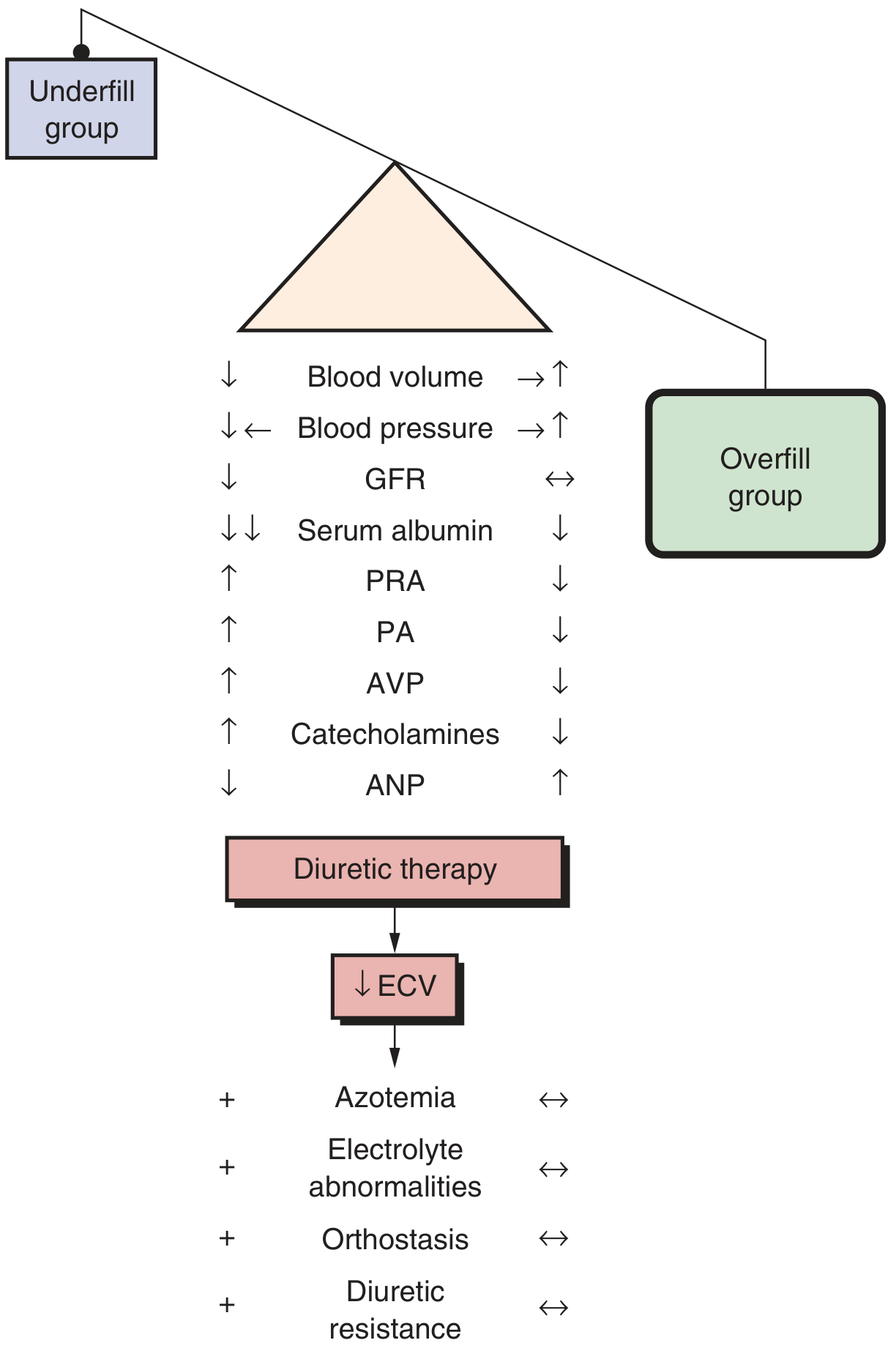
Fig: Comparison of underfill vs overfill edema mechanisms in nephrotic syndrome - Brenner & Rector's The Kidney
Clinical Features
Hallmark Presentation
- Periorbital edema - often the first sign, especially in the morning; parents may initially think it is an allergic reaction
- Dependent edema - ankles/feet when ambulatory; sacral when supine
- Ascites - abdominal distension
- Pleural effusion - respiratory distress in severe cases
- Scrotal/labial edema
- Pallor, lethargy, decreased urine output (frothy/foamy urine)
- Weight gain (from fluid retention)
Typically ABSENT in MCNS:
- Significant hypertension (hypertension is NOT typical of MCNS)
- Gross hematuria (microscopic hematuria seen in ~20%)
Atypical features requiring biopsy before treatment:
- Age <1 year at presentation
- Macroscopic (gross) hematuria
- Hypertension
- Low complement levels
- Extrarenal symptoms (rash, arthritis)
Complications (Nursing Alert Points)
1. Infection (PRIORITY CONCERN)
- Loss of immunoglobulins (IgG) in urine + depressed T-cell function
- Most dangerous: peritonitis (spontaneous bacterial peritonitis - Streptococcus pneumoniae commonest)
- Also vulnerable to staphylococcal infections, cellulitis, sepsis
- Corticosteroid therapy further immunosuppresses
2. Thromboembolism
- Loss of antithrombin III, protein C, protein S in urine
- Increased procoagulant factors (fibrinogen) + platelet hyperactivity
- Risk of: renal vein thrombosis, DVT, pulmonary embolism
- Most dangerous in hypoalbuminemia <2 g/dL
3. Hypovolemia (Intravascular Depletion)
- Despite generalized edema, intravascular volume may be contracted (underfill)
- Signs: abdominal pain, tachycardia, cold extremities, oliguria
- Dangerous if diuretics given without assessing volume status
4. Acute Kidney Injury
- A 2024 systematic review (PMID: 39759881) found significant incidence of AKI in children with NS - key risk factor requiring monitoring
5. Cardiovascular
- Hyperlipidemia (↑ LDL, cholesterol, triglycerides, ↓ HDL)
- A 2025 meta-analysis showed increased carotid intima-media thickness in pediatric NS, indicating early atherosclerosis risk (PMID: 40963441)
6. Steroid Side Effects (with prolonged therapy)
- Growth retardation, Cushingoid features, hypertension, osteoporosis, behavioral changes, cataracts
Diagnostic Investigations
| Test | Expected Finding |
|---|---|
| Urine dipstick | 3+ to 4+ protein (Albustix) |
| Urine protein:creatinine ratio | >2.0 mg/mg |
| Serum albumin | <2.5 g/dL |
| Serum cholesterol/triglycerides | Elevated |
| Serum complement (C3, C4) | Normal in MCNS; low in MPGN/SLE |
| Serum creatinine/BUN | Usually normal in MCNS |
| FBC | Check for infection |
| ASOT, ANA, Hep B/C serology | To rule out secondary causes |
| Kidney biopsy | For atypical presentations or steroid-resistant cases |
Medical Management
First-line: Corticosteroids
- Prednisone 60 mg/m²/day or 2 mg/kg/day (max 80 mg/day) for 4-6 weeks
- Then alternate-day dosing, tapered over 6 weeks or longer
- Remission = urine protein-free for 3 consecutive days
Relapse Patterns:
- Frequent relapse (FRNS): ≥2 relapses within 6 months OR ≥4 within 12 months
- Steroid-dependent (SDNS): relapses during or immediately after steroid taper
- Steroid-resistant (SRNS): no remission after 6-8 weeks full-dose prednisone (15-20% of children)
Steroid-Sparing Agents (for FRNS/SDNS/SRNS):
- Cyclophosphamide (oral alkylating agent)
- Mycophenolate mofetil (MMF)
- Calcineurin inhibitors: cyclosporine, tacrolimus
- Rituximab (B-cell depletion)
Congenital NS:
- No steroids (nonresponsive)
- Conservative: sodium/fluid restriction, IV albumin + loop diuretics, hypercaloric diet, thyroid hormone replacement
Nursing Management (Core Focus)
1. Assessment
- Daily weight (same time, same scale, same clothing) - best indicator of fluid balance
- Strict intake and output monitoring
- Measure abdominal girth daily
- Assess edema: location, pitting grade, degree
- Blood pressure monitoring (4-hourly during acute phase)
- Urine testing for protein (dipstick) - teach parents for home monitoring
- Monitor for signs of infection (fever, abdominal pain, peritonitis)
- Monitor for hypovolemia (tachycardia, cold peripheries, postural hypotension)
2. Fluid and Electrolyte Management
- Fluid restriction during severe edema
- Sodium restriction - low-sodium diet (no added salt)
- Administer furosemide as prescribed; monitor potassium levels
- IV albumin (25%) before diuretics in severe hypoalbuminemia with symptomatic edema
- Monitor for electrolyte imbalances (hyponatremia, hypokalemia with diuretics)
3. Skin Care
- Edematous skin is fragile and vulnerable to breakdown
- Change position every 2 hours
- Use pressure-relieving mattress
- Keep skin clean and dry; avoid friction
- Elevate edematous limbs (scrotal support for boys)
- Inspect skinfolds, perianal area, periorbital skin regularly
4. Infection Prevention
- Strict hand hygiene by all staff and visitors
- Isolate from children with known infections (especially chickenpox)
- Monitor temperature regularly
- Avoid live vaccines while on steroids
- Pneumococcal vaccine (Pneumovax) recommended in all children with NS
- Any febrile episode must be urgently evaluated (risk of peritonitis/sepsis)
5. Nutrition
- High protein diet - to compensate protein losses (only when proteinuria is present; high protein actually increases urinary protein losses, so this is debated - low-salt, normal-to-high protein is pragmatic guidance)
- Low sodium - reduces edema
- Low fat - to manage hyperlipidemia
- Adequate calories for growth
- Avoid concentrated sweets (steroid-induced hyperglycemia risk)
6. Medication Administration and Teaching
- Administer corticosteroids with food (reduces GI irritation)
- Never stop steroids abruptly (adrenal suppression risk)
- Monitor for steroid side effects: blood glucose, BP, mood, weight
- Educate parents on urine dipstick testing at home
- Teach signs of relapse (periorbital puffiness, weight gain, frothy urine)
- Teach signs that require emergency care (fever, abdominal pain, decreased urine output)
7. Psychosocial Care
- Body image concerns (Cushingoid features, edema)
- School attendance disruption - liaise with school
- Parental anxiety and fatigue - provide emotional support and clear education
- Emphasize that MCNS has an excellent long-term prognosis in most children
- Support groups for families with frequently-relapsing NS
8. Discharge Teaching / Parent Education
| Topic | Key Points |
|---|---|
| Urine testing | Dipstick for protein every morning; record results |
| Signs of relapse | Periorbital puffiness on waking, weight gain, foamy urine |
| Signs of infection | Fever >38°C, abdominal pain, swelling → go to hospital immediately |
| Medications | Never stop prednisone suddenly; give with food |
| Diet | Low salt, adequate protein, avoid junk food |
| Activity | No restrictions during remission; limited during active edema |
| Follow-up | Regular nephrology review; vaccinations schedule |
Nursing Diagnoses (NANDA-based)
- Excess Fluid Volume r/t decreased oncotic pressure, sodium retention
- Risk for Impaired Skin Integrity r/t edema and immobility
- Risk for Infection r/t immunosuppression (disease + steroids)
- Imbalanced Nutrition: Less than body requirements r/t anorexia, dietary restrictions
- Deficient Knowledge r/t disease process, medication management (parents)
- Anxiety (parental) r/t child's chronic illness and relapsing course
- Risk for Disturbed Body Image r/t edema, steroid-induced changes
Prognosis
- MCNS: ~90% achieve remission with steroids; up to 85% achieve long-lasting remission. Frequently relapsing course in a subset, but most excellent long-term prognosis
- FSGS: <25% respond to steroids; higher risk of progression to chronic kidney disease
- Congenital NS: Poor prognosis without aggressive management; may need kidney transplantation
- A 2025 systematic review (PMID: 40600975) confirmed that kidney function outcomes and mortality risk vary significantly by underlying histology
Key Sources:
- Campbell-Walsh-Wein Urology, p. 459-460 (Pediatric Nephrotic Syndrome section)
- Robbins, Cotran & Kumar Pathologic Basis of Disease, p. 844 (Nephrotic Syndrome pathophysiology)
- Brenner & Rector's The Kidney (Edema mechanisms, diuretic therapy)
- Symptom to Diagnosis: An Evidence-Based Guide, 4th Ed. (Clinical consequences)
This is a shared conversation. Sign in to Orris to start your own chat.