I now have comprehensive, authoritative data from multiple textbooks plus clinical images. Here is the complete, definitive reference:
🔬 CYCLOSPORINE (Cyclosporin A / CsA) — Complete Clinical Reference
SECTION 1 — CLASSIFICATION
Origin
Cyclosporine is a lipophilic cyclic polypeptide of 11 amino acids produced by the soil fungus Beauveria nivea (originally isolated as Tolypocladium inflatum). — Goodman & Gilman's
Pharmacological Classification
IMMUNOSUPPRESSANT DRUGS
│
├── 1. CALCINEURIN INHIBITORS (CNIs) ◄─── CYCLOSPORINE is here
│      ├── Cyclosporine (binds CYCLOPHILIN)
│      └── Tacrolimus   (binds FKBP-12)
│
├── 2. mTOR INHIBITORS
│      ├── Sirolimus (Rapamycin)
│      └── Everolimus
│
├── 3. COSTIMULATION BLOCKERS
│      └── Belatacept
│
├── 4. ANTIPROLIFERATIVES / ANTIMETABOLITES
│      ├── Mycophenolate mofetil (MMF)
│      └── Azathioprine
│
└── 5. CORTICOSTEROIDS
       └── Prednisolone, Methylprednisolone
— Lippincott Illustrated Reviews: Pharmacology, 7th ed.
SECTION 2 — MECHANISM OF ACTION
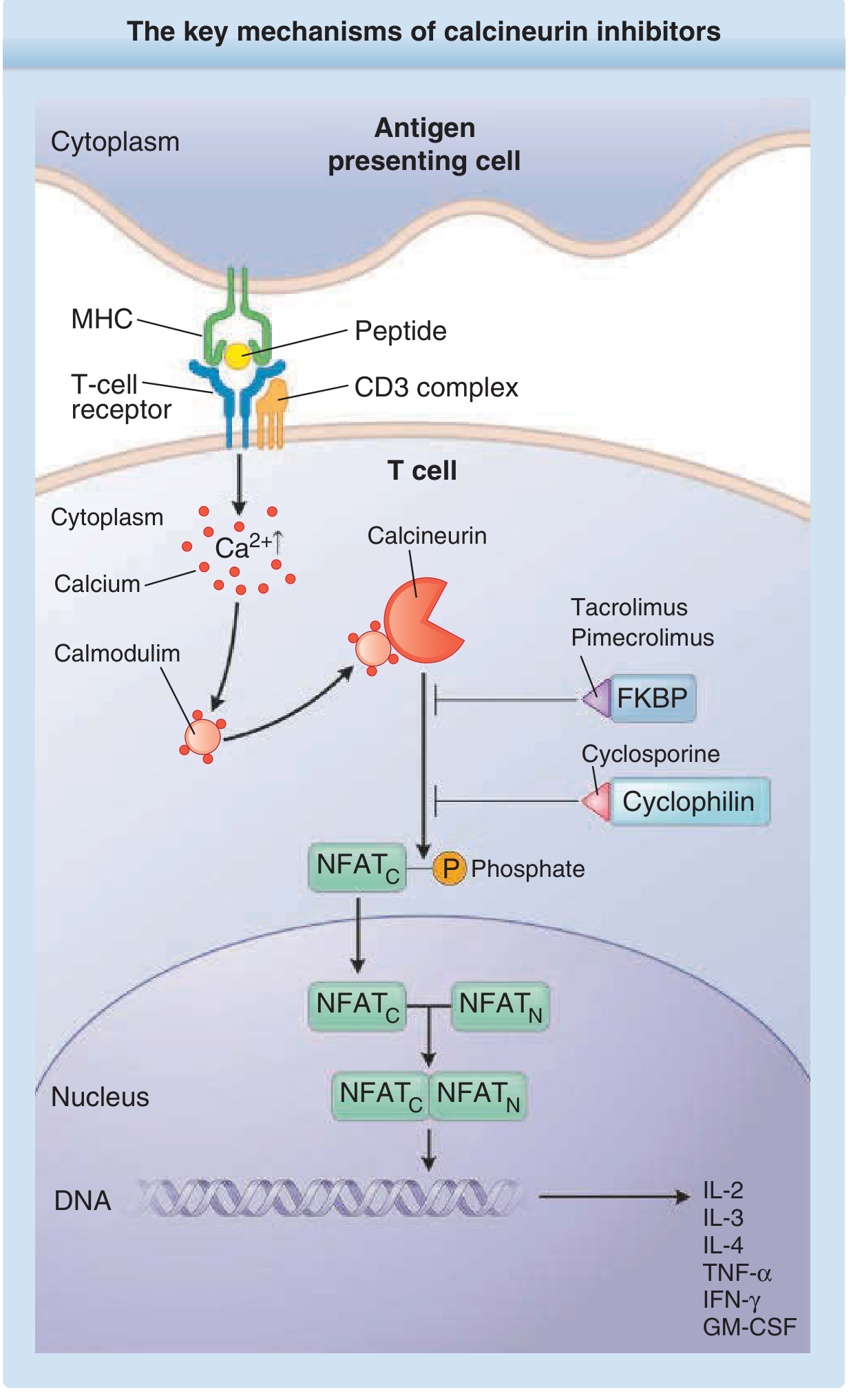
Visual Diagram (Fitzpatrick's Dermatology, Fig. 192-2):
Figure 192-2 from Fitzpatrick's Dermatology: Cyclosporine binds cyclophilin → CsA–Cyclophilin complex binds calcineurin → blocks NFAT dephosphorylation → NFAT cannot translocate to nucleus → no cytokine gene transcription (IL-2, IL-3, IL-4, TNF-α, IFN-γ, GM-CSF)
Step-by-Step Molecular Cascade
NORMAL T-CELL ACTIVATION:
━━━━━━━━━━━━━━━━━━━━━━━━━━━━━━━━━━━━━━━━━━━━━━━━━━━━━━━━
APC presents peptide (in MHC groove) to T-cell receptor
              ↓
    TCR + CD3 complex activation
              ↓
    Transmembrane signalling → ↑↑ intracellular Ca²⁺
              ↓
    Ca²⁺ binds CALMODULIN
              ↓
    Ca²⁺–Calmodulin activates CALCINEURIN
    (serine/threonine phosphatase: CnA catalytic + CnB regulatory subunits)
              ↓
    Calcineurin DEPHOSPHORYLATES cytoplasmic NFAT (NFATc)
              ↓
    NFATc translocates to NUCLEUS
              ↓
    NFATc + NFATn complex → binds cytokine gene promoters
              ↓
    TRANSCRIPTION: IL-2, IL-3, IL-4, TNF-α, IFN-γ, GM-CSF
              ↓
    T-cell ACTIVATION → PROLIFERATION → IMMUNE RESPONSE

━━━━━━━━━━━━━━━━━━━━━━━━━━━━━━━━━━━━━━━━━━━━━━━━━━━━━━━━
HOW CYCLOSPORINE BLOCKS THIS:
━━━━━━━━━━━━━━━━━━━━━━━━━━━━━━━━━━━━━━━━━━━━━━━━━━━━━━━━
CsA (lipophilic) → freely diffuses into T-cell cytoplasm
              ↓
    Binds CYCLOPHILIN (immunophilin receptor, high affinity)
              ↓
    CsA–Cyclophilin complex → BINDS CALCINEURIN
              ↓
    CALCINEURIN IS INHIBITED (phosphatase activity blocked)
              ↓
    NFATc remains PHOSPHORYLATED → CANNOT enter nucleus
              ↓
    NO cytokine gene transcription
              ↓
    NO IL-2 production → T-cell NOT activated
              ↓
    IMMUNOSUPPRESSION achieved
"CsA inhibits T-cell activation mediated by antigens by blocking the downstream signalling cascade of the T-cell receptor, but it does not inhibit the early phases of T-lymphocyte signal transduction." — Fitzpatrick's Dermatology, p. 3550
Additional Immune Effects
| Effect | Details |
|---|
| Cyclophilin–apoptosis | Cyclophilin also mediates apoptosis and degranulation of cytotoxic T-lymphocytes — CsA inhibits this |
| TGF-β upregulation | CsA increases TGF-β, which further inhibits IL-2–stimulated T-cell proliferation |
| Humoral immunity | Partially suppressed (B-cell dependent on T-helper cells) |
| Antiapoptotic proteins | Blunts expression in lymphocytes |
SECTION 3 — SITE OF ACTION AMONG IMMUNOSUPPRESSANTS
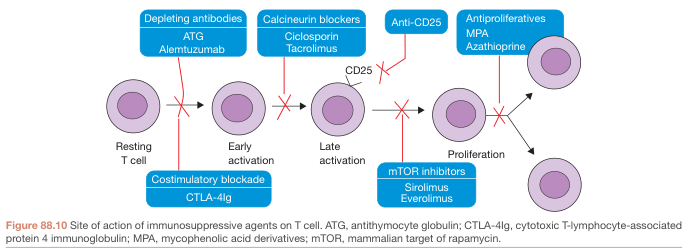
Bailey & Love's Short Practice of Surgery, 28th ed., Fig. 88.10 — Cyclosporine (calcineurin blocker) acts at the Early → Late T-cell activation transition, upstream of mTOR inhibitors and antiproliferatives.
SECTION 4 — FORMULATIONS & PHARMACOKINETICS (ADME)
Formulations
| Product | Description | Note |
|---|
| SANDIMMUNE | Original soft gelatin capsule + oral solution | Erratic bioavailability (20–50%); AVOID switching |
| NEORAL | Modified microemulsion — most widely used | More uniform, slightly higher bioavailability; 25 mg & 100 mg capsules; 100 mg/mL solution |
| GENGRAF | Second modified formulation | Also NOT interchangeable with Sandimmune |
| IV formulation | Ethanol + polyoxyethylated castor oil vehicle; dilute in NS or D5W before injection | Discontinue IV → switch to oral ASAP; more adverse effects with IV route |
⚠️ Critical safety point: SANDIMMUNE and NEORAL are NOT bioequivalent and cannot be substituted without close monitoring. Inadvertent substitution can cause graft loss or toxicity. — Goodman & Gilman's, p. 793
Pharmacokinetics Summary
| PK Parameter | Detail |
|---|
| Absorption | Oral: incomplete, highly variable; food delays and reduces absorption (AUC ↓13%, Cmax ↓33% with high-fat meal) |
| Peak plasma level (Neoral) | 1.5–4 hours post-dose |
| C2 level | Level at 2 h post-dose — better AUC correlate than trough C0 level |
| Volume of Distribution | 3–5 L/kg (IV) in transplant recipients; 13 L/kg (Fitzpatrick's) — extensive extravascular distribution |
| Blood binding | Binds to lymphocytes, granulocytes, erythrocytes + plasma lipoproteins; whole blood levels preferred for monitoring |
| Half-life (t½) | 5–18 hours (biphasic elimination); ~6–12 h in healthy subjects |
| Metabolism | Hepatic CYP3A4 primarily; also GI tract/kidneys; >30 metabolites (partially active) |
| Excretion | >90% biliary/fecal; only ~6% urinary; renal failure does not substantially alter clearance |
| Special populations | Hepatic dysfunction → dose reduction required; dialysis/renal failure → NO adjustment needed |
SECTION 5 — DOSAGE
| Indication | Standard Dose | Notes |
|---|
| Renal transplant | 3–5 mg/kg/day PO ÷ 2 doses | Delay initiation until threshold renal function reached; guided by trough levels |
| Liver / Heart transplant | Protocol-dependent; typically 2–5 mg/kg/day | Combined with steroids ± MMF or azathioprine |
| Rheumatoid arthritis | 2.5–4 mg/kg/day PO ÷ 2 doses | Severe RA unresponsive to MTX; can combine with MTX with close monitoring |
| Psoriasis (severe plaque) | 2.5–5 mg/kg/day; optimal control up to 4–5 mg/kg/day | Short courses; avoid continuous use >1 year |
| Psoriatic arthritis | 2.5–4 mg/kg/day | GRAPPA-recommended DMARD |
| Nephrotic syndrome | 3–5 mg/kg/day | Minimal change disease, FSGS |
| Pediatric | Weight-based; adjusted to trough; monthly BP monitoring | JDM, MAS, JIA |
| IV (when oral not possible) | ~⅓ of oral dose | Switch to oral as soon as feasible |
Therapeutic Drug Monitoring Targets
| Timeframe | Trough (C0) Target |
|---|
| 0–3 months post-transplant | 250–300 ng/mL |
| 3–6 months | 200–300 ng/mL |
| 6–12 months | 150–250 ng/mL |
| >12 months | 100–150 ng/mL |
C2 levels (2 h post-dose): 1000–1700 ng/mL in early post-transplant period (better AUC correlation)
SECTION 6 — THERAPEUTIC USES
6A — Transplantation
- Kidney, liver, heart transplant: cornerstone CNI immunosuppression in combination regimens
- Bone marrow / stem cell transplant: GVHD prophylaxis (combined with methotrexate — standard regimen)
- Initial dose delayed in renal transplant until threshold renal function attained
6B — Rheumatologic / Musculoskeletal Conditions
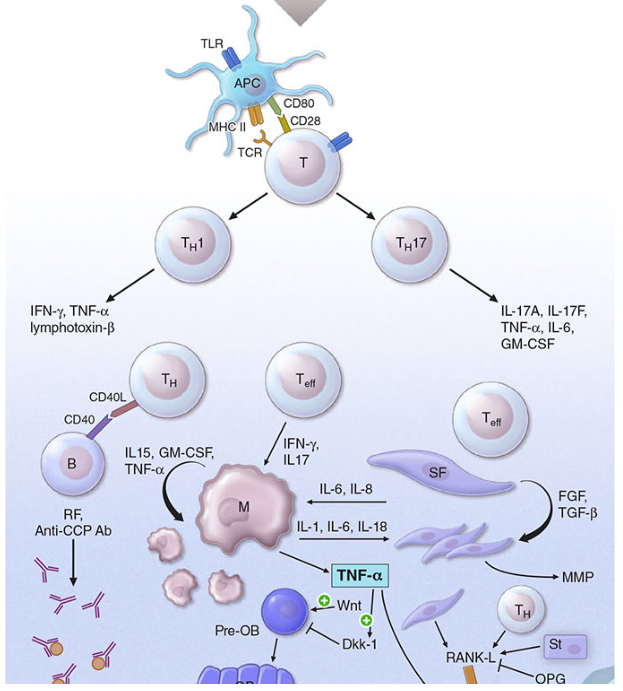
Rheumatoid Arthritis — the Inflammation Cascade CsA Targets:
Harrison's Principles of Internal Medicine 22E: RA immunopathogenesis — Cyclosporine interrupts the T-cell activation cascade at the very top of this diagram, preventing downstream cytokine production, synovial inflammation, and joint destruction
| Condition | Role of Cyclosporine |
|---|
| Rheumatoid Arthritis | Used in severe RA unresponsive to methotrexate; can combine CsA + MTX (both levels monitored closely) — FDA-approved |
| Psoriatic Arthritis | GRAPPA strongly recommends CsA as a DMARD; controls skin + joint disease |
| Psoriasis (severe plaque) | Adult immunocompetent patients with severe, disabling disease where other systemic therapies contraindicated or failed |
| Behçet's disease | Especially for ocular and joint manifestations |
| Endogenous uveitis | Well-established |
| Atopic dermatitis | Established evidence |
| SLE (lupus) | ACR-recognized; especially renal and cutaneous involvement |
| Juvenile dermatomyositis (JDM) | Most common pediatric rheumatology use |
| Macrophage Activation Syndrome (MAS) | Associated with systemic JIA — rescue therapy |
| Inflammatory bowel disease | Rescue therapy for severe refractory Crohn's/UC |
| Nephrotic syndrome | Steroid-dependent / frequently relapsing minimal change disease, FSGS |
| Dry eye (xerophthalmia) | FDA-approved ophthalmic formulation (Restasis 0.05%) |
6C — 🦴 Uses Specific to Orthopedics
| Orthopedic Context | Role & Significance |
|---|
| Rheumatoid Arthritis (erosive joint disease) | Reduces synovial T-cell–driven inflammation; slows joint space narrowing in severe, MTX-refractory RA; used as DMARD before biologics |
| Psoriatic Arthritis with joint involvement | Controls both skin and joint disease; reduces enthesitis, dactylitis, and erosive damage; combined DMARD option |
| Reactive / inflammatory arthritis | Adjunct immunosuppression in refractory cases |
| Gout (secondary hyperuricemia) | CsA itself causes hyperuricemia → gout flares; orthopedic surgeons must recognize CsA as a cause of acute gout in transplant patients |
| Perioperative management of transplant recipients undergoing orthopedic surgery | CsA must be continued perioperatively (transplant patients); blood levels monitored daily; adjust for fluid dilution, drug interactions, and NPO status |
| GVHD (bone marrow transplant) | Prevents GVHD affecting musculoskeletal tissues (myopathy, fasciitis, arthropathy) |
| Macrophage Activation Syndrome (systemic JIA) | Rescue therapy affecting joints, bone marrow |
| Heterotopic ossification (emerging evidence) | NFAT pathway modulation by CNIs may affect ectopic bone formation; experimental data only — not standard of care |
Perioperative Protocol for CsA (Orthopedic Surgery):
TRANSPLANT PATIENT ON CYCLOSPORINE → ORTHOPEDIC SURGERY
                    │
    ┌───────────────┼───────────────┐
    │               │               │
 CONTINUE        MONITOR         AVOID
CsA throughout  blood levels    NSAIDs
 perioperative    daily         (additive
  period       perioperatively nephrotoxicity)
    │               │               │
 If NPO →      Adjust dose for    Use
  IV CsA        fluid dilution   paracetamol/
  (~1/3 oral)  and drug          opioids
               interactions    post-op
"Patients with organ transplants should be continued on immunosuppressant medications unless directed otherwise by transplant physician." — Froedtert Hospital Perioperative Medication Guidelines
"Clinically significant reductions of cyclosporine blood levels can be caused by dilution with massive fluid infusion perioperatively and cardiopulmonary bypass." — IARS Anesthesia & Analgesia
SECTION 7 — SIDE EFFECTS
Master Adverse Effects Flowchart
CYCLOSPORINE ADVERSE EFFECTS
              │
    ┌─────────┼──────────────────────┐
    │         │                      │
RENAL    CARDIOVASCULAR          METABOLIC
    │         │                      │
Nephrotoxicity  Hypertension     ┌───┴────────────────────┐
(majority of    (~50% renal tx;  │ Hyperlipidemia (↑LDL)  │
 patients)      ~100% cardiac)   │ Hyperkalemia            │
    │                            │ Hyperuricemia → GOUT    │
 Acute:                          │ Hyperglycemia / DM      │
 renal vasoconstriction          │ Hypomagnesemia          │
 (reversible with                └────────────────────────┘
  dose reduction)
 Chronic:
 interstitial fibrosis
              │
    ┌─────────┼────────────────────────┐
    │         │                        │
COSMETIC  NEUROLOGICAL           ONCOLOGICAL
    │         │                        │
Hirsutism  Tremor (common)      ↑ Lymphoma risk
Gingival   Headache             Post-transplant
hyperplasia Paresthesias         lymphoproliferative
            Mental confusion     disorder (PTLD)
            Hallucinations       Skin malignancy
            Seizures (rare)      (SCC > BCC)
            PRES
              │
    ┌─────────┼─────────────┐
    │         │             │
INFECTIONS  GI           OTHER
    │         │             │
Opportunistic  Nausea     Pancreatitis
infections     Vomiting   Hepatotoxicity
(fungal,       Diarrhea   Dyspnea
bacterial,
viral — CMV)
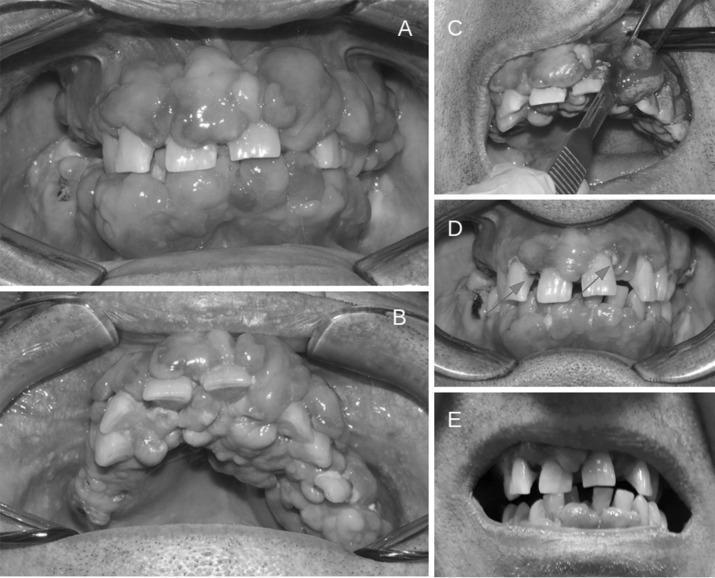
Gingival Hyperplasia — Clinical Photographs
Clinical photo series: A/B — severe cyclosporine-induced gingival overgrowth (lobulated, nodular); C — scalpel gingivectomy; D — dental plaque at margins; E — resolution after switching to tacrolimus
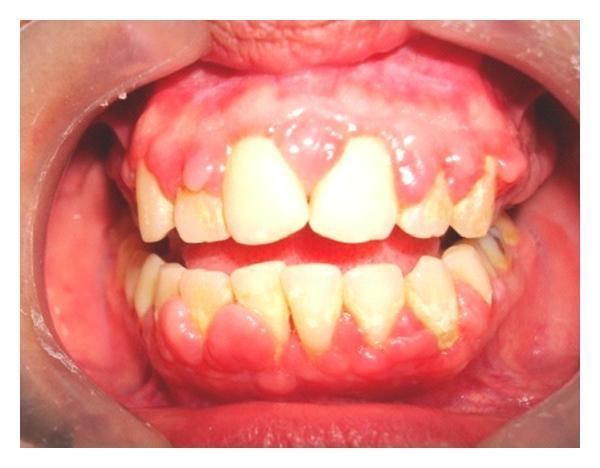
Cyclosporine-induced gingival hyperplasia: note bulbous, erythematous gingival overgrowth covering clinical crowns — a hallmark cosmetic side effect of CNI therapy
Comparison: Cyclosporine vs. Tacrolimus Side Effects
| Side Effect | Cyclosporine | Tacrolimus |
|---|
| Nephrotoxicity | ✅ Yes (major) | ✅ Yes (major) |
| Hypertension | ✅ ~50% renal, ~100% cardiac | ✅ Yes |
| Hirsutism | ✅ More common | ✗ Less; hair loss instead |
| Gingival hyperplasia | ✅ Yes | ✗ No |
| Hyperlipidemia (LDL ↑) | ✅ More | Less |
| Hyperglycemia / DM | ✅ (less than tacrolimus) | ✅ More diabetogenic |
| Neurotoxicity | ✅ Tremor, seizures | ✅ More tremor, headache |
| Alopecia | ✗ No | ✅ Yes |
| Diarrhea | Less | More |
SECTION 8 — DRUG INTERACTIONS
From Fitzpatrick's Dermatology (comprehensive table):
| Interaction Type | Drug Class | Examples |
|---|
| ↑ CsA levels (CYP3A4 inhibitors — ↑ toxicity risk) | Ca²⁺ channel blockers | Diltiazem, nicardipine, verapamil |
| Antibiotics | Erythromycin, clarithromycin, azithromycin, quinupristin |
| Antifungals | Fluconazole, itraconazole, ketoconazole, voriconazole |
| Antivirals (HIV) | Ritonavir, indinavir, saquinavir, nelfinavir |
| Glucocorticoids | Methylprednisolone |
| Other | Allopurinol, amiodarone, bromocriptine, colchicine, danazol, metoclopramide, oral contraceptives |
| Food | GRAPEFRUIT JUICE ⚠️ (CYP3A4 + P-gp inhibition) |
| ↓ CsA levels (CYP3A4 inducers — ↓ efficacy) | Antibiotics | Rifampin, nafcillin |
| Anticonvulsants | Carbamazepine, phenobarbital, phenytoin, oxcarbazepine |
| Other | St. John's wort, bosentan, orlistat, octreotide, terbinafine |
| Additive TOXICITY | NSAIDs | Diclofenac, naproxen, sulindac, colchicine ⚠️ Nephrotoxicity |
| Antibiotics | Ciprofloxacin, gentamicin, vancomycin, TMP-SMX |
| Antifungals | Amphotericin B |
| Immunosuppressants | Tacrolimus (synergistic nephrotoxicity — avoid) |
| Antimetabolites | Methotrexate (↑ MTX levels), fibrates |
| CsA as inhibitor (CYP3A4 + P-gp) | CsA ↑ levels of: | Statins (↑ myopathy risk), prednisolone, digoxin, MTX |
⚠️ Orthopedic Alert — NSAIDs + Cyclosporine: Additive nephrotoxicity. Commonly used post-op analgesics (diclofenac, naproxen, ketorolac) must be avoided or used with extreme caution in patients on cyclosporine. — Goodman & Gilman's, p. 794
SECTION 9 — MONITORING
Monitoring Protocol Flowchart
INITIATE CYCLOSPORINE
         │
BASELINE ASSESSMENTS
─────────────────────────────────────────────
 • Blood pressure (both arms)
 • Serum creatinine + eGFR
 • Full blood count (CBC)
 • Liver function tests
 • Fasting lipid panel
 • Uric acid
 • Blood glucose / HbA1c
 • Urinalysis (proteinuria)
 • CsA baseline levels (trough C0 or C2)
 • Dermatologic exam (skin cancer baseline)
         │
FIRST 3 MONTHS (most intensive)
─────────────────────────────────────────────
 • BP: at each visit
 • Creatinine: every 2 weeks
 • CsA trough (C0): weekly → every 2 weeks
 • C2 if used: exactly 2 h after dose
 • CBC + LFTs: monthly
         │
MONTHS 3–12 (stable phase)
─────────────────────────────────────────────
 • BP + Creatinine: monthly
 • CsA trough: monthly
 • Lipids + uric acid: every 3–6 months
 • Annual skin surveillance (SCC risk)
         │
TARGETS / ACTION THRESHOLDS
─────────────────────────────────────────────
 • Creatinine rise >30% from baseline
   → REDUCE DOSE or STOP
 • BP >130/80 → Antihypertensive (amlodipine
   preferred; avoid diltiazem/verapamil)
 • eGFR declining trend → Consider switch
   to tacrolimus or non-CNI
SECTION 10 — CONTRAINDICATIONS
| Contraindication | Rationale |
|---|
| Uncontrolled hypertension | CsA worsens; increased stroke/renal risk |
| Significant renal impairment at baseline | Additive nephrotoxicity; may cause irreversible damage |
| Active uncontrolled infection | Immunosuppression will exacerbate |
| Current malignancy (especially lymphoma/skin) | CsA promotes tumor growth |
| Concomitant tacrolimus | Synergistic nephrotoxicity |
| Concomitant sirolimus (simultaneous) | Must time-separate (cyclosporine worsens sirolimus-induced hyperlipidemia; sirolimus worsens CsA nephrotoxicity) |
| Pregnancy | Teratogenic; discuss risk/benefit; ACR advises avoid |
| Breastfeeding | Excreted in breast milk |
| Hypersensitivity to polyoxyethylated castor oil | (IV formulation only) |
SECTION 11 — PREVENTION & MANAGEMENT OF SIDE EFFECTS
| Side Effect | Prevention | Management |
|---|
| Nephrotoxicity | Lowest effective dose; avoid NSAIDs, aminoglycosides, amphotericin; baseline renal assessment | Dose reduction (reversible); if graft dysfunction: biopsy to differentiate rejection vs. toxicity; switch to tacrolimus if persistent |
| Hypertension | Avoid high-sodium diet; monitor BP at every visit | Amlodipine (preferred CCB — no CYP3A4 interaction); ACE inhibitors; avoid diltiazem/verapamil |
| Gingival hyperplasia | Strict oral hygiene; regular dental review | Gingivoplasty/gingivectomy if severe; switch to tacrolimus (reverses overgrowth) |
| Hirsutism | Counsel patient pre-treatment | Cosmetic management; switch to tacrolimus if socially unacceptable |
| Hyperlipidemia | Low-fat diet; monitor lipids 3–6 monthly | Statins (pravastatin preferred — least CYP3A4 interaction); avoid lovastatin/simvastatin (high myopathy risk with CsA) |
| Hyperuricemia / Gout | Avoid allopurinol (unless dose-adjusted — allopurinol ↑ CsA levels); low-purine diet | Colchicine (caution: CsA ↑ colchicine toxicity → use low dose); dose reduction |
| Hyperkalemia | Low-potassium diet; avoid K-sparing diuretics | Kayexalate; dose reduction |
| Infection risk | PCP prophylaxis (TMP-SMX); CMV prophylaxis post-transplant; antifungal prophylaxis | Treat aggressively; consider dose reduction |
| Malignancy | Sun protection (SPF 50+); annual skin surveillance; avoid prolonged high-dose use; avoid combination with UV therapy | Dermatology surveillance; switch immunosuppression class; consider mTOR inhibitors (sirolimus has antitumor properties) |
| Neurotoxicity (tremor, seizures) | Maintain therapeutic drug levels | Dose reduction; if seizures: avoid hyperventilation perioperatively; lower seizure threshold with CsA |
SECTION 12 — MAINTENANCE IMMUNOSUPPRESSANT COMPARISON TABLE
(Lippincott Illustrated Reviews: Pharmacology)
| Drug | Class | Key Indications | PK | Adverse Effects |
|---|
| Cyclosporine | CNI | SOT, psoriasis, RA, GVHD | CYP3A4; P-gp inhibitor | HTN, nephrotoxicity, hirsutism, gingival hyperplasia, HLD, neurotoxicity |
| Tacrolimus | CNI | SOT, GVHD | CYP3A4 | HTN, nephrotoxicity, DM, alopecia, neurotoxicity |
| Sirolimus | mTOR inhibitor | SOT (renal, heart), GVHD | CYP3A4 | Impaired wound healing ⚠️, HLD, proteinuria, myelosuppression |
| Everolimus | mTOR inhibitor | SOT, oncology | CYP3A4 | Same as sirolimus; stomatitis |
| Mycophenolate | Antiproliferative | SOT, SLE | Glucuronidation | Myelosuppression, GI effects |
| Azathioprine | Antiproliferative | SOT, RA, lupus | Thiopurine pathway | Myelosuppression, hepatotoxicity, pancreatitis |
| Corticosteroids | Corticosteroid | Many | — | HTN, osteoporosis, DM, Cushing's |
| Belatacept | Costimulation blocker | SOT (renal) | t½ ~10 days | ↑ PTLD risk, anemia |
Orthopedic Note on Sirolimus: Unlike cyclosporine, sirolimus significantly impairs wound healing — this is a critical distinction when managing post-surgical patients.
SECTION 13 — CLINICAL DECISION FLOWCHART: Cyclosporine in Orthopedic / Rheumatologic Practice
PATIENT WITH INFLAMMATORY JOINT DISEASE
(RA / Psoriatic Arthritis / Reactive Arthritis)
                       │
                       ▼
       ┌───────────────────────────────┐
       │   STEP 1: FIRST-LINE DMARDs   │
       │ Methotrexate (MTX)            │
       │ Sulfasalazine                 │
       │ Hydroxychloroquine            │
       └───────────────┬───────────────┘
                       │
              Adequate response?
              YES ─────┴────── NO
               │                 │
          Continue            3–6 months
         & Monitor            inadequate
                                 │
                                 ▼
         ┌─────────────────────────────────────┐
         │  STEP 2: CONSIDER CYCLOSPORINE       │
         │  Indication:                         │
         │  • RA refractory to MTX              │
         │  • Severe psoriatic arthritis         │
         │  • Cannot use biologics              │
         │  Dose: 2.5–4 mg/kg/day PO ÷ 2       │
         └────────────────┬────────────────────┘
                          │
         Can add MTX to CsA? YES — monitor BOTH levels
                          │
            ┌─────────────▼────────────────────┐
            │   BASELINE ASSESSMENTS           │
            │ BP, Cr, eGFR, CBC, LFTs,         │
            │ Lipids, Uric acid, UA, CsA level  │
            └─────────────┬────────────────────┘
                          │
              Monitor q2 weeks × 3 months
              then monthly
                          │
               ┌──────────┴──────────┐
               │                     │
        Adequate response        Inadequate response
        & tolerable                or side effects
               │                     │
          Continue at           ┌────┴──────────────┐
          lowest effective      │                    │
           dose                Dose              Switch to:
                               adjust         • Tacrolimus
                                              • Biologic DMARD
                                                (TNF-i, IL-17-i)
                                              • JAK inhibitor

━━━━━━━━━━━━━━━━━━━━━━━━━━━━━━━━━━━━━━━━━━━━━━━━━━━━━━━━
PERIOPERATIVE PATHWAY (Orthopedic Surgery)
━━━━━━━━━━━━━━━━━━━━━━━━━━━━━━━━━━━━━━━━━━━━━━━━━━━━━━━━
Patient on CsA → ELECTIVE ORTHO SURGERY
         │
         ├─ TRANSPLANT patient → CONTINUE CsA throughout
         │                       (consult transplant team)
         │
         ├─ RA/PsA patient (non-severe SLE) → CONTINUE CsA
         │                                    (ACR guidelines)
         │
         ├─ NPO perioperatively → SWITCH to IV CsA (~1/3 oral dose)
         │
         ├─ AVOID NSAIDs postoperatively (additive nephrotoxicity)
         │   → Use paracetamol, opioids, COX-2 (with caution)
         │
         ├─ Monitor CsA blood levels DAILY perioperatively
         │
         └─ Check for drug interactions with anesthetic agents
            and antibiotics used
KEY CLINICAL PEARLS — Quick Reference
| Situation | Key Point |
|---|
| NSAIDs + CsA | Additive nephrotoxicity — use paracetamol instead post-op |
| Formulation switch | SANDIMMUNE ≠ NEORAL — never switch without close monitoring |
| Grapefruit | Inhibits CYP3A4 → ↑ CsA levels → toxicity |
| Rifampin / Phenytoin | Dramatically ↓ CsA levels → rejection risk |
| Statin choice | Use pravastatin (least CYP3A4); avoid lovastatin/simvastatin |
| Gout flare on CsA | CsA causes hyperuricemia; recognize as CsA complication; low-dose colchicine |
| BP management | Amlodipine preferred; NOT diltiazem/verapamil (↑ CsA levels) |
| Wound healing | CsA does NOT impair wound healing (unlike sirolimus/everolimus) |
| Creatinine ↑ >30% | Reduce dose immediately; if persistent → biopsy or switch |
| Gingival hyperplasia | Switch to tacrolimus — resolves within months |
References
- Goodman & Gilman's The Pharmacological Basis of Therapeutics, 14th ed., Chapter 39
- Fitzpatrick's Dermatology, 9th ed., Chapter 192 (Calcineurin Inhibitors)
- Lippincott Illustrated Reviews: Pharmacology, 8th ed., Chapter 38
- Harrison's Principles of Internal Medicine, 22nd ed. (2025)
- Bailey & Love's Short Practice of Surgery, 28th ed., Chapters 88–89
- Sabiston Textbook of Surgery, 21st ed.
- National Kidney Foundation Primer on Kidney Diseases, 8th ed.
- ACR 2017 Guideline — Perioperative Management of Antirheumatic Medications
- ACR Patient Education — Cyclosporine (updated February 2025)
- GRAPPA Guidelines for Psoriatic Arthritis