
Winging of scapula
Reading File
Finding Sources
Finding Sources
Searching the Web
winging of scapula causes nerve injury clinical anatomy
Reading File
Reading File
Reading File
Searching Images
winging of scapula serratus anterior long thoracic nerve palsy
Loading Image
Loading Image
Loading Image
Here is a comprehensive overview of winging of the scapula.
Winging of the Scapula
Definition
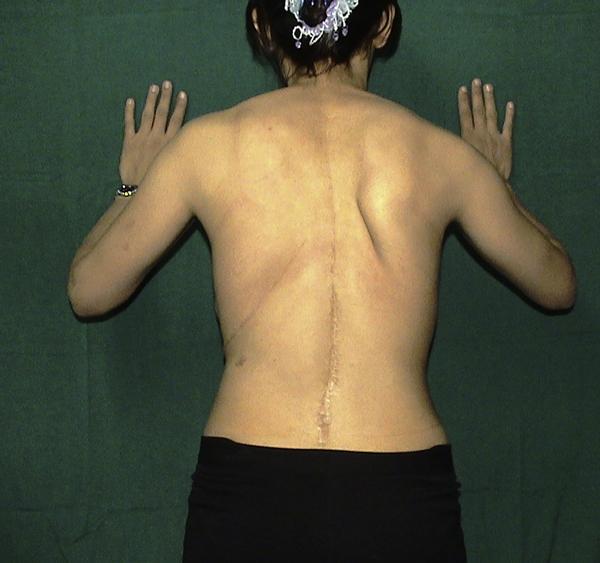
Winging of the scapula refers to the abnormal protrusion of the medial border and/or inferior angle of the scapula away from the posterior thoracic wall, producing a "wing-like" appearance. The direction of winging is classified based on where the inferior angle of the scapula moves.
Anatomy & Mechanism
The scapula is held flush against the thoracic wall primarily by the serratus anterior muscle (with contributions from the trapezius and rhomboids). Paralysis of any of these muscles — usually from nerve injury — allows unopposed action of the remaining muscles to displace the scapula.
| Muscle | Nerve | Root |
|---|---|---|
| Serratus anterior | Long thoracic nerve (nerve of Bell) | C5, C6, C7 |
| Trapezius | Spinal accessory nerve (CN XI) | — |
| Rhomboids | Dorsal scapular nerve | C4, C5 |
Types of Winging
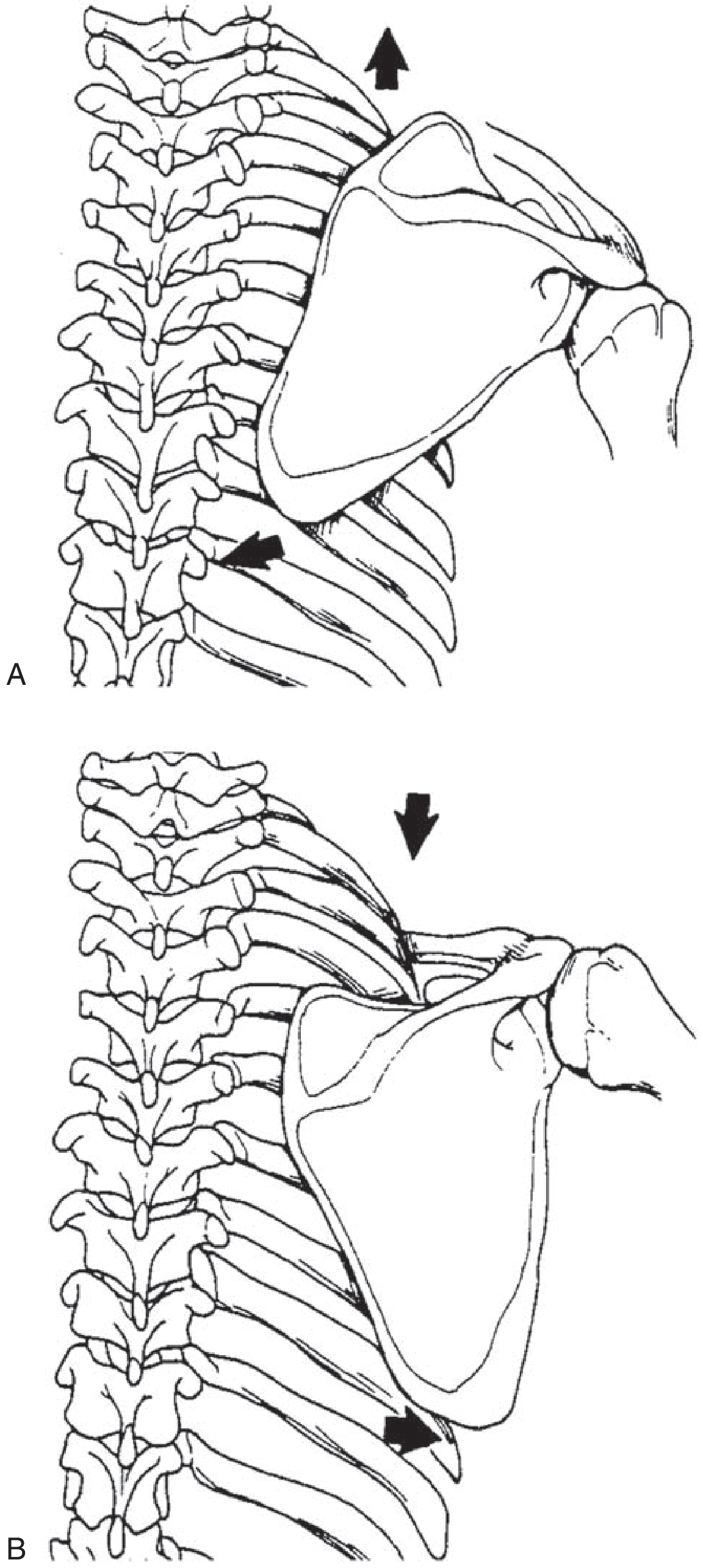
1. Medial Winging (more common)
- Nerve injured: Long thoracic nerve (C5–C7)
- Muscle paralyzed: Serratus anterior
- Scapular movement: Superior elevation, scapula translated medially, inferior angle rotated medially
- Elicited by: Pushing against a wall with arms outstretched ("wall push-up test") — the medial border lifts off the chest wall
- Common causes: Direct trauma to lateral chest wall, sports injuries (overhead athletes, weight lifting), iatrogenic (axillary dissection, rib resection), idiopathic
2. Lateral Winging (less common)
- Nerve injured: Spinal accessory nerve (CN XI)
- Muscle paralyzed: Trapezius
- Scapular movement: Shoulder depression, scapula translated laterally, inferior angle rotated laterally (unopposed serratus anterior pull)
- Common causes: Iatrogenic — ipsilateral neck surgery (thyroidectomy, lymph node biopsy, radical neck dissection)
- Additional signs: Shoulder drop, inability to shrug, difficulty abducting arm above 90°
Dorsal scapular nerve injury → rhomboid paralysis also causes lateral winging.
Mnemonics:
SWIM — Serratus Winging Is Medial TRAWL — Trapezius and Rhomboids Are Winged Laterally
Clinical Photo
Clinical Features
- Prominent protrusion of medial border / inferior angle posteriorly
- Functional deficit: Inability to fully elevate the arm (serratus anterior is essential for upward rotation of the scapula during arm elevation above 90°)
- Pain around the shoulder girdle
- Cosmetic deformity
Other Causes
Beyond nerve injury, winging can result from:
- Osseous causes: Osteochondromas (most common bony cause), fracture malunions (e.g., clavicle malunion)
- Muscle contracture (e.g., deltoid fibrosis causing abduction contracture)
- Facioscapulohumeral muscular dystrophy (FSHD): winging + facial weakness + inability to whistle; normal CPK; treated with scapulothoracic fusion
- Voluntary winging (can be performed voluntarily in some individuals)
Investigations
- Clinical diagnosis via wall push-up test or forward arm elevation
- EMG/nerve conduction studies to confirm nerve injury and localize the lesion
- MRI — denervation edema of serratus anterior (hyperintense signal on PDFS sequence) in long thoracic nerve palsy
Treatment
| Type | Conservative | Surgical |
|---|---|---|
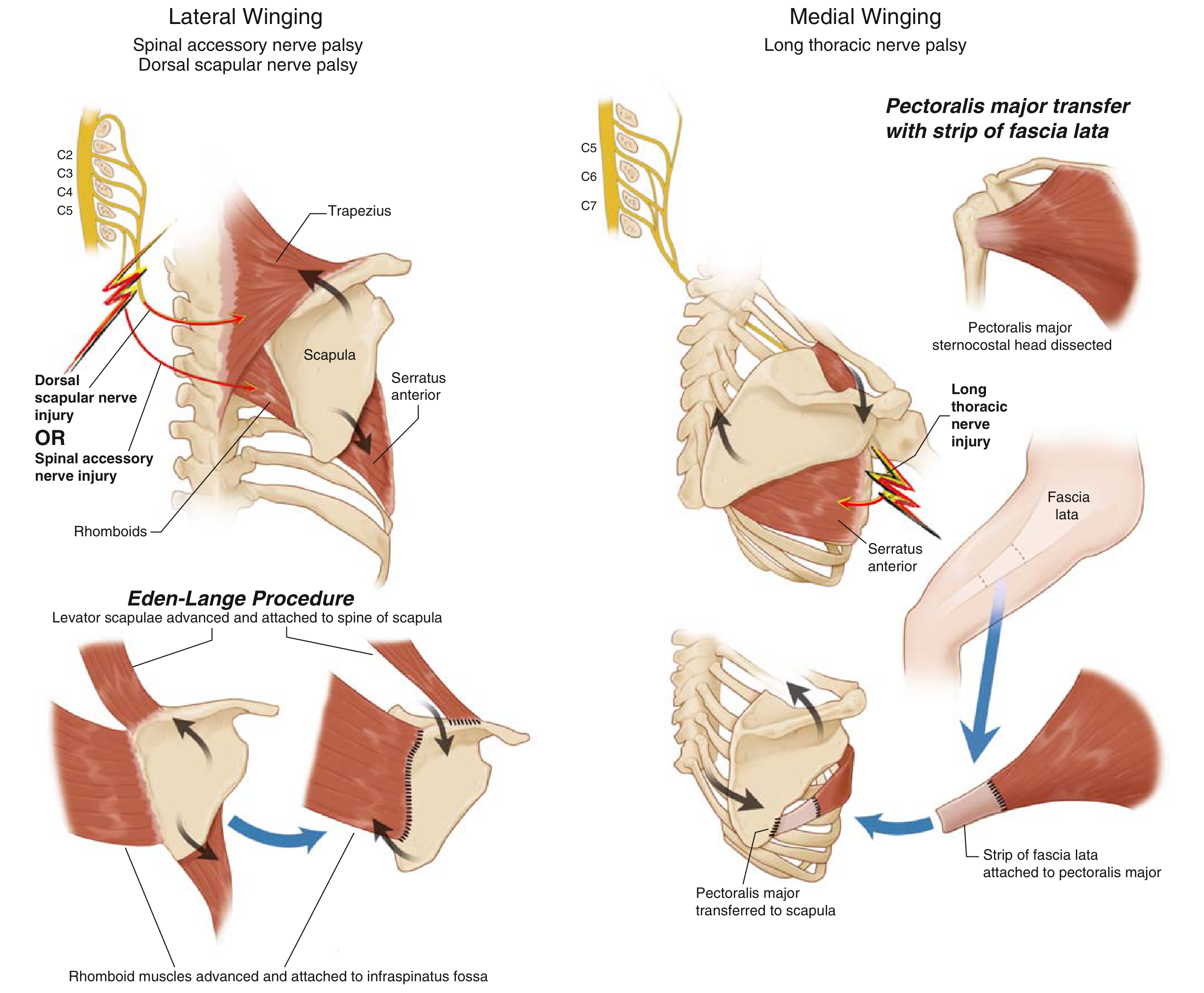
| Medial (serratus anterior palsy) | Physiotherapy, winger's brace | Pectoralis major transfer + strip of fascia lata to scapula |
| Lateral (trapezius palsy) | Physiotherapy, bracing | Eden–Lange procedure — levator scapulae and rhomboids transferred laterally to spine/infraspinatus fossa of scapula |
- Most cases of long thoracic nerve palsy resolve spontaneously within 6–24 months with conservative management
- Selective muscle strengthening may ameliorate winging
- Surgical options indicated for unacceptable cosmetic deformity or significant functional disability
Sources:
- Gray's Anatomy for Students, p. 846
- Miller's Review of Orthopaedics, 9th Edition, pp. 158, 405
This is a shared conversation. Sign in to Orris to start your own chat.