
Anticholinesterase drugs
anticholinesterase drugs mechanism classification neostigmine physostigmine organophosphate
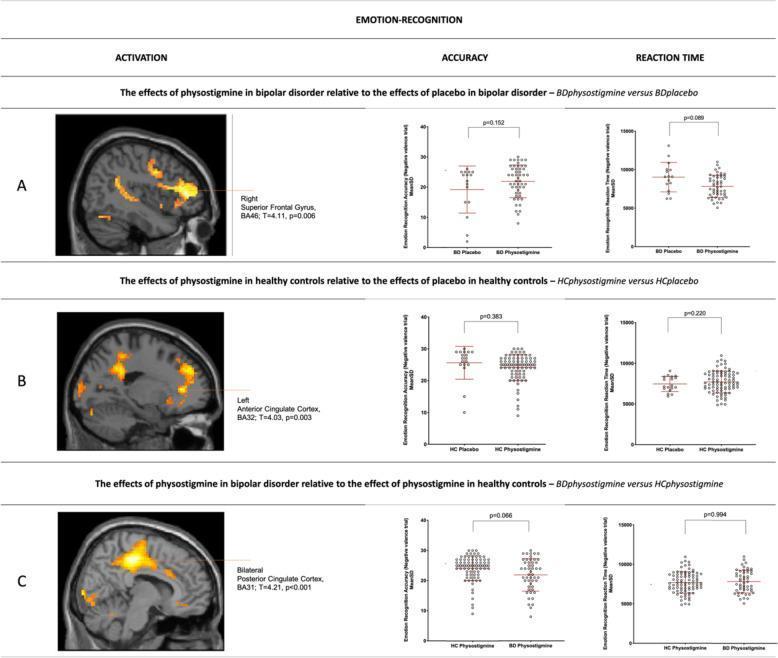
This composite educational graphic details the neurobiological effects of physostigmine during emotion-recognition tasks in Bipolar Disorder (BD) and Healthy Controls (HC). The image is organized into three comparative panels (A, B, C), each containing a functional MRI (fMRI) brain scan and corresponding behavioral dot plots for accuracy and reaction time. Panel A shows sagittal brain activation where physostigmine increases activity in the right superior frontal gyrus (Brodmann Area 46) in BD patients compared to placebo. Panel B illustrates decreased activation in the left anterior cingulate cortex (BA32) in healthy controls following physostigmine administration relative to placebo. Panel C displays a direct contrast between the two groups under physostigmine influence, highlighting increased activation in the bilateral posterior/dorsal cingulate cortex (BA31) in BD patients relative to controls. The behavioral data plots indicate that while neurofunctional activation patterns shifted significantly (p<0.05), behavioral performance regarding recognition accuracy and reaction times remained largely unchanged across groups. This material illustrates the differential cholinergic impact on frontocingulate circuits involved in emotional processing and top-down regulation in mood disorders.
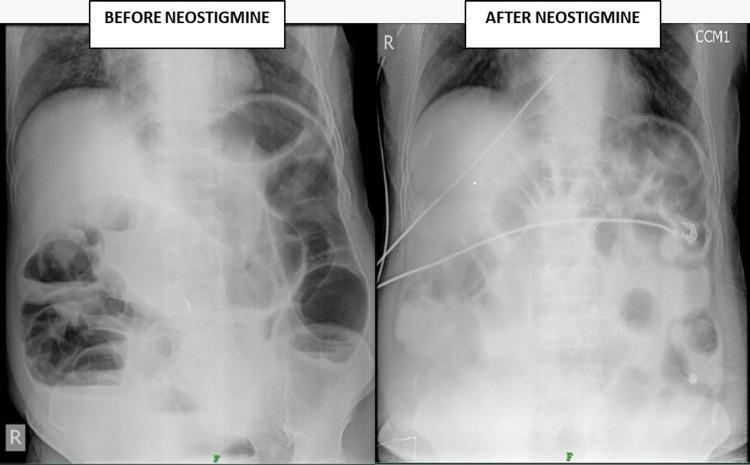
A comparison of two anteroposterior (AP) erect abdominal X-rays demonstrating the radiological management of acute colonic pseudo-obstruction (Ogilvie's syndrome). The 'Before Neostigmine' image shows marked gaseous distention of the large and small bowel loops throughout the abdominal cavity, with prominent multiple air-fluid levels indicative of functional bowel obstruction. The 'After Neostigmine' image shows a significant reduction in bowel loop caliber and a decrease in the number and height of air-fluid levels, indicating successful pharmacological decompression. In the second image, a radiopaque nasogastric (NG) tube is visible, coursing from the upper midline into the left upper quadrant, terminating in the stomach for decompression. Additional monitoring leads are visible on the periphery. This comparison illustrates the clinical effectiveness of neostigmine, an acetylcholinesterase inhibitor, in restoring bowel motility and reducing intraluminal pressure in cases of pseudo-obstruction.
![This pathophysiology diagram illustrates the mechanism of pH-induced physiological drug resistance (PIPDR) and its circumvention via nanoparticle (NP) delivery. The diagram is divided into two clinical scenarios: normal tissue and tumor tissue. In normal tissue (extracellular pH 7.4), weakly basic drugs exist in uncharged forms and freely permeate the cell membrane to enter normal cells (intracellular pH 7.0–7.4). In the tumor microenvironment (extracellular pH 6.5–7.0), the acidic conditions cause the drug molecules to become protonated ([HD]+). These protonated forms are depicted as clustered aggregates with reduced membrane permeability, leading to decreased intracellular drug concentration in tumor cells. The lower section demonstrates the educational concept of NP-mediated delivery: drug-loaded nanoparticles enter tumor cells through endocytosis, bypassing pH-dependent membrane permeability barriers. Once inside the intracellular environment (pH 7.0–7.4), the drugs are released in their active, uncharged forms, effectively restoring therapeutic efficacy. The diagram uses color-coded arrows and chemical equilibrium equations to highlight how local pH gradients influence pharmacokinetics and how nanomedicine can overcome extracellular acidity-induced resistance.](https://cdn.orris.care/cdss_images/pmc_clinical_VQA_c30d6d3413fb487b9b65ce7badf6c1f2b097f8647263f82b5d6f9482aee245ab.jpg)
This pathophysiology diagram illustrates the mechanism of pH-induced physiological drug resistance (PIPDR) and its circumvention via nanoparticle (NP) delivery. The diagram is divided into two clinical scenarios: normal tissue and tumor tissue. In normal tissue (extracellular pH 7.4), weakly basic drugs exist in uncharged forms and freely permeate the cell membrane to enter normal cells (intracellular pH 7.0–7.4). In the tumor microenvironment (extracellular pH 6.5–7.0), the acidic conditions cause the drug molecules to become protonated ([HD]+). These protonated forms are depicted as clustered aggregates with reduced membrane permeability, leading to decreased intracellular drug concentration in tumor cells. The lower section demonstrates the educational concept of NP-mediated delivery: drug-loaded nanoparticles enter tumor cells through endocytosis, bypassing pH-dependent membrane permeability barriers. Once inside the intracellular environment (pH 7.0–7.4), the drugs are released in their active, uncharged forms, effectively restoring therapeutic efficacy. The diagram uses color-coded arrows and chemical equilibrium equations to highlight how local pH gradients influence pharmacokinetics and how nanomedicine can overcome extracellular acidity-induced resistance.
A pathophysiology diagram illustrating three primary mechanisms of azole drug resistance in Aspergillus fumigatus. Mechanism A (Reduced azole affinity) shows a brown cyp51A gene with lightning bolt symbols representing single amino acid substitutions (G54, P216, F219, M220, G448), resulting in mutated CYP51A enzymes that cannot bind azole drugs. Mechanism B (Overexpression of CYP51A) depicts a green cyp51A gene with a TR34/L98H mutation in the promoter region, leading to increased mRNA transcription and a high concentration of target enzymes. Mechanism C (Overexpression of efflux transporter) illustrates multiple blue cylindrical Cdr1B transporters embedded in the cell membrane, using blue arrows to show the active expulsion of azole drugs (represented by brown triangles) from the intracellular space. This medical illustration provides a clear visual summary of genetic mutations and protein overexpression strategies used by fungal pathogens to evade antifungal treatments targeting the ergosterol synthesis pathway.
Anticholinesterase Drugs
Mechanism of Action
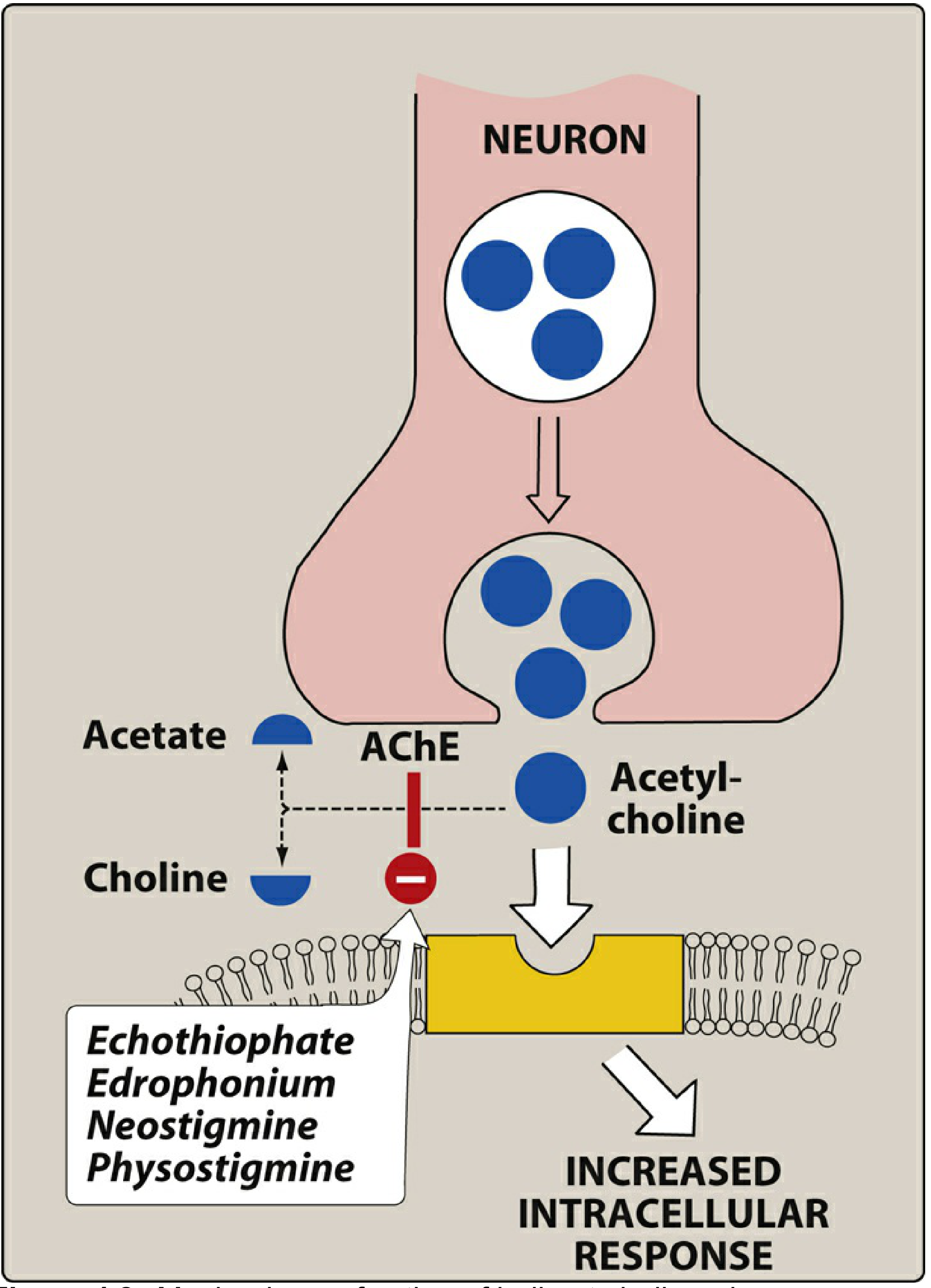
- Stimulates muscarinic receptors at ANS effector organs (heart, smooth muscle, glands)
- Stimulates then depresses nicotinic receptors at all ANS ganglia and skeletal muscle (NMJ)
- Stimulates then depresses CNS cholinergic sites (only with lipid-soluble/tertiary amine drugs)
- Lippincott Illustrated Reviews: Pharmacology, p. 159
Classification
Anticholinesterase Drugs
├── Reversible
│   ├── Short-acting: Edrophonium
│   ├── Intermediate-acting: Physostigmine, Neostigmine, Pyridostigmine, Rivastigmine, Donepezil, Galantamine
│   └── Long-acting (but reversible): Organophosphate-based ophthalmic agents (some)
└── Irreversible
    └── Organophosphates: Echothiophate, Parathion, Malathion, Nerve agents (Sarin, Soman, VX)
I. Reversible Anticholinesterases
A. Short-Acting: Edrophonium
- Structure: Quaternary amine (cannot cross BBB - peripherally restricted)
- Mechanism: Binds reversibly to the active center of AChE, electrostatically (no covalent bond)
- Duration: 10-20 minutes (rapid renal elimination)
- Uses (historical):
- Diagnosis of myasthenia gravis (Tensilon test) - IV injection causes rapid, brief improvement in muscle strength in MG patients
- Assessment of adequacy of treatment with longer-acting cholinesterase inhibitors (distinguishing myasthenic crisis from cholinergic crisis)
- Note: Edrophonium has been removed from the market due to availability of better diagnostic methods (anti-AChR antibody tests)
- Katzung's Basic and Clinical Pharmacology, 16th Ed., p. 189; Lippincott, p. 160
B. Intermediate-Acting: Physostigmine
- Structure: Tertiary amine (natural alkaloid from Calabar bean) - crosses the BBB
- Mechanism: Carbamic acid ester; forms a stable carbamoylated intermediate with AChE (reversibly inactivated). Duration: 30 min to 2 hours
- Actions:
- Stimulates muscarinic + nicotinic sites of ANS
- Stimulates nicotinic receptors at NMJ (muscle twitches, fasciculations, paralysis at high doses)
- CNS effects (due to tertiary structure): stimulates central cholinergic sites
- Therapeutic uses:
- Reversal of anticholinergic (atropine) overdose - can reverse CNS effects (delirium, coma), unlike neostigmine
- Historically used in glaucoma
- Adverse effects: Convulsions at high doses, bradycardia, decreased cardiac output, skeletal muscle paralysis
C. Intermediate-Acting: Neostigmine
- Structure: Quaternary amine (synthetic carbamic acid ester) - cannot cross BBB
- Mechanism: Reversible carbamylation of AChE, similar to physostigmine. Duration: 30 min to 2 hours
- Actions: Greater effect on skeletal muscle than physostigmine; can stimulate then paralyze skeletal muscle
- Therapeutic uses:
- Reversal of non-depolarizing neuromuscular blockade (e.g., post-surgery)
- Myasthenia gravis (symptomatic management)
- Paralytic ileus and urinary retention (0.5-1 mg SC)
- Acute colonic pseudo-obstruction (Ogilvie's syndrome)
- Adverse effects: Salivation, flushing, hypotension, nausea, diarrhea, bronchospasm (generalized cholinergic stimulation). No CNS effects. Contraindicated in mechanical bowel/urinary obstruction
- Lippincott, p. 161; Katzung, p. 187
D. Pyridostigmine
- Structure: Quaternary amine - peripherally restricted
- Longer duration than neostigmine (~3-6 hours)
- Uses: Chronic management of myasthenia gravis (oral; preferred over neostigmine for long-term use). Also used in nerve agent prophylaxis (military)
E. CNS-Acting Agents (Alzheimer's Disease)
| Drug | Selectivity | Duration | Notes |
|---|---|---|---|
| Donepezil | AChE > BuChE | Long (t½ ~70 hrs) | First-line; once daily; all stages of AD |
| Rivastigmine | AChE + BuChE | Intermediate | Oral/patch; also for Parkinson's dementia |
| Galantamine | AChE + allosteric nicotinic modulator | Intermediate | Also enhances nicotinic receptor sensitivity |
| Tacrine | AChE + BuChE | Short | Withdrawn (hepatotoxicity) |
II. Irreversible Anticholinesterases
A. Organophosphates (Echothiophate, Parathion, Malathion, Nerve Agents)
- Mechanism: Covalently bind via phosphate group to the serine hydroxyl at the active site of AChE → permanent inactivation
- Recovery requires synthesis of new enzyme molecules
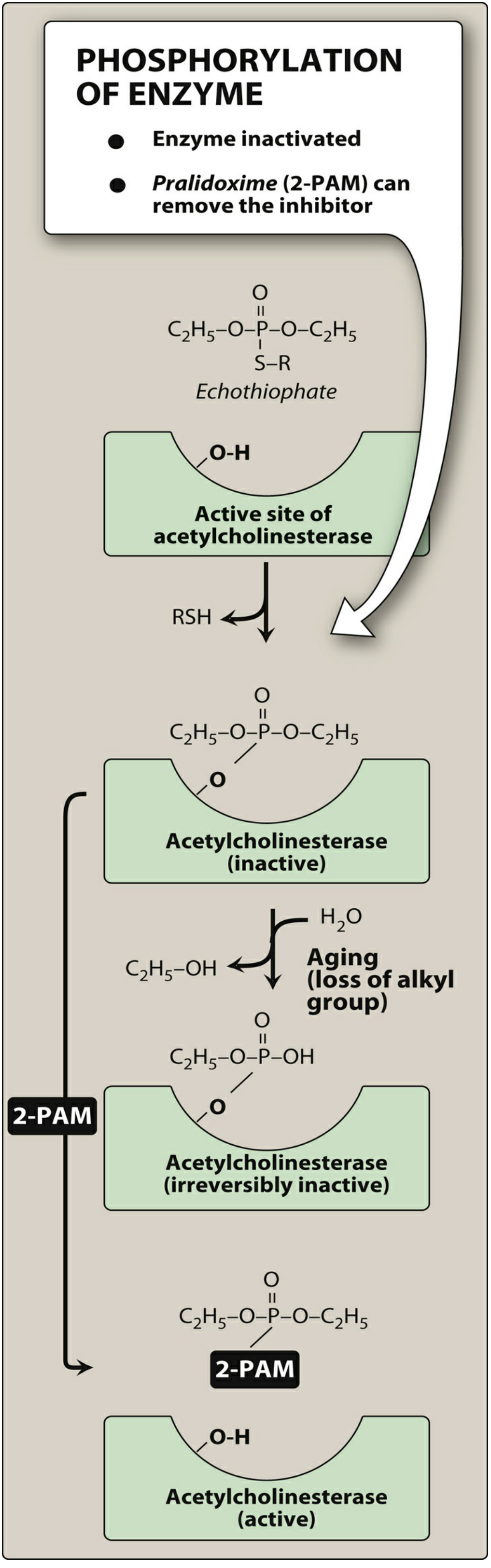
- Aging: After covalent modification, the phosphorylated enzyme slowly loses one alkyl group ("aging") - making it impossible for pralidoxime to reactivate the enzyme
- Faster aging agents: Soman (seconds) > Sarin > VX > Echothiophate
- Echothiophate (historical use): Topical ophthalmic solution for open-angle glaucoma; withdrawn due to risk of cataract formation
- Parathion/Malathion: Agricultural insecticides; major source of accidental poisoning
- Nerve agents (Sarin, Soman, VX, Tabun): Chemical warfare agents; act extremely rapidly at high concentrations
- Lippincott, p. 164-165
III. Pharmacological Effects (SLUDGE + Nicotinic + CNS)
Muscarinic Effects (SLUDGE / DUMBELS)
| System | Effect |
|---|---|
| Salivation | Increased |
| Lacrimation | Increased |
| Urination | Increased (detrusor contraction) |
| Defecation / Diarrhea | Increased GI motility |
| GI cramps | Nausea, vomiting |
| Emesis | Nausea/vomiting |
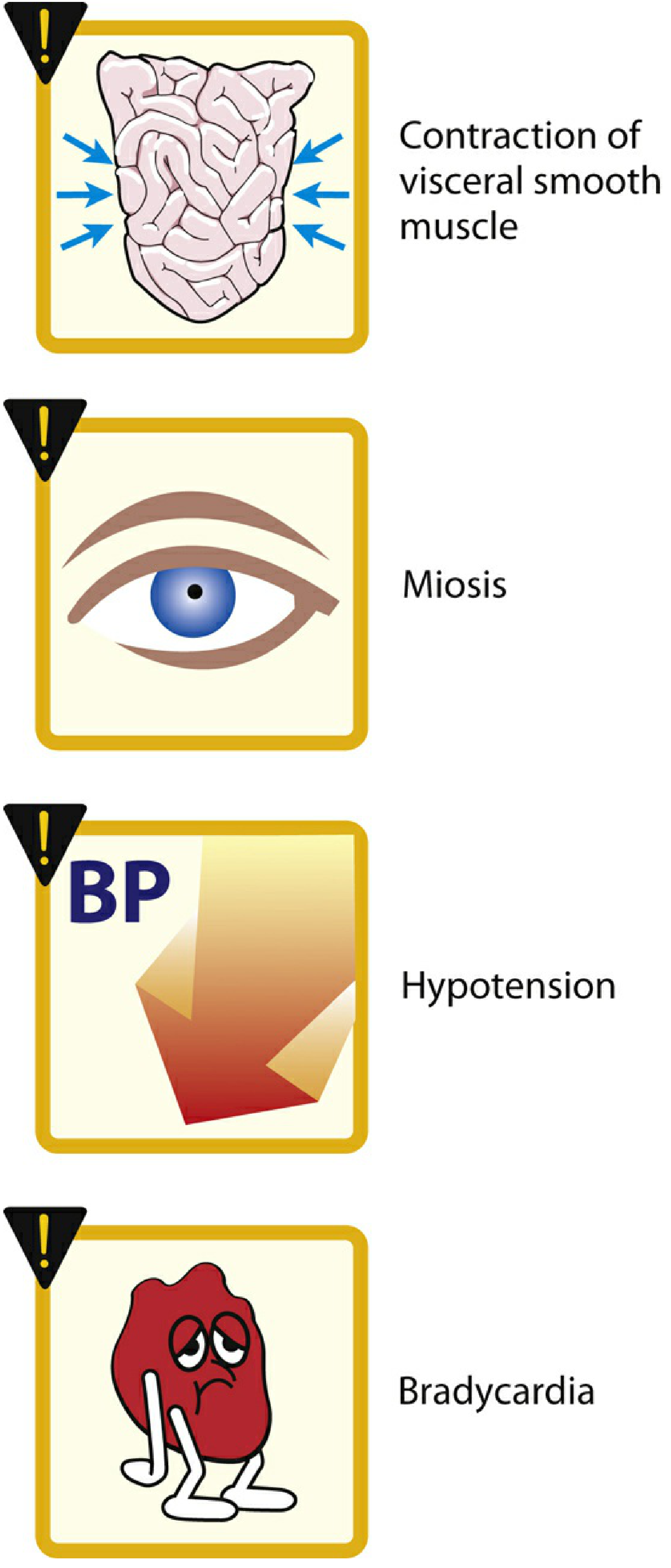
| Eye | Miosis, blurred vision |
| Heart | Bradycardia, heart block |
| Bronchi | Bronchoconstriction, increased secretions |
| BP | Hypotension |
| Sweat glands | Diaphoresis |
Nicotinic Effects (NMJ + Ganglia)
- NMJ: Muscle fasciculations → weakness → paralysis (depolarizing block)
- Ganglia: Tachycardia, hypertension (can counteract some muscarinic effects)
CNS Effects (tertiary amines / lipid-soluble organophosphates)
- Anxiety, restlessness
- Seizures / convulsions
- Loss of consciousness, coma
- Respiratory failure (central + peripheral: bronchospasm + diaphragm paralysis)
IV. Therapeutic Uses Summary
| Indication | Drug(s) of Choice |
|---|---|
| Myasthenia gravis (chronic) | Pyridostigmine (oral), neostigmine |
| Myasthenia gravis (diagnosis) | Edrophonium (historical), anti-AChR antibodies now preferred |
| Reversal of NMB (non-depolarizing) | Neostigmine + glycopyrrolate/atropine |
| Alzheimer's dementia | Donepezil, rivastigmine, galantamine |
| Anticholinergic overdose | Physostigmine (crosses BBB) |
| Glaucoma (open-angle) | Pilocarpine (direct); echothiophate (historical, withdrawn) |
| Paralytic ileus / urinary retention | Neostigmine |
| Ogilvie's syndrome | Neostigmine IV |
V. Treatment of Anticholinesterase Poisoning (Organophosphate Toxicity)
Clinical Presentation (Cholinergic Crisis)
- Dominant signs: bronchospasm, excessive secretions, bradycardia, seizures, miosis, diaphoresis, muscle paralysis
Treatment
- Pralidoxime (2-PAM) - oxime reactivator of AChE:
- Must be given before aging occurs (within hours for most agents)
- Has a charged group that displaces the phosphate from AChE
- Reverses both peripheral muscarinic and nicotinic effects
- Does NOT penetrate CNS - cannot reverse central effects
- Ineffective once aging has occurred, and cannot reverse carbamate (e.g., physostigmine, neostigmine) toxicity
- Atropine (high doses) - blocks muscarinic effects (bronchospasm, secretions, bradycardia)
- Diazepam - for persistent convulsions
- Supportive care: patent airway, oxygen, mechanical ventilation if needed
- Lippincott Illustrated Reviews: Pharmacology, p. 167; Katzung, p. 193
Key Comparison: Physostigmine vs Neostigmine
| Feature | Physostigmine | Neostigmine |
|---|---|---|
| Structure | Tertiary amine (natural) | Quaternary amine (synthetic) |
| BBB penetration | Yes | No |
| GI absorption | Good | Poor |
| CNS effects | Yes | No |
| Skeletal muscle effect | Moderate | Greater |
| Main uses | Anticholinergic OD reversal, glaucoma | NMB reversal, MG, ileus |
| Atropine reversal | Yes (peripheral + some CNS) | Yes (peripheral only) |
Refer from kd tripathi and other resources which have easy language and understanding which we could write in our exams and can get good marks
cholinergic crisis SLUDGE symptoms organophosphate poisoning muscarinic nicotinic
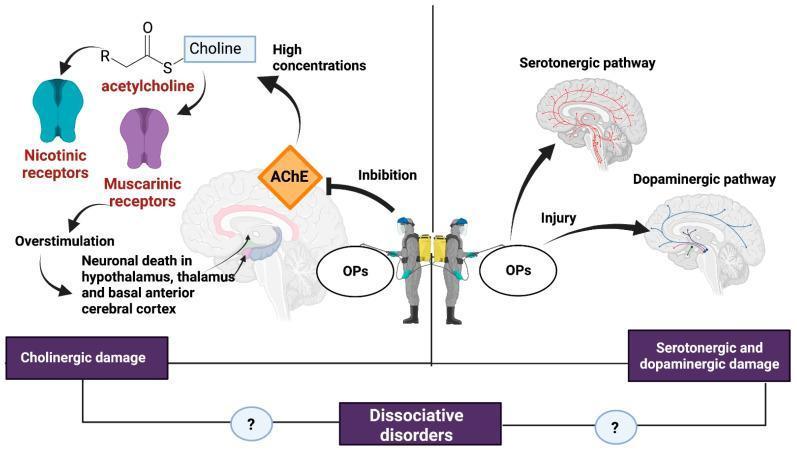
This pathophysiology diagram illustrates the neurotoxic mechanisms of organophosphates (OPs) and their potential link to dissociative disorders. The visual is divided into two primary sections. The left panel depicts the cholinergic damage pathway, showing how OPs inhibit acetylcholinesterase (AChE), the enzyme responsible for breaking down acetylcholine into choline. This inhibition results in high concentrations of acetylcholine, leading to the overstimulation of nicotinic and muscarinic receptors. The downstream consequence is neuronal death within the hypothalamus, thalamus, and basal anterior cerebral cortex. The right panel focuses on non-cholinergic neurotoxicity, where OPs cause direct injury to the serotonergic (red) and dopaminergic (blue) pathways, visualized on a sagittal brain section. Both pathways converge at the bottom of the diagram, suggesting that combined cholinergic, serotonergic, and dopaminergic damage may serve as a pathophysiological substrate for the development of dissociative disorders. The diagram utilizes chemical structures, receptor icons, and anatomical brain maps to synthesize complex biochemical and neurological interactions in the context of pesticide exposure.
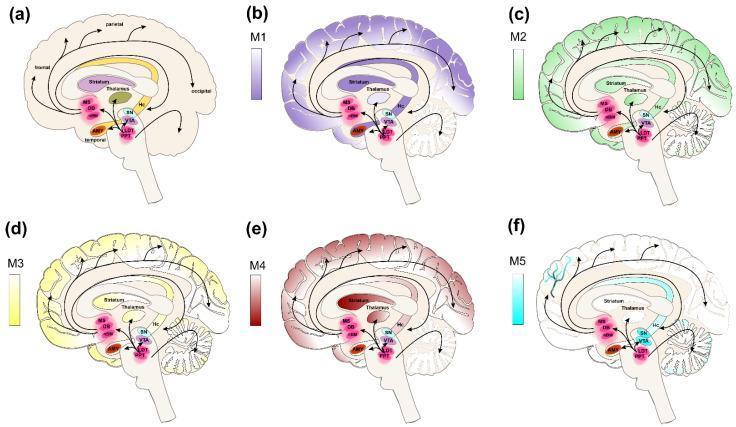
This medical illustration comprises six sagittal-view diagrams of the human brain (a–f) detailing cholinergic pathways and the distribution of muscarinic receptor subtypes (M1–M5). Diagram (a) maps primary cholinergic inputs, illustrating projections from basal forebrain nuclei, including the medial septum (MS), diagonal band of Broca (DB), and nucleus basalis magnocellularis (nBM), toward the neocortex (frontal, parietal, occipital), amygdala (AMY), and hippocampus (Hc). Brainstem cholinergic projections from the pedunculopontine nucleus (PPN) and laterodorsal tegmentum (LDT) are shown targeting the thalamus and basal forebrain. Panels (b) through (f) utilize color-coded heatmaps to indicate the expression density of muscarinic receptor subtypes: M1 (purple) and M2 (green) show high cortical and hippocampal density; M3 (yellow) is localized primarily in the cortex and basal ganglia; M4 (red) exhibits strong expression in the striatum and neocortex; and M5 (cyan) displays more localized expression in the ventral tegmental area and substantia nigra. These diagrams facilitate understanding of cholinergic neurotransmission relevant to neurodegenerative diseases, epilepsy, and schizophrenia.
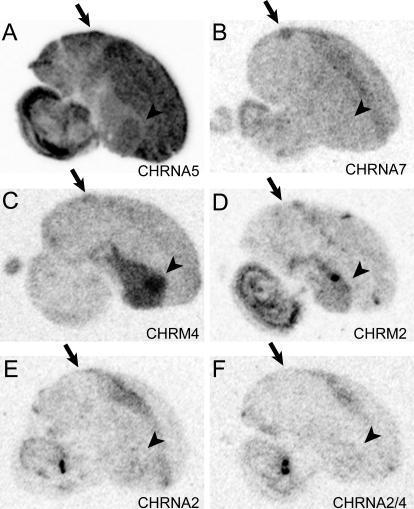
This composite diagnostic image consists of six phosphorimage autoradiograms (A–F) displaying mRNA expression patterns of nicotinic and muscarinic acetylcholine receptor subunits in avian brain sections. Panels A, B, E, and F illustrate nicotinic subunits (CHRNA5, CHRNA7, CHRNA2, and CHRNA2/4 respectively), while panels C and D show muscarinic subunits (CHRM4 and CHRM2). Each panel demonstrates differential signal intensities in grayscale, where darker regions indicate higher gene expression. Black arrows across all panels point to the nucleus HVC (High Vocal Center) in the caudo-dorsal nidopallium, showing notable enrichment for CHRNA5 and CHRM4. Black arrowheads identify the location of Area X in the striatum, which shows particularly intense signal for CHRM4 (panel C) and CHRM2 (panel D). The autoradiograms provide a comparative visualization of neurochemical specializations within the song system, highlighting how specific receptor subunits are localized to different functional nuclei involved in vocal learning and motor control. Scale bar: 1 mm.
ANTICHOLINESTERASE DRUGS
(KD Tripathi-style | Exam-Ready Notes)
Note: KD Tripathi is not in the digital library, but the following is written in the same concise, point-by-point style KD Tripathi is known for, sourced from Lippincott Pharmacology, Katzung, and Goodman & Gilman.
DEFINITION / INTRO (Write this first in exams)
CLASSIFICATION (Most important for exams)
ANTICHOLINESTERASE DRUGS
│
├── A. REVERSIBLE
│   ├── 1. Short-acting (minutes)
│   │       Edrophonium (10–20 min)
│   │
│   ├── 2. Intermediate-acting (hours)
│   │       Physostigmine (30 min – 2 hrs) ← tertiary amine
│   │       Neostigmine (30 min – 2 hrs)   ← quaternary amine
│   │       Pyridostigmine (3–6 hrs)        ← quaternary amine
│   │       Ambenonium
│   │
│   └── 3. Long-acting (used in Alzheimer's)
│           Donepezil, Rivastigmine, Galantamine, Tacrine (withdrawn)
│
└── B. IRREVERSIBLE
        Organophosphates:
        Echothiophate (ophthalmic)
        Parathion, Malathion (insecticides)
        Sarin, Soman, VX, Tabun (nerve agents / chemical warfare)
MECHANISM OF ACTION
- Edrophonium → binds electrostatically (non-covalent) to the anionic site of AChE. Very brief action.
- Physostigmine, Neostigmine → are carbamic acid esters. They carbamylate the esteratic site of AChE → the enzyme is reversibly inactivated (carbamylated enzyme regenerates slowly over 30 min to 2 hours).
- Covalently phosphorylate the serine-OH at the esteratic (active) site of AChE
- Enzyme is permanently inactivated
- Recovery only by synthesis of new enzyme (takes weeks)
- "Aging" = spontaneous loss of one alkyl group from the phosphorylated enzyme → makes the bond absolutely irreversible, even pralidoxime cannot work after aging
PHARMACOLOGICAL EFFECTS
1. Muscarinic effects (SLUDGE mnemonic)
| Letter | Effect |
|---|---|
| S | Salivation increased |
| L | Lacrimation increased |
| U | Urination (detrusor contracts) |
| D | Defecation / Diarrhea |
| G | GI cramps |
| E | Emesis (nausea/vomiting) |
- Eye: Miosis + spasm of accommodation (ciliary muscle contracts)
- Heart: Bradycardia, reduced cardiac output, hypotension
- Lung: Bronchoconstriction + increased bronchial secretions
- Skin: Diaphoresis (sweating)
2. Nicotinic effects (NMJ)
- Low dose: Muscle fasciculations, increased muscle strength
- High dose: Depolarizing blockade → muscle weakness → paralysis
- Also: ganglionic stimulation → tachycardia, hypertension (can mask muscarinic bradycardia)
3. CNS effects (only with tertiary amines - physostigmine, organophosphates)
- Low dose: Restlessness, anxiety
- High dose: Tremors, convulsions, coma, respiratory depression
Key exam point: Quaternary amines (neostigmine, pyridostigmine, edrophonium) do NOT cross the BBB → no CNS effects. Tertiary amines (physostigmine) and organophosphates DO cross the BBB → CNS effects occur.
INDIVIDUAL DRUGS (write these one by one in exams)
1. EDROPHONIUM
| Feature | Details |
|---|---|
| Type | Quaternary amine, short-acting |
| Mechanism | Electrostatic binding to anionic site of AChE (no covalent bond) |
| Duration | 10-20 minutes (rapidly excreted by kidney) |
| BBB? | NO |
| Uses | Diagnosis of myasthenia gravis (Tensilon test - historically); distinguishing myasthenic crisis from cholinergic crisis |
| Note | Now removed from market; anti-AChR antibody test is preferred |
2. PHYSOSTIGMINE (The most important reversible agent - frequently asked)
| Feature | Details |
|---|---|
| Source | Natural alkaloid (Calabar bean) |
| Type | Tertiary amine - crosses BBB |
| Mechanism | Carbamylates esteratic site of AChE (reversible) |
| Duration | 30 min - 2 hrs |
| BBB? | YES (most important feature) |
- Antidote for anticholinergic (atropine) poisoning - can reverse BOTH peripheral AND central (delirium, coma) anticholinergic effects. This is its KEY use.
- Glaucoma (historically, topical)
- Alzheimer's disease (historical)
- Bradycardia, hypotension
- Convulsions at high doses
- Excessive secretions, bronchospasm
- Skeletal muscle paralysis (at high doses - via NMJ depolarizing block)
Exam tip: "Physostigmine crosses the BBB - so it is used to reverse CNS effects of atropine poisoning. Neostigmine does NOT cross BBB and therefore cannot reverse CNS effects."
3. NEOSTIGMINE (Most clinically used - MUST know)
| Feature | Details |
|---|---|
| Type | Quaternary amine (synthetic) |
| Mechanism | Carbamylates AChE (reversible) |
| Duration | 30 min - 2 hrs |
| BBB? | NO |
| GI absorption | Poor (given parenterally or large oral doses) |
- Reversal of non-depolarizing neuromuscular blockade (post-surgery) - always given WITH atropine/glycopyrrolate to prevent bradycardia
- Myasthenia gravis - symptomatic treatment
- Paralytic ileus - 0.5-1 mg SC
- Urinary retention (post-op, post-partum, non-obstructive)
- Ogilvie's syndrome (acute colonic pseudo-obstruction) - IV neostigmine
4. PYRIDOSTIGMINE
- Quaternary amine, similar to neostigmine but longer duration (3-6 hrs)
- Preferred for chronic oral treatment of myasthenia gravis (neostigmine is used acutely)
- Also used as prophylaxis against nerve agent (soman) poisoning in military personnel
- Adverse effects same as neostigmine
5. DONEPEZIL, RIVASTIGMINE, GALANTAMINE (Alzheimer's group)
| Drug | Special Feature |
|---|---|
| Donepezil | Once daily (t½ = 70 hrs); mild-moderate-severe AD; well tolerated |
| Rivastigmine | Inhibits both AChE + BuChE; also for Parkinson's dementia; available as transdermal patch |
| Galantamine | Also acts as allosteric nicotinic receptor modulator (unique) |
| Tacrine | First agent; WITHDRAWN due to hepatotoxicity |
Exam tip: "None of these drugs stop the progression of Alzheimer's - they only delay it and give modest symptomatic benefit."
6. ORGANOPHOSPHATES (Irreversible agents)
- Echothiophate - ophthalmic use (glaucoma), now mostly withdrawn
- Parathion, Malathion - agricultural insecticides
- Sarin, Soman, Tabun, VX - chemical warfare nerve agents
- Organophosphate covalently phosphorylates serine-OH of AChE → enzyme inactive
- If left alone → "aging" occurs (loss of one alkyl group)
- After aging → enzyme is absolutely irreversible - pralidoxime cannot work
- Rate of aging: Soman > Sarin > Tabun > others (soman ages within seconds!)
CHOLINERGIC CRISIS (Organophosphate Poisoning) - Very High Yield
| System | Signs |
|---|---|
| Eye | Miosis (pin-point pupils), blurred vision |
| GI | Nausea, vomiting, diarrhea, cramps, defecation |
| Glands | Salivation, lacrimation, sweating (diaphoresis) |
| Respiratory | Bronchoconstriction + excessive secretions → respiratory failure |
| Heart | Bradycardia, hypotension |
| NMJ | Fasciculations → weakness → paralysis of respiratory muscles |
| CNS | Anxiety → seizures → coma (with organophosphates) |
Most common cause of death = RESPIRATORY FAILURE (bronchospasm + paralysis of diaphragm + CNS depression)
TREATMENT OF ORGANOPHOSPHATE POISONING (Very Frequently Asked)
Step 1: Supportive care
- Clear airway, oxygen, mechanical ventilation if needed
Step 2: ATROPINE (given in HIGH doses - life-saving)
- Blocks muscarinic effects: bronchospasm, secretions, bradycardia
- Given IV until secretions dry up ("atropinization")
- Does NOT reverse nicotinic or CNS effects
- Dose: 2-4 mg IV, repeated every 5-10 min until atropinized
Step 3: PRALIDOXIME (2-PAM) (oxime reactivator)
- Must be given EARLY before aging
- Mechanism: Its charged group approaches the anionic site of AChE → displaces the phosphate from AChE → enzyme reactivated
- Reverses both peripheral muscarinic AND nicotinic effects
- Does NOT cross BBB → cannot reverse CNS effects
- Useless after aging of the enzyme
- Cannot reverse carbamate (physostigmine, neostigmine) toxicity
Step 4: DIAZEPAM
- Given to control persistent convulsions
COMPARISON TABLE: PHYSOSTIGMINE vs NEOSTIGMINE
| Feature | Physostigmine | Neostigmine |
|---|---|---|
| Source | Natural (Calabar bean) | Synthetic |
| Chemical type | Tertiary amine | Quaternary amine |
| Crosses BBB? | YES | NO |
| GI absorption | Good | Poor |
| CNS effects | Yes | No |
| Effect on skeletal muscle | Moderate | Greater |
| Used for anticholinergic OD? | YES (can reverse CNS effects) | NO |
| Used in myasthenia gravis? | Not preferred | YES |
| Used for NMJ reversal? | No | YES |
USES AT A GLANCE (Quick revision table)
| Clinical Use | Drug of Choice |
|---|---|
| Myasthenia gravis (chronic) | Pyridostigmine (oral) |
| Myasthenia gravis (acute/diagnosis) | Edrophonium (historical) / Neostigmine |
| Reversal of non-depolarizing NMB | Neostigmine + atropine |
| Alzheimer's disease | Donepezil (1st choice), Rivastigmine, Galantamine |
| Atropine/anticholinergic overdose | Physostigmine (crosses BBB) |
| Paralytic ileus / urinary retention | Neostigmine |
| Glaucoma (open angle) | Pilocarpine (direct); Echothiophate (historical) |
| Organophosphate poisoning | Atropine + Pralidoxime + Diazepam |
| Parkinson's dementia | Rivastigmine |
EXAM-WORTHY ONE-LINERS
- "Physostigmine is a tertiary amine - the only reversible AChE inhibitor that crosses the BBB."
- "Neostigmine has greater effect on skeletal muscle than physostigmine."
- "Pralidoxime works only before aging - give it early in organophosphate poisoning."
- "Aging is fastest with Soman (seconds) - so 2-PAM is least effective against Soman."
- "Tacrine = first AChE inhibitor for Alzheimer's - withdrawn due to hepatotoxicity."
- "Death in organophosphate poisoning = respiratory failure (bronchoconstriction + NMJ paralysis)."
- "Atropine treats muscarinic effects of AChE poisoning; 2-PAM treats both muscarinic + nicotinic."
- "Quaternary amines (neostigmine, pyridostigmine, edrophonium) cannot cross BBB."
Explain me this topic im very new to this i cant understand whats happening
Anticholinesterase Drugs — Explained Like You're Hearing It for the First Time
STEP 1: First, understand the "messenger" — Acetylcholine (ACh)
STEP 2: Now meet the "cleaner" — Acetylcholinesterase (AChE)
Nerve → releases ACh → ACh lands on organ → message delivered
                ↓
          AChE comes and DESTROYS ACh
                ↓
         Message stops. System resets.
STEP 3: What happens when you BLOCK the garbage collector?
STEP 4: Where does ACh act? (Two types of receptors)
| Receptor | Where | Effect when ACh lands |
|---|---|---|
| Muscarinic | Heart, smooth muscle (gut, lungs, bladder), glands, eyes | Slows heart, increases secretions, contracts gut, constricts pupil |
| Nicotinic | Skeletal muscle (NMJ), autonomic ganglia | Contracts muscles |
STEP 5: What are the EFFECTS of too much ACh?
Muscarinic effects — remember "SLUDGE"
| S | Salivation — mouth fills with saliva |
|---|---|
| L | Lacrimation — tears pouring out |
| U | Urination — can't hold urine |
| D | Defecation / Diarrhea — loose stools |
| G | GI cramps — stomach pain |
| E | Emesis — nausea and vomiting |
- Eyes: Miosis (pupil becomes very small — "pin-point pupils")
- Heart: Bradycardia (heart slows down)
- Lungs: Bronchoconstriction (airways narrow) + lots of mucus secretion → breathing difficulty
- BP: Falls (hypotension)
- Skin: Sweating (diaphoresis)
Nicotinic effects (skeletal muscle):
- Small dose: Muscle twitching (fasciculations), increased strength
- Large dose: Muscles get paralyzed (too much stimulation causes the muscle to stop responding — like a phone line overloaded and crashing)
CNS effects (only some drugs):
- Anxiety → tremors → seizures → coma
STEP 6: The drugs — two big groups
GROUP A: Reversible (temporary blockade of AChE)
GROUP B: Irreversible (permanent blockade of AChE)
STEP 7: The individual drugs — made simple
1. EDROPHONIUM — "The quick detective"
- Blocks AChE for only 10-20 minutes, then disappears
- Was used as a diagnostic test for myasthenia gravis (a disease where muscles are weak — explained below)
- If a patient has myasthenia gravis and you give edrophonium → muscles become suddenly stronger for a few minutes (because ACh accumulates at the weak NMJ) → confirms diagnosis
- Cannot enter the brain
2. PHYSOSTIGMINE — "The special one that enters the brain"
- Blocks AChE for about 30 min to 2 hours
- The KEY special thing: it is a tertiary amine → can cross the blood-brain barrier (BBB) into the brain
- Main use: Antidote when someone has atropine/anticholinergic poisoning — because it can reverse both the body AND brain effects of atropine overdose (confusion, delirium, coma)
- No other common anticholinesterase drug can do this
3. NEOSTIGMINE — "The workhorse"
- Blocks AChE for 30 min to 2 hours
- Cannot enter the brain (quaternary amine — too charged/polar)
- Three big uses:
- After surgery, doctors give muscle relaxants to paralyze the patient. When surgery is over, they give neostigmine to reverse this paralysis (always combined with atropine to prevent bradycardia)
- Myasthenia gravis — to strengthen weak muscles
- Paralytic ileus / urinary retention — to get the gut and bladder moving again
4. PYRIDOSTIGMINE — "The long-lasting neostigmine"
- Similar to neostigmine, but lasts 3-6 hours (longer)
- Preferred for daily tablet treatment of myasthenia gravis (because it lasts longer, patient takes fewer tablets)
5. DONEPEZIL / RIVASTIGMINE / GALANTAMINE — "The brain helpers"
- Used in Alzheimer's disease
- In Alzheimer's, the brain loses ACh-releasing nerve cells → memory and thinking decline
- These drugs inhibit AChE in the brain → ACh is preserved → memory and thinking improve (modestly)
- They do NOT cure Alzheimer's — they slow it down temporarily
STEP 8: What is Myasthenia Gravis? (Because these drugs are very linked to it)
- Fewer receptors available → ACh cannot deliver its muscle-contracting message properly → muscles become weak
- Symptoms: drooping eyelids (ptosis), double vision, difficulty swallowing and speaking, limb weakness
- Treatment: Give neostigmine or pyridostigmine → AChE is blocked → more ACh accumulates → the little ACh that IS available gets to work on the few remaining receptors → muscle strength improves
STEP 9: Organophosphate Poisoning — The scary but important one
- AChE is permanently destroyed
- ACh floods everywhere
- The person shows ALL of the SLUDGE effects + muscle paralysis + seizures
- Most common cause of death = Respiratory failure (airways narrow from bronchoconstriction + breathing muscles become paralyzed)
How do you treat it?
| Drug | What it does |
|---|---|
| Atropine (high doses) | Blocks muscarinic receptors — stops the SLUDGE effects, opens the airways, raises heart rate. This is the LIFE-SAVING step. |
| Pralidoxime (2-PAM) | "Reactivates" AChE — pulls the organophosphate off the enzyme. Works ONLY if given early, before "aging" happens. |
| Diazepam | Stops the seizures |
What is "Aging"?
THE BIG PICTURE — one diagram in your head
NERVE releases ACh
        ↓
   ACh crosses synapse
        ↓
   ACh binds to receptor → EFFECT (heart slows, muscle contracts, etc.)
        ↓
   AChE breaks down ACh → effect stops

   ===================================

   GIVE ANTICHOLINESTERASE DRUG:
        ↓
   AChE is BLOCKED → ACh is NOT broken down
        ↓
   ACh piles up → PROLONGED and EXAGGERATED EFFECTS
   (SLUDGE + muscle fasciculations/paralysis + CNS effects)
SUMMARY IN PLAIN ENGLISH
- ACh is the nerve messenger. AChE is the enzyme that destroys it.
- Anticholinesterase drugs block AChE → ACh piles up → everything gets over-stimulated.
- Reversible drugs (neostigmine, physostigmine, pyridostigmine) → useful medicines for myasthenia gravis, reversal of muscle relaxants, Alzheimer's.
- Physostigmine is special — only one that enters the brain, used for atropine overdose.
- Irreversible drugs (organophosphates) → pesticides/nerve agents → cause SLUDGE + paralysis + seizures + death.
- Treatment of poisoning = Atropine (stop SLUDGE) + Pralidoxime (reactivate AChE) + Diazepam (stop fits).
Try again
What was wrong with the last explanation? What do you want me to change? · What is your background right now?
Whats the use of these drugs
What Are Anticholinesterase Drugs Used For?
1. 🧠 Myasthenia Gravis (Muscle Weakness Disease)
- In this disease, muscles become very weak because the body attacks its own nerve-muscle connection
- These drugs make more ACh available at the muscle → muscle gets stronger
- Pyridostigmine tablet is taken daily by patients to function normally
- Think of it as: "boosting the signal to weak muscles"
2. 🏥 Reversing Muscle Paralysis After Surgery
- During surgery, doctors paralyze the patient's muscles (on purpose) using muscle relaxants
- After surgery is done, they give neostigmine to wake the muscles back up
- Always given with atropine to prevent the heart from slowing down too much
3. 🧓 Alzheimer's Disease (Memory Loss)
- In Alzheimer's, brain cells that make ACh die off → memory and thinking decline
- These drugs preserve whatever ACh is left in the brain → modest improvement in memory
- They do NOT cure Alzheimer's — they just slow it down for a while
4. 💊 Antidote for Atropine / Anticholinergic Poisoning
- If someone takes too much atropine or anticholinergic drug → they get confused, delirious, can go into coma
- Physostigmine is the only anticholinesterase that enters the brain
- It reverses both the body AND brain effects of atropine overdose
5. 🚽 Paralytic Ileus and Urinary Retention
- Sometimes after surgery, the gut or bladder "falls asleep" and stops working
- Neostigmine stimulates the gut and bladder muscles back into action
- Also used in Ogilvie's syndrome (colon stops working without blockage)
6. 👁️ Glaucoma (High Eye Pressure)
- Causes the pupil to constrict (miosis) → helps fluid drain from the eye → lowers eye pressure
- Largely replaced by better, safer eye drops now
7. 🔍 Diagnosis of Myasthenia Gravis (Historical)
- A very short-acting drug (works for only 10-20 min)
- If given IV to a myasthenia patient → muscles get suddenly stronger → confirms diagnosis
- Now replaced by blood tests (anti-AChR antibody test)
Quick Memory Table
| Use | Drug |
|---|---|
| Myasthenia gravis (daily treatment) | Pyridostigmine |
| Reversing paralysis after surgery | Neostigmine |
| Alzheimer's disease | Donepezil, Rivastigmine, Galantamine |
| Atropine overdose | Physostigmine |
| Paralytic ileus / urinary retention | Neostigmine |
| Glaucoma | Echothiophate (historical) |
| Diagnosing myasthenia gravis | Edrophonium (historical) |
Give a long note of 12 to 15 marks on anticholinesterase in easy language with flow charts to the point exam ready answer
ANTICHOLINESTERASE DRUGS
(Long Answer — 12 to 15 Marks)
INTRODUCTION
HOW IT WORKS — BASIC CONCEPT
NORMAL SITUATION:
─────────────────────────────────────────────────────
  Nerve ──► releases ACh ──► ACh acts on receptor
                                    │
                              AChE breaks ACh down
                                    │
                             Effect STOPS normally
─────────────────────────────────────────────────────

WITH ANTICHOLINESTERASE DRUG:
─────────────────────────────────────────────────────
  Nerve ──► releases ACh ──► ACh acts on receptor
                                    │
                          AChE is BLOCKED by drug
                                    │
                          ACh is NOT broken down
                                    │
                        ACh keeps accumulating
                                    │
                   PROLONGED & EXAGGERATED EFFECTS
─────────────────────────────────────────────────────
CLASSIFICATION
ANTICHOLINESTERASE DRUGS
│
├── A. REVERSIBLE
│   │
│   ├── 1. Short-acting
│   │        • Edrophonium (10–20 min)
│   │
│   ├── 2. Intermediate-acting
│   │        • Physostigmine (30 min – 2 hrs) ← TERTIARY AMINE
│   │        • Neostigmine  (30 min – 2 hrs)  ← QUATERNARY AMINE
│   │        • Pyridostigmine (3–6 hrs)        ← QUATERNARY AMINE
│   │        • Ambenonium
│   │
│   └── 3. Long-acting (used in Alzheimer's)
│            • Donepezil
│            • Rivastigmine
│            • Galantamine
│            • Tacrine (WITHDRAWN — hepatotoxic)
│
└── B. IRREVERSIBLE
         Organophosphates:
         • Echothiophate (eye drops — glaucoma)
         • Parathion, Malathion (insecticides)
         • Sarin, Soman, VX, Tabun (nerve agents)
MECHANISM OF ACTION
Reversible agents:
- Edrophonium → binds electrostatically (non-covalent) to the anionic site of AChE. Very brief block. AChE recovers quickly.
- Physostigmine and Neostigmine → carbamic acid esters. They carbamylate the esteratic (active) site of AChE → enzyme is temporarily inactivated. Duration: 30 min to 2 hrs.
Irreversible agents (Organophosphates):
ORGANOPHOSPHATE MECHANISM:
───────────────────────────────────────────────────────────
  Organophosphate
       │
       ▼
  Covalently binds to SERINE-OH at active site of AChE
       │
       ▼
  AChE is permanently PHOSPHORYLATED → INACTIVE
       │
       ▼
  "AGING" occurs (loss of one alkyl group)
       │
       ▼
  Bond becomes ABSOLUTELY IRREVERSIBLE
  (Even pralidoxime cannot break it after aging)
       │
       ▼
  New AChE must be synthesized (takes weeks)
───────────────────────────────────────────────────────────
Key point on Aging: Soman ages fastest (within seconds) → Pralidoxime is least effective against Soman.
PHARMACOLOGICAL EFFECTS
1. Muscarinic Effects — Mnemonic: "SLUDGE"
S ── Salivation (excessive)
L ── Lacrimation (tearing)
U ── Urination (increased)
D ── Defecation / Diarrhea
G ── GI cramps
E ── Emesis (nausea/vomiting)

PLUS:
• Eye      → Miosis (pin-point pupils) + spasm of accommodation
• Heart    → Bradycardia + hypotension
• Lungs    → Bronchoconstriction + increased secretions
• Skin     → Diaphoresis (sweating)
2. Nicotinic Effects (at NMJ and Ganglia)
Low dose  → Muscle fasciculations, increased strength
High dose → Depolarizing block → Muscle PARALYSIS
            (ganglionic stimulation can also cause tachycardia)
3. CNS Effects (only with tertiary amines and organophosphates)
Mild  → Anxiety, restlessness, dizziness
Severe → Seizures / convulsions → Coma → Respiratory depression
Exam tip: Quaternary amines (neostigmine, pyridostigmine, edrophonium) CANNOT cross BBB → no CNS effects. Tertiary amines (physostigmine) and organophosphates CAN cross BBB → CNS effects occur.
INDIVIDUAL DRUGS
1. EDROPHONIUM
- Type: Quaternary amine, short-acting
- Mechanism: Electrostatic (non-covalent) binding to AChE
- Duration: 10–20 minutes
- Cannot cross BBB
- Use: Diagnosis of myasthenia gravis (Tensilon test — historical); distinguish myasthenic crisis from cholinergic crisis
- Now removed from market; blood tests (anti-AChR antibody) preferred
2. PHYSOSTIGMINE
- Source: Natural alkaloid from Calabar bean
- Type: Tertiary amine → Crosses BBB
- Mechanism: Carbamylation of AChE (reversible)
- Duration: 30 min – 2 hrs
- Antidote for anticholinergic (atropine) poisoning → reverses BOTH body AND CNS effects
- Historical: glaucoma
Remember: Physostigmine = Only reversible AChE inhibitor that enters the brain = Used for atropine OD
3. NEOSTIGMINE
- Type: Quaternary amine (synthetic)
- Mechanism: Carbamylation of AChE (reversible)
- Duration: 30 min – 2 hrs
- Cannot cross BBB
- Reversal of non-depolarizing neuromuscular blockade (post-surgery) — always given with atropine/glycopyrrolate
- Myasthenia gravis — symptomatic treatment
- Paralytic ileus and urinary retention
- Ogilvie's syndrome (acute colonic pseudo-obstruction)
4. PYRIDOSTIGMINE
- Quaternary amine, longer duration (3–6 hrs)
- Preferred for chronic oral treatment of myasthenia gravis
- Also used as prophylaxis against nerve agents (Soman) in military
- Adverse effects same as neostigmine
5. DONEPEZIL / RIVASTIGMINE / GALANTAMINE (Alzheimer's Group)
| Drug | Special Feature |
|---|---|
| Donepezil | t½ = 70 hrs, once daily, used in all stages of AD |
| Rivastigmine | Inhibits AChE + BuChE; also used in Parkinson's dementia; patch available |
| Galantamine | Also allosteric nicotinic receptor modulator |
| Tacrine | FIRST agent — WITHDRAWN due to hepatotoxicity |
THERAPEUTIC USES — SUMMARY FLOWCHART
ANTICHOLINESTERASE DRUGS — USES
│
├── Myasthenia Gravis
│       ├── Chronic daily treatment ──► PYRIDOSTIGMINE (oral)
│       ├── Acute / post-op ──────────► NEOSTIGMINE
│       └── Diagnosis (historical) ───► EDROPHONIUM
│
├── Post-surgery NMJ Reversal ────────► NEOSTIGMINE + Atropine
│
├── Paralytic Ileus / Urinary Retention ──► NEOSTIGMINE
│
├── Alzheimer's Disease ──────────────► DONEPEZIL / RIVASTIGMINE / GALANTAMINE
│
├── Atropine/Anticholinergic Poisoning ──► PHYSOSTIGMINE (crosses BBB)
│
└── Glaucoma (historical) ────────────► ECHOTHIOPHATE (mostly replaced)
ORGANOPHOSPHATE POISONING (CHOLINERGIC CRISIS)
Signs and Symptoms:
CHOLINERGIC CRISIS
│
├── MUSCARINIC (SLUDGE)
│       Salivation, Lacrimation, Urination,
│       Defecation, GI cramps, Emesis
│       + Miosis, Bradycardia,
│       + Bronchoconstriction + secretions
│       + Diaphoresis, Hypotension
│
├── NICOTINIC
│       Muscle fasciculations → Weakness → PARALYSIS
│       Tachycardia (ganglionic)
│
└── CNS
        Anxiety → Seizures → Coma
        Central respiratory depression

⚠️ DEATH = RESPIRATORY FAILURE
   (Bronchoconstriction + Paralysis of breathing muscles
    + CNS depression → can't breathe)
Treatment:
STEP 1: SUPPORTIVE CARE
        Clear airway, O₂, mechanical ventilation
              │
              ▼
STEP 2: ATROPINE (High doses IV)
        Blocks muscarinic effects
        Opens airways, stops secretions,
        raises heart rate
        Given until "atropinization"
        (dry mouth, tachycardia = endpoint)
        ⚠️ Does NOT reverse nicotinic or CNS effects
              │
              ▼
STEP 3: PRALIDOXIME (2-PAM)
        Reactivates AChE
        Must give EARLY (before aging)
        Reverses peripheral muscarinic + nicotinic effects
        ⚠️ Does NOT cross BBB
        ⚠️ Useless after aging occurs
        ⚠️ Cannot reverse carbamate (neostigmine) toxicity
              │
              ▼
STEP 4: DIAZEPAM
        Controls persistent seizures
KEY COMPARISON: PHYSOSTIGMINE vs NEOSTIGMINE
| Feature | Physostigmine | Neostigmine |
|---|---|---|
| Type | Tertiary amine | Quaternary amine |
| Source | Natural (Calabar bean) | Synthetic |
| Crosses BBB? | YES | NO |
| GI Absorption | Good | Poor |
| CNS effects | Yes | No |
| Skeletal muscle effect | Moderate | Greater |
| Used for atropine OD? | YES | No |
| Used for NMJ reversal? | No | YES |
| Used in myasthenia gravis? | Not preferred | YES |
HIGH-YIELD ONE-LINERS FOR EXAMS
★ "Anticholinesterase drugs are indirect cholinomimetics — they increase ACh by blocking its breakdown."
★ "Physostigmine is the only reversible AChE inhibitor that crosses BBB — used in atropine poisoning."
★ "Neostigmine has greater effect on skeletal muscle than physostigmine."
★ "Pyridostigmine is preferred over neostigmine for long-term myasthenia gravis because it lasts longer (3–6 hrs)."
★ "Organophosphates cause irreversible inhibition by phosphorylating AChE."
★ "Aging = loss of alkyl group from phosphorylated AChE = absolutely irreversible = pralidoxime won't work."
★ "Soman ages fastest (seconds) → pralidoxime least effective against soman."
★ "Death in organophosphate poisoning = respiratory failure."
★ "Treatment of OP poisoning = Atropine (muscarinic) + Pralidoxime (reactivates AChE) + Diazepam (seizures)."
★ "Tacrine = first Alzheimer's drug = WITHDRAWN due to hepatotoxicity."
★ "Pralidoxime does not cross BBB — cannot reverse CNS effects of OP poisoning."