
Sudden swelling and itching and redness in hand and disappear after few hours
Reading File
This sounds like urticaria (hives) - a common allergic/immune skin reaction. Let me look this up in the medical textbooks now.
Searching sources...
Finding Sources
Searching the Web
sudden swelling itching redness hand disappears few hours urticaria causes treatment
Reading File
Finding Sources
Reading File
Reading File
Now let me get the treatment section:
Reading File
I now have enough information to give a thorough answer. Let me also fetch the urticaria image for visual clarity.
Loading Image
Based on the textbook content and research, here is a thorough answer:
Urticaria (Hives) - Sudden Swelling, Itching & Redness That Disappears in Hours
What you are describing - sudden swelling, itching, and redness on the hand that resolves within a few hours - is classic urticaria, commonly known as hives.
What is it?
Urticaria is a vascular reaction of the skin producing raised welts called wheals, surrounded by a red halo/flare, with intense itching, stinging, or pricking. The swelling is caused by localized fluid accumulating in the skin (edema) due to mast cell degranulation and histamine release.
Individual wheals typically last less than 12 hours and clear completely - which exactly matches what you are experiencing. If episodes last under 6 weeks total, it is called acute urticaria.
- Andrews' Diseases of the Skin, p.175
What Triggers It?
Common causes include:
| Category | Examples |
|---|---|
| Infections | Viral URIs, streptococcal throat, H. pylori, hepatitis |
| Foods | Shellfish, nuts, peanuts, chocolate, strawberries, eggs, milk, tomatoes |
| Drugs | NSAIDs (aspirin, ibuprofen), antibiotics, opiates |
| Food additives | Preservatives, azo dyes, benzoic acid, sulfites |
| Inhalants | Dust mites, pollen, animal dander, molds |
| Physical triggers | Pressure, cold, heat, sunlight, exercise, friction |
| Contact | Latex, cosmetics |
For swelling specifically on the hand, consider:
- Contact urticaria - touching an allergen (latex gloves, plants, food, cosmetics)
- Pressure urticaria - delayed swelling after gripping or carrying something
- Cold urticaria - exposure to cold temperatures
- Aquagenic urticaria - reaction to water
What is the Mechanism?
Mast cells in the skin degranulate and release histamine, which causes:
- Blood vessels to leak fluid → swelling
- Nerve endings to become activated → itching
- Local blood vessel dilation → redness
This is why the wheals disappear on their own once histamine is cleared from tissues.
When to Be Concerned
Seek immediate medical care if you also experience:
- Swelling of lips, tongue, or throat
- Difficulty breathing or swallowing
- Dizziness, fainting, or chest tightness
These signs suggest angioedema or anaphylaxis, which is a medical emergency requiring epinephrine.
Also see a doctor if:
- Episodes happen repeatedly
- Wheals last more than 24 hours or leave bruising/discoloration (could suggest urticarial vasculitis)
- Symptoms continue for more than 6 weeks (chronic urticaria)
Treatment
For mild/acute episodes:
- Second-generation antihistamines are the mainstay - cetirizine, fexofenadine, desloratadine, loratadine. These are non-sedating and work by blocking histamine H1 receptors.
- Identify and avoid the trigger whenever possible.
If antihistamines alone are insufficient:
- Short course of oral corticosteroids (e.g., prednisolone)
- Adding an H2 antihistamine (e.g., famotidine, ranitidine) alongside H1 blockers
For severe/anaphylactic reactions:
-
Epinephrine (adrenaline) injection is first-line emergency treatment
-
Hospital monitoring, IV antihistamines (diphenhydramine 25-50 mg), IV corticosteroids (hydrocortisone 250 mg)
-
Andrews' Diseases of the Skin, p.177-178
Practical Steps for You
- Try to identify the trigger - think about what you touched, ate, or were exposed to before each episode
- Take an over-the-counter antihistamine (cetirizine 10 mg or loratadine 10 mg) when it happens
- Keep a diary of episodes, foods eaten, and activities - this helps find the pattern
- See a dermatologist or allergist if episodes keep recurring, so allergy testing can be done
Disclaimer: This information is educational. Please consult a doctor for a proper diagnosis and treatment plan, especially if episodes are frequent, severe, or accompanied by breathing difficulty.
Sudden swelling and itching and redness in hand and disappear after few hours
Based on your description, this sounds like urticaria (hives) - a very common skin reaction. Let me pull up the full medical detail for you.
Searching sources...
Finding Sources
Searching the Web
urticaria hives hand swelling itching redness disappears hours causes treatment 2025
Reading File
Reading File
Here is a thorough explanation of your symptoms:
Urticaria (Hives) - What You're Experiencing
Your symptoms - sudden swelling, itching, and redness on the hand that disappears within a few hours - are the hallmark presentation of urticaria, commonly called hives.
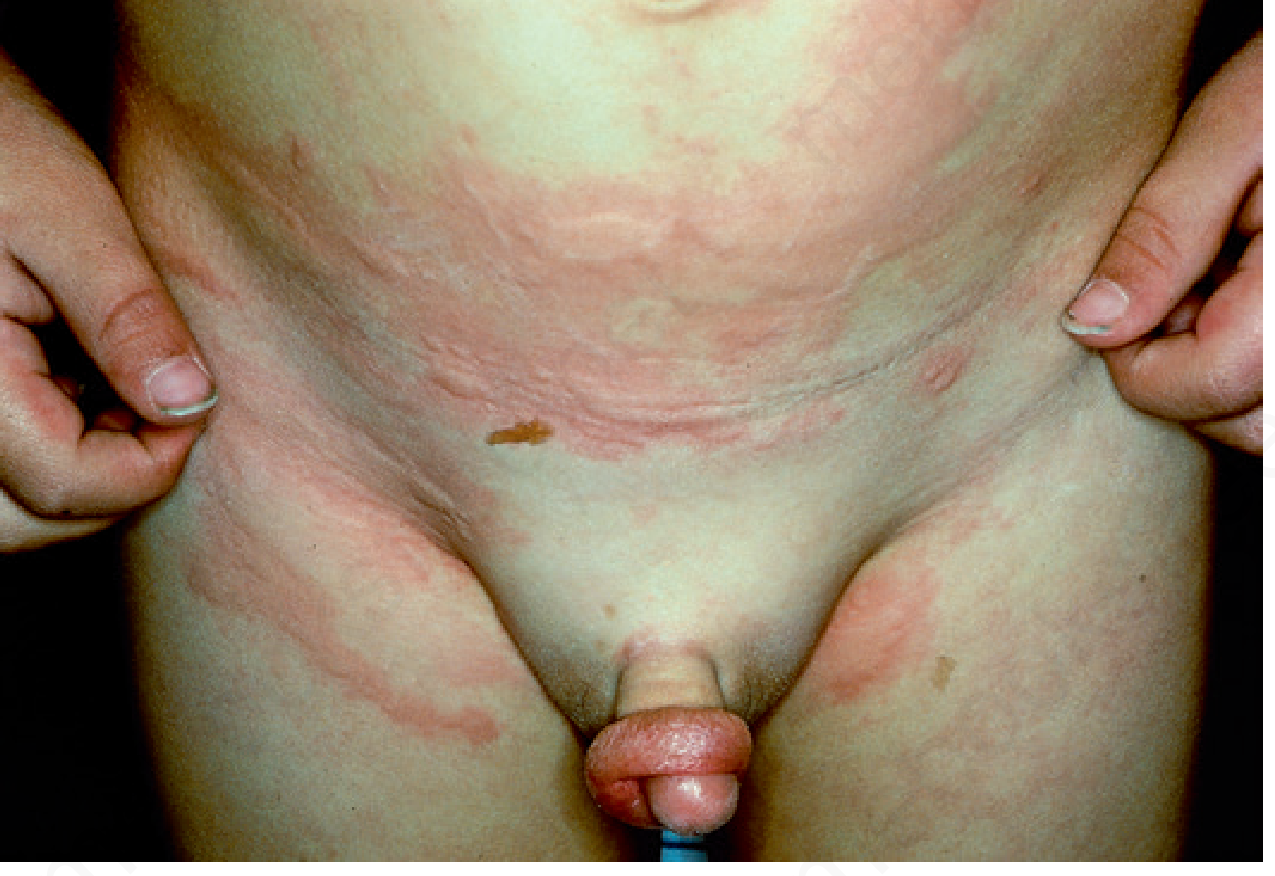
What is Urticaria?
Urticaria is a vascular reaction of the skin that produces raised welts called wheals, surrounded by a red halo, with intense itching, stinging, or pricking. The swelling comes from localized fluid leaking into the skin (edema) triggered by the release of histamine from mast cells.
Individual wheals typically last less than 12 hours and disappear completely - exactly what you're describing. Episodes that resolve within 6 weeks are classified as acute urticaria.
- Andrews' Diseases of the Skin, Clinical Dermatology, p. 175
Why Does it Happen? (The Mechanism)
Mast cells in your skin degranulate (burst open) and flood local tissue with histamine, which causes:
- Blood vessels to dilate → redness
- Vessel walls to leak fluid into tissue → swelling
- Nerve endings to fire → itching/stinging
Once the histamine disperses, the reaction fades - hence it disappears after a few hours.
Common Triggers
| Category | Examples |
|---|---|
| Foods | Shellfish, nuts, peanuts, eggs, strawberries, tomatoes, chocolate, milk |
| Drugs | NSAIDs (aspirin, ibuprofen), antibiotics, opiates |
| Infections | Viral infections, strep throat, H. pylori, hepatitis |
| Physical stimuli | Pressure on skin, cold, heat, sunlight, exercise, friction |
| Inhalants | Dust mites, pollen, animal dander, molds |
| Contact | Latex, cosmetics, plants, certain metals |
| Food additives | Preservatives, artificial dyes, sulfites, benzoic acid |
Since your symptoms are specifically on the hand, useful things to consider:
- Contact urticaria - touching an allergen (latex gloves, food, plants, a cleaning product)
- Pressure urticaria - delayed swelling from gripping or carrying something
- Cold urticaria - from touching something cold
Acute vs. Chronic
| Type | Duration | Notes |
|---|---|---|
| Acute | Under 6 weeks | Often has identifiable trigger (food, drug, infection) |
| Chronic | Over 6 weeks | More than 50% of cases have no identifiable cause |
Treatment
For mild/acute episodes (like yours):
- Second-generation antihistamines are the first-line treatment - cetirizine (Zyrtec), loratadine (Claritin), or fexofenadine (Allegra). These are non-sedating and work by blocking histamine H1 receptors.
- Identify and avoid the trigger - the most effective long-term solution.
- If antihistamines are not enough, a short course of oral corticosteroids (e.g., prednisolone) is effective.
For severe reactions - go to emergency care immediately if you have:
-
Throat or tongue swelling, difficulty breathing or swallowing
-
Dizziness, racing heart, or feeling faint
-
These indicate anaphylaxis, requiring epinephrine injection right away.
-
Andrews' Diseases of the Skin, p. 177-178
What You Should Do
- Note the pattern - When did it start? What did you touch, eat, or do 30 minutes before? Keep a short diary.
- Take an antihistamine (cetirizine 10 mg or loratadine 10 mg) when it occurs.
- Avoid known triggers once identified.
- See a doctor or dermatologist if:
- Episodes happen more than twice a week
- They persist beyond 6 weeks
- Throat/face swelling ever occurs
- No trigger is found after a few weeks
A doctor can arrange allergy skin-prick testing or blood tests to identify specific triggers.
Disclaimer: This is educational information only. Please see a doctor for a proper diagnosis - especially if episodes are frequent, worsening, or accompanied by any breathing difficulty or throat swelling.
Here is also a helpful video overview:
This is a shared conversation. Sign in to Orris to start your own chat.