
Give me ECG images explanations management of most common ICU diseases
Reading File
Finding Sources
Finding Sources
Finding Sources
Searching Images
STEMI ST elevation myocardial infarction ECG pattern
Finding Sources
Finding Sources
Searching Images
atrial fibrillation ECG 12-lead irregular rhythm
Searching Images
pulmonary embolism ECG S1Q3T3 right heart strain
Searching Images
hyperkalemia ECG peaked T waves wide QRS sine wave
Searching Images
ventricular tachycardia VT ECG wide complex tachycardia
Reading File
Finding Sources
Searching Images
complete heart block third degree AV block ECG dissociation
Finding Sources
Finding Sources
Finding Sources
Here is a comprehensive reference for the most common ICU conditions — ECG findings, explanations, and management — with real clinical ECG images from the literature.
ECG Guide to Common ICU Diseases
1. STEMI — ST-Elevation Myocardial Infarction
ECG Patterns
Anterolateral STEMI (LAD occlusion)
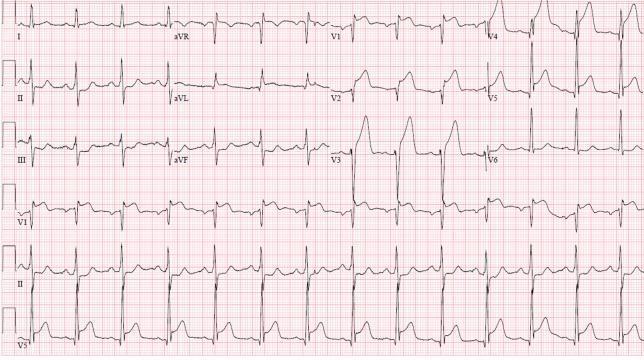
ECG Features:
- Convex ("tombstone") ST elevation in V1–V6, leads I and aVL
- Hyperacute, peaked T-waves most prominent in V2–V4
- Reciprocal ST depression in inferior leads (II, III, aVF)
- QRS widening in maximally elevated leads
- Sinus rhythm with possible sinus tachycardia
Inferior STEMI (RCA or LCx occlusion)
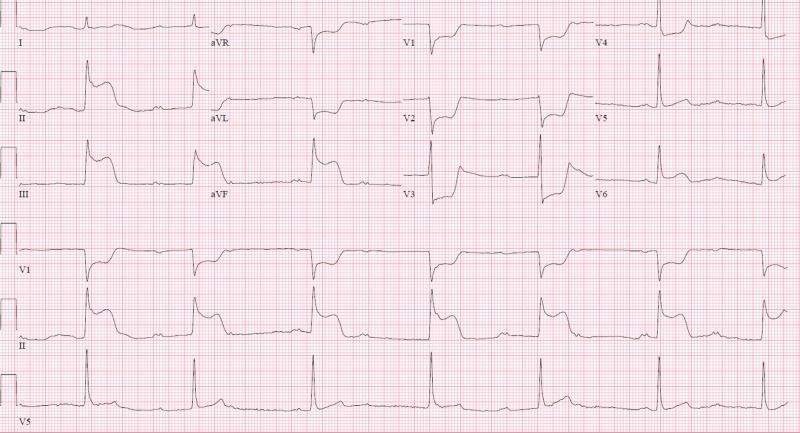
ECG Features:
- Convex (coved) ST elevation in leads II, III, and aVF
- Marked reciprocal ST depression in V1–V6, I, aVL
- Localizes injury to inferior wall
High-Risk Pattern: "Shark Fin" / Tombstone + RBBB
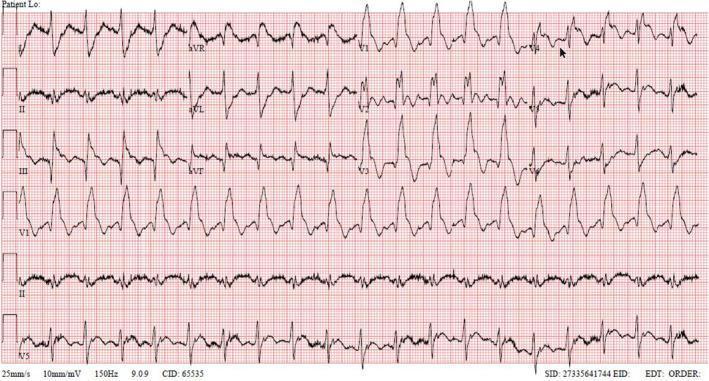
ECG Features:
- Monophasic QRS-ST-T "shark fin" complex in V1–V4
- ST elevation in aVR — highly specific for left main or proximal LAD occlusion
- RBBB morphology + massive anterior ST elevation
- Indicates critical hemodynamic instability
Management (STEMI)
| Step | Action |
|---|---|
| Immediate | Aspirin 325 mg + P2Y12 inhibitor (ticagrelor or clopidogrel) |
| Reperfusion | Primary PCI within 90 min (door-to-balloon); if unavailable → fibrinolysis within 30 min |
| Anticoagulation | UFH or bivalirudin during PCI |
| Adjuncts | Nitrates (avoid if RV infarct), beta-blocker (when hemodynamically stable), ACEi/ARB within 24h |
| ICU monitoring | Continuous telemetry, watch for VF, complete heart block (inferior STEMI), cardiogenic shock |
| Cardiogenic shock | Vasopressors (norepinephrine first-line), consider IABP/Impella; urgent revascularization |
2. Atrial Fibrillation (AF)
ECG Pattern
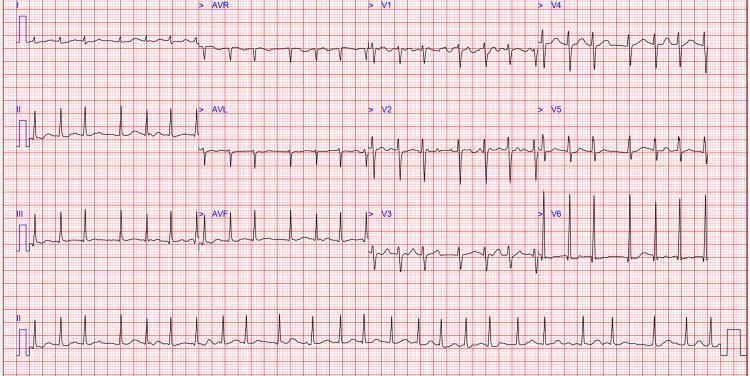
ECG Features:
- Absent P waves — replaced by low-amplitude fibrillatory (f) waves, best seen in V1
- Irregularly irregular R-R intervals — the defining feature
- Narrow QRS complexes (supraventricular origin)
- Ventricular rate varies (typically 100–180 bpm in rapid AF)
- No ST/T changes unless concurrent ischemia
Management (New-Onset AF in ICU)
| Priority | Action |
|---|---|
| Rate control | Metoprolol IV or diltiazem IV (avoid in pre-excitation/WPW); digoxin for low-EF |
| Rhythm control | Amiodarone (preferred in ICU, especially with LV dysfunction or hemodynamic instability) |
| Hemodynamically unstable | Synchronized DC cardioversion immediately |
| Anticoagulation | Heparin/DOAC if AF >48h or unknown duration; assess CHA₂DS₂-VASc |
| Treat precipitants | Sepsis, hypoxia, hypokalemia, hypomagnesemia, pain, hyperthyroidism |
3. Pulmonary Embolism (PE)
ECG Pattern
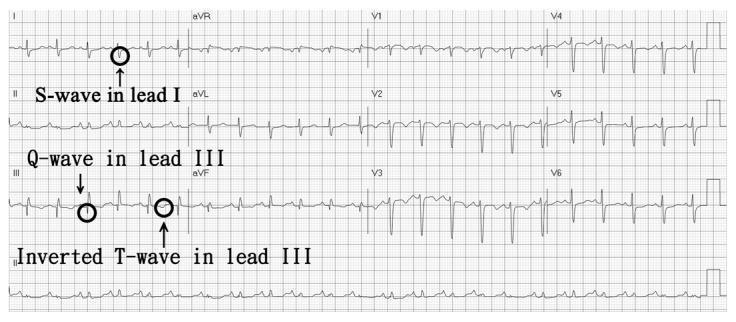
ECG Features (classic right heart strain pattern):
- S1Q3T3: Prominent S-wave in lead I, Q-wave in lead III, inverted T-wave in lead III
- Sinus tachycardia (most common, seen in >40% of PE)
- T-wave inversions in V1–V3 (right precordial leads) — RV strain
- Incomplete or complete RBBB
- Right axis deviation
- P pulmonale (tall P in II, >2.5 mm)
Important: A normal ECG does NOT exclude PE. Sinus tachycardia alone is the most common finding.
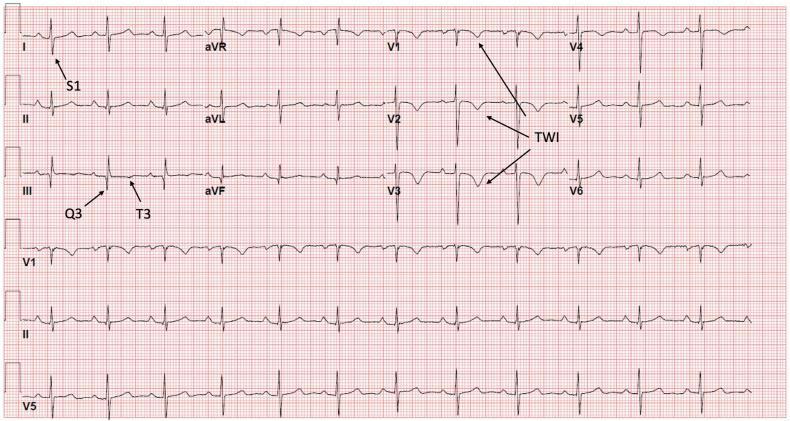
Management (PE)
| Risk Stratification | Action |
|---|---|
| Massive PE (hemodynamic instability) | Systemic thrombolysis (alteplase 100 mg IV over 2h) or surgical embolectomy; UFH bridge |
| Submassive PE (RV dysfunction, biomarkers↑) | UFH anticoagulation; consider catheter-directed thrombolysis (CDT) if deteriorating |
| Low-risk PE | LMWH or DOAC (rivaroxaban, apixaban); consider early discharge |
| Anticoagulation | UFH preferred in ICU (reversible, titratable); LMWH if renal function adequate |
| Supportive | Supplemental O₂, cautious fluid resuscitation (avoid RV overload), vasopressors if shock (norepinephrine) |
4. Hyperkalemia
ECG Pattern — Progressive Stages
Stage 1 — Peaked T-waves (K⁺ ~6–7 mmol/L)
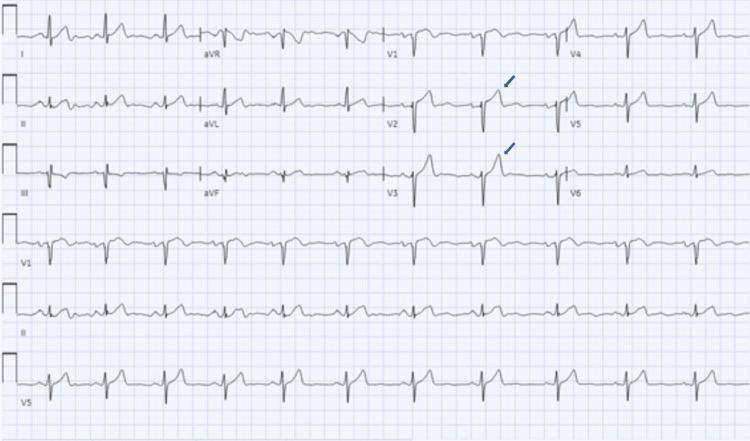
Stage 2 — PR prolongation, P-wave flattening, QRS widening (K⁺ ~7–8 mmol/L)
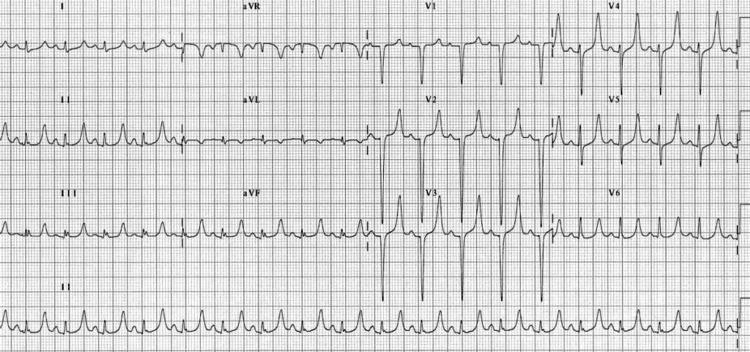
Stage 3 — Sine wave pattern, imminent arrest (K⁺ >8–9 mmol/L)
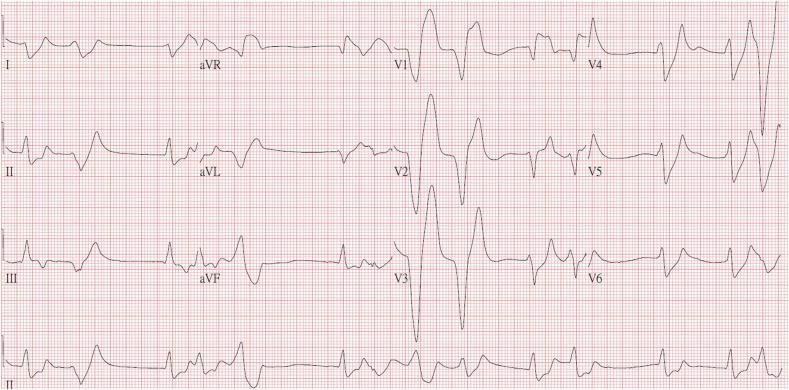
ECG Progression:
| K⁺ Level | ECG Change |
|---|---|
| 5.5–6.5 | Tall, narrow, peaked ("tented") T-waves |
| 6.5–7.5 | PR prolongation, flat/absent P-waves |
| 7.5–8.5 | QRS widening, intraventricular conduction delay |
| >8.5 | Sine-wave pattern → VF or asystole |
Management (Hyperkalemia)
| Step | Agent | Mechanism |
|---|---|---|
| 1. Membrane stabilization (if ECG changes) | Calcium gluconate 1g IV over 2–5 min (repeat if no change in 5 min) | Raises action potential threshold |
| 2. Shift K⁺ into cells | Insulin 10 units IV + dextrose 50g; Salbutamol nebulization 10–20 mg | Activates Na/K-ATPase |
| 3. Remove K⁺ from body | Furosemide IV (if adequate renal function); Kayexalate or patiromer (GI binding); Dialysis (definitive) | Elimination |
| 4. Stop contributing factors | Hold ACEi/ARB, NSAIDs, potassium supplements; treat metabolic acidosis |
5. Ventricular Tachycardia (VT)
ECG Pattern
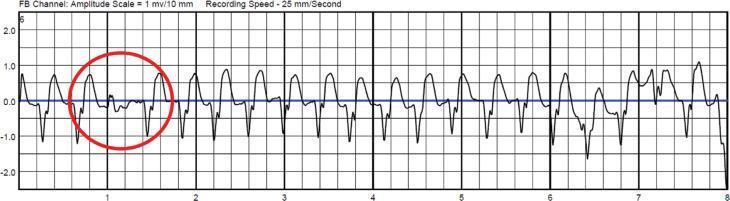
ECG Features (monomorphic VT):
- Wide QRS complexes (>120 ms), regular rhythm, rate 100–250 bpm
- AV dissociation (P-waves march independently of QRS — pathognomonic when seen)
- Fusion beats and capture beats — virtually diagnostic of VT
- Concordance in precordial leads (all positive or all negative V1–V6)
- Extreme axis deviation ("northwest axis")
Differentiating VT from SVT with aberrancy: Use Brugada criteria — if any of the following is present → VT: (1) no RS complex in precordials, (2) RS interval >100ms, (3) AV dissociation, (4) morphology criteria not met for SVT.
Management (VT)
| Situation | Treatment |
|---|---|
| Pulseless VT | Immediate unsynchronized defibrillation + CPR; amiodarone 300 mg IV |
| Hemodynamically unstable (pulse present) | Synchronized cardioversion (100–200 J biphasic) |
| Stable monomorphic VT | Amiodarone 150 mg IV over 10 min → maintenance; or procainamide IV |
| Polymorphic VT / Torsades de Pointes | Magnesium sulfate 2g IV; stop offending drugs; correct electrolytes; temporary pacing for bradycardia-induced TdP |
| Prevention | Beta-blockers, amiodarone, ICD if recurrent/structural disease |
6. Complete (Third-Degree) AV Block
ECG Pattern
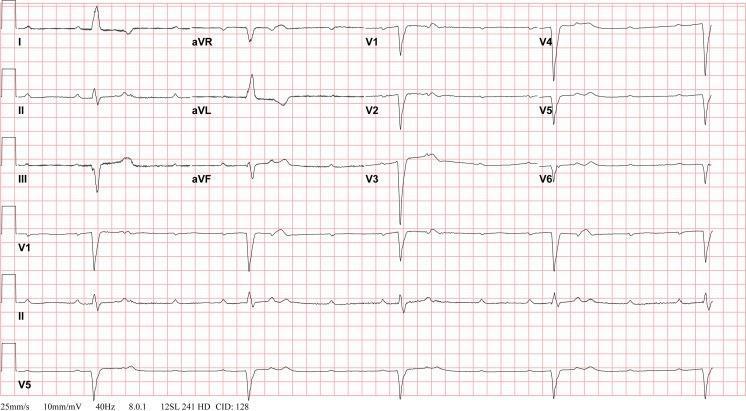
ECG Features:
- Complete AV dissociation: P-waves occur at faster regular rate, QRS at slower regular rate, with no relationship between them
- Slow ventricular escape rhythm (30–60 bpm if junctional; <40 bpm if ventricular)
- Wide QRS if infra-Hisian escape (ventricular origin); narrow if junctional
- T-wave inversions from aberrant repolarization
Common ICU causes: Inferior STEMI (RCA), hyperkalemia, digoxin toxicity, beta-blocker overdose, Lyme disease, post-cardiac surgery.
Management
| Step | Action |
|---|---|
| Immediate | Atropine 0.5–1 mg IV (may be ineffective in infra-Hisian block) |
| Bridge | Transcutaneous pacing (TCP) while preparing for transvenous |
| Definitive | Transvenous temporary pacing (TVP) → permanent pacemaker if not reversible |
| Reversible causes | Reverse hyperkalemia, hold AV nodal drugs, thrombolysis/PCI for inferior STEMI |
7. Sepsis / Septic Shock
ECG relevance: Sinus tachycardia is ubiquitous. Sepsis can trigger AF, QTc prolongation, and ST changes from demand ischemia (sepsis-induced cardiomyopathy/"Takotsubo-like").
Sepsis Management (Surviving Sepsis / Hour-1 Bundle)
| Time | Action |
|---|---|
| 0–1 hour | Blood cultures × 2 (before antibiotics); lactate measurement |
| Antibiotics | Broad-spectrum IV antibiotics within 1 hour of recognition |
| Fluid resuscitation | 30 mL/kg IV crystalloid for hypotension or lactate ≥4 mmol/L |
| Vasopressors | Norepinephrine first-line if MAP <65 mmHg despite fluids; target MAP ≥65 mmHg |
| If septic shock persists | Add vasopressin 0.03 U/min; consider hydrocortisone 200 mg/day if refractory |
| Source control | Drain abscesses, remove infected hardware, surgical consultation as needed |
| Monitoring | Arterial line, CVP/ScvO₂, serial lactate clearance (target >10% decrease/2h) |
8. ARDS — Acute Respiratory Distress Syndrome
ECG relevance: Sinus tachycardia from hypoxia. P pulmonale if chronic cor pulmonale. Identify and treat underlying precipitant (sepsis ECG changes, PE pattern).
Berlin Criteria (Diagnosis)
| Severity | PaO₂/FiO₂ Ratio | Mortality |
|---|---|---|
| Mild | 200–300 mmHg | ~27% |
| Moderate | 100–200 mmHg | ~32% |
| Severe | <100 mmHg | ~45% |
ARDS Management
| Intervention | Detail |
|---|---|
| Lung-protective ventilation (standard of care) | Tidal volume 6 mL/kg PBW; plateau pressure <30 cmH₂O; PEEP titrated to oxygenation |
| Prone positioning | ≥16 hours/day for PaO₂/FiO₂ <150 mmHg — reduces mortality (PROSEVA trial) |
| Conservative fluid strategy | After resuscitation; target dry to euvolemic (FACTT trial) |
| Neuromuscular blockade | Cisatracurium 48h infusion for severe ARDS (PaO₂/FiO₂ <150) — consider per ACURASYS |
| Recruitment maneuvers | Stepwise PEEP titration; evidence mixed for staircase RM |
| Corticosteroids | Methylprednisolone for early severe ARDS or fibroproliferative phase — select cases |
| VV-ECMO | Rescue therapy for refractory severe ARDS (EOLIA trial) |
Quick ECG Summary Table for ICU
| Condition | Rate | Rhythm | P-wave | PR | QRS | ST/T |
|---|---|---|---|---|---|---|
| Anterolateral STEMI | Normal/↑ | Regular | Normal | Normal | May widen | ST↑ V1–V6, I, aVL; ST↓ II,III,aVF |
| Inferior STEMI | Normal | Regular | Normal | Normal | Normal | ST↑ II,III,aVF; ST↓ V1–V4 |
| Atrial Fibrillation | Variable | Irregularly irregular | Absent (f-waves) | None | Narrow | No change |
| Pulmonary Embolism | ↑ (tachycardia) | Regular | Normal | Normal | May have RBBB | S1Q3T3; T↓ V1–V3 |
| Hyperkalemia | ↓ | Variable → sine | Flat/absent | ↑ | Wide | Peaked T |
| Monomorphic VT | ↑↑ (100–250) | Regular | Dissociated | None | Wide >120ms | Discordant |
| Complete AV Block | ↓ (escape 30–60) | Regular (2 independent) | Regular, faster | None | Wide or narrow | Secondary changes |
*Sources: Braunwald's Heart Disease 12e; Harrison's Principles of Internal Medicine 22e; Rosen's Emergency Medicine 9e; Murray & Nadel's Textbook of Respiratory Medicine; Tintinalli's Emergency Medicine; Schwartz's Principles of Surgery 11e; Fishman's Pulmonary Diseases and Disorders.*This guide covers the 8 most common ICU scenarios with clinical ECG images, pattern explanations, and evidence-based management. Here's a quick orientation:
What's covered:
- STEMI — anterolateral, inferior, and "shark fin" high-risk patterns + PCI/thrombolysis protocol
- Atrial Fibrillation — rapid AF pattern + rate/rhythm control in the ICU
- Pulmonary Embolism — S1Q3T3, right heart strain, McGinn-White sign + anticoagulation/thrombolysis tiers
- Hyperkalemia — progressive ECG stages (peaked T → sine wave) + stepwise treatment (calcium → shift → eliminate)
- Ventricular Tachycardia — wide complex tachycardia, capture beats + cardioversion/amiodarone algorithm
- Complete AV Block — AV dissociation + pacing approach
- Sepsis/Septic Shock — Hour-1 bundle (antibiotics, fluids, vasopressors)
- ARDS — Berlin criteria + lung-protective ventilation (6 mL/kg, prone positioning, ECMO)
The quick summary table at the bottom lets you rapidly distinguish conditions at the bedside. Let me know if you'd like deeper coverage of any specific condition or additional ECG patterns (e.g., DKA, digoxin toxicity, Brugada, long QT).
Give me ECG images explanations management of most common ICU diseases
Reading File
I'll run all image searches and textbook queries in parallel to build a comprehensive answer.
Searching Images
STEMI ST elevation myocardial infarction anterior ECG tombstone
Searching Images
inferior STEMI ECG ST elevation II III aVF reciprocal changes
Searching Images
atrial fibrillation ECG irregularly irregular absent P waves
Searching Images
pulmonary embolism ECG S1Q3T3 right ventricular strain
Finding Sources
Finding Sources
Your credits are exhausted. Your daily credits reset tomorrow, or you can purchase a top-up for more.
This is a shared conversation. Sign in to Orris to start your own chat.