
Discuss Central nervous system in medicine
Reading File
Now I'll run parallel searches across the medical library for a comprehensive CNS overview.
Finding Sources
Finding Sources
Finding Sources
Good. Now let me read the key textbook sections in parallel — Neuroanatomy, Neuroscience, Histology, Gray's Anatomy, and Bradley's Neurology.
Reading File
Reading File
Reading File
Reading File
Finding Sources
Excellent content. Now let me pull key sections on CNS cells, blood-brain barrier, spinal cord, and clinical disorders in parallel.
Reading File
Finding Sources
Finding Sources
Finding Sources
Reading File
Reading File
Finding Sources
Searching Images
central nervous system brain anatomy diagram
I now have comprehensive material to compose a detailed, well-structured answer. Let me also fetch the key CNS anatomy diagram from the textbook.
Loading Image
Loading Image
I now have all the content needed for a comprehensive, textbook-grounded discussion. Here is the full answer:
The Central Nervous System (CNS) in Medicine
1. Overview and Definition
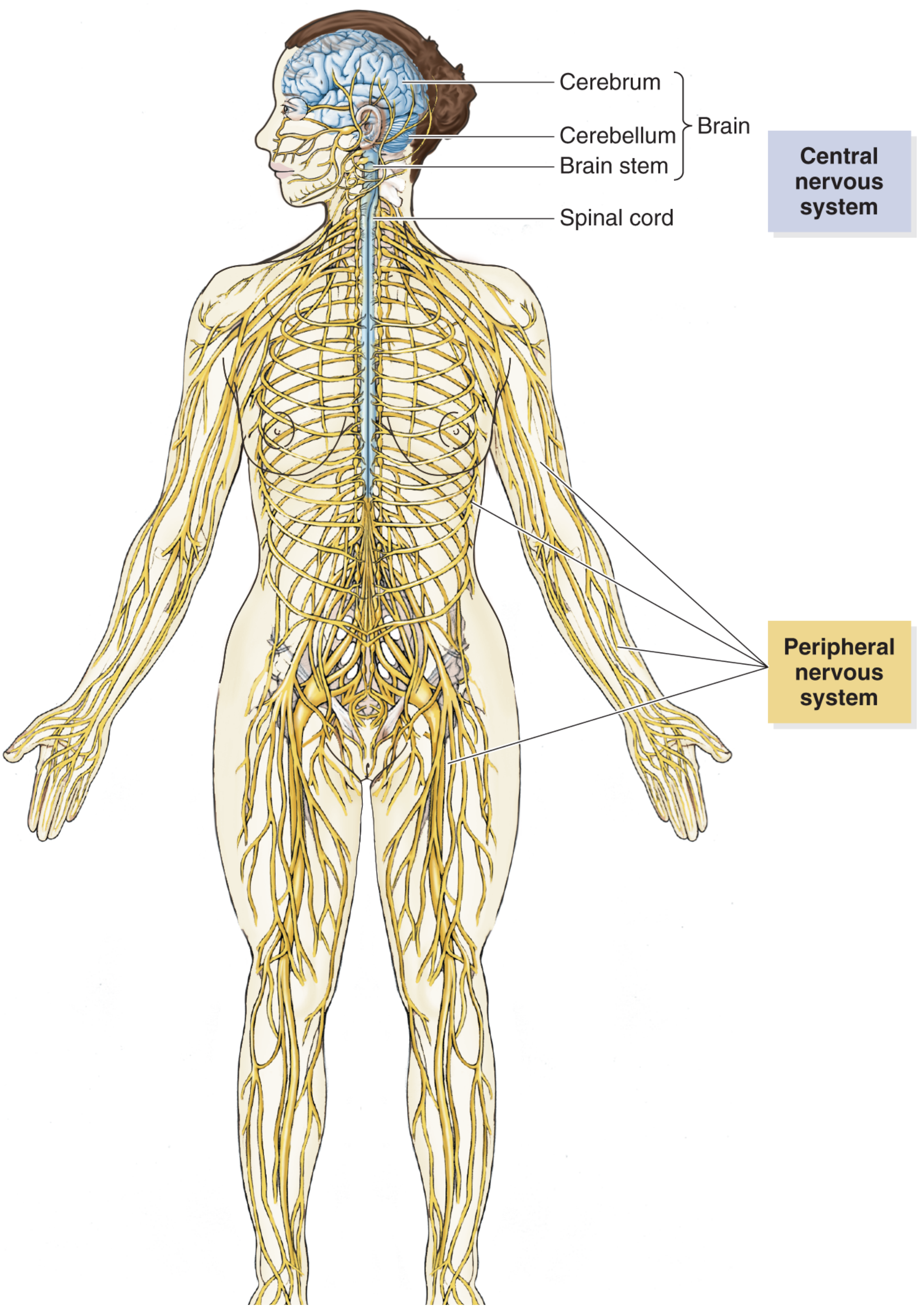
The nervous system is structurally divided into the central nervous system (CNS) and the peripheral nervous system (PNS). The CNS consists of the brain and the spinal cord, which are enclosed within and protected by the cranial cavity and vertebral column respectively. The PNS includes cranial nerves, spinal nerves, autonomic nerves, and the enteric nervous system.
"The CNS consists of the brain and spinal cord. The three major parts of the brain are the cerebrum, the cerebellum, and the brain stem. The PNS consists of the nerves and nerve cells that lie outside the brain and spinal cord." — Neuroscience: Exploring the Brain, 5th Ed.
2. Embryological Development
During the third week of development, the ectoderm thickens to form the neural plate, which deepens into a neural groove. The neural folds fuse to form the neural tube, whose lumen becomes the ventricular system. Three primary vesicles arise:
| Primary Vesicle | Secondary Vesicle | Derivatives | Cavity |
|---|---|---|---|
| Prosencephalon (forebrain) | Telencephalon | Cerebral hemispheres | Lateral ventricles |
| Diencephalon | Thalamus, hypothalamus, retina | Third ventricle | |
| Mesencephalon | Mesencephalon | Midbrain | Cerebral aqueduct |
| Rhombencephalon (hindbrain) | Metencephalon | Pons, cerebellum | Fourth ventricle |
| Myelencephalon | Medulla | Fourth ventricle / central canal |
The PNS arises from neural crest cells that migrate from the surface ectoderm.
— Gray's Anatomy for Students
3. Gross Anatomy
3.1 The Brain
The brain is subdivided into:
Telencephalon (Cerebral Hemispheres)
- Contains the cerebral cortex (gray matter), white matter, and basal ganglia
- The cortical surface is folded into gyri (bumps) separated by sulci (grooves) and fissures
- Divided into four lobes: frontal, parietal, temporal, and occipital, each with distinct functional roles
Diencephalon
- Thalamus: major sensory relay station for nearly all sensory pathways to the cortex (except olfaction)
- Hypothalamus: regulates autonomic functions, temperature, hunger, thirst, endocrine axes, and circadian rhythms
Brainstem (most evolutionarily ancient)
- Midbrain: a narrow region connecting forebrain and hindbrain; contains nuclei for eye movement (CN III, IV), dopaminergic substantia nigra, and the periaqueductal gray (pain modulation)
- Pons: relay station; contains CN V, VI, VII, VIII nuclei; pontine respiratory group
- Medulla oblongata: controls vital functions — respiration, blood pressure, heart rate; contains CN IX, X, XI, XII nuclei
"The brainstem is the most evolutionarily ancient part of the human brain and controls many of the most basic bodily functions necessary for survival, such as respiration, blood pressure, and heart rate." — Neuroanatomy through Clinical Cases, 3rd Ed.
Cerebellum
- Coordinates movement, balance, and fine motor control
- Receives proprioceptive, vestibular, and cortical inputs; outputs via deep cerebellar nuclei to thalamus and motor cortex
3.2 The Spinal Cord
- Extends from the foramen magnum to the conus medullaris (~L1–L2 in adults)
- Gray matter (H-shaped on cross section): dorsal horns (sensory), ventral horns (motor), lateral horns (autonomic, T1–L2)
- White matter (surrounding gray matter): organized into ascending sensory tracts (dorsal columns, spinothalamic) and descending motor tracts (corticospinal, rubrospinal)
- 31 pairs of spinal nerves exit via intervertebral foramina
4. Functional Organization
The nervous system is functionally divided into:
| Division | Description |
|---|---|
| Somatic NS | Conscious voluntary control of skeletal muscle; sensory and motor innervation to body surface |
| Autonomic NS (ANS) | Involuntary control of smooth muscle, cardiac muscle, glands; subdivided into sympathetic, parasympathetic, and enteric divisions |
5. Cellular Composition
5.1 Neurons
The neuron is the functional unit of the CNS. It consists of:
- Cell body (soma): contains nucleus and organelles (Nissl bodies = rough ER for protein synthesis)
- Dendrites: receive incoming signals
- Axon: conducts outgoing action potentials; can be myelinated or unmyelinated
- Synapse: specialized junction for chemical signal transmission between neurons via neurotransmitters
5.2 Glial Cells (Neuroglia)
Supporting cells of the CNS — they are non-conducting but essential:
| Glial Cell | Function |
|---|---|
| Oligodendrocytes | Produce myelin sheaths around CNS axons (compare: Schwann cells in PNS) |
| Astrocytes | Physical support; metabolic exchange between blood and neurons; regulate synaptic cleft; contribute to blood-brain barrier |
| Microglia | Immune surveillance of the CNS; phagocytosis of debris and pathogens |
| Ependymal cells | Line the ventricles and central canal; contribute to CSF production and flow |
"Functions of glial cells include physical support for neurons, insulation for nerve processes facilitating rapid impulse transmission, repair of neuronal injury, regulation of the internal fluid environment of the CNS, and clearance of neurotransmitters from synaptic clefts." — Histology: A Text and Atlas, 8th Ed.
6. Protective Structures
6.1 Meninges
Three membranous layers cover the CNS (mnemonic: PAD — Pia, Arachnoid, Dura, inner to outer):
- Pia mater: thin, closely adherent to brain/cord surface
- Arachnoid mater: forms the subarachnoid space through which CSF circulates
- Dura mater: tough outer layer; in the skull it has two layers; venous sinuses (e.g., superior sagittal sinus) lie within its folds
6.2 Cerebrospinal Fluid (CSF)
- Produced mainly by the choroid plexus in the lateral, third, and fourth ventricles
- Circulates: lateral ventricles → third ventricle → cerebral aqueduct → fourth ventricle → subarachnoid space → reabsorbed via arachnoid granulations into venous sinuses
- Functions: mechanical cushioning, waste removal, immune surveillance
6.3 Blood-Brain Barrier (BBB)
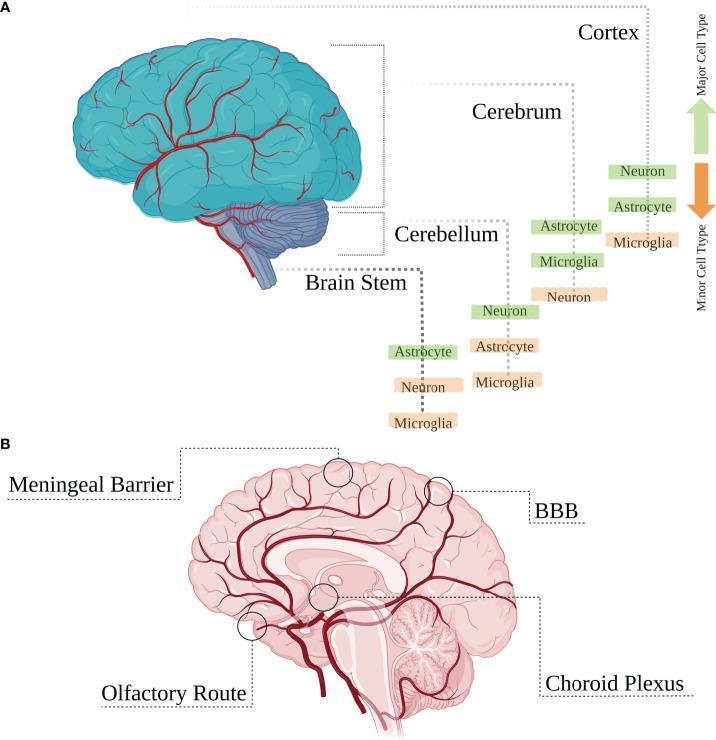
The BBB is a critical selective barrier consisting of:
- Capillary endothelial cells joined by tight junctions (principal component)
- Basement membrane with pericytes
- Astrocytic perivascular foot processes
"The brain's vascular endothelial cells... are joined by tight junctions and generally lack the transport channels found elsewhere in the body. As a result, the blood-brain barrier prevents hydrophilic polar and large molecules in the blood from entering the brain. Glucose is the brain's sole source of energy and crosses via non-energy-dependent facilitated transport (Glut1)." — Goldman-Cecil Medicine
Key barrier crossings:
- Freely cross: O₂, CO₂, lipid-soluble drugs (e.g., general anaesthetics, opioids)
- Carrier-mediated: glucose (Glut1), amino acids
- Cannot cross: large proteins, most antibiotics, charged molecules
- Failure: occurs in ischemia, inflammation, trauma → vasogenic cerebral oedema
6.4 Neurovascular Unit
A broader concept linking endothelial cells, pericytes, vascular smooth muscle, astrocytes, and neurons. Local neural activity and pH regulate cerebral blood flow (neurovascular coupling). Disruption underlies stroke, neurodegeneration, and neuroinflammatory diseases.
7. Major CNS Blood Supply
| Artery | Territory |
|---|---|
| Anterior cerebral artery (ACA) | Medial frontal and parietal lobes (leg area of motor/sensory cortex) |
| Middle cerebral artery (MCA) | Lateral hemisphere — arm, face, language (Broca/Wernicke areas) |
| Posterior cerebral artery (PCA) | Occipital lobe (visual cortex), medial temporal lobe |
| Vertebrobasilar system | Brainstem, cerebellum, posterior thalamus |
The Circle of Willis provides collateral anastomosis between anterior and posterior circulations.
"Brain function is completely dependent on its supply of blood and oxygen. Clinical symptoms ensue when global or regional blood supply falls below the critical 50 mL per 100 g per minute." — Goldman-Cecil Medicine
8. Key CNS Pathologies (Clinical Relevance)
8.1 Cerebrovascular Disease
- Ischaemic stroke: focal infarction from thromboembolism or small vessel disease; MCA territory is most common
- Global ischaemia: cardiac arrest → selective neuronal necrosis (hippocampus, cerebellar Purkinje cells, neocortical layers III/V are most vulnerable)
- Haemorrhagic stroke: intracerebral or subarachnoid haemorrhage
8.2 Demyelinating Diseases
- Multiple sclerosis: autoimmune destruction of CNS myelin (oligodendrocytes); episodic neurological deficits with spatial and temporal dissemination; plaques in periventricular white matter, corpus callosum, optic nerves, spinal cord
- Reactive gliosis: astrocyte proliferation and scar formation following CNS injury (replaces function of peripheral Schwann cell regeneration, but is far more limited)
8.3 Neurodegenerative Diseases
- Parkinson disease: loss of dopaminergic neurons in the substantia nigra pars compacta → dopamine depletion in the striatum → bradykinesia, rigidity, rest tremor, postural instability; Lewy bodies (α-synuclein inclusions) are hallmark
- Alzheimer disease: amyloid-β plaques and neurofibrillary tangles (tau protein); progressive memory and cognitive decline
- ALS (Amyotrophic Lateral Sclerosis): combined upper and lower motor neuron degeneration
8.4 CNS Tumours
- Gliomas (from glial cells): glioblastoma multiforme (GBM) — most aggressive primary CNS tumour; astrocytomas, oligodendrogliomas
- Meningiomas: arise from arachnoid cells; usually benign and surgically resectable
- Metastases: most common brain tumours in adults; lung, breast, melanoma, renal, colorectal are leading primaries
8.5 CNS Infections
- Bacterial meningitis: infection of meninges/CSF; Streptococcus pneumoniae, Neisseria meningitidis most common
- Viral encephalitis: HSV-1 encephalitis (temporal lobe predilection); CSF PCR is diagnostic standard
- Brain abscess: ring-enhancing lesion on MRI; S. aureus, Streptococcus, anaerobes common organisms
8.6 Metabolic Encephalopathy
- Hypoglycaemia: causes acute encephalopathy with tremulousness, confusion, seizures; may mimic stroke; targets basal ganglia, cortex, substantia nigra, hippocampus
- Diabetic ketoacidosis (DKA): altered consciousness → coma; cerebral oedema may complicate treatment
- Hepatic encephalopathy: ammonia-driven astrocyte dysfunction; asterixis, confusion, coma
8.7 Epilepsy
- Abnormal, synchronous neuronal discharge causing transient neurological dysfunction (seizures)
- Focal vs. generalised; EEG is cornerstone of diagnosis; MRI identifies structural causes
9. CNS Pharmacology Highlights
The CNS is a major target of pharmacological agents. Key principles:
- Lipid solubility and molecular size determine BBB penetration
- Opioid receptors are widely distributed in the CNS (medulla, locus coeruleus, periaqueductal gray, limbic system, cortex, spinal cord) — basis of analgesia and respiratory depression
- General anaesthetics enhance GABA-A inhibition and/or block NMDA receptors
- Antiepileptics act via Na⁺ channel stabilisation (phenytoin), GABA enhancement (benzodiazepines, valproate), or Ca²⁺ channel blockade
- Antidepressants/antipsychotics modulate monoamine systems (serotonin, dopamine, noradrenaline)
10. Summary Table
| Component | Structure | Key Function |
|---|---|---|
| Cerebral cortex | Frontal, parietal, temporal, occipital lobes | Higher cognition, voluntary movement, sensory processing, language |
| Basal ganglia | Striatum, globus pallidus, subthalamic nucleus, substantia nigra | Movement regulation, habit learning |
| Thalamus | Diencephalon | Sensory relay; gating of consciousness |
| Hypothalamus | Diencephalon | Homeostasis, neuroendocrine control |
| Brainstem | Midbrain, pons, medulla | Vital functions; cranial nerve nuclei |
| Cerebellum | Posterior fossa | Motor coordination and balance |
| Spinal cord | Cervical → sacral | Motor/sensory relay; reflex arcs |
| Meninges | Pia, arachnoid, dura | Physical protection; CSF containment |
| Blood-brain barrier | Endothelium + astrocytes | Selective permeability for brain homeostasis |
| CSF | Ventricular system | Cushioning, waste clearance |
Sources:
- Neuroanatomy through Clinical Cases, 3rd Ed. (Blumenfeld)
- Neuroscience: Exploring the Brain, 5th Ed. (Bear, Connors, Paradiso)
- Histology: A Text and Atlas, 8th Ed. (Ross & Pawlina)
- Gray's Anatomy for Students, 4th Ed.
- Goldman-Cecil Medicine, International Ed.
- Bradley and Daroff's Neurology in Clinical Practice
- Lippincott Illustrated Reviews: Pharmacology
This is a shared conversation. Sign in to Orris to start your own chat.