
Tsh metabolism in newborns.
Reading File
Searching sources...
Finding Sources
Finding Sources
Searching PubMed
TSH metabolism newborn thyroid function
Finding Sources
Finding Sources
Reading File
Reading File
Excellent content found. Let me read more of this section for the postnatal TSH surge details.
Reading File
Finding Sources
Finding Sources
Finding Sources
Reading File
Reading File
Now let me fetch the key diagrams for a complete visual answer.
Loading Image
Loading Image
Reading File
I now have comprehensive content from two authoritative textbooks plus key diagrams. Here is the full answer:
TSH Metabolism in Newborns
1. Fetal Thyroid Development and the HPT Axis
The thyroid gland forms at the base of the tongue from endodermal cells as early as week 3 of gestation and descends to the pretracheal position by weeks 5-7. The hypothalamic-pituitary-thyroid (HPT) axis matures progressively:
| Milestone | Gestational Age |
|---|---|
| TRH detectable in fetal CNS | ~5 weeks |
| Thyroid descent to neck | ~7 weeks |
| TRH in hypothalamus; TSH in pituitary/serum | ~10-14 weeks |
| Fetal thyroid functional (iodide trapping, T4 synthesis) | ~12 weeks |
| Hypothalamic-portal system active; fetal TSH and T4 begin rising | ~18-20 weeks |
| Fetal T3 becomes significant | ~30 weeks onward |
Before ~16 weeks, the fetus is entirely dependent on maternal thyroid hormone (T4). Maternal TRH does not significantly cross the placenta, and TSH does not cross the placenta at all.
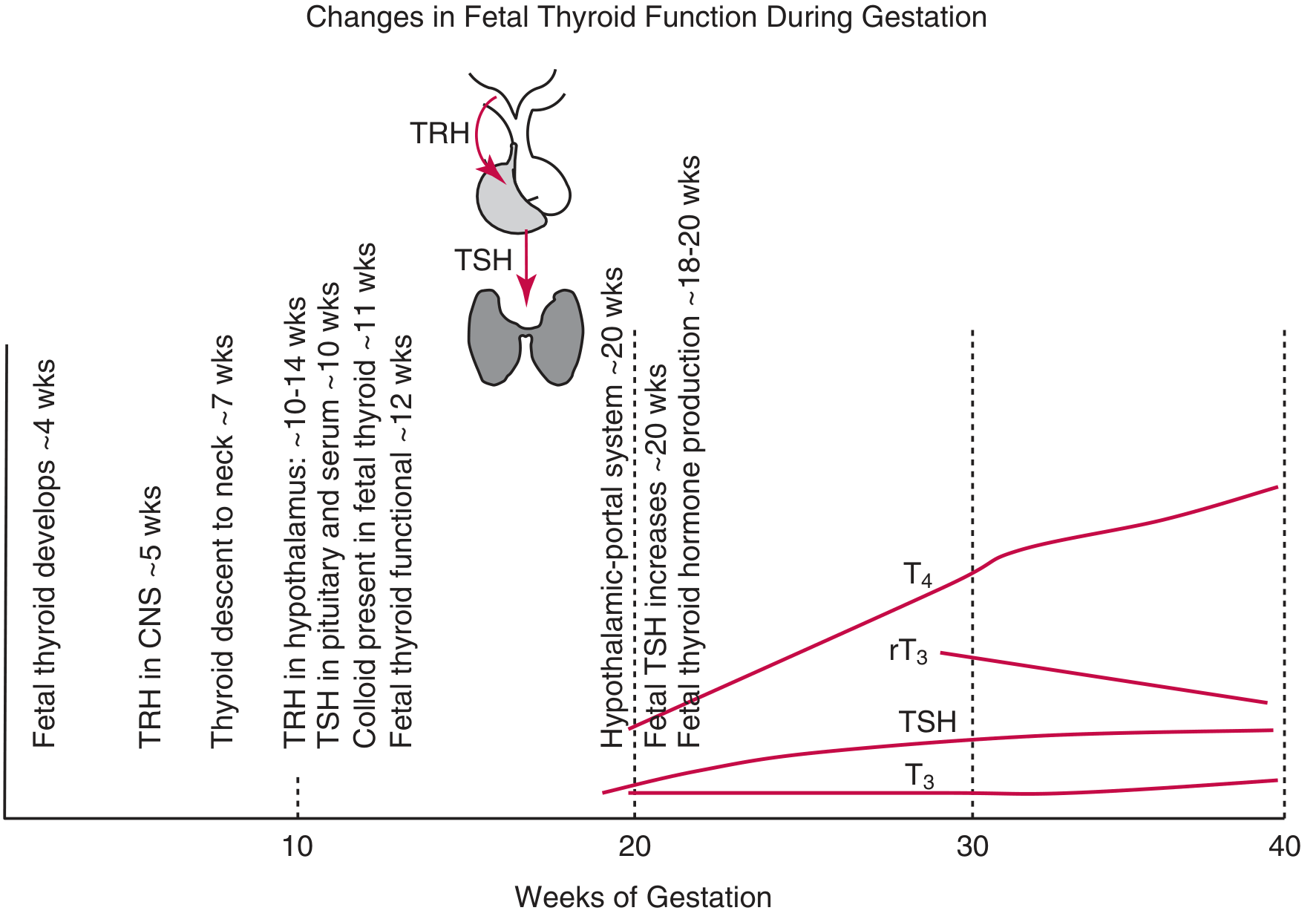
After 20 weeks, T4 steadily rises from ~2 µg/dL to adult levels of ~10 µg/dL at term, driven by pituitary TSH. Importantly, the rising T4 has minimal negative feedback on fetal TSH because the HPT axis remains immature and does not fully mature until 1-2 months after birth.
2. Fetal T3 and the Role of Deiodinases
The fetus maintains a high rT3 (reverse T3), low T3 environment deliberately:
- Type 3 deiodinase (D3) dominates in fetal tissues and the placenta - it inactivates T4 to rT3 (rather than to active T3). This protects the fetus from premature exposure to biologically active T3.
- Because of the high D3:D1 ratio, fetal serum T3 is negligible until ~30 weeks.
- Near term, increasing D1 activity allows rising T3 levels (up to ~50 ng/dL), paralleled by a progressive decline in rT3.
- Approximately 30-50% of T4 in cord blood is maternally derived, even at term.
3. The Postnatal TSH Surge - The Key Event
At birth, exposure to the cold extrauterine environment triggers a massive and rapid TRH surge from the hypothalamus, which drives an acute TSH release from the pituitary:
- TSH peaks at ~30 minutes after birth (the "neonatal TSH surge")
- This is the largest TSH rise seen at any point in human life
- By 2-3 days, TSH falls back toward adult levels under T3/T4 negative-feedback inhibition
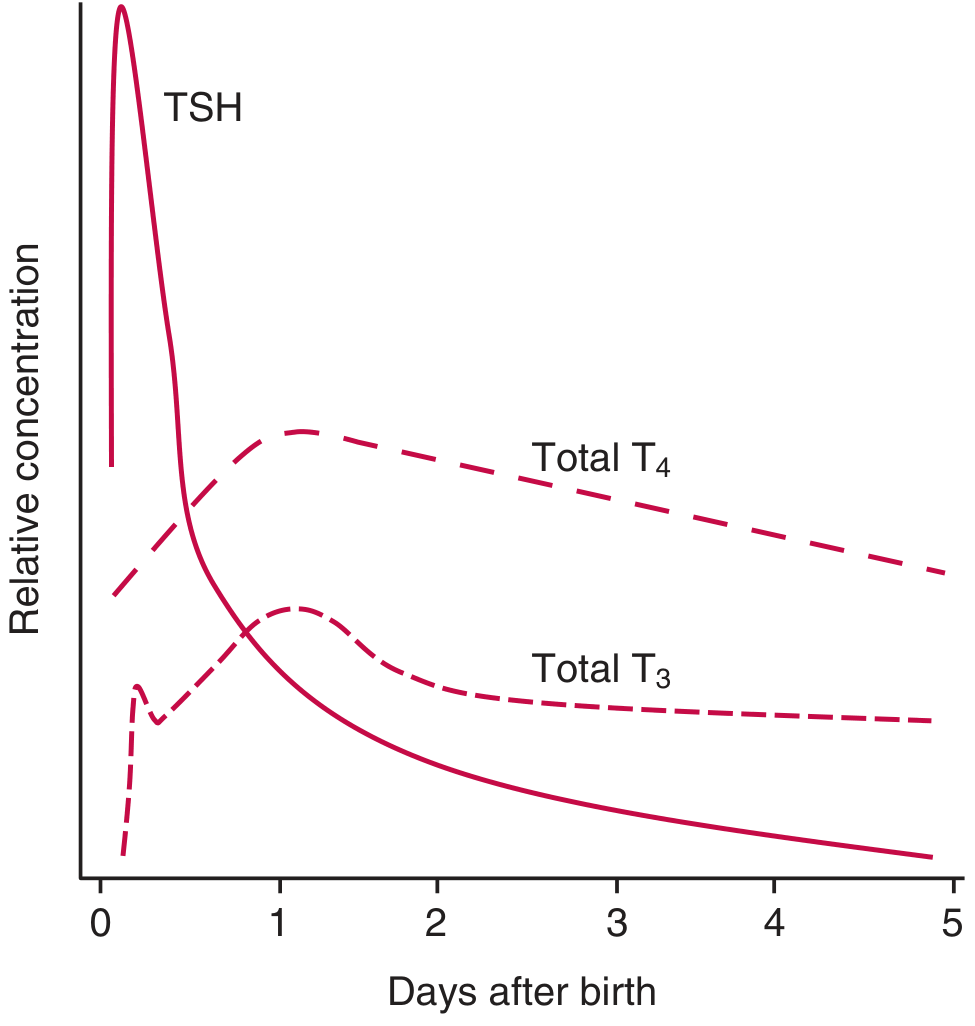
Downstream effects of the TSH surge:
- TSH stimulates the thyroid gland to massively increase T4 and T3 secretion
- T3 and T4 peak at ~24 hours after delivery
- The disproportionately greater rise in T3 vs T4 in the first 24 hours reflects acutely increased conversion of T4 → T3 via maturation of type I deiodinase (D1)
- T4 and T3 then gradually decline to stable adult-range concentrations by 4-6 weeks
- Transient hyperthyroxinemia can also be triggered by neonatal cooling and may represent a thermogenic adaptation to extrauterine life
4. The HPT Axis in Prematurity
In premature neonates, the HPT axis is immature and the physiological TSH surge is dramatically lower or absent:
- FT4 and FT3 levels are low despite "normal" TSH levels
- May take 3-8 weeks after birth to achieve levels similar to term infants
- Transient hypothalamic hypothyroidism of prematurity occurs in up to 50% of infants born before 28 weeks
- It can be difficult to distinguish from true central hypothyroidism
- Transient hypothyroxinemia in premature infants is associated with cognitive and neurological delays, but optimal treatment targets are not yet established
5. Clinical Relevance - Newborn Screening
Because TSH surges after birth, the timing of neonatal screening matters:
- Screening is ideally done at 2-4 days of age in term infants (after the physiological TSH surge has resolved)
- Within 7 days for preterm infants
- TSH-first strategy: most common - elevated TSH triggers reflex FT4
- Combined TSH + FT4: detects central hypothyroidism (low FT4 with normal or low TSH), thyroid hormone resistance, and conditions causing delayed TSH elevation
- Screening with TSH alone misses central hypothyroidism (1 in 25,000-50,000 newborns)
Congenital hypothyroidism (CH) now has an estimated incidence of 1 in 2,000-4,000 newborns (higher than the historical estimate of 1 in 7,000, due to lower TSH cut-offs). If levothyroxine is started within the first 2 weeks of life, mental retardation is preventable in over 90% of affected children. - Tietz Textbook of Laboratory Medicine, 7th Ed.; Creasy & Resnik's Maternal-Fetal Medicine, 8th Ed.
Summary Table
| Phase | TSH | T4 | T3 | Key Mechanism |
|---|---|---|---|---|
| <16 wks gestation | Low | Low (maternal) | Very low | Fetus dependent on maternal T4 |
| 16-40 wks | Gradually rising | Rising (2→10 µg/dL) | Low (D3 dominates → rT3) | Fetal HPT axis maturing |
| Birth (~30 min) | Massive surge (peak) | Rising | Rising | Cold-induced TRH release |
| Day 1 (~24 hrs) | Falling | Peak | Peak | TSH-driven secretion + D1 maturation (T4→T3) |
| Days 2-3 | Returns to normal | Plateaus then falls | Plateaus then falls | T3/T4 negative feedback |
| Weeks 4-6 | Adult levels | Adult levels | Adult levels | HPT axis fully mature |
Recent evidence note: A 2025 systematic review/meta-analysis (PMID 39954784) found that delivery mode influences neonatal TSH levels - vaginal delivery is associated with a more robust TSH surge compared to elective caesarean section, consistent with the cold-stress and catecholamine-driven mechanism of the postnatal surge.
All i need to know about migraine. From incidence among people of various age groups, pathophysiology, classification, clinical presentation, risk factors, triggers, investigations, management, prognosis
Reading File
This is a broad, comprehensive medical query. I'll use parallel searches across the library and PubMed simultaneously.
Finding Sources
Finding Sources
Searching PubMed
migraine pathophysiology treatment guidelines
Good - found key textbook sections. Now reading the primary neurology and pharmacology sources in parallel, plus searching for management/epidemiology content.
Reading File
Reading File
Finding Sources
Finding Sources
Reading File
Reading File
Finding Sources
Reading File
Reading File
Reading File
Reading File
Now let me get the pathophysiology detail and the prognosis from Goldman-Cecil, plus fetch key images.
Reading File
Reading File
Loading Image
Excellent - now getting pathophysiology detail, prognosis, and prophylaxis content.
Reading File
Reading File
Reading File
I now have comprehensive content from multiple authoritative sources. Let me compile the full answer.---
Migraine: A Comprehensive Review
1. Epidemiology and Incidence
Migraine is one of the most disabling medical conditions in the world, ranked by the WHO among the top causes of years lived with disability.
Global prevalence:
- 1-year prevalence: ~12% of the general population (18% of women, 6% of men)
- Lifetime prevalence: ~33% in women and ~13% in men
By age group:
| Age Group | Pattern |
|---|---|
| Prepubertal children | Boys and girls affected equally; 4-10% of school-age children |
| Puberty | Incidence rises sharply, disproportionately in girls |
| 20s-30s | Increasing prevalence in both sexes |
| 4th decade (peak) | ~24% of women and ~7% of men |
| After menopause | Frequency and severity typically decline |
| Elderly | Usually milder, less frequent; de novo onset after 50 warrants secondary cause workup |
Sex ratio: Women are affected ~3x as often as men, with the gap emerging at puberty and narrowing after menopause - strongly implicating hormonal factors.
Chronification: 2% of the general population meets criteria for chronic migraine (≥15 headache days/month with ≥8 migraine days). An estimated 7.5% of episodic migraineurs progress to chronic migraine per quarter.
Socioeconomic burden: $13 billion/year in indirect costs (lost productivity); 112 million bedridden days/year in the US alone. - Bradley and Daroff's Neurology in Clinical Practice
2. Pathophysiology
Migraine is now understood as a primary brain disorder, not a purely vascular disease. Several interacting mechanisms are involved:
2a. Cortical Spreading Depression (CSD) - The Substrate of Aura
- CSD is a slow wave of neuronal and glial depolarization that originates in the occipital cortex and propagates anteriorly at 2-4 mm/min
- It produces a transient phase of neuronal excitation followed by sustained inhibition
- The rate of spread matches the classic "marching" character of visual and sensory aura
- CSD does not follow vascular territories, ruling out simple vasospasm as the mechanism
- CSD triggers activation of the trigeminal nerve and meningeal nociceptors, initiating the headache cascade
2b. The Trigeminovascular System
- Perivascular trigeminal nerve fibers innervate the meningeal and intracranial vessels
- CSD and other triggers activate these fibers, causing release of vasoactive neuropeptides: calcitonin gene-related peptide (CGRP), substance P, and neurokinin A
- These neuropeptides produce neurogenic inflammation of dural vessels (vasodilation, plasma protein extravasation, mast cell degranulation)
- Pain signals travel via the trigeminal nerve → trigeminal nucleus caudalis → thalamus → somatosensory cortex
2c. Serotonin (5-HT)
- Plasma and platelet 5-HT levels fluctuate during migraine phases
- Urinary 5-HT metabolites are elevated during attacks
- Reserpine (which depletes 5-HT) can precipitate attacks
- The efficacy of triptans (5-HT₁B/₁D agonists) confirms 5-HT's central role
- 5-HT₁B activation causes vasoconstriction of intracranial vessels; 5-HT₁D activation inhibits presynaptic release of proinflammatory neuropeptides
2d. CGRP - The Key Neuropeptide
- CGRP is the dominant vasodilatory neuropeptide released during attacks
- Blood CGRP levels are elevated during attacks and normalize with triptan treatment
- CGRP receptor antagonists (gepants) and anti-CGRP monoclonal antibodies are highly effective treatments, directly validating CGRP's pathophysiological role
2e. Central Sensitization
- Repeated activation of the trigeminovascular system leads to central sensitization
- Clinically manifests as cutaneous allodynia (pain from normally non-painful stimuli, e.g., combing hair, wearing glasses)
- Allodynia predicts poor response to triptans when present
2f. The "Migraine Generator"
- Functional MRI studies show activation of the dorsal rostral pons and posterolateral hypothalamus during the premonitory phase, before headache onset
- The hypothalamus is particularly implicated in premonitory symptoms (food cravings, yawning, mood changes, thirst, photosensitivity)
- This supports the concept of a diffuse "altered brain state" rather than a single generator
2g. Central vs. Vascular - Modern Consensus
Evidence against the pure vascular theory includes:
- Functional hyperemia precedes oligemia during aura (reverse of what vasospasm predicts)
- Headache may begin while cortical blood flow is still reduced
- MRA shows no change in cerebral artery diameter during nitroglycerin-triggered attacks
- Oligemia does not follow vascular territories
The modern view: migraine is a brain state of altered neuronal excitability with secondary vascular effects, not a primary vascular disorder. - Bradley and Daroff's Neurology in Clinical Practice; Goodman & Gilman's Pharmacological Basis of Therapeutics
3. Classification (ICHD-3)
The International Classification of Headache Disorders, 3rd edition (IHS 2018) classifies migraine as:
Primary Migraine Types
| Type | Key Feature |
|---|---|
| Migraine without aura (common migraine) | Most common; fulfills IHS criteria without preceding aura |
| Migraine with aura (classic migraine) | ~1/3 of migraineurs; aura precedes/accompanies headache |
| Chronic migraine | ≥15 headache days/month for >3 months, ≥8 meeting migraine criteria |
| Status migrainosus | Migraine attack lasting >72 hours |
| Migraine with brainstem aura (formerly "basilar migraine") | Aura symptoms referable to brainstem: dysarthria, vertigo, tinnitus, diplopia, bilateral paresthesias |
| Hemiplegic migraine | Motor weakness as part of aura; familial or sporadic |
| Retinal migraine | Reversible monocular visual disturbance |
| Migrainous infarction | Neuroimaging-confirmed cerebral infarct in context of migraine |
| Persistent aura without infarction | Aura symptoms lasting >1 week without infarct |
Childhood Migraine Equivalents (Migraine Precursors)
- Cyclical vomiting syndrome
- Abdominal migraine
- Benign paroxysmal vertigo of childhood
- Benign paroxysmal torticollis
IHS Diagnostic Criteria for Migraine Without Aura
At least 5 attacks meeting:
- Duration 4-72 hours
- At least 2 of 4 headache features:
- Unilateral location
- Pulsating quality
- Moderate or severe intensity
- Aggravated by routine physical activity
- During the headache, at least 1 of 2:
- Nausea and/or vomiting
- Photophobia AND phonophobia
For migraine with aura: add at least one reversible aura symptom (visual, sensory, speech/language, motor, brainstem, retinal) developing gradually over ≥5 min, lasting 5-60 min, followed by headache within 60 min.
4. Clinical Presentation: The Four Phases
Phase 1 - Prodrome (Premonitory Phase)
- Occurs hours to 1-2 days before headache
- Present in ~60-70% of migraineurs
- Symptoms: fatigue, mild cognitive dysfunction, irritability, neck stiffness, excessive yawning, food cravings, excessive thirst, mild photo/phonophobia, blurred vision
- Reflects hypothalamic activation; when recognized, predicts migraine in ~75% of cases
Phase 2 - Aura
- Affects ~1/3 of migraineurs; most who have aura also have attacks without it
- Develops gradually over ≥5 minutes; resolves within 60 minutes
- Usually precedes but may accompany or rarely follow headache
- Types of aura (in order of frequency):
- Visual (>80% of aura cases): positive (scintillating scotoma - flashing lights, zigzag "fortification spectra") followed by negative (scotoma); migrates slowly across visual field
- Sensory (next most common): unilateral positive (tingling/paresthesias) then negative (numbness); typically starts in the hand, marches up the arm to shoulder and face; takes 10-20 min to reach maximum extent (slower than a seizure, much slower than TIA)
- Language: expressive dysphasia most common; usually mild
- Motor: true unilateral weakness; classifies as hemiplegic migraine
Phase 3 - Headache
- Duration: 4-72 hours (untreated)
- Unilateral in 60-75% (can shift sides or become bilateral)
- Pulsating/throbbing quality
- Moderate to severe intensity
- Worse with routine activity
- Associated symptoms: nausea (90%), vomiting (30%), photophobia, phonophobia, osmophobia (highly specific for migraine when present), cutaneous allodynia
- Patients typically seek dark, quiet room
Phase 4 - Postdrome
- Follows resolution of headache
- Symptoms: fatigue, cognitive fog ("migraine hangover"), mood changes, mild photophobia, GI symptoms
- Can last hours to a day
5. Risk Factors
Non-modifiable:
- Female sex (3:1 F:M after puberty)
- Family history: first-degree relatives 2x (migraine without aura) to 4x (migraine with aura) more likely to develop migraine
- Genetic variants: 44 genetic loci identified by GWAS in 375,000 individuals; genes enriched in vascular and smooth muscle tissue
- Familial Hemiplegic Migraine genes: CACNA1A (Chr 19, FHM1), ATP1A2 (Chr 1, FHM2), SCN1A (Chr 2, FHM3)
- Age at puberty and hormonal milestones
Modifiable/comorbid:
- Obesity (risk factor for chronification)
- Sleep disorders (insomnia, obstructive sleep apnea)
- Depression and anxiety (strong bidirectional association)
- Medication overuse (opioids, triptans, NSAIDs used >10-15 days/month → medication overuse headache)
- Traumatic brain injury / head trauma
- Low socioeconomic status / low educational attainment
6. Triggers
Triggers do not cause migraine in non-susceptible individuals - they lower the threshold in a brain already predisposed. Importantly, trigger susceptibility varies day to day; the same exposure may or may not trigger an attack.
Most common triggers (Kelman, 2007):
| Category | Examples |
|---|---|
| Stress/emotional | Anxiety, emotional distress, "let-down" headache after stress resolves |
| Hormonal | Menstruation (estrogen withdrawal), oral contraceptives, HRT, ovulation |
| Sleep | Too little or too much sleep, irregular sleep schedule, jet lag |
| Food/drink | Alcohol (especially red wine, beer), tyramine (aged cheese, red wine), nitrates (processed meats), chocolate, caffeine (both intake and withdrawal), MSG, fasting/missed meals, aspartame |
| Sensory | Bright or flickering lights, strong odors (perfume, smoke, paint fumes), loud noise |
| Weather | Barometric pressure changes, high humidity, extreme temperatures |
| Physical | Intense exercise, overheating, physical exertion |
| Medications | Vasodilators (nitroglycerin, nifedipine), reserpine, estrogens |
| Neck/posture | Muscle tension, cervicogenic factors |
Note: Photophobia during the prodrome is sometimes misattributed as "light triggering" the headache by patients.
7. Investigations
The majority of patients with typical migraine require NO diagnostic testing. The diagnosis is clinical, based on history and a normal neurological examination.
When to investigate - "Red Flags" (SNNOOP10):
- Thunderclap onset (peak pain <1 minute) - subarachnoid hemorrhage
- Fever with headache - meningitis, encephalitis
- New neurological signs on examination
- New onset after age 50 - giant cell arteritis, intracranial mass
- Progressive worsening headache pattern
- Headache provoked by Valsalva/postural change - raised ICP, Chiari malformation
- History of cancer or immunosuppression - CNS metastasis
- Pregnancy - cerebral venous thrombosis, PRES
- Atypical aura (duration >60 min, motor aura, or no headache following)
Investigations when indicated:
| Investigation | Indication |
|---|---|
| Brain MRI | First-line imaging for non-acute presentations; preferred over CT for mass lesions, white matter disease, venous sinus thrombosis, Chiari |
| Brain CT | Acute headache with thunderclap onset (r/o subarachnoid hemorrhage) |
| CT/MR angiography | Suspected reversible cerebral vasoconstriction syndrome (RCVS), arterial dissection, aneurysm |
| MR/CT venography | Suspected cerebral venous sinus thrombosis |
| Lumbar puncture | Suspected meningitis, subarachnoid hemorrhage (if CT negative), suspected intracranial hypertension/hypotension |
| ESR / CRP | Age >60 with new headache - r/o giant cell arteritis |
| TSH | Thyroid disease as secondary cause |
| Blood pressure | Hypertension-related headache |
| CSF analysis | Opening pressure, protein, glucose, cell count, culture, cytology when indicated |
MRI may show incidental white matter hyperintensities (WMH) more often in migraineurs, particularly those with aura, but their clinical significance remains uncertain.
8. Management
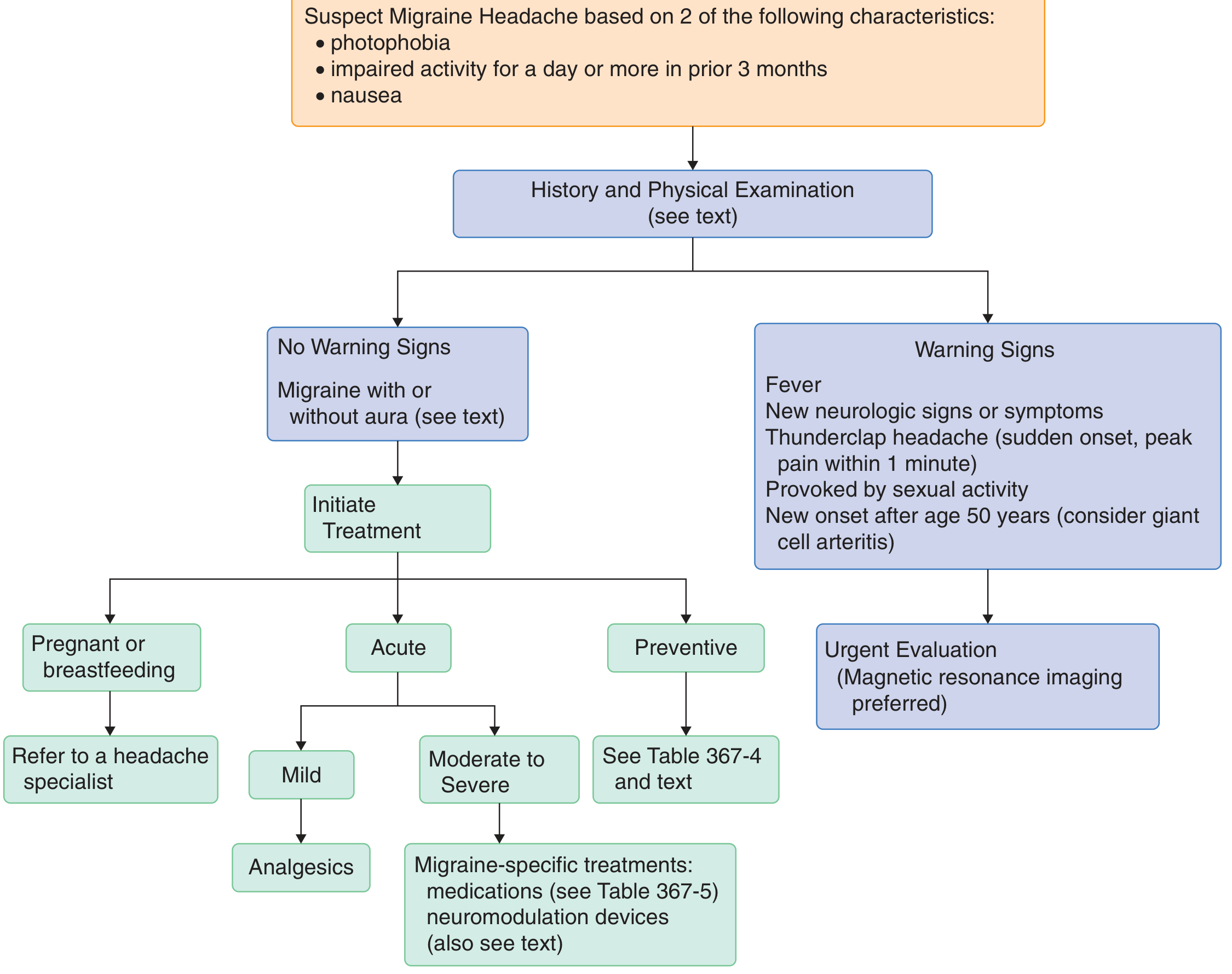
Management is divided into: acute (abortive) treatment, preventive (prophylactic) treatment, and non-pharmacological strategies.
8a. Non-Pharmacological Management
- Identify and avoid personal triggers (trigger diary)
- Regular sleep schedule
- Regular meals (avoid fasting)
- Stress management and biofeedback
- Aerobic exercise (regular, not excessive)
- Cognitive-behavioral therapy
- Acupuncture (evidence-based for prevention)
- Patient education and lifestyle modification
8b. Acute (Abortive) Treatment
Step 1 - Mild-to-Moderate Attacks:
- Acetaminophen 650-1000 mg
- NSAIDs: aspirin 500-1000 mg, ibuprofen 400-800 mg, naproxen 500-825 mg, diclofenac 50 mg, ketoprofen 75 mg
- Caffeine-combination analgesics (acetaminophen + aspirin + caffeine)
- Rule: if nausea is present, consider metoclopramide first to improve gastric emptying and drug absorption
Step 2 - Moderate-to-Severe Attacks (Migraine-Specific):
Triptans (5-HT₁B/₁D agonists) - first-line for moderate-severe migraine:
| Triptan | Notes |
|---|---|
| Sumatriptan | Available SC, IN, oral; fastest onset SC |
| Zolmitriptan | Oral and intranasal |
| Rizatriptan | Oral; fast onset |
| Naratriptan, Frovatriptan | Lower side-effect profile; longer half-life |
| Almotriptan, Eletriptan | Good tolerability |
- Common side effects: flushing, tingling, chest tightness, "heaviness"
- Contraindications: uncontrolled hypertension, ischemic heart disease, Prinzmetal angina, stroke, within 24h of ergots or another triptan
- If nausea limits oral use → intranasal or SC route
- Combining with an NSAID improves efficacy and reduces recurrence
Lasmiditan (ditans):
- 5-HT₁F receptor agonist - NO vasoconstrictive activity
- Safe when triptans are contraindicated (cardiac disease)
- Dose: 50-200 mg oral
- Key caveat: sedating - no driving for ≥8 hours
Gepants (CGRP receptor antagonists):
- Rimegepant 75 mg oral, Ubrogepant 50-100 mg oral
- ~10% absolute increase in pain freedom at 2 hours vs. placebo
- No vasoconstrictive effects; safe in cardiovascular disease
- Useful when triptans fail or are contraindicated
- Rimegepant also approved for preventive use (every other day)
Ergots:
- Ergotamine tartrate 2 mg PO/rectal at onset
- Dihydroergotamine (DHE): 1 mg SC, or 0.5-1 mg IV (requires antiemetic pretreatment)
- DHE: equivalent 2-hour efficacy to sumatriptan but lower headache recurrence
- Contraindicated: CAD, uncontrolled HTN, peripheral vascular disease, pregnancy
Antiemetics (adjuncts and standalone):
- Prochlorperazine 10-25 mg IM/IV
- Metoclopramide 10 mg IV
- Promethazine 25 mg (for IV DHE)
- Can be effective standalone in emergency setting
For very severe/ED treatment:
- Ketorolac 60 mg IM or 30 mg IV
- Prochlorperazine 10 mg IV over 5 min
- IV DHE with antiemetic
- IV valproate sodium
- Celecoxib 120 mg oral solution
- Opioids: last resort only (risk of chronification and medication overuse headache)
Status Migrainosus (>72 hours):
- IV hydration + IV ketorolac 30 mg + neurologic antiemetic (prochlorperazine/metoclopramide)
- Consider extracranial nerve blocks (occipital, supraorbital, sphenopalatine ganglion)
- Consider IV DHE protocol
- Hospitalization if dehydrated or refractory
8c. Preventive (Prophylactic) Treatment
Indications (any of the following):
- ≥4 headache days/month with significant disability
- Attacks not responding to or contraindicated for acute therapy
- Frequent use of acute medications (risk of MOH)
- Chronic migraine (≥15 days/month)
- Hemiplegic migraine, prolonged aura, migrainous infarction
- Patient preference
Principle: start low, titrate slowly, give ≥2-3 months for adequate trial, aim for ≥50% reduction in headache frequency.
Conventional Preventive Agents:
| Drug Class | Agent | Evidence |
|---|---|---|
| Beta-blockers | Propranolol 40-240 mg/d, Metoprolol, Timolol | Level A |
| Antiepileptics | Topiramate 25-100 mg/d, Valproate 500-1500 mg/d | Level A |
| Antidepressants | Amitriptyline 10-150 mg/d (especially with sleep disorder/depression), Nortriptyline | Level B |
| Calcium channel blockers | Flunarizine (limited availability in US), Verapamil | Level B |
| NSAIDs | Naproxen (limited use) | Level B |
CGRP-Targeting Biologics (newer agents):
Monoclonal antibodies (monthly or quarterly SC/IV injection):
| Drug | Target | Dosing |
|---|---|---|
| Erenumab | CGRP receptor | 70-140 mg SC monthly |
| Fremanezumab | CGRP ligand | Monthly or quarterly SC |
| Galcanezumab | CGRP ligand | Monthly SC |
| Eptinezumab | CGRP ligand | IV quarterly |
- Reserved for patients who have failed 2-3 conventional preventive classes
- ~50% reduction in monthly migraine days in ~50% of patients
- Generally well-tolerated; no significant cardiovascular contraindications
Gepants for prevention:
- Rimegepant 75 mg every other day (oral)
- Atogepant 10-60 mg daily
Botulinum toxin A (OnabotulinumtoxinA/Botox):
- Approved specifically for chronic migraine (≥15 headache days/month)
- 155 units injected across 31 sites on head/neck every 12 weeks
- Level A evidence
Non-pharmacological prevention:
- Biofeedback, relaxation training, CBT (Level A)
- Acupuncture
- Neuromodulation devices: non-invasive vagus nerve stimulation (nVNS), remote electrical neuromodulation (REN), transcranial magnetic stimulation (TMS), CEFALY (external trigeminal neurostimulation)
9. Special Populations
Children: NSAIDs and triptans (rizatriptan, sumatriptan nasal spray) are effective; topiramate, amitriptyline, and propranolol are used preventively.
Pregnancy: Most preventive medications are contraindicated. Magnesium, propranolol (with caution), and amitriptyline are options. Triptans: limited data, generally avoided but some are used in severe cases. Refer to headache specialist.
Menstrual migraine: Perimenstrual use of NSAIDs, frovatriptan (long t½), or mini-prophylaxis with naproxen sodium around expected menstruation.
Oral contraceptives and HRT: Exacerbate migraine in many women; migraine with aura + OCP + smoking significantly increases ischemic stroke risk - OCP should generally be avoided in women with migraine with aura.
10. Prognosis
- Most migraineurs have a fluctuating course throughout life, with periods of more and less frequent attacks
- Tendency toward improvement with age, particularly after menopause in women
- ~30-40% of patients eventually experience spontaneous remission
- Risk factors for chronification (episodic → chronic migraine):
- Female sex
- Obesity
- High baseline headache frequency
- Medication overuse (opioids > triptans/NSAIDs)
- Depression, anxiety, and other psychiatric comorbidities
- Sleep disorders
- Stressful life events
- Low socioeconomic status
- Medication overuse headache (MOH): A major driver of chronification. Occurs when acute medications are used >10-15 days/month; withdrawal and preventive treatment are required
- Migrainous infarction is a rare but real risk, particularly in women with migraine with aura who smoke and use estrogen-containing contraceptives
- White matter hyperintensities are more prevalent on MRI in migraineurs (especially with aura) but clinical significance is uncertain; the risk of clinically overt stroke attributable to migraine alone is small
Sources: Bradley and Daroff's Neurology in Clinical Practice; Goldman-Cecil Medicine International Edition; Goodman & Gilman's Pharmacological Basis of Therapeutics; Textbook of Family Medicine, 9e
---That covers everything you asked for. Here is a brief orientation to the answer above:
What was covered:
-
Epidemiology - 12% 1-year global prevalence, peak in the 4th decade, 3:1 F:M ratio after puberty, childhood equivalents, chronification rates
-
Pathophysiology - The modern neurovascular model: cortical spreading depression (CSD) as the electrophysiological substrate of aura; trigeminovascular activation and neurogenic inflammation; the central role of CGRP and 5-HT; the migraine generator debate (hypothalamus + dorsal pons); central sensitization and allodynia; why the old "vascular theory" is obsolete
-
Classification - Full ICHD-3 spectrum: migraine without aura, with aura (visual/sensory/language/motor), chronic, hemiplegic, basilar/brainstem aura, retinal, status migrainosus, migrainous infarction, childhood equivalents; diagnostic criteria
-
Clinical presentation - All four phases in detail: prodrome, aura (the "marching" sensory/visual/language phenomena and how to distinguish them from TIA or seizure), headache phase, postdrome
-
Risk factors - Genetics (FHM genes, GWAS loci), sex, age, obesity, mood disorders, medication overuse, hormonal factors
-
Triggers - Stress, hormones, sleep, diet, sensory stimuli, weather, medications - and why susceptibility fluctuates daily
-
Investigations - Primarily clinical; red flags and when to image (MRI vs. CT) or perform LP; ESR/CRP, TSH
-
Management - Non-pharmacological; acute treatment stratified by severity (analgesics → triptans → lasmiditan/gepants → DHE/ergots → ED protocols → status migrainosus); preventive treatment (beta-blockers, antiepileptics, TCAs; CGRP monoclonal antibodies; botulinum toxin A for chronic migraine; gepants); special populations
-
Prognosis - Fluctuating lifelong course, improvement post-menopause, risk of chronification, MOH, rare migrainous infarction risk
This is a shared conversation. Sign in to Orris to start your own chat.