
Hyperthyroidism
Reading File
Searching sources...
Finding Sources
Searching PubMed
"hyperthyroidism"[MeSH Terms] AND "treatment"[MeSH Terms]
Finding Sources
Good - I have several key sources. Let me read the most comprehensive ones in parallel: Robbins Pathology (for etiology/pathology), Family Medicine (for clinical overview), and the Emergency Medicine text.
Reading File
Reading File
Reading File
Excellent - I have rich content. Let me now read the full Family Medicine section for treatment details and also get Graves disease specifics/images.
Reading File
Finding Sources
Reading File
Reading File
I now have comprehensive content. Let me also fetch the pharmacology diagram image and get key treatment details from the Family Medicine section.
Reading File
Loading Image
I now have comprehensive information to write a complete, well-structured answer on hyperthyroidism.
Hyperthyroidism
Hyperthyroidism (thyrotoxicosis) is a hypermetabolic state caused by elevated circulating thyroid hormones. It affects multiple organ systems and has several distinct etiologies requiring different management strategies.
Definition & Pathophysiology
Elevated circulating T3/T4 causes a hypermetabolic state by:
- Increasing cellular oxygen consumption and heat production
- Upregulating adrenergic receptor sensitivity (amplifying sympathetic effects)
- Accelerating virtually all metabolic pathways
The diagnosis rests on a suppressed serum TSH (<0.1 mIU/L) plus elevated free T4 and/or free T3. TSH is the single most sensitive screening test - it falls even before T4 becomes overtly elevated (subclinical hyperthyroidism).
- Robbins & Kumar Basic Pathology, Robbins Pathology, p. 1866-1898
- Textbook of Family Medicine 9e, p. 1018-1021
Causes
| Cause | Key Feature |
|---|---|
| Graves disease (~85%) | TSH receptor-stimulating antibodies (TSH-RS Abs); diffuse goiter + ophthalmopathy |
| Toxic multinodular goiter (Plummer disease) | Multiple autonomous nodules; older patients |
| Toxic adenoma | Single hyperfunctioning nodule; "hot nodule" on scan |
| Subacute/destructive thyroiditis | Transient leak of preformed hormone; low RAI uptake |
| TSH-producing pituitary adenoma | Rare; TSH normal or elevated (secondary hyperthyroidism) |
| Factitious/iatrogenic | Exogenous thyroid hormone ingestion |
| hCG-mediated (hyperemesis gravidarum, hydatidiform mole) | hCG cross-reacts with TSH receptor |
Graves Disease (Most Common)
Graves disease results from TSH-RS Abs that bind TSH receptors and continuously stimulate T4 production, completely suppressing TSH (often <0.01 mIU/L, sometimes unmeasurable). Key distinguishing features:
- Goiter in >90% of patients
- Ophthalmopathy (exophthalmos, lid retraction, lid lag) - partly from sympathetic stimulation of the superior tarsal muscle, partly from retroorbital infiltration
- Pretibial myxedema (less common)
A diagnosis of Graves disease without goiter and ophthalmic abnormalities should be questioned.
Clinical Features
The manifestations reflect both the hypermetabolic state and sympathetic overactivity:
Constitutional
- Warm, moist, flushed skin; heat intolerance; excessive sweating
- Weight loss despite increased appetite
Cardiovascular
- Tachycardia, palpitations, wide pulse pressure, systolic hypertension
- Atrial fibrillation (especially in elderly); high-output heart failure with prolonged disease
Gastrointestinal
- Diarrhea, hypermotility, malabsorption, steatorrhea
Neuromuscular
- Anxiety, tremor, irritability, hyperactivity
- Proximal muscle weakness (thyroid myopathy) in ~50%
- Fine resting tremor
Ocular
- Wide staring gaze, lid lag (sympathetic overstimulation of superior tarsal muscle)
- In Graves: true exophthalmos from retroorbital infiltration
Reproductive
- Menstrual irregularities, reduced fertility
Apathetic hyperthyroidism (in elderly): typical hypermetabolic signs are blunted; may present only with unexplained weight loss or worsening cardiovascular disease - diagnosed during workup.
Diagnosis
| Test | Finding in Primary Hyperthyroidism |
|---|---|
| Serum TSH | Low (<0.1 mIU/L; often <0.01) |
| Free T4 | Elevated (or normal in T3-toxicosis) |
| Free T3 | Elevated (measure if TSH low but T4 normal) |
| TSH-RS Abs | Positive in Graves disease |
| TPO antibodies | May be elevated |
| Radioactive iodine uptake (RAIU) | High + diffuse = Graves; High + focal = toxic nodule; Low = thyroiditis |
Secondary hyperthyroidism (pituitary adenoma) is rare: TSH is normal or elevated with elevated T4.
Treatment
1. Symptomatic / Temporizing
Beta-blockers (propranolol, metoprolol, atenolol) are first-line for rapid symptom control - they blunt tachycardia, hypertension, tremor, and anxiety. They do NOT reduce thyroid hormone levels.
2. Antithyroid Drugs (Thioamides)
The thioamides methimazole (MMI) and propylthiouracil (PTU) work by:
- Inhibiting thyroid peroxidase → blocking iodination of tyrosyl groups and coupling reactions
- PTU additionally blocks peripheral T4 → T3 conversion
MMI is preferred over PTU in most patients because:
- Longer half-life (once-daily dosing)
- Lower incidence of adverse effects
- Lower risk of severe hepatotoxicity
PTU is preferred in:
- First trimester of pregnancy (methimazole carries greater teratogenic risk)
- Thyroid storm (additional peripheral T4→T3 blockade is valuable)
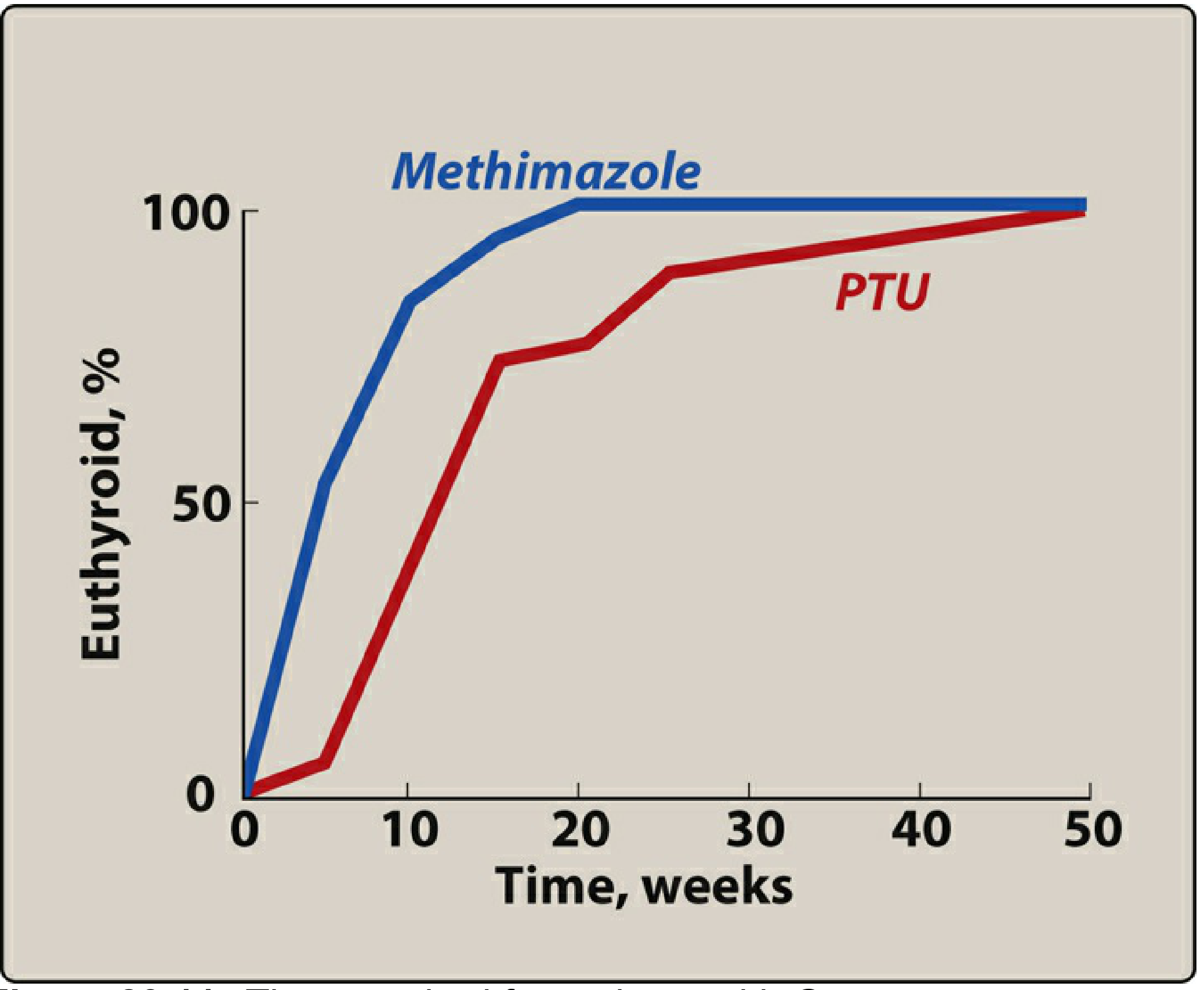
Note: Clinical effect is delayed until pre-stored thyroglobulin is depleted - see graph below.
Adverse effects of both: rash, pruritus, arthralgia, agranulocytosis (rare but serious), hepatotoxicity (PTU more severe).
3. Radioactive Iodine (¹³¹I)
- Selectively taken up by follicular cells → ablation of thyroid tissue
- Most patients develop hypothyroidism afterward and require lifelong levothyroxine
- Contraindicated in pregnancy (also ablates fetal thyroid)
- Should NOT be used during active thyroid storm (can precipitate storm)
4. Surgery (Thyroidectomy)
- Indicated for large goiters causing compressive symptoms, thyroid cancer concern, or failed medical therapy
- Requires pre-operative euthyroid state
- Results in permanent hypothyroidism requiring T4 replacement
Long-term approach for Graves disease - three options:
- Sustained antithyroid medication - dose adjusted to maintain euthyroidism; ~30-40% achieve lasting remission after 12-18 months
- ¹³¹I ablation + lifelong levothyroxine (most common choice)
- Thyroidectomy + lifelong levothyroxine
Iodide (Pharmacologic Doses)
- Wolff-Chaikoff effect: large doses of iodide transiently inhibit thyroid hormone synthesis (effect lasts only days)
- More importantly: iodide inhibits thyroid hormone release from thyroglobulin
- Used before thyroid surgery (reduces gland vascularity) and in thyroid storm
- Must give antithyroid drugs FIRST, then iodide - to block iodine-induced new synthesis
- Not suitable for long-term therapy
Thyroid Storm
Thyroid storm is abrupt, severe thyrotoxicosis - a medical emergency with mortality of 20-75% if untreated.
Precipitants: infection, surgery, trauma, radioiodine therapy, abrupt discontinuation of antithyroid drugs, myocardial infarction, PE, stroke.
Clinical features: fever, extreme tachycardia, dysrhythmias, high-output heart failure, markedly altered mental status (the most distinguishing feature from simple thyrotoxicosis), circulatory collapse.
Management (sequential/simultaneous):
- PTU (high dose) - blocks synthesis AND peripheral conversion
- Iodide (given 1-2 hours AFTER PTU) - blocks hormone release
- Beta-blockers (propranolol preferred - also blocks T4→T3 conversion)
- Corticosteroids (dexamethasone/hydrocortisone) - block T4→T3 conversion, treat possible adrenal insufficiency
- Cooling for hyperthermia (avoid aspirin - displaces T4 from binding proteins)
- Fluid resuscitation
- Treat the precipitating event
- ICU admission mandatory
Cholestyramine (binds thyroid hormone in gut) and plasmapheresis are reserved for refractory cases. ECMO has been used in severe cases with cardiovascular collapse.
Subclinical Hyperthyroidism
- Low TSH with normal free T4 and T3
- May be asymptomatic or have subtle symptoms
- Increases risk of atrial fibrillation and osteoporosis with prolonged course
- Management depends on degree of TSH suppression, age, and comorbidities
Hyperthyroidism in Pregnancy
- 65% of cases in pregnancy are Graves disease
- First trimester: transient exacerbation is common; postpartum rebound also common
- PTU in first trimester → switch to methimazole in second/third trimester (to limit PTU hepatotoxicity)
- ¹³¹I is absolutely contraindicated throughout pregnancy
- Iodide is Class D; use only in severe cases for limited duration
- Thyroid storm in pregnancy can mimic eclampsia - check TSH/free T4 in eclamptic patients; mortality approaches 100% untreated
- Maternal TSH-RS Abs cross the placenta → up to 20% of neonates develop transient hyperthyroidism lasting 3-12 weeks
Sources
- Robbins & Kumar Basic Pathology, Robbins Pathology - block 7, p. 1866-1898
- Textbook of Family Medicine 9e - block 12, p. 1018-1022
- ROSEN's Emergency Medicine - block 23, p. 200-218
- Lippincott Illustrated Reviews: Pharmacology - block 3, p. 641-663
Treatment of hyperthyroidism
Reading File
Searching sources...
Finding Sources
Finding Sources
Searching PubMed
"hyperthyroidism"[MeSH Terms] AND "treatment"[MeSH Terms]
Excellent. I have multiple high-yield sources. Let me read them in parallel - Harrison's (most authoritative), Lippincott Pharmacology, Tintinalli, Symptom to Diagnosis, and Washington Manual.
Reading File
Reading File
Reading File
Reading File
The Harrison's offset was off (landed on diabetes content). Let me get the right Harrison's section on hyperthyroidism treatment, plus read more of the Washington Manual and the Tintinalli thyroid storm treatment protocol.
Finding Sources
Reading File
Reading File
Reading File
Reading File
Reading File
Reading File
I now have comprehensive, authoritative content from Harrison's 22nd edition, Washington Manual, Lippincott Pharmacology, and Tintinalli's. Let me also get the Harrison's thyroid storm treatment and fetch the diagnostic algorithm image.
Reading File
Loading Image
I now have all the content I need from multiple authoritative sources. Let me compile a comprehensive, well-organized answer.
Treatment of Hyperthyroidism
The approach to treatment depends on the underlying cause, disease severity, patient age, comorbidities, and whether the patient is pregnant. Three definitive modalities exist for most forms: antithyroid drugs (thionamides), radioactive iodine (RAI/¹³¹I), and thyroidectomy. Beta-blockers serve as important adjunctive therapy.
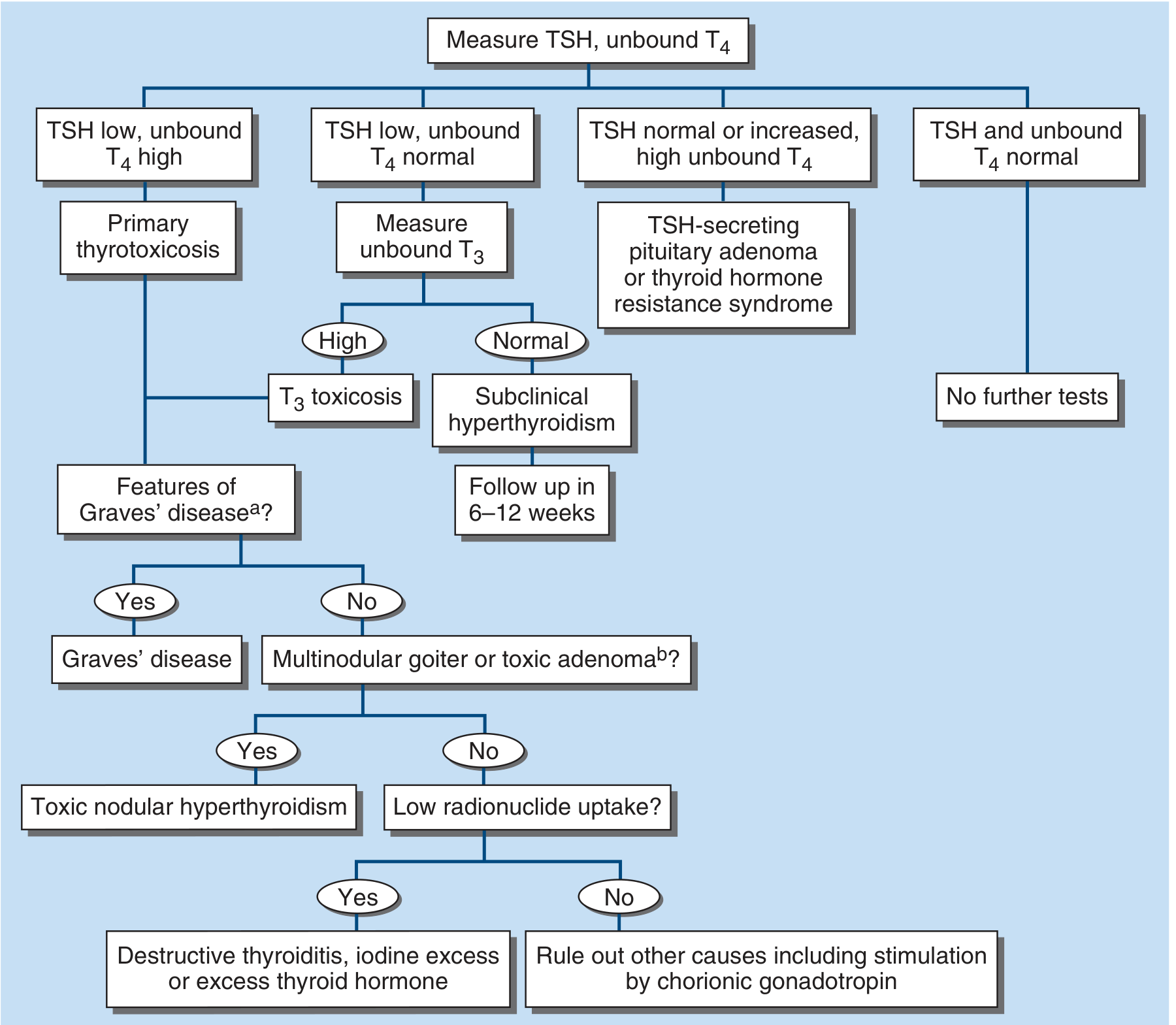
Diagnostic Algorithm First
Before treating, identify the cause - it determines the modality.
1. Beta-Blockers (Symptomatic / Temporizing)
Beta-blockers are the first-line symptomatic treatment - they do not reduce thyroid hormone levels but rapidly blunt adrenergic manifestations while awaiting definitive therapy or lab confirmation of the cause.
- Propranolol is often preferred because, as a non-selective beta-blocker, it also inhibits peripheral T4 → T3 conversion (in addition to blocking adrenergic receptors)
- Atenolol or metoprolol (cardioselective) can be used if reactive airway disease is a concern
- In patients where beta-blockers are contraindicated: calcium channel blockers (rate control), or rarely reserpine/guanethidine (deplete catecholamines)
- Atenolol 50-100 mg/day is also used preoperatively (1-2 weeks before surgery) to keep resting HR below 90 bpm
- Washington Manual of Medical Therapeutics; Tintinalli's Emergency Medicine
2. Antithyroid Drugs (Thionamides)
Drugs: Methimazole (MMI) and Propylthiouracil (PTU)
Mechanism:
- Both inhibit thyroid peroxidase (TPO) → block oxidation/organification of iodide and coupling of iodotyrosines → reduced T3/T4 synthesis
- PTU additionally blocks peripheral deiodination of T4 → T3 (an advantage mainly in thyroid storm and severe thyrotoxicosis)
- Important: Neither drug affects pre-stored thyroglobulin. Clinical effect is delayed by weeks to months until stored hormone is depleted
Methimazole vs. PTU - When to Use Which
| Situation | Preferred Drug | Reason |
|---|---|---|
| Most patients | Methimazole | Once-daily dosing (t½ 6h vs 90 min); fewer side effects; lower hepatotoxicity risk |
| First trimester of pregnancy | PTU | Methimazole is teratogenic in first trimester (aplasia cutis, choanal atresia, tracheoesophageal fistula) |
| Second & third trimester | Methimazole | PTU's hepatotoxicity risk outweighs benefit after organogenesis |
| Thyroid storm | PTU (preferred) | Extra benefit of blocking T4→T3 peripherally (though recent evidence suggests this conversion may already be reduced in storm) |
| Children | Methimazole | PTU is contraindicated in children unless allergic/intolerant |
Dosing (Washington Manual / Tintinalli)
- Methimazole: 10-40 mg PO daily (starting); up to 60 mg/day in severe cases; 20 mg q6h in thyroid storm
- PTU: 100-200 mg PO TID (starting); up to 300 mg PO QID in severe cases; 500-1000 mg loading dose followed by 250 mg q4h in thyroid storm
Monitoring and Duration
- Check free T4 every 4 weeks; adjust dose to maintain normal range
- If free T4 does not fall after 4-8 weeks: increase dose
- Duration: typically 6 months to 2 years
- Spontaneous remission of Graves disease occurs in ~one-third of patients during thionamide therapy (more likely with small goiter, mild/recent-onset disease, low TSI titers)
- Hyperthyroidism recurs within 6 months of stopping in the majority; if persistent off-therapy after 1+ year, move to RAI or surgery
Adverse Effects
| Severity | Effects |
|---|---|
| Minor (first few months) | Rash, urticaria, pruritus, arthralgia, fever, transient leukopenia |
| Serious | Agranulocytosis (0.3%): fever, chills, sore throat - stop drug immediately, check WBC. Routine WBC monitoring is NOT useful (develops suddenly) |
| Serious | Hepatotoxicity (PTU more severe - fatal liver failure reported; FDA black box warning on PTU) |
| Rare | Vasculitis, drug-induced lupus, hepatitis with methimazole |
- Patients must be warned to stop the drug and seek immediate evaluation for fever, sore throat, or jaundice
- Harrison's 22e; Washington Manual; Lippincott Pharmacology; Tintinalli's EM
3. Radioactive Iodine (¹³¹I / RAI)
Mechanism
¹³¹I is selectively taken up by thyroid follicular cells → beta radiation destroys thyroid tissue → reduced hormone production. A single dose permanently controls hyperthyroidism in ~90% of patients.
Indications and Preferred Use
- First-line in North America (vs. antithyroid drugs preferred in Europe/Japan/Latin America - no single approach is universally superior)
- Preferred for toxic nodular goiter and toxic adenoma (residual normal tissue often spared when nodules are most active)
- Good option in Graves disease when remission on antithyroid drugs has failed or is unlikely
Key Points
- Pregnancy test immediately before therapy in women of childbearing age
- Measure 24-hour RAIU to calculate dose
- Stop thionamides at least 3 days before RAI (they interfere with uptake); stop iodine at least 2 weeks before
- Euthyroid state may take several months to achieve; follow free T4 at 4-6 week intervals
- Hypothyroidism develops in most patients within the first year and continues accumulating at ~3%/year thereafter - lifelong levothyroxine replacement required in nearly all
- In patients with severe cardiac disease: treat with thionamides first to deplete stored hormone before RAI (RAI can cause transient T4 rise in first 2 weeks from release of stored hormone)
- Graves orbitopathy: RAI can worsen eye disease (especially in smokers) - ophthalmology evaluation before RAI; glucocorticoids or teprotumumab (IGF-1R antibody) used for active orbitopathy
- Does NOT increase cancer risk or cause congenital abnormalities in children conceived after treatment
- Absolutely contraindicated in pregnancy and breastfeeding
- Harrison's 22e; Washington Manual; Lippincott Pharmacology
4. Thyroidectomy (Surgery)
Indications
- Large goiter causing compressive symptoms (dysphagia, stridor)
- Suspected thyroid malignancy
- Failure or intolerance of medical therapy and RAI
- Patient preference
- Pregnancy where antithyroid drugs are not tolerated (can be performed in second trimester)
- Children/young patients who prefer permanent solution
Pre-operative Preparation
Two options (Washington Manual / Harrison's):
Option A:
- Give thionamide until nearly euthyroid
- Add SSKI (supersaturated potassium iodide), 40-80 mg PO BID, 1-2 weeks before surgery (reduces gland vascularity and hormone release)
- Stop both drugs postoperatively
Option B:
- Atenolol 50-100 mg/day starting 1-2 weeks before surgery, titrated to resting HR <90 bpm; continue for 5-7 days postoperatively
- Add SSKI as above
Post-operative
- Start levothyroxine replacement
- Check TSH and free T4 at 6 weeks
- Monitor calcium (hypoparathyroidism risk)
Complications
| Complication | Notes |
|---|---|
| Hypothyroidism | Expected; requires lifelong T4 replacement |
| Hypoparathyroidism | Can be transient or permanent; monitor Ca²⁺ |
| Recurrent laryngeal nerve injury | Vocal cord paralysis; rare with experienced surgeon |
| Perioperative thyroid storm | Prevented by pre-op euthyroid state |
- Harrison's 22e; Washington Manual; KJ Lee's Otolaryngology
5. Iodide (Lugol's / SSKI / KI)
- Wolff-Chaikoff effect: large-dose iodide transiently inhibits thyroid hormone synthesis (lasts only days, then escapes)
- More importantly: inhibits hormone release from thyroglobulin (mechanism unclear)
- Must give antithyroid drugs first (at least 1 hour before iodide) to block iodide-induced new synthesis
- Uses: pre-operatively, thyroid storm
- Not suitable for long-term therapy (escape phenomenon)
- Adverse effects: sore mouth/throat, tongue swelling, metallic taste, mucosal ulceration
Treatment by Etiology - Summary
| Cause | Preferred Treatment |
|---|---|
| Graves disease | Thionamides (initial) → RAI or thyroidectomy for definitive tx; or thionamides long-term with ~30% remission |
| Toxic multinodular goiter | RAI preferred; thionamides or thyroidectomy as alternatives |
| Toxic adenoma | RAI or surgery (after thionamide suppression); rarely malignant |
| Subacute thyroiditis | Symptomatic only: NSAIDs (first-line); corticosteroids if refractory; beta-blockers for symptoms; no antithyroid drugs (not hormone overproduction) |
| Amiodarone-induced (type 1) | Stop amiodarone + thionamides |
| Amiodarone-induced (type 2) | Corticosteroids; decision on stopping amiodarone case-by-case |
| Iodine-induced | Thionamides + atenolol until euthyroid |
| Pregnancy - Graves | PTU (1st trimester) → methimazole (2nd/3rd); RAI absolutely contraindicated |
| Transient thyroiditis (postpartum, silent) | Beta-blockers for symptoms only; self-limiting |
6. Thyroid Storm (Emergency Treatment)
Thyroid storm is a clinical diagnosis - do not wait for labs. Manage simultaneously:
| Step | Drug | Mechanism |
|---|---|---|
| 1. Block new synthesis (give first) | PTU 500-1000 mg loading → 250 mg q4h OR methimazole 20 mg q6h | Blocks TPO; PTU also blocks T4→T3 conversion |
| 2. Block hormone release (1-2 h after Step 1) | Lugol's iodine or SSKI | Wolff-Chaikoff effect + inhibits thyroglobulin release |
| 3. Adrenergic blockade | Propranolol IV/PO (also blocks T4→T3); atenolol if reactive airway | Reduces HR, tremor, agitation, fever |
| 4. Block T4→T3 peripherally | Dexamethasone 2 mg q6h or hydrocortisone 100 mg q8h | Also treats possible relative adrenal insufficiency |
| 5. Antipyresis | Acetaminophen + cooling blanket | Avoid aspirin (displaces T4 from binding proteins) |
| 6. Fluids + electrolytes | IV fluids | Correct dehydration and metabolic derangements |
| 7. Treat precipitant | Antibiotics if infection, etc. | Storm is often precipitated by infection, MI, PE, surgery |
| Refractory cases | Cholestyramine, plasmapheresis, ECMO | Cholestyramine binds hormone in gut; plasmapheresis removes circulating hormone |
- Disposition: ICU admission mandatory
- Neither RAI nor surgery should be used during active thyroid storm (can worsen it); only after sustained euthyroid state
7. Subclinical Hyperthyroidism
- TSH suppressed but free T4 and T3 normal
- Risks: atrial fibrillation, osteoporosis, progression to overt hyperthyroidism
- Treatment threshold depends on degree of TSH suppression, age, cardiac disease, and bone density
- Many patients with TSH 0.1-0.4 can be monitored; treatment (usually RAI or thionamides) generally recommended if TSH persistently <0.1 mIU/L, especially in elderly or those with cardiac risk
8. Special Populations
Graves orbitopathy:
- Antithyroid drugs and surgery do not worsen eye disease
- RAI can worsen it (especially in smokers)
- Active orbitopathy: glucocorticoids or teprotumumab (anti-IGF-1R monoclonal antibody - newer treatment)
- Ophthalmology evaluation before choosing RAI
Pregnancy (see above table):
- Neonatal hyperthyroidism risk from placental transfer of TSI - monitor TRAb levels in mother; up to 20% of neonates of TRAb-positive mothers develop transient hyperthyroidism lasting 3-12 weeks
Sources:
- Harrison's Principles of Internal Medicine, 22nd Edition (2025), Ch. 396
- Washington Manual of Medical Therapeutics
- Lippincott Illustrated Reviews: Pharmacology
- Tintinalli's Emergency Medicine: A Comprehensive Study
- Robbins & Kumar Basic Pathology
This is a shared conversation. Sign in to Orris to start your own chat.