
Selphos poisoning
Reading File
Now let me search the library and PubMed in parallel for Selphos (aluminium phosphide) poisoning.
Finding Sources
Searching PubMed
"aluminium phosphide" AND poisoning
Searching the Web
Selphos aluminium phosphide poisoning management treatment 2024
Good - found two textbook sections. Let me read both in parallel.
Reading File
Reading File
The first textbook was truncated. Let me read the rest of it and also search for more detailed management content in the library.
Reading File
Finding Sources
I now have comprehensive information. Let me compile the full answer.
Selphos (Aluminium Phosphide) Poisoning
Selphos is one of several trade names for aluminium phosphide (AlP) tablets - others include Celphos, Alphos, Phostoxin, and Fumigran. It is infamous as "the agent of sure death" due to its extremely high mortality rate and the absence of a specific antidote.
Formulation
- Gray-green tablets, each weighing 3 g, containing 56% active ingredient mixed with urea and ammonium carbonate
- Each tablet liberates 1 g of phosphine gas (PH3)
- Primarily used as a grain fumigant to destroy insects and rodents in stored grain
Mechanism of Toxicity
On contact with moisture (atmospheric humidity or gastric acid):
AlP + 3H2O → Al(OH)3 + PH3 (phosphine gas)
Phosphine is the actual toxic agent. It causes:
- Mitochondrial dysfunction - inhibits cytochrome c oxidase (complex IV), blocking cellular respiration
- Oxidative stress - generates reactive oxygen species, lipid peroxidation
- Inhibits multiple enzyme systems including catalase and cholinesterase
- Results in multi-organ failure: cardiovascular collapse is the principal cause of death
Fatal Dose and Period
| Parameter | Value |
|---|---|
| Fatal dose | 4-5 g (1-3 tablets) |
| Fatal period | 12-36 hours |
Signs and Symptoms
Gastrointestinal (early):
- Nausea, vomiting, burning epigastric pain
- Intense thirst and diarrhoea
- Garlicky/fishy odour from breath (characteristic)
Cardiovascular:
- Hypotension and shock
- ECG abnormalities: sinus tachycardia, bradycardia, heart block
- Arrhythmias
- Myocardial damage, pericarditis, congestive cardiac failure
Respiratory:
- Tightness in chest, dyspnoea
- Severe pulmonary oedema (from inhaled phosphine)
- Respiratory distress in terminal stages
Neurological/Metabolic:
- Excitement and agitation (early)
- Hypocalcaemia, tetany, convulsions, coma
- Oliguria
- Metabolic acidosis
- Cold clammy skin
Terminal event: Death from cardiac failure
- P C Dikshit Textbook of Forensic Medicine and Toxicology, p. 573-574
- Parikh's Textbook of Medical Jurisprudence Forensic Medicine and Toxicology, p. 679
Diagnosis
Clinical:
- History of ingestion / exposure
- Characteristic garlicky odour
Chemical test (bedside):
- Ask the patient to breathe on filter paper impregnated with 0.1 N silver nitrate for 5-10 minutes
- Paper turns black if phosphine is present (silver nitrate is reduced to metallic silver)
Lab:
- Serial blood phosphine levels
- ABG (metabolic acidosis), serum electrolytes, ECG monitoring
- Serum magnesium, calcium
- Cardiac enzymes (myocardial damage)
- NT-proBNP (predictive biomarker for mortality)
Management
There is NO specific antidote.
Immediate / Decontamination
- Remove patient from source of exposure
- Wash skin with soap and water (AlP can absorb through skin)
- Healthcare workers must use full-face masks and gloves - do NOT perform mouth-to-mouth; phosphine off-gassing from vomit is hazardous
- Gastric lavage with 3-5% sodium bicarbonate, 1% copper sulphate, 1% potassium permanganate, or mineral/coconut oil - these convert AlP to phosphate within 30 minutes
- Note: Some recent evidence questions routine gastric lavage since moisture contact during the procedure may accelerate phosphine generation
- Oil-based decontamination (coconut oil) has shown benefit in some studies; a 2024 systematic review and meta-analysis supports oil-based gastric lavage
Supportive Treatment
| Problem | Intervention |
|---|---|
| Arrhythmias | Magnesium sulphate 3 g IV bolus, then 6 g infusion over 24 h for 5-7 days |
| Hypocalcaemia/tetany | Intravenous calcium salts |
| Metabolic acidosis | Sodium bicarbonate 50 mEq q15 min until arterial HCO3 > 15 mmol/L |
| Hypotension | IV fluids (0.9% NaCl bolus); low-dose dopamine infusion |
| Pulmonary oedema | Corticosteroids; oxygen; positive pressure ventilation/intubation |
| Bronchospasm | Aerosol bronchodilators |
| Infection | Antibiotics |
| Oxidative stress | Antioxidants (N-acetylcysteine, glutathione, Vitamin E) - used adjunctively |
Emerging/Investigated Therapies
- Intravenous lipid emulsion (ILE) - shown benefit in case reports and a 2024 RCT (acts as lipid sink for lipophilic phosphine)
- Glucose-insulin-potassium (GIK) infusion - pilot RCT showed some benefit for myocardial support
- High-dose insulin therapy - under study (RCT published 2024)
- Hyperbaric oxygen therapy - rare successful cases reported; limited evidence
- Monitoring for 72 hours minimum; continuous cardiac monitoring mandatory
Medicolegal Aspects
- Common method of suicide in rural India, especially in Haryana, Punjab, Uttar Pradesh, and Rajasthan
- Used in dowry deaths (homicidal poisoning) in rural India - only a fragment of a tablet is sufficient
- The resemblance of tablets to medicinal preparations makes accidental ingestion possible
- Autopsy findings include congestion of all organs and frothy fluid in airways
Key Points to Remember
- Phosphine is the actual toxin, not AlP itself
- Garlicky/fishy breath odour is the clinical hallmark
- No antidote exists - all treatment is supportive
- Cardiac failure (cardiogenic shock) is the primary cause of death
- Magnesium sulphate is the cornerstone drug for arrhythmias
- Coconut/mineral oil lavage may reduce phosphine liberation in the stomach
- High mortality even with aggressive ICU care
Recent evidence note: A 2025 review (PMID 41523401) specifically addresses neurological manifestations of AlP poisoning, an underappreciated aspect. A 2024 systematic review supports oil-based gastric decontamination. High-dose insulin and ILE are being studied in RCTs as adjuncts.
Harrison based
Finding Sources
Finding Sources
Finding Sources
Finding Sources
Finding Sources
Finding Sources
Finding Sources
Finding Sources
The "Poisoning and Drug Overdose" section at line 1531 and "Specific Toxic Syndromes" at line 1685 in block52 are most relevant. Let me read those sections.
Reading File
Reading File
The table content from Harrison's appears garbled/OCR-corrupted in these blocks. Let me search specifically for phosphide content in Harrison's toxicology chapter and read the specific toxic syndromes section more carefully.
Reading File
Harrison's 22E does not have a dedicated section on aluminium phosphide/Selphos poisoning - it refers readers to "specialized texts" for poisonings not covered. The chapter covers general toxicology principles and common poisonings (opioids, acetaminophen, heavy metals, etc.) but aluminium phosphide is not among them. Let me now read the general principles and the key treatment table from Harrison's to give a proper Harrison-based answer.
Reading File
I now have enough from Harrison's. Here is an honest, Harrison-based answer:
Selphos (Aluminium Phosphide) Poisoning - Harrison's 22E Perspective
Important clarification upfront
Harrison's Principles of Internal Medicine 22E does not have a dedicated section on aluminium phosphide / Selphos poisoning. The toxicology chapter (Chapter 470, "Poisoning and Drug Overdose") explicitly states that "Poisonings not covered in this chapter are discussed in specialized texts." AlP poisoning is not among its covered syndromes - it focuses on poisonings common in a Western context (acetaminophen, opioids, alcohol, carbon monoxide, etc.).
What Harrison's does provide is the general framework for managing any poisoning, which directly applies to Selphos. Here is how that framework maps onto AlP poisoning:
Harrison's General Framework Applied to Selphos Poisoning
1. Treatment Goals (Harrison's Table 470-3)
Harrison's defines five universal goals:
| Goal | Application to Selphos |
|---|---|
| Support vital signs | Maintain BP, treat arrhythmias, ventilate |
| Prevent further absorption | GI decontamination (oil/bicarbonate lavage) |
| Enhance elimination | Supportive; no established extracorporeal method |
| Administer antidotes | None exist for AlP |
| Prevent re-exposure | Psychiatric referral (suicidal ingestion), regulatory notification |
2. Supportive Care (Harrison's priority)
Harrison's emphasises this is the backbone of all poisoning management:
- Airway protection - early intubation if respiratory distress or pulmonary oedema develops
- Oxygenation/ventilation - oxygen for hypoxia; positive pressure ventilation for pulmonary oedema
- Treatment of arrhythmias - magnesium sulphate is the agent of choice (IV 3 g bolus, then infusion)
- Haemodynamic support - IV fluids, vasopressors (dopamine/noradrenaline) for refractory shock
- Correction of metabolic derangements - sodium bicarbonate for metabolic acidosis; calcium for hypocalcaemia
- Treatment of seizures - benzodiazepines
- Prevention of secondary complications - ICU monitoring, treat infections
3. GI Decontamination (Harrison's principles)
Harrison's states decontamination should be selective, not routine, based on:
- Time since ingestion (efficacy drops sharply after 1 hour)
- Severity of expected toxicity
- Risk of complications
For AlP specifically:
- Activated charcoal - Harrison's preferred decontamination method generally, but its efficacy for AlP is uncertain (AlP is an inorganic compound; Harrison's notes that "charged chemicals and inorganic compounds are not well adsorbed by charcoal")
- Gastric lavage - Harrison's reserves this for "life-threatening poisons not treatable by other means" - AlP qualifies. However, a unique concern with AlP is that adding moisture during lavage accelerates phosphine liberation; oil-based lavage (coconut oil/liquid paraffin) is preferred over water to avoid this
- Skin decontamination - wash with soap and water (AlP is dermally absorbed)
4. Enhancement of Elimination
Harrison's lists: multiple-dose activated charcoal, urinary pH alteration, haemodialysis, haemoperfusion, CVVH, hyperbaric oxygen.
For AlP:
- No extracorporeal method has proven effective for eliminating phosphine
- Hyperbaric oxygen - listed by Harrison's as a modality; isolated case reports suggest benefit in AlP, though evidence remains very limited
- Haemoperfusion/CVVH may assist multi-organ support, not phosphine elimination per se
5. Antidotes
Harrison's framework: "Neutralization by antibodies, chemical binding, metabolic antagonism, physiologic antagonism."
For AlP: No specific antidote exists. This is what makes Selphos poisoning so lethal. Agents used empirically include:
- Magnesium sulphate (physiologic antagonism for arrhythmias)
- N-acetylcysteine, glutathione (antioxidants - metabolic support)
- Intravenous lipid emulsion (ILE) - emerging evidence; acts as a lipid sink
- Glucose-insulin-potassium (GIK) - myocardial support
- Sodium bicarbonate - metabolic antagonism of acidosis
6. Harrison's Global Considerations Note
Harrison's 22E (2025) specifically adds a Global Considerations note acknowledging that poisoning patterns differ globally - immigrants, travelers, and internet purchasing introduce agents uncommon in Western settings. AlP is a perfect example: it is the leading cause of pesticide suicide in South Asia and the Middle East but rarely encountered in North America/Europe.
Bottom Line
Harrison's does not address Selphos directly. For this topic, forensic medicine and toxicology texts (P.C. Dikshit, Parikh's) and emergency medicine references (Rosen's) are the authoritative sources. Harrison's framework for general poisoning management remains applicable and is consistent with what those texts recommend for AlP.
- Harrison's Principles of Internal Medicine 22E, Chapter 470: Poisoning and Drug Overdose, pp. 3749-3758
Rat poison
Finding Sources
Finding Sources
Finding Sources
Finding Sources
Finding Sources
Finding Sources
Reading File
Reading File
Reading File
Reading File
Reading File
Now I also need the zinc phosphide content and the fluoroacetate/yellow phosphorus data. Let me get the zinc phosphide section and check if there's anything on yellow phosphorus (another classic rat poison).
Reading File
Finding Sources
I now have enough for a comprehensive answer. Let me also quickly fetch the stomach image which is directly relevant.
Loading Image
"Rat poison" is a colloquial term that covers several distinct compounds. Here is a systematic coverage of all major rat poisons from the textbooks:
Rat Poison - Classification and Poisoning
"Rat poison" is not a single substance - it refers to several chemically unrelated compounds used as rodenticides. The common types are:
| Type | Agent | Trade Names |
|---|---|---|
| Phosphide | Aluminium phosphide, Zinc phosphide | Celphos, Selphos, Alphos |
| Anticoagulant | Warfarin, Brodifacoum, Bromadiolone | Ratol, Ditrac |
| Inorganic | Barium carbonate | - |
| Fluoride-based | Sodium fluoroacetate (1080) | - |
| Metal | Thallium sulphate | - |
1. Aluminium Phosphide / Zinc Phosphide (Phosphide Rodenticides)
These are the most medically important in the Indian subcontinent and the most lethal.
Aluminium Phosphide (Celphos, Selphos, Alphos, Quickphos)
Mechanism: Contact with moisture (HCl in stomach accelerates this) liberates phosphine gas (PH3):
AlP + moisture → Al(OH)3 + PH3
Phosphine inhibits cytochrome oxidase (electron transport chain), causing systemic cellular energy failure.
Fatal dose: 1-3 g (1-3 tablets) | Fatal period: 6-12 hours (majority die within 24 h)
- Inhalation of >400-600 ppm phosphine is fatal within 1 hour
Absorption/Excretion:
- Rapidly absorbed from GI tract by simple diffusion
- Some ALP is absorbed intact and metabolized in the liver (slow phosphine release - prolongs symptoms)
- Phosphine is oxidized to oxyacids and excreted in urine as hypophosphite; also excreted unchanged through lungs
Signs and Symptoms:
| Severity | Features |
|---|---|
| Mild | Mucous membrane irritation, nausea, vomiting, headache, abdominal pain, dizziness |
| Moderate | Ataxia, numbness, paresthesia, tremors, diplopia, jaundice, muscular weakness, incoordination |
| Severe | ARDS, cardiac arrhythmias, congestive heart failure, pulmonary oedema, convulsions, coma |
Systemic involvement in severe/ingestion poisoning:
- GIT: Nausea, vomiting, diarrhoea, retrosternal pain
- CVS: Hypotension, shock, arrhythmias, myocarditis, pericarditis, acute CCF - cardiogenic shock is the most common cause of death
- Respiratory: Cough, dyspnoea, cyanosis, pulmonary oedema, respiratory failure
- Hepatic: Jaundice, hepatitis, hepatomegaly
- Renal: Renal failure
- CNS: Headache, dizziness, altered mental state, restlessness, convulsions, hypoxic encephalopathy, coma
- Rare: Muscle wasting, bleeding diathesis (widespread capillary damage), massive GI bleeding
Mortality: 35-100% (one of the highest of any poisoning)
Postmortem Appearances:
- Garlic-like odour at mouth, nostrils, and gastric contents
- Blood-stained froth in mouth and nostrils
- Congestion of lower oesophagus, stomach, and duodenum mucosa
- Lungs, liver, spleen, kidneys, and brain all congested
- Centrizonal haemorrhagic necrosis of liver
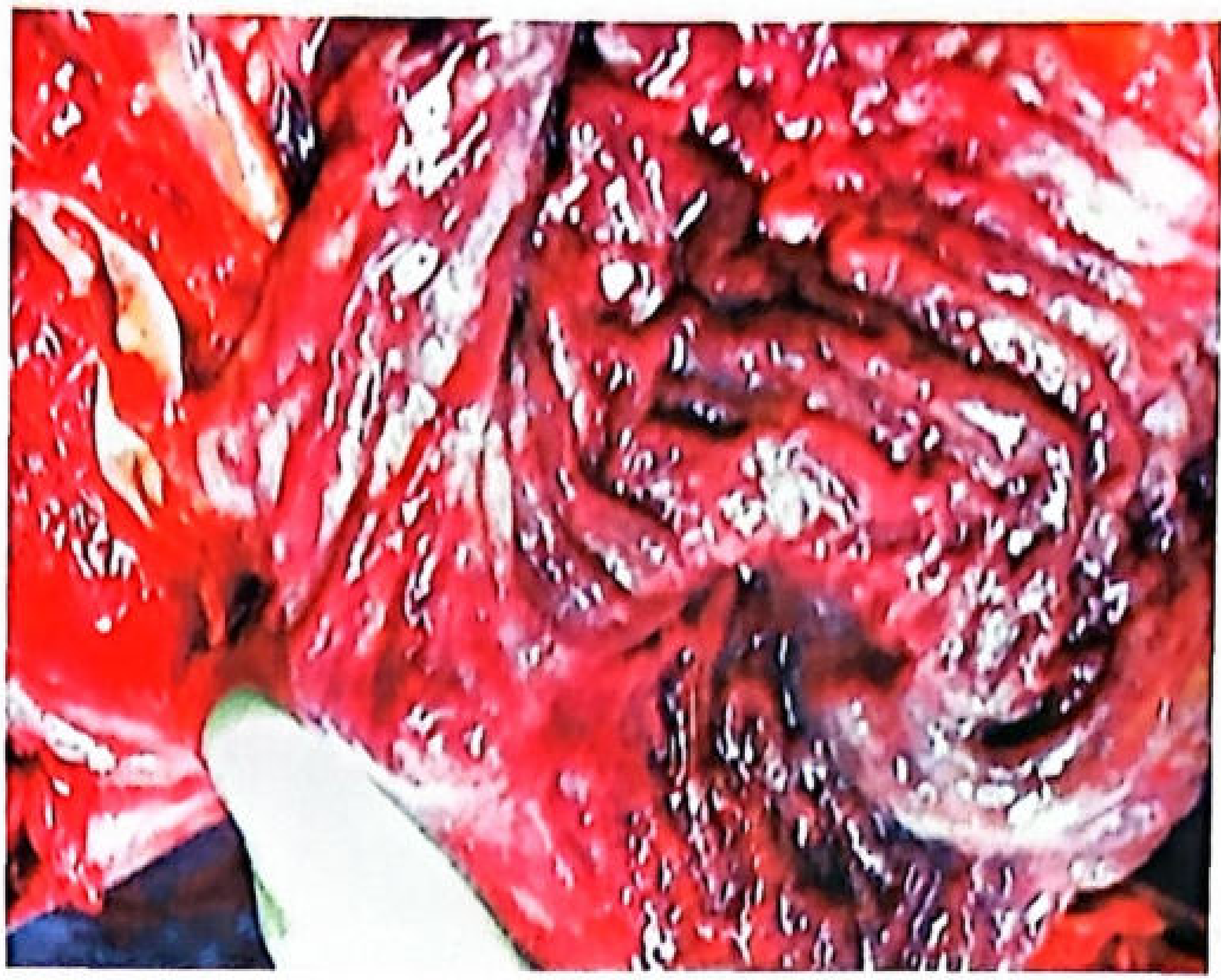
Histopathology:
- Stomach: Congestion, oedema, leucocytic infiltration, sloughing of gastric mucosa
- Lungs: Congestion, oedema, desquamation of respiratory epithelium, thickened alveoli
- Kidneys: Congestion, necrosis, tubular degeneration
- Adrenals: Congestion, haemorrhage, cortical lipid depletion
- Heart: Congestion, oedema, fibre fragmentation, focal necrosis
Chemical Tests:
- Mix 5 mL gastric aspirate + 15 mL water in a flask; cover with filter paper impregnated with 0.1 N silver nitrate; heat at 50°C for 15-20 min → paper turns black if PH3 present
- Patient breathes through silver nitrate-impregnated filter paper mask for 5-10 min → blackening confirms phosphine (positive in breath only if >6 g ALP ingested)
Treatment (No specific antidote):
| Step | Intervention |
|---|---|
| 1. Decontamination | Gastric lavage with KMnO4 (oxidizes phosphine to nontoxic phosphate); repeat 2-3 times after intubation |
| 2. Charcoal | Activated charcoal 100 g orally mixed with sorbitol (not water) - 240 mL per 30 g |
| 3. Antacids | Reduce GI symptoms and absorption |
| 4. Liquid paraffin | Facilitates excretion of ALP/phosphine from gut |
| 5. Magnesium sulphate | 1 g IV, repeat 2-hourly then 1-1.5 g q6h for 5-7 days - corrects arrhythmias and hypomagnesaemia |
| 6. IV fluids | 4-6 L in first 3-6 h; 50% normal saline for shock |
| 7. Dopamine | Low dose 4-6 mcg/kg/min infusion |
| 8. Hydrocortisone | 400 mg IV q4-6h - highly effective; reduces dopamine requirements |
| 9. Oxygen | For hypoxia; positive pressure ventilation for pulmonary oedema |
| 10. Sodium bicarbonate | IV for metabolic acidosis |
| 11. Peritoneal/haemodialysis | Useful as adjunct |
Zinc Phosphide
- Steel-grey crystalline powder with garlicky/fishy odour
- Used as grain preservative and rodenticide
- Same mechanism as ALP - releases phosphine gas on contact with moisture
- Difference: Slower onset (gradual phosphine release); symptoms mimic ALP poisoning
- Death from pulmonary oedema within a few hours, or cardiovascular collapse within 30 hours
- Management same as ALP
2. Long-Acting Anticoagulant Rodenticides (LAARs)
Brodifacoum / Superwarfarins (Bromadiolone, Difenacoum)
Mechanism: Vitamin K antagonist with an extremely long half-life (brodifacoum: 16-36 days). Originally developed in the 1970s to overcome warfarin resistance in rodent populations. Blocks synthesis of vitamin K-dependent clotting factors (II, VII, IX, X) and proteins C and S.
Clinical Features:
- Bleeding diathesis is the hallmark - gross haematuria, oral mucosal bleeding, epistaxis, GI bleeding
- Deaths reported in severe cases
- Notable 2018 US outbreak: >300 patients poisoned by brodifacoum-tainted synthetic cannabinoids
Laboratory:
- Markedly prolonged INR (mean INR ~15)
- Selective deficiency of vitamin K-dependent factors (II, V, VII, IX)
- Confirmation: LAAR levels by high-performance liquid chromatography (HPLC)
Treatment:
- Oral vitamin K1 - all patients; twice-daily dosing, titrate to clinical/lab response
- IV vitamin K1 - if actively bleeding, for rapid INR correction
- 4-factor PCC or FFP - for major/life-threatening bleeding
- Median treatment duration: 140 days (range up to 730 days) - due to fat solubility and high volume of distribution
- Discontinue vitamin K1 only when INR is consistently normal without it
3. Barium Carbonate
Mechanism: Barium is a potent inhibitor of inward-rectifying K+ (KIR) channels, preventing K+ efflux → redistribution of K+ intracellularly → severe hypokalaemia.
Clinical Features:
- Profound hypokalaemia
- Prominent U waves on ECG (direct inhibition of cardiac KIR channels)
- Muscle paralysis (inhibition of muscle KIR channels)
- Cardiovascular arrhythmias
Treatment:
- Potassium supplementation (increases plasma K+ and displaces barium from K+ channels)
- Haemodialysis - effective
Summary Comparison
| Feature | AlP/Zinc phosphide | LAAR (Brodifacoum) | Barium carbonate |
|---|---|---|---|
| Mechanism | Cytochrome oxidase inhibition | Vit K antagonism | KIR channel block |
| Key feature | Cardiogenic shock | Bleeding diathesis | Hypokalaemia + paralysis |
| Odour | Garlicky/fishy | None | None |
| Mortality | 35-100% | Lower if treated | Variable |
| Antidote | None | Vitamin K1 | Potassium + HD |
| Duration of treatment | Days (acute) | Months (LAARs) | Days |
- The Essentials of Forensic Medicine and Toxicology 36th ed. (2026), pp. 499-500
- Brenner and Rector's The Kidney, Chapter on Hypokalaemia
- Henry's Clinical Diagnosis and Management by Laboratory Methods, p. 1510 (Brodifacoum/LAARs)
Op poisoning
Finding Sources
Finding Sources
Finding Sources
Good. Tintinalli's and The Essentials of Forensic Medicine (2026) are the richest sources. Let me read both simultaneously, along with the Essentials OP section.
Finding Sources
Reading File
Reading File
Reading File
Reading File
Excellent - I now have very comprehensive content. Let me compile the full answer.
Organophosphorus (OP) Poisoning
Overview
Organophosphates (OPs) are the most clinically important group of insecticide poisonings worldwide. Common agents include parathion, malathion, diazinon, chlorpyrifos, acephate, dimethoate, and dichlorvos (DDVP). Chemical warfare nerve agents (sarin, soman, tabun, VX) share the same mechanism.
OP poisoning results most commonly from deliberate self-poisoning globally; accidental exposures occur in agricultural settings.
Mechanism of Toxicity
OPs irreversibly phosphorylate and inhibit acetylcholinesterase (AChE), preventing breakdown of acetylcholine (ACh) at nerve synapses and neuromuscular junctions. The result is ACh accumulation causing overstimulation, then paralysis, of cholinergic transmission at:
| Site | Receptor | Effect |
|---|---|---|
| Parasympathetic nerve endings | Muscarinic | SLUDGE/DUMBELS (see below) |
| Sympathetic ganglia + adrenal medulla | Nicotinic (ganglionic) | Mixed autonomic |
| Neuromuscular junction | Nicotinic (NMJ) | Fasciculations → paralysis |
| CNS | Both | Seizures, coma |
Aging: Over time, the OP-AChE bond becomes permanent and irreversible ("aging"). Time to aging varies from minutes (soman) to days (parathion). Once aging occurs, new enzyme must be synthesized over weeks. Antidotes (oximes) must be given before aging.
Route of absorption: Inhalation, transdermal, transconjunctival, GI, mucous membrane - all effective. Systemic absorption is slowest via skin, but faster if skin is broken.
Clinical Features
Four Clinical Syndromes
| Syndrome | Timing | Features |
|---|---|---|
| 1. Acute poisoning | Within 8 h (nearly all within 24 h) | Cholinergic crisis (see below) |
| 2. Intermediate syndrome (IMS) | 1-5 days post-exposure (up to 40% of ingestions) | Proximal muscle paralysis, CN palsies, respiratory failure - WITHOUT cholinergic signs |
| 3. Chronic toxicity | Chronic low-level exposure | Symmetrical sensorimotor axonopathy; leg cramps → weakness → paralysis (mimics GBS) |
| 4. OPIDN (Organophosphate-Induced Delayed Neuropathy) | Weeks after | Cognitive dysfunction, impaired memory, mood changes, autonomic dysfunction, peripheral neuropathy, extrapyramidal signs |
Acute Poisoning - The Cholinergic Toxidrome
Muscarinic Effects (mnemonic: SLUDGE / DUMBELS)
| Mnemonic | Feature |
|---|---|
| S | Salivation |
| L | Lacrimation |
| U | Urinary incontinence |
| D | Defecation / Diarrhoea |
| G | GI pain |
| E | Emesis |
And the "Killer Bs" (life-threatening muscarinic effects):
- Bradycardia
- Bronchorrhoea
- Bronchospasm
Other muscarinic signs: miosis (pinpoint pupils), excessive sweating, increased GI motility.
Nicotinic Effects (NMJ and sympathetic ganglia)
- Muscle fasciculations, cramps, weakness
- Paralysis (including diaphragm) → respiratory failure
- Mydriasis, pallor (sympathetic ganglionic stimulation)
- Tachycardia, hypertension (may compete with parasympathetic bradycardia; mixed picture is common)
CNS Effects
- Anxiety, restlessness, emotional lability
- Tremor, headache, dizziness
- Confusion, delirium, hallucinations
- Seizures, coma
Death is most commonly due to respiratory failure - from a combination of bronchorrhoea + bronchospasm + respiratory muscle paralysis.
Other Complications
- Abdominal pain; pancreatitis (rare); peritonitis (rare)
- Myocardial ischaemia in severe toxicity
- Aspiration pneumonia / lipoid pneumonia from hydrocarbon solvents in formulation
- QTc prolongation and arrhythmias
Intermediate Syndrome (IMS)
- Occurs 1-5 days after acute cholinergic phase resolves (reported in up to 40% of ingestions)
- No cholinergic signs - this is key to distinguishing it
- Features: paralysis of neck flexors, cranial nerve-innervated muscles, proximal limb muscles, and respiratory muscles (may need ventilation)
- EMG may assist diagnosis
- Usually resolves within 7 days
- Nerve agents do NOT cause IMS
Diagnosis
Diagnosis is clinical - based on history + cholinergic toxidrome. Do not wait for lab results before treating.
Clinical clues:
- Characteristic hydrocarbon or garlic-like odour
- Pinpoint pupils (miosis) + excessive sweating + hypersecretions + breathing difficulty = classic severe presentation
- Altered mental status
Cholinesterase levels:
| Test | Comment |
|---|---|
| Plasma butyrylcholinesterase (BuChE) | Easier to assay, more available; decreases first; takes 28-42 days to normalise without oxime |
| Red cell AChE | More accurate marker of synaptic inhibition; reduced to 10-20% in moderate and <10% in severe poisoning; requires new RBC synthesis to recover (up to 120 days in severe cases) |
- Plasma BuChE may be depressed 50% in asymptomatic patients - clinical correlation required
- Poor standardisation of normal ranges between labs
Management
1. Decontamination and Stabilisation
- Remove from exposure immediately
- Skin decontamination - remove clothing, wash with soap and water (wear gloves - risk of secondary contamination)
- Eye decontamination - irrigate with water
- Airway first - early intubation if respiratory distress, excessive secretions, or declining consciousness
- IV access and cardiac monitoring
- GI decontamination - activated charcoal (1 g/kg) if ingestion is recent and airway is protected; gastric lavage for large ingestions
2. Atropine (Antidote for Muscarinic Effects)
Atropine is the primary antidote - it is a competitive antagonist at muscarinic receptors.
Indications for atropine: Pinpoint pupils + excessive secretions/sweating + respiratory distress
Dosing:
- Adults: Initial 1.2-3 mg IV (depending on severity)
- Double the dose every 5 minutes until therapeutic endpoint is reached
- Very large amounts (hundreds of milligrams) may be needed in massive ingestions
Therapeutic endpoint (titrate to):
| Target | Value |
|---|---|
| Chest | Clear on auscultation (secretions dried) |
| Heart rate | >80 bpm |
| Systolic BP | >80 mmHg |
Pupillary dilatation is NOT a therapeutic endpoint. Tachycardia is NOT a contraindication - tachycardia can be secondary to bronchospasm + hypoxia and may actually improve with atropine.
Maintenance: Once adequate atropinisation is achieved, start an infusion at 10-20% of the total loading dose per hour.
Important: Atropine dries secretions and reverses muscarinic effects but does NOT reverse muscle weakness - ventilatory support must be provided separately.
Alternative: Glycopyrrolate (does not cross BBB, avoids CNS toxicity) - but dosing is not well defined.
3. Pralidoxime / Oximes (Antidote for Nicotinic + Muscarinic + CNS Effects)
Oximes displace OPs from the AChE active site, reactivating the enzyme. Must be given before aging occurs.
Actions: Reverses muscarinic, nicotinic, and CNS effects; critically - reverses muscle paralysis if given early.
WHO recommended dose:
- 30 mg/kg IV bolus
- Followed by 8 mg/kg/hour IV infusion
- Continue for 24-48 hours while monitoring AChE levels
Notes:
- Obtain blood for AChE levels before giving pralidoxime if possible, but do not delay treatment
- Recommended even >24-48 hours after exposure (still give it late)
- Not recommended for asymptomatic patients or isolated carbamate exposures with minimal symptoms
- Current evidence is inadequate to definitively show oximes reduce mortality (controversial), but still standard of care
4. Seizures
- Benzodiazepines (first line)
- Atropine (addresses cholinergic-driven seizures)
- Airway protection + oxygen
- Avoid phenytoin (ineffective for cholinergic seizures)
5. Ventilatory Support
- Endotracheal intubation + mechanical ventilation for:
- Severe poisoning with respiratory failure
- Intermediate syndrome with respiratory muscle paralysis
- Avoid succinylcholine (hydrolysed by plasma cholinesterase; prolonged paralysis in OP poisoning)
- Avoid β-blockers (may potentiate poisoning)
- Use non-depolarising neuromuscular blockers if needed
6. Other Measures
- Benzodiazepines for agitation, seizures
- Magnesium sulphate and calcium channel blockers - some evidence of benefit in OP poisoning
- Correct electrolyte disturbances, treat arrhythmias
- Monitor QTc
Summary: Atropine vs Pralidoxime
| Feature | Atropine | Pralidoxime (2-PAM) |
|---|---|---|
| Mechanism | Competitive muscarinic antagonist | Reactivates AChE by displacing OP |
| Effects reversed | Muscarinic (secretions, bradycardia, bronchospasm) | Muscarinic + nicotinic + CNS; muscle paralysis |
| Does NOT reverse | Muscle weakness/paralysis | Secretions (complementary to atropine) |
| Timing | Any time | Must be given before aging |
| Dose (adult) | 1.2-3 mg IV; double q5 min; titrate to secretions/HR/BP | 30 mg/kg bolus then 8 mg/kg/h |
Carbamates vs Organophosphates
Carbamates (e.g., carbofuran, aldicarb) have the same mechanism but bind AChE reversibly (carbamylation, not phosphorylation). They do NOT undergo aging, spontaneously reactivate within hours, and generally have shorter duration. Pralidoxime is not recommended for pure carbamate poisoning with minimal symptoms.
- Tintinalli's Emergency Medicine: A Comprehensive Study Guide, Chapter 201
- The Essentials of Forensic Medicine and Toxicology, 36th ed. (2026)
- Morgan & Mikhail's Clinical Anesthesiology 7e
This is a shared conversation. Sign in to Orris to start your own chat.