

Identify this instrument
tenaculum forceps single tooth ring handle surgical instrument
surgical instrument ring handle ratchet single curved sharp hook tip tenaculum cervix
Identification: Single-Tooth Tenaculum Forceps
- Ring handle with ratchet lock - the two finger rings (top right of image) let the surgeon lock the jaws closed on tissue, same mechanism as a hemostat/clamp
- Long, slightly curved shaft
- Single sharp, curved hook tip that angles upward - this is the diagnostic feature distinguishing it from other ringed clamps (e.g., Schroeder tenaculum has two opposing sharp hooks/teeth; this one appears to be a single-tooth variant like a Jacobs or Lahey tenaculum)
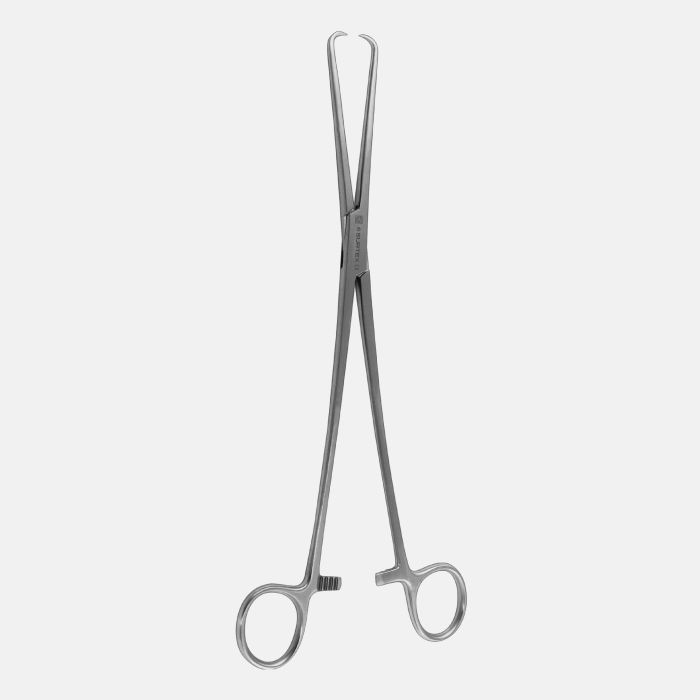
How is this tenacilum???? The shaft is clearly curved whereas the shaft of tenaculum is not curved?!!!!!
Lahey thyroid tenaculum forceps curved bent shaft single hook
- Ring handles + ratchet lock - same holding mechanism as the cervical tenaculum, confirmed in your photo
- Curved/angled shaft - this is a defining feature of the Lahey design, distinguishing it from the straight cervical tenaculum. The bend lets the tip approach tissue from below or at an angle while the handle stays clear
- Single sharp hook tip (sometimes double-pronged 2x2 or 3x3 in other Lahey variants) - grasps and provides traction on fibrous/glandular tissue
- Straight shaft -> cervical/uterine tenacula (Schroeder, Jacobs, Duplay) - gynecology
- Curved/angled shaft -> Lahey tenaculum - thyroid and general surgery, also sometimes used in gynecology
?? It was in a gyne tray
Duplay tenaculum forceps curved shaft single tooth gynecology uterine
- Curvature: S-shaped / double-curved shaft - designed specifically to navigate the vaginal canal and reach a deep or retroverted cervix/uterus without the handle obstructing the visual field, while keeping the finger rings out of the way
- Tip: single sharp, inward-angled tooth - grasps and pierces just enough cervical tissue for firm traction, matching the hooked point in your photo
- Handle: ring handles with ratchet lock - same holding mechanism visible in your image
- Application: gynecologic procedures requiring cervical/uterine traction and stabilization - tubal ligation, hysterectomy, D&C, IUD placement, amniotomy
This is a scissor!!!!
Jorgenson scissors curved upward tip gynecology vaginal hysterectomy
- Ring handles with a screw/pivot joint (not a ratchet) - scissors, not a grasping clamp
- Long shaft that curves upward near the tip - this upward bend is the signature feature of Jorgenson scissors. It's designed so the surgeon can get the blade tips into a tight, deep space (like the vaginal cuff/cul-de-sac) while keeping the handle and their hand out of the line of sight
- Sharp, pointed tips with blades that meet along a fine visible line down the shaft - exactly what's seen curving to a point at the left of your image
You are still getting it wrong
Does the tip of the instrument move/open (like jaws or blades), or is it a single fixed hook that doesn't open? · What does the handle mechanism look like - does it lock in place with a ratchet (clicks and stays closed), or is it a simple pivot/screw joint like scissors (no locking)? · Is the tip sharp/pointed (for piercing or hooking tissue) or blunt/rounded?
Identification: Single-Tooth Tenaculum Forceps
- Ring handle with ratchet lock - the two finger rings (top right of image) let the surgeon lock the jaws closed on tissue, same mechanism as a hemostat/clamp
- Long, slightly curved shaft
- Single sharp, curved hook tip that angles upward - this is the diagnostic feature distinguishing it from other ringed clamps (e.g., Schroeder tenaculum has two opposing sharp hooks/teeth; this one appears to be a single-tooth variant like a Jacobs or Lahey tenaculum)
- Ring handles + ratchet lock - same holding mechanism as the cervical tenaculum, confirmed in your photo
- Curved/angled shaft - this is a defining feature of the Lahey design, distinguishing it from the straight cervical tenaculum. The bend lets the tip approach tissue from below or at an angle while the handle stays clear
- Single sharp hook tip (sometimes double-pronged 2x2 or 3x3 in other Lahey variants) - grasps and provides traction on fibrous/glandular tissue
- Straight shaft -> cervical/uterine tenacula (Schroeder, Jacobs, Duplay) - gynecology
- Curved/angled shaft -> Lahey tenaculum - thyroid and general surgery, also sometimes used in gynecology
- Curvature: S-shaped / double-curved shaft - designed specifically to navigate the vaginal canal and reach a deep or retroverted cervix/uterus without the handle obstructing the visual field, while keeping the finger rings out of the way
- Tip: single sharp, inward-angled tooth - grasps and pierces just enough cervical tissue for firm traction, matching the hooked point in your photo
- Handle: ring handles with ratchet lock - same holding mechanism visible in your image
- Application: gynecologic procedures requiring cervical/uterine traction and stabilization - tubal ligation, hysterectomy, D&C, IUD placement, amniotomy
- Ring handles with a screw/pivot joint (not a ratchet) - scissors, not a grasping clamp
- Long shaft that curves upward near the tip - this upward bend is the signature feature of Jorgenson scissors. It's designed so the surgeon can get the blade tips into a tight, deep space (like the vaginal cuff/cul-de-sac) while keeping the handle and their hand out of the line of sight
- Sharp, pointed tips with blades that meet along a fine visible line down the shaft - exactly what's seen curving to a point at the left of your image
This is a suture cutting scissors 🙂↕️ you were unhelpful
- Ring handles with a pivot joint - a true scissor mechanism, not a ratcheted grasping clamp
- Slightly curved shaft, angled hook near the tip - lets the surgeon hook under a knot or ligature from the side rather than approaching straight on
- Sharp point on the hooked tip - catches and isolates the single strand of suture to be cut, minimizing risk to adjacent tissue