
Hypo magnesium 5 mark answer
I'll start by reading the medical library skill, then search for hypomagnesemia content in parallel.
Reading File
Now searching the medical library for hypomagnesemia content:
Finding Sources
Finding Sources
Good results. Now reading the most comprehensive sections in parallel:
Reading File
Reading File
Reading File
Excellent content. Let me read more from Comprehensive Clinical Nephrology for clinical features and management, and fetch the flowchart image:
Reading File
Loading Image
I now have comprehensive information from multiple authoritative sources. Here is the full 5-mark answer:
Hypomagnesemia
Definition
Hypomagnesemia is defined as a serum magnesium concentration below 1.7 mg/dL (0.7 mmol/L). It must be distinguished from magnesium deficiency, which refers to a deficit in total body magnesium stores; hypomagnesemia refers to low circulating magnesium concentrations. Since serum levels may not reflect total body stores, clinical diagnosis relies on both lab values and symptoms.
Causes
Causes are broadly classified into reduced GI absorption, increased renal losses, and miscellaneous categories. The fractional excretion of magnesium (FEMg) helps distinguish GI from renal causes.
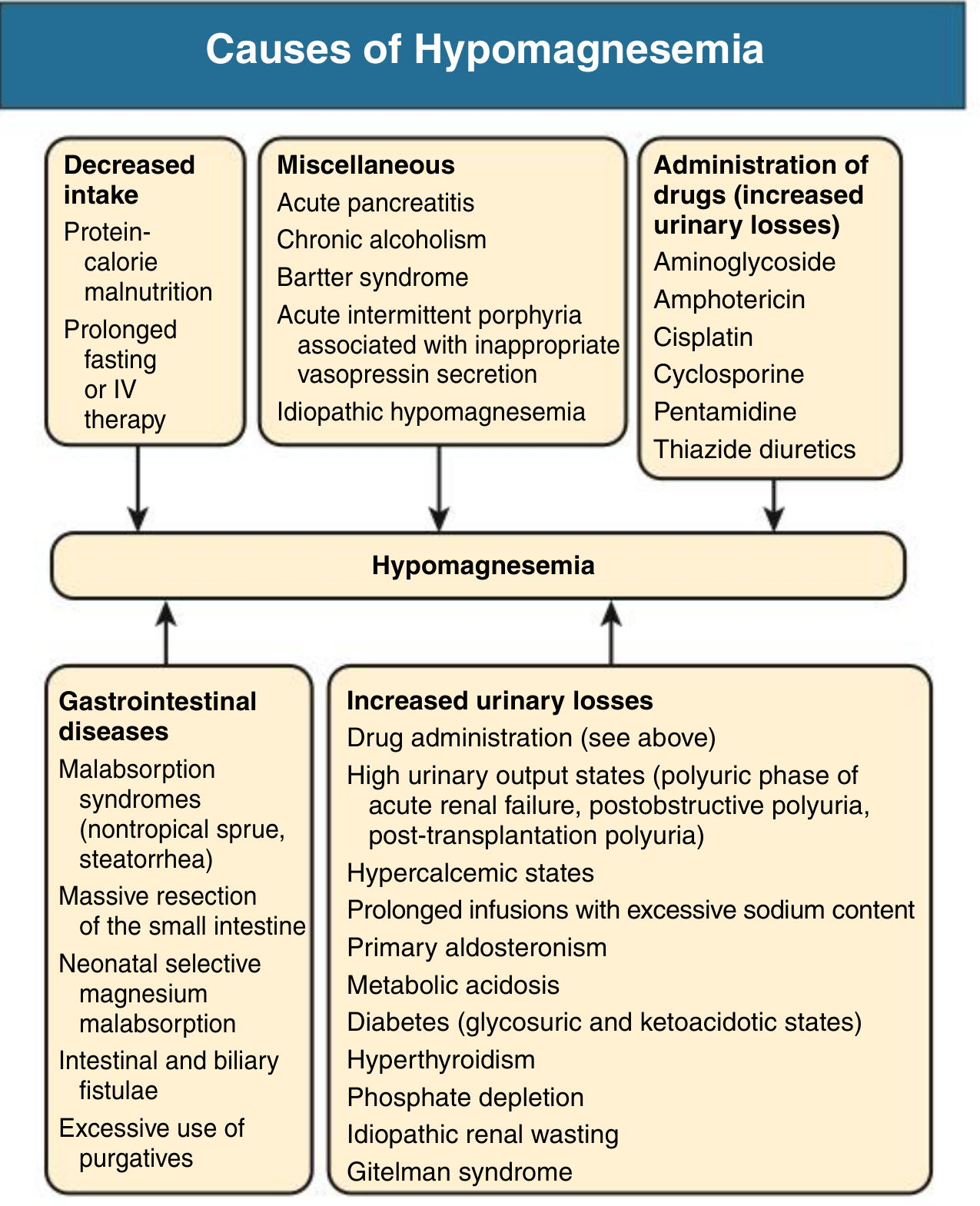
Fig. 11.25 - Causes of hypomagnesemia (Comprehensive Clinical Nephrology, 7th ed.)
1. Gastrointestinal Causes
- Reduced intake: Protein-calorie malnutrition, prolonged fasting, prolonged IV therapy without supplementation
- Malabsorption: Nontropical sprue (celiac disease), steatorrhea, short bowel syndrome (massive small bowel resection)
- GI losses: Severe diarrhea, intestinal and biliary fistulae, excessive purgative use
- Chronic alcoholism: Most common cause in hospitalized patients - due to marked nutritional deficiency and some inappropriate renal wasting
- Acute pancreatitis: Saponification of magnesium in necrotic fat
- Proton pump inhibitors (PPIs): Inhibit intestinal magnesium absorption; chronic use is associated with hypomagnesemia
2. Renal (Urinary) Causes
- Diuretics: Most common acquired cause
- Loop diuretics (furosemide): block NKCC2 cotransporter in the thick ascending limb (TAL), reducing the electrochemical driving force for paracellular Mg²⁺ reabsorption
- Thiazide diuretics: block NCC cotransporter in the distal convoluted tubule (DCT), which colocalizes with TRPM6 channel, reducing magnesium reabsorption
- Nephrotoxic drugs: Aminoglycosides (gentamicin), cisplatin, amphotericin B, calcineurin inhibitors (cyclosporine, tacrolimus), anti-EGFR monoclonal antibodies (cetuximab, panitumumab)
- Hypercalcemia: Activates CaSR in the TAL, inducing renal Mg²⁺ wasting
- High urinary output states: Polyuric phase of AKI, post-obstructive polyuria, post-transplant polyuria, osmotic diuresis (diabetes with glycosuria/ketoacidosis)
- Metabolic acidosis, hyperthyroidism, primary aldosteronism
3. Hereditary/Genetic Disorders
- Bartter syndrome: Autosomal recessive; mutations in TAL transporters (NKCC2, ROMK, CLCNKB) - "loop diuretic-like effect"; presents with hypokalemia, hypomagnesemia, metabolic alkalosis, growth retardation
- Gitelman syndrome: Autosomal recessive; NCC mutation - "thiazide-like effect"; presents with hypomagnesemia, hypokalemia, hypocalciuria, metabolic alkalosis
Clinical Features
Clinical manifestations depend on the severity and rate of depletion. Symptoms become more common when serum Mg falls below 1.2 mg/dL.
Neuromuscular
- Generalized weakness
- Neuromuscular hyperexcitability: hyperreflexia, tremors, carpopedal spasm, tetany
- Seizures (severe deficiency)
- Positive Chvostek's and Trousseau's signs (often due to accompanying hypocalcemia)
Cardiac
- Prolonged QT interval
- ST depression
- Torsades de pointes (life-threatening; seen especially post-surgery)
- Potentiation of digoxin toxicity
Metabolic Consequences (Co-electrolyte Disturbances)
- Hypocalcemia: Hypomagnesemia blunts PTH secretion and action (relative hypoparathyroidism), causing hypocalcemia and reduced calcitriol synthesis. This is a classic cause of PTH-resistant hypocalcemia.
- Hypokalemia: Occurs in ~40% of hypomagnesemia patients. Decreased intracellular Mg²⁺ impairs ATP production, reduces Na⁺/K⁺-ATPase activity, causing K⁺ to leak into the tubular lumen. This hypokalemia is refractory to potassium replacement until magnesium is repleted first.
- Hypophosphatemia and hyponatremia may also occur.
Treatment
| Severity | Route | Regimen |
|---|---|---|
| Mild / Asymptomatic | Oral | Magnesium oxide, hydroxide, chloride, lactate, or pidolate salts (limited by GI side effects - diarrhea) |
| Symptomatic / Moderate-Severe | IV | Magnesium sulfate (MgSO₄): 8-12 g over first 24 hours, then 4-6 g/day for 3-4 days |
| Torsades de pointes | IV bolus | MgSO₄ 1-2 g IV over 5 minutes (ACC/AHA recommendation) |
| Eclampsia | IV | MgSO₄ - more effective than phenytoin for seizure control |
Important points:
- 1 g of MgSO₄ contains 0.1 g of elemental magnesium
- In renal insufficiency: reduce dose by 50-75%; monitor deep tendon reflexes (loss signals toxicity)
- Severe hypomagnesemia (<1.0 mEq/L) requires sustained therapy due to slow equilibration with intracellular stores
- Potassium-sparing diuretics (amiloride, triamterene) help in chronic renal Mg wasting by blocking DCT sodium channels
- Correct hypomagnesemia before correcting hypokalemia or it will remain refractory
Key Points Summary (Exam Mnemonics)
- "ReGiMen" of causes: Renal losses, GI losses, Malnutrition/drugs
- Always check Mg when K is low and resistant to replacement
- Torsades = Think Mg (first-line treatment is IV MgSO₄)
- Hypomagnesemia → Hypoparathyroidism → Hypocalcemia (PTH blunting pathway)
- ICU prevalence: 11-65% (usually asymptomatic but associated with mortality)
Sources: Comprehensive Clinical Nephrology 7th Ed., Sabiston Textbook of Surgery, Tintinalli's Emergency Medicine
This is a shared conversation. Sign in to Orris to start your own chat.