
Aetcom module 2.5 for 5mark notes
AETCOM Module 2.5 covers "What does it mean to be a patient?" - focusing on the patient's perspective, illness experience, the sick role, and the doctor-patient relationship from a humanistic standpoint.
Searching sources...
Searching the Web
AETCOM module 2.5 "what does it mean to be a patient" medical ethics notes
Searching the Web
AETCOM module 2.5 5 mark notes MBBS India
Reading Web Page
https://dokumen.pub/aetcom-attitude-ethics-and-communication…
Reading Web Page
https://www.nmc.org.in/wp-content/uploads/2020/01/AETCOM_boo…
I now have sufficient information from the official NMC AETCOM book to write comprehensive 5-mark notes.
AETCOM Module 2.5 - 5 Mark Notes
Bioethics Continued: Case Studies on Patient Autonomy and Decision Making
(Professional Year 2 | 5 hours)
Background / Introduction
Module 2.5 is a continuation of bioethics (begun in Module 2.2) and uses a hybrid problem-based learning format. Students work through case studies collaboratively to understand the ethical, medicolegal, and sociocultural dimensions of patient autonomy and decision-making in clinical care.
Competency Addressed
The student should be able to:
"Identify, discuss and defend medicolegal, sociocultural and ethical issues as they pertain to patient autonomy, patient rights, and shared responsibility in health care."
Key Concepts
1. Patient Autonomy
- Autonomy = the right of a patient to make decisions about their own health care without being overridden by others.
- Derived from the ethical principle of respect for persons.
- Includes the right to accept or refuse treatment, even when refusal may be harmful.
- Requires that the patient is competent to make that decision.
2. Paternalism vs. Autonomy
- Paternalism: The doctor (or family) overrides the patient's wish, believing they know what is "best."
- Soft paternalism: Acceptable - intervening only when patient's autonomy is impaired (e.g., unconscious, coerced).
- Hard paternalism: Overriding a competent patient's wishes - generally considered unethical.
- Modern medicine leans strongly toward autonomy over paternalism.
3. Shared Decision Making (SDM)
- A collaborative process between doctor and patient where both parties contribute to the clinical decision.
- Doctor's responsibilities: provide full, accurate, and understandable information; present all options; respect patient values.
- Patient's responsibilities: engage actively, ask questions, communicate values and preferences, take responsibility for choices.
- SDM balances beneficence with autonomy.
4. Full and Reasonable Disclosure
- The doctor must disclose:
- The diagnosis and nature of the illness
- The proposed treatment and alternatives
- Risks, benefits, and complications
- What happens if treatment is refused
- Disclosure must be in simple language the patient understands.
- Failure to disclose constitutes a medicolegal risk (basis for negligence claims).
5. Decision-Making Capacity vs. Competency
| Capacity | Competency | |
|---|---|---|
| Determined by | Clinician (bedside assessment) | Court/legal authority |
| Nature | Functional, can fluctuate | Legal status |
| Focus | Can patient understand and decide now? | Long-term legal standing |
- A patient with intact capacity can: understand information, appreciate consequences, reason, and communicate a choice.
- Factors impairing capacity: acute illness, pain, drugs, psychiatric disorders, delirium, dementia, extreme fear/anxiety.
6. Surrogacy in Decision Making
- When a patient lacks decision-making capacity, a surrogate makes decisions on their behalf.
- Surrogate hierarchy (generally): spouse > adult children > parents > siblings.
- The surrogate must apply the substituted judgment standard (what would the patient want?), not their own preferences.
- If no surrogate is available, legal/ethical processes apply.
- Advance directives (living wills, DNR orders) allow patients to specify wishes in advance.
7. Do Not Resuscitate (DNR) Orders
- A DNR is a medical order to withhold CPR/resuscitation in event of cardiac/respiratory arrest.
- Must reflect the patient's informed wish or, if incapacitated, surrogate's decision based on patient's prior wishes.
- Has legal, ethical, and social dimensions.
- Involves balancing autonomy (patient's right not to be resuscitated) vs. beneficence (doctor's duty to preserve life).
Points for Discussion (from NMC book)
- Extent of patient autonomy
- Elements of decision making - Competency vs. Capacity
- Surrogacy in decision making
- Autonomy vs. Beneficence
- How much do family wishes count?
- Legal, ethical and social aspects of 'Do Not Resuscitate'
Assessment Short Questions (Summative)
The NMC book specifies these exact short-answer topics for Module 2.5:
- Define patient autonomy - patient's right to make informed decisions about their own healthcare.
- Contrast autonomy and paternalism - autonomy respects patient choice; paternalism overrides it "for the patient's good."
- Responsibilities of patients and doctors in shared decision making.
- What is full and reasonable disclosure? - complete information about diagnosis, treatment options, risks, and alternatives.
Learning Experience Format
- Introduction of case - 1 hour
- Self-directed learning - 2 hours
- Anchoring lecture - 1 hour
- Discussion and closure of case - 1 hour
- Total: 5 hours
Clinical/Ethical Scenario Application
A typical Module 2.5 case might involve: a patient refusing a blood transfusion for religious reasons, or a family demanding aggressive treatment for an incapacitated patient who had previously expressed a wish for comfort care only. Students analyze the competing ethical principles (autonomy, beneficence, non-maleficence, justice) and articulate the correct ethical/legal response.
Summary Table for Quick Revision
| Topic | Key Point |
|---|---|
| Autonomy | Patient's right to decide - must be respected |
| Paternalism | Overriding patient - generally unethical if patient is competent |
| SDM | Joint decision - doctor informs, patient decides |
| Capacity | Functional, assessed by clinician, can change |
| Competency | Legal determination by court |
| Surrogate | Decides for incapacitated patient using substituted judgment |
| DNR | Legal order; must reflect patient's own wishes |
| Disclosure | Full, clear, and understandable information to patient |
Source: NMC AETCOM Book (official NMC publication), Module 2.5, pp. 35-38.
H pylori in peptic ulcer pharma for 5 marks
H. pylori eradication is a core pharmacology topic - treatment involves combination antibiotic + PPI regimens. Let me pull the full detail from the medical library.
Searching sources...
Reading File
Finding Sources
Finding Sources
Reading File
Reading File
Reading File
Reading File
Finding Sources
Reading File
I now have comprehensive data from Harrison's 22e, Lippincott Pharmacology, Yamada's Gastroenterology, and Schwartz Surgery. Here are the complete 5-mark notes:
H. pylori in Peptic Ulcer Disease - Pharmacology (5-Mark Notes)
1. Role of H. pylori in PUD
- Helicobacter pylori is a gram-negative, spiral, urease-producing bacterium that colonises the gastric mucosa.
- Found in ~60-70% of gastric ulcers and ~90% of duodenal ulcers.
- Causes ulcers by: damaging the mucous layer, stimulating acid secretion, triggering inflammation (IL-1, TNF, IL-8).
- Without eradication: ulcer recurrence rate is ~59% (gastric) and ~67% (duodenal) per year.
- With eradication: recurrence drops to <10-20%.
- Also implicated in gastric MALT lymphoma - eradication causes complete remission in 60-90% of cases.
(Harrison's Principles of Internal Medicine 22e, p. 2570)
2. Diagnosis of H. pylori (for context)
| Test | Type | Sensitivity/Specificity |
|---|---|---|
| Rapid urease test | Invasive (endoscopy) | 80-95% / 95-100% |
| Histology | Invasive | 60-90% / >95% |
| Urea breath test | Non-invasive | >95% / >95% |
| Stool antigen test | Non-invasive | >95% / >95% |
| Serology | Non-invasive | 74% / 59% (cannot distinguish active vs. past) |
Note: PPIs and antibiotics cause false negatives in urease-based tests - stop 2 weeks before testing.
3. Indications for H. pylori Eradication
- All patients with documented PUD (whether active or in remission, first episode or recurrent)
- Patients with gastric MALT lymphoma
- Long-term NSAID users with prior PUD history
- First-degree relatives of gastric cancer patients
- Post-endoscopic resection of early gastric cancer
- Patients aged <60 years with uninvestigated dyspepsia (ACG guidelines)
4. Treatment Regimens
A. Standard Triple Therapy (First Line - where clarithromycin resistance <15%)
| Drug | Dose | Duration |
|---|---|---|
| PPI (Omeprazole/Lansoprazole/Pantoprazole) | Standard dose BD | 14 days |
| Clarithromycin | 500 mg BD | 14 days |
| Amoxicillin | 1 g BD | 14 days |
- If penicillin allergy: replace amoxicillin with metronidazole 500 mg BD.
- Eradication rate: 70-85%.
- Avoid if prior macrolide antibiotic exposure or clarithromycin resistance >15%.
B. Bismuth Quadruple Therapy (First Line in high resistance areas / Second Line)
| Drug | Dose | Duration |
|---|---|---|
| PPI | Standard dose BD | 10-14 days |
| Bismuth subsalicylate | 300 mg QID | 10-14 days |
| Metronidazole | 500 mg QID | 10-14 days |
| Tetracycline | 500 mg QID | 10-14 days |
- Eradication rate: >90%.
- Preferred first-line when clarithromycin resistance is unknown or >15%, or in developing countries.
- Bismuth acts locally - coats ulcer base, anti-H. pylori, and promotes mucus secretion.
C. Concomitant (Non-Bismuth) Quadruple Therapy
- PPI + Amoxicillin + Clarithromycin + Metronidazole - all four given simultaneously for 10-14 days.
- Superior to standard triple therapy in meta-analyses.
D. Sequential Therapy
- 5 days: PPI + Amoxicillin, THEN
- 5 more days: PPI + Clarithromycin + Tinidazole (or Metronidazole)
- Total: 10 days. Rationale: amoxicillin reduces bacterial load first, then targeted antibiotics finish the job.
5. Role of Individual Drugs
Proton Pump Inhibitors (PPIs)
- Mechanism: Irreversibly inhibit H⁺/K⁺-ATPase (proton pump) of parietal cells.
- Increase gastric pH → enhances antibiotic stability and efficacy (especially clarithromycin, which is acid-labile).
- Examples: Omeprazole 20 mg, Lansoprazole 30 mg, Pantoprazole 40 mg, Rabeprazole 20 mg, Esomeprazole 40 mg.
- Are prodrugs - activated in acidic environment of parietal cell canaliculus.
Clarithromycin
- Macrolide antibiotic; inhibits 50S ribosome (protein synthesis).
- Most active anti-H. pylori agent but resistance is rising (13-16% in the US).
- Main cause of triple therapy failure.
Amoxicillin
- Beta-lactam; inhibits cell wall synthesis.
- Resistance rare (<1%) - backbone of most regimens.
- Replaced by metronidazole in penicillin allergy.
Metronidazole
- Nitroimidazole; forms free radicals that damage bacterial DNA.
- Resistance common (up to 30% in North America, 80% in developing countries) but still partially effective.
Bismuth Subsalicylate
- Not an antibiotic but has direct anti-H. pylori activity.
- Disrupts bacterial cell wall; inhibits urease, phospholipase, and adhesion to gastric mucosa.
- Adds mucosal protection (forms a protective layer over ulcer base).
- Also used as adjunct to prevent antibiotic resistance being the sole reason for failure.
Tetracycline
- Inhibits 30S ribosome; resistance is very rare (<2%).
- Used in bismuth quadruple regimens.
6. Salvage / Second-Line Therapies
After first-line failure, options include:
| Regimen | Duration |
|---|---|
| Bismuth quadruple (if not used first) | 10-14 days |
| Levofloxacin triple (PPI + Levofloxacin + Amoxicillin) | 10 days |
| Rifabutin triple (PPI + Rifabutin + Amoxicillin) | 10 days - ~86% cure rate in resistant strains |
| Furazolidone triple (PPI + Furazolidone + Amoxicillin) | 14 days |
After two failures: culture and sensitivity testing should be considered.
7. Confirming Eradication
- Test with urea breath test or stool antigen test at least 4 weeks after completing therapy and 2 weeks after stopping PPI.
- Serology is NOT useful for confirming eradication (remains positive for months after).
Quick Summary Table
| Regimen | Drugs | Duration | Eradication Rate |
|---|---|---|---|
| Standard Triple | PPI + Clarithromycin + Amoxicillin | 14 days | 70-85% |
| Bismuth Quadruple | PPI + Bismuth + Metronidazole + Tetracycline | 10-14 days | >90% |
| Concomitant Quadruple | PPI + Amoxicillin + Clarithromycin + Metronidazole | 10-14 days | >90% |
| Sequential | PPI+Amox (5d) → PPI+Clarith+Tinidazole (5d) | 10 days | ~85-90% |
Sources: Harrison's Principles of Internal Medicine 22e, p. 2570 | Lippincott Illustrated Reviews: Pharmacology, Ch. 42 | Yamada's Textbook of Gastroenterology 7e | Schwartz's Principles of Surgery 11e
Antitussive
Antitussives suppress the cough reflex - key drugs are codeine, dextromethorphan, and noscapine. Let me pull full detail from the medical library.
Searching sources...
Finding Sources
Finding Sources
Reading File
Reading File
Reading File
Reading File
Reading File
Excellent - I now have comprehensive data from Goodman & Gilman, Lippincott Pharmacology, Katzung, and Murray & Nadel's Respiratory Medicine. Here are the complete notes:
Antitussives - Pharmacology Notes
Definition
Antitussives are drugs that suppress or inhibit the cough reflex. They act either centrally (on the medullary cough centre in the brainstem) or peripherally (on afferent sensory receptors in the airways).
"An ideal antitussive would suppress the hypersensitive component of cough in disease yet allow the protective cough reflex to remain active." - Murray & Nadel's Respiratory Medicine
Cough Reflex Arc (basis for drug action)
Stimulus (irritant, mucus, inflammation)
→ Peripheral afferent receptors (vagal C-fibers, RAR receptors in larynx, trachea, bronchi)
→ Afferent vagal nerve (via nodose ganglion)
→ Cough centre (nucleus tractus solitarius / medulla oblongata)
→ Efferent signals → respiratory muscles → forceful expiration = cough
Antitussives interrupt this arc either centrally or peripherally.
Classification
I. Centrally Acting Antitussives
A. Opioid (Narcotic) Antitussives
1. Codeine (Methylmorphine)
- Prototype centrally acting antitussive - the standard against which all others are compared.
- Mechanism: Mu-opioid receptor agonist; depresses sensitivity of the cough centre in the medulla to peripheral stimuli. (Note: the antitussive action may not be entirely opioid-receptor mediated.)
- Dose: 10-30 mg orally every 4-6 hours.
- Advantages: Effective for pathologic cough; also has mild analgesic and anxiolytic effects.
- Adverse effects: Constipation, sedation, dysphoria, fatigue, addiction potential (limits long-term use), respiratory depression at high doses, histamine release (may worsen wheeze).
- Efficacy: Active against pathologic cough and cough in normal volunteers; limited activity in COPD patients or acute cough of common cold.
2. Morphine / Diamorphine (Heroin)
- Reserved for palliative control of cough in terminal cancer patients.
- Slow-release morphine: partially effective for severe chronic idiopathic/refractory cough.
- Also relieves anxiety and pain.
3. Hydrocodone
- Opioid used in combination cough preparations.
- Higher addiction potential; schedule II in USA.
B. Non-Opioid Centrally Acting
4. Dextromethorphan (DXM)
- Most widely used OTC antitussive; synthetic D-isomer of morphine derivative (3-methoxy-N-methylmorphinan).
- Mechanism:
- Acts centrally to elevate cough threshold in medullary cough centre.
- Also blocks NMDA (N-methyl-D-aspartate) excitatory receptors in the CNS - unlike codeine.
- Does NOT bind to mu-opioid receptors → no analgesia, no addiction at therapeutic doses.
- Dose: 10-20 mg every 4 hours OR 30 mg every 6-8 hours; max 120 mg/day. Extended-release form available for twice-daily use.
- Advantages: Equal efficacy to codeine; fewer subjective and GI side effects; does not inhibit mucociliary clearance; antitussive effect lasts 5-6 hours.
- Adverse effects:
- At therapeutic doses: minimal.
- At high doses: dizziness, nausea, vomiting, headaches.
- Drug of abuse - at very high doses causes hallucinations, euphoria, dissociation, motor impairment (via NMDA blockade).
- Serotonin syndrome if combined with MAO inhibitors (inhibits neuronal serotonin reuptake) - avoid in patients on MAOIs.
- Avoid in children due to risk of adverse effects and overdose.
- Use: Acute debilitating cough, OTC cough preparations (often combined with antihistamines, decongestants, expectorants).
5. Pholcodine
- Structurally related to morphine; does not bind to opioid receptors.
- At least as effective as codeine as antitussive.
- Long t½ - can be given once or twice daily.
- Used in many countries outside the USA.
II. Peripherally Acting Antitussives
6. Benzonatate (Tessalon)
- Chemically related to local anaesthetics (tetracaine, benzocaine).
- Mechanism: Anaesthetises stretch receptors (RAR - rapidly adapting receptors) in respiratory passages, lungs, and pleura → blocks afferent input to cough centre.
- Dose: Taken as whole capsules with water - must NOT be chewed (causes numbness of tongue, mouth, throat; topical toxicity).
- Adverse effects: Dizziness, oral numbness if capsule broken, CNS depression in overdose.
7. Levodropropizine
- Non-opioid; peripheral inhibition of sensory cough receptors (C-fibre afferents).
- Favorable benefit/risk profile compared with dextromethorphan.
- Used in children and adults.
III. Neuromodulators (for Chronic/Refractory Cough)
These act on enhanced neural sensitisation underlying chronic cough:
| Drug | Mechanism | Use |
|---|---|---|
| Gabapentin | Blocks voltage-gated calcium channels; modulates GABA transmission; reduces presynaptic excitability | Refractory chronic cough (RCT evidence) |
| Pregabalin | Similar to gabapentin | Refractory cough + speech therapy |
| Amitriptyline | Central antinociceptive; NMDA receptor modulation | Chronic cough (superior to codeine/guaifenesin in RCT) |
| Slow-release Morphine | Opioid receptor agonist centrally | Severe chronic idiopathic cough |
Quick Comparison Table
| Drug | Class | Site of Action | Opioid Receptor? | Addiction Risk | Key Feature |
|---|---|---|---|---|---|
| Codeine | Opioid | Central (medulla) | Yes (mu) | Yes | Prototype antitussive |
| Dextromethorphan | Non-opioid | Central (medulla + NMDA) | No | Low | Best OTC option |
| Pholcodine | Non-opioid | Central | No | No | Long t½, once/twice daily |
| Benzonatate | Non-opioid | Peripheral (stretch receptors) | No | No | Local anaesthetic type |
| Levodropropizine | Non-opioid | Peripheral (C-fibres) | No | No | Good for children |
| Morphine | Opioid | Central | Yes (mu) | Yes | Palliative/refractory only |
Important Clinical Points
- Treat the cause first - cough is a defence reflex; identify and treat the underlying cause (infection, asthma, GERD, postnasal drip, ACE inhibitor use) before suppressing it.
- ACE inhibitor cough: Switch to ARB (angiotensin II receptor blocker) - antitussives are not the solution.
- Avoid in children: DXM-containing preparations and opioid antitussives should be avoided in children < 6 years.
- Productive cough: Should generally NOT be suppressed with antitussives - use expectorants/mucolytics (guaifenesin, acetylcysteine) instead.
- Serotonin syndrome: Both codeine and dextromethorphan inhibit serotonin reuptake - dangerous with MAOIs.
- Opioid antitussives work at doses lower than those required for analgesia.
Sources: Goodman & Gilman's Pharmacological Basis of Therapeutics | Lippincott Illustrated Reviews: Pharmacology | Katzung's Basic & Clinical Pharmacology 16e | Murray & Nadel's Textbook of Respiratory Medicine
Laxative purgative
Laxatives/purgatives promote bowel evacuation - classified by mechanism into bulk-forming, osmotic, stimulant, stool softeners, and lubricants. Let me get the full pharmacology from the textbooks.
Searching sources...
Finding Sources
Finding Sources
Finding Sources
Finding Sources
Reading File
Reading File
Finding Sources
Reading File
Reading File
Reading File
Reading File
Excellent - I now have comprehensive data from Goodman & Gilman, Yamada's Gastroenterology, and Lippincott. Here are the complete notes:
Laxatives and Purgatives - Pharmacology Notes
Definition & Distinction
| Term | Meaning |
|---|---|
| Laxative | Produces soft, formed stool; mild action; 1-3 days latency |
| Purgative / Cathartic | Produces fluid/watery evacuation; stronger action; 1-6 hours |
Both promote defecation but differ in intensity. The same drug in different doses can act as either.
Classification (by Mechanism & Onset)
I. Bulk-Forming Laxatives (Onset: 1-3 days)
Drugs: Psyllium (Isabgol), Methylcellulose, Calcium polycarbophil, Bran
Mechanism:
- Hydrophilic, indigestible plant fibers that absorb and retain water in the intestinal lumen.
- Increase stool bulk and weight → distend the colon → stimulate peristalsis reflexively.
- Some undergo bacterial fermentation in colon → short-chain fatty acids → additional prokinetic effect.
Psyllium husk (Ispaghula/Isabgol): Derived from Plantago ovata; contains hydrophilic mucilloid. Dose: 2.5-4 g (1-3 teaspoons) in 250 mL water/juice. Grade B recommendation.
Uses: Chronic constipation, IBS, diverticular disease, haemorrhoids, hypercholesterolaemia (psyllium).
Adverse effects: Flatulence, bloating, abdominal distension, rarely mechanical obstruction if taken with insufficient water.
Contraindications: Intestinal obstruction, impaction, dysphagia, patients requiring fluid restriction.
II. Osmotic Laxatives (Onset: 1 hour - 3 days)
Poorly absorbed ions or molecules draw water osmotically into the intestinal lumen.
A. Saline Laxatives (Onset: 1-3 hours - purgative effect)
| Drug | Notes |
|---|---|
| Magnesium sulphate (Epsom salt) | Powerful purgative; 10-15 g in water |
| Magnesium hydroxide (Milk of Magnesia) | 1-2 tablespoons; onset 6-12 hours; milder |
| Magnesium citrate | Carbonated solution; 116 mmol Mg²⁺ per bottle |
| Sodium phosphate | Used as enema (Fleet); cleanses lower colon |
Caution: Hypermagnesaemia in renal failure - avoid saline laxatives in renal impairment.
B. Non-Absorbable Sugars & Alcohols
Lactulose
- Synthetic disaccharide (galactose + fructose); resistant to intestinal disaccharidases.
- Fermented in the colon → short-chain fatty acids → pH drops → osmotic water retention + stimulation of peristalsis.
- Dose: 15-30 mL at night; effect in 24-48 hours.
- Dual use: (1) Constipation; (2) Hepatic encephalopathy - acidic environment "traps" NH₃ as NH₄⁺, reducing ammonia absorption. Goal: 2-3 soft stools/day at pH 5-5.5.
- ADRs: Flatulence, bloating, abdominal distension.
Sorbitol: 70% solution; equally effective as lactulose but far cheaper.
Glycerin: Used as suppository; osmotically draws water into rectum → rapid evacuation.
C. Polyethylene Glycol (PEG-3350, MiraLAX)
- Large, inert polymer; poorly absorbed; not degraded by bacteria.
- Retains water in lumen purely by osmosis; no electrolyte disturbances.
- Available as lavage solution for colonoscopy prep (4 litres, e.g., GoLytely).
- Dose: 1 tablespoon/day for constipation; 68 g for reliable laxation within 24 hours.
- Superior to lactulose in RCTs; Grade A recommendation.
- ADRs: Bloating, nausea; no significant electrolyte changes.
III. Stimulant (Irritant) Laxatives (Onset: 6-12 hours)
Mechanism: Act directly on enterocytes, enteric (myenteric) nerve plexus, and GI smooth muscle → low-grade mucosal inflammation → accumulate water and electrolytes in lumen + stimulate intestinal motility and peristalsis. Also inhibit Na⁺/K⁺-ATPase → reduce water/electrolyte absorption.
A. Diphenylmethane Derivatives
Bisacodyl
- Requires hydrolysis by intestinal/colonic enzymes to active form.
- Oral tablets (enteric-coated to prevent gastric irritation): 10 mg/day adults; 5-10 mg children (6-12 years).
- Suppository form acts faster (15-60 minutes).
- ADRs: Abdominal cramps, fecal incontinence; electrolyte disturbances with overuse.
Sodium Picosulphate: Similar to bisacodyl; also requires bacterial activation in colon.
B. Anthraquinone (Anthracene) Derivatives
Senna (Sennosides A & B)
- Derived from Cassia species. Pro-drug - converted by colonic bacteria to active anthrones.
- Onset 6-10 hours; commonly used in opioid-induced constipation.
- Dose: 15-30 mg at bedtime.
Cascara sagrada: Similar to senna; milder.
Aloe: Anthraquinone; potent, may cause severe griping.
Long-term use of anthraquinone laxatives: Melanosis coli - brownish/black discolouration of colonic mucosa (harmless, reversible).
C. Ricinoleic Acid (Castor Oil)
- Hydrolysed in small intestine by lipases to ricinoleic acid (the active form).
- Irritates small intestinal mucosa → massive fluid/electrolyte secretion → powerful purgation.
- Onset: 1-3 hours (most rapid of all laxatives).
- Uses: Bowel preparation, rarely constipation.
- ADRs: Severe griping, dehydration, electrolyte imbalance; avoid in pregnancy (stimulates uterine contractions).
IV. Stool Softeners / Emollients (Onset: 1-3 days)
Docusate sodium (Dioctyl sodium sulphosuccinate, DSS)
- Anionic surfactant (detergent-like); lowers surface tension of stool → allows mixing of aqueous and fatty components → softens stool.
- Also stimulates intestinal fluid/electrolyte secretion via increased mucosal cAMP.
- Dose: Docusate sodium 100 mg BD; Docusate calcium 240 mg/day.
- Marginal efficacy in chronic constipation; better for prevention.
V. Lubricant Laxatives
Liquid Paraffin (Mineral Oil)
- Indigestible aliphatic hydrocarbons; coats and softens stool; interferes with water reabsorption.
- Onset: 2-3 days.
- ADRs (preclude regular use):
- Interferes with absorption of fat-soluble vitamins (A, D, E, K).
- Foreign-body reactions in intestinal mucosa/lymph nodes.
- Anal leakage/seepage.
- Lipid pneumonitis if aspirated (especially at night - avoid at bedtime).
- Not recommended for routine use.
VI. Newer / Secretagogue Agents
| Drug | Mechanism | Use |
|---|---|---|
| Lubiprostone (Amitiza) | Activates intestinal Cl⁻ channel type-2 (ClC-2) → ↑Cl⁻/water secretion into lumen | Chronic constipation, opioid-induced constipation |
| Linaclotide (Linzess) | Activates guanylate cyclase-C (GCC) receptor → ↑cGMP → ↑CFTR → Cl⁻/HCO₃⁻ secretion; also reduces visceral pain | IBS-C, chronic constipation |
| Plecanatide | GCC receptor agonist (like linaclotide) | Chronic constipation |
| Prucalopride | 5-HT₄ receptor agonist → prokinetic | Chronic constipation |
| Methylnaltrexone | PAMORA (peripheral μ-opioid receptor antagonist) - doesn't cross BBB | Opioid-induced constipation |
| Naloxegol | Pegylated naloxone; PAMORA - doesn't reverse central analgesia | Opioid-induced constipation |
Classification Summary Table (Goodman & Gilman)
| Latency / Effect | Drugs |
|---|---|
| Softening of feces (1-3 days) | Bulk-forming (psyllium, bran, methylcellulose), Docusates, Lactulose |
| Soft/semi-fluid stool (6-8 hours) | Stimulants: Bisacodyl, Senna, Cascara |
| Watery evacuation (1-3 hours) | Osmotic purgatives: Magnesium sulphate, Milk of magnesia, Magnesium citrate, Castor oil |
Clinical Indications
| Situation | Preferred Laxative |
|---|---|
| Chronic constipation (first line) | Bulk-forming + PEG |
| Opioid-induced constipation | Senna + methylnaltrexone/naloxegol |
| Colonoscopy prep | PEG lavage solution (4 L) |
| Hepatic encephalopathy | Lactulose |
| Acute constipation / quick relief | Bisacodyl, Glycerin suppository |
| Post-operative / avoid straining | Docusate sodium |
| Bowel preparation (surgery) | Castor oil, Sodium phosphate enema |
Important Adverse Effects to Remember
| Drug | Key ADR |
|---|---|
| Anthraquinones (senna, cascara) | Melanosis coli (long-term) |
| Liquid paraffin | Fat-soluble vitamin deficiency; lipid pneumonitis |
| Castor oil | Uterine contractions - contraindicated in pregnancy |
| Magnesium salts | Hypermagnesaemia in renal failure |
| Lactulose | Flatulence, bloating |
| Stimulants (overuse) | Electrolyte disturbances, cathartic colon |
Sources: Goodman & Gilman's Pharmacological Basis of Therapeutics, Table 54-2 | Yamada's Textbook of Gastroenterology 7e, Table 36.2 | Harrison's Principles of Internal Medicine 22e
Treatment of antiretroviral
Antiretroviral therapy (ART) targets different steps of the HIV replication cycle. Key classes: NRTIs, NNRTIs, PIs, INSTIs, fusion/entry inhibitors. Let me pull full detail from the textbooks.
Searching sources...
Finding Sources
Finding Sources
Reading File
Finding Sources
Reading File
Reading File
Reading File
Reading File
Reading File
I now have comprehensive data from Katzung's Pharmacology. Let me also fetch the HIV lifecycle diagram for visual clarity.
Loading Image
I have all the data needed. Here are the complete notes with the HIV lifecycle diagram:
Antiretroviral Therapy (ART) - Pharmacology Notes
HIV Replication Cycle & Sites of Drug Action
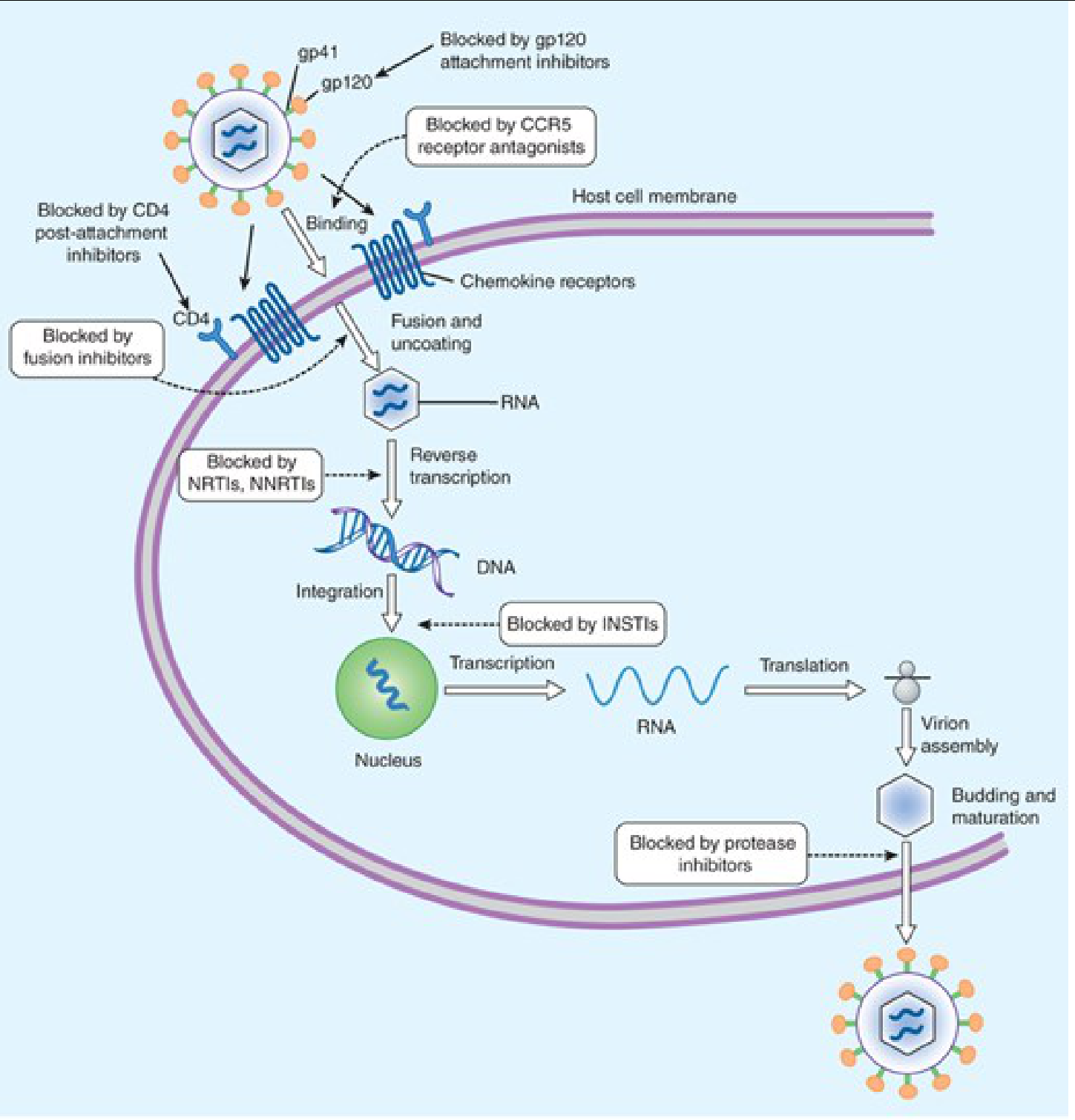
Sites of drug action in the HIV lifecycle - Katzung's Basic & Clinical Pharmacology 16e
Classification of Antiretroviral Drugs
| Class | Step Blocked | Key Drugs |
|---|---|---|
| NRTIs | Reverse transcription | Zidovudine, Tenofovir, Emtricitabine, Lamivudine, Abacavir |
| NNRTIs | Reverse transcription (allosteric) | Efavirenz, Nevirapine, Rilpivirine, Doravirine |
| PIs | Viral maturation (budding) | Atazanavir, Darunavir, Lopinavir, Ritonavir |
| INSTIs | Integration of viral DNA | Dolutegravir, Bictegravir, Raltegravir, Elvitegravir, Cabotegravir |
| Fusion Inhibitors | Membrane fusion (gp41) | Enfuvirtide (T-20) |
| CCR5 Antagonists | Co-receptor binding | Maraviroc |
| CD4 Post-attachment Inhibitors | CD4 receptor binding | Ibalizumab |
| gp120 Attachment Inhibitors | gp120 binding to CD4 | Fostemsavir |
| Capsid Inhibitors | Viral capsid | Lenacapavir |
| Pharmacokinetic Boosters | Not antiviral - enhance drug levels | Ritonavir, Cobicistat |
I. Nucleoside/Nucleotide Reverse Transcriptase Inhibitors (NRTIs)
Mechanism: Pro-drugs - require intracellular phosphorylation to active triphosphate form → competitively inhibit HIV reverse transcriptase → incorporated into viral DNA → chain termination (lack a 3'-OH group, so no further elongation).
Key drugs:
| Drug | Notes |
|---|---|
| Zidovudine (AZT) | First ARV ever approved (1987); thymidine analog; CSF penetration 60-65%; T½ 1h plasma, 3-4h intracellular; ADRs: macrocytic anaemia (1-4%), neutropenia (2-8%), myopathy, lipodystrophy; used in PMTCT |
| Tenofovir disoproxil fumarate (TDF) | Nucleotide analog; ADRs: nephrotoxicity (proximal tubulopathy), decreased bone mineral density; active vs HBV |
| Tenofovir alafenamide (TAF) | Newer prodrug of tenofovir; better intracellular delivery at lower dose; less renal and bone toxicity than TDF |
| Emtricitabine (FTC) | Cytidine analog; minimal side effects; also active vs HBV; often combined with tenofovir |
| Lamivudine (3TC) | Cytidine analog; also active vs HBV; excellent safety; used widely in resource-limited settings |
| Abacavir (ABC) | Guanosine analog; requires HLA-B*5701 testing before use - positive = hypersensitivity reaction risk (potentially fatal); avoid alcohol |
Class ADRs (NRTIs): Mitochondrial toxicity (via inhibition of mitochondrial DNA polymerase-γ) → lactic acidosis, hepatic steatosis, lipoatrophy, peripheral neuropathy, pancreatitis.
II. Non-Nucleoside Reverse Transcriptase Inhibitors (NNRTIs)
Mechanism: Bind allosterically to HIV-1 reverse transcriptase at a site near (but distinct from) the NRTI binding site → conformational change → inhibit RNA- and DNA-dependent DNA polymerase activity. Do NOT require phosphorylation. NOT active against HIV-2.
Key features:
- Long plasma half-life (>24 hours) → once-daily dosing.
- 2nd-generation NNRTIs (doravirine, etravirine, rilpivirine) have higher potency, longer half-lives, reduced side effects, higher barrier to resistance vs 1st generation (efavirenz, nevirapine).
- All metabolized by CYP450 → many drug-drug interactions.
- Baseline genotypic resistance testing recommended (primary resistance 2-8%).
| Drug | Key ADRs | Notes |
|---|---|---|
| Efavirenz | Neuropsychiatric effects (vivid dreams, dizziness, confusion), rash, teratogenic in 1st trimester | Take at bedtime on empty stomach; 600 mg QD |
| Nevirapine | Severe hepatotoxicity, Stevens-Johnson syndrome, rash | Avoid in women with CD4 >250 or men with CD4 >400 |
| Rilpivirine | Rash, depression, insomnia | Must be taken with food; avoid with PPIs |
| Doravirine | Headache, nausea, diarrhea | 100 mg QD; newer, better tolerated |
| Etravirine | Rash, nausea | 2nd line; active against efavirenz-resistant strains |
Class ADR: "K103N mutation" - single mutation causes high-level resistance to 1st-gen NNRTIs (efavirenz, nevirapine) - called low genetic barrier to resistance.
III. Protease Inhibitors (PIs)
Mechanism: Inhibit HIV aspartyl protease → prevents cleavage of Gag-Pol polyproteins into functional viral proteins → immature, non-infectious virions are produced (budding occurs but maturation fails).
Key features:
- All require pharmacokinetic boosting with ritonavir (100 mg) or cobicistat (150 mg) - "boosted PI" - to increase plasma levels and extend dosing intervals.
- Extensive CYP3A4 metabolism → major drug-drug interactions.
- All PIs taken with food (except atazanavir requires separation from antacids).
| Drug | Key ADRs / Notes |
|---|---|
| Ritonavir | Now used only as a booster (100 mg BD); potent CYP3A4 inhibitor; full doses cause GI toxicity, hepatitis, paresthesias |
| Cobicistat | Pure pharmacokinetic booster (no antiviral activity); CYP3A4 inhibitor; raises serum creatinine (inhibits tubular secretion) without reducing GFR |
| Atazanavir | Indirect hyperbilirubinaemia (jaundice - benign, like Gilbert's); PR interval prolongation; nephrolithiasis |
| Darunavir | Preferred PI; sulfonamide allergy risk; take with food; hyperlipidaemia |
| Lopinavir/ritonavir | Diarrhoea, hyperlipidaemia, PR/QT prolongation; avoid in pregnancy (preterm birth risk) |
Class ADRs (PIs): Lipodystrophy (buffalo hump, central obesity, lipoatrophy), hyperlipidaemia, insulin resistance/hyperglycaemia, GI intolerance, nephrolithiasis.
IV. Integrase Strand Transfer Inhibitors (INSTIs)
Mechanism: Block HIV integrase enzyme → prevent integration of viral double-stranded DNA into the host cell genome → no proviral DNA → cannot produce new virions.
Key features:
- Currently preferred first-line drugs due to high efficacy, high barrier to resistance (dolutegravir, bictegravir), once-daily dosing, minimal drug interactions.
- Chelated by divalent cations (Mg²⁺, Al³⁺) - separate from antacids/polyvalent cations by ≥2 hours.
| Drug | Key Points |
|---|---|
| Dolutegravir (DTG) | Preferred first-line (WHO); 50 mg QD; high barrier to resistance; insomnia, headache; neural tube defect risk if used periconceptionally (caution in early pregnancy) |
| Bictegravir | Fixed-dose combination only (BIC/TAF/FTC); very high resistance barrier; once daily; nausea, diarrhoea |
| Raltegravir | First INSTI approved; twice daily; excellent safety; lower resistance barrier than DTG |
| Elvitegravir | Only used with cobicistat booster; take with food |
| Cabotegravir | Available as long-acting injectable (400 mg IM monthly with rilpivirine); also oral; used for treatment and PrEP |
V. Entry/Fusion Inhibitors
A. Fusion Inhibitor
Enfuvirtide (T-20)
- Synthetic peptide (36 amino acids); binds to gp41 heptad repeat region → blocks conformational change needed for membrane fusion.
- Route: Subcutaneous injection only (not oral).
- ADRs: Local injection site reactions (almost universal - nodules, pain, erythema), pneumonia risk.
- Reserved for salvage therapy in multi-drug resistant HIV.
B. CCR5 Co-receptor Antagonist
Maraviroc
- Binds CCR5 chemokine receptor on host CD4 cells → prevents gp120 binding → blocks viral entry.
- Only active against CCR5-tropic (R5) HIV - must perform tropism testing (viral genotyping) before use.
- If CXCR4-tropic (X4) or dual/mixed-tropic virus is present → drug will not work.
- Excellent CSF penetration; cervicovaginal levels 4x higher than plasma.
- ADRs: Hepatotoxicity (with allergic prodrome), cough, URI, dizziness, myocardial ischaemia.
- Substrate of CYP3A4 - dose adjustment with CYP3A inhibitors/inducers.
C. CD4 Post-Attachment Inhibitor
Ibalizumab
- Monoclonal antibody binding CD4 receptor → blocks HIV entry post-attachment.
- IV every 2 weeks; reserved for multidrug-resistant HIV.
D. gp120 Attachment Inhibitor
Fostemsavir
- Prodrug → temsavir; binds HIV gp120 → prevents attachment to CD4.
- For heavily treatment-experienced patients with multidrug-resistant HIV.
VI. Capsid Inhibitor
Lenacapavir
- Binds HIV capsid protein → disrupts multiple stages: nuclear import, viral assembly, uncoating.
- Long-acting: SC injection every 6 months (longest-acting ARV).
- Used in multidrug-resistant HIV and being studied for PrEP.
Recommended First-Line ART Regimen
Per WHO/current guidelines:
Preferred regimen:
TDF + 3TC (or FTC) + DTG (Tenofovir + Lamivudine/Emtricitabine + Dolutegravir)
- Two NRTIs as the backbone + one third agent (INSTI preferred > NNRTI > boosted PI).
- Aims for plasma viral load <50 copies/mL (undetectable) within 6 months.
- Goal: U=U (Undetectable = Untransmittable).
Alternative backbone:
- ABC/3TC (if TDF contraindicated - requires HLA-B*5701 testing)
- AZT/3TC (used in PMTCT regimens)
Special Situations
| Situation | Preferred ART |
|---|---|
| Pregnancy (PMTCT) | TDF + 3TC/FTC + DTG (caution: avoid DTG in periconception period if possible); AZT used in labor for PMTCT |
| Tuberculosis co-infection | Rifampicin induces CYP3A4 → use Efavirenz or double-dose DTG (50 mg BD) |
| Hepatitis B co-infection | Include TDF (or TAF) + 3TC/FTC in regimen (both active vs HBV) |
| Post-exposure prophylaxis (PEP) | TDF + FTC + DTG (or raltegravir) for 28 days; start within 72 hours |
| Pre-exposure prophylaxis (PrEP) | TDF/FTC daily or cabotegravir LA injection every 2 months |
| Opioid-induced constipation | Avoid lopinavir/ritonavir (worsens GI symptoms) |
| Renal impairment | Prefer TAF over TDF; avoid TDF |
Key Drug-Drug Interactions
| Interacting Drug | Affected ARV | Effect |
|---|---|---|
| Rifampicin | NNRTIs, PIs, INSTIs | Induces CYP3A4 → ↓ ARV levels; use efavirenz or double DTG |
| Antacids / Mg²⁺, Al³⁺ | INSTIs | Chelation → ↓ INSTI absorption; separate by ≥2 h |
| MAOIs | NNRTIs | Avoid |
| St. John's Wort | PIs, NNRTIs | CYP3A4 induction → treatment failure |
| Statins | PIs (ritonavir) | ↑ statin levels → myopathy/rhabdomyolysis; avoid simvastatin/lovastatin |
Summary: Class ADRs at a Glance
| Class | Signature Toxicity |
|---|---|
| NRTIs | Mitochondrial toxicity: lactic acidosis, lipoatrophy, peripheral neuropathy; AZT → anaemia |
| NNRTIs | Rash (efavirenz, nevirapine), hepatotoxicity (nevirapine), neuropsychiatric (efavirenz) |
| PIs | Lipodystrophy, hyperlipidaemia, hyperglycaemia, GI upset, nephrolithiasis (atazanavir) |
| INSTIs | Generally well tolerated; insomnia (dolutegravir); neural tube defect concern |
| Fusion (enfuvirtide) | Injection site reactions |
| CCR5 (maraviroc) | Hepatotoxicity, requires tropism test |
Sources: Katzung's Basic & Clinical Pharmacology 16e, Table 49-3 | Comprehensive Clinical Nephrology 7e | Harrison's Principles of Internal Medicine 22e
This is a shared conversation. Sign in to Orris to start your own chat.