
Hypertension all about it with treatment
Reading File
Hypertension is a large topic, so I'll start with a map and a short overview. Then you can pick a section to go through in depth.
Topic breakdown
- Definition and classification (ACC/AHA vs ESC/ESH thresholds)
- Epidemiology and risk factors
- Pathophysiology (RAAS, sympathetic tone, sodium handling, vascular remodeling)
- Primary vs secondary hypertension (renal, endocrine, drug-induced causes)
- Clinical features, diagnosis and BP measurement (office, home, ABPM)
- Target organ damage and complications
- Lifestyle and non-drug management
- Drug therapy (ACE inhibitors, ARBs, calcium channel blockers, thiazide-like diuretics, beta blockers, others) and BP targets
- Resistant hypertension
- Special situations: pregnancy, elderly, CKD, diabetes, hypertensive emergency and urgency
Brief overview
What it is: Hypertension is persistently raised arterial pressure. The ACC/AHA defines it as 130/80 mmHg or higher. ESC/ESH keeps the threshold at 140/90 mmHg or higher in the office. About 90% of cases are primary (essential), from a mix of genetics, high salt intake, obesity, inactivity, alcohol and aging. The other 5 to 10% are secondary, for example to renal parenchymal or renovascular disease, primary aldosteronism, pheochromocytoma, Cushing syndrome, sleep apnea, or drugs such as NSAIDs and oral contraceptives.
Why it matters: It is usually silent. Over time it damages the heart (LVH, heart failure, coronary disease), brain (stroke, dementia), kidneys (CKD), eyes (retinopathy) and large vessels (aortic dissection, aneurysm). It is the leading modifiable cause of cardiovascular death.
Treatment in outline: Management starts with lifestyle change: weight loss, DASH diet, sodium restriction, potassium-rich foods, exercise and limiting alcohol. Most patients also need drugs. First-line options are ACE inhibitors or ARBs, dihydropyridine calcium channel blockers, and thiazide-like diuretics, often combined in a single pill. The usual target is below 130/80 mmHg if tolerated. Choice of drug depends on comorbidities, such as an ACE inhibitor or ARB in diabetes with albuminuria, or avoiding ACE inhibitors and ARBs in pregnancy.
Asking for Preferences
Which part of hypertension do you want in detail?
Hypertension is a large topic, so I'll start with a map and a short overview. Then you can pick a section to go through in depth.
Topic breakdown
- Definition and classification (ACC/AHA vs ESC/ESH thresholds)
- Epidemiology and risk factors
- Pathophysiology (RAAS, sympathetic tone, sodium handling, vascular remodeling)
- Primary vs secondary hypertension (renal, endocrine, drug-induced causes)
- Clinical features, diagnosis and BP measurement (office, home, ABPM)
- Target organ damage and complications
- Lifestyle and non-drug management
- Drug therapy (ACE inhibitors, ARBs, calcium channel blockers, thiazide-like diuretics, beta blockers, others) and BP targets
- Resistant hypertension
- Special situations: pregnancy, elderly, CKD, diabetes, hypertensive emergency and urgency
Brief overview
What it is: Hypertension is persistently raised arterial pressure. The ACC/AHA defines it as 130/80 mmHg or higher. ESC/ESH keeps the threshold at 140/90 mmHg or higher in the office. About 90% of cases are primary (essential), from a mix of genetics, high salt intake, obesity, inactivity, alcohol and aging. The other 5 to 10% are secondary, for example to renal parenchymal or renovascular disease, primary aldosteronism, pheochromocytoma, Cushing syndrome, sleep apnea, or drugs such as NSAIDs and oral contraceptives.
Why it matters: It is usually silent. Over time it damages the heart (LVH, heart failure, coronary disease), brain (stroke, dementia), kidneys (CKD), eyes (retinopathy) and large vessels (aortic dissection, aneurysm). It is the leading modifiable cause of cardiovascular death.
Treatment in outline: Management starts with lifestyle change: weight loss, DASH diet, sodium restriction, potassium-rich foods, exercise and limiting alcohol. Most patients also need drugs. First-line options are ACE inhibitors or ARBs, dihydropyridine calcium channel blockers, and thiazide-like diuretics, often combined in a single pill. The usual target is below 130/80 mmHg if tolerated. Choice of drug depends on comorbidities, such as an ACE inhibitor or ARB in diabetes with albuminuria, or avoiding ACE inhibitors and ARBs in pregnancy.
Finding Sources
Searching PubMed
"hypertension"[MeSH Terms] AND "antihypertensive agents"[MeSH Terms]
Searching the Web
2025 AHA/ACC high blood pressure guideline key changes treatment targets
Reading File
Reading File
Hypertension: overview and treatment
You didn't pick a section, so this covers the whole topic. Tell me which part you want in more depth.
1. Definition and classification
| Category (2017 and 2025 ACC/AHA) | Systolic | Diastolic |
|---|---|---|
| Normal | <120 | and <80 |
| Elevated | 120-129 | and <80 |
| Stage 1 | 130-139 | or 80-89 |
| Stage 2 | ≥140 | or ≥90 |
- ESC/ESH defines hypertension as office BP ≥140/90 mmHg.
- The 2025 AHA/ACC guideline kept the 2017 categories and the <130/80 mmHg goal.
- Hypertensive crisis is BP >180/120 mmHg. It is called an emergency if there is acute target organ damage, and urgency if there is not.
2. Causes and risk factors
- Primary (essential) hypertension is about 90% of cases. Risk factors are age, family history, obesity, high sodium intake, low potassium intake, inactivity, alcohol, stress and sleep apnea.
- Secondary hypertension is about 5 to 10% of cases. Think of it with early onset, severe or resistant BP, or hypokalemia.
- Renal: parenchymal disease, renal artery stenosis.
- Endocrine: primary aldosteronism (the most common endocrine cause), Cushing syndrome, pheochromocytoma, thyroid disease.
- Other: obstructive sleep apnea, coarctation of the aorta.
- Drugs: NSAIDs, oral contraceptives, decongestants, steroids, licorice, cocaine, calcineurin inhibitors.
3. Pathophysiology
BP equals cardiac output multiplied by peripheral resistance. The main contributors are:
- RAAS overactivity, which causes vasoconstriction and sodium retention.
- Increased sympathetic tone.
- Impaired renal sodium excretion, so the pressure-natriuresis curve shifts.
- Endothelial dysfunction, with reduced nitric oxide.
- Arterial stiffness and vascular remodeling, with insulin resistance and inflammation.
4. Diagnosis
- Measure BP properly: seated and rested, correct cuff size, arm at heart level, average of at least 2 readings on at least 2 occasions.
- Confirm with out-of-office measurement, either home BP monitoring or 24-hour ambulatory BP monitoring (ABPM). This excludes white-coat and masked hypertension.
- Baseline tests:
- Urea, creatinine/eGFR, electrolytes, glucose and lipids.
- Urinalysis and urine albumin-creatinine ratio.
- ECG, with echocardiography if LVH is suspected.
- Fundoscopy.
- TSH if indicated.
- Targeted screening:
- Primary aldosteronism: renin and aldosterone. The 2025 guideline broadened this to all patients with stage 2 or resistant hypertension.
- Pheochromocytoma: plasma metanephrines.
- Renal artery stenosis: imaging.
- Sleep apnea: sleep study.
5. Complications
- Heart: LVH, heart failure, coronary disease, atrial fibrillation.
- Brain: stroke, intracerebral hemorrhage, cognitive decline.
- Kidney: hypertensive nephrosclerosis, CKD.
- Eye: retinopathy.
- Vessels: aortic dissection, aneurysm, peripheral artery disease.
6. Treatment
A. Lifestyle (for all patients)
Goldman-Cecil Medicine states that lifestyle modification can lower systolic BP by 7 up to 15 mmHg and can be tried before drugs (Goldman-Cecil Medicine, "Treatment of Essential Hypertension"). The main measures are:
- Weight loss: about 1 mmHg per kg lost.
- DASH diet.
- Sodium below about 2 g a day.
- Potassium-rich foods, unless CKD or hyperkalemia.
- Aerobic exercise: 150 minutes a week.
- Alcohol limited to 1 to 2 drinks a day or less.
- Stop smoking.
B. When to start drugs (2025 ACC/AHA)
- Start in stage 2 hypertension, usually with two drugs.
- Start in stage 1 if the patient has established CVD, diabetes or CKD, or a 10-year CVD risk ≥7.5% on the new PREVENT calculator.
- In lower-risk stage 1, give lifestyle measures for 3 to 6 months. If BP stays ≥130/80 mmHg, add medication. This is a change from 2017.
- The goal for most adults is <130/80 mmHg. For higher-risk patients, aim for systolic <130 and try to reach <120 where it is tolerated and measured in a standardized way.
- Use single-pill combinations to improve adherence.
C. First-line drug classes
| Class | Examples | Preferred when | Cautions |
|---|---|---|---|
| ACE inhibitor | ramipril, lisinopril, enalapril | Diabetes, albuminuria/CKD, heart failure, post-MI | Cough, angioedema, hyperkalemia, pregnancy |
| ARB | losartan, valsartan, telmisartan | Same, or ACE-inhibitor cough | Same as ACE inhibitors, but no cough. Never combine ACE inhibitor with ARB |
| Dihydropyridine CCB | amlodipine, nifedipine | Elderly, isolated systolic hypertension, Black patients, angina | Ankle edema, flushing |
| Thiazide-like diuretic | chlorthalidone, indapamide | Elderly, Black patients, osteoporosis | Hypokalemia, hyponatremia, hyperuricemia, glucose rise. Weaker effect if eGFR <30 |
| Beta blocker | bisoprolol, carvedilol, metoprolol | Not first-line alone. Use for angina, post-MI, heart failure with reduced EF, AF rate control | Bradycardia, fatigue, bronchospasm |
Later-line drugs:
- Mineralocorticoid receptor antagonists (spironolactone, eplerenone) are the best fourth-line drug for resistant hypertension.
- Others are alpha blockers (doxazosin), central agents (clonidine, methyldopa), hydralazine and minoxidil.
D. Practical approach
- Start two-drug single-pill therapy for stage 2, using an ACE inhibitor or ARB plus a CCB or thiazide-like diuretic.
- If BP is uncontrolled, move to triple therapy: ACE inhibitor/ARB plus CCB plus thiazide-like diuretic.
- If still uncontrolled, add spironolactone and check for adherence problems, secondary causes, interfering drugs and white-coat effect. This is resistant hypertension.
- Review within 2 to 4 weeks after changes, then monthly until at goal. Check potassium and creatinine after starting ACE inhibitors, ARBs or diuretics.
- For resistant cases, the 2025 guideline adds renal denervation as an adjunct in selected patients.
The Lancet 2025 meta-analysis (PMID 40885583) supports combination therapy, since drug combinations lower BP more than monotherapy.
E. Special situations
- Diabetes or CKD: Target <130/80 mmHg. Use an ACE inhibitor or ARB if albuminuria is present. In CKD, salt restriction comes first, and a small eGFR fall (<30%) after starting an ACE inhibitor or ARB can be acceptable. RAS inhibitors can usually be continued even at low eGFR with monitoring. Avoid amiloride and triamterene in most patients, and monitor potassium with MRAs (Harrison's Principles of Internal Medicine 22E, "Management of Hypertension"). Very low targets may not suit CKD patients.
- Pregnancy: Use labetalol, nifedipine or methyldopa. Avoid ACE inhibitors, ARBs and direct renin inhibitors. Treat severe BP (≥160/110) urgently. Low-dose aspirin is used to prevent pre-eclampsia in high-risk women.
- Elderly: Treat if tolerated, with a gradual start, and watch for orthostatic hypotension. A 2025 Cochrane review (PMID 41065416) covers drug therapy at age 60 and over.
- Black patients: A CCB or thiazide-like diuretic is usually preferred as the first-line choice.
- Acute intracerebral hemorrhage: The 2025 guideline lowers systolic BP to 130 to <140 mmHg for at least 7 days in patients presenting at 150 to 220 mmHg.
- Hypertensive emergency: BP >180/120 mmHg with organ damage (encephalopathy, aortic dissection, acute pulmonary edema, ACS, eclampsia, acute kidney injury). Admit to ICU and use IV agents such as labetalol, nicardipine, clevidipine, nitroprusside or nitroglycerin. Lower mean BP by no more than about 25% in the first hour, then gradually over 24 to 48 hours. Aortic dissection is the exception, where systolic is lowered to <120 mmHg rapidly. Hypertensive urgency without organ damage is managed with oral drugs and outpatient follow-up, not rapid lowering.
7. Follow-up and prevention
- Home BP monitoring and regular visits.
- Statin and aspirin only when otherwise indicated.
- Treat sleep apnea.
- Avoid therapeutic inertia.
Evidence check: Recent systematic reviews (PMIDs 40885583, 41065416) agree with the textbook and guideline approach. I found nothing that contradicts it. Textbook page numbers weren't available in my retrieval, so I cited by chapter section.
I can go deeper on any section, for example the drug choice algorithm, resistant hypertension, hypertensive emergencies, or secondary hypertension work-up.
Gradings
Finding Sources
Finding Sources
Searching Images
hypertensive retinopathy grades fundus Keith-Wagener
Reading File
Reading File
query_images_db
"Gradings" can mean several things in hypertension. I've covered the main ones: BP grades, retinopathy grades, and the hypertensive crisis categories. If you meant something else, such as pre-eclampsia, pulmonary hypertension or risk stratification, tell me.
1. Grading of blood pressure
ESC/ESH 2018 (also WHO/ISH style grades)
These grades are taken from the table in Comprehensive Clinical Nephrology, 7th Edition, Table 34.3. The grade 1 and 2 cut-offs also appear in Park's Textbook of Preventive and Social Medicine, Table 1.
| Category | Systolic (mmHg) | Diastolic (mmHg) | |
|---|---|---|---|
| Optimal | <120 | and | <80 |
| Normal | 120-129 | and/or | 80-84 |
| High normal | 130-139 | and/or | 85-89 |
| Grade 1 hypertension | 140-159 | and/or | 90-99 |
| Grade 2 hypertension | 160-179 | and/or | 100-109 |
| Grade 3 hypertension | ≥180 | and/or | ≥110 |
| Isolated systolic hypertension | ≥140 | and | <90 |
Thresholds for diagnosing hypertension by measurement method (same table):
- Office BP: ≥140/90 mmHg.
- Home or daytime ambulatory: ≥135/85 mmHg.
- Night-time ambulatory: ≥120/70 mmHg.
- 24-hour ambulatory: ≥130/80 mmHg.
If systolic and diastolic fall in different grades, use the higher grade.
ACC/AHA (2017, retained in 2025)
It uses stages instead of grades.
| Stage | Systolic | Diastolic |
|---|---|---|
| Normal | <120 | and <80 |
| Elevated | 120-129 | and <80 |
| Stage 1 | 130-139 | or 80-89 |
| Stage 2 | ≥140 | or ≥90 |
JNC 7 (older, still used in some exams)
- Normal: <120/80.
- Prehypertension: 120-139 / 80-89.
- Stage 1: 140-159 / 90-99.
- Stage 2: ≥160 / ≥100.
2. Grading of hypertensive retinopathy
The Textbook of Family Medicine 9e says there is no universally accepted classification of fundus changes in hypertension. The commonly taught Keith-Wagener-Barker grades are:
| Grade | Fundus findings |
|---|---|
| 1 | Generalized arteriolar attenuation (mild narrowing) |
| 2 | More pronounced attenuation with focal arteriolar narrowing, plus AV nipping |
| 3 | Grade 2 changes plus retinal hemorrhages, hard exudates and cotton-wool spots |
| 4 | Grade 3 changes plus papilledema (optic disc swelling) |
- The Rosen's Emergency Medicine funduscopic scale runs 0 to 4. It is the same except that grade 0 is normal and grade 1 is minimal arterial narrowing.
- Scheie's classification grades arteriolar sclerosis separately: grade 1 is a broadened arteriolar reflex, grade 2 an increased light reflex with AV crossing changes, grade 3 "copper wire" arterioles, and grade 4 "silver wire" arterioles (Textbook of Family Medicine 9e, "Hypertensive Retinopathy Grading").
- Grade 3 and 4 changes indicate accelerated or malignant hypertension. They also raise the possibility of secondary causes such as renovascular disease (Campbell-Walsh Urology, "Diagnosis").
- A simpler modern grouping is mild (grades 1 and 2), moderate (grade 3) and malignant (grade 4).
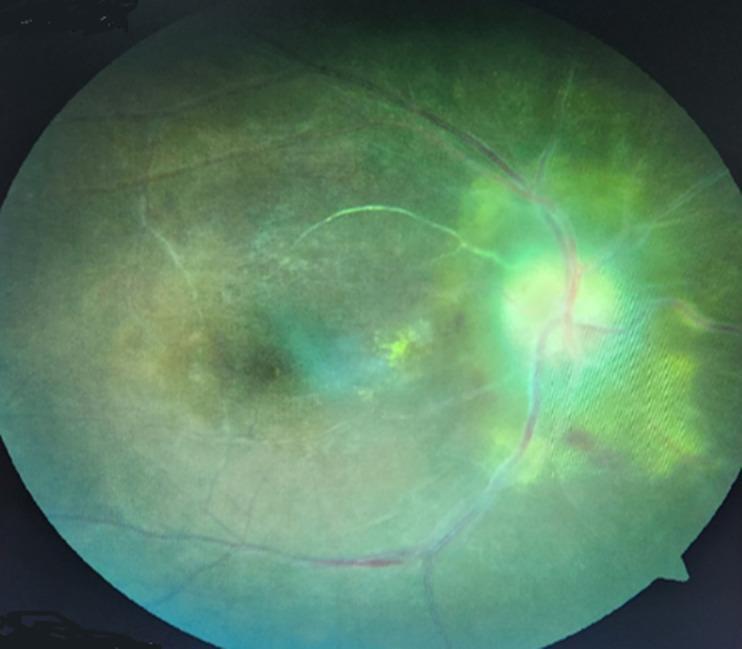
The fundus photograph above shows a swollen, hyperemic optic disc with blurred margins. The vessels are dilated and tortuous, and the arteries are attenuated and white ("silver-wiring").
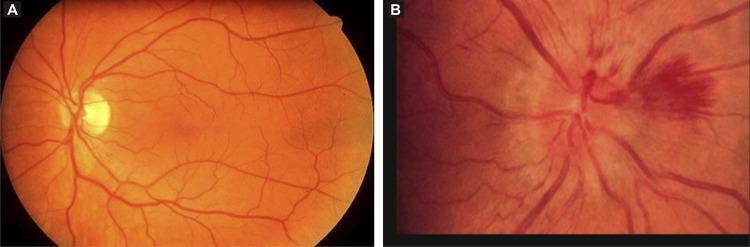
This side-by-side shows a normal fundus (A) and grade IV changes (B): an elevated disc with blurred margins, a flame-shaped hemorrhage and a hazy edematous background.
3. Hypertensive crisis
Hypertensive crisis is BP >180/120 mmHg. It is split by whether there is acute target organ damage.
| Type | Organ damage | Management |
|---|---|---|
| Urgency | None | Oral drugs, outpatient follow-up |
| Emergency | Present (encephalopathy, stroke, ACS, pulmonary edema, aortic dissection, acute kidney injury, eclampsia) | ICU, IV agents, controlled BP lowering |
4. Total CV risk stratification
The ESC/ESH approach combines the BP grade with risk factors (age, smoking, lipids, diabetes), target organ damage (LVH, CKD, albuminuria) and established CVD to give low, moderate, high or very high risk. This risk level guides how early to start drugs. The 2025 ACC/AHA guideline does this with the PREVENT calculator, using a 10-year CVD risk ≥7.5% as the threshold for drug treatment in stage 1 (see my earlier answer).
I can turn this into a one-page revision table or flashcards if you'd like.
Clinical Features of grade 1 hypertension
Finding Sources
Finding Sources
Searching PubMed
"hypertension"[MeSH Terms] AND "headache"[MeSH Terms]
Finding Sources
Finding Sources
Searching the Web
clinical features of stage 1 hypertension asymptomatic symptoms signs physical examination
Clinical features of grade 1 hypertension
"Grade 1" is ESC/ESH usage, meaning BP 140-159/90-99 mmHg. ACC/AHA "stage 1" is 130-139/80-89 mmHg. The clinical picture is the same for both.
1. Symptoms: usually none
- Most people with grade 1 hypertension have no symptoms, and it is found at a routine check-up or screening. This is why it is called the "silent killer".
- Compensated hypertensive heart disease is "typically asymptomatic and is suspected only from discovery of elevated blood pressure on routine physical examination, or from ECG or echocardiographic findings of left ventricular hypertrophy" (Robbins & Kumar Basic Pathology, "Morphology").
- Fuster and Hurst's The Heart notes that even severely raised BP (>180/120 mmHg) is often asymptomatic.
- Adams and Victor's Principles of Neurology notes that headache, dizziness and epistaxis do not occur with any consistency before hypertensive complications.
- Headache, dizziness, palpitations, tinnitus and nosebleeds are often blamed on hypertension. At this grade they are mostly coincidental and not caused by the BP. The AHA also says symptoms are not a reliable guide.
2. History to look for
The purpose of the history is to find causes, target organ damage and risk factors (Brenner & Rector's The Kidney, "History and Physical Examination").
- Risk factors: family history, salt intake, alcohol, smoking, inactivity, weight gain, stress.
- Contributing drugs: NSAIDs, oral contraceptives, decongestants, steroids, licorice, stimulants.
- Secondary-cause clues: snoring or daytime sleepiness (sleep apnea), episodic sweating, palpitations and headache (pheochromocytoma), muscle weakness or cramps (hypokalemia, aldosteronism), renal disease history.
- Complication clues: chest pain, breathlessness, claudication, transient neurological or visual symptoms.
- Comorbidities: diabetes, dyslipidemia, CKD, gout.
3. Signs on examination
These are usually minimal.
- BP:
- Properly measured, repeated, and taken in both arms. Check postural change in older patients.
- Home or ambulatory readings rule out white-coat and masked hypertension.
- General: BMI, waist circumference, and features of Cushing syndrome.
- Cardiac:
- Normal or a slightly forceful apex beat.
- A fourth heart sound (S4) from a stiff left ventricle.
- Loud A2.
- Pulses and bruits: check for radio-femoral delay (coarctation), and listen for renal artery or carotid bruits.
- Abdomen: palpable kidneys (polycystic disease), abdominal aortic aneurysm.
- Fundoscopy: normal or Keith-Wagener-Barker grade 1 to 2 changes (mild arteriolar narrowing, AV nipping). Grade 3 or 4 changes (hemorrhages, exudates, papilledema) are not expected and suggest accelerated hypertension or a secondary cause.
- Edema: none unless there is heart or kidney disease.
4. Investigation findings
- Normal in many patients.
- Possible findings:
- ECG: early LVH or left atrial enlargement.
- Urine: mild albuminuria.
- Blood: raised creatinine, glucose or lipids.
- Hypokalemia with high-normal sodium should prompt aldosterone/renin testing.
5. Key points for exams
- Grade 1 hypertension is mostly asymptomatic and found incidentally.
- Physical signs are usually absent or subtle.
- Check for target organ damage, risk factors and secondary causes.
- Treatment depends on total CV risk, not on grade alone.
- In ESC/ESH, drug therapy is considered for grade 1 only in patients with high CV risk, established CVD, or persistent elevation after lifestyle measures. In the 2025 ACC/AHA guideline, stage 1 is treated with drugs in patients with diabetes, CKD or 10-year risk ≥7.5%, or when BP stays ≥130/80 mmHg after 3 to 6 months of lifestyle change.
Source limits
The library had no dedicated textbook section on clinical features of essential hypertension. Instead, I pieced this together from the passages above. My PubMed search for recent systematic reviews returned nothing relevant, so I found no new evidence that contradicts this.
I can go on to the work-up of a newly diagnosed grade 1 patient, or management by risk category.
This is a shared conversation. Sign in to Orris to start your own chat.