
Anxiolytic and hypnotic drugs also sedatives
Reading File
Now let me search the library for comprehensive content on anxiolytics, hypnotics, and sedatives.
Finding Sources
Finding Sources
Finding Sources
Reading File
Good. Now let me get the core pharmacology content from Katzung and Lippincott, which will have the best pharmacology coverage.
Finding Sources
Finding Sources
Reading File
Finding Sources
Excellent content found. Let me read more of this Katzung chapter for full pharmacology detail.
Reading File
I now have rich content. Let me read a bit more to cover the newer drugs (z-drugs, buspirone, barbiturates) and then compile the full answer.
Reading File
I now have comprehensive content to write a detailed, well-organized answer. Let me fetch the key images to include visually.
Loading Image
Loading Image
I now have enough content for a comprehensive, well-illustrated answer. Let me compile it.
Anxiolytic, Hypnotic, and Sedative Drugs
Definitions and Concepts
These three terms describe overlapping functional categories rather than distinct drug classes:
- Sedative: reduces anxiety and exerts a calming effect with minimal CNS depression
- Anxiolytic: relieves anxiety (functionally the same as sedation at low doses)
- Hypnotic: produces drowsiness and facilitates sleep onset/maintenance (more pronounced CNS depression than sedation)
A key principle is graded, dose-dependent CNS depression - most sedative-hypnotics produce sedation at low doses, hypnosis at higher doses, and anesthesia or death at very high doses. The dose-response curve shape differs critically between drug classes:
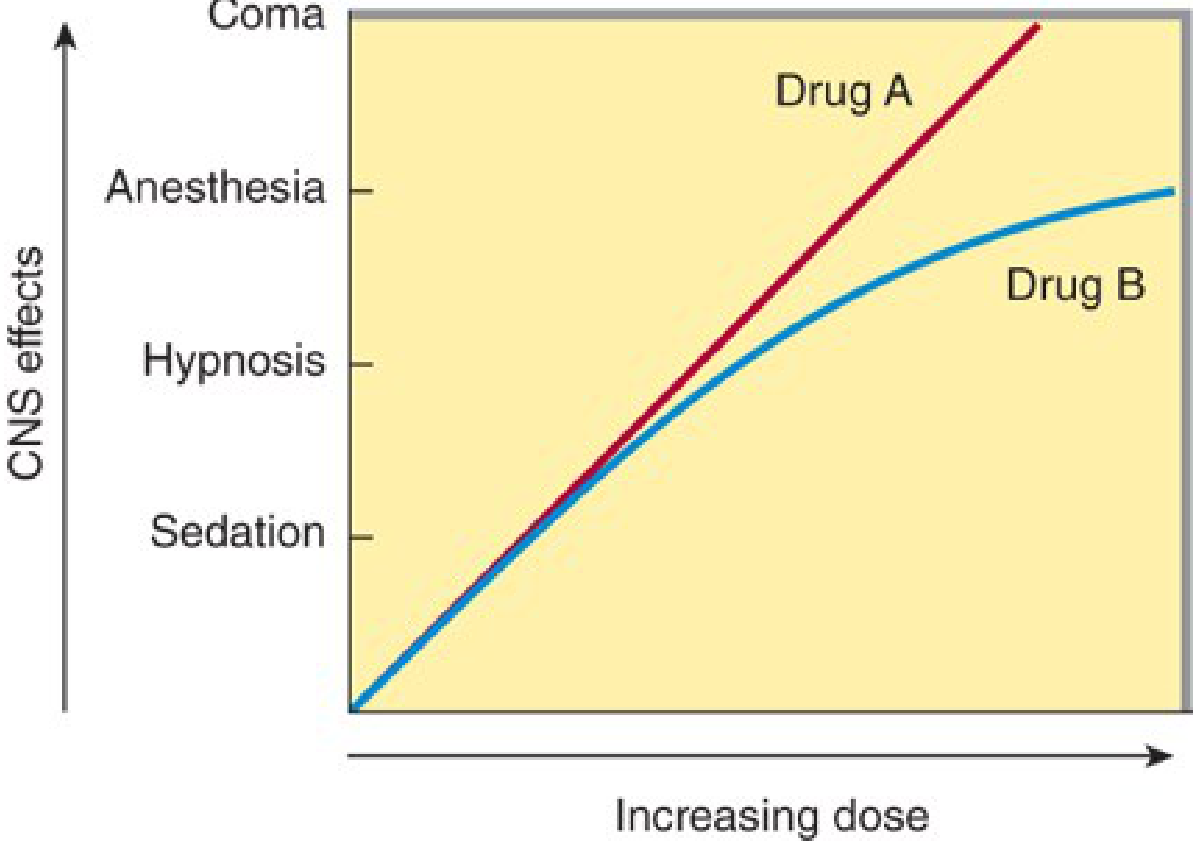
- Drug A (barbiturates, alcohols): linear response - dose increments produce proportional CNS depression, progressing to anesthesia, coma, and death
- Drug B (benzodiazepines, Z-drugs): flattened ceiling - proportionately greater dose increments are needed to reach anesthesia; much wider therapeutic index
- Katzung's Basic and Clinical Pharmacology, 16th Ed.
Classification of Sedative-Hypnotic/Anxiolytic Drugs
1. Benzodiazepines (BZDs) - Most Widely Used
Chemical structure: 1,4-benzodiazepine ring with a carboxamide group in the seven-membered ring. A halogen or nitro group at position 7 is required for activity. Triazolam and alprazolam have an additional triazole ring at the 1,2 position.
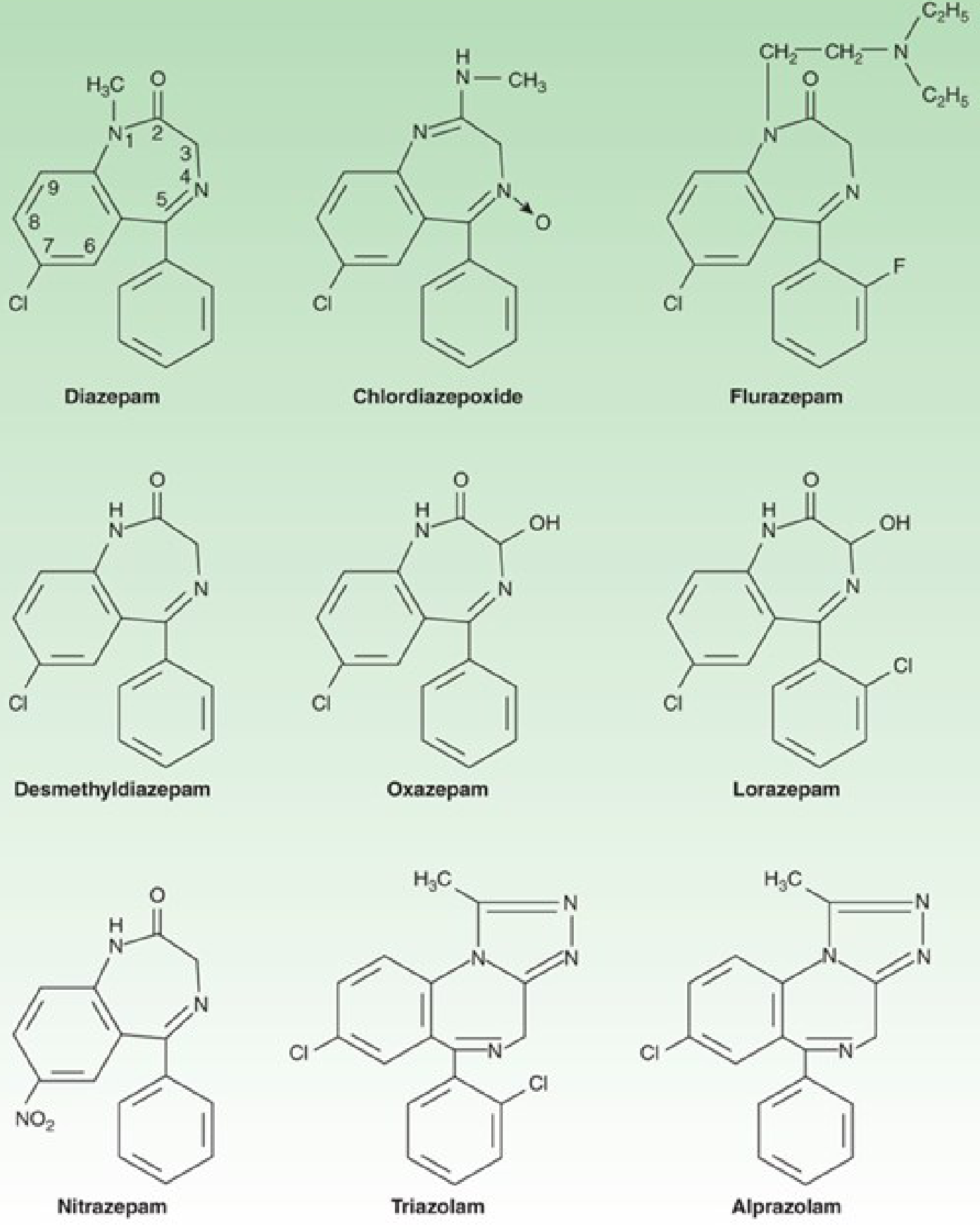
Mechanism: Positive allosteric modulators of the GABA-A receptor. They bind to a distinct BZ site (between the alpha and gamma subunits) and increase the frequency of chloride channel opening in response to GABA. They do NOT activate the receptor directly (unlike barbiturates). This requires GABA to be present.
Classification by half-life:
| Duration | Examples | Clinical use |
|---|---|---|
| Ultra-short (<6h) | Triazolam | Sleep induction |
| Short-intermediate (6-24h) | Lorazepam, oxazepam, alprazolam, temazepam | Anxiety, pre-op sedation |
| Long (>24h) | Diazepam, chlordiazepoxide, flurazepam, clonazepam | Anxiety, seizures, alcohol withdrawal |
Important metabolic feature: Many BZDs (diazepam, chlordiazepoxide, flurazepam) are converted to desmethyldiazepam (nordazepam), an active metabolite with t½ of 36-200 hours. Oxazepam, lorazepam, and temazepam undergo direct glucuronide conjugation ("LOT" drugs) - safer in liver disease and the elderly.
Clinical Uses:
- Generalized anxiety disorder (GAD), panic disorder, social anxiety
- Insomnia (temazepam, triazolam, flurazepam)
- Seizure disorders (clonazepam, diazepam)
- Alcohol withdrawal (chlordiazepoxide, diazepam)
- Muscle relaxation (diazepam)
- Pre-operative sedation/amnesia
Adverse Effects:
- Sedation, cognitive impairment, anterograde amnesia
- Psychomotor impairment - falls, driving accidents
- CNS depression potentiated by alcohol and other depressants
- Dependence, tolerance, and withdrawal syndrome (anxiety, agitation, insomnia, tachycardia, seizures in severe cases)
- Respiratory depression (less than barbiturates; more dangerous in combination with opioids)
Tolerance and Dependence: Pharmacodynamic tolerance develops over weeks-months. Physical dependence leads to a withdrawal syndrome when stopped abruptly, which can precipitate seizures in long-term users. Tapering is required.
2. Z-Drugs (Non-Benzodiazepine Hypnotics)
- Zolpidem (imidazopyridine), Zaleplon (pyrazolopyrimidine), Eszopiclone (cyclopyrrolone - S-enantiomer of zopiclone)
Mechanism: Selective agonists at GABA-A receptors containing the alpha-1 subunit (the BZ1 subtype). This selectivity underpins relative preference for hypnotic over anxiolytic/muscle relaxant/anticonvulsant effects. They are antagonized by flumazenil.
Pharmacokinetics: Short half-lives (zaleplon ~1h, zolpidem ~2-3h, eszopiclone ~6h). Zaleplon is so short-acting it can be taken in the middle of the night. No significant active metabolites.
Advantages over BZDs: Less disruption of sleep architecture (less suppression of REM and slow-wave sleep compared to older BZDs), less daytime hangover, lower abuse potential (though not zero).
Adverse effects: Similar to BZDs but generally milder - residual sedation, complex sleep behaviors (sleepwalking, sleep-driving with zolpidem - FDA black box warning).
3. Barbiturates
Mechanism: Act at GABA-A receptors to increase the duration of chloride channel opening. At high doses, they can directly activate the chloride channel without GABA. This explains their narrow therapeutic index and danger in overdose.
Classification:
- Ultra-short: Thiopental, methohexital (IV anesthesia induction)
- Short-intermediate: Pentobarbital, secobarbital (sedation, no longer routinely used)
- Long-acting: Phenobarbital (epilepsy, febrile seizures, neonatal seizures)
Key dangers:
- Steep dose-response curve - toxic dose not far above therapeutic
- Respiratory and vasomotor center depression - cause of death in overdose
- No ceiling effect (unlike benzodiazepines)
- Induce hepatic CYP enzymes - many drug interactions
- Severe withdrawal syndrome (potentially fatal)
Modern use: Barbiturates are largely replaced by BZDs and Z-drugs for sedation/anxiety. Phenobarbital remains used for seizures; thiopental/methohexital in anesthesia.
4. Buspirone
Mechanism: Partial agonist at serotonin 5-HT1A receptors (and some D2 dopamine receptor activity). Does NOT act on GABA-A receptors. Has no cross-tolerance with BZDs.
Key features:
- Slow onset: 2-4 weeks for full anxiolytic effect (similar to antidepressants)
- No sedation, no muscle relaxation, no anticonvulsant effect
- No dependence, no withdrawal, no abuse potential
- Does not enhance CNS depression from alcohol
- Not effective for acute anxiety or panic attacks
Clinical use: Generalized anxiety disorder, especially in patients where benzodiazepine dependence is a concern, or those with a history of substance use disorders.
5. Melatonin Receptor Agonists
- Ramelteon and Tasimelteon: Agonists at MT1 and MT2 melatonin receptors in the suprachiasmatic nucleus
- Mechanism: Mimic the natural sleep-onset signal; regulate circadian rhythm
- Uses: Sleep-onset insomnia, circadian rhythm disorders (tasimelteon for non-24-hour sleep-wake disorder in the blind)
- Advantages: No abuse potential, no dependence, no withdrawal, no rebound insomnia; safe in elderly
6. Orexin Receptor Antagonists (DORAs)
- Suvorexant and Lemborexant: Dual orexin receptor antagonists (OX1R and OX2R)
- Mechanism: Block wake-promoting orexin (hypocretin) signaling, facilitating the transition to sleep
- Clinical use: Insomnia, particularly sleep-maintenance insomnia
- Advantages: New mechanism; do not suppress REM sleep; lower abuse potential than BZDs
- Adverse effects: Next-day somnolence, potential for sleep paralysis/hypnagogic hallucinations at high doses
7. Antihistamines
- Diphenhydramine, doxylamine: H1-receptor antagonists with significant CNS penetration
- Available OTC for sleep; significant hangover/anticholinergic effects; tolerance develops rapidly; not recommended for regular use, especially in the elderly (Beers criteria)
The GABA-A Receptor Complex
The GABA-A receptor is an ionotropic receptor containing alpha, beta, and gamma subunits. The chloride channel is the functional unit. Multiple drugs act here:
| Drug Class | Site | Effect on Channel |
|---|---|---|
| Benzodiazepines | BZ site (alpha-gamma interface) | ↑ frequency of opening |
| Barbiturates | Barbiturate site (beta subunit) | ↑ duration of opening |
| Z-drugs (zolpidem, zaleplon) | BZ site (alpha-1 selective) | ↑ frequency (alpha-1 selective) |
| Alcohol, propofol, etomidate | Multiple sites | Facilitate/mimic GABA |
| Picrotoxin | Channel pore | Direct channel block |
| Flumazenil | BZ site | Competitive antagonist |
Flumazenil is the specific BZ antagonist used for reversal of benzodiazepine sedation or overdose. It does NOT reverse barbiturate, meprobamate, or alcohol effects.
Pharmacokinetics Summary
Most BZDs are lipid-soluble and rapidly absorbed orally. Distribution is rapid into the CNS. Metabolism is primarily hepatic. The presence or absence of active metabolites greatly affects clinical duration.
Factors affecting BZD metabolism:
- Age (elderly: reduced hepatic metabolism, increased sensitivity)
- Liver disease (avoid drugs with active metabolites; use LOT drugs)
- Drug interactions: CYP3A4 inhibitors (e.g., ketoconazole) can significantly increase BZD levels
Clinical Issues
Tolerance and Dependence
- Sedative-hypnotics cause dispositional tolerance (increased metabolism) and pharmacodynamic tolerance (receptor downregulation/desensitization)
- Physical dependence occurs with regular use
- Cross-tolerance exists between all CNS depressants (BZDs, barbiturates, alcohol) - explains why one can substitute for another in withdrawal management
Withdrawal
- Severity depends on drug half-life: short-acting agents produce more rapid and intense withdrawal
- Symptoms: anxiety, tremor, insomnia, tachycardia, hypertension, diaphoresis
- Severe: seizures (potentially life-threatening in untreated barbiturate or BZD withdrawal)
- Management: gradual taper, often switching to a long-acting BZD (diazepam) or phenobarbital
Drug Interactions - Critical Warning
- BZDs + opioids = synergistic respiratory depression (FDA black box warning; common cause of overdose death)
- Parenteral buprenorphine + benzodiazepines = hazardous combination
- Any sedative + CNS depressant = additive/synergistic depression
Special Populations
- Elderly: increased sensitivity; LOT drugs preferred (lorazepam, oxazepam, temazepam); avoid long-acting BZDs
- Pregnancy: BZDs cross placenta; associated with neonatal withdrawal and possible cleft palate (Category D)
- Liver disease: use LOT drugs (direct glucuronidation, no active metabolites)
Summary Comparison Table
| Drug Class | Mechanism | Onset | Dependence | Key Use |
|---|---|---|---|---|
| Benzodiazepines | GABA-A BZ site (↑ frequency) | Fast | Yes | Anxiety, insomnia, seizures, withdrawal |
| Barbiturates | GABA-A (↑ duration; direct at high dose) | Fast | Yes (severe) | Anesthesia, seizures |
| Z-drugs | GABA-A alpha-1 selective | Fast | Low-moderate | Insomnia |
| Buspirone | 5-HT1A partial agonist | Slow (2-4 wk) | No | GAD |
| Ramelteon/Tasimelteon | MT1/MT2 agonist | Fast | No | Insomnia, circadian disorders |
| Suvorexant/Lemborexant | Orexin antagonist | Fast | No | Insomnia |
Sources: Katzung's Basic and Clinical Pharmacology, 16th Ed.; Goldman-Cecil Medicine, 2-Volume Set
Detailed pharmacology notes on above
Reading File
Finding Sources
Reading File
Reading File
Reading File
Finding Sources
Reading File
Reading File
Excellent - I now have very rich detail. Let me fetch the key pharmacokinetics and metabolism images, and then compile the comprehensive notes.
Loading Image
Loading Image
Here are the detailed pharmacology notes:
Detailed Pharmacology Notes: Anxiolytic, Hypnotic, and Sedative Drugs
1. CORE CONCEPTS AND DEFINITIONS
A drug assigned to the sedative-hypnotic class is capable of:
- Sedation / Anxiolysis: reducing anxiety, producing a calming effect - the minimum CNS depression consistent with therapeutic benefit
- Hypnosis: producing drowsiness and encouraging sleep onset/maintenance - a more profound degree of CNS depression
This classification is based on clinical use, not chemical structure. Most drugs in this class produce graded, dose-dependent CNS depression:
Sedation → Anxiolysis → Hypnosis → Anesthesia → Coma → Death
Dose-response curve shape is the key safety distinction:
- Drug A (barbiturates, alcohols): Linear curve - each dose increment produces proportional CNS depression. Toxic dose is just above the hypnotic dose.
- Drug B (benzodiazepines): Flattened curve with a ceiling - progressively greater dose increments are needed to reach anesthesia, giving a wide therapeutic index.
- Katzung's Basic and Clinical Pharmacology, 16th Ed., p.597
2. BENZODIAZEPINES (BZDs)
2.1 Chemistry
All are 1,4-benzodiazepines with a carboxamide group in the 7-membered ring. Structural requirements:
- Substituent at position 7 (halogen or nitro group) = required for activity
- Triazolam and alprazolam have an additional triazole ring fused at the 1,2 position (triazolo-benzodiazepines)
2.2 Mechanism of Action
BZDs are positive allosteric modulators of the GABA-A receptor (ionotropic, ligand-gated Cl⁻ channel).
- They bind to a specific benzodiazepine (BZ) site located at the interface between the alpha (α) and gamma (γ) subunits of the GABA-A receptor
- Binding increases the frequency of Cl⁻ channel opening in response to GABA
- They do NOT open the channel directly - GABA must be present (they are modulators, not direct agonists)
- Result: hyperpolarization of the neuron → reduced neuronal excitability
BZ receptor interactions - three types:
| Interaction | Drug Examples | Effect |
|---|---|---|
| Agonist | Diazepam, lorazepam, Z-drugs | Facilitate GABA → anxiolysis, sedation, hypnosis |
| Antagonist | Flumazenil | Blocks BZ agonists; no intrinsic effect |
| Inverse agonist | β-carbolines (e.g., β-CCB) | Negative allosteric modulation → anxiety, seizures |
Receptor subunit selectivity - the GABA-A receptor has multiple subtypes based on alpha subunit composition:
- α1 subunit: mediates sedation, anterograde amnesia, anticonvulsant effect
- α2/α3 subunits: mediate anxiolytic and muscle-relaxant effects
- Classical BZDs act at ALL subtypes containing α1, α2, α3, or α5 subunits (non-selective)
- Z-drugs (zolpidem, zaleplon) are selective for α1 → preferential hypnotic effects
2.3 Pharmacokinetics
Absorption: Most BZDs are well absorbed orally; rapid CNS penetration due to high lipid solubility.
Metabolism: All undergo hepatic metabolism.
- Most undergo Phase I (microsomal oxidation): N-dealkylation and aliphatic hydroxylation via CYP3A4
- Followed by Phase II: glucuronide conjugation → renal excretion
The key clinical issue - active metabolites:
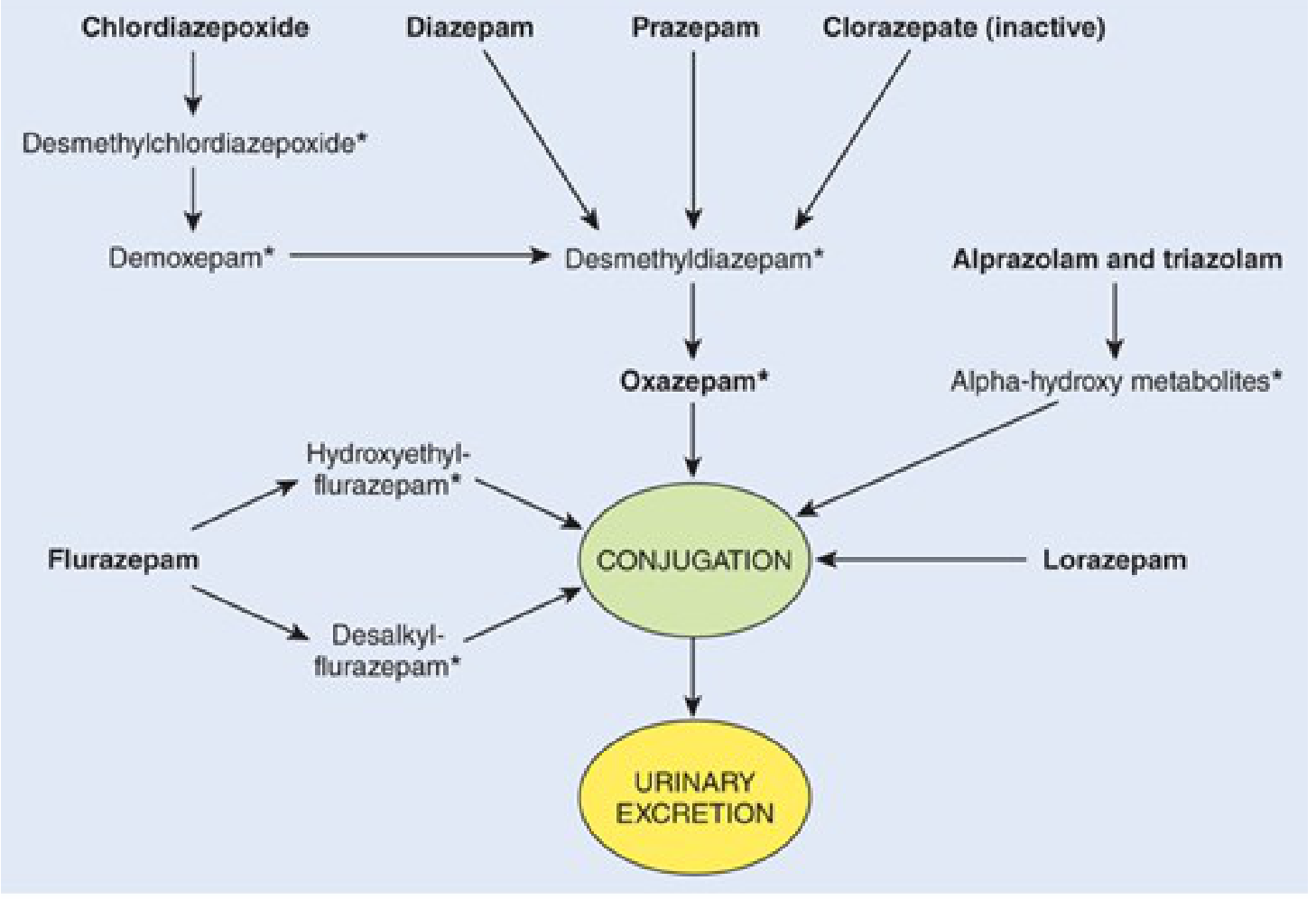
- Desmethyldiazepam (nordazepam): active metabolite of diazepam, chlordiazepoxide, prazepam, and clorazepate. t½ = 40-200 hours - causes cumulative effects
- Alprazolam and triazolam: undergo α-hydroxylation → short-lived active metabolites rapidly conjugated to inactive glucuronides
- Lorazepam, oxazepam, temazepam (LOT drugs): undergo direct glucuronide conjugation only - no active metabolites, not dependent on oxidative hepatic metabolism → safe in elderly and liver disease
Pharmacokinetic table (selected drugs):
| Drug | t½ (parent) | Active metabolite | Clinical duration | Primary use |
|---|---|---|---|---|
| Triazolam | 2-3 h | None significant | Ultra-short | Sleep induction |
| Midazolam | 2-3 h | 1-hydroxy-midazolam | Short | IV sedation, pre-op |
| Lorazepam | 10-20 h | None (LOT) | Intermediate | Anxiety, status epilepticus |
| Oxazepam | 8-12 h | None (LOT) | Intermediate | Anxiety, elderly |
| Temazepam | 8-20 h | None (LOT) | Intermediate | Insomnia |
| Alprazolam | 12-15 h | Minor | Intermediate | Panic, anxiety |
| Diazepam | 20-100 h | Desmethyldiazepam (t½ >40h) | Long | Anxiety, seizures, alcohol withdrawal |
| Chlordiazepoxide | 8-28 h | Multiple active | Long | Alcohol withdrawal |
| Flurazepam | 2-3 h (parent) | Desalkyl-flurazepam (t½ 50-100h) | Long | Insomnia (hangover!) |
| Clonazepam | 20-80 h | None significant | Long | Seizures, panic |
2.4 Pharmacodynamics - Organ-Level Effects
CNS Effects:
-
Sedation and anxiolysis: Calming with reduced anxiety. Also produces disinhibition of punishment-suppressed behavior (important: this is why BZDs can cause paradoxical reactions - euphoria, impaired judgment, loss of self-control, aggression). Anterograde amnesia is dose-dependent.
-
Hypnosis - effects on sleep architecture:
- ↓ Sleep latency (time to fall asleep)
- ↑ Duration of stage 2 NREM sleep
- ↓ REM sleep
- ↓ Slow-wave (stage 3/4 NREM) sleep
- On abrupt cessation: REM rebound - increased REM with vivid dreams, nightmares (especially with short-acting agents like triazolam)
-
Anesthesia: High doses of some BZDs (IV midazolam) → stage III anesthesia, but unlike barbiturates they rarely cause fatal respiratory depression alone
-
Anticonvulsant: Effective against many seizure types. IV diazepam/lorazepam = first-line for status epilepticus. Clonazepam used long-term for seizure disorders.
-
Muscle relaxation: Act on spinal cord interneurons (not neuromuscular junction). Useful for muscle spasms. Diazepam most used for this.
-
Anterograde amnesia: Particularly useful pre-operatively (midazolam, lorazepam)
Cardiovascular: Minimal at therapeutic doses. High IV doses → mild reduction in BP and cardiac output.
Respiratory: At therapeutic doses, little effect on respiration in healthy individuals. Risk of respiratory depression significantly increased in combination with opioids (synergistic depression - FDA black box warning). Patients with sleep apnea are particularly vulnerable.
2.5 Tolerance and Dependence
Types of tolerance:
- Pharmacodynamic tolerance: down-regulation and desensitization of GABA-A receptors. Develops to sedative, hypnotic, and anticonvulsant effects.
- Dispositional tolerance: increased hepatic metabolism over time.
- Note: The lethal dose range is NOT altered by long-term use - the therapeutic index therefore narrows dangerously with tolerance.
- Cross-tolerance exists between all CNS depressants (BZDs, barbiturates, ethanol, meprobamate).
Physical dependence: Occurs with regular use. Features:
| Withdrawal Symptom | Onset | Notes |
|---|---|---|
| Anxiety, agitation, insomnia | 1-5 days after stopping | Earlier with short-acting drugs |
| Tremor, diaphoresis | Autonomic instability | |
| Tachycardia, hypertension | Sympathetic surge | |
| Perceptual distortions | Hyperacusis, photophobia | |
| Seizures | 2-7 days | Life-threatening; more risk with abrupt cessation |
Management: Slow taper (often switch to long-acting BZD such as diazepam or use phenobarbital), then taper over weeks.
2.6 Clinical Uses Summary
| Indication | Drug of choice |
|---|---|
| Generalized anxiety | Diazepam, clonazepam, lorazepam; SSRIs preferred long-term |
| Panic disorder | Alprazolam, clonazepam |
| Social anxiety | Clonazepam |
| Insomnia - sleep onset | Triazolam, temazepam, zolpidem |
| Insomnia - sleep maintenance | Temazepam, eszopiclone |
| Status epilepticus | IV lorazepam (first-line), IV diazepam |
| Chronic epilepsy | Clonazepam (seizures, absence/myoclonic) |
| Alcohol withdrawal | Chlordiazepoxide, diazepam (long-acting preferred) |
| Skeletal muscle spasm | Diazepam |
| Pre-operative sedation/amnesia | Midazolam (IV), lorazepam |
| Acute procedural sedation | IV midazolam |
2.7 Adverse Effects
- Common: sedation, cognitive impairment, anterograde amnesia, psychomotor impairment (driving, reaction time)
- Paradoxical reactions: agitation, aggression, hostility (more common with triazolam at high doses and in patients with pre-existing hostility)
- Fall risk: especially in elderly - use LOT drugs at lowest dose
- Respiratory depression: synergistic with opioids and other CNS depressants
- Dependence and withdrawal
- Rebound insomnia on cessation
- Teratogenicity: Category D (some are category X); crosses placenta; risk of neonatal withdrawal syndrome; associated with cleft palate concerns
- Disinhibition: behavioral disinhibition (euphoria, impaired judgment, loss of self-control)
2.8 Benzodiazepine Antagonist: Flumazenil
- Synthetic BZD derivative
- Competitive antagonist at the BZ binding site
- Reverses sedative effects of BZDs, eszopiclone, zaleplon, and zolpidem
- Does NOT reverse barbiturates, meprobamate, or ethanol
- Short duration of action (t½ ~1h) → resedation can occur; monitoring essential
- Risk of precipitating acute withdrawal in long-term BZD users (seizures)
- IV use in overdose; also used post-procedurally
3. BARBITURATES
3.1 Chemistry
All share the barbituric acid nucleus (pyrimidine ring with two keto groups). Substituents at position 5 (R1 and R2) determine pharmacological activity and duration.
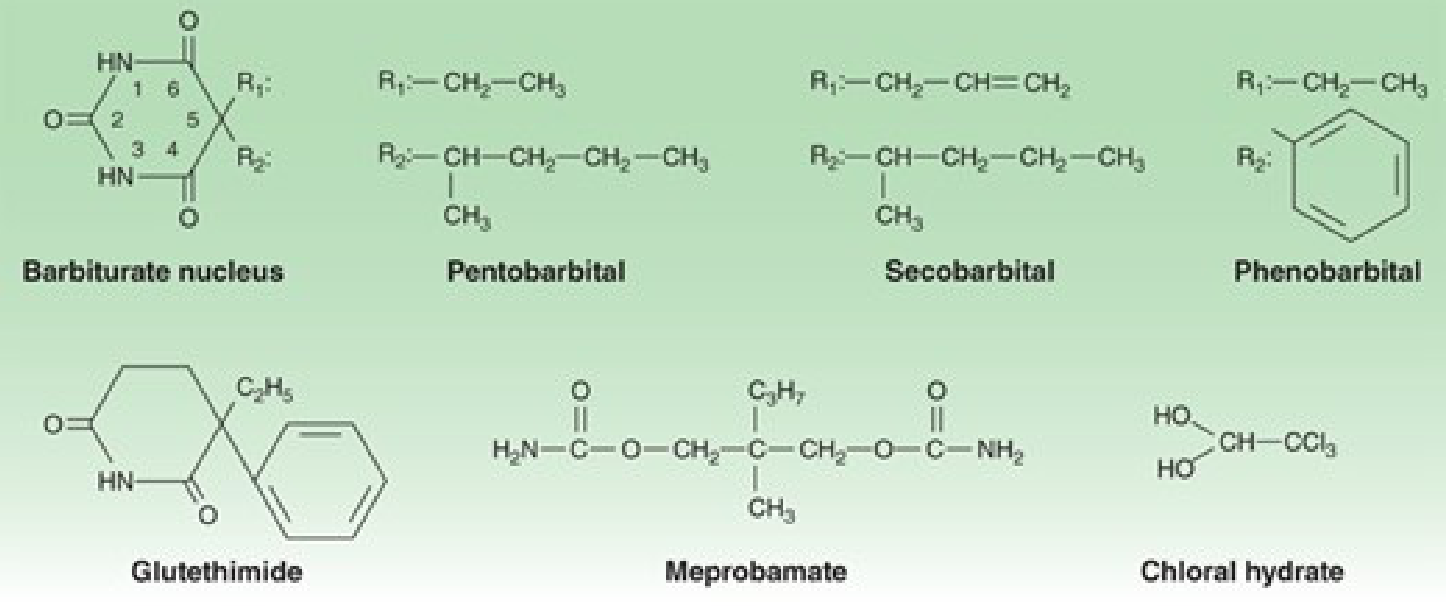
- Addition of a phenyl group (phenobarbital) → anticonvulsant properties
- Thiopental has a sulfur replacing the C2 oxygen → ultra-short action, high lipid solubility
3.2 Mechanism of Action
Act on the GABA-A receptor but at a different site (the barbiturate binding site on the beta subunit):
- Increase the duration of Cl⁻ channel opening (vs. BZDs which increase frequency)
- At higher doses: directly activate the Cl⁻ channel without GABA being present
- This direct activation is the reason for their narrow therapeutic index and lethality in overdose
Additional mechanisms at high doses:
- Inhibit glutamate (AMPA receptor) - excitatory neurotransmission
- Block voltage-gated Na⁺ channels (phenobarbital at therapeutic doses for seizures)
Comparison: BZD vs Barbiturate at GABA-A receptor:
| Benzodiazepine | Barbiturate | |
|---|---|---|
| Binding site | α-γ interface (BZ site) | β subunit |
| Effect on channel | ↑ frequency of opening | ↑ duration of opening |
| GABA required? | Yes (only modulate) | No (at high doses, direct activation) |
| Therapeutic index | Wide | Narrow |
| Reversed by flumazenil? | Yes | No |
3.3 Classification by Duration
| Class | Drug | t½ | Use |
|---|---|---|---|
| Ultra-short | Thiopental, methohexital | Minutes | IV induction of anesthesia |
| Short-intermediate | Pentobarbital, secobarbital | 15-40h | Sedation (rarely); euthanasia preparations |
| Long-acting | Phenobarbital | 80-120h | Epilepsy, febrile seizures, neonatal seizures, alcohol/BZD withdrawal |
3.4 Pharmacokinetics
- Thiopental: highly lipid-soluble, rapid CNS entry, rapid redistribution to muscle/fat → very short action despite long t½
- Phenobarbital: slower onset, long t½, partial renal excretion (can be enhanced by urinary alkalinization)
- All barbiturates are potent inducers of hepatic CYP enzymes (CYP1A2, CYP2C9, CYP3A4) → numerous drug interactions (reduce efficacy of warfarin, OCP, many other drugs)
- Absolutely contraindicated in porphyria (acute intermittent, variegate, hereditary coproporphyria): barbiturates induce ALA synthetase → precipitate porphyric crisis
3.5 Pharmacodynamic Effects
- CNS: same spectrum as BZDs (sedation → hypnosis → anesthesia → coma/death) but with linear dose-response; less margin of safety
- Respiratory depression: dose-dependent depression of medullary respiratory center; the mechanism of death in overdose
- Cardiovascular: myocardial depression, reduced cardiac output at anesthetic doses
- Sleep architecture: marked suppression of REM and slow-wave sleep (greater than BZDs); REM rebound on cessation
- No analgesic effect (can even be hyperalgesic at sub-anesthetic doses)
- Anticonvulsant (phenobarbital): reduces neuronal excitability via Na⁺ channel blockade and GABA enhancement
3.6 Adverse Effects
- Narrow therapeutic index - overdose easily fatal
- CNS depression (hangover, cognitive impairment)
- Enzyme induction - major drug interactions
- Tolerance and severe physical dependence: withdrawal syndrome indistinguishable from BZD withdrawal but potentially more severe; treatment is phenobarbital taper
- Respiratory depression in overdose: treated with supportive care (no specific antidote unlike BZDs)
- Contraindicated in porphyria
- Pregnancy: FDA Category D; neonatal hemorrhage (inhibit vitamin K-dependent clotting factors); neonatal withdrawal
4. Z-DRUGS (NON-BENZODIAZEPINE HYPNOTICS)
Three structurally distinct compounds all act via the same mechanism as BZDs:
| Drug | Chemical class | t½ | Tmax |
|---|---|---|---|
| Zolpidem | Imidazopyridine | 2-3 h | 1.6 h |
| Zaleplon | Pyrazolopyrimidine | ~1 h | ~1 h |
| Eszopiclone | Cyclopyrrolone (S-enantiomer of zopiclone) | ~6 h | ~1 h |
Mechanism: Selective α1-subunit GABA-A agonists → preferential hypnotic effect with less anxiolytic, muscle-relaxant, and anticonvulsant action compared to BZDs. All are antagonized by flumazenil.
Effects on sleep architecture (vs. BZDs):
- Zolpidem: ↓ sleep latency; ↓ REM sleep; minimal effect on slow-wave sleep
- Zaleplon: ↓ sleep latency; minimal effect on total sleep time, NREM, or REM (extremely short t½ allows middle-of-night dosing)
- Eszopiclone: ↑ total sleep time (mainly stage 2 NREM); at low doses minimal sleep pattern changes; ↓ REM only at highest doses
Advantages:
- Less REM suppression than older BZDs
- Less hangover/daytime sedation (especially zaleplon)
- Less development of tolerance for <4 weeks use
- Lower (but not zero) abuse potential
Adverse effects:
- Complex sleep behaviors: sleepwalking, sleep-driving, sleep-eating (zolpidem - FDA black box warning)
- Anterograde amnesia at high doses
- Next-day residual sedation (especially extended-release zolpidem, eszopiclone)
- Rebound insomnia if used at high doses and abruptly stopped
- Behavioral disinhibition (rare)
- Schedule IV controlled substances
5. BUSPIRONE
Class: Azapirone
Mechanism of action:
- Partial agonist at 5-HT1A receptors (serotonin) - acts at both pre- and post-synaptic receptors in the raphe nuclei and limbic system
- Weak antagonist at dopamine D2 receptors
- Does NOT interact with GABA-A receptors at all
- No cross-tolerance with BZDs, barbiturates, or ethanol
Pharmacokinetics:
- Oral absorption rapid but extensive first-pass metabolism (bioavailability ~4%)
- t½ ~2-4 hours but effects are largely due to active metabolite 1-PP
- Metabolized by CYP3A4
Clinical pharmacology:
- Onset of effect: 2-4 weeks (similar to antidepressants) - unsuitable for acute anxiety
- No sedation, no psychomotor impairment, no anticonvulsant effect
- Does not enhance CNS depression of alcohol
- No dependence, no tolerance, no withdrawal syndrome
- No abuse potential (Schedule is uncontrolled)
- Not effective for panic attacks (no acute relief)
Clinical use: First-line or adjunctive for generalized anxiety disorder (GAD), particularly in:
- Patients with history of substance use disorder
- Patients where cognitive/psychomotor impairment must be avoided
- Long-term management where BZD dependence is a concern
Adverse effects: Dizziness, nausea, headache, nervousness (no significant sedation). FDA pregnancy category B (safest of the anxiolytics in this regard).
6. MELATONIN RECEPTOR AGONISTS
Ramelteon and Tasimelteon
Mechanism: Agonists at MT1 and MT2 melatonin receptors in the suprachiasmatic nucleus (SCN) of the hypothalamus (master circadian pacemaker)
- MT1: mediates acute sleepiness (inhibits SCN firing)
- MT2: mediates circadian phase-shifting
- No GABAergic activity whatsoever
Pharmacokinetics:
- Ramelteon: Rapidly absorbed; extensive first-pass metabolism; active metabolite M-II (t½ 2-5h); metabolized by CYP1A2 (major) and CYP2C9
- Drug interaction: Fluvoxamine (CYP1A2 inhibitor) dramatically increases ramelteon levels - contraindicated combination
- Tasimelteon: Metabolized by CYP1A2 and CYP3A4; approved specifically for non-24-hour sleep-wake disorder
Effects on sleep:
- Reduces sleep onset latency
- No effect on sleep architecture (no REM suppression, no slow-wave suppression)
- No rebound insomnia on cessation
- No significant withdrawal symptoms
Advantages: No abuse potential, no dependence, no controlled substance scheduling, safe in elderly, no next-day sedation
Clinical use: Sleep-onset insomnia; circadian rhythm disorders (tasimelteon for totally blind patients with non-24 disorder)
7. OREXIN RECEPTOR ANTAGONISTS (DORAs)
Suvorexant and Lemborexant
Background: Orexins (hypocretins) A and B are neuropeptides synthesized by neurons in the lateral hypothalamus. They promote wakefulness:
- Orexin levels rise during the day and fall at night
- Loss of orexin neurons → narcolepsy (characterized by daytime sleepiness, cataplexy)
- Orexin receptors: OX1R and OX2R (both GPCRs); OX2R has 5-10x higher affinity for orexin B
Mechanism: Suvorexant and lemborexant are dual orexin receptor antagonists (DORAs) at OX1R and OX2R → block wake-promoting signaling → facilitate sleep
Effects on sleep:
- ↓ time to persistent sleep
- ↑ total sleep time
- ↓ REM sleep (unlike melatonin agonists)
- Particularly useful for sleep-maintenance insomnia
Pharmacokinetics:
- Suvorexant: CYP3A4 substrate; t½ ~12h
- Lemborexant: CYP3A4 substrate; t½ ~17-19h
Adverse effects:
- Next-day somnolence (dose-dependent)
- Sleep paralysis, hypnagogic/hypnopompic hallucinations at high doses
- Lower abuse potential than BZDs (Schedule IV but considered less problematic)
Advantage over BZDs: No respiratory depression enhancement; do not suppress slow-wave sleep significantly; novel mechanism effective when traditional hypnotics fail.
8. THE GABA-A RECEPTOR - DETAILED MECHANISM
The GABA-A receptor is a pentameric ligand-gated ion channel (Cys-loop family). The typical structure is 2α + 2β + 1γ subunit combination. When activated, Cl⁻ flows into the cell → membrane hyperpolarization → neuronal inhibition.
Multiple drug binding sites on the same receptor complex:
| Drug / Substance | Binding site | Mechanism | Effect |
|---|---|---|---|
| Benzodiazepines | α-γ interface (BZ site) | Allosteric positive modulator | ↑ frequency of Cl⁻ channel opening |
| Barbiturates | β subunit | Allosteric modulator; direct activation at high dose | ↑ duration of Cl⁻ channel opening |
| Z-drugs (α1-selective) | BZ site (α1 subunit) | α1-selective positive modulator | ↑ frequency (sedation/hypnosis selective) |
| Ethanol | Multiple | GABA facilitation + NMDA inhibition | CNS depression |
| Propofol, etomidate | α2/α3 subunits | Positive allosteric modulation | IV anesthesia |
| Neurosteroids (alphaxalone) | β subunit | Positive modulation | Anesthesia |
| Volatile anesthetics (sevoflurane) | Multiple | Multiple mechanisms | Anesthesia |
| Flumazenil | BZ site | Competitive antagonist | Blocks BZ/Z-drug effects |
| β-Carbolines | BZ site | Inverse agonist (negative modulator) | Anxiety, seizures |
| Picrotoxin | Channel pore | Direct channel blocker | Convulsant |
| Bicuculline | GABA binding site | Competitive GABA antagonist | Convulsant |
9. TREATMENT OF INSOMNIA - DRUG SELECTION
General approach - non-pharmacologic first: sleep hygiene, CBT-I (cognitive behavioral therapy for insomnia)
Sleep-onset insomnia: zaleplon, zolpidem, ramelteon (no next-day sedation)
Sleep-maintenance insomnia: eszopiclone, suvorexant, lemborexant, temazepam
Elderly patients: ramelteon (safest), low-dose doxepin, suvorexant (no dependence risk); avoid long-acting BZDs (flurazepam → hangover)
Patients with anxiety + insomnia: eszopiclone + SSRI; or BZD short-term while titrating SSRI
Avoid long-term BZD use: tolerance to hypnotic effect develops within 1-2 weeks; rebound insomnia on cessation
Drug comparison for insomnia:
| Drug | Sleep onset | Sleep maintenance | REM effect | Hangover | Dependence |
|---|---|---|---|---|---|
| Triazolam | ✓✓ | - | Suppresses (rebound) | Low | Yes |
| Temazepam | ✓ | ✓ | Mild suppression | Low | Yes |
| Flurazepam | ✓ | ✓✓ | Suppresses | High | Yes |
| Zolpidem | ✓✓ | ✓ | Mild suppression | Low | Low |
| Zaleplon | ✓✓✓ | - | Minimal | Minimal | Low |
| Eszopiclone | ✓ | ✓✓ | Minimal (low dose) | Low | Low |
| Ramelteon | ✓ | - | None | None | None |
| Suvorexant | ✓ | ✓✓ | ↓ | Low | Low |
10. TOLERANCE, DEPENDENCE, AND WITHDRAWAL
Mechanism of Tolerance
- Pharmacodynamic tolerance: reduced receptor sensitivity (down-regulation, uncoupling of GABA-A subunits, change in subunit expression - α1→α5 shift reduces BZD efficacy)
- Dispositional tolerance: increased metabolic clearance (hepatic enzyme induction - more pronounced with barbiturates)
- Tolerance is NOT uniform - develops faster to sedative effects than to anxiolytic effects
The Withdrawal Syndrome (General)
All sedative-hypnotics share the same withdrawal syndrome - a CNS hyperexcitability state (opposite of the drug's effects):
Mild-moderate:
- Anxiety, restlessness, insomnia, irritability
- Tremor, diaphoresis, tachycardia, hypertension
- Nausea, vomiting, anorexia
Severe (life-threatening):
- Grand mal seizures - can occur without warning
- Delirium (delirium tremens equivalent) - confusion, hallucinations, autonomic instability
- Potentially fatal if untreated
Timeline (depends on drug half-life):
- Short-acting drugs (triazolam, zaleplon): onset within 24h, peak 1-2 days
- Long-acting drugs (diazepam, phenobarbital): onset 3-7 days, more prolonged but less intense
Cross-dependence: All CNS depressants are cross-tolerant. A long-acting BZD or phenobarbital can substitute for any CNS depressant in withdrawal management.
11. OLDER/MISCELLANEOUS SEDATIVE-HYPNOTICS
Chloral Hydrate
- Rapidly reduced to trichloroethanol (active metabolite) by hepatic alcohol dehydrogenase
- Barbiturate-like effects on GABA-A channel
- Low therapeutic index; narrow margin between hypnotic and toxic dose
- Historical significance: "knockout drops" / "Mickey Finn"
- Now used occasionally for procedural sedation in pediatrics
- Schedule IV
Meprobamate
- Bis-carbamate ester; introduced 1955 as first tranquilizer
- Pharmacology similar to BZDs at lower doses; barbiturate-like at higher doses
- Cannot produce anesthesia (unlike barbiturates)
- Risk: Formation of gastric bezoars in overdose (undissolved tablets)
- High abuse liability; largely replaced by BZDs
- Withdrawn from EU (2012) and Canada (2013)
- Schedule IV; approved only for anxiety in the US
Antihistamines (Diphenhydramine, Doxylamine)
- H1-receptor antagonists with CNS penetration
- OTC availability; significant anticholinergic effects (dry mouth, urinary retention, constipation, confusion in elderly)
- Rapid tolerance development (within days)
- Beers Criteria: Avoid in elderly (risk of anticholinergic toxicity, cognitive impairment, falls)
12. SPECIAL POPULATIONS
| Population | Key Considerations |
|---|---|
| Elderly | Use LOT drugs (lorazepam, oxazepam, temazepam); ramelteon safest hypnotic; avoid long-acting BZDs (flurazepam), barbiturates, antihistamines; high fall risk |
| Liver disease | Use LOT drugs (phase II conjugation only, no active metabolites); avoid diazepam, chlordiazepoxide, flurazepam |
| Renal disease | Most BZDs safe (hepatic metabolism); lorazepam glucuronide may accumulate in ESRD |
| Pregnancy | Most BZDs: FDA Cat D; buspirone Cat B; ramelteon/eszopiclone/zolpidem Cat C; barbiturates Cat D; neonatal withdrawal and neonatal hemorrhage risk with barbiturates |
| Substance use disorder | Buspirone preferred for GAD (no abuse potential); SSRIs/SNRIs for anxiety; avoid BZDs if possible |
| COPD/Sleep apnea | BZDs and barbiturates can worsen hypoventilation; suvorexant, ramelteon safer alternatives |
| Porphyria | Barbiturates absolutely contraindicated |
13. DRUG INTERACTIONS
| Interaction | Mechanism | Clinical Effect |
|---|---|---|
| BZDs + Opioids | Additive CNS/respiratory depression | Potentially fatal (FDA black box warning) |
| Barbiturates + Warfarin/OCP | CYP enzyme induction | Reduced drug effect (contraceptive failure, sub-therapeutic anticoagulation) |
| Diazepam + CYP3A4 inhibitors (ketoconazole, erythromycin) | Reduced BZD metabolism | ↑ BZD levels, excessive sedation |
| Ramelteon + Fluvoxamine | CYP1A2 inhibition | Dramatic ↑ in ramelteon levels - contraindicated |
| Any sedative + Ethanol | Additive CNS depression | Enhanced impairment, respiratory depression |
| BZD + Antidepressants | Pharmacodynamic | Generally additive sedation |
| Buprenorphine (parenteral) + BZDs | Additive respiratory depression | Hazardous; special caution required |
14. QUICK EXAM SUMMARY TABLE
| Drug/Class | Mechanism | Key Feature | Antidote | Abuse |
|---|---|---|---|---|
| BZDs | GABA-A (↑ frequency, BZ site, α1+α2+α3) | Wide TI, LOT drugs for elderly/liver | Flumazenil | Yes |
| Barbiturates | GABA-A (↑ duration, β site; direct at high dose) | Narrow TI, enzyme induction, porphyria CI | None | Yes (severe) |
| Z-drugs | GABA-A (α1 selective) | Hypnotic-selective, complex sleep behaviors | Flumazenil | Low |
| Buspirone | 5-HT1A partial agonist | Slow onset 2-4 wk, no dependence, no sedation | None needed | None |
| Ramelteon | MT1/MT2 melatonin agonist | No dependence, no REM effect, CYP1A2 metabolism | None needed | None |
| Suvorexant/Lemborexant | Dual orexin antagonist (OX1R+OX2R) | Novel mechanism, sleep maintenance | None | Low |
| Flumazenil | BZ site competitive antagonist | Short t½, risk of withdrawal precipitation | - | - |
*Sources: Katzung's Basic and Clinical Pharmacology, 16th Ed. (Ch. 22); Goodman & Gilman's The Pharmacological Basis of Therapeutics, 13th Ed.*These notes cover the full pharmacology of sedative-hypnotic and anxiolytic drugs in exam-ready depth. Here's a quick orientation to the sections:
What's covered:
- Core concepts - definitions, dose-response curve differences (the most fundamental concept)
- Benzodiazepines - chemistry, mechanism (BZ site, frequency of Cl⁻ opening), full PK table with active metabolites, LOT drugs, organ effects on sleep architecture, tolerance/dependence/withdrawal, clinical uses, flumazenil
- Barbiturates - mechanism (duration of Cl⁻ opening, direct activation at high doses), classification by duration, enzyme induction, porphyria contraindication
- Z-drugs - α1 selectivity, individual drug comparisons (zaleplon ultra-short vs. eszopiclone longer), complex sleep behaviors
- Buspirone - 5-HT1A partial agonism, 2-4 week onset, no dependence - contrasted clearly with BZDs
- Melatonin agonists - CYP1A2 and the fluvoxamine interaction
- Orexin antagonists - wake-promoting orexin system, narcolepsy connection, sleep maintenance advantage
- GABA-A receptor - master comparison table of all drugs acting at one receptor
- Tolerance/withdrawal - mechanisms and life-threatening seizure risk
- Special populations and drug interactions - practical clinical points
- Final exam summary table - all classes side-by-side
This is a shared conversation. Sign in to Orris to start your own chat.