
Which can inhibit HMG COA into mevalonate
Reading File
Finding Sources
Searching the Web
HMG-CoA reductase inhibitors statins mevalonate pathway pharmacology
Reading File
Reading File
Loading Image
Statins — Inhibitors of HMG-CoA Reductase
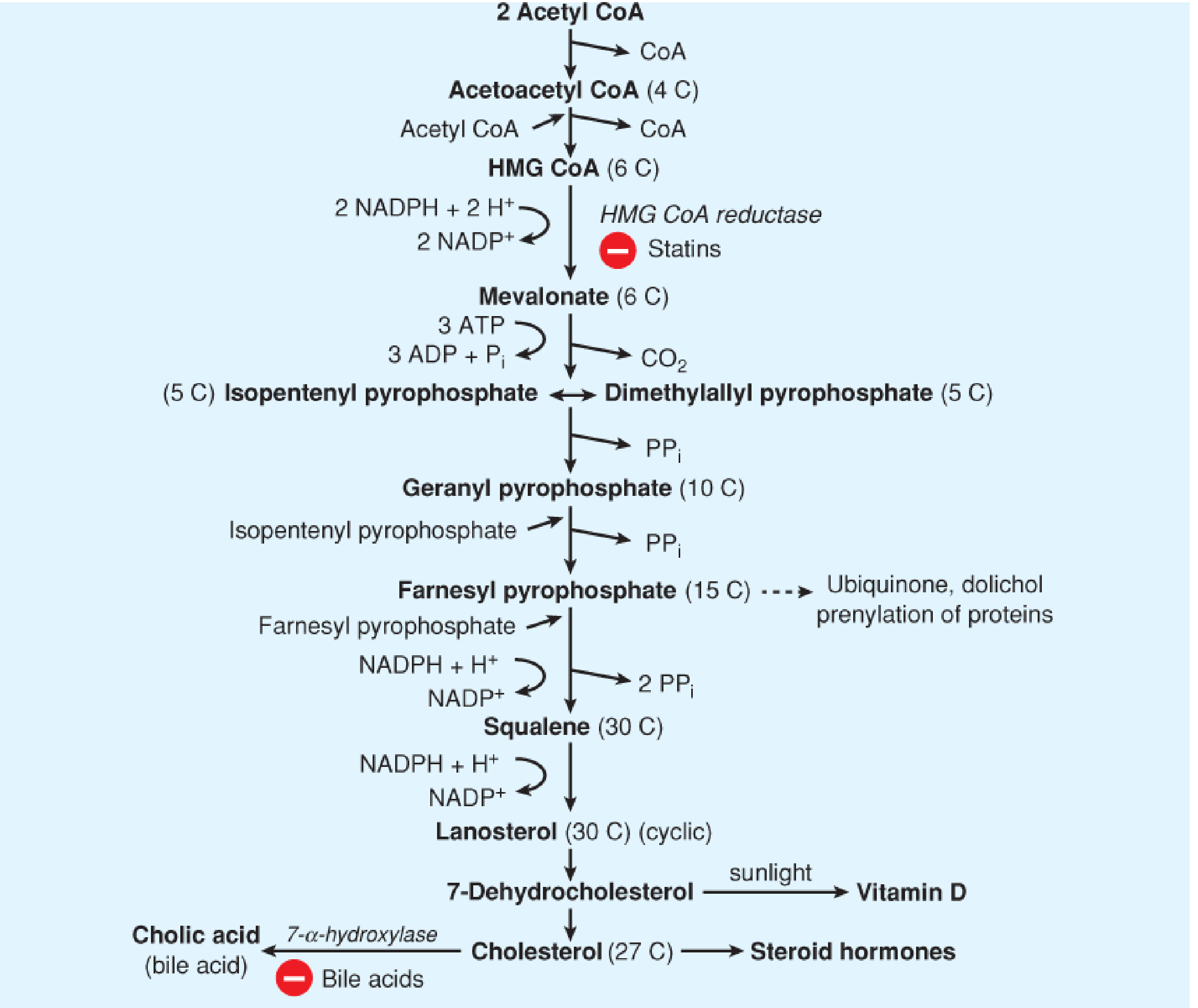
The enzyme HMG-CoA reductase catalyzes the NADPH-dependent reduction of HMG-CoA → mevalonate, which is the rate-limiting step in cholesterol biosynthesis. The drug class that inhibits this step is the statins (HMG-CoA reductase inhibitors).
Mechanism
Statins contain a mevalonic acid-like moiety that competitively inhibits the active site of HMG-CoA reductase, preventing the conversion of HMG-CoA to mevalonate. This:
- Reduces hepatic cholesterol synthesis
- Upregulates LDL receptor expression (via SREBP-2 activation) → increased LDL clearance from blood
- Decreases VLDL production (at higher doses)
Statin Drugs (by potency)
| Drug | Relative Potency |
|---|---|
| Rosuvastatin | Highest |
| Atorvastatin | High |
| Simvastatin | Moderate–High |
| Lovastatin | Moderate |
| Pravastatin | Moderate |
| Fluvastatin | Lower |
| Pitavastatin | Moderate |
Key Points
- The reaction requires 2 NADPH as a cofactor (oxidized to NADP⁺)
- Inhibiting HMG-CoA reductase also reduces downstream isoprenoid products (ubiquinone, dolichol, prenylated proteins) — relevant to statin side effects (e.g., myopathy)
- Statins are competitive inhibitors — they increase apparent Km without changing Vmax
Source: Goodman & Gilman's Pharmacological Basis of Therapeutics; Lippincott's Illustrated Reviews: Biochemistry, 8th ed.
This is a shared conversation. Sign in to Orris to start your own chat.