
Igel vs et tube advantages and disadvantages detailed information
The i-gel is a supraglottic airway device (SAD) while the endotracheal tube (ETT) is a definitive airway. Key differences: i-gel is faster/easier to insert without special equipment, while ETT provides a sealed, protected airway with lower aspiration risk. ETT requires laryngoscopy and more training.
Searching sources...
Reading File
Searching the Web
i-gel vs endotracheal tube advantages disadvantages airway management
Searching PubMed
i-gel supraglottic airway endotracheal intubation comparison
Now let me search the medical library for detailed textbook content on i-gel and ETT comparison, and also get the abstract of the top PubMed result.
Finding Sources
Finding Sources
Reading Article
PMID: 39406569
Now let me read the most relevant textbook sections on i-gel and airway management:
Reading File
Reading File
Finding Sources
Let me read a bit more from the Scott-Brown and Tintinalli textbook sections on supraglottic airways and get one more relevant image:
Reading File
Searching Images
i-gel supraglottic airway device vs endotracheal tube comparison
I now have rich, comprehensive data from multiple authoritative textbooks and recent PubMed evidence. Let me compile the full detailed response.
Loading Image
I now have comprehensive information to write a detailed, well-structured comparison. Here it is:
i-gel vs Endotracheal Tube (ETT): Detailed Comparison
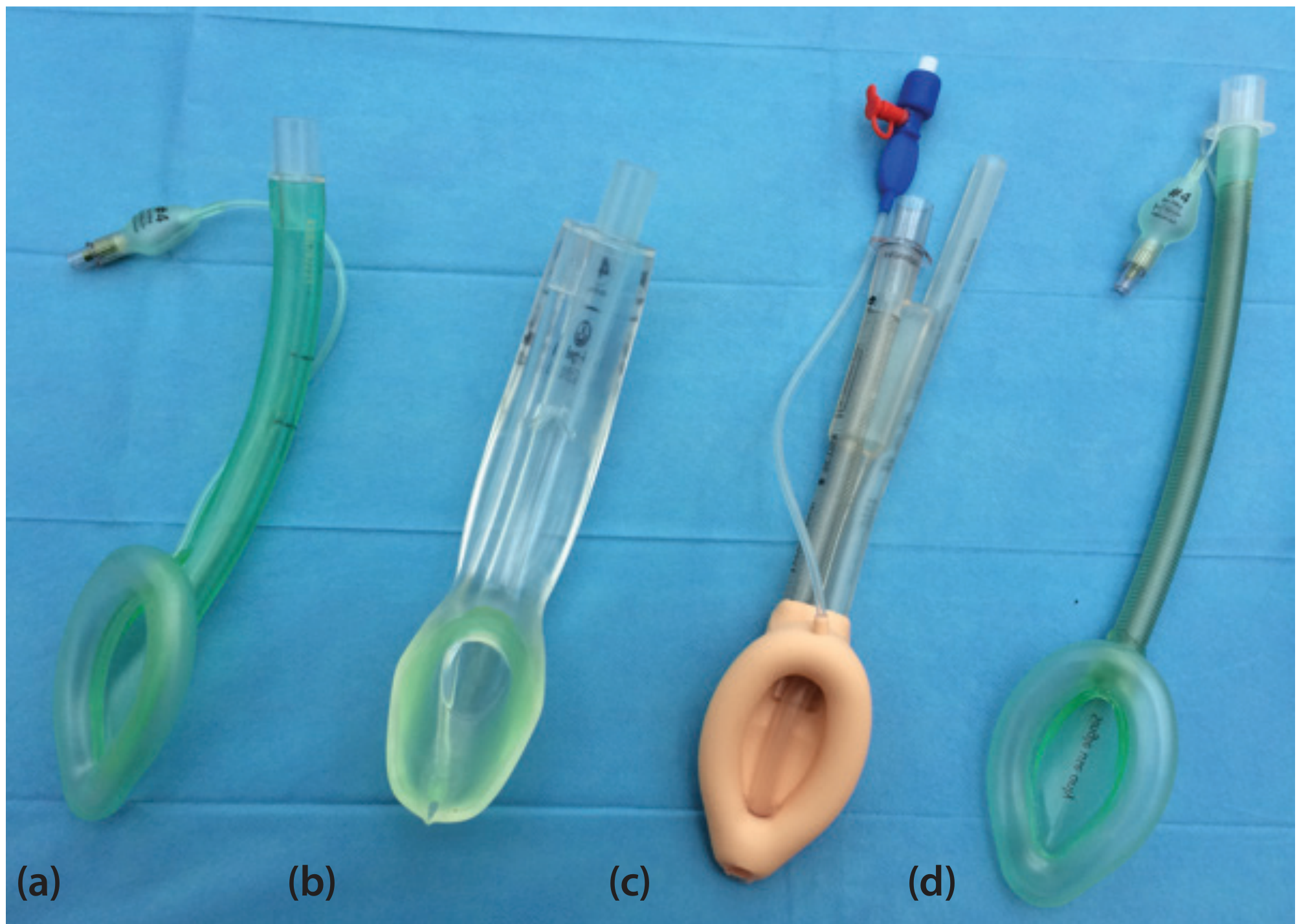
1. Device Overview
i-gel (Second-Generation Supraglottic Airway Device)
- Introduced clinically in 2007
- Composed of a soft, gel-filled, non-inflatable cuff made of thermoplastic elastomer that conforms to the perilaryngeal anatomy
- Includes an integral bite block, a narrow-bore gastric drain tube, and a buccal cavity stabiliser strap (adult sizes)
- Lies above the glottis (supraglottic) - does NOT enter the trachea
- Classified as a second-generation SAD, like the ProSeal LMA and LMA Supreme
Endotracheal Tube (ETT)
- A cuffed tube passed through the glottis directly into the trachea
- High-volume, low-pressure cuff inflated with air to seal the trachea
- Provides a definitive, sealed airway conduit
- Requires direct or video laryngoscopy for placement in most cases
- Considered the gold standard for definitive airway management
2. Advantages and Disadvantages - Head to Head
A. Insertion
| Feature | i-gel | ETT |
|---|---|---|
| Technique | Blind insertion, no laryngoscopy needed | Requires laryngoscopy (direct or video) |
| Speed | Faster - mean insertion time significantly shorter | Slower, more steps involved |
| Training required | Less; can be taught to non-anaesthetists/paramedics | More training needed; skill degradation occurs |
| First-attempt success | High first-attempt success rate | More attempts sometimes needed, especially in difficult airways |
Evidence: i-gel is significantly easier to insert than a tracheal tube (p=0.0056), per the PMC clinical comparison study. The 2024 network meta-analysis in BJA (111 RCTs, 12,045 patients) found i-gel ranked in the top 6 SGAs for first-attempt insertion success. - Miller's Anesthesia, 10th Ed., p. 9992
B. Airway Seal and Ventilation
| Feature | i-gel | ETT |
|---|---|---|
| Seal mechanism | Non-inflatable cuff forms anatomical seal around larynx | Inflated cuff seals trachea directly |
| Oropharyngeal leak pressure (OLP) | Intermediate - between 1st and 2nd gen SADs (~18-25 cmH₂O) | High - sealed tracheal airway |
| Pressure-controlled ventilation | Adequate up to 15-20 cmH₂O | Effective at any required airway pressure |
| High-pressure ventilation | Not suitable for high PIPs | Suitable for high peak inspiratory pressures |
| Gastric inflation risk | Present if seal inadequate | None (sealed tracheal tube) |
Limitation of i-gel: Significant leak differences vs ETT become apparent at PCV pressures >20-25 cmH₂O. i-gel provides a reasonable alternative to ETT for pressure-controlled ventilation only when pressures can be limited to 15-20 cmH₂O. - PMC5656161, Clinical Procedures in Emergency Medicine
C. Aspiration Protection
| Feature | i-gel | ETT |
|---|---|---|
| Protection against aspiration | Partial - gastric drain tube reduces risk vs 1st gen SADs | Full - inflated cuff seals the trachea |
| Regurgitation risk | Remains (lies above glottis, not a sealed airway) | Minimised with properly inflated cuff |
| Use in full stomach/RSI | Not recommended as first choice | Preferred (rapid sequence intubation) |
| Gastric drain tube | Yes - allows suction/decompression, venting | No separate gastric access |
The gastric drain tube of the i-gel does reduce aspiration risk compared to first-generation SADs, but the i-gel cannot yet be regarded as completely safe against regurgitation/aspiration, unlike the ETT. - Scott-Brown's Otorhinolaryngology, 9th Ed., p. 384; Miller's Anesthesia, 10th Ed., p. 9991
D. Haemodynamic Response
| Feature | i-gel | ETT |
|---|---|---|
| Sympathetic stimulation | Minimal - no laryngoscopy, no glottic stimulation | Greater - laryngoscopy + tracheal stimulation |
| Heart rate change | Smaller increase at insertion | Significantly higher HR and MAP post-insertion |
| Blood pressure change | More stable MAP | Marked sympathetic surge (risk in cardiovascular disease) |
| Emergence response | Smoother - less coughing, laryngospasm | More coughing, bucking on tube during emergence |
This makes the i-gel particularly preferred in patients with cardiovascular disease, hypertension, or raised ICP where sympathetic surges are hazardous. - Miller's Anesthesia, 10th Ed., p. 9991; IJC RCT 2024
E. Postoperative Complications
| Complication | i-gel | ETT |
|---|---|---|
| Sore throat (POST) | 6-12% | 22-45% |
| Dysphagia | 4-17.5% | 2-11% |
| Hoarseness/dysphonia | 4-12% | More common |
| Vocal cord injury | Rare | More common (especially short-term) |
| Coughing/laryngospasm | Less frequent | More frequent |
| Nerve injury (recurrent laryngeal) | Rare, pressure-related | Uncommon, but hoarseness more common overall |
The 2024 BJA network meta-analysis of 12,045 patients found i-gel ranked within the top 6 SGAs for postoperative sore throat and bleeding complications. - PMC5656161; Scott-Brown's, 9th Ed.
F. Specific Clinical Settings
Laparoscopic Surgery
- ETT: Traditionally preferred for laparoscopic procedures, especially in obese patients, as it tolerates higher pressures needed with pneumoperitoneum
- i-gel/2nd gen SADs: Growing evidence supports use in laparoscopic cholecystectomy in non-obese patients; lower pain scores, less PONV, smoother emergence. However, somewhat less effective than ETT in the obese. - Miller's Anesthesia, 10th Ed., p. 9991
Difficult Airway
- ETT: The definitive goal, but insertion may be impossible without aids
- i-gel: Can act as a rescue airway and a conduit for fibreoptic intubation; used in cannot-intubate situations. ILMA version facilitates blind or fibreoptic ETT passage through it.
Emergency/Pre-hospital
- i-gel: Faster, no laryngoscopy, usable by paramedics, lower risk of oesophageal intubation - preferred when advanced airway skills may be limited
- ETT: Definitive, but requires trained provider, risk of unrecognised oesophageal intubation
ENT/Head-Neck Surgery (Shared Airway)
- ETT: Preferred - provides secure, protected airway when the airway is "shared" with the surgeon
- i-gel: More restricted use; cannot provide the same protection in mouth, nose, or laryngopharyngeal surgery where blood from above may soil the lungs. - Scott-Brown's Otorhinolaryngology, 9th Ed., p. 384
Cardiorespiratory Resuscitation
- i-gel: Used widely in CPR - allows hands-free ventilation, faster insertion, acceptable ventilation during resuscitation
- ETT: More definitive but takes time and interrupts compressions
G. Oxygenation and ETCO₂ Monitoring
Both devices provide comparable oxygenation (SpO₂) and ventilation (ETCO₂) in routine surgical settings, with no statistically significant differences found in multiple RCTs. - IJCPR RCT 2024; PMC5656161
3. Summary Comparison Table
| Parameter | i-gel | Endotracheal Tube |
|---|---|---|
| Type | Supraglottic (2nd gen SAD) | Definitive (tracheal) |
| Insertion technique | Blind, no laryngoscopy | Requires laryngoscopy |
| Insertion speed | Faster | Slower |
| Training required | Less | More |
| Airway seal | Intermediate | Complete (sealed trachea) |
| Aspiration protection | Partial (gastric drain tube) | Complete (inflated cuff) |
| Use in full stomach | Not recommended | Recommended |
| High-pressure ventilation | Limited (~20 cmH₂O max) | Unlimited |
| Sympathetic response | Minimal | Significant |
| Postoperative sore throat | 6-12% | 22-45% |
| Postoperative hoarseness | Less | More |
| Emergency/rescue use | Excellent | Good (needs training) |
| Conduit for intubation | Yes (fibreoptic/blind) | No |
| Use in obesity | Limited | Preferred |
| Use in laparoscopy | Possible (non-obese, non-full stomach) | Preferred |
| ENT/shared airway surgery | Restricted | Preferred |
| Haemodynamic stability | Better | Less stable at insertion |
| SpO₂/ETCO₂ | Comparable | Comparable |
4. When to Choose Which
Choose i-gel when:
- Elective, short-to-medium procedures in fasted, non-obese patients (ASA I-II)
- Spontaneous or low-pressure controlled ventilation required
- Patient has cardiovascular disease/raised ICP (haemodynamic stability important)
- Difficult airway rescue or as a conduit for fibreoptic intubation
- Pre-hospital/emergency setting by less-trained providers
- Reducing postoperative pharyngolaryngeal morbidity is a priority
Choose ETT when:
- Full stomach / risk of regurgitation (RSI setting)
- Obese patients, difficult airway requiring definitive securing
- High airway pressures needed (ARDS, poor compliance, obese, laparoscopic in obese)
- Prolonged surgery or ICU mechanical ventilation
- Head, neck, ENT, or intraoral surgery (shared airway)
- Prone positioning requiring highly secured airway
- Neurosurgery with raised ICP (where hypoventilation from a leak could be catastrophic)
Sources:
- Miller's Anesthesia, 10th Ed., pp. 9991-9993
- Scott-Brown's Otorhinolaryngology Head & Neck Surgery, 9th Ed., pp. 383-384
- Bailey and Love's Short Practice of Surgery, 28th Ed.
- Kanakaraj et al., Br J Anaesth 2024 - Network meta-analysis of 29 SGAs (PMID: 39406569)
- Clinical Comparison of i-gel and Cuffed ETT for Pressure-Controlled Ventilation, PMC5656161
Types of supraglottic airway
Supraglottic airways (SGAs) are broadly divided into first-generation (classic LMA, flexible LMA - basic ventilation only) and second-generation devices (i-gel, ProSeal, LMA Supreme - with gastric drain tubes and better seal). There are also intubating SADs (ILMA/Fastrach) used as conduits for tracheal intubation.
Searching sources...
Finding Sources
Searching the Web
types of supraglottic airway devices classification first second generation
Finding Sources
Finding Sources
Reading File
Finding Sources
Searching Images
types of laryngeal mask airway supraglottic devices LMA classification
Reading File
Finding Sources
Finding Sources
Reading Web Page
https://pmc.ncbi.nlm.nih.gov/articles/PMC10839323
Reading File
Reading File
I now have comprehensive information. Let me compile the full detailed response on types of supraglottic airways.
Types of Supraglottic Airway Devices (SADs)
Supraglottic airway devices sit above the glottis in the oropharynx/hypopharynx, forming a seal around the laryngeal opening without entering the trachea. The most widely used classification is Cook's Generation System, with Timmermann's 2011 classification as the academic standard. A third generation has also been proposed.
Classification Systems
1. Cook's Generation Classification (Most Widely Used)
| Generation | Definition | Key Examples |
|---|---|---|
| 1st Generation | Simple breathing tube with mask/opening; no specific aspiration protection | Classic LMA, LMA-Unique, Flexible LMA, CobraPLA, Laryngeal Tube |
| 2nd Generation | 1st gen features + gastric drainage channel + improved seal + aspiration protection | i-gel, LMA ProSeal, LMA Supreme, Combitube, King LTS-D, AuraGain, air-Q |
| 3rd Generation | 2nd gen features + dynamic sealing / integrated video | Baska Mask, SaCoVLM, SafeLM VLMS |
2. Brimacombe's Classification
Based on three criteria:
- Presence or absence of a cuff
- Mode of insertion (oral or nasal)
- Anatomic location of the distal portion relative to the hypopharynx
3. Miller's Classification
Research-oriented; classifies by sealing mechanism with subdivision by individual attributes. Useful for device design but less used clinically.
FIRST-GENERATION SADs
These are simple airway tubes with NO specific features to reduce aspiration risk.
1. Classic LMA (cLMA)
- Invented by Dr. Archie Brain (UK), introduced ~1983
- Oval inflatable cuff attached to an airway tube; cuff inflates to seal around glottic opening
- First SGA ever used clinically; transformed anaesthesia practice
- Placement: lubricated cuff advanced blindly along hard palate into oropharynx until resistance felt, then cuff inflated
- OLP (oropharyngeal leak pressure): ~18-20 cmH₂O
- Advantage: Reliable airway maintenance, low trauma, usable by non-anaesthetists, suitable for spontaneous and low-pressure ventilation
- Disadvantage: No gastric drain, no protection from aspiration, unsuitable for high-pressure ventilation
- Sizes: 1 (neonates) to 6 (large adult)
2. LMA-Unique
- Disposable single-use version of the cLMA
- Same design, avoids risk of cross-contamination
- Widely used in routine elective surgery
3. Flexible LMA (Reinforced LMA / Wire-reinforced)
- Armoured, flexible wire-reinforced shaft that can be moved without displacing the cuff
- Resistant to kinking and compression
- Can be positioned away from the surgical field (ENT, dental, head-neck procedures)
- Advantage: Tube can be repositioned; doesn't obstruct surgical access
- Disadvantage: More difficult to insert than cLMA; flexible shaft makes it harder to guide during placement
4. CobraPLA (Perilaryngeal Airway)
- Wide, cobra-shaped distal tip that sits in the oropharynx
- Provides a wider airway channel
- Used in short procedures, less commonly available now
5. Laryngeal Tube (LT) / King LT
- Tube with two cuffs (pharyngeal and oesophageal) that together isolate the larynx
- Popular in pre-hospital/EMS setting
- Variants: LT-D (disposable), King LTS-D (second gen with gastric access)
SECOND-GENERATION SADs
These devices add:
- A gastric drain tube for decompression and suction
- Improved cuff seal (higher OLP, better positive pressure ventilation)
- Integral bite block to prevent occlusion
- Better protection against aspiration compared to first-generation
1. LMA ProSeal (PLMA)
- Two cuffs: anterior cuff (same as cLMA) + additional posterior cuff that pushes mask against glottis from behind
- Integral gastric drain tube for decompression or NGT passage
- OLP: 29-30 cmH₂O (significantly higher than cLMA)
- Advantage: Better seal, suitable for laparoscopy, better aspiration protection, ideal for prone patients
- Disadvantage: Requires introducer or digital technique; heavier, reinflatable cuff needs careful management; not suitable for blind intubation
2. LMA Supreme
- Single-use, pre-curved rigid design (fits anatomical curve of oropharynx)
- Integral gastric drain tube + bite block
- OLP: ~24-28 cmH₂O
- Easier to insert than ProSeal (no introducer needed); good first-attempt success
- Advantage: Quick insertion, disposable, suitable for moderate-pressure ventilation
- Disadvantage: Pre-curved rigid shaft less adaptable; not for prolonged use
3. i-gel (Intersurgical, 2007)
- Non-inflatable thermoplastic elastomer cuff that conforms anatomically to the perilaryngeal structures
- Narrow-bore gastric drain tube + integral bite block + buccal stabiliser strap
- OLP: ~24-27 cmH₂O (intermediate between 1st and 2nd gen SADs)
- No inflation required - no syringe, no pilot balloon
- Advantage: Fastest insertion, no inflation errors, less pharyngeal trauma, low sore throat rate (6-12%), usable by paramedics; acts as conduit for fibreoptic intubation
- Disadvantage: Limited seal at pressures >20 cmH₂O; cuff not adjustable; less effective in obese patients
4. Combitube (Oesophageal-Tracheal Combitube)
- Dual-lumen tube with two cuffs (pharyngeal and oesophageal)
- Can ventilate whether placed in oesophagus (most common) or trachea
- Useful in emergency, pre-hospital settings or when intubation fails
- Advantage: Can ventilate regardless of insertion site; protects from regurgitation
- Disadvantage: Bulky, difficult to use, largely replaced by newer SADs; not suitable for paediatrics
5. King LTS-D (Laryngeal Tube Suction - Disposable)
- Dual-cuff design (similar to laryngeal tube) + gastric drain access
- Popular in EMS/paramedic use
- Good seal pressure; easy insertion
6. AuraGain (Ambu)
- Second-generation SAD with gastric drain tube and reinforced tip
- Can function as intubating conduit (allows ETT passage)
- Increasing popularity due to intubation capability
7. air-Q (Intubating SAD)
- Wide-bore airway shaft designed specifically as an intubating conduit
- No epiglottic bars (common in classic LMA), allowing ETT passage
- Self-pressurizing cuff design (3rd gen feature claimed by some)
- Both disposable (air-Q sp) and reusable versions
- Used in difficult airway algorithms as a bridge to intubation
INTUBATING SADs (Separate Functional Category)
These SADs are designed specifically to facilitate tracheal intubation through them as a primary function.
1. ILMA / LMA Fastrach
- Invented by Dr. Archie Brain (1997); first intubating SGA
- Rigid, curved metal handle; wide airway tube with epiglottic elevating bar
- Allows blind or fibreoptic tracheal intubation through the device
- Specially designed silicone ETT (wire-reinforced) passes through ILMA
- Insertion technique uses "Chandy manoeuvre" (two-step adjustment for optimal position)
- OLP: ~24 cmH₂O
- Advantage: Permits ventilation between attempts; high blind intubation success; suitable for unexpected difficult airway
- Disadvantage: Significant learning curve; rigid design causes high tissue pressure - should be removed promptly after intubation; not reusable for long durations
2. Classic LMA as intubation conduit
- Not designed for intubation but can be used with a fibreoptic scope
- Requires microlaryngeal tube (narrow) due to long/narrow shaft
- Or used with Aintree Intubation Catheter + FIS for ETT exchange
THIRD-GENERATION SADs (Emerging)
These devices add video guidance or dynamic sealing to second-generation designs.
1. Baska Mask
- Novel gastric drain design with a non-inflatable, self-pressurizing cuff (passive inflation by respiratory pressure)
- Very high OLP (~35+ cmH₂O); among highest of any SAD
- Separate drain tubes; integral bite block
- Best-ranking SAD for OLP in the 2024 BJA Network Meta-analysis (12,045 patients)
2. SaCoVLM (Video Laryngeal Mask)
- Second-generation SAD body + integrated reusable videoscope in a dedicated channel
- Three channels: ventilation, gastric drainage, visual/video
- Allows real-time visualisation of the glottis AND fibreoptic intubation under vision
- Reduces blind tube placement risk
3. SafeLM Video Laryngeal Mask System
- Similar design to SaCoVLM with flexible-tipped videoscope
- Enables visually guided intubation through the SAD
Summary Overview Table
| Device | Generation | Cuff Type | Gastric Drain | OLP (cmH₂O) | Intubation Conduit | Key Use |
|---|---|---|---|---|---|---|
| Classic LMA | 1st | Inflatable | No | ~18-20 | Limited | Routine elective surgery |
| Flexible LMA | 1st | Inflatable | No | ~18-20 | No | ENT/head-neck surgery |
| LMA ProSeal | 2nd | Dual inflatable | Yes | ~29-30 | No | Laparoscopy, obese |
| LMA Supreme | 2nd | Inflatable, curved | Yes | ~24-28 | Limited | Quick cases, moderate PPV |
| i-gel | 2nd | Non-inflatable gel | Yes | ~24-27 | Yes (FIS) | Most elective cases, rescue |
| LMA Fastrach (ILMA) | Intubating | Inflatable | No | ~24 | Yes (blind/FIS) | Difficult airway, cannot intubate |
| air-Q | 2nd/3rd | Self-pressurising | Yes | ~25-30 | Yes | Difficult airway intubation |
| Combitube | 2nd | Dual cuff | Via oesophageal | Variable | No | Emergency rescue |
| King LTS-D | 2nd | Dual cuff | Yes | ~30 | No | Pre-hospital/EMS |
| Baska Mask | 3rd | Self-pressurising | Yes | ~35+ | No | High-pressure PPV |
| SaCoVLM | 3rd | Inflatable | Yes | Variable | Yes (video) | Video-guided intubation |
Key Anatomical Principle
All SADs share a common mechanism - the distal tip sits in the proximal oesophagus, the cuff (or body) forms a seal with the arytenoids and perilaryngeal structures, and the airway lumen aligns with the glottis. They work by:
- Maintaining airway patency without laryngoscopy
- Allowing spontaneous or assisted ventilation
- Permitting gas exchange at pressures below the oropharyngeal leak pressure (OLP)
The LMA partially protects the larynx from pharyngeal secretions but NOT from gastric regurgitation - only second-generation devices with gastric channels offer improved (but not complete) aspiration protection. - Morgan & Mikhail's Clinical Anesthesiology, 7th Ed.; Fishman's Pulmonary Diseases; Scott-Brown's Otorhinolaryngology, 9th Ed.
Types of supraglottic airways
I just covered this topic in detail in my previous response! Here's a quick recap, and the full answer is right above.
Types of Supraglottic Airways - Quick Summary
Cook's Generation Classification (most widely used):
1st Generation - Simple airway, no aspiration protection
- Classic LMA, LMA-Unique, Flexible (Reinforced) LMA, CobraPLA, Laryngeal Tube (King LT)
2nd Generation - Adds gastric drain + better seal + bite block
- i-gel, LMA ProSeal, LMA Supreme, Combitube, King LTS-D, AuraGain, air-Q
Intubating SADs - Primary function is tracheal intubation
- LMA Fastrach (ILMA), air-Q, AuraGain
3rd Generation - Adds dynamic seal or integrated video
- Baska Mask, SaCoVLM (Video LMA), SafeLM VLMS
The detailed response just above covers each device with:
- Cuff type and design
- Oropharyngeal leak pressure (OLP)
- Advantages and disadvantages
- Key clinical indications
- A full comparison table
Is there a specific device or aspect you'd like me to go deeper on - such as insertion technique, use in difficult airway, or paediatric SADs?
Types of supraglottic airway
This was covered in full detail two responses ago. Here is a clean, complete summary:
Types of Supraglottic Airway Devices (SADs)
SADs sit above the glottis and do not enter the trachea. Classified by Cook's Generation System:
🔹 First Generation — Simple airway tube, NO aspiration protection
| Device | Key Feature |
|---|---|
| Classic LMA | Original; inflatable oval cuff; inserted blindly |
| LMA-Unique | Disposable single-use version of Classic LMA |
| Flexible LMA | Wire-reinforced shaft; moveable away from surgical field |
| CobraPLA | Wide cobra-shaped distal tip |
| Laryngeal Tube (King LT) | Dual-cuff tube; popular in pre-hospital/EMS |
🔹 Second Generation — Gastric drain tube + better seal + bite block
| Device | Key Feature |
|---|---|
| LMA ProSeal | Dual cuff (anterior + posterior); highest OLP ~29-30 cmH₂O |
| LMA Supreme | Pre-curved rigid design; disposable; easy insertion |
| i-gel | Non-inflatable gel cuff; fastest insertion; gastric drain |
| Combitube | Dual-lumen dual-cuff; oesophageal or tracheal placement |
| King LTS-D | Dual cuff + gastric drain; common in EMS |
| AuraGain | Gastric drain + intubation conduit capability |
| air-Q | Wide-bore shaft; intubating conduit; self-pressurising cuff |
🔹 Intubating SADs — Designed primarily as conduit for tracheal intubation
| Device | Key Feature |
|---|---|
| LMA Fastrach (ILMA) | Rigid metal handle; Chandy manoeuvre; blind or fibreoptic ETT |
| air-Q | Wide-bore; fibreoptic or blind ETT passage |
| AuraGain | Second-gen with intubating capability |
🔹 Third Generation — Dynamic seal OR integrated video
| Device | Key Feature |
|---|---|
| Baska Mask | Self-pressurising cuff; highest OLP ~35+ cmH₂O |
| SaCoVLM | 3 channels: ventilation + gastric drain + integrated videoscope |
| SafeLM VLMS | Flexible-tipped videoscope; visually guided intubation |
Key Principle
All SADs: distal tip in proximal oesophagus → cuff seals around arytenoids/perilaryngeal structures → lumen aligns with glottis
- LMA protects from pharyngeal secretions but NOT gastric regurgitation
- Only 2nd gen devices (with gastric drain) offer improved (not complete) aspiration protection
- Ventilation is effective only when peak inspiratory pressure < oropharyngeal leak pressure (OLP)
Would you like details on a specific device, insertion technique, paediatric sizing, or use in difficult airway management?
This is a shared conversation. Sign in to Orris to start your own chat.