
Describe the role of sialendoscopy in various salivary gland disease in detail for 50 marks with diagram and flow charts from Scott Brown, Cummings, stell and marans, Zakir Hussain, dhingra, hazarika and related articles with recent advances according to rguhs university
sialendoscopy salivary gland
sialendoscopy salivary gland disease RGUHS ENT 50 marks role indications technique
sialendoscopy juvenile recurrent parotitis Sjogren radioiodine
sialendoscopy technique outcome complications
PMID: 37486613
PMID: 37598195
PMID: 36781439
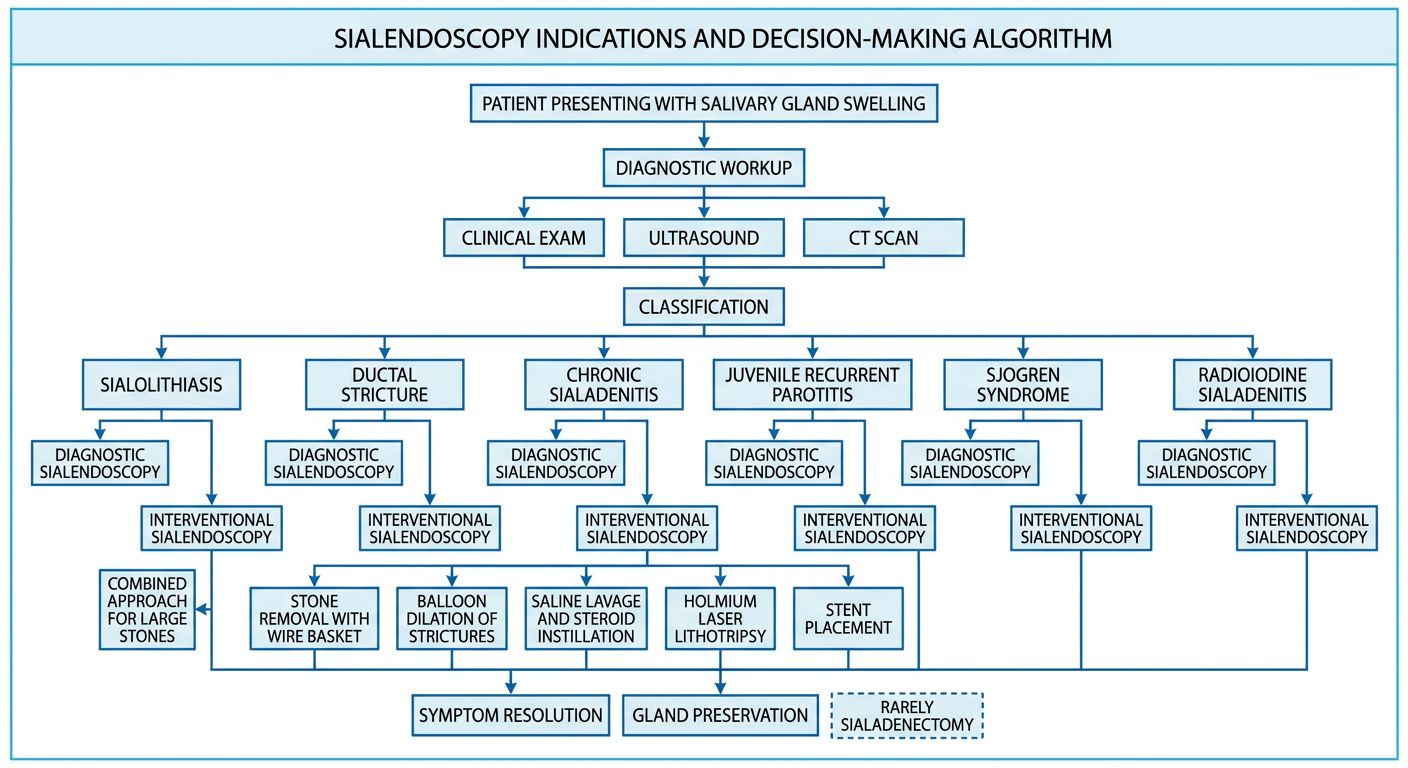
Medical flowchart diagram for sialendoscopy indications and decision-making algorithm. Shows a patient presenting with salivary gland swelling at the top. Branches into diagnostic workup (clinical exam, ultrasound, CT), then classification into sialolithiasis, ductal stricture, chronic sialadenitis, juvenile recurrent parotitis, Sjogren syndrome, radioiodine sialadenitis. Each condition has arrows pointing to: diagnostic sialendoscopy or interventional sialendoscopy. Interventional branch shows sub-branches for stone removal with wire basket, balloon dilation of strictures, saline lavage and steroid instillation, holmium laser lithotripsy, stent placement. Combined approach for large stones. Outcomes: symptom resolution, gland preservation, or rarely sialadenectomy. Clean clinical flowchart style with blue and white color scheme, labeled boxes with arrows
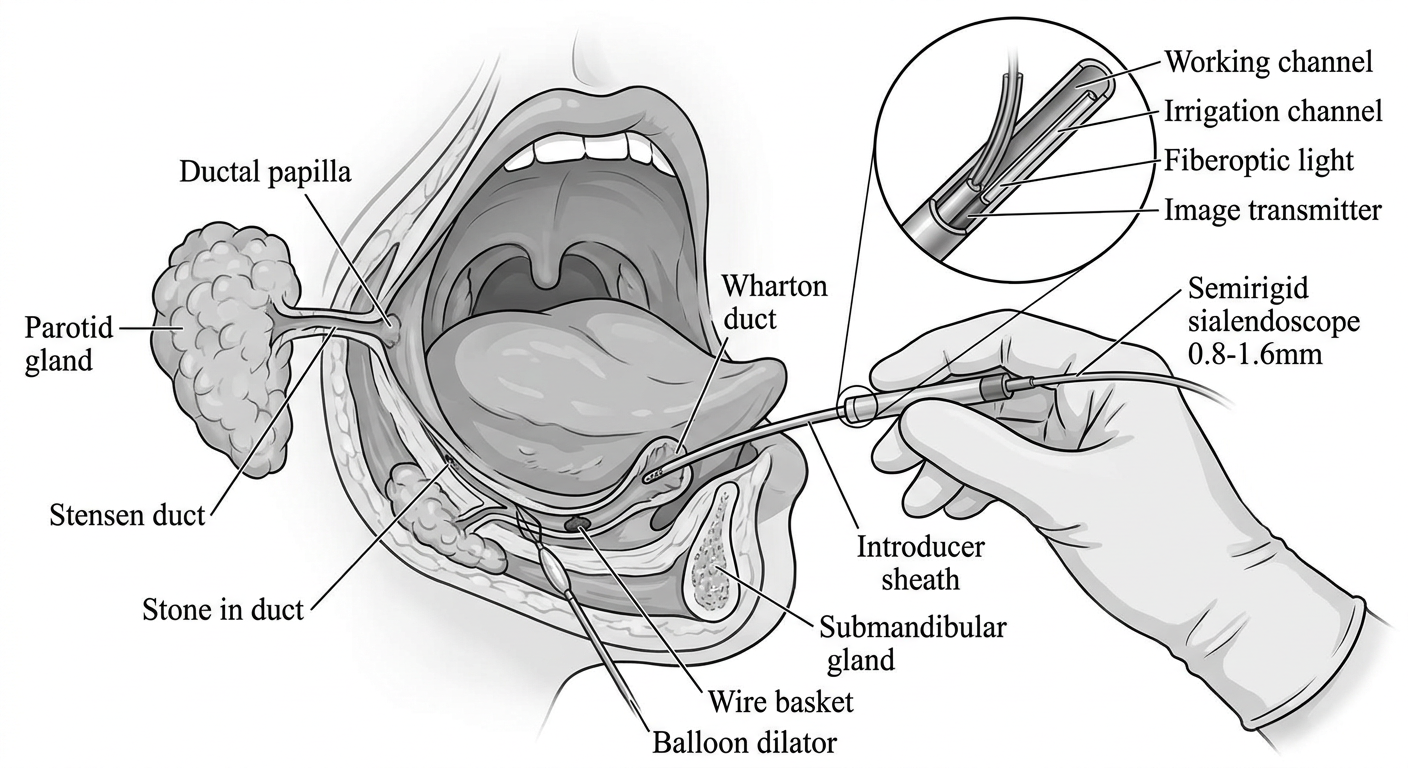
Anatomical diagram of salivary gland ductal system showing sialendoscopy technique. Diagram shows cross-section of mouth floor with Wharton duct (submandibular) and parotid duct (Stensen duct) labeled. Shows the sialendoscope being inserted transoral into the ductal papilla. Labels include: ductal papilla, introducer sheath, semirigid sialendoscope 0.8-1.6mm, working channel, irrigation channel, fiberoptic light, image transmitter, stone in duct, wire basket, balloon dilator, submandibular gland, parotid gland. Medical textbook quality anatomical illustration style, black and white with gray shading
ROLE OF SIALENDOSCOPY IN SALIVARY GLAND DISEASES
(RGUHS ENT - 50 Marks Long Answer)
I. INTRODUCTION
II. ANATOMY RELEVANT TO SIALENDOSCOPY
- Length: 5-6 cm; diameter: 1.5-3 mm
- Opens at the sublingual papilla lateral to the frenulum
- Right-angle bend over posterior edge of mylohyoid is the most common site of stone impaction
- More amenable to sialendoscopy due to larger caliber and dependent drainage
- Length: ~6 cm; diameter: 1-3 mm
- Opens opposite upper 2nd molar
- Tortuosity makes instrumentation more technically demanding
- Prone to stricture formation after manipulation - stenting often required
III. THE SIALENDOSCOPE - INSTRUMENTATION
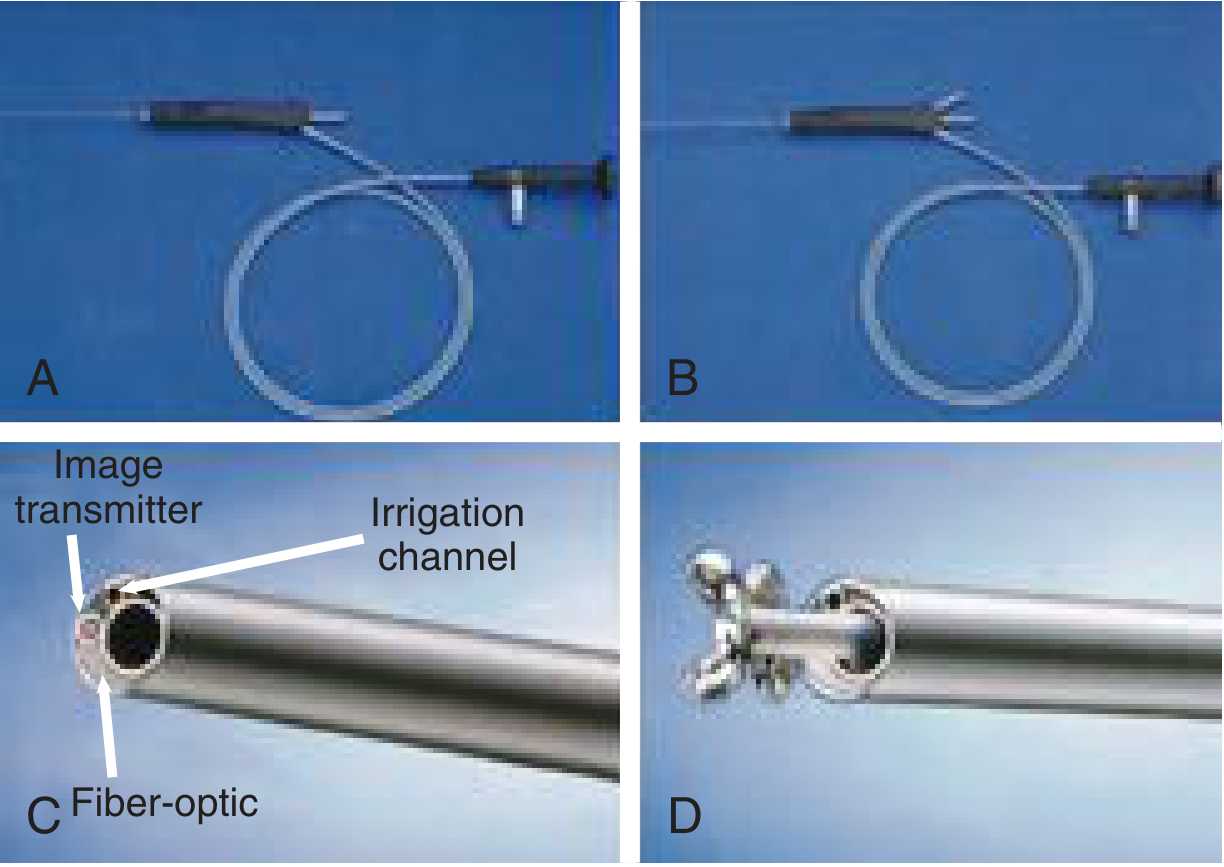
| Feature | Flexible | Semirigid | Rigid |
|---|---|---|---|
| Diameter | 0.8-1.1 mm | 0.8-1.6 mm | 1.1-1.6 mm |
| Navigation | Easy in curves | Moderate | Difficult in bends |
| Working channel | Limited | Yes (>1.1mm) | Yes |
| Stone retrieval | Limited | Yes | Yes |
- 0.8 mm - diagnostic only (light + image + irrigation, no working channel)
- 1.1 mm - working channel allows microdrill, laser fiber, balloon dilator
- 1.6 mm - full instrumentation; occasionally too large for small pediatric patients
- Wire basket - for stone extraction (Dormia-type, 3-4 wire)
- Balloon dilator - for ductal strictures (high-pressure)
- Holmium:YAG laser fiber - for stone fragmentation (lithotripsy)
- Pneumatic/hydraulic lithotripter - intraductal fragmentation
- Microdrill - for large impacted stones
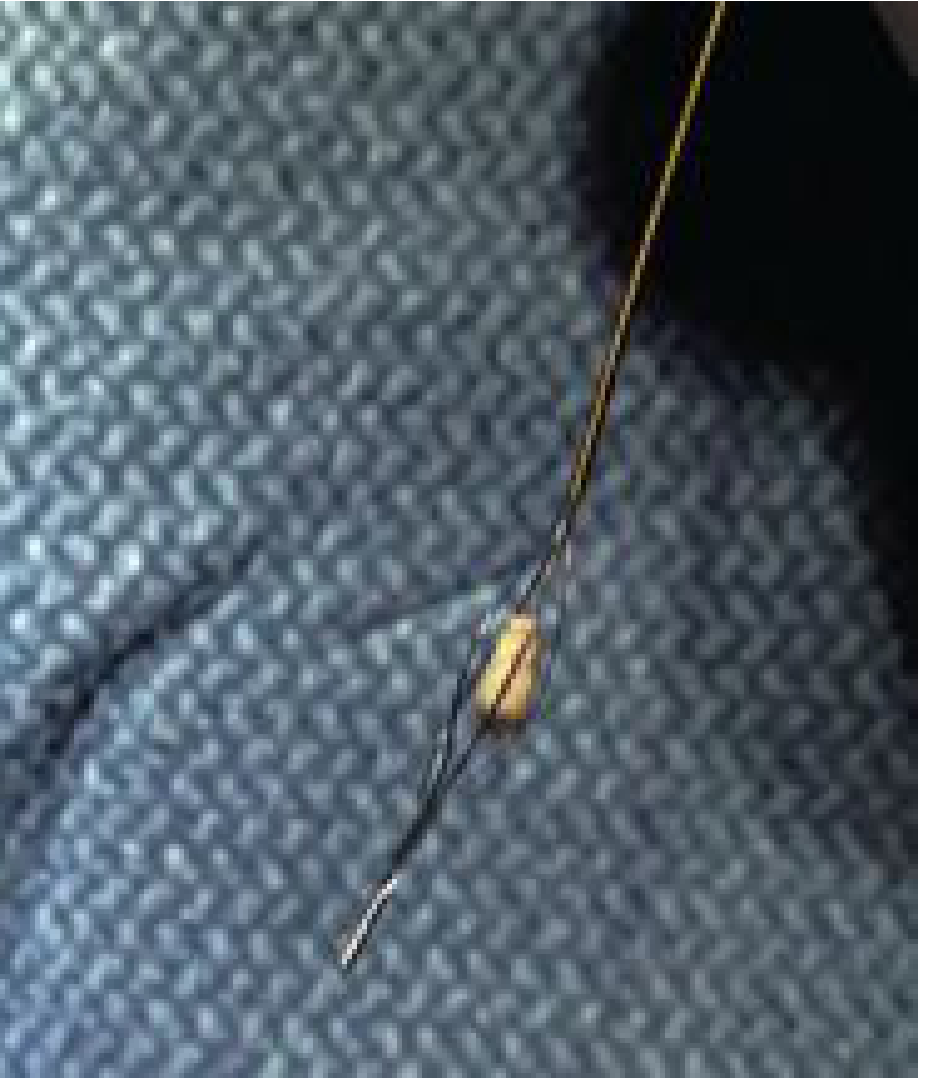
- Salivary stent - for post-dilation stenosis prevention
IV. FLOWCHART: SIALENDOSCOPY DECISION ALGORITHM
V. ANATOMY DIAGRAM - SIALENDOSCOPY TECHNIQUE
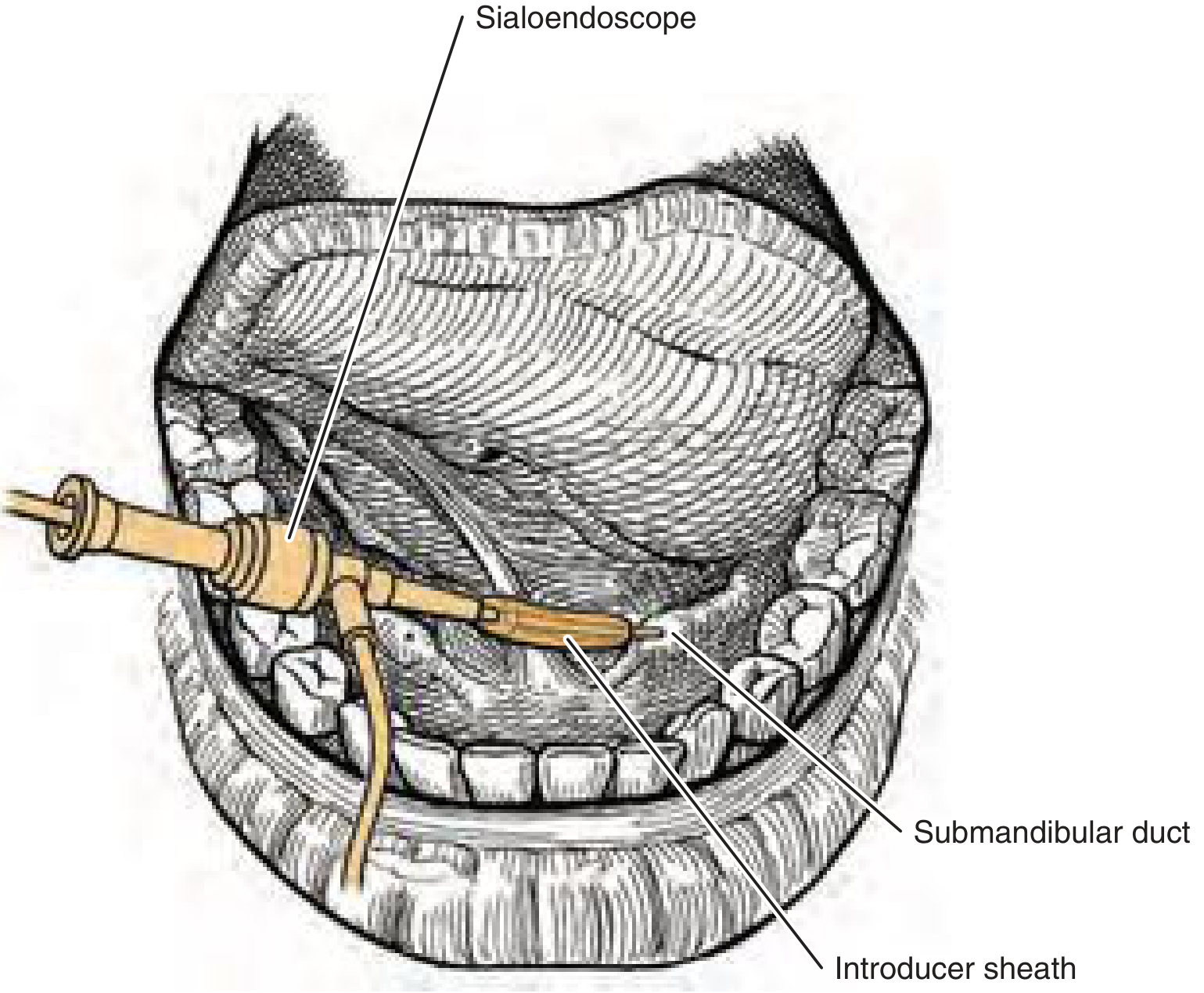
VI. TECHNIQUE OF SIALENDOSCOPY
Patient Preparation
- Anesthesia: General anesthesia is standard; local anesthesia may be used in cooperative adults and children >8 years
- Position: Supine with head slightly extended
- Equipment: Bite block on contralateral side; salivary duct probe set; dilators; sialendoscope; camera system; irrigation saline; light source
Step-by-Step Operative Technique
STEP 1: Identification of ductal papilla
         ↓
STEP 2: Serial dilation using salivary duct probes (Bowman probes 000 → 4)
         ↓
STEP 3: Insertion of introducer sheath
         ↓
STEP 4: Introduction of sialendoscope into dilated orifice
         ↓
STEP 5: Exploration under continuous saline irrigation (maintains lumen,
         flushes debris, allows visualization)
         ↓
STEP 6: Advance to first branching point; explore each branch
         ↓
STEP 7: Identify pathology (stone, stricture, mucus plug, abnormal mucosa)
         ↓
STEP 8: Therapeutic intervention (basket, balloon, laser, lavage)
         ↓
STEP 9: Stent placement if indicated (2-4 weeks) → prevents re-stricture
         ↓
STEP 10: Post-op: sialagogues, hydration, antibiotics if needed
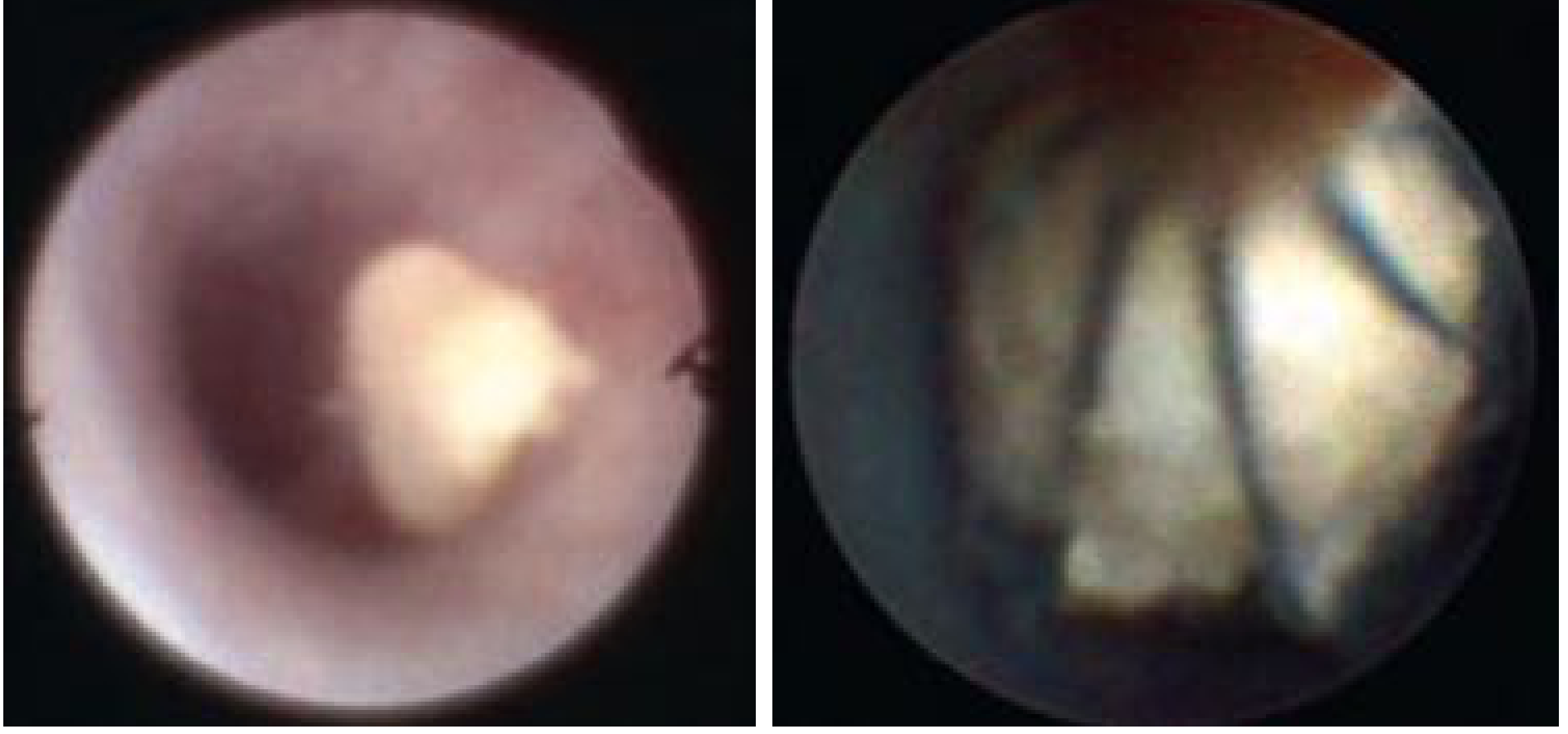
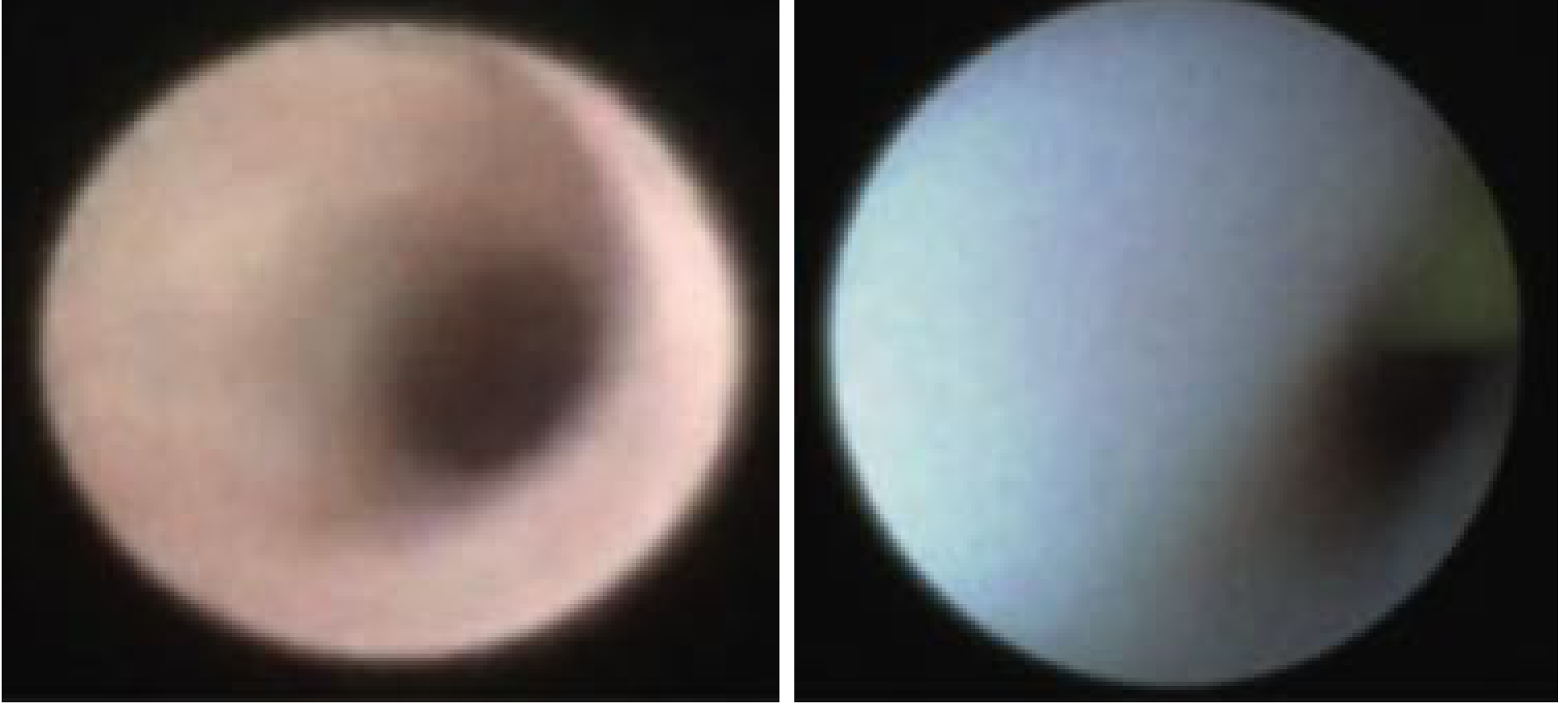
Normal Sialendoscopic Appearance:
- Pink-white ductal wall
- Normal vascular markings (fine branching vessels visible)
- Clear lumen
Abnormal Findings:
- Sialolith: Yellowish-white, hard, fixed or mobile mass
- Stricture: Narrowing, blanched walls, loss of vascular markings
- Chronic sialadenitis: Mucus plugs, whitish debris, dilated ducts
- JRP: Whitish particles (mucoid), punctate sialectasis appearance
VII. INDICATIONS FOR SIALENDOSCOPY
A. DIAGNOSTIC Indications
- Unexplained recurrent salivary gland swelling
- Sialolithiasis (confirmation + localization when imaging inconclusive)
- Ductal anatomy assessment before surgery
- Suspected ductal polyp or foreign body
- Investigation of unexplained xerostomia in autoimmune disease
B. THERAPEUTIC Indications
| Condition | Sialendoscopy Role |
|---|---|
| Sialolithiasis | Stone retrieval, fragmentation |
| Ductal strictures | Balloon dilation, stent placement |
| Chronic sialadenitis | Lavage, steroid instillation |
| Juvenile Recurrent Parotitis (JRP) | Ductal washout, steroid irrigation |
| Sjögren syndrome | Dilation, lavage, steroid instillation |
| Radioiodine-induced sialadenitis | Washout, debris removal, dilation |
| Mucus plugs | Retrieval, lavage |
| Ductal kinks | Balloon dilation |
| Sialodochitis fibrinosa | Fibrin plug retrieval |
Contraindications:
- Acute suppurative sialadenitis (absolute - risk of perforation, sepsis spread)
- Trismus (relative - cannot access papilla)
- Untreated coagulopathy
- Recent ductal surgery with scarring at papilla (relative)
VIII. ROLE IN SPECIFIC DISEASES
A. SIALOLITHIASIS (SALIVARY CALCULI)
Stone confirmed on imaging (US/CT)
        |
        ↓
Determine stone characteristics:
   Size: <4mm / 4-8mm / >8mm
   Location: Distal / Mid / Proximal / Intraglandular
   Mobility: Mobile / Impacted
        |
        ↓
     ┌──┴──┐
  <4mm    4-8mm      >8mm
  Mobile  ±impacted  or impacted
     |         |           |
     ↓         ↓           ↓
Wire basket  Holmium    Combined approach:
retrieval    laser       Endoscopy-guided
alone      fragmentation transoral incision
                |         or parotidectomy
                ↓         approach + stone
          Basket removal  removal
          of fragments
        |
        ↓
Stent placement 2-4 weeks (Parotid especially)
        |
        ↓
Success rate: 89.6% for sialolithiasis
(Beumer et al., Oral Dis 2024; 91 studies, 8218 patients)
- Stones >4-5 mm in the parotid duct are often too large for basket extraction alone and require laser fragmentation first
- Submandibular success rate: 88.3% vs. parotid: 81.2% (Beumer et al., 2024)
- Endoscopic-assisted transoral removal: 86.3%
- Combined approach parotid: 78.2%
B. DUCTAL STRICTURES (STENOSIS)
- Grade I: Mild narrowing, easily negotiated
- Grade II: Moderate - requires balloon dilation
- Grade III: Severe - requires balloon + stent
- Grade IV: Complete obliteration - endoscopic approach may fail
- Balloon dilation using high-pressure balloon dilators passed through the working channel
- Stent placement (polyethylene or silicone stent, 2-6 weeks duration)
- Prevents re-stricture after dilation
- Success rate for stenoses: 56.3% (Beumer et al., 2024 meta-analysis; lower than sialolithiasis due to recurrence)
- Repeated sessions may be required
C. CHRONIC SIALADENITIS (RECURRENT PAROTITIS IN ADULTS / CHRONIC OBSTRUCTIVE SIALADENITIS)
- Ductal dilation
- Saline lavage (continuous irrigation, removes debris)
- Steroid instillation - Triamcinolone acetonide 40 mg diluted in 3-5 mL normal saline - instilled at end of procedure (anti-inflammatory effect on ductal mucosa)
- Stent if stricture present
- Antibiotic irrigation (gentamicin/ampicillin) if infection suspected
D. JUVENILE RECURRENT PAROTITIS (JRP)
- 524 patients, 646 sialendoscopies
- Sialendoscopy was 74.9% effective as primary treatment in prevention of recurrent symptoms
- Mean recurrence rate: 25.1% (95% CI 23.6-26.6%)
- Type of ductal irrigation (saline alone vs. corticosteroids vs. corticosteroids + antibiotics) did not significantly influence recurrence
- Significant relationship between frequency of pre-op attacks and post-op recurrences (p<0.05)
- Saline washout + corticosteroid (triamcinolone/hydrocortisone) instillation
- Most procedures done under general anesthesia in children
- Can be done under local anesthesia in children >8 years who cooperate
- May require repeat procedures (2-3 sessions)
- Virtually all cases resolve spontaneously at puberty - surgical intervention rarely needed
Recurrent parotid swelling in child (age 3-6 years)
           |
           ↓
     Clinical assessment + Ultrasound
    (punctate sialectasis = pathognomonic)
           |
           ↓
  Acute episode? ──Yes──→ Conservative: antibiotics,
           |              sialagogues, hydration, warm compress
           No
           ↓
  Recurrent (≥2 episodes/year)?
           |
          Yes
           ↓
     Sialendoscopy
  (diagnostic + therapeutic)
     - Ductal washout
     - Saline ± steroid irrigation
     - Stent if stricture
           |
           ↓
    74.9% symptom-free
    25.1% may recur
           |
           ↓
    Recurrence? ──Yes──→ Repeat sialendoscopy
           |
           No
           ↓
    Follow-up to puberty
    (spontaneous resolution expected)
E. SJÖGREN SYNDROME
- Whitish ductal walls
- Multiple strictures
- Reduced duct caliber
- Mucus plugs
- Loss of vascular markings
- Serial balloon dilation of strictures
- Saline + steroid lavage (triamcinolone)
- May require repeated sessions (every 6-12 months)
- Combined rheumatological management: hydroxychloroquine, pilocarpine
F. RADIOIODINE-INDUCED SIALADENITIS (RAIS)
- Papilla dilation
- Washout of mucus plugs and debris
- Balloon dilation of strictures
- Steroid instillation (triamcinolone)
- Stent placement
G. SIALODOCHITIS / MUCUS PLUGS / FIBRIN PLUGS
- Endoscopic retrieval using basket or forceps
- Saline lavage under irrigation pressure
- Steroid instillation
IX. COMBINED (HYBRID) APPROACH
Sialendoscopy alone fails or stone >8mm
               |
               ↓
Combined / Hybrid Approach
               |
    ┌──────────┴──────────┐
    ↓                     ↓
Submandibular         Parotid gland
(Transoral approach)  (External approach)
    |                     |
    ↓                     ↓
Sialendoscope          Sialendoscope
localizes stone         localizes stone
    |                     |
    ↓                     ↓
Transoral incision    Partial or complete
over Wharton duct     parotidectomy incision
+ stone removal       with SMAS flap elevation
    |                     |
    ↓                     ↓
Stent placement       Stent placement
2-4 weeks             2-4 weeks
X. PEDIATRIC SIALENDOSCOPY
- General anesthesia in almost all cases below age 8
- Smaller scope sizes required (0.8-1.1 mm preferred)
- JRP is the dominant indication (68.9% - Cummings)
- Sialolithiasis is rarer in children but success rate is high: 95.5% effectiveness, 97.2% safety (Skalias et al., Eur Arch Otorhinolaryngol 2023, PMID 36781439; meta-analysis of 13 studies, 133 pediatric sialolithiasis cases)
- The 1.6 mm scope may be too large for very young patients - 0.8 mm diagnostic scope used first
- JRP resolves spontaneously at puberty in virtually all cases
XI. OUTCOMES AND SUCCESS RATES
- Systematic review + meta-analysis
- 91 studies, 8218 patients, 9043 procedures
- Weighted pooled success rate: 80.9%
- No major complications reported
- Sialadenectomy rate: 0-14%
| Indication/Gland | Success Rate |
|---|---|
| Sialolithiasis (overall) | 89.6% |
| Submandibular gland | 88.3% |
| Parotid gland | 81.2% |
| Endoscopic-assisted transoral (stone) | 86.3% |
| Combined parotid approach | 78.2% |
| Ductal stenoses | 56.3% |
| Juvenile Recurrent Parotitis | 67.0% |
| Radioiodine-Induced Sialadenitis | 45.8% |
XII. COMPLICATIONS
| Complication | Frequency | Management |
|---|---|---|
| Ductal perforation | Most common | Usually self-limiting; rarely needs repair |
| Temporary swelling | Common | Resolves in 24-48h |
| Post-op infection | Rare | Antibiotics |
| Papilla trauma/scarring | Rare | Careful dilation technique; stenting |
| Ductal avulsion | Very rare | Surgical repair |
| Stone migration proximally | Occasional | Repeat sialendoscopy |
| Failure to cannulate | 5-10% | Abandon; try alternative approach |
XIII. FLOWCHART: OVERALL SIALENDOSCOPY PATHWAY
PATIENT WITH SALIVARY GLAND SYMPTOMS
(Recurrent swelling, pain, xerostomia)
               |
               ↓
      CLINICAL ASSESSMENT
   History + Physical Examination
               |
               ↓
         IMAGING
  ┌──────────┼──────────┐
  ↓          ↓          ↓
 USG        HRCT      MR Sialography
(1st line)  (stone    (complex cases,
             sizing)   strictures)
               |
               ↓
    DIAGNOSIS CONFIRMED?
    |                  |
   Yes                 No
    |                  ↓
    |         Diagnostic Sialendoscopy
    |                  |
    |                  ↓
    └──────→ PATHOLOGY IDENTIFIED
               |
    ┌──────────┼──────────┬──────────┐
    ↓          ↓          ↓          ↓
Sialolithiasis Stricture  Chronic    JRP / SS /
               (stenosis) inflam.    RAIS
    |          |          |          |
    ↓          ↓          ↓          ↓
Wire basket  Balloon    Lavage +   Lavage +
± Laser    dilation +  Steroid    Steroid ±
lithotripsy  Stent     instill.    Stent
    |          |          |          |
    ↓          ↓          ↓          ↓
Stone >8mm?  Severe?   Refractory? Recurrence?
    |          |          |          |
   Yes        Yes        Yes        Yes
    ↓          ↓          ↓          ↓
  Combined    Repeat    Gland       Repeat
  approach   sessions  excision    sialendo.
    |
    ↓
GLAND PRESERVED + SYMPTOM RESOLUTION
(Overall success ~80.9%)
XIV. ROLE OF STEROID USE IN SIALENDOSCOPY
- Reduce post-procedural ductal edema
- Prevent re-stricture
- Reduce recurrence in inflammatory conditions (JRP, SS, RAIS)
- Provide anti-inflammatory effect on ductal mucosa
XV. RECENT ADVANCES (2021-2026)
-
Robot-assisted sialolithotomy: Seif-Elnasr et al. (Laryngoscope 2024; PMID 38041581) compared intraoral microscopic vs. robot-assisted approach - robotic technique showed improved precision for submandibular stones.
-
Image-guided sialendoscopy: Gaffuri et al. (J Laryngol Otol 2024; PMID 37807900) described image-guided and sialendoscopy-assisted transoral approach for parotid duct stenosis and megaduct - improved accuracy for complex anatomy.
-
Pneumatic intraductal lithotripsy: Emerging as an alternative to holmium laser for stone fragmentation - lower cost, effective for medium stones, used through working channel.
-
Salivary Gland Society (MSGS) Questionnaire: International consensus tool (Buchholzer et al., Laryngoscope 2022; PMID 34236085) for standardizing patient-reported outcomes in sialendoscopy - enables multicenter outcome comparison.
-
Eosinophilic sialodochitis: Recently characterized entity (Sanchez Barrueco et al., Clin Rev Allergy Immunol, 2026; PMID 42032355) - sialendoscopy shows characteristic findings (fibrinous plugs, eosinophilic infiltration) and plays a therapeutic role.
-
Ultrasound-guided combined approach: Pre-operative ultrasound marking of stone location for combined approach planning - improves precision of external incision.
-
Virtual sialendoscopy: CT/MRI 3D reconstruction allowing pre-procedural ductal mapping in complex cases before actual sialendoscopy (Cummings, Ch. 83).
-
Biodegradable stents: Under investigation for prevention of re-stenosis after balloon dilation - avoid second procedure for stent removal.
XVI. CONTRAINDICATIONS AND LIMITATIONS
- Acute suppurative sialadenitis (perforation risk; bacteremia risk)
- Trismus (cannot access papilla)
- Expensive, specialized equipment
- Long learning curve
- Cannot access intraglandular parenchymal disease
- Limited utility in complete ductal obliteration
- Low success in severe RAIS (irreversible glandular damage)
- Not curative for Sjögren syndrome (only symptomatic relief)
- Requires general anesthesia in children
- Sporadic adoption due to cost in low/middle-income countries
XVII. COMPARISON WITH TRADITIONAL APPROACHES
| Aspect | Sialendoscopy | Gland Excision |
|---|---|---|
| Invasiveness | Minimally invasive | Major surgery |
| Gland preservation | Yes | No |
| Nerve risk | Nil | Facial / lingual / hypoglossal |
| Scar | None | External |
| Anesthesia | GA or LA | GA |
| Recovery | Day-care | 2-5 days hospital |
| Success | 80-90% | 100% (stone removed with gland) |
| Dry mouth | No | Yes (permanent loss of gland) |
| Cost | High (equipment) | Moderate-high |
XVIII. SUMMARY TABLE - ROLE BY DISEASE
| Disease | Sialendoscopy Modality | Key Action | Success |
|---|---|---|---|
| Sialolithiasis | Interventional | Wire basket ± laser | 89.6% |
| Ductal stricture | Interventional | Balloon dilation + stent | 56.3% |
| Chronic sialadenitis | Interventional | Lavage + steroid | Good |
| JRP | Interventional | Washout + steroid | 74.9% |
| Sjögren syndrome | Interventional | Dilation + lavage | Palliative |
| RAIS | Interventional | Washout + dilation | 45.8% |
| Mucus plugs | Interventional | Basket + lavage | High |
| Unexplained swelling | Diagnostic | Visualization | Diagnostic |
XIX. REFERENCES
- Cummings CW, Flint PW, et al. Cummings Otolaryngology Head and Neck Surgery, 7th ed. Elsevier, 2021. Chapters 83, 205.
- Scott-Brown WG. Scott-Brown's Otorhinolaryngology Head & Neck Surgery, 8th ed. CRC Press, 2019. Vol. 2, Ch. 45.
- Lee KJ. KJ Lee's Essential Otolaryngology, 11th ed. McGraw-Hill, 2022. Ch. Sialadenitis/Sialolithiasis.
- Beumer LJ, Vissink A, Gareb B, et al. "Success rate of sialendoscopy. A systematic review and meta-analysis." Oral Dis. 2024 May. [PMID: 37486613] - 91 studies, 8218 patients; pooled success 80.9%.
- Soriano-Martin D, Garcia-Consuegra L, Junquera L, et al. "Sialendoscopy approach in treating juvenile recurrent parotitis: a systematic review." J Otolaryngol Head Neck Surg. 2023 Aug. [PMID: 37598195] - 74.9% success in JRP.
- Skalias A, Garefis K, Markou K, et al. "Effectiveness and safety of sialendoscopy for sialolithiasis in children." Eur Arch Otorhinolaryngol. 2023 Jul. [PMID: 36781439] - 95.5% effectiveness in pediatric sialolithiasis.
- Teng TZJ, Low JYD, Razali AH. "Steroid Use in Sialendoscopy - A Systematic Review." Clin Otolaryngol. 2026 May. [PMID: 41501981].
- Donaldson G, de Paiva Leite S, Hardcastle T. "The Need for Studies on Oral Corticosteroids After Sialendoscopy." Ann Otol Rhinol Laryngol. 2022 Jul. [PMID: 34493105].
- Seif-Elnasr M, Magdy EA, Fung E. "Intraoral Microscopic vs Robot-Assisted Sialolithotomy." Laryngoscope. 2024 May. [PMID: 38041581].
- Gaffuri M, Battilocchi L, Pignataro L. "Image-guided and sialendoscopy-assisted transoral approach for parotid duct stenosis." J Laryngol Otol. 2024 May. [PMID: 37807900].
- Dhingra PL, Dhingra S. Diseases of Ear Nose and Throat, 8th ed. Elsevier; Salivary Gland Diseases chapter.
- Hazarika P. Textbook of ENT and Head & Neck Surgery. Jaypee Brothers; Salivary Glands.
- Sialendoscopy introduced in 1990s; uses semirigid scopes of 0.8-1.6 mm diameter
- Principle: Gland-preserving, minimally invasive, transoral approach
- Most common indication overall: Sialolithiasis; in children: JRP (68.9%)
- Contraindicated in acute suppurative sialadenitis
- Overall success rate: 80.9% (Beumer meta-analysis 2024)
- Best results: sialolithiasis (89.6%); worst: RAIS (45.8%)
- Steroid instillation (triamcinolone 40 mg in 3-5 mL NS) at end of procedure is standard
- Stent for 2-4 weeks post-dilation to prevent re-stricture
- Combined/hybrid approach for stones >8 mm or impacted stones
- JRP: resolves spontaneously at puberty; sialendoscopy provides 74.9% recurrence prevention