
The role of computed tomography in the differential diagnosis of infiltrative syndrome
computed tomography differential diagnosis pulmonary infiltrative syndrome
Harrison's Principles of Internal Medicine, Twenty First Edition
Page 10393
CT imaging patterns lung infiltrates interstitial alveolar infiltration
Diagnosis and Evaluation of Hypersensitivity Pneumonitis (HP)
Page 49
CT chest infiltrative syndrome lung patterns consolidation ground glass
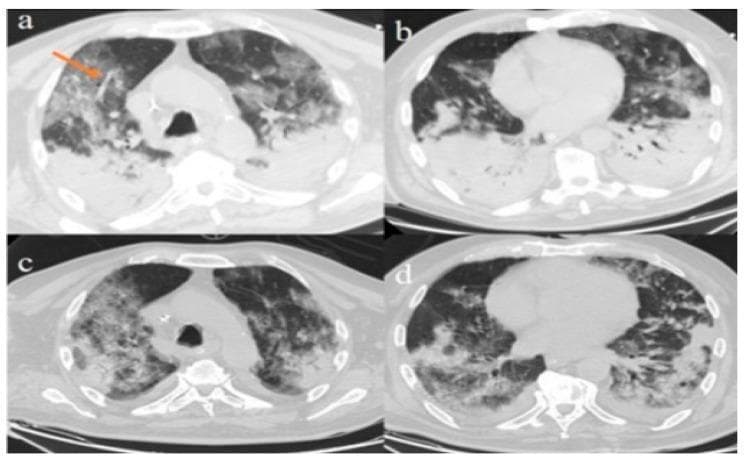
Hugging Face pmc clinical VQA raw
Page 0
CT chest consolidation ground glass opacity differential diagnosis pneumonia lymphoma
high resolution CT HRCT interstitial lung disease pattern recognition UIP NSIP
The Role of Computed Tomography in the Differential Diagnosis of Infiltrative Syndrome
What Is Infiltrative Syndrome?
- Consolidation — complete replacement of alveolar air by material
- Ground-glass opacity (GGO) — hazy increased attenuation that does not obscure underlying vessels
- Interstitial thickening — septal lines, reticular, nodular, or honeycombing patterns
- Mixed alveolo-interstitial patterns
Why CT Is Superior to Plain Radiography
| Feature | Chest X-ray | HRCT |
|---|---|---|
| Detection sensitivity | Low (50–70% for ILD) | Very high (>95%) |
| Pattern characterization | Limited | Excellent (UIP vs. NSIP vs. HP, etc.) |
| Distribution analysis | Poor | Precise (axial, craniocaudal, bronchovascular) |
| Guidance for biopsy | No | Yes |
| Avoidance of biopsy | Rarely | Often possible |
| Associated findings | Limited | Lymphadenopathy, effusion, vascular changes |
Core CT Patterns and Their Differential Diagnoses
1. Consolidation (Airspace Filling)
| Distribution/Morphology | Leading Differentials |
|---|---|
| Lobar/segmental, unilateral | Bacterial pneumonia (Streptococcus, Klebsiella), obstructive pneumonia from endobronchial tumor |
| Bilateral, diffuse | Pulmonary edema (cardiogenic), ARDS, diffuse alveolar hemorrhage, bilateral pneumonia |
| Peripheral, subpleural | Cryptogenic organizing pneumonia (COP), eosinophilic pneumonia, pulmonary infarction |
| Migratory/fleeting | COP, Löffler syndrome (eosinophilic), drug reactions |
| Peribronchovascular | Sarcoidosis, lymphoma, bronchoalveolar carcinoma (now lepidic adenocarcinoma) |
| Mass-like consolidation | Mucoid impaction, lymphoma, adenocarcinoma in situ |
2. Ground-Glass Opacity (GGO)
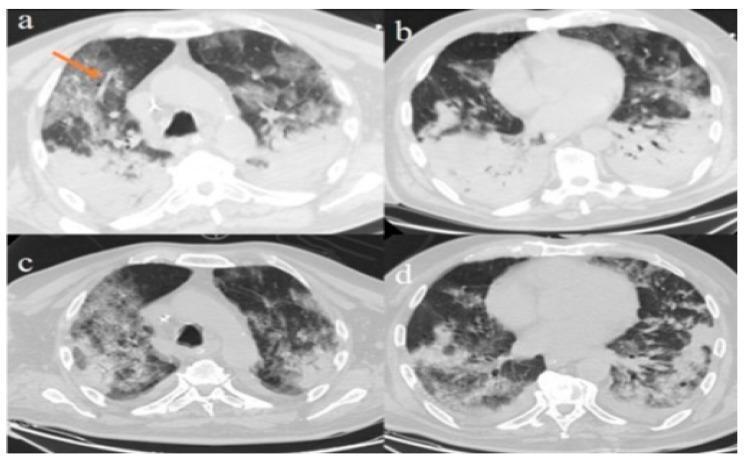
| GGO Pattern | Key Differentials |
|---|---|
| Diffuse bilateral GGO | Cardiogenic pulmonary edema, ARDS, PCP (Pneumocystis), diffuse alveolar hemorrhage, atypical pneumonia |
| Crazy-paving (GGO + septal thickening) | Pulmonary alveolar proteinosis (PAP), ARDS, lipoid pneumonia, PCP, COVID-19, edema |
| Centrilobular nodular GGO | Hypersensitivity pneumonitis (HP), respiratory bronchiolitis-ILD (RB-ILD), atypical infection |
| Peripheral bilateral GGO | Eosinophilic pneumonia, COP, NSIP, drug toxicity |
| Focal GGO with solid component ("part-solid nodule") | Early adenocarcinoma (atypical adenomatous hyperplasia → adenocarcinoma in situ → minimally invasive) |
| GGO with lower-lobe predominance | NSIP, asbestosis, CTD-associated ILD |
3. Interstitial Patterns (Reticular, Nodular, Honeycombing)
A. Usual Interstitial Pneumonia (UIP) Pattern
- CT hallmarks: Bilateral, subpleural, basal-predominant honeycombing ± traction bronchiectasis; minimal GGO
- Diagnosis: Idiopathic Pulmonary Fibrosis (IPF) when clinical context fits; also seen in RA-ILD, asbestosis
- Key rule: A "typical UIP" CT pattern in a patient >60 years with basal honeycombing allows diagnosis of IPF without surgical biopsy (ATS/ERS/JRS/ALAT 2018 guidelines)
B. Nonspecific Interstitial Pneumonia (NSIP) Pattern
- CT hallmarks: Bilateral, symmetrical, lower-lobe GGO + fine reticulation; subpleural sparing; honeycombing rare
- Diagnosis: Idiopathic NSIP, connective tissue diseases (SSc, polymyositis/dermatomyositis), drug toxicity, HP
- Distinguishing from UIP: Subpleural sparing favors NSIP; honeycombing favors UIP
C. Hypersensitivity Pneumonitis (HP) Pattern
- Three-density sign: areas of predominant GGO + normal attenuation + mosaic attenuation (air trapping)
- Mild reticulation and traction bronchiectasis
- Upper/mid-lobe predominance (in chronic fibrotic HP)
D. Sarcoidosis Pattern
- CT hallmarks: Perilymphatic nodules along bronchovascular bundles, fissures, and subpleural regions; upper-lobe predominance; "galaxy sign" (cluster of nodules); bilateral hilar + mediastinal lymphadenopathy
- Distribution is key: strictly perilymphatic distribution strongly favors sarcoidosis over infection or malignancy
E. Lymphangitic Carcinomatosis
- CT hallmarks: Irregular (beaded) interlobular septal thickening; peribronchovascular thickening; preserved lung architecture; unilateral or bilateral; associated hilar/mediastinal nodes
- Contrast with pulmonary edema: edema causes smooth septal thickening (Kerley B lines), bilateral, with pleural effusions
4. Mixed Alveolo-Interstitial Pattern
| Pattern | Differentials |
|---|---|
| Peribronchovascular consolidation + GGO | Sarcoidosis, lymphoma, organizing pneumonia |
| Diffuse GGO + consolidation + crazy-paving | PAP, lipoid pneumonia, PCP, ARDS |
| GGO + reticulation + traction bronchiectasis | Fibrotic HP, fibrotic NSIP, CTD-ILD |
CT Features That Guide the Differential
Distribution Analysis (Crucial)
| Axis | Pattern | Implication |
|---|---|---|
| Axial | Peripheral (subpleural) | UIP/IPF, NSIP, COP, eosinophilic pneumonia, asbestosis |
| Axial | Central/peribronchovascular | Sarcoidosis, lymphoma, edema, PCP |
| Axial | Random | Miliary TB, hematogenous metastases, diffuse alveolar hemorrhage |
| Craniocaudal | Upper-lobe predominance | Sarcoidosis, HP (acute/subacute), silicosis, TB |
| Craniocaudal | Lower-lobe predominance | UIP/IPF, NSIP, asbestosis, aspiration |
| Craniocaudal | Diffuse/bilateral | Edema, ARDS, PCP, diffuse alveolar hemorrhage |
Associated CT Findings That Narrow the Differential
| Associated Finding | Key Differentials |
|---|---|
| Bilateral hilar + mediastinal lymphadenopathy | Sarcoidosis, lymphoma, primary lung cancer |
| Unilateral hilar adenopathy | TB, lymphoma, primary lung cancer |
| Pleural effusion | Cardiogenic edema, malignancy, empyema, lymphangitis |
| Honeycombing | IPF/UIP, chronic HP, asbestosis, end-stage CTD-ILD |
| Traction bronchiectasis | Fibrotic ILD (UIP, NSIP, HP) |
| Air trapping (mosaic attenuation) | HP, constrictive bronchiolitis, asthma, EAA |
| Cysts | LAM, PLCH (Langerhans cell histiocytosis), LIP, Birt-Hogg-Dubé |
| Calcified nodules/lymph nodes | Old TB, histoplasmosis, silicosis, sarcoidosis (eggshell) |
| Pleural plaques | Asbestosis |
| "Halo sign" (GGO surrounding nodule) | Angioinvasive aspergillosis, hemorrhagic metastases, Wegener's |
| "Reversed halo / atoll sign" | COP (highly specific when present) |
CT in Specific Scenarios of Infiltrative Syndrome
Immunocompromised Host
| CT Pattern | Organism/Cause |
|---|---|
| Diffuse bilateral GGO | PCP (Pneumocystis jirovecii), CMV pneumonitis, drug toxicity |
| Halo sign (nodule + GGO rim) | Angioinvasive aspergillosis (early), candidiasis |
| Nodules ± cavitation | Aspergillosis, mucormycosis, nocardia, TB |
| Consolidation + tree-in-bud | Bacterial bronchopneumonia, NTM |
| Crazy-paving | PCP, drug toxicity (e.g., methotrexate) |
Diffuse Alveolar Hemorrhage (DAH)
- Bilateral, diffuse GGO or consolidation, often perihilar
- May evolve to crazy-paving on subsequent CT
- Clinical context (hemoptysis, anemia, renal disease) guides toward vasculitis (GPA, MPA), anti-GBM disease, SLE, or anticoagulation
Drug-Induced Infiltrative Disease
- No single CT pattern; context is key
- Common patterns: bilateral GGO (amiodarone, MTX, nitrofurantoin), organizing pneumonia pattern (amiodarone, bleomycin), NSIP pattern (chemotherapy)
- Amiodarone: unique — high-attenuation consolidation due to iodine content
Diagnostic Algorithm Using CT
Infiltrative pattern on chest X-ray
             ↓
          HRCT
             ↓
 ┌──────────────────────────────────┐
 │  Characterize pattern:          │
 │  Consolidation / GGO /          │
 │  Interstitial / Mixed           │
 └──────────────────────────────────┘
             ↓
  Analyze distribution (axial + craniocaudal)
             ↓
  Check associated findings
  (lymph nodes, effusions, honeycombing, cysts)
             ↓
  Correlate with:
  - Clinical history (onset, occupation, exposures)
  - Immune status
  - Serologies, BAL, PFTs
             ↓
  If pattern is TYPICAL (e.g., UIP for IPF, typical HP):
     → Diagnosis possible WITHOUT biopsy
  If pattern is indeterminate:
     → BAL ± surgical lung biopsy
     → Multidisciplinary discussion (MDD)
Summary Table: CT Pattern → Top Differentials
| CT Pattern | Top 3 Diagnoses |
|---|---|
| Lobar consolidation | Bacterial pneumonia, obstructive pneumonia, adenocarcinoma |
| Bilateral GGO + crazy-paving | PAP, ARDS/COVID-19, PCP |
| Peripheral consolidation + GGO | COP, eosinophilic pneumonia, drug reaction |
| Perilymphatic nodules + bilateral hilar nodes | Sarcoidosis |
| Basal subpleural honeycombing | IPF (UIP pattern) |
| Bilateral GGO + subpleural sparing | NSIP (CTD-ILD) |
| Three-density sign + mosaic | Hypersensitivity pneumonitis |
| Irregular septal thickening (beaded) | Lymphangitic carcinomatosis |
| Halo sign | Angioinvasive aspergillosis |
| Reversed halo / atoll sign | COP |
| Centrilobular nodules + tree-in-bud | Infectious bronchiolitis (TB, NTM, viral) |
| Upper-lobe cysts + nodules | PLCH (Langerhans cell histiocytosis) |
| Diffuse thin-walled cysts (women) | LAM |
Conclusion
- Detecting infiltrates not visible on plain films
- Characterizing the dominant pattern (consolidation, GGO, interstitial, mixed)
- Mapping distribution along axial and craniocaudal axes
- Identifying associated findings (lymphadenopathy, effusions, honeycombing, cysts)
- Establishing specific diagnoses (IPF, HP, sarcoidosis) without biopsy when findings are typical
- Guiding biopsy (site selection, technique) when tissue remains necessary
- Monitoring treatment response and disease progression over time
The role of computed tomography in the differential diagnosis of infiltrative syndrome
computed tomography differential diagnosis pulmonary infiltrative syndrome patterns
Diagnosis and Evaluation of Hypersensitivity Pneumonitis (HP)
Page 57
HRCT interstitial lung disease UIP NSIP hypersensitivity pneumonitis CT findings
Harrison's Principles of Internal Medicine, Twenty First Edition
Page 8070
CT chest infiltrative lung disease consolidation ground glass interstitial pattern
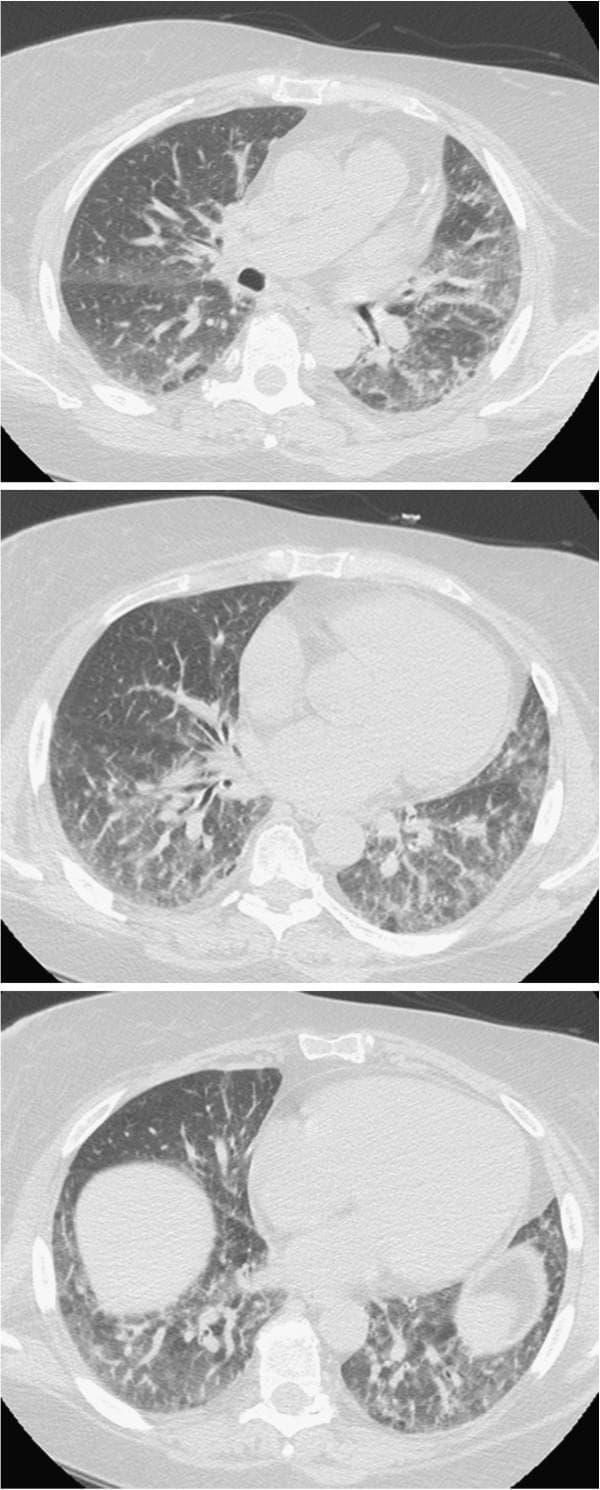
Hugging Face pmc clinical VQA raw
Page 0
The Role of Computed Tomography in the Differential Diagnosis of Infiltrative Syndrome
Definition and Scope
- Consolidation — complete alveolar airspace filling
- Ground-glass opacity (GGO) — hazy increased attenuation, vessels still visible
- Interstitial thickening — reticular, nodular, septal, or honeycombing changes
- Mixed alveolo-interstitial — combinations of the above
Why CT Surpasses Plain Radiography
| Feature | Chest X-ray | HRCT |
|---|---|---|
| Detection of ILD | ~50–70% sensitivity | >95% sensitivity |
| Pattern characterization | Poor | Excellent |
| Distribution analysis | Limited | Precise (axial, craniocaudal, bronchovascular) |
| Associated findings | Incomplete | Lymphadenopathy, effusions, cysts, honeycombing |
| Avoidance of biopsy | Rarely | Often possible |
| Biopsy site guidance | No | Yes |
The Four Core CT Patterns and Their Differentials
1. Consolidation
| Distribution | Leading Differentials |
|---|---|
| Lobar/segmental, unilateral | Bacterial pneumonia (S. pneumoniae, Klebsiella), obstructive pneumonia from endobronchial tumor |
| Bilateral diffuse | Cardiogenic pulmonary edema, ARDS, diffuse alveolar hemorrhage (DAH), bilateral pneumonia |
| Peripheral subpleural | Cryptogenic organizing pneumonia (COP), eosinophilic pneumonia, pulmonary infarction |
| Migratory/fleeting | COP, Löffler syndrome, drug reactions |
| Peribronchovascular | Sarcoidosis, lymphoma, mucinous adenocarcinoma |
| Mass-like consolidation | Mucinous adenocarcinoma (formerly BAC), lymphoma, mucoid impaction |
Key sign: The CT angiogram sign (enhancing vessels within non-enhancing consolidated lung) is characteristic of mucinous adenocarcinoma.Key sign: The reversed halo / atoll sign (GGO surrounded by a rim of consolidation) is highly specific for COP.
2. Ground-Glass Opacity (GGO)
| GGO Pattern | Leading Differentials |
|---|---|
| Diffuse bilateral GGO | Cardiogenic edema, ARDS, PCP (Pneumocystis), DAH, atypical pneumonia (viral) |
| Crazy-paving (GGO + thickened septa) | Pulmonary alveolar proteinosis (PAP), ARDS, COVID-19/SARS-CoV-2, PCP, lipoid pneumonia |
| Centrilobular nodular GGO | Hypersensitivity pneumonitis (HP), RB-ILD, atypical infection |
| Peripheral bilateral GGO | NSIP, eosinophilic pneumonia, COP, drug toxicity |
| Focal GGO with solid component (part-solid nodule) | Early adenocarcinoma spectrum (AIS → MIA → invasive) |
| GGO + lower-lobe reticulation | NSIP, asbestosis, CTD-associated ILD |
3. Interstitial Patterns (Reticular, Nodular, Honeycombing)
A. Usual Interstitial Pneumonia (UIP)
- CT hallmarks: Bilateral, subpleural, basal-predominant honeycombing ± traction bronchiectasis; minimal GGO
- Diagnosis: IPF (when clinical context matches); also RA-ILD, asbestosis, chronic HP (late)
- Critical point: A typical UIP pattern in the appropriate clinical setting allows diagnosis of IPF without surgical lung biopsy (ATS/ERS/JRS/ALAT 2022 guidelines)
B. Nonspecific Interstitial Pneumonia (NSIP)
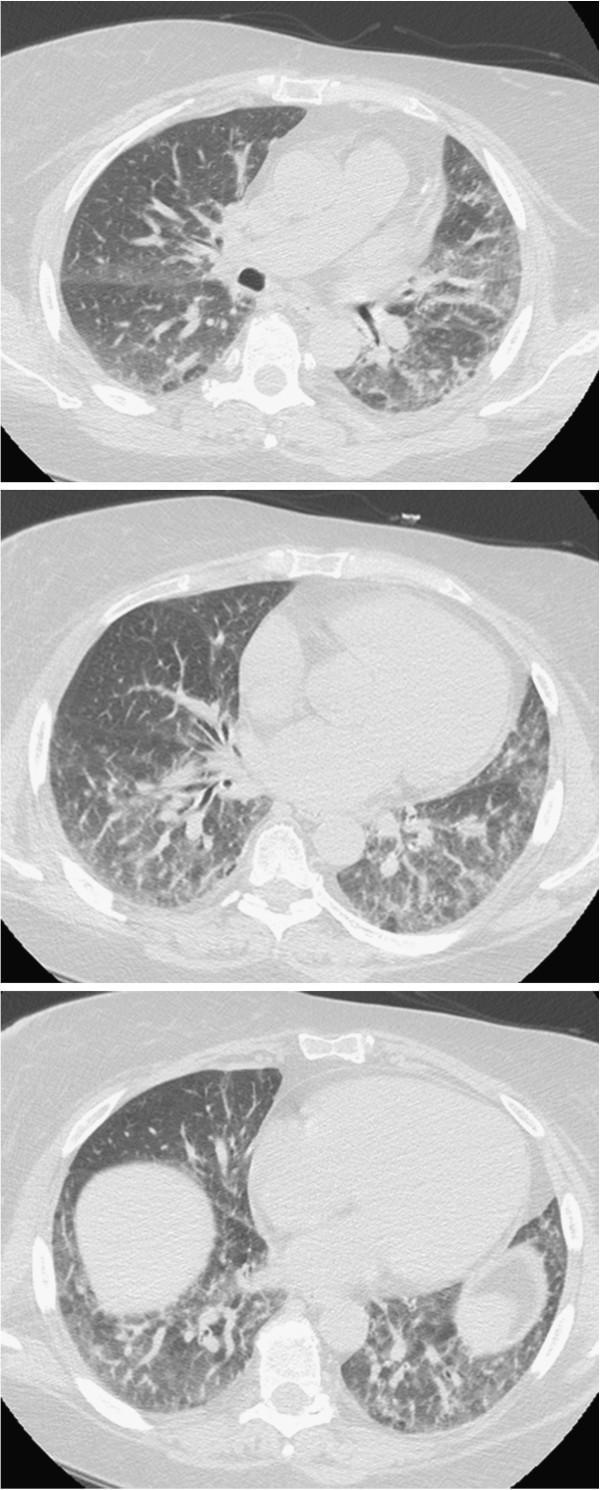
- CT hallmarks: Bilateral symmetrical lower-lobe GGO + fine reticulation; subpleural sparing; bronchovascular bundle thickening; honeycombing rare
- Diagnosis: Idiopathic NSIP, connective tissue diseases (SSc, PM/DM, Sjögren's), drug toxicity, HP
- Key distinction from UIP: Subpleural sparing and predominant GGO favor NSIP; honeycombing favors UIP
C. Hypersensitivity Pneumonitis (HP)
- Three-density sign: Predominant GGO + areas of normal attenuation + mosaic attenuation (air trapping) — highly characteristic
- Mild reticulation and traction bronchiectasis in fibrotic HP
- Upper/mid-lobe predominance in chronic HP; diffuse in acute/subacute
- CT can establish HP diagnosis even when biopsy shows non-specific NSIP-like fibrosis, as documented in multidisciplinary cohort studies (Lynch et al., Silva et al., Salisbury et al.)
D. Sarcoidosis
- CT hallmarks: Perilymphatic nodules along bronchovascular bundles, fissures, and subpleural regions; upper-lobe predominance; "galaxy sign" (nodule cluster); bilateral hilar + mediastinal lymphadenopathy
- Distribution is the key: strictly perilymphatic pattern strongly favors sarcoidosis over infection or malignancy
E. Lymphangitic Carcinomatosis
- CT hallmarks: Irregular (beaded) interlobular septal thickening; peribronchovascular thickening; preserved lung architecture; unilateral or bilateral; hilar/mediastinal nodes
- Contrast with cardiogenic edema: edema = smooth septal thickening + bilateral pleural effusions
4. Mixed Alveolo-Interstitial Pattern
| Pattern | Differentials |
|---|---|
| Peribronchovascular consolidation + GGO | Sarcoidosis, lymphoma, organizing pneumonia |
| Diffuse GGO + consolidation + crazy-paving | PAP, ARDS, PCP, lipoid pneumonia |
| GGO + reticulation + traction bronchiectasis | Fibrotic HP, fibrotic NSIP, CTD-ILD |
| Mixed infiltrative + obstructive (air trapping) | HP, constrictive bronchiolitis, mixed ILD (Chung et al., J Thorac Imaging 2001) |
Distribution Analysis: The Diagnostic Axis
| Axis | Pattern | Primary Implication |
|---|---|---|
| Axial — peripheral/subpleural | UIP/IPF, NSIP, COP, eosinophilic pneumonia, asbestosis | |
| Axial — central/peribronchovascular | Sarcoidosis, lymphoma, cardiogenic edema, PCP | |
| Axial — random | Miliary TB, hematogenous metastases, DAH | |
| Craniocaudal — upper-lobe | Sarcoidosis, HP (acute/subacute), silicosis, TB, PLCH | |
| Craniocaudal — lower-lobe | UIP/IPF, NSIP, asbestosis, aspiration pneumonitis | |
| Craniocaudal — diffuse | Cardiogenic edema, ARDS, PCP, DAH |
Associated CT Findings That Refine the Differential
| Associated Finding | Key Differentials |
|---|---|
| Bilateral hilar + mediastinal lymphadenopathy | Sarcoidosis, lymphoma, primary lung cancer |
| Eggshell calcified lymph nodes | Silicosis, sarcoidosis, treated lymphoma |
| Pleural effusion | Cardiogenic edema, malignancy, empyema, lymphangitis |
| Honeycombing | IPF/UIP, chronic HP, asbestosis, end-stage CTD-ILD |
| Traction bronchiectasis | Fibrotic ILD (UIP, NSIP, HP) — indicates irreversible fibrosis |
| Mosaic attenuation / air trapping | HP, constrictive bronchiolitis, asthma |
| Diffuse thin-walled cysts | LAM (women of childbearing age), LIP, Birt-Hogg-Dubé |
| Upper-lobe cysts + nodules | PLCH (Langerhans cell histiocytosis) |
| Pleural plaques | Asbestosis |
| Halo sign (GGO surrounding nodule) | Angioinvasive aspergillosis, hemorrhagic metastases, GPA |
| Reversed halo / atoll sign | COP (high specificity) |
| High-attenuation consolidation | Amiodarone pulmonary toxicity (iodine accumulation) |
CT in Special Clinical Scenarios
Immunocompromised Host
| CT Pattern | Likely Organism/Cause |
|---|---|
| Diffuse bilateral GGO | PCP, CMV pneumonitis, drug toxicity (MTX, bleomycin) |
| Halo sign + nodules | Angioinvasive aspergillosis (early), candidiasis |
| Nodules ± cavitation | Aspergillosis, mucormycosis, nocardia, TB |
| Tree-in-bud + consolidation | Bacterial bronchopneumonia, NTM |
| Crazy-paving | PCP, drug toxicity |
Diffuse Alveolar Hemorrhage (DAH)
- Bilateral diffuse GGO or consolidation, often perihilar or bat-wing
- May evolve to crazy-paving pattern on serial CT
- Clinical context (hemoptysis, falling Hb, renal involvement) directs toward GPA, MPA, anti-GBM, SLE, or coagulopathy
Drug-Induced Infiltrative Disease
- No single CT pattern; always a diagnosis of exclusion
- Amiodarone: high-attenuation consolidation (unique — due to iodine)
- Bleomycin/busulfan: bilateral GGO + consolidation (NSIP-like or DAD)
- Methotrexate: bilateral GGO, eosinophilic or organizing pneumonia pattern
Diagnostic Algorithm
Infiltrative pattern on chest X-ray or clinical suspicion
                        ↓
              HRCT (thin-section, 1–1.5 mm)
                        ↓
     Characterize dominant pattern:
     Consolidation | GGO | Interstitial | Mixed
                        ↓
         Analyze distribution (axial + craniocaudal)
                        ↓
           Identify associated findings
           (nodes, effusions, honeycombing, cysts)
                        ↓
        Correlate with clinical context:
        Age, sex, onset, occupational/antigen exposure,
        immune status, CTD serology, PFTs, BAL
                        ↓
         ┌─────────────────────────────────┐
         │  Pattern TYPICAL?               │
         │  (UIP→IPF, HP, sarcoidosis)     │
         │  → Diagnosis without biopsy     │
         └─────────────────────────────────┘
                        ↓
         ┌─────────────────────────────────┐
         │  Pattern INDETERMINATE?         │
         │  → BAL + cryobiopsy/SLB         │
         │  → Multidisciplinary discussion │
         └─────────────────────────────────┘
Summary: CT Pattern → Top Differentials
| CT Pattern | Top Diagnoses |
|---|---|
| Lobar consolidation | Bacterial pneumonia, obstructive pneumonia, mucinous adenocarcinoma |
| Bilateral GGO + crazy-paving | PAP, ARDS/COVID-19, PCP |
| Peripheral consolidation + GGO | COP, eosinophilic pneumonia, drug reaction |
| Perilymphatic nodules + bilateral hilar nodes | Sarcoidosis |
| Basal subpleural honeycombing | IPF (UIP pattern) |
| Bilateral GGO + subpleural sparing | NSIP (CTD-ILD) |
| Three-density sign + mosaic attenuation | Hypersensitivity pneumonitis |
| Irregular beaded septal thickening | Lymphangitic carcinomatosis |
| Halo sign | Angioinvasive aspergillosis |
| Reversed halo / atoll sign | COP |
| Centrilobular nodules + tree-in-bud | Infectious bronchiolitis (TB, NTM, viral) |
| Diffuse thin-walled cysts | LAM |
| Upper-lobe cysts + stellate nodules | PLCH |
Key Takeaways
- CT characterizes what plain X-ray cannot — pattern, distribution, and associated findings that are diagnostic in up to 70% of ILD cases without biopsy.
- Distribution is as diagnostically important as the pattern itself — the same GGO in a basal subpleural location suggests NSIP, while upper-lobe centrilobular distribution suggests HP.
- A typical UIP or HP pattern on CT can establish diagnosis without biopsy, per current international guidelines.
- Indeterminate patterns require multidisciplinary integration — CT alone is insufficient; clinical, serological, BAL, and histological data must be synthesized together.
- Serial CT adds value by tracking disease progression, treatment response, and evolution from inflammatory to fibrotic phases — critical for prognosis and therapeutic decision-making.