
Make a note of ephedrine drug
Reading File
Finding Sources
Finding Sources
Reading File
Reading File
Reading File
Reading File
Reading File
Here is a comprehensive note on Ephedrine:
📋 Ephedrine — Drug Note
Basic Classification
| Property | Detail |
|---|---|
| Drug class | Mixed-acting sympathomimetic (adrenergic agonist) |
| Chemical type | Noncatechol phenylisopropylamine |
| Mechanism | Direct α and β receptor agonist + indirect (promotes norepinephrine release from nerve terminals; inhibits NE reuptake) |
| Origin | Derived from the plant Ephedra sinica (Ma huang); used in China for >2000 years; introduced to Western medicine in 1924 |
Mechanism of Action
Ephedrine works via two pathways:
- Direct: Stimulates α₁, β₁, and β₂ adrenergic receptors directly.
- Indirect: Enters presynaptic sympathetic nerve terminals → displaces norepinephrine from synaptic vesicles → released NE activates postsynaptic receptors.
Because it is a noncatecholamine, it is a poor substrate for COMT and MAO, giving it a longer duration of action.
Pharmacokinetics
| Parameter | Detail |
|---|---|
| Route | Effective orally; also IV (anesthesia) |
| Bioavailability | Excellent oral absorption |
| Duration | Hours (much longer than catecholamines) |
| Half-life (t½) | 3–6 hours |
| Metabolism | Poorly metabolized; largely excreted unchanged in urine |
| CNS penetration | Yes — crosses the blood-brain barrier |
Pharmacological Effects
Cardiovascular
- ↑ Heart rate, contractility, cardiac output
- ↑ Systolic and diastolic blood pressure (via vasoconstriction + cardiac stimulation)
- Peripheral resistance variably increased
Respiratory
- Bronchodilation via β₂ receptor activation (less potent and slower than epinephrine/isoproterenol)
CNS
- Mild CNS stimulant: ↑ alertness, ↓ fatigue, prevents sleep
- Raises minimum alveolar concentration (MAC) of anesthetic agents
Urological
- Stimulates α₁ receptors in bladder neck → ↑ urinary outflow resistance
Clinical Uses
| Indication | Notes |
|---|---|
| Anesthesia-induced hypotension | Most common intraoperative use; vasopressor during spinal/neuraxial anesthesia |
| Spinal anesthesia hypotension | Historically preferred in obstetrics; now largely replaced by phenylephrine (faster onset, easier titration, better fetal pH profile) |
| Bronchodilation | Replaced by β₂-selective agonists in asthma |
| Urinary continence | Used in stress incontinence; also causes urinary retention in BPH |
| Nasal decongestant | Historical use |
Dosing (Anesthesia Context)
- Adults: Bolus of 2.5–10 mg IV
- Children: Bolus of 0.1 mg/kg IV
- Subsequent doses may need to be increased to overcome tachyphylaxis
Adverse Effects / Toxicity
| Effect | Notes |
|---|---|
| Hypertension | Especially at high doses |
| Insomnia | CNS stimulant effect |
| Tachyphylaxis | Occurs with repeated dosing due to depletion of NE stores |
| Urinary retention | Particularly in men with BPH |
| Cardiovascular toxicity | Life-threatening cardiac events, stroke, and death in susceptible individuals and with high-dose herbal preparations |
| Drug interactions | Potentiates effects of epinephrine/norepinephrine |
Special Considerations
- Tachyphylaxis: Rapid tolerance develops with repeated doses; dose escalation may be required.
- Herbal preparations (Ma huang/Ephedra): Highly variable ephedrine content → risk of inadvertent overdose. The FDA has banned ephedra-containing dietary supplements.
- Obstetric use: Previously preferred vasopressor in obstetric anesthesia (did not reduce uterine blood flow in animal models), but phenylephrine is now widely preferred.
- Illicit use: Ephedrine and pseudoephedrine are precursors for illicit methamphetamine synthesis → sales regulated by the Combat Methamphetamine Epidemic Act (2005) in the US.
- Sports: Completely banned from all sports competitions since 2003.
- Bitter orange (p-synephrine): Marketed as a "safer" herbal alternative; contains demethylated ephedrine, but appears to have minimal stimulant/cardiotoxic effects at usual doses.
Comparison: Ephedrine vs. Epinephrine
| Feature | Ephedrine | Epinephrine |
|---|---|---|
| Potency | Much less potent | Highly potent |
| Duration | Hours | Minutes |
| Action | Mixed (direct + indirect) | Direct |
| CNS stimulation | Yes | Minimal |
| Tachyphylaxis | Yes | No |
| Route | Oral or IV | IV/IM/SC |
Sources: Goodman & Gilman's Pharmacological Basis of Therapeutics; Morgan & Mikhail's Clinical Anesthesiology, 7e; Katzung's Basic & Clinical Pharmacology, 16e; Lippincott Illustrated Reviews Pharmacology; Rosen's Emergency Medicine.
Give me source and reason onof adv effects , moa infication
Checking Date & Time
Finding Sources
Finding Sources
Reading File
Reading File
Reading File
Here is the expanded note with source citations, mechanistic reasons for each adverse effect, and a clarified MOA:
💊 Ephedrine — MOA, Adverse Effects with Sources & Reasons
Mechanism of Action (MOA) — Detailed
Ephedrine is a mixed-acting sympathomimetic — it works through both direct and indirect pathways:
Indirect Action (Predominant)
"Endocytosis of ephedrine into alpha- and beta-adrenoceptor presynaptic postganglionic nerve terminals displaces norepinephrine from the synaptic vesicles. The displaced norepinephrine is then released to activate the corresponding postsynaptic receptors to cause arterial and venous vasoconstriction and increased myocardial contractility." — Barash Clinical Anesthesia, 9e
Direct Action
"Ephedrine is an agonist at both α and β receptors; in addition, it enhances release of NE from sympathetic neurons and thus is a mixed-acting sympathomimetic." — Goodman & Gilman's Pharmacological Basis of Therapeutics
Summary of Receptor Actions
| Receptor | Location | Effect |
|---|---|---|
| α₁ | Vascular smooth muscle, bladder neck | Vasoconstriction, ↑ BP, urinary resistance |
| β₁ | Heart | ↑ HR, ↑ contractility, ↑ cardiac output |
| β₂ | Bronchial smooth muscle | Bronchodilation |
| CNS | Brain | Stimulation, ↑ alertness, ↑ MAC |
"Ephedrine and pseudoephedrine are not catecholamines and are poor substrates for COMT and MAO. Therefore, these drugs have a long duration of action." — Lippincott Illustrated Reviews: Pharmacology
Adverse Effects — with Source + Mechanistic Reason
1. 🔴 Hypertension
Source: Goodman & Gilman's Pharmacological Basis of Therapeutics
"Untoward effects of ephedrine include hypertension and insomnia."
Reason:
- α₁ agonism → arterial and venous vasoconstriction → ↑ peripheral vascular resistance
- β₁ agonism → ↑ heart rate + ↑ cardiac output
- Both mechanisms together drive blood pressure up. Because ephedrine is a noncatechol, it is not rapidly degraded by COMT/MAO → sustained pressor effect.
2. 🟡 Tachyphylaxis (Rapid Tolerance)
Source: Barash Clinical Anesthesia, 9e
"Tachyphylaxis to ephedrine's hemodynamic effects occurs with repetitive administration of the drug because presynaptic norepinephrine stores are rapidly depleted and ephedrine is then released from synaptic vesicles as a false neurotransmitter."
Reason:
- Ephedrine's indirect mechanism depends on NE stores. With repeated dosing, the vesicular NE is exhausted.
- Once stores are depleted, ephedrine itself is taken up into vesicles and released as a false neurotransmitter — it occupies receptors but produces little to no response.
- This is why epinephrine does NOT show tachyphylaxis — it acts directly on receptors without needing NE displacement.
3. 🟡 Insomnia / CNS Stimulation
Source: Goodman & Gilman's Pharmacological Basis of Therapeutics
"Ephedrine is a potent CNS stimulant."
Lippincott Illustrated Reviews:
"Ephedrine produces a mild stimulation of the CNS. This increases alertness, decreases fatigue, and prevents sleep."
Reason:
- Ephedrine crosses the blood-brain barrier (it is a noncatecholamine with high lipophilicity relative to catecholamines).
- Promotes NE and dopamine release in the CNS → activates arousal pathways → insomnia, hyperactivity, headache.
4. 🟡 Urinary Retention (especially in BPH)
Source: Goodman & Gilman's Pharmacological Basis of Therapeutics
"Stimulation of the α adrenergic receptors of smooth muscle cells in the bladder base may increase the resistance to the outflow of urine... the drug may cause urinary retention, particularly in men with benign prostatic hyperplasia (BPH)."
Reason:
- α₁ receptor activation in the bladder neck/internal urethral sphincter → smooth muscle contraction → increased urethral resistance.
- In BPH, the prostate is already compressing the urethra. Adding α₁ stimulation compounds this obstruction → acute urinary retention.
5. 🔴 Cardiovascular Toxicity / Death (with high doses / herbal preparations)
Source: Goodman & Gilman's Pharmacological Basis of Therapeutics
"Usual or higher-than-recommended doses may cause important adverse effects in susceptible individuals, especially in patients with underlying cardiovascular disease that might be unrecognized. There can be considerable variability in the content of ephedrine in these preparations... leading to significant toxicity and death."
Rosen's Emergency Medicine:
"Ephedra has been associated with strokes and deaths in adolescent users."
Reason:
- Massive sympathomimetic surge → severe hypertension → hemorrhagic stroke
- Intense cardiac stimulation → arrhythmias, myocardial infarction
- Susceptible individuals (undiagnosed hypertension, coronary artery disease) are at highest risk.
6. 🟠 Arrhythmias
Source: Lippincott Illustrated Reviews: Pharmacology (illustrated as a key adverse effect)
Reason:
- β₁ receptor overstimulation in the heart → ↑ automaticity and ↑ conduction velocity in ectopic foci → ventricular tachycardia, atrial arrhythmias.
- Combined with hypertension-induced increase in cardiac wall stress, arrhythmia risk rises.
7. 🟠 Drug Interactions (Cocaine, Reserpine)
Source: Barash Clinical Anesthesia, 9e
"Predictably, drugs that block the ephedrine uptake into adrenergic nerves (e.g., cocaine) and those that deplete norepinephrine reserves (e.g., reserpine) attenuate its cardiovascular effects."
Reason:
- Cocaine blocks the transporter (NET) that ephedrine uses to enter the nerve terminal → ephedrine cannot displace NE → indirect action is blocked.
- Reserpine depletes NE stores → nothing left for ephedrine to release → indirect action is abolished.
MOA Clarification Summary Table
| MOA Component | Mechanism | Consequence |
|---|---|---|
| NE displacement (indirect) | Enters vesicles, displaces NE → NE floods synapse | ↑ BP, ↑ HR, vasoconstriction |
| Direct α₁ agonism | Binds α₁ on vascular smooth muscle | Vasoconstriction → ↑ BP |
| Direct β₁ agonism | Binds β₁ on myocardium | ↑ HR, ↑ contractility |
| Direct β₂ agonism | Binds β₂ on bronchi | Bronchodilation |
| CNS penetration | Crosses BBB (noncatecholamine) | Stimulation, insomnia, ↑ MAC |
| Not metabolized by COMT/MAO | Lacks catechol structure | Prolonged duration of action |
| Tachyphylaxis | NE store depletion + false neurotransmitter | Loss of effect on repeat dosing |
Primary Sources:
- Goodman & Gilman's Pharmacological Basis of Therapeutics (MOA, adverse effects)
- Barash, Cullen & Stoelting's Clinical Anesthesia, 9e (tachyphylaxis mechanism, drug interactions)
- Lippincott Illustrated Reviews: Pharmacology (mixed-action classification, CNS effects)
- Rosen's Emergency Medicine (herbal ephedra toxicity)
- Morgan & Mikhail's Clinical Anesthesiology, 7e (clinical use, obstetric context)
Can you make pdf of this whatever you have written
Reading File
Running Command
ls -la /home/daytona/workspace/
Running Command
mkdir -p /home/daytona/workspace/ephedrine-notes
Writing File
~/ephedrine-notes/generate_pdf.py
from reportlab.lib.pagesizes import A4
from reportlab.lib import colors
from reportlab.lib.styles import getSampleStyleSheet, ParagraphStyle
from reportlab.lib.units import cm
from reportlab.platypus import (
    SimpleDocTemplate, Paragraph, Spacer, Table, TableStyle,
    HRFlowable, KeepTogether
)
from reportlab.lib.enums import TA_LEFT, TA_CENTER, TA_JUSTIFY

OUTPUT = "/home/daytona/workspace/ephedrine-notes/Ephedrine_Drug_Note.pdf"

doc = SimpleDocTemplate(
    OUTPUT,
    pagesize=A4,
    leftMargin=2*cm, rightMargin=2*cm,
    topMargin=2*cm, bottomMargin=2*cm,
    title="Ephedrine Drug Note",
    author="Orris Medical Assistant"
)

styles = getSampleStyleSheet()

# Custom styles
title_style = ParagraphStyle(
    "TitleStyle", parent=styles["Title"],
    fontSize=22, textColor=colors.HexColor("#1a3a5c"),
    spaceAfter=6, spaceBefore=0, leading=28
)
subtitle_style = ParagraphStyle(
    "SubTitle", parent=styles["Normal"],
    fontSize=11, textColor=colors.HexColor("#4a6fa5"),
    spaceAfter=12, alignment=TA_CENTER
)
h1_style = ParagraphStyle(
    "H1", parent=styles["Heading1"],
    fontSize=14, textColor=colors.white,
    backColor=colors.HexColor("#1a3a5c"),
    spaceBefore=14, spaceAfter=6, leading=20,
    leftIndent=-0.3*cm, rightIndent=-0.3*cm,
    borderPadding=(4, 6, 4, 6)
)
h2_style = ParagraphStyle(
    "H2", parent=styles["Heading2"],
    fontSize=12, textColor=colors.HexColor("#1a3a5c"),
    spaceBefore=10, spaceAfter=4, leading=16,
    borderPadding=(2, 4, 2, 4)
)
h3_style = ParagraphStyle(
    "H3", parent=styles["Heading3"],
    fontSize=11, textColor=colors.HexColor("#c0392b"),
    spaceBefore=8, spaceAfter=3, leading=14
)
body_style = ParagraphStyle(
    "Body", parent=styles["Normal"],
    fontSize=9.5, leading=14, spaceAfter=4,
    textColor=colors.HexColor("#222222"), alignment=TA_JUSTIFY
)
quote_style = ParagraphStyle(
    "Quote", parent=styles["Normal"],
    fontSize=9, leading=13, spaceAfter=4,
    textColor=colors.HexColor("#555555"),
    leftIndent=1*cm, rightIndent=0.5*cm,
    borderColor=colors.HexColor("#4a6fa5"),
    borderWidth=2, borderPadding=(4, 8, 4, 8),
    backColor=colors.HexColor("#f0f4fa"),
    fontName="Helvetica-Oblique"
)
source_style = ParagraphStyle(
    "Source", parent=styles["Normal"],
    fontSize=8.5, leading=12, spaceAfter=3,
    textColor=colors.HexColor("#27ae60"),
    fontName="Helvetica-BoldOblique"
)
bullet_style = ParagraphStyle(
    "Bullet", parent=styles["Normal"],
    fontSize=9.5, leading=13, spaceAfter=3,
    leftIndent=0.6*cm, bulletIndent=0.2*cm,
    textColor=colors.HexColor("#222222")
)
footer_style = ParagraphStyle(
    "Footer", parent=styles["Normal"],
    fontSize=8, textColor=colors.HexColor("#888888"),
    alignment=TA_CENTER
)

def section_header(text):
    return Paragraph(f"  {text}", h1_style)

def sub_header(text):
    return Paragraph(text, h2_style)

def adv_header(text):
    return Paragraph(text, h3_style)

def body(text):
    return Paragraph(text, body_style)

def quote(text):
    return Paragraph(text, quote_style)

def source(text):
    return Paragraph(f"📚 Source: {text}", source_style)

def bullet(text):
    return Paragraph(f"• {text}", bullet_style)

def spacer(h=0.2):
    return Spacer(1, h*cm)

def hr():
    return HRFlowable(width="100%", thickness=0.5, color=colors.HexColor("#cccccc"), spaceAfter=4, spaceBefore=4)


story = []

# ── TITLE ────────────────────────────────────────────────────
story.append(Paragraph("💊 Ephedrine — Drug Note", title_style))
story.append(Paragraph("Mechanism of Action · Adverse Effects (with Sources & Reasons) · MOA Clarification", subtitle_style))
story.append(hr())
story.append(spacer(0.3))

# ── SECTION 1: Basic Classification ──────────────────────────
story.append(section_header("1. Basic Classification"))
story.append(spacer(0.2))

basic_data = [
    ["Property", "Detail"],
    ["Drug Class", "Mixed-acting sympathomimetic (adrenergic agonist)"],
    ["Chemical Type", "Noncatechol phenylisopropylamine"],
    ["Mechanism", "Direct α & β receptor agonist + indirect (NE release & reuptake inhibition)"],
    ["Origin", "Ephedra sinica (Ma huang); used in China >2000 years; Western medicine since 1924"],
]
basic_table = Table(basic_data, colWidths=[4*cm, 12.5*cm])
basic_table.setStyle(TableStyle([
    ("BACKGROUND", (0, 0), (-1, 0), colors.HexColor("#1a3a5c")),
    ("TEXTCOLOR", (0, 0), (-1, 0), colors.white),
    ("FONTNAME", (0, 0), (-1, 0), "Helvetica-Bold"),
    ("FONTSIZE", (0, 0), (-1, -1), 9),
    ("BACKGROUND", (0, 1), (0, -1), colors.HexColor("#e8eef7")),
    ("FONTNAME", (0, 1), (0, -1), "Helvetica-Bold"),
    ("ROWBACKGROUNDS", (0, 1), (-1, -1), [colors.white, colors.HexColor("#f5f8ff")]),
    ("GRID", (0, 0), (-1, -1), 0.5, colors.HexColor("#cccccc")),
    ("VALIGN", (0, 0), (-1, -1), "MIDDLE"),
    ("PADDING", (0, 0), (-1, -1), 5),
    ("TOPPADDING", (0, 0), (-1, -1), 6),
    ("BOTTOMPADDING", (0, 0), (-1, -1), 6),
]))
story.append(basic_table)
story.append(spacer(0.3))

# ── SECTION 2: MOA ───────────────────────────────────────────
story.append(section_header("2. Mechanism of Action (MOA) — Detailed"))
story.append(spacer(0.2))

story.append(sub_header("2a. Indirect Action (Predominant)"))
story.append(quote(
    '"Endocytosis of ephedrine into alpha- and beta-adrenoceptor presynaptic postganglionic nerve terminals '
    'displaces norepinephrine from the synaptic vesicles. The displaced norepinephrine is then released to '
    'activate the corresponding postsynaptic receptors to cause arterial and venous vasoconstriction and '
    'increased myocardial contractility."'
))
story.append(source("Barash, Cullen & Stoelting's Clinical Anesthesia, 9e"))
story.append(spacer(0.2))

story.append(sub_header("2b. Direct Action"))
story.append(quote(
    '"Ephedrine is an agonist at both α and β receptors; in addition, it enhances release of NE from '
    'sympathetic neurons and thus is a mixed-acting sympathomimetic."'
))
story.append(source("Goodman & Gilman's Pharmacological Basis of Therapeutics"))
story.append(spacer(0.2))

story.append(sub_header("2c. Not Metabolized by COMT/MAO"))
story.append(quote(
    '"Ephedrine and pseudoephedrine are not catecholamines and are poor substrates for COMT and MAO. '
    'Therefore, these drugs have a long duration of action."'
))
story.append(source("Lippincott Illustrated Reviews: Pharmacology"))
story.append(spacer(0.2))

story.append(sub_header("2d. Receptor Action Summary"))
moa_data = [
    ["Receptor", "Location", "Effect"],
    ["α₁ (direct)", "Vascular smooth muscle, bladder neck", "Vasoconstriction, ↑ BP, urinary resistance"],
    ["β₁ (direct)", "Heart", "↑ HR, ↑ contractility, ↑ cardiac output"],
    ["β₂ (direct)", "Bronchial smooth muscle", "Bronchodilation"],
    ["CNS", "Brain", "Stimulation, ↑ alertness, ↑ MAC"],
    ["Indirect (all)", "Presynaptic nerve terminals", "NE displacement → floods synapse"],
]
moa_table = Table(moa_data, colWidths=[3.5*cm, 6.5*cm, 6.5*cm])
moa_table.setStyle(TableStyle([
    ("BACKGROUND", (0, 0), (-1, 0), colors.HexColor("#4a6fa5")),
    ("TEXTCOLOR", (0, 0), (-1, 0), colors.white),
    ("FONTNAME", (0, 0), (-1, 0), "Helvetica-Bold"),
    ("FONTSIZE", (0, 0), (-1, -1), 9),
    ("ROWBACKGROUNDS", (0, 1), (-1, -1), [colors.white, colors.HexColor("#f0f4fa")]),
    ("GRID", (0, 0), (-1, -1), 0.5, colors.HexColor("#cccccc")),
    ("VALIGN", (0, 0), (-1, -1), "MIDDLE"),
    ("PADDING", (0, 0), (-1, -1), 5),
    ("TOPPADDING", (0, 0), (-1, -1), 5),
    ("BOTTOMPADDING", (0, 0), (-1, -1), 5),
]))
story.append(moa_table)
story.append(spacer(0.4))

# ── SECTION 3: Adverse Effects ───────────────────────────────
story.append(section_header("3. Adverse Effects — Source + Mechanistic Reason"))
story.append(spacer(0.2))

# --- 3.1 Hypertension ---
story.append(adv_header("🔴 3.1 Hypertension"))
story.append(quote(
    '"Untoward effects of ephedrine include hypertension and insomnia."'
))
story.append(source("Goodman & Gilman's Pharmacological Basis of Therapeutics"))
story.append(body("<b>Mechanistic Reason:</b>"))
story.append(bullet("α₁ agonism → arterial and venous vasoconstriction → ↑ peripheral vascular resistance"))
story.append(bullet("β₁ agonism → ↑ heart rate + ↑ cardiac output"))
story.append(bullet("Noncatechol structure → not degraded by COMT/MAO → sustained pressor effect"))
story.append(spacer(0.3))

# --- 3.2 Tachyphylaxis ---
story.append(adv_header("🟡 3.2 Tachyphylaxis (Rapid Tolerance with Repeat Dosing)"))
story.append(quote(
    '"Tachyphylaxis to ephedrine\'s hemodynamic effects occurs with repetitive administration of the drug '
    'because presynaptic norepinephrine stores are rapidly depleted and ephedrine is then released from '
    'synaptic vesicles as a false neurotransmitter. In contrast, tachyphylaxis does not occur with epinephrine '
    'because it directly stimulates alpha- and beta-adrenoceptors independent of a displacement and release mechanism."'
))
story.append(source("Barash, Cullen & Stoelting's Clinical Anesthesia, 9e"))
story.append(body("<b>Mechanistic Reason:</b>"))
story.append(bullet("Indirect mechanism depends entirely on NE vesicular stores"))
story.append(bullet("Repeated dosing exhausts these NE stores"))
story.append(bullet("Ephedrine itself enters vesicles → released as a 'false neurotransmitter' with minimal receptor activity"))
story.append(bullet("Unlike ephedrine, epinephrine directly binds receptors → no tachyphylaxis"))
story.append(spacer(0.3))

# --- 3.3 Insomnia / CNS stimulation ---
story.append(adv_header("🟡 3.3 Insomnia / CNS Stimulation"))
story.append(quote(
    '"Ephedrine produces a mild stimulation of the CNS. This increases alertness, decreases fatigue, '
    'and prevents sleep."'
))
story.append(source("Lippincott Illustrated Reviews: Pharmacology"))
story.append(body("<b>Mechanistic Reason:</b>"))
story.append(bullet("Noncatecholamine structure → crosses blood-brain barrier (lipophilic)"))
story.append(bullet("Promotes NE and dopamine release in CNS arousal pathways → insomnia, hyperactivity, headache"))
story.append(bullet("Also raises minimum alveolar concentration (MAC) of anaesthetic agents"))
story.append(spacer(0.3))

# --- 3.4 Urinary Retention ---
story.append(adv_header("🟡 3.4 Urinary Retention (especially in BPH)"))
story.append(quote(
    '"Stimulation of the α adrenergic receptors of smooth muscle cells in the bladder base may increase '
    'the resistance to the outflow of urine... the drug may cause urinary retention, particularly in men '
    'with benign prostatic hyperplasia (BPH)."'
))
story.append(source("Goodman & Gilman's Pharmacological Basis of Therapeutics"))
story.append(body("<b>Mechanistic Reason:</b>"))
story.append(bullet("α₁ activation in bladder neck / internal urethral sphincter → smooth muscle contraction → ↑ urethral resistance"))
story.append(bullet("In BPH, prostate already compresses urethra → added α₁ stimulation causes acute retention"))
story.append(spacer(0.3))

# --- 3.5 Cardiovascular Toxicity ---
story.append(adv_header("🔴 3.5 Cardiovascular Toxicity / Stroke / Death"))
story.append(quote(
    '"Usual or higher-than-recommended doses may cause important adverse effects in susceptible individuals, '
    'especially in patients with underlying cardiovascular disease... There can be considerable variability '
    'in the content of ephedrine in these preparations... leading to significant toxicity and death."'
))
story.append(source("Goodman & Gilman's Pharmacological Basis of Therapeutics"))
story.append(quote('"Ephedra has been associated with strokes and deaths in adolescent users."'))
story.append(source("Rosen's Emergency Medicine"))
story.append(body("<b>Mechanistic Reason:</b>"))
story.append(bullet("Massive sympathomimetic surge → severe hypertension → haemorrhagic stroke"))
story.append(bullet("Intense β₁ stimulation → arrhythmias, myocardial infarction"))
story.append(bullet("Patients with unrecognised hypertension or CAD are at highest risk"))
story.append(bullet("Variable herbal content → inadvertent overdose"))
story.append(spacer(0.3))

# --- 3.6 Arrhythmias ---
story.append(adv_header("🟠 3.6 Arrhythmias"))
story.append(source("Lippincott Illustrated Reviews: Pharmacology (illustrated as key adverse effect)"))
story.append(body("<b>Mechanistic Reason:</b>"))
story.append(bullet("β₁ overstimulation → ↑ automaticity in ectopic cardiac foci → ventricular tachycardia, atrial arrhythmias"))
story.append(bullet("Hypertension-induced ↑ cardiac wall stress further elevates arrhythmia risk"))
story.append(spacer(0.3))

# --- 3.7 Drug Interactions ---
story.append(adv_header("🟠 3.7 Drug Interactions (Cocaine, Reserpine)"))
story.append(quote(
    '"Predictably, drugs that block the ephedrine uptake into adrenergic nerves (e.g., cocaine) and those '
    'that deplete norepinephrine reserves (e.g., reserpine) attenuate its cardiovascular effects."'
))
story.append(source("Barash, Cullen & Stoelting's Clinical Anesthesia, 9e"))
story.append(body("<b>Mechanistic Reason:</b>"))
story.append(bullet("Cocaine blocks NET (norepinephrine transporter) → ephedrine cannot enter nerve terminal → indirect action abolished"))
story.append(bullet("Reserpine depletes NE vesicular stores → nothing left to displace → indirect action abolished"))
story.append(spacer(0.4))

# ── SECTION 4: MOA Clarification Summary Table ───────────────
story.append(section_header("4. MOA Clarification Summary Table"))
story.append(spacer(0.2))

moa_summary = [
    ["MOA Component", "Mechanism", "Consequence"],
    ["NE displacement\n(indirect, predominant)", "Enters vesicles, displaces NE → NE floods synapse", "↑ BP, ↑ HR, vasoconstriction"],
    ["Direct α₁ agonism", "Binds α₁ on vascular smooth muscle", "Vasoconstriction → ↑ BP"],
    ["Direct β₁ agonism", "Binds β₁ on myocardium", "↑ HR, ↑ contractility"],
    ["Direct β₂ agonism", "Binds β₂ on bronchi", "Bronchodilation"],
    ["CNS penetration", "Crosses BBB (noncatecholamine, lipophilic)", "Stimulation, insomnia, ↑ MAC"],
    ["Not COMT/MAO substrate", "Lacks catechol ring structure", "Prolonged duration of action"],
    ["Tachyphylaxis", "NE store depletion + false neurotransmitter\nupon repeat dosing", "Loss of effect with repeat doses"],
]
moa_sum_table = Table(moa_summary, colWidths=[4*cm, 6.5*cm, 6*cm])
moa_sum_table.setStyle(TableStyle([
    ("BACKGROUND", (0, 0), (-1, 0), colors.HexColor("#1a3a5c")),
    ("TEXTCOLOR", (0, 0), (-1, 0), colors.white),
    ("FONTNAME", (0, 0), (-1, 0), "Helvetica-Bold"),
    ("FONTSIZE", (0, 0), (-1, -1), 9),
    ("BACKGROUND", (0, 1), (0, -1), colors.HexColor("#e8eef7")),
    ("FONTNAME", (0, 1), (0, -1), "Helvetica-Bold"),
    ("ROWBACKGROUNDS", (0, 1), (-1, -1), [colors.white, colors.HexColor("#f5f8ff")]),
    ("GRID", (0, 0), (-1, -1), 0.5, colors.HexColor("#cccccc")),
    ("VALIGN", (0, 0), (-1, -1), "MIDDLE"),
    ("PADDING", (0, 0), (-1, -1), 5),
    ("TOPPADDING", (0, 0), (-1, -1), 5),
    ("BOTTOMPADDING", (0, 0), (-1, -1), 5),
    ("WORDWRAP", (0, 0), (-1, -1), True),
]))
story.append(moa_sum_table)
story.append(spacer(0.5))

# ── SECTION 5: Pharmacokinetics ──────────────────────────────
story.append(section_header("5. Pharmacokinetics"))
story.append(spacer(0.2))

pk_data = [
    ["Parameter", "Detail"],
    ["Route", "Oral or IV (bolus in anaesthesia)"],
    ["Bioavailability", "Excellent oral absorption"],
    ["Half-life (t½)", "3–6 hours"],
    ["Duration", "Hours (much longer than catecholamines)"],
    ["Metabolism", "Poor COMT/MAO substrate; largely excreted unchanged in urine"],
    ["CNS penetration", "Yes — crosses blood-brain barrier"],
]
pk_table = Table(pk_data, colWidths=[4*cm, 12.5*cm])
pk_table.setStyle(TableStyle([
    ("BACKGROUND", (0, 0), (-1, 0), colors.HexColor("#1a3a5c")),
    ("TEXTCOLOR", (0, 0), (-1, 0), colors.white),
    ("FONTNAME", (0, 0), (-1, 0), "Helvetica-Bold"),
    ("FONTSIZE", (0, 0), (-1, -1), 9),
    ("BACKGROUND", (0, 1), (0, -1), colors.HexColor("#e8eef7")),
    ("FONTNAME", (0, 1), (0, -1), "Helvetica-Bold"),
    ("ROWBACKGROUNDS", (0, 1), (-1, -1), [colors.white, colors.HexColor("#f5f8ff")]),
    ("GRID", (0, 0), (-1, -1), 0.5, colors.HexColor("#cccccc")),
    ("VALIGN", (0, 0), (-1, -1), "MIDDLE"),
    ("PADDING", (0, 0), (-1, -1), 5),
    ("TOPPADDING", (0, 0), (-1, -1), 5),
    ("BOTTOMPADDING", (0, 0), (-1, -1), 5),
]))
story.append(pk_table)
story.append(spacer(0.4))

# ── SECTION 6: Clinical Uses ─────────────────────────────────
story.append(section_header("6. Clinical Uses"))
story.append(spacer(0.2))

clinical_data = [
    ["Indication", "Notes"],
    ["Anaesthesia-induced hypotension", "Most common intraoperative use; temporising measure"],
    ["Spinal/neuraxial anaesthesia hypotension", "Replaced by phenylephrine in obstetrics (better fetal pH profile)"],
    ["Bronchodilation (historical)", "Replaced by β₂-selective agonists in asthma"],
    ["Urinary continence", "α₁ tightens bladder neck; also causes retention in BPH"],
    ["Nasal decongestant (historical)", "Now replaced by safer alternatives"],
]
clinical_table = Table(clinical_data, colWidths=[5.5*cm, 11*cm])
clinical_table.setStyle(TableStyle([
    ("BACKGROUND", (0, 0), (-1, 0), colors.HexColor("#4a6fa5")),
    ("TEXTCOLOR", (0, 0), (-1, 0), colors.white),
    ("FONTNAME", (0, 0), (-1, 0), "Helvetica-Bold"),
    ("FONTSIZE", (0, 0), (-1, -1), 9),
    ("ROWBACKGROUNDS", (0, 1), (-1, -1), [colors.white, colors.HexColor("#f0f4fa")]),
    ("GRID", (0, 0), (-1, -1), 0.5, colors.HexColor("#cccccc")),
    ("VALIGN", (0, 0), (-1, -1), "MIDDLE"),
    ("PADDING", (0, 0), (-1, -1), 5),
    ("TOPPADDING", (0, 0), (-1, -1), 5),
    ("BOTTOMPADDING", (0, 0), (-1, -1), 5),
]))
story.append(clinical_table)
story.append(spacer(0.3))

story.append(sub_header("Dosing (Anaesthesia)"))
story.append(bullet("Adults: IV bolus 2.5–10 mg"))
story.append(bullet("Children: IV bolus 0.1 mg/kg"))
story.append(bullet("Available as 1 mL ampules containing 25 or 50 mg"))
story.append(bullet("Subsequent doses may need to be increased to overcome tachyphylaxis"))
story.append(spacer(0.4))

# ── SECTION 7: Ephedrine vs Epinephrine ──────────────────────
story.append(section_header("7. Ephedrine vs. Epinephrine — Comparison"))
story.append(spacer(0.2))

compare_data = [
    ["Feature", "Ephedrine", "Epinephrine"],
    ["Potency", "Much less potent", "Highly potent"],
    ["Duration", "Hours", "Minutes"],
    ["Action", "Mixed (direct + indirect)", "Direct only"],
    ["CNS stimulation", "Yes (crosses BBB)", "Minimal"],
    ["Tachyphylaxis", "Yes (NE store depletion)", "No (direct action)"],
    ["Route", "Oral or IV", "IV / IM / SC"],
    ["COMT/MAO metabolism", "Poor substrate → longer t½", "Rapidly degraded"],
]
compare_table = Table(compare_data, colWidths=[4.5*cm, 6*cm, 6*cm])
compare_table.setStyle(TableStyle([
    ("BACKGROUND", (0, 0), (-1, 0), colors.HexColor("#1a3a5c")),
    ("TEXTCOLOR", (0, 0), (-1, 0), colors.white),
    ("FONTNAME", (0, 0), (-1, 0), "Helvetica-Bold"),
    ("FONTSIZE", (0, 0), (-1, -1), 9),
    ("BACKGROUND", (0, 1), (0, -1), colors.HexColor("#e8eef7")),
    ("FONTNAME", (0, 1), (0, -1), "Helvetica-Bold"),
    ("ROWBACKGROUNDS", (0, 1), (-1, -1), [colors.white, colors.HexColor("#f5f8ff")]),
    ("GRID", (0, 0), (-1, -1), 0.5, colors.HexColor("#cccccc")),
    ("VALIGN", (0, 0), (-1, -1), "MIDDLE"),
    ("PADDING", (0, 0), (-1, -1), 5),
    ("TOPPADDING", (0, 0), (-1, -1), 5),
    ("BOTTOMPADDING", (0, 0), (-1, -1), 5),
]))
story.append(compare_table)
story.append(spacer(0.5))

# ── SOURCES ──────────────────────────────────────────────────
story.append(hr())
story.append(sub_header("Primary Sources"))
story.append(bullet("Goodman & Gilman's The Pharmacological Basis of Therapeutics — MOA, adverse effects, ADME"))
story.append(bullet("Barash, Cullen & Stoelting's Clinical Anesthesia, 9e — Tachyphylaxis mechanism, drug interactions, anaesthesia use"))
story.append(bullet("Lippincott Illustrated Reviews: Pharmacology — Mixed-action classification, CNS effects, arrhythmias"))
story.append(bullet("Morgan & Mikhail's Clinical Anesthesiology, 7e — Cardiovascular effects, obstetric anaesthesia"))
story.append(bullet("Katzung's Basic and Clinical Pharmacology, 16e — Herbal use, historical context"))
story.append(bullet("Rosen's Emergency Medicine — Ephedra toxicity, stroke, herbal dangers"))
story.append(spacer(0.3))

story.append(hr())
story.append(Paragraph("Generated by Orris Medical Assistant · April 2026", footer_style))

# Build
doc.build(story)
print(f"PDF saved to: {OUTPUT}")
Running Command
python /home/daytona/workspace/ephedrine-notes/generate_pdf.py
Your PDF is ready! Here's the download link:
Ephedrine Drug Note
PDF Document · PDF
The PDF includes all 7 sections in a clean, formatted layout:
- Basic Classification — drug class, chemical type, origin
- Mechanism of Action — indirect NE displacement, direct receptor agonism, COMT/MAO resistance, receptor action table (with textbook quotes)
- Adverse Effects — each effect with a direct textbook quote, source citation, and mechanistic reason (hypertension, tachyphylaxis, insomnia, urinary retention, cardiovascular toxicity, arrhythmias, drug interactions)
- MOA Clarification Summary Table
- Pharmacokinetics
- Clinical Uses + Dosing
- Ephedrine vs. Epinephrine comparison
All sourced from Goodman & Gilman, Barash Clinical Anesthesia, Lippincott, Morgan & Mikhail, Katzung, and Rosen's Emergency Medicine.
Tell me about hfnc apnonic oxgenation principle , components adv disadvantage of hfnc
Reading File
Finding Sources
Finding Sources
Reading File
Reading File
Reading File
Reading File
Reading File
Finding Sources
Reading File
Finding Sources
Reading File
Reading File
Reading File
Loading Image
Reading File
Now I have comprehensive information from multiple authoritative textbooks. Here is the full note:
🫁 High-Flow Nasal Cannula (HFNC) — Complete Note
1. What is HFNC?
HFNC is an oxygen delivery system that delivers heated, humidified, high-concentration oxygen at flow rates of 40–80 L/min through wide-bore nasal prongs. FiO₂ (21–100%) and flow rate can be adjusted independently.
"High flow nasal cannula (HFNC) consists of oxygenated gas heated and humidified to body conditions, delivered to the nares at flows up to 40 to 80 L/min." — Murray & Nadel's Textbook of Respiratory Medicine
2. Components of HFNC
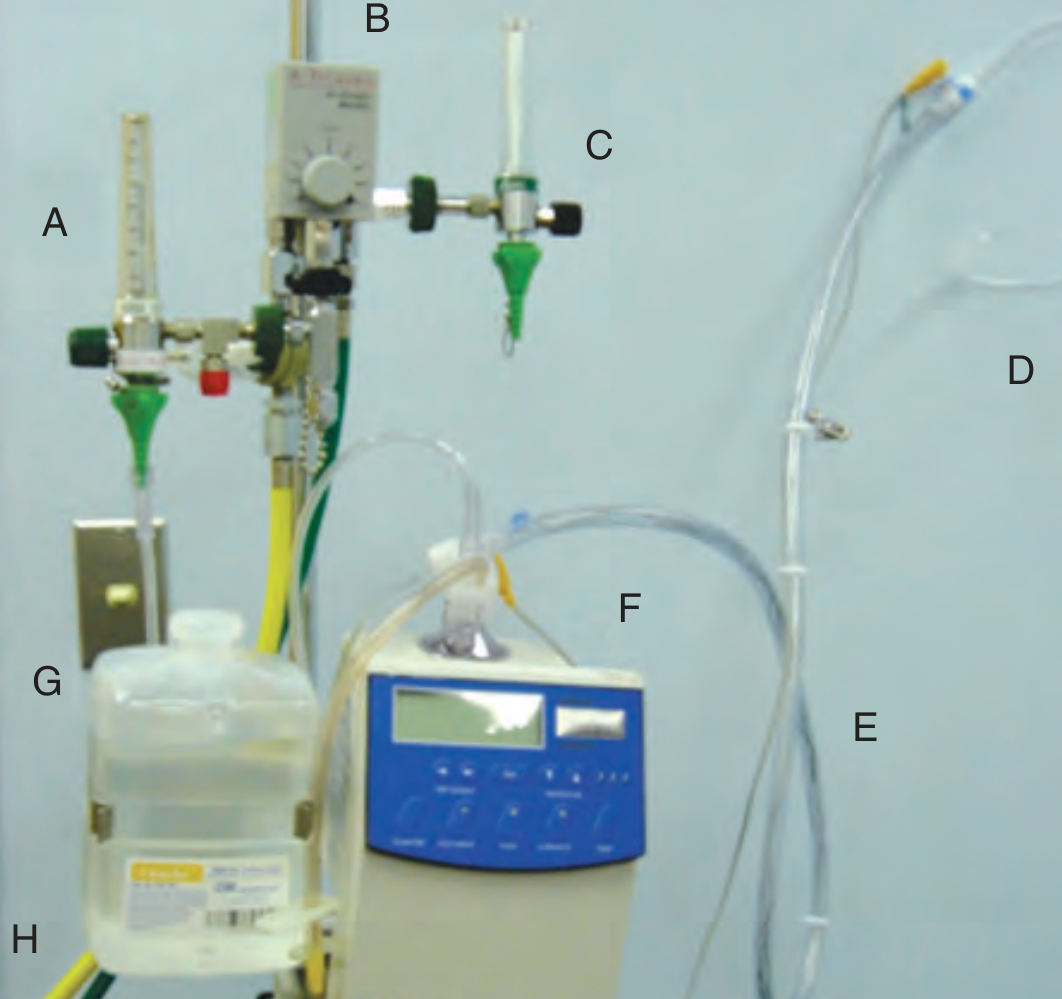
HFNC system — Roberts and Hedges' Clinical Procedures in Emergency Medicine
| Component | Function |
|---|---|
| A. High-flow flowmeter | Measures and controls total gas flow (up to 40–80 L/min) |
| B. Oxygen blender (Air-O₂ mixer) | Mixes wall oxygen and compressed air to achieve precise FiO₂ (21–100%) |
| C. Low-flow flowmeter | Supplementary flow regulation |
| D. Wide-bore nasal cannula (prongs) | Delivers gas to nares; should NOT fully occlude nares (≥50% gap needed for exhalation) |
| E. Low-compliance heated-wire circuit | Tubing with embedded heater wire to prevent condensation and maintain temperature |
| F. Active humidifier | Humidifies gas to near 100% relative humidity at 37°C |
| G. Water reservoir | Supplies sterile water for humidification |
| H. Air/O₂ wall supply | Compressed air and oxygen source |
"Gas is delivered through an air-oxygen blender system to achieve a FiO₂ of up to 100%. Humidification of gases is a standard addition and is required for tolerability of the flow rates... heated to increase humidity to nearly 100% at 37°C." — Murray & Nadel's Textbook of Respiratory Medicine
3. Physiological Mechanisms / Principles
3.1 High FiO₂ Delivery
- Standard nasal cannula draws in room air during inspiration (dilutes FiO₂). HFNC flows at 40–80 L/min, which exceeds the patient's peak inspiratory flow → virtually all inspired gas comes from the device → accurate, high, predictable FiO₂.
"High flow rates more closely match patients' inspiratory flow and volume demands, so more inspired gas comes from the device than ambient air." — Rosen's Emergency Medicine
3.2 Anatomical Dead Space Washout (CO₂ Clearance)
- The nasopharynx/oropharynx (≈150 mL) normally holds expired CO₂-rich gas which is re-inspired first in the next breath.
- HFNC's continuous high flow physically flushes this dead space with fresh O₂-rich gas, reducing CO₂ rebreathing and improving ventilatory efficiency.
"The high flow rates of HFNC also decrease physiologic dead space by reducing the fraction of rebreathed air in the upper airway, thereby providing a small fraction of ventilation support through carbon dioxide washout." — Murray & Nadel's Textbook of Respiratory Medicine
3.3 Low-Level PEEP Generation
- The high flow through partially occluded nares creates a small but real positive end-expiratory pressure.
- Each 10 L/min increase in flow ≈ 0.3–1.0 cm H₂O of CPAP. At 60 L/min → up to 4–6 cm H₂O.
- This recruits collapsed alveoli and increases functional residual capacity (FRC).
"HFNC results in the application of a low level of CPAP. It has been variably estimated that each 10 L/min increase in flow generates from 0.3 to 1.0 cm H₂O CPAP." — Murray & Nadel's Textbook of Respiratory Medicine
3.4 Reduced Work of Breathing
- Matching or exceeding inspiratory demand means the patient's respiratory muscles work less to pull gas.
- Studies show ↓ respiratory rate, ↓ minute ventilation, ↓ pressure-time product (measure of respiratory effort), with ↑ end-expiratory lung volume and more equitable ventilation distribution.
3.5 Mucociliary Clearance & Airway Conditioning
- Conventional O₂ at >6 L/min dries out mucous membranes → epistaxis, crusting, patient discomfort.
- HFNC delivers gas at 37°C with ~100% relative humidity → keeps airways moist → enhances mucus mobilization and ciliary function.
4. Apnoeic Oxygenation — Principle
What is Apnoeic Oxygenation?
"Apneic oxygenation is a physiologic phenomenon by which oxygen from the oropharynx or nasopharynx diffuses down into the alveoli as a result of the net negative alveolar gas exchange rate resulting from oxygen removal and carbon dioxide excretion during apnea." — Miller's Anesthesia, 10e
Physiology — Why Does It Work?
During apnoea (no breathing), gas exchange continues at the alveolar level:
| Gas | Diffusion Rate Across Alveoli | Blood Solubility |
|---|---|---|
| O₂ | Very fast | Lower solubility → consumed rapidly by tissues |
| CO₂ | Slower diffusion | Much higher solubility in blood → enters blood slowly |
The key imbalance:
- O₂ leaves alveoli into blood faster than CO₂ enters alveoli from blood.
- This creates a net negative pressure gradient in the alveolus → alveolar volume shrinks slightly → this "vacuum" pulls gas from above (nasopharynx → trachea → alveoli).
- If O₂ is insufflated into the nasopharynx, it travels passively down this gradient into the alveoli without any breathing effort.
"Even in the absence of ventilation, oxygen is able to travel down the tracheobronchial tree to the alveoli and diffuse into the bloodstream... more oxygen leaves the alveoli than carbon dioxide enters. This creates a pressure gradient that causes oxygen to travel from the nasopharynx to the alveoli." — Roberts and Hedges' Clinical Procedures in Emergency Medicine
HFNC as Apnoeic Oxygenation (THRIVE)
THRIVE = Transnasal Humidified Rapid Insufflation Ventilatory Exchange
- HFNC allows higher flow rates (up to 70 L/min) during apnoea vs. standard nasal cannula (max 15 L/min).
- This extends safe apnoea time AND improves CO₂ clearance (average CO₂ rise of only 1.1 mmHg/min vs. 3–4 mmHg/min with standard apnoeic oxygenation).
"THRIVE involves the administration of warmed, humidified oxygen, allowing higher oxygen flow rates — up to 70 L/min. These higher flows extend the safe apnea time even further and improve the clearance of carbon dioxide... In 25 patients with a difficult airway, THRIVE achieved a median apnea time without desaturation to <90% of 14 minutes, range 5 to 65 minutes." — Miller's Anesthesia, 10e
Practical Apnoeic Oxygenation with HFNC
- Place HFNC (or nasal cannula) beneath the preoxygenation mask during RSI
- At onset of apnoea: keep HFNC in place → oxygen continues passively flowing to alveoli
- Standard nasal cannula: 15 L/min → adequate but not humidified
- HFNC: 30–70 L/min → superior apnoeic oxygenation + CO₂ clearance
5. Advantages of HFNC
| Advantage | Mechanism |
|---|---|
| High, accurate, titratable FiO₂ | Exceeds peak inspiratory flow; FiO₂ and flow set independently |
| Dead space washout → ↓ CO₂ | Continuous flushing of nasopharyngeal dead space |
| Low-level PEEP (1–4 cm H₂O) | Alveolar recruitment, ↑ FRC, ↓ atelectasis |
| ↓ Work of breathing | ↓ RR, ↓ minute ventilation, ↓ pressure-time product |
| Better patient comfort vs. NIV/mask | No tight mask seal needed; patient can eat, talk, expectorate |
| Airway mucosal conditioning | Heated, humidified gas → preserves ciliary function, mobilises secretions |
| Apnoeic oxygenation (THRIVE) | Extends safe apnoea time during intubation to minutes |
| Non-invasive | Avoids risks of intubation and invasive ventilation |
| Better oxygenation outcomes | Reduces need for escalation to intubation in hypoxaemic respiratory failure |
| Post-extubation support | ↓ reintubation rates vs. conventional O₂ in high-risk patients |
6. Disadvantages / Limitations of HFNC
| Disadvantage | Explanation |
|---|---|
| Cannot adequately treat hypercapnic respiratory failure | PEEP and ventilatory support minimal → CO₂ clearance insufficient for significant ventilatory failure; NIV preferred |
| Not suitable for absent/obstructed upper airway | Gas delivery depends entirely on patent nares and pharynx |
| Risk of delayed intubation | Patient may appear comfortable despite worsening gas exchange → may mask the need for intubation |
| Limited PEEP control | PEEP is generated indirectly and unpredictably (0.3–1.0 cm H₂O per 10 L/min); cannot be precisely set |
| Aerosol generation risk | HFNC is an aerosol-generating procedure → infection control concern (e.g., COVID-19, TB); requires negative-pressure room |
| Nasal discomfort at very high flows | Even with humidification, flows >60 L/min can be uncomfortable |
| Gastric distension (rare) | If prongs occlude nares completely → positive pressure → air swallowing |
| Requires specialised equipment & training | Air-O₂ blender, heated humidifier, specific circuits; not available everywhere |
| Noisy device | High-flow systems can be noisy |
| Contraindicated in | Respiratory arrest, absent respiratory drive, facial trauma preventing prong placement, excessive secretions, severely depressed consciousness |
"HFNC should not be used in place of NIV in patients needing primary ventilation support." — Murray & Nadel's Textbook of Respiratory Medicine
"Relative contraindications include depressed mental status, facial injury, inability to manage secretions, or respiratory arrest." — Rosen's Emergency Medicine
7. Indications Summary
| Indication | Evidence Level |
|---|---|
| Acute hypoxaemic respiratory failure (pneumonia, ARDS) | Strong — reduces intubation rate |
| Post-extubation support (high-risk patients) | Comparable to NIV for reintubation prevention |
| Apnoeic oxygenation during RSI / difficult airway (THRIVE) | Well supported |
| Immunocompromised patients avoiding intubation | Supported |
| COPD exacerbation (mild–moderate, or NIV-intolerant) | Noninferior to NIV in some trials; NIV still first-line for hypercapnic failure |
| Paediatric bronchiolitis | Reduces escalation; CPAP preferred in neonates |
Sources:
- Miller's Anesthesia, 10e — Apnoeic oxygenation, THRIVE
- Roberts and Hedges' Clinical Procedures in Emergency Medicine — Apnoeic oxygenation mechanism, HFNC components
- Murray & Nadel's Textbook of Respiratory Medicine — HFNC physiology, advantages, indications, PEEP generation
- Rosen's Emergency Medicine — Clinical use, contraindications
- Barash Clinical Anesthesia, 9e — HFNC in acute respiratory failure
- Fishman's Pulmonary Diseases — Components, dead space clearance
Indication can yoh explain in simple language
Here are the HFNC indications explained in simple language:
When Do We Use HFNC? (Simple Language)
1. 🫁 Patient whose oxygen level is dangerously low (Acute Hypoxaemic Respiratory Failure)
Simple: The patient is not getting enough oxygen into the blood — lungs are failing to pick up O₂. This happens in:
- Pneumonia — lungs filled with infection/pus → can't pick up O₂
- COVID-19 — severe lung inflammation
- ARDS — both lungs badly injured, stiff, and flooded
Why HFNC? We want to push a lot of oxygen in at high speed so the body gets enough, without putting a tube down the throat. It buys time and often avoids the need for a ventilator altogether.
2. 🛏️ Patient just taken off the breathing machine (Post-Extubation)
Simple: After a patient is weaned off a ventilator and the tube is removed, the lungs are still weak. There is a risk they might need to be re-intubated (tube put back in).
Why HFNC? It acts as a safety net — gives extra oxygen and mild pressure support to the lungs while they recover. Reduces the chance the patient needs the tube back.
3. 💉 During intubation — keeping oxygen levels up while the doctor places the tube (Apnoeic Oxygenation / THRIVE)
Simple: When a doctor is trying to put a breathing tube in, the patient stops breathing for a short time. Normally oxygen levels fall fast (especially in sick patients). HFNC is kept on the nose throughout — even with no breathing, oxygen keeps trickling down into the lungs passively.
Why HFNC? It extends the "safe window" from 2–3 minutes to sometimes 10–15 minutes — giving the doctor more time to place the tube safely without the patient going blue.
4. 🧬 Cancer patients / immune-compromised patients (Immunosuppressed)
Simple: Patients on chemotherapy or with very low immunity whose lungs are failing. If we put a breathing tube in these patients, they are at very high risk of getting serious infections from the ventilator (ventilator-associated pneumonia).
Why HFNC? It avoids putting a tube in altogether. Delivers high oxygen non-invasively, protecting these vulnerable patients from ventilator complications.
5. 😮💨 COPD patients who can't tolerate a face mask (NIV-Intolerant)
Simple: COPD patients with a flare-up ideally need NIV (BiPAP/CPAP via tight face mask). But some patients find the mask claustrophobic, uncomfortable, or can't keep it on.
Why HFNC? It's much more comfortable than a tight mask. The patient can talk, drink, and breathe naturally. Used when NIV isn't tolerated or as an add-on to NIV.
⚠️ NIV is still first choice for COPD with high CO₂. HFNC is an alternative, not a replacement.
6. 👶 Children with bronchiolitis (RSV lung infection in babies)
Simple: Babies with bronchiolitis (viral lung infection) have blocked tiny airways and struggle to breathe. Standard oxygen through a normal nasal tube is not enough.
Why HFNC? The slightly higher pressure helps open the tiny airways. Reduces the work of breathing and keeps oxygen levels up. Often used as a rescue when normal oxygen fails.
⚠️ In very premature newborns, CPAP is still preferred over HFNC.
Quick One-Line Summary Table
| Situation | In Plain Words |
|---|---|
| Low oxygen in blood (pneumonia, ARDS) | "Lungs can't pick up O₂ — flood them with high-flow oxygen" |
| After removing ventilator tube | "Safety net while lungs recover from being on the machine" |
| During tube insertion (RSI) | "Keep oxygen flowing to the lungs while doctor places the tube" |
| Immunocompromised patients | "Avoid the ventilator to prevent dangerous infections" |
| COPD, can't tolerate mask | "NIV not tolerated — HFNC is more comfortable alternative" |
| Babies with bronchiolitis | "Opens small airways and reduces breathing effort in infants" |
The core idea behind all indications is the same: the patient needs more oxygen than a normal mask can give, but we want to avoid putting a tube down the throat if possible. HFNC sits in that middle ground — more powerful than a standard mask, less invasive than a ventilator.
Tell me about magnesium sulphate in Anesthesiology everything j need to know
Checking Date & Time
Finding Sources
Finding Sources
Finding Sources
Finding Sources
Reading File
Reading File
Finding Sources
Reading File
Finding Sources
Finding Sources
Reading File
Finding Sources
Finding Sources
I now have comprehensive material from multiple authoritative textbooks. Here is the complete anaesthesiology note on Magnesium Sulphate:
🧲 Magnesium Sulphate (MgSO₄) in Anaesthesiology — Complete Note
1. Basic Facts
| Property | Detail |
|---|---|
| Chemical formula | MgSO₄ · 7H₂O (heptahydrate = Epsom salt) |
| Ion | Mg²⁺ — a divalent cation (like calcium) |
| Normal serum level | 1.7–2.4 mg/dL (0.7–1.0 mmol/L) |
| Route in anaesthesia | Intravenous (IV bolus + infusion) |
| Elimination | Almost entirely renal — contraindicated in renal failure |
2. Mechanism of Action — How Magnesium Works
Magnesium has multiple overlapping mechanisms that explain its wide use in anaesthesiology:
2a. Calcium Channel Antagonism (L and P channels)
- Mg²⁺ competes with Ca²⁺ at voltage-gated calcium channels.
- At the neuromuscular junction (NMJ): blocks P-type calcium channels → reduces Ca²⁺ entry into the nerve terminal → less acetylcholine (ACh) release → muscle relaxation.
- At the vascular smooth muscle: blocks L-type channels → vasodilation → ↓ blood pressure.
"Higher-than-normal concentrations of bivalent inorganic cations (e.g., magnesium) can block the entry of calcium through P channels and profoundly impair neuromuscular transmission. This mechanism is behind the typical muscle weakness and potentiation of muscle relaxants when magnesium sulfate is administered to treat preeclampsia." — Miller's Anesthesia, 10e
2b. NMDA Receptor Antagonism (Analgesic Mechanism)
- Mg²⁺ is a physiological voltage-dependent blocker of the NMDA (N-methyl-D-aspartate) receptor channel.
- NMDA receptors are central to pain transmission and central sensitisation (wind-up pain).
- Blocking NMDA → ↓ central sensitisation → ↓ pain → ↓ opioid requirements.
"The mechanism of analgesia is thought to be mediated by NMDA receptor antagonism as well as regulation of calcium influx into the cell, resulting in suppression of neuropathic pain and inhibition of central sensitization, potentially making this drug useful in the opioid-tolerant patient." — Barash Clinical Anesthesia, 9e
2c. NMJ — Presynaptic + Postsynaptic Effects
- Presynaptic: ↓ ACh release (via Ca²⁺ channel blockade)
- Postsynaptic: reduces sensitivity of the motor end-plate to ACh
- Combined → potentiates ALL non-depolarising muscle relaxants (NDMRs)
2d. CNS Depression / Anticonvulsant
- Reduces excitatory neuronal transmission by NMDA blockade and Ca²⁺ antagonism
- Raises seizure threshold → prevents/treats eclamptic seizures
2e. Smooth Muscle Relaxation
- Via calcium channel blockade in smooth muscle
- → Bronchodilation (airway smooth muscle)
- → Uterine relaxation (tocolysis)
- → Vasodilation (↓ BP, useful in hypertensive crises)
3. Uses in Anaesthesiology
3.1 Pre-eclampsia and Eclampsia (Most Classic Use)
Pre-eclampsia: hypertension + proteinuria in pregnancy. Risk of seizures.
Eclampsia: seizures have occurred.
"Magnesium sulfate (4 g IV loading dose, followed by 1–2 g/hour) is considered first-line therapy for all cases of preeclampsia and eclampsia. It relaxes the smooth muscle (partly through calcium antagonism), leading to some decrease in blood pressure." — Rosen's Emergency Medicine
| Regimen | Dose |
|---|---|
| Loading dose | 4–6 g IV over 15–20 minutes |
| Maintenance | 1–2 g/hour IV infusion |
Anaesthetic implications:
- Potentiates NDMRs → reduce dose of rocuronium/atracurium by 30–50%
- Use objective neuromuscular monitoring (TOF) — do not rely on clinical assessment alone
- Sugammadex still works for reversal of rocuronium
- Extubate carefully — residual neuromuscular block risk is real
"In the case of administration of magnesium sulfate, a distinct potentiation of the effect of any nondepolarizing agents occurs, with subsequently prolonged recovery time... neuromuscular monitoring based on an objective monitoring technique should be used." — Miller's Anesthesia, 10e
3.2 Perioperative Analgesia (Opioid-Sparing)
Magnesium is a valuable part of multimodal analgesia.
"IV magnesium infusion decreases pain scores, is opioid sparing in the first 24 hours following surgery and is devoid of any serious adverse effects." — Barash Clinical Anesthesia, 9e
| Dose regimen (pain) | Details |
|---|---|
| Bolus | 30–50 mg/kg IV over 15–30 min (intraoperative) |
| Maintenance | 6–8 mg/kg/hour intraoperatively |
| Combination | Works synergistically with low-dose ketamine (both NMDA antagonists) |
Clinical evidence: In scoliosis surgery, Mg + low-dose ketamine vs ketamine alone → ↓ postoperative morphine consumption + better sleep + higher patient satisfaction.
Particularly useful in:
- Opioid-tolerant/opioid-dependent patients
- Chronic pain patients
- Patients at high risk for opioid-related adverse effects
3.3 Attenuation of Haemodynamic Responses
Magnesium blunts the sympathetic surge from:
- Laryngoscopy and intubation → Mg given before induction ↓ hypertensive and tachycardic response
- Surgical stimulation
- Pneumoperitoneum (laparoscopic surgery)
Mechanism: Ca²⁺ channel blockade in vascular smooth muscle + reduced catecholamine release.
3.4 Bronchospasm / Intraoperative Bronchospasm
"Mechanisms [of magnesium in bronchospasm] include calcium channel-blocking properties, inhibition of cholinergic neuromuscular transmission, stabilization of mast cells and T-lymphocytes, and stimulation of nitric oxide and prostacyclin." — Rosen's Emergency Medicine
- Used as adjunct in acute severe asthma and intraoperative bronchospasm refractory to bronchodilators.
- Dose: 1.2–2 g IV over 20 minutes
- Also useful in status asthmaticus in ICU/emergency setting.
3.5 Cardiac Arrhythmias — Torsades de Pointes
"Manifest cardiac arrest caused by torsades de pointes is managed by the intravenous administration of magnesium... magnesium may effectively control the arrhythmia without normalising the QT interval." — Braunwald's Heart Disease, 15e
- Torsades de Pointes (TdP): life-threatening polymorphic VT in setting of prolonged QT
- Dose: 1–2 g IV over 5–10 minutes (bolus) → then infusion if needed
- Also used for digoxin toxicity arrhythmias and hypomagnesaemia-induced arrhythmias
3.6 Fetal Neuroprotection (Obstetric Anaesthesia)
"Benefits have been shown for antenatal use for its fetal neuroprotective effects... fetoprotective effects probably result from noncompetitive antagonism of the NMDA receptor or through antiapoptosis and prevention of neuronal cell loss." — Roberts and Hedges' Clinical Procedures in Emergency Medicine
- Given to mothers with preterm labour (<32 weeks) to protect the fetal brain from hypoxic-ischaemic injury.
- Reduces incidence of cerebral palsy.
3.7 Muscle Relaxant Potentiation (NMJ Effect)
| Muscle Relaxant | Effect of Mg²⁺ |
|---|---|
| Succinylcholine (depolarising) | Slight potentiation (↓ presynaptic ACh release) |
| Rocuronium, vecuronium, atracurium (NDMRs) | Significant potentiation — ↓ dose by 30–50% |
| Onset | Faster onset of NDMRs |
| Duration | Prolonged recovery time |
| Reversal | Neostigmine or sugammadex — both effective, but Mg may partially antagonise neostigmine |
4. Pharmacokinetics
| Parameter | Detail |
|---|---|
| Route | IV (IM possible but painful; not used in anaesthesia) |
| Distribution | 60% intracellular; extracellular pool is pharmacologically active |
| Protein binding | ~30% (to albumin) |
| Elimination | Renal excretion (>95% unchanged) |
| Half-life | ~4 hours (longer in renal impairment) |
| Renal failure | Contraindicated — accumulates → toxicity |
5. Toxicity — Signs by Serum Level
This is critical knowledge for anaesthesiologists managing Mg infusions:
| Serum Mg Level (mEq/L) | Clinical Sign |
|---|---|
| 1.7–2.4 | Normal range |
| 4–5 | Loss of patellar (knee) reflex ← earliest sign of toxicity — monitor this! |
| 5–7 | Somnolence, nausea, diplopia, slurred speech |
| 7–10 | Muscle paralysis, ↓ respiratory effort |
| >10 | Respiratory arrest |
| >12–15 | Cardiac arrest |
"The first sign of magnesium toxicity, a decrease in the patellar reflex, typically occurs as serum magnesium levels exceed 4 mEq/L. The dosing and ongoing maintenance of magnesium therapy should be guided by the clinical status of the patient rather than by laboratory values." — Roberts and Hedges' Clinical Procedures in Emergency Medicine
6. Monitoring During Mg Therapy
| What to Monitor | Why |
|---|---|
| Patellar reflex (hourly) | First sign of toxicity — absent = stop Mg |
| Respiratory rate | Must be ≥12/min before each dose |
| Urine output | Must be ≥25 mL/hour (renal excretion) |
| Serum Mg levels | Target 4–7 mEq/L for seizure prophylaxis |
| TOF (Train-of-Four) | Objective NMJ monitoring if on NDMRs |
| SpO₂ | Respiratory depression risk |
7. Antidote for Magnesium Toxicity
"If respiratory depression develops, inject 10 mL of a 10% solution of calcium gluconate or calcium chloride over a 3-minute period as an antidote. For severe respiratory depression or arrest, prompt endotracheal intubation may be lifesaving." — Roberts and Hedges' Clinical Procedures in Emergency Medicine
| Antidote | Dose | Mechanism |
|---|---|---|
| Calcium gluconate 10% | 10 mL (1g) IV over 3 minutes | Ca²⁺ directly antagonises Mg²⁺ at NMJ and heart |
| Calcium chloride 10% | 5–10 mL IV (more Ca²⁺ per mL than gluconate) | Same mechanism, faster but more irritant |
⚠️ Always have calcium gluconate drawn up at the bedside when running Mg infusions.
8. Contraindications
| Contraindication | Reason |
|---|---|
| Renal failure | Cannot excrete Mg → rapid accumulation → toxicity |
| Myasthenia gravis | Pre-existing NMJ dysfunction → even small doses can cause respiratory arrest |
| Hypotension | Mg causes vasodilation → worsens hypotension |
| Concurrent calcium channel blocker use (relative) | Additive cardiovascular depression |
| Heart block | Mg slows conduction → worsens block |
"Magnesium sulfate is contraindicated for treatment of eclampsia in myasthenia gravis because of its neuromuscular blocking effects; barbiturates or phenytoin should be used instead." — Rosen's Emergency Medicine
9. Drug Interactions in Anaesthesia
| Drug | Interaction |
|---|---|
| Non-depolarising NMBDs (rocuronium, vecuronium, atracurium) | Marked potentiation — ↓ dose by 30–50%, monitor TOF |
| Succinylcholine | Mild potentiation |
| Neostigmine | May partially reduce reversal efficacy |
| Calcium channel blockers (nifedipine, verapamil) | Additive cardiovascular depression |
| Aminoglycosides | Both impair NMJ → additive neuromuscular blockade |
| Digoxin | Mg protects against digoxin toxicity arrhythmias |
10. Quick Summary Table — Uses in Anaesthesiology
| Clinical Scenario | Dose | Key Point |
|---|---|---|
| Eclampsia / Pre-eclampsia | 4–6 g loading, 1–2 g/hr maintenance | Monitor patellar reflex; antidote = Ca gluconate |
| Perioperative analgesia (opioid-sparing) | 30–50 mg/kg bolus + 6–8 mg/kg/hr | NMDA antagonism; synergy with ketamine |
| Laryngoscopy/intubation response blunting | 30–60 mg/kg 5 min before intubation | Attenuates hypertension/tachycardia |
| Intraoperative bronchospasm | 1.2–2 g IV over 20 min | Smooth muscle relaxation via Ca²⁺ blockade |
| Torsades de Pointes | 1–2 g IV over 5–10 min | Antiarrhythmic — does not correct QT |
| NDMR potentiation (obstetric) | — | ↓ NDMR dose; use TOF monitoring |
| Fetal neuroprotection | 4 g loading, 1 g/hr | <32 weeks preterm; ↓ cerebral palsy |
Sources:
- Miller's Anesthesia, 10e — NMJ mechanism, NDMR potentiation, obstetric use
- Barash Clinical Anesthesia, 9e — Perioperative analgesia, NMDA antagonism, opioid-sparing
- Roberts and Hedges' Clinical Procedures in Emergency Medicine — Toxicity signs, antidote, monitoring, dosing
- Rosen's Emergency Medicine — Bronchospasm mechanism, preeclampsia dosing, contraindications
- Braunwald's Heart Disease, 15e — Torsades de Pointes management
- Tintinalli's Emergency Medicine — Arrhythmia use, calcium antidote
This is a shared conversation. Sign in to Orris to start your own chat.