
How to diagnose fibromyalgia in a 33 y/o female with c/o pain in the cervical spine and fibromyalgia tender points .how likely it is that its for cervical spondylitis?
Reading File
Now I'll run parallel searches across the medical library and PubMed for fibromyalgia diagnosis and the overlap with cervical spondylitis.
Finding Sources
Finding Sources
Searching PubMed
fibromyalgia diagnosis criteria 2010
Good - found a key textbook section. Let me read it and also search for cervical spondylosis/fibromyalgia overlap simultaneously.
Reading File
Reading File
Finding Sources
Excellent. Now let me read the core fibromyalgia and cervical spondylosis sections from the most authoritative sources.
Reading File
Reading File
Finding Sources
I now have the key diagnostic criteria from Rheumatology textbook. Let me read the full criteria section and also get the cervical spondylosis features for comparison.
Reading File
Reading File
Now let me get the 2016 revised criteria and also the WPI tender point diagram image.
Reading File
Loading Image
I now have comprehensive information. Let me compile the full answer.
Diagnosing Fibromyalgia in a 33-Year-Old Female with Cervical Pain and Tender Points
Key Clinical Context
A 33-year-old woman with cervical pain and fibromyalgia tender points is a classic presentation. Fibromyalgia is more common in women, typically diagnosed between ages 20-55, and neck pain is one of the recognized WPI body regions. Here is a structured approach.
Part 1: How to Diagnose Fibromyalgia
Current Diagnostic Standard: ACR 2010/2016 Criteria
Tender points are no longer required for diagnosis. The ACR shifted to a symptom-based scoring system. Per the 2016 revised criteria (Rheumatology, Elsevier 2022), a patient satisfies fibromyalgia criteria if ALL of the following are met:
Criterion 1 - Widespread Pain Index (WPI) + Symptom Severity (SS) Score:
| Combination | Threshold |
|---|---|
| WPI ≥ 7 AND SSS ≥ 5 | OR |
| WPI 4-6 AND SSS ≥ 9 |
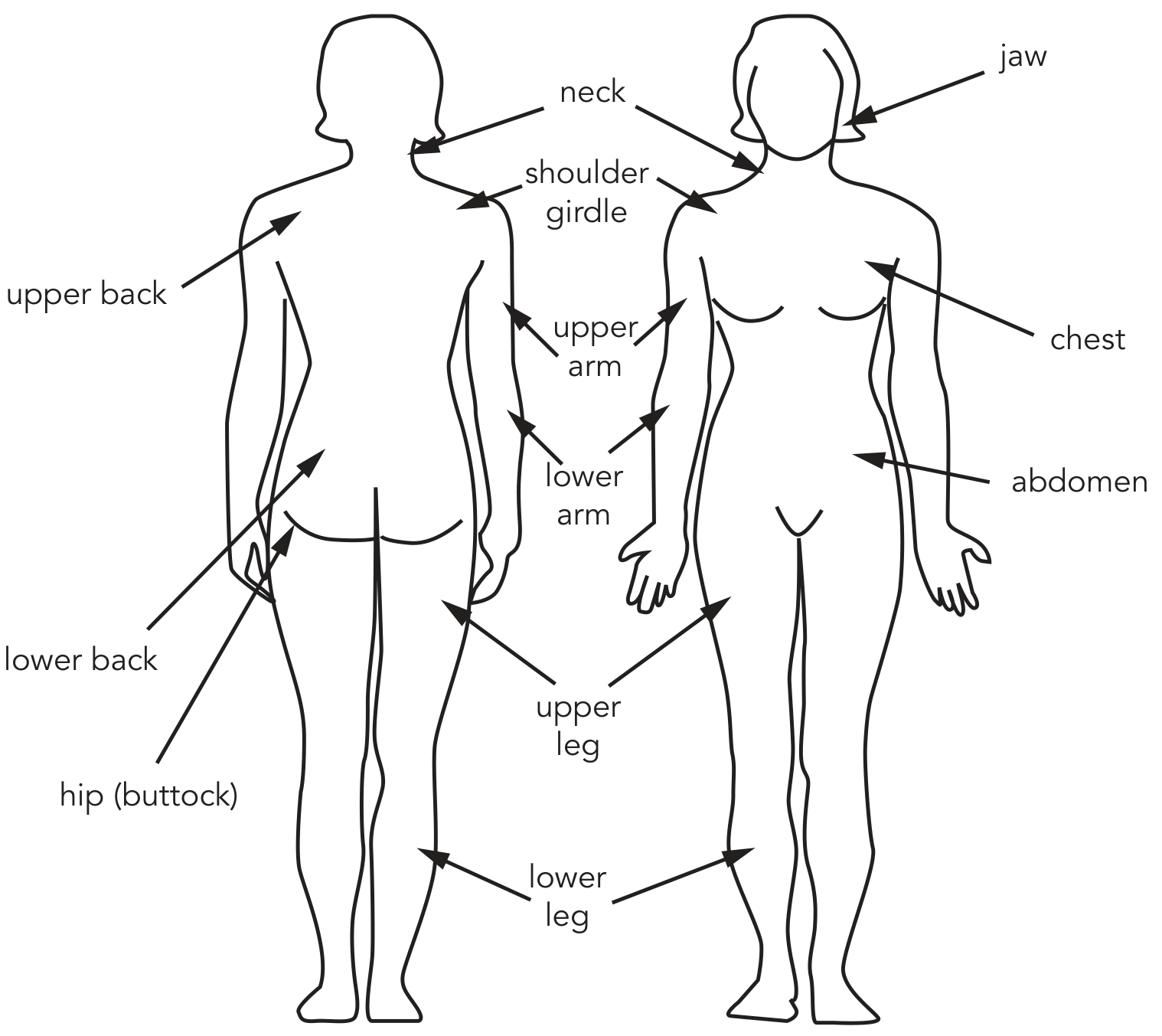
Criterion 2 - Generalized pain must be present in at least 4 of 5 body regions:
- Region 1: Left upper (jaw, shoulder girdle, upper arm, lower arm)
- Region 2: Right upper (same as left)
- Region 3: Left lower (hip/buttock, upper leg, lower leg)
- Region 4: Right lower (same as left)
- Region 5: Axial - neck, upper back, lower back, chest, abdomen
Neck is in the axial region (Region 5). If pain is only cervical without involvement of 3+ other regions, the generalized pain criterion would not be met.
Criterion 3: Symptoms present for ≥3 months
Key 2016 update: A diagnosis of fibromyalgia is valid irrespective of other diagnoses - fibromyalgia and cervical spondylosis can coexist.
Symptom Severity (SS) Scale
Rate each of the following 0-3 (0 = none, 3 = severe):
- Fatigue
- Waking unrefreshed
- Cognitive symptoms ("fibro-fog")
Plus a somatic symptom burden score (0-3). Maximum total SS = 12.
Associated features that support fibromyalgia diagnosis:
- Headaches
- Irritable bowel syndrome
- Pelvic/bladder symptoms
- Sleep disturbance (non-restorative sleep - patients report light sleep, frequent waking)
- Mood disturbances (depression, anxiety co-occur frequently)
What About Tender Points?
The older ACR 1990 criteria required ≥11 of 18 tender points. These are no longer mandatory but remain clinically useful as supportive evidence. The 18 classic tender point sites include:
- Occiput (suboccipital muscle insertions)
- Low cervical (anterior aspects of C5-C7 intertransverse spaces)
- Trapezius
- Supraspinatus
- Second rib (costochondral junctions)
- Lateral epicondyle
- Gluteal (upper outer quadrant)
- Greater trochanter
- Medial knee (medial fat pad)
The fact that this patient has cervical tender points is consistent with fibromyalgia but is not sufficient alone - the point is confirmed by WPI + SS scoring.
Part 2: How Likely is Cervical Spondylosis?
Cervical Spondylosis - Key Features (Tintinalli's Emergency Medicine)
Cervical spondylosis is a progressive degenerative condition (degenerative disk disease / osteoarthritis) causing:
- Neck pain and reduced cervical flexibility
- Occipital neuralgia
- Radicular pain (shooting into shoulder, arm, hand along a dermatome)
- Myelopathy in severe cases (hyperreflexia, Babinski's, sphincter involvement)
Why Cervical Spondylosis is LESS LIKELY in this patient:
| Feature | This Patient | Cervical Spondylosis |
|---|---|---|
| Age | 33 years | Typically 50+, degenerative |
| Pain pattern | Diffuse tender points at multiple sites | Localized neck ± radicular arm pain |
| Neurological signs | Absent (implied) | Radiculopathy / myelopathy common |
| Pain distribution | Multiple body regions (WPI) | Dermatomal / myotomal |
| Associated symptoms | Fatigue, sleep disturbance, cognitive fog | Usually absent |
| Sex | Female (fibromyalgia F:M = 7:1) | More common in males |
| Lab findings | Normal (ESR, CRP, CBC negative) | Normal (unless complicated) |
At 33, cervical spondylosis as the primary diagnosis is uncommon. Significant degenerative spondylosis in the 30s is possible but would typically follow a history of repetitive occupational strain, prior trauma, or congenital canal stenosis. It would also lack the systemic features (fatigue, sleep disruption, cognitive symptoms) that characterize fibromyalgia.
Critical Red Flags That Would Point AWAY from Fibromyalgia and TOWARD Spondylosis:
- Radicular arm pain with dermatomal sensory loss
- Weakness in specific myotomes (e.g., C5 - deltoid, C6 - wrist extension, C7 - triceps)
- Decreased deep tendon reflexes (biceps, brachioradialis, triceps)
- Spurling's sign positive (cervical lateral flexion reproduces arm pain)
- Lhermitte's sign (electric shock on neck flexion - myelopathy)
- Abnormal MRI showing foraminal narrowing or cord compression
Investigations to Differentiate:
For fibromyalgia workup (to exclude mimics):
- CBC, ESR, CRP - should be normal in fibromyalgia; elevated suggests inflammatory arthritis
- TSH - exclude hypothyroidism (classic fibromyalgia mimic)
- Vitamin D, B12
- ANA if lupus/CTD suspected
- No imaging is diagnostic for fibromyalgia
For cervical spondylosis:
- Plain X-ray cervical spine (3 views) - osteophytes, loss of disk height, foraminal narrowing
- MRI cervical spine - gold standard; needed if new neurological signs or symptoms
Summary: Most Likely Diagnosis
In a 33-year-old woman with:
- Cervical pain (falls in WPI axial region)
- Multiple tender points at fibromyalgia sites
- Likely associated fatigue/sleep/cognitive symptoms
Fibromyalgia is the most probable diagnosis. Cervical spondylosis as a primary explanation is unlikely but should be evaluated if:
- Radicular symptoms (arm pain, paresthesia) are present
- Neurological deficits are found on examination
- Symptoms fail to respond to fibromyalgia management
Per the 2016 ACR criteria, even if mild cervical spondylosis is found on imaging, this does not exclude fibromyalgia - both can coexist, and fibromyalgia should still be diagnosed on its own merits if criteria are met.
Sources: Rheumatology 2-Volume Set, Elsevier 2022 | Tintinalli's Emergency Medicine, 9th Ed. | Swanson's Family Medicine Review | Stahl's Essential Psychopharmacology
Management of fibromyalgia
Searching sources...
Finding Sources
Searching PubMed
fibromyalgia management treatment
Reading File
Finding Sources
Reading File
Reading File
Reading File
Finding Sources
Finding Sources
Finding Sources
Reading File
Finding Sources
Reading File
Loading Image
I now have comprehensive information from multiple authoritative sources. Here is the full management overview:
Management of Fibromyalgia
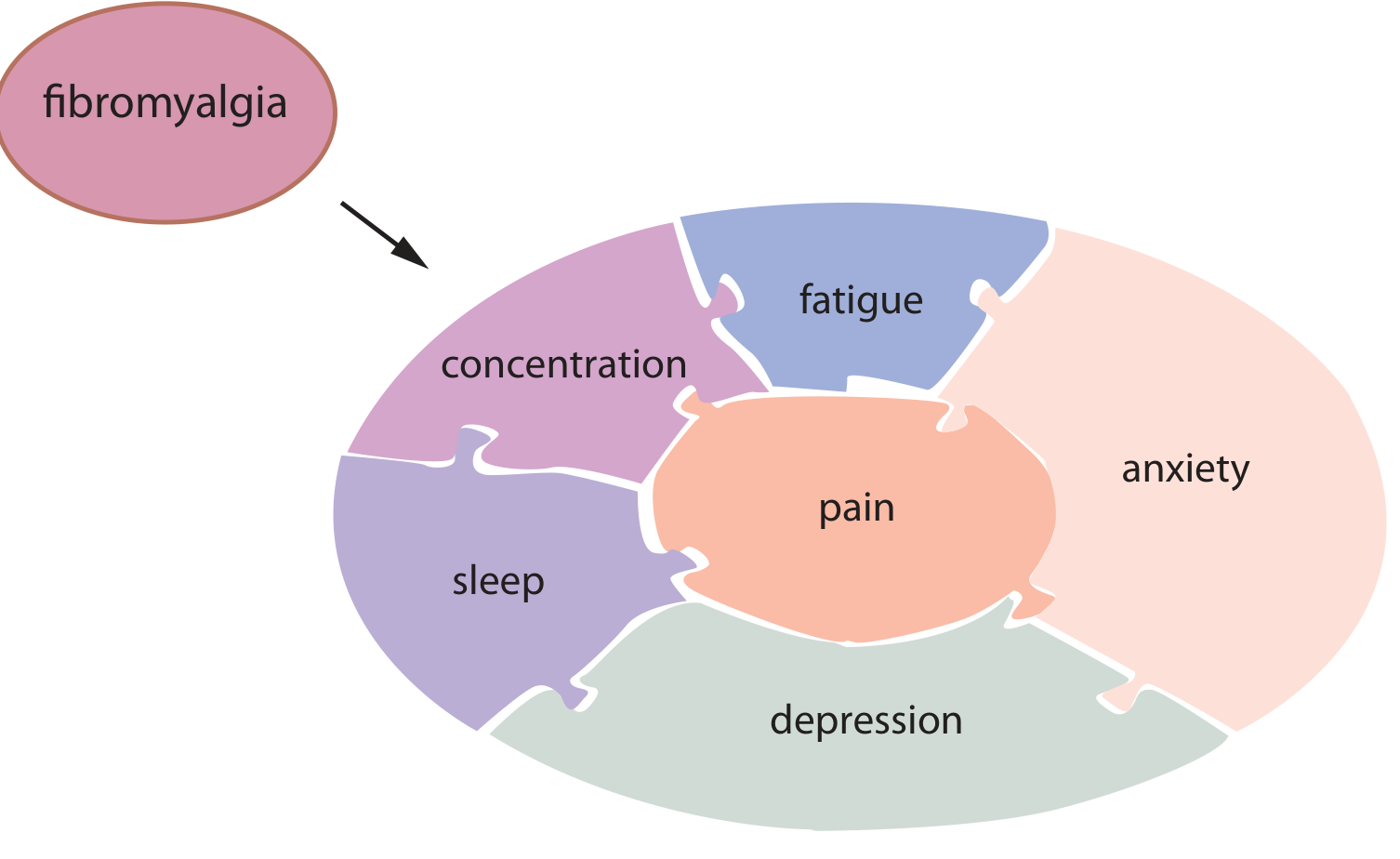
Fibromyalgia requires a multimodal, multidisciplinary approach targeting its interconnected symptoms - pain, fatigue, sleep, mood, and cognitive dysfunction. No single therapy is sufficient; combining non-pharmacological and pharmacological strategies gives the best outcomes.
Step 1: Non-Pharmacological Therapy (FIRST LINE - EULAR Guidelines)
Per EULAR revised recommendations, education and exercise are the mandatory first step before any drug is started.
1. Patient Education
- Explain that fibromyalgia is real, recognized, and not psychiatric
- Teach the central sensitization model (amplified pain processing in the CNS)
- Set realistic expectations: symptoms improve with management but may not resolve fully
- Address sleep disorders and mood as part of the education
- "Start low and go slow" principle for all therapies
- Online tools such as painguide.com can supplement in-person education
2. Exercise (Strongest Non-Drug Evidence)
- Aerobic exercise is best studied and most recommended
- Mechanisms: activates central inhibitory pathways that produce opioid-mediated analgesia
- Start low-intensity - walking, swimming, cycling
- Gradually increase duration before intensity
- Strength training also reduces pain, fatigue, tender point count, depression, and anxiety with improved functional capacity and quality of life
- Adherence is the main barrier - personalized, graduated programs improve compliance
- A 2025 meta-analysis (PMID 39805734) confirms aerobic exercise prescription significantly reduces pain in fibromyalgia
3. Cognitive Behavioral Therapy (CBT)
- Effective in one-on-one, group, and internet-based formats
- "Rewires" the brain toward pain relief - sustained improvements often persist months after CBT stops
- Significant improvements in:
- Pain, fatigue, and functional disability
- Negative mood and anxiety
- Overall fibromyalgia impact
- Ideally part of a multidisciplinary plan including exercise and medication - not a replacement for them
- Internet-enhanced behavioral self-management programs also effective
4. Sleep Hygiene
- Make sleep routine a priority
- Optimize sleep environment (cool, dark, quiet)
- Daytime exercise (not close to bedtime)
- Avoid nighttime stimulants (caffeine after midday)
- Avoid alcohol - it is a powerful REM sleep blocker
- Improving sleep hygiene directly improves pain and mental well-being outcomes
5. Complementary and Alternative Therapies
These have evidence of efficacy and are commonly used as adjuncts:
| Therapy | Evidence Level | Notes |
|---|---|---|
| Tai chi | Strong | Among the most positive for symptom improvement |
| Yoga | Strong | Meditative movement - reduces pain and mood symptoms |
| Mindfulness / meditation | Good | Reduces depression, anxiety, anger, pain, stress |
| Trigger point injections | Moderate | Useful if local myofascial pain components present |
| Acupuncture | Moderate | Some evidence; short-term benefits |
| Myofascial release | Moderate | Useful adjunct |
| TENS | Some evidence | Treats peripheral musculoskeletal pain |
| Chiropractic | Inconsistent | No consistent significant benefit in trials |
Step 2: Pharmacological Therapy
If patients fail to respond to education and exercise, drug monotherapy is added. Combinations become necessary in refractory cases.
FDA-Approved Drugs for Fibromyalgia (3 approved agents)
| Drug | Class | Dose | Key Points |
|---|---|---|---|
| Pregabalin (Lyrica) | Gabapentinoid (α2δ Ca²⁺ channel blocker) | 300-600 mg/day | 10% of patients get large pain reduction; Cochrane: high-quality evidence at this dose range |
| Duloxetine (Cymbalta) | SNRI | 60-120 mg/day | Also effective for comorbid depression/anxiety; superior to opioids for chronic MSK pain |
| Milnacipran (Savella) | SNRI | 100-200 mg/day | More NE activity; less 5-HT than duloxetine; approved specifically for FM |
Other Commonly Used Drugs (Evidence-Supported, Not FDA-Approved for FM)
| Drug | Class | Key Evidence |
|---|---|---|
| Amitriptyline | TCA | Low-dose (10-50 mg at night); improves sleep, pain, fatigue; most recommended by German meta-analysis |
| Cyclobenzaprine | Muscle relaxant (TCA-like) | Improves sleep and pain; mechanism similar to amitriptyline |
| Gabapentin | Gabapentinoid | Some benefit; less evidence than pregabalin; Cochrane did not find adequate evidence |
| Tramadol | Weak opioid + SNRI | Short-term benefit shown; use cautiously |
| Melatonin | Sleep aid | Combination with amitriptyline more effective than monotherapy |
Combination Therapy
Combinations are more effective than single agents:
- Pregabalin + duloxetine - superior to either alone
- Fluoxetine + amitriptyline - effective combination
- Melatonin + amitriptyline - better than amitriptyline alone
Drugs to AVOID (Important)
| Drug | Guideline Recommendation |
|---|---|
| Strong opioids (morphine, oxycodone) | Strongly recommended AGAINST by EULAR; not effective for FM pain; risk of addiction and worsening |
| Corticosteroids | Strongly recommended AGAINST by EULAR; FM is non-inflammatory |
| NSAIDs alone | Not effective as monotherapy for FM; may be useful adjuncts for comorbid musculoskeletal pain |
| Benzodiazepines | No benefit shown; sedative hypnotics failed to show benefit |
Step 3: Managing Comorbidities
Because FM symptoms interlock (see diagram above), targeted co-treatment is needed:
| Comorbidity | Preferred Approach |
|---|---|
| Depression/Anxiety | Duloxetine (addresses both pain and mood) |
| Sleep disturbance | Amitriptyline (low-dose), melatonin, sleep hygiene |
| Cognitive fog ("fibro-fog") | Exercise (best evidence), CBT |
| IBS | Low-FODMAP diet, gut-directed therapies |
| Pelvic/bladder symptoms | Urology/gynecology co-management |
Practical Treatment Algorithm
Diagnosis confirmed
        ↓
STEP 1: Education + Aerobic Exercise + Sleep Hygiene
        ↓ (if insufficient response at 4-6 weeks)
STEP 2: Add drug monotherapy
   → Amitriptyline 10-25 mg nocte (1st choice for sleep + pain)
   OR Duloxetine 30→60 mg (if depression/anxiety comorbid)
   OR Pregabalin 75 mg BD → 150 mg BD (if neuropathic-type pain prominent)
        ↓ (if partial response)
STEP 3: Combination therapy + CBT
   → Pregabalin + Duloxetine / Amitriptyline + Fluoxetine
   → Add CBT, tai chi, mindfulness
        ↓ (ongoing)
STEP 4: Multidisciplinary pain clinic referral
Prognosis
FM is often undertreated - patients accumulate comorbid psychological, behavioral, and medical problems (including opioid addiction, obesity, metabolic syndrome) if poorly managed. Early diagnosis and multimodal treatment allows most patients to manage well. FM is associated with excess mortality due to accidents and suicide, making psychological co-management important. As FM worsens, opioids, injections, and surgery become increasingly ineffective.
Sources: Rheumatology 2-Volume Set, Elsevier 2022 | Swanson's Family Medicine Review | Morgan & Mikhail's Clinical Anesthesiology 7th Ed. | EULAR Revised Recommendations (Macfarlane et al., Ann Rheum Dis 2017) | PMID 39805734 (aerobic exercise meta-analysis, 2025)
This is a shared conversation. Sign in to Orris to start your own chat.