
Biomolecules explain in detail
Reading File
Biomolecules are the organic molecules that make up living organisms - primarily carbohydrates, lipids, proteins, and nucleic acids. Each class has distinct structures and functions. Let me pull comprehensive textbook content on this.
Searching sources...
Finding Sources
Finding Sources
Finding Sources
Finding Sources
Finding Sources
Finding Sources
Reading File
Reading File
Finding Sources
Finding Sources
Finding Sources
Finding Sources
Reading File
Reading File
Reading File
Loading Image
Reading File
Loading Image
Loading Image
Reading File
Loading Image
Loading Image
Reading File
Reading File
Now I have comprehensive material. Let me compile a detailed, well-structured answer.
Biomolecules: A Detailed Guide
Biomolecules are the carbon-containing organic molecules synthesized by and found in living organisms. They are built primarily from carbon, hydrogen, oxygen, nitrogen, phosphorus, and sulfur. The four major classes are:
- Carbohydrates
- Proteins
- Lipids
- Nucleic Acids
1. Carbohydrates
Definition and General Formula
Carbohydrates have the empirical formula (CH₂O)n. They consist of carbon atoms bearing hydroxyl (-OH) and carbonyl (C=O) groups. All carbohydrates already contain significant oxygen and are considered "partially oxidized" molecules.
Classification
| Class | Units | Examples |
|---|---|---|
| Monosaccharides | 1 sugar | Glucose, Fructose, Galactose |
| Disaccharides | 2 sugars | Sucrose, Lactose, Maltose |
| Oligosaccharides | 3-9 sugars | Raffinose |
| Polysaccharides | >9 sugars | Starch, Glycogen, Cellulose |
Key monosaccharides:
- Glucose - the predominant sugar in human blood; the brain's primary fuel
- Fructose - found in fruits; metabolized in the liver
- Galactose - from lactose digestion; found in milk
Key polysaccharides:
- Starch - plant storage form (amylose + amylopectin)
- Glycogen - animal/human storage form found in liver and muscle; a highly branched polysaccharide made of glucose units linked by α(1→4) bonds with α(1→6) branch points
- Cellulose - structural polysaccharide in plants; β(1→4) linkages make it indigestible by humans
Structure of Starch and Glycogen
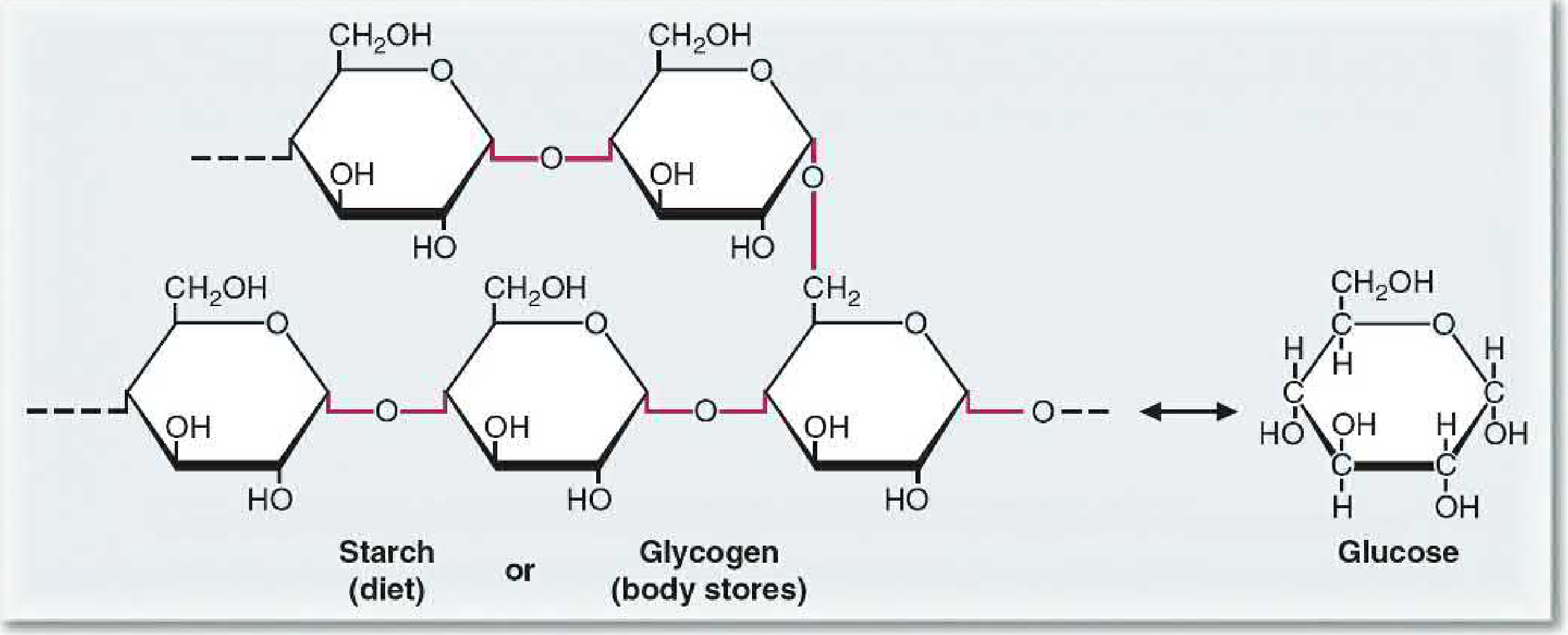
Starch (dietary) and glycogen (body stores) are both polysaccharides made of glucose. Glycogen has more branch points than starch. - Basic Medical Biochemistry, 6e
Functions
- Primary energy source: oxidation yields 4 kcal/g
- Structural role (cellulose in plants, chitin in insects)
- Cell recognition and signaling (glycoproteins, glycolipids)
- Energy storage (glycogen in liver and muscle)
Digestion
Carbohydrates are delivered to the gut as polysaccharides and disaccharides. Only monosaccharides can be absorbed across the intestinal wall; digestion by salivary amylase, pancreatic amylase, and brush-border enzymes (maltase, sucrase, lactase) converts them to monosaccharides (glucose, fructose, galactose), which then enter the bloodstream.
2. Proteins
Building Blocks: Amino Acids
Proteins are linear chains of amino acids joined by peptide bonds. In mammals, 20 standard amino acids are encoded by DNA. Each amino acid has:
- A central alpha-carbon (Cα)
- A carboxyl group (-COOH; ionized to -COO⁻ at physiologic pH)
- An amino group (-NH₂; protonated to -NH₃⁺ at physiologic pH)
- A distinctive side chain (R group) that determines properties
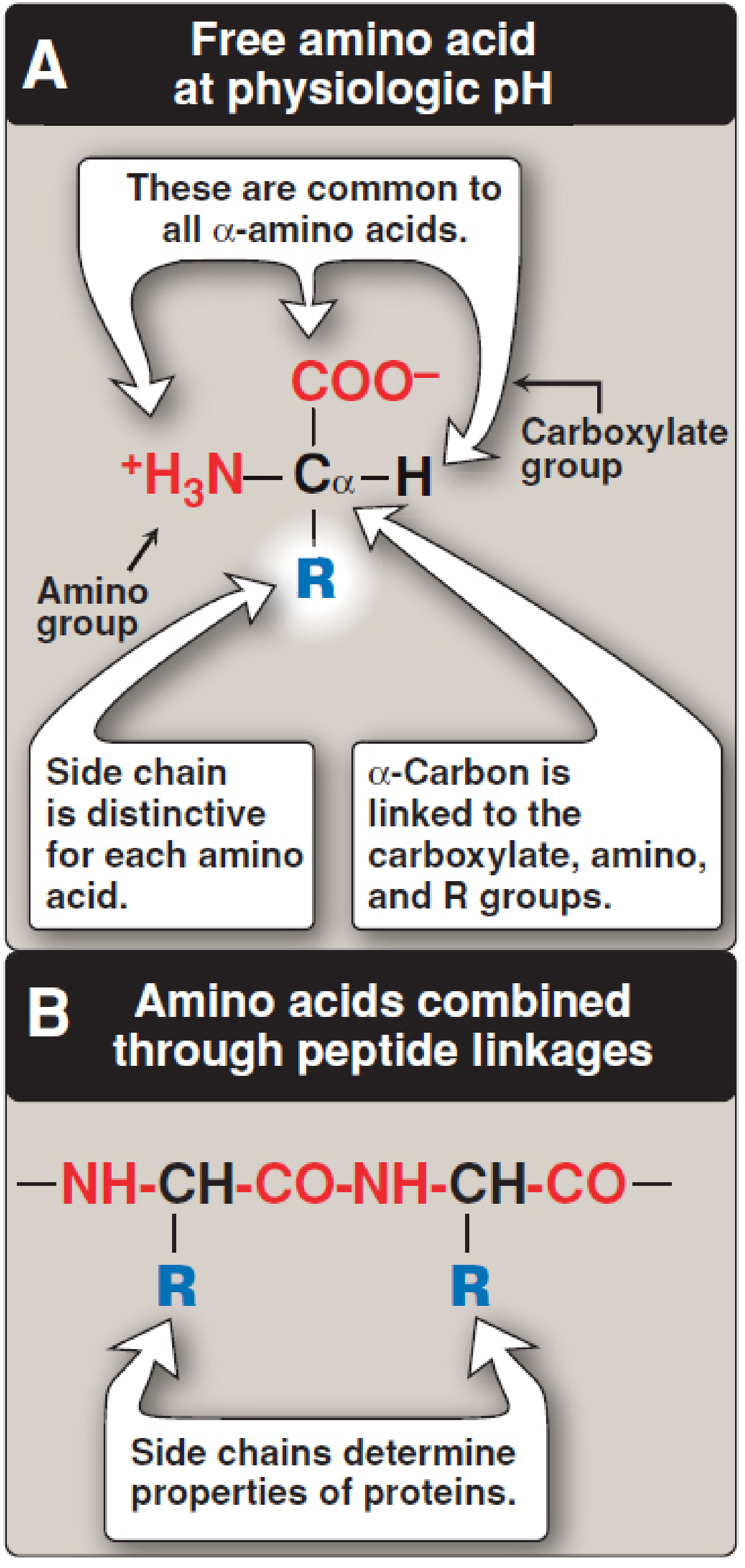
At physiologic pH (~7.4), the carboxyl group is ionized (-COO⁻) and the amino group is protonated (-NH₃⁺). In proteins, amino acids are linked through peptide bonds; the side chains (R) determine protein properties. - Lippincott's Biochemistry, 8e
Classification of Amino Acids (by R group)
| Category | Examples | Properties |
|---|---|---|
| Nonpolar (hydrophobic) | Glycine, Alanine, Valine, Leucine, Isoleucine, Phenylalanine, Tryptophan, Methionine, Proline | Cluster in protein interior |
| Uncharged polar | Serine, Threonine, Tyrosine, Asparagine, Glutamine, Cysteine | Participate in H-bonds; Cys forms disulfide bonds |
| Acidic (negatively charged) | Aspartate, Glutamate | Lose protons at physiologic pH |
| Basic (positively charged) | Lysine, Arginine, Histidine | Gain protons at physiologic pH |
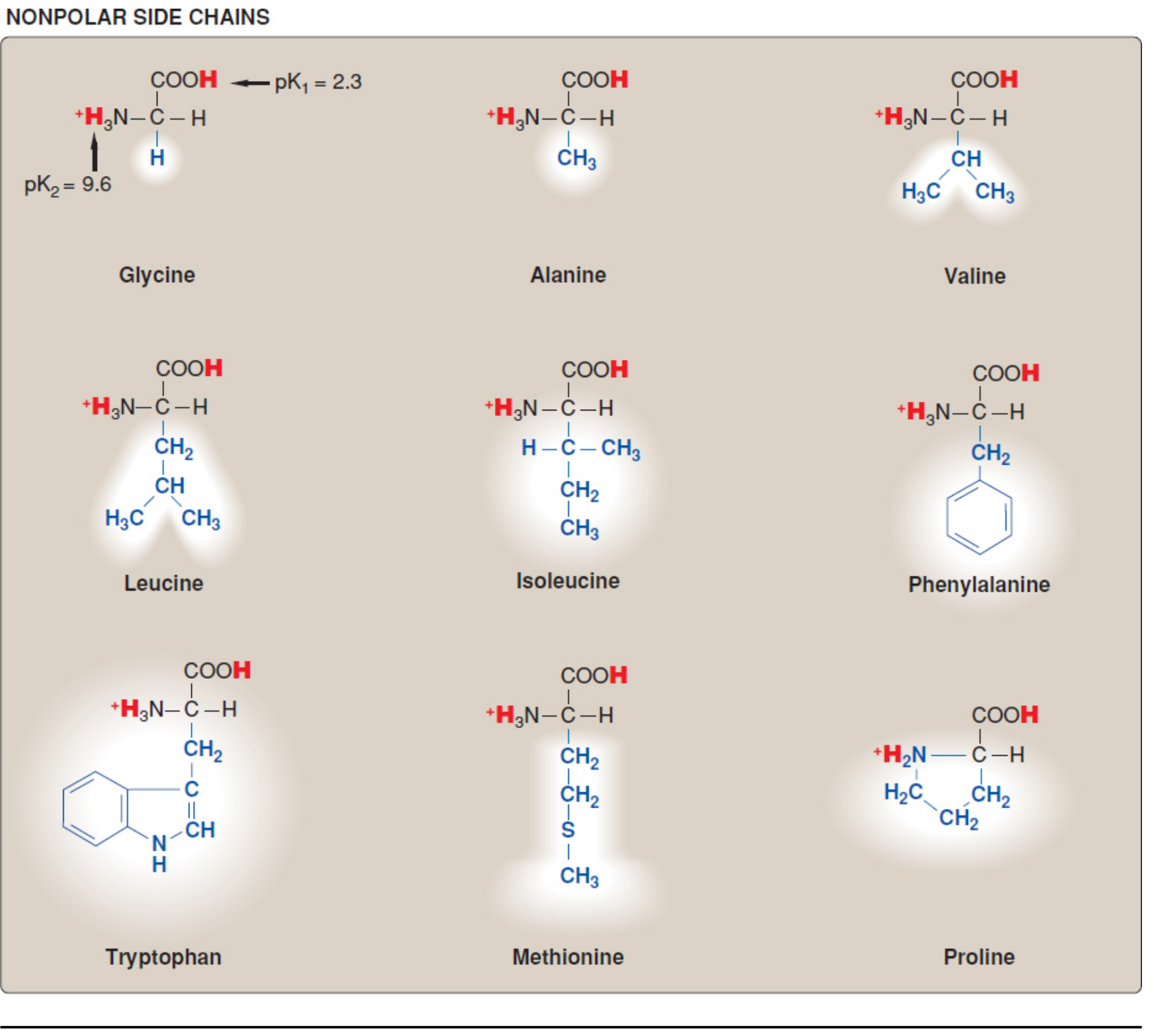
Nonpolar amino acids with hydrophobic side chains. Proline is unique as it has a secondary (not primary) amino group. - Lippincott's Biochemistry, 8e
Levels of Protein Structure
| Level | Description | Bonds Involved |
|---|---|---|
| Primary | Linear sequence of amino acids | Covalent peptide bonds |
| Secondary | Local folding patterns (α-helix, β-sheet) | Hydrogen bonds (between backbone NH and C=O) |
| Tertiary | Full 3D shape of single polypeptide | H-bonds, ionic bonds, disulfide bonds, hydrophobic interactions |
| Quaternary | Assembly of multiple polypeptide subunits | Same noncovalent forces |
- α-Helix: coiled structure; carbonyl group forms H-bond with the nitrogen 4 amino acids farther along the chain
- β-Sheet: extended parallel/antiparallel strands held by H-bonds
- Proline disrupts α-helices because its ring structure restricts backbone rotation
Key Points
- Proteins containing only one polypeptide do not have quaternary structure
- Disulfide bonds (-S-S-) form between two cysteine residues; stabilize extracellular proteins (e.g., albumin, fibrinogen)
- Hydrophobic side chains cluster in the protein interior (hydrophobic effect)
- Polar/charged side chains face outward toward the aqueous environment
Energy from Proteins
Complete oxidation yields approximately 4 kcal/g. Proteins contain ~16% nitrogen by weight (unique among the four biomolecules).
3. Lipids
Definition
Lipids are hydrophobic or amphipathic molecules that are insoluble in water but soluble in organic solvents. They contain relatively less oxygen than carbohydrates, making them more reduced and energy-dense.
Major Classes
a) Fatty Acids
Long hydrocarbon chains with a carboxyl group (-COOH) at one end. They are categorized as:
- Saturated: no double bonds (e.g., Palmitate C16:0, Stearate C18:0) - solid at room temperature
- Monounsaturated: one double bond (e.g., Oleate C18:1) - liquid at room temperature
- Polyunsaturated: multiple double bonds (e.g., linoleate, arachidonate)
b) Triacylglycerols (Fats/Triglycerides)
Three fatty acids esterified to one glycerol backbone. These are the main form of energy storage in adipose tissue.
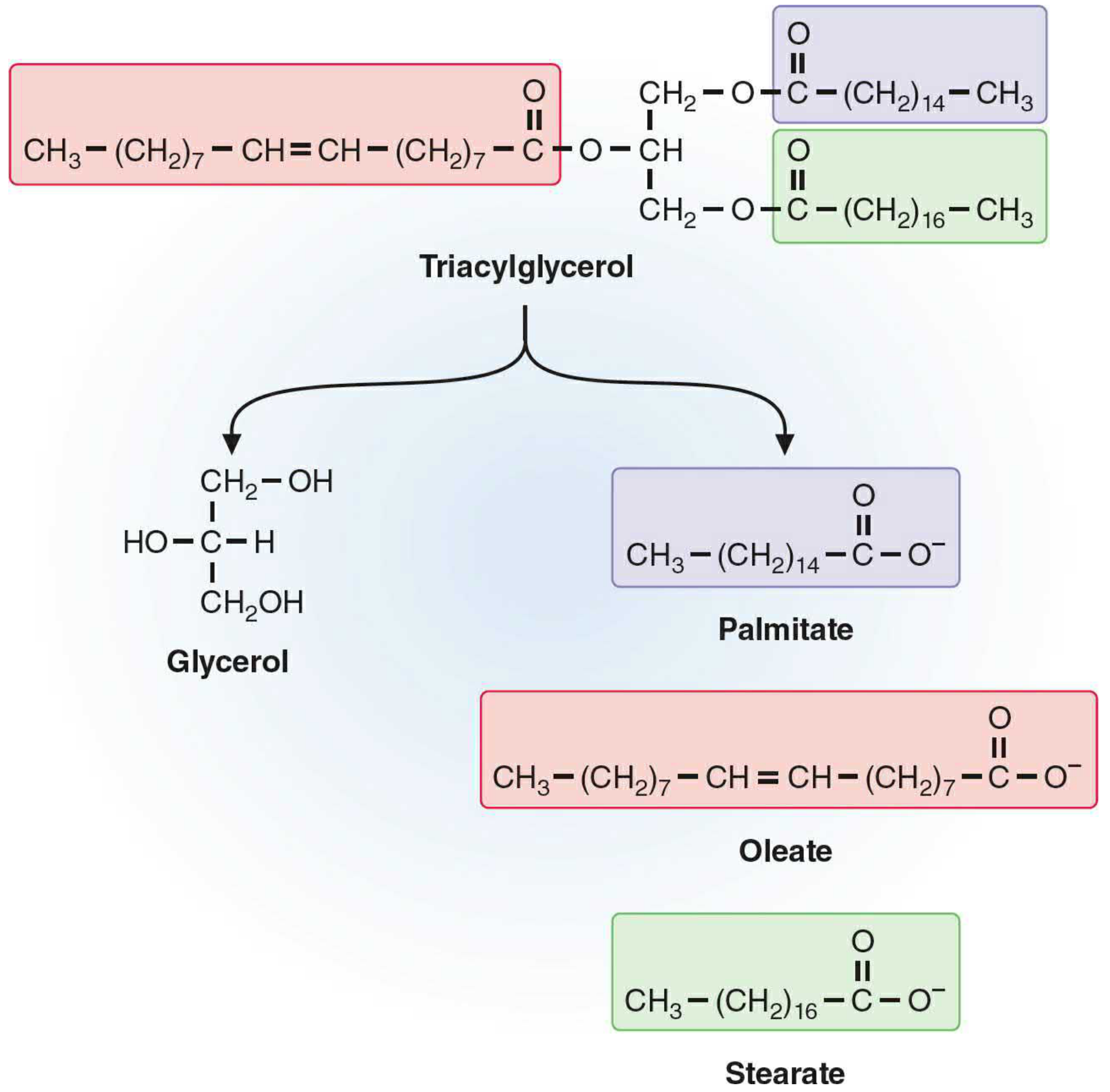
Triacylglycerol consists of glycerol esterified with three fatty acids (palmitate-saturated, stearate-saturated, and oleate-monounsaturated). - Basic Medical Biochemistry, 6e
c) Phospholipids
The main components of cell membranes. They have:
- A glycerol backbone
- Two fatty acid tails (hydrophobic)
- A phosphate group linked to a polar head group (hydrophilic)
- This amphipathic nature drives spontaneous bilayer formation
In phospholipid bilayers, the charged head groups contact water while the hydrophobic fatty acyl chains cluster together, excluding water.
d) Sterols
- Cholesterol: present in animal cell membranes; precursor for steroid hormones (cortisol, estrogen, testosterone, aldosterone), bile acids, and Vitamin D
- Steroid hormones: derived from cholesterol; act as intracellular receptors
e) Glycolipids and Sphingolipids
- Found in cell membranes, especially the nervous system (myelin sheath)
- Sphingomyelin is abundant in nerve cell membranes
Energy from Lipids
Fats contain far less oxygen than carbohydrates, so they are more reduced. Complete oxidation yields approximately 9 kcal/g - more than double carbohydrates or protein.
Body Fuel Stores Summary
| Fuel | Energy (kcal/g) |
|---|---|
| Carbohydrate | 4 |
| Protein | 4 |
| Alcohol | 7 |
| Fat | 9 |
(Source: Basic Medical Biochemistry, 6e)
4. Nucleic Acids
Definition
Nucleic acids (DNA and RNA) are polymers of nucleotides, carrying genetic information and directing protein synthesis.
Nucleotide Structure
Each nucleotide is composed of three components:
- A pentose sugar (deoxyribose in DNA; ribose in RNA)
- A nitrogenous base (purine or pyrimidine)
- A phosphate group
Purine bases: Adenine (A), Guanine (G) - double-ring structure
Pyrimidine bases: Cytosine (C), Thymine (T) (DNA only), Uracil (U) (RNA only) - single-ring structure
DNA - Deoxyribonucleic Acid
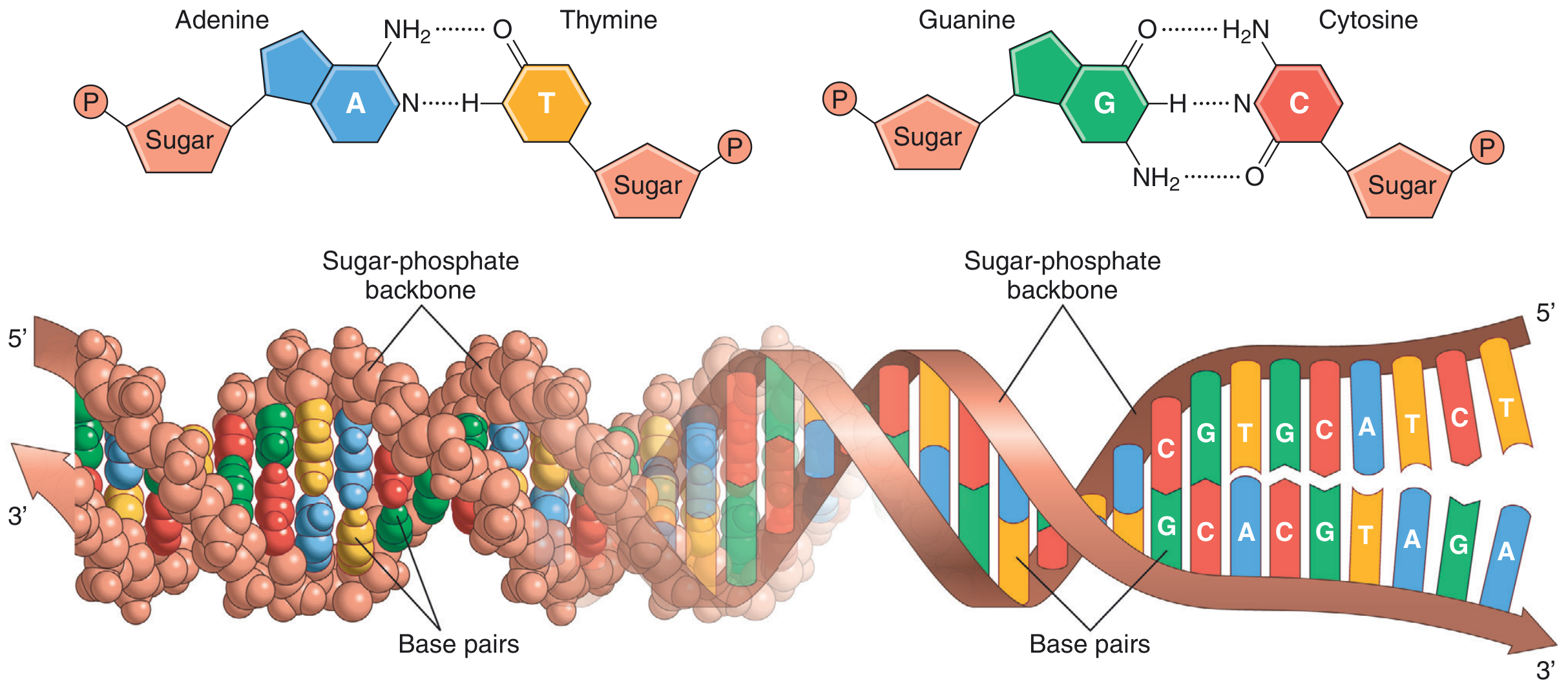
The DNA double helix: two antiparallel strands held together by hydrogen bonds between complementary base pairs (A=T and G≡C). The backbone consists of alternating phosphate-deoxyribose units. - Guyton & Hall Medical Physiology
Key Features of DNA
- Double helix: two antiparallel polynucleotide strands wound around each other
- Sugar-phosphate backbone forms the outside; bases point inward
- Watson-Crick base pairing via hydrogen bonds:
- A pairs with T (2 hydrogen bonds)
- G pairs with C (3 hydrogen bonds)
- Individual strands are held by covalent bonds; the two strands are held together by noncovalent forces (H-bonds + van der Waals stacking interactions)
- The double helix buries hydrophobic bases in its interior; charged phosphates and polar hydroxyl groups face the aqueous environment
Functions of DNA
- Carries the complete genetic information (genome)
- Template for replication and transcription
- Mutations in DNA → changes in protein structure → disease
RNA - Ribonucleic Acid
| Type | Function |
|---|---|
| mRNA (messenger RNA) | Carries genetic code from DNA to ribosome |
| rRNA (ribosomal RNA) | Structural and catalytic component of ribosomes |
| tRNA (transfer RNA) | Brings amino acids to ribosome during translation |
| snRNA, miRNA, etc. | Regulatory roles |
Key differences from DNA:
- Contains ribose (has -OH at 2' carbon) instead of deoxyribose
- Single-stranded (mostly)
- Contains uracil instead of thymine
Bonds That Stabilize Biomolecules
All biomolecules depend on a combination of covalent and noncovalent forces:
| Bond Type | Strength | Role |
|---|---|---|
| Covalent bonds (C-C, C-N, C-O, peptide, phosphodiester) | Strongest | Holds monomers together |
| Hydrogen bonds | Moderate | DNA base pairing, α-helix, β-sheet |
| Ionic bonds | Moderate | Salt bridges in proteins |
| Hydrophobic interactions | Variable | Drive protein folding; membrane bilayer formation |
| van der Waals forces | Weakest (cumulative) | DNA base stacking; protein-protein contacts |
The noncovalent forces are essential for three-dimensional folding of proteins and nucleic acids into their functionally active conformations. The DNA double helix, for example, is held together entirely by noncovalent interactions - hydrogen bonds between base pairs and van der Waals stacking between successive bases.
Summary Table
| Biomolecule | Monomer | Key Bond | Primary Function | Energy (kcal/g) |
|---|---|---|---|---|
| Carbohydrates | Monosaccharides | Glycosidic bond | Energy; structural; signaling | 4 |
| Proteins | Amino acids | Peptide bond | Enzymes; structural; transport; hormones | 4 |
| Lipids | Fatty acids/glycerol | Ester bond | Energy storage; membrane structure; signaling | 9 |
| Nucleic acids | Nucleotides | Phosphodiester bond | Genetic information; protein synthesis | - |
Sources: Basic Medical Biochemistry: A Clinical Approach, 6e | Lippincott's Illustrated Reviews: Biochemistry, 8e | Harper's Illustrated Biochemistry, 32e | Guyton and Hall Textbook of Medical Physiology
give me content for b pharma
Asking for Preferences
Which semester / year of B.Pharm are you in? · Which subject do you need biomolecules content for? · What format do you need?
B.Pharm 2nd Semester Biochemistry — Biomolecules detailed notes. Let me pull the most relevant textbook content at the right depth.
Searching sources...
Reading File
Searching the Web
B Pharm 2nd semester Biochemistry biomolecules syllabus PCI India 2024
PCI syllabus confirmed: BP203T Biochemistry, Unit I = Biomolecules (carbohydrates, lipids, nucleic acids, amino acids, proteins - classification, structure, chemical nature, biological role). Now pulling deep textbook content on each topic.
Finding Sources
Finding Sources
Finding Sources
Finding Sources
Finding Sources
Finding Sources
Finding Sources
Reading File
Finding Sources
Finding Sources
Reading File
Reading File
Loading Image
Reading File
Reading File
Loading Image
I now have all the content needed. Let me compile the complete, exam-ready B.Pharm 2nd Semester Biochemistry notes.
📚 B.Pharm 2nd Semester — Biochemistry (BP203T)
UNIT I: BIOMOLECULES
(As per PCI Syllabus — Classification, Chemical Nature & Biological Role)
INTRODUCTION TO BIOMOLECULES
Biomolecules are the organic (carbon-containing) molecules that are present in and produced by living organisms. They are the chemical basis of all life processes. The major biomolecules are:
- Carbohydrates
- Lipids
- Proteins (Amino Acids)
- Nucleic Acids
They are built mainly from C, H, O, N, P, and S atoms, and are held together by covalent bonds (glycosidic, peptide, ester, phosphodiester) as well as noncovalent forces (hydrogen bonds, van der Waals, hydrophobic interactions, ionic bonds).
SECTION 1: CARBOHYDRATES
1.1 Definition
Carbohydrates are polyhydroxy aldehydes or ketones, or compounds that can be hydrolyzed to yield them. General formula: (CH₂O)n
They contain C, H, O in the ratio 1:2:1.
1.2 Classification
A. Based on number of sugar units:
| Class | Sugar Units | Examples |
|---|---|---|
| Monosaccharides | 1 | Glucose, Fructose, Galactose, Ribose |
| Disaccharides | 2 | Sucrose, Lactose, Maltose |
| Oligosaccharides | 3-9 | Raffinose, Stachyose |
| Polysaccharides | >9 | Starch, Glycogen, Cellulose, Chitin |
B. Based on functional group:
- Aldoses - contain an aldehyde group (-CHO) e.g., Glucose, Galactose
- Ketoses - contain a keto group (>C=O) e.g., Fructose
C. Based on carbon number:
- Trioses (C3): Glyceraldehyde, Dihydroxyacetone
- Pentoses (C5): Ribose, Deoxyribose, Ribulose
- Hexoses (C6): Glucose, Fructose, Galactose
1.3 Important Monosaccharides
Glucose (C₆H₁₂O₆)
- Most important monosaccharide; blood sugar in humans (normal fasting: 70-100 mg/dL)
- Exists mainly in ring (pyranose) form in solution
- Aldohexose; the brain depends almost exclusively on glucose for energy
- Linear (Fischer) form: aldehyde at C1, hydroxyl groups at C2-C6
Fructose
- Ketohexose; sweeter than glucose
- Found in fruits and honey
- Metabolized in the liver; does not require insulin for cellular uptake
Ribose and Deoxyribose (Pentoses)
- Ribose (C5): found in RNA, ATP, NAD⁺, FAD
- Deoxyribose (C5): found in DNA (lacks -OH at C2)
1.4 Disaccharides
| Disaccharide | Monomers | Bond | Source | Enzyme to digest |
|---|---|---|---|---|
| Sucrose (table sugar) | Glucose + Fructose | α(1→2)β | Plants, sugarcane | Sucrase |
| Lactose (milk sugar) | Glucose + Galactose | β(1→4) | Milk | Lactase |
| Maltose (malt sugar) | Glucose + Glucose | α(1→4) | Starch digestion | Maltase |
| Trehalose | Glucose + Glucose | α(1→1)α | Fungi, insects | Trehalase |
1.5 Polysaccharides
Starch (plant storage)
- Made of glucose units; two components:
- Amylose - unbranched; α(1→4) linkages; ~20-25% of starch
- Amylopectin - branched; α(1→4) chain with α(1→6) branch points every 24-30 residues; ~75-80% of starch
Glycogen (animal/human storage)
- Stored in liver (~100g) and muscle (~400g)
- Highly branched: α(1→4) chain with α(1→6) branches every 8-12 residues (more branches than amylopectin)
- Released rapidly as glucose when blood glucose falls
Cellulose (structural)
- β(1→4) linkages between glucose units - humans cannot digest it
- Acts as dietary fiber; important for gut motility
Chitin - structural polysaccharide in insect exoskeletons and fungal cell walls; N-acetylglucosamine units
1.6 Biological Roles of Carbohydrates
| Role | Example |
|---|---|
| Primary energy source | Glucose → ATP (4 kcal/g) |
| Energy storage | Glycogen in liver and muscle |
| Structural support | Cellulose (plants), Chitin (insects) |
| Cell recognition/signaling | Glycoproteins, glycolipids on cell surface |
| Nucleic acid backbone | Ribose (RNA), Deoxyribose (DNA) |
| Coenzyme component | Ribose in NAD⁺, FAD, ATP |
| Blood group antigens | ABO blood groups are based on sugar residues |
SECTION 2: LIPIDS
2.1 Definition
Lipids are a heterogeneous group of naturally occurring organic molecules that are insoluble in water but soluble in organic solvents (ether, chloroform, benzene). They are not defined by a single chemical structure but by their solubility properties.
They contain C, H, and O (much less O than carbohydrates), making them more reduced and energy-rich.
2.2 Classification
A. Simple Lipids (esters of fatty acids with glycerol)
- Fats (Triacylglycerols / Triglycerides): 3 fatty acids + 1 glycerol
- Waxes: fatty acid + long-chain alcohol
B. Complex (Compound) Lipids (contain other groups beyond fatty acid + alcohol)
- Phospholipids: glycerol + 2 fatty acids + phosphate + polar head group
- Phosphatidylcholine (lecithin), Phosphatidylethanolamine (cephalin), Phosphatidylserine, Phosphatidylinositol
- Glycolipids: ceramide + sugar; e.g., cerebrosides, gangliosides
- Sphingolipids: sphingosine backbone; e.g., sphingomyelin (major in myelin sheath)
- Lipoproteins: lipid + protein complexes for transport in blood (LDL, HDL, VLDL)
C. Derived Lipids (from hydrolysis of simple/complex lipids)
- Fatty acids, sterols, cholesterol, bile acids, steroid hormones, fat-soluble vitamins (A, D, E, K)
2.3 Fatty Acids
Long hydrocarbon chains with a terminal carboxyl group (-COOH). General formula: CH₃-(CH₂)n-COOH
Saturated fatty acids (no double bonds):
| Fatty Acid | Carbon # | Common Name | Source |
|---|---|---|---|
| Lauric acid | C12:0 | - | Coconut oil |
| Palmitic acid | C16:0 | - | Palm oil, animal fat |
| Stearic acid | C18:0 | - | Animal fat |
Unsaturated fatty acids:
| Fatty Acid | Notation | Type |
|---|---|---|
| Oleic acid | C18:1 (Δ9) | Monounsaturated; olive oil |
| Linoleic acid | C18:2 (Δ9,12) | Polyunsaturated; essential (ω-6) |
| Linolenic acid | C18:3 | Polyunsaturated; essential (ω-3) |
| Arachidonic acid | C20:4 | Polyunsaturated; precursor of eicosanoids |
Essential Fatty Acids (cannot be synthesized by humans, must come from diet): Linoleic acid and α-Linolenic acid
2.4 Triacylglycerols (TAGs)
Three fatty acids esterified to a glycerol backbone by ester bonds. The three fatty acids may be the same (simple TAG) or different (mixed TAG).
TAGs yield ~9 kcal/g upon complete oxidation - the body's major fuel reserve
- Stored mainly in adipose tissue
- Hydrophobic → compact storage (unlike glycogen which is hydrated)
- Mobilized during fasting by hormone-sensitive lipase
2.5 Phospholipids
Key structural components of cell membranes (plasma membrane, organelle membranes).
Structure: Glycerol + 2 fatty acids + phosphate + polar head group
They are amphipathic (have both hydrophilic polar head and hydrophobic fatty acid tails) → this drives spontaneous bilayer formation in water.
Types by head group:
- Phosphatidylcholine (lecithin): most abundant; forms bilayer; component of lung surfactant
- Phosphatidylethanolamine: inner leaflet of plasma membrane
- Phosphatidylserine: inner membrane; important in apoptosis signaling
- Phosphatidylinositol: precursor of second messenger IP₃/DAG
2.6 Cholesterol
- A sterol (steroid + alcohol)
- Has a characteristic 4-ring (steroid nucleus) structure
- Present in all animal cell membranes; modulates membrane fluidity
- Precursor for:
- Steroid hormones: cortisol, aldosterone, estrogen, testosterone, progesterone
- Bile acids: emulsify dietary fats for absorption
- Vitamin D: after UV-B skin exposure
- Cholesterol esters: storage/transport form
2.7 Biological Roles of Lipids
| Role | Lipid Class |
|---|---|
| Energy storage (9 kcal/g) | Triacylglycerols |
| Cell membrane structure | Phospholipids, Cholesterol |
| Thermal insulation | Subcutaneous fat |
| Organ protection (cushioning) | Adipose tissue |
| Hormone precursors | Cholesterol → steroid hormones |
| Fat-soluble vitamin transport | Lipoproteins |
| Signaling molecules | Eicosanoids, DAG, IP₃ |
| Myelin sheath (nerve insulation) | Sphingomyelin |
| Lung surfactant | Dipalmitoylphosphatidylcholine |
SECTION 3: AMINO ACIDS AND PROTEINS
3.1 Amino Acids — Definition and General Structure
Amino acids are the building blocks (monomers) of proteins. They are organic compounds with:
- An alpha-carbon (Cα)
- A carboxyl group (-COOH) → ionized as -COO⁻ at physiologic pH
- An amino group (-NH₂) → protonated as -NH₃⁺ at physiologic pH
- A side chain (R group) — unique to each amino acid
At physiological pH (~7.4), amino acids exist as zwitterions (dipolar ions with both + and - charges simultaneously).
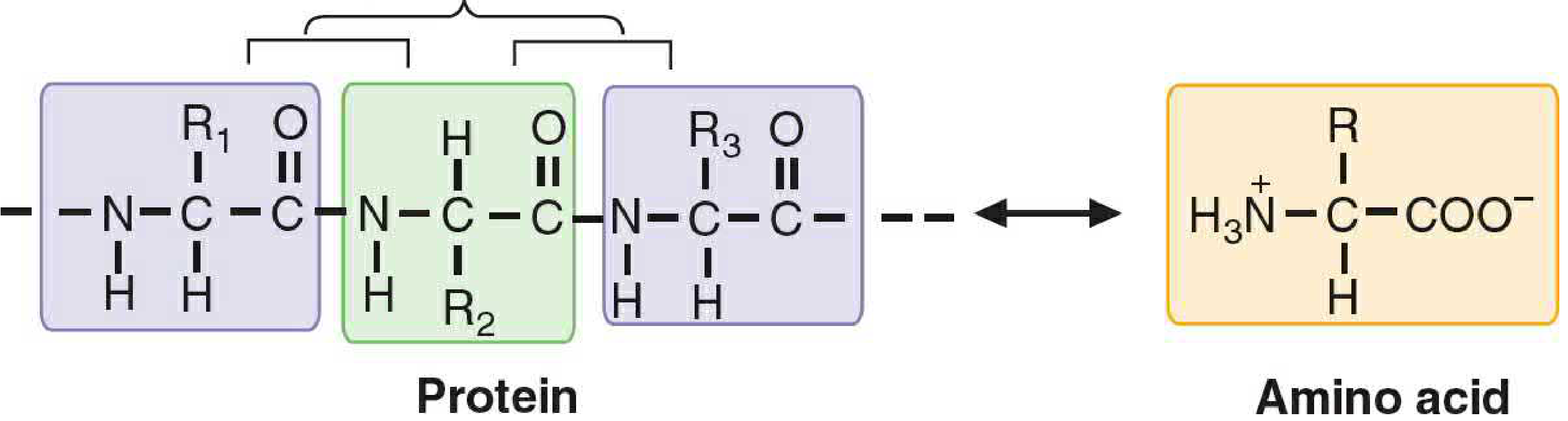
Free amino acid at physiologic pH (left) and amino acids joined through peptide bonds in a protein (right)
3.2 Classification of Amino Acids
There are 20 standard amino acids encoded by DNA in humans.
A. Based on R-group polarity:
1. Nonpolar (Hydrophobic) — 9 AAs:
- Glycine (Gly, G), Alanine (Ala, A), Valine (Val, V), Leucine (Leu, L), Isoleucine (Ile, I), Proline (Pro, P), Phenylalanine (Phe, F), Tryptophan (Trp, W), Methionine (Met, M)
- Side chains are "oily" — cluster inside folded proteins (hydrophobic effect)
- Proline is unique: its R group forms a ring with its own nitrogen → secondary amino group → breaks α-helices
2. Polar, Uncharged — 6 AAs:
- Serine (Ser, S), Threonine (Thr, T), Tyrosine (Tyr, Y), Asparagine (Asn, N), Glutamine (Gln, Q), Cysteine (Cys, C)
- Participate in hydrogen bonds
- Cys: -SH group → forms disulfide bonds (-S-S-) between cysteines → stabilize protein structure
- Ser, Thr, Tyr: phosphorylated by kinases → signal transduction
3. Acidic (Negatively Charged) — 2 AAs:
- Aspartate (Asp, D), Glutamate (Glu, E)
- Lose protons at physiologic pH → negative charge (-COO⁻)
4. Basic (Positively Charged) — 3 AAs:
- Lysine (Lys, K), Arginine (Arg, R), Histidine (His, H)
- Accept protons → positive charge
- Histidine: only amino acid that ionizes within the physiologic pH range (7.35-7.45) → important buffer in hemoglobin and other proteins
B. Based on nutritional requirement:
- Essential amino acids (cannot be synthesized; must come from diet):
Phenylalanine, Valine, Tryptophan, Threonine, Isoleucine, Methionine, Histidine, Leucine, Lysine
- Mnemonic: PVT TIM HaLL
- Non-essential amino acids: Synthesized by the body (e.g., Alanine, Glycine, Serine)
- Conditionally essential: Required only in disease states or rapid growth (e.g., Arginine, Glutamine)
3.3 Peptide Bond
When two amino acids join, the carboxyl group of one reacts with the amino group of another, releasing water (condensation/dehydration reaction) → forms a peptide bond (-CO-NH-).
Properties of the peptide bond:
- Has partial double bond character (resonance) → rigid, planar
- Trans configuration is preferred
- The backbone of a polypeptide is -[NH-CHR-CO]n-
Nomenclature:
- 2 AAs → dipeptide
- 3 AAs → tripeptide
- Up to ~50 AAs → polypeptide (or oligopeptide)
-
50 AAs → protein
3.4 Levels of Protein Structure
Primary (1°) Structure:
- The linear sequence of amino acids from N-terminus to C-terminus
- Held by covalent peptide bonds
- Determines all higher levels of structure
- Example: The specific sequence of 574 amino acids in hemoglobin β-chain
Secondary (2°) Structure:
- Local regular folding of the polypeptide backbone
- Held by hydrogen bonds between backbone C=O and N-H groups
- Two major types:
- α-Helix: right-handed coil; C=O of residue n hydrogen bonds to N-H of residue n+4; 3.6 residues per turn; Proline breaks it
- β-Sheet: extended strands linked by H-bonds; can be parallel or antiparallel
Tertiary (3°) Structure:
- Overall 3D shape of a single polypeptide chain
- Stabilized by multiple noncovalent forces + disulfide bonds:
- Hydrophobic interactions (nonpolar R groups buried inside)
- Ionic (electrostatic) bonds (salt bridges)
- Hydrogen bonds (polar side chains)
- Van der Waals forces
- Disulfide bonds (-S-S-) between Cys residues (covalent)
Quaternary (4°) Structure:
- Assembly of two or more polypeptide subunits (chains)
- Held by the same noncovalent forces as tertiary structure
- Example: Hemoglobin = 2α + 2β subunits; Insulin = A chain + B chain (linked by disulfide bonds)
3.5 Biological Roles of Proteins
| Role | Example |
|---|---|
| Enzymes (catalysts) | Amylase, Pepsin, Trypsin |
| Structural support | Collagen, Keratin, Elastin |
| Transport | Hemoglobin (O₂), Albumin (fatty acids, drugs) |
| Hormones | Insulin, Glucagon, Growth hormone |
| Antibodies/Immunity | Immunoglobulins (IgG, IgA) |
| Receptors | Insulin receptor, Adrenergic receptor |
| Membrane transport | Ion channels, Carrier proteins |
| Muscle contraction | Actin, Myosin |
| Coagulation | Fibrinogen, Thrombin |
| Toxins/Venom | Botulinum toxin |
Energy from proteins: Complete oxidation yields ~4 kcal/g
SECTION 4: NUCLEIC ACIDS
4.1 Definition and Types
Nucleic acids are polymers of nucleotides that store and transmit genetic information and direct protein synthesis.
Two main types:
- DNA (Deoxyribonucleic acid): stores genetic information
- RNA (Ribonucleic acid): involved in expressing genetic information (transcription, translation)
4.2 Structure of a Nucleotide
Each nucleotide consists of three components:
- Pentose sugar: Deoxyribose (in DNA) or Ribose (in RNA)
- Nitrogenous base: Purine or Pyrimidine
- Phosphate group (one to three; monophosphate, diphosphate, triphosphate)
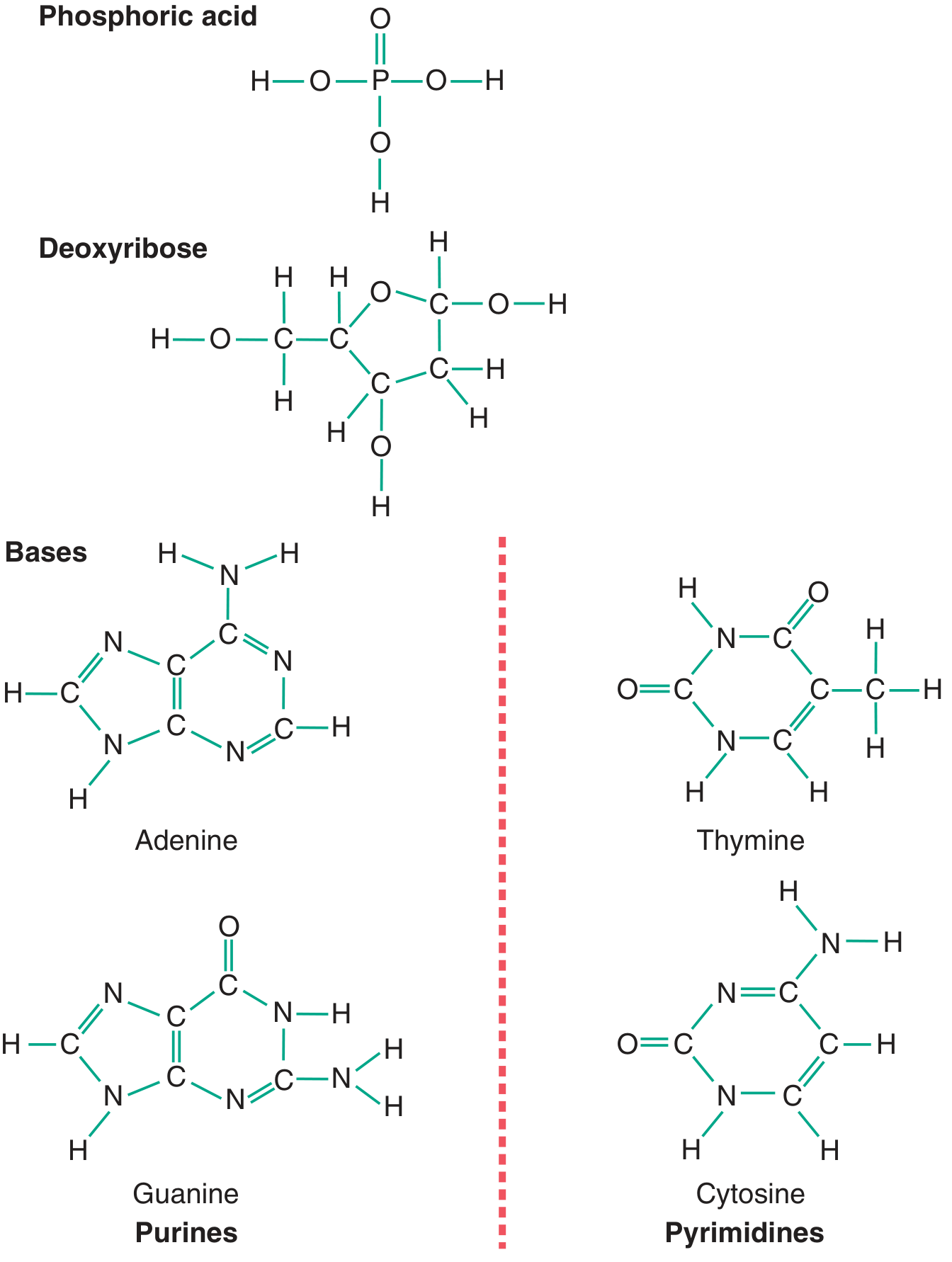
Nitrogenous Bases:
| Type | Name | Present In |
|---|---|---|
| Purines (double ring) | Adenine (A), Guanine (G) | DNA & RNA |
| Pyrimidines (single ring) | Cytosine (C) | DNA & RNA |
| Thymine (T) | DNA only | |
| Uracil (U) | RNA only |
Memory Aid: PuRines have double rings (think: pURe gold = more valuable, more rings). Pyrimidines = CUT (Cytosine, Uracil, Thymine)
Nucleoside = Base + Sugar (no phosphate)
Nucleotide = Base + Sugar + Phosphate
4.3 Structure of DNA
Watson and Crick (1953) proposed the double helix model of DNA:
Key features:
- Two antiparallel polynucleotide strands wound around each other in a right-handed double helix
- Sugar-phosphate backbone forms the outer (hydrophilic) part
- Nitrogenous bases are inside (hydrophobic), stacked perpendicular to the helix axis
- Strands are held together by hydrogen bonds between complementary base pairs:
- A — T (Adenine-Thymine): 2 hydrogen bonds
- G ≡ C (Guanine-Cytosine): 3 hydrogen bonds
- Chargaff's Rule: In any DNA, %A = %T and %G = %C
- Helix parameters: ~10 base pairs per turn; 3.4 Å between base pairs; 34 Å per turn
- Backbone: nucleotides linked by phosphodiester bonds (between 3'-OH of one sugar and 5'-phosphate of next)
4.4 Structure of RNA
RNA is generally single-stranded (but folds into secondary structures via local base pairing).
| Feature | DNA | RNA |
|---|---|---|
| Sugar | 2'-Deoxyribose | Ribose (has 2'-OH) |
| Bases | A, T, G, C | A, U, G, C |
| Strands | Double-stranded | Single-stranded (usually) |
| Location | Nucleus (mainly) | Nucleus + Cytoplasm |
| Stability | Very stable | Less stable |
| Function | Genetic information storage | Gene expression |
4.5 Types of RNA
| Type | Full Name | Function |
|---|---|---|
| mRNA | Messenger RNA | Carries genetic code from DNA to ribosome for translation |
| rRNA | Ribosomal RNA | Structural and catalytic component of ribosomes (~80% of total RNA) |
| tRNA | Transfer RNA | Carries specific amino acids to the ribosome; has anticodon loop; cloverleaf shape |
| hnRNA | Heterogeneous nuclear RNA | Pre-mRNA before processing |
| snRNA | Small nuclear RNA | Involved in mRNA splicing |
| miRNA | MicroRNA | Regulates gene expression post-transcriptionally |
4.6 Biological Roles of Nucleic Acids
| Role | Details |
|---|---|
| Genetic information storage | DNA carries the complete genome |
| Heredity | DNA replication transmits genetic info to daughter cells |
| Protein synthesis | mRNA directs translation; tRNA brings amino acids; rRNA catalyzes peptide bonds |
| Energy currency | ATP (adenine + ribose + 3 phosphates) drives most cellular reactions |
| Coenzymes | NAD⁺, FAD, CoA — contain nucleotide components |
| Intracellular signaling | cAMP, cGMP act as second messengers |
| Mutation/Genetic variation | Base changes in DNA → altered proteins → disease |
QUICK COMPARISON TABLE
| Property | Carbohydrates | Lipids | Proteins | Nucleic Acids |
|---|---|---|---|---|
| Monomer | Monosaccharide | Fatty acid/glycerol | Amino acid | Nucleotide |
| Key bond | Glycosidic | Ester | Peptide | Phosphodiester |
| Elements | C, H, O | C, H, O (less O) | C, H, O, N, S | C, H, O, N, P |
| Energy yield | 4 kcal/g | 9 kcal/g | 4 kcal/g | - |
| Primary function | Quick energy, structure | Long-term energy, membranes | Enzymes, structure, transport | Genetic info, protein synthesis |
| Storage form | Glycogen (animals), Starch (plants) | Triacylglycerols in adipose | Muscle protein | Chromosomes |
HIGH-YIELD EXAM POINTS
- Reducing sugars: All monosaccharides; maltose, lactose are reducing disaccharides. Sucrose is NON-reducing (anomeric carbons of both monomers are involved in the bond).
- Chargaff's Rule: A=T, G≡C in DNA; (A+G)/(T+C) = 1 always.
- Essential amino acids: PVT TIM HaLL (9 essential AAs).
- Proline — breaks alpha helices; has secondary amino group (imino group).
- Histidine — only amino acid that ionizes within physiologic pH range; key buffer in hemoglobin.
- Disulfide bonds — covalent; between cysteine residues; stabilize extracellular proteins.
- Phospholipids are amphipathic → form bilayers → basis of all biological membranes.
- Glycogen has more branch points than starch (branch every 8-12 residues vs. 24-30 in amylopectin) → allows faster glucose mobilization.
- Insulin glargine (pharmaceutical application): created by substituting Asn→Gly at A21 and adding Arg residues to C-terminus of B chain → shifts isoelectric point, slower absorption → long-acting insulin.
- Fat-soluble vitamins (A, D, E, K) are lipid biomolecules; absorbed with dietary fat.
PHARMACEUTICAL RELEVANCE
| Biomolecule | Pharmaceutical Application |
|---|---|
| Glucose | IV fluid (5% Dextrose); treatment of hypoglycemia |
| Heparin | Polysaccharide anticoagulant drug |
| Hyaluronic acid | Joint injections, dermal fillers |
| Insulin | Protein hormone used in diabetes treatment |
| Cholesterol | Precursor for synthesis of cortisone, oral contraceptives, vitamin D analogues |
| Phospholipids (lecithin) | Drug delivery: liposomes for targeted drug delivery |
| DNA | Target for anticancer drugs (doxorubicin, cisplatin intercalate with DNA) |
| Amino acids | IV nutrition (total parenteral nutrition - TPN); prodrug design |
| Eicosanoids | NSAIDs (aspirin, ibuprofen) block prostaglandin synthesis from arachidonic acid |
Sources: Basic Medical Biochemistry: A Clinical Approach, 6e (Marks) | Lippincott's Illustrated Reviews: Biochemistry, 8e | Harper's Illustrated Biochemistry, 32e | Guyton & Hall Textbook of Medical Physiology | PCI B.Pharm Syllabus (BP203T)
give me short type all content
Here is all the B.Pharm 2nd Sem Biochemistry — Biomolecules content in short, crisp, exam-ready format:
📝 BIOMOLECULES — SHORT NOTES
B.Pharm 2nd Sem | BP203T Biochemistry | Unit I
1. CARBOHYDRATES
Definition: Polyhydroxy aldehydes or ketones. Formula: (CH₂O)n
Elements: C, H, O | Energy: 4 kcal/g
Classification:
| Class | Units | Examples |
|---|---|---|
| Monosaccharides | 1 | Glucose, Fructose, Galactose |
| Disaccharides | 2 | Sucrose, Lactose, Maltose |
| Oligosaccharides | 3-9 | Raffinose |
| Polysaccharides | >9 | Starch, Glycogen, Cellulose |
Types of Monosaccharides:
- Aldose = aldehyde group → Glucose, Galactose
- Ketose = keto group → Fructose
- Pentose (C5): Ribose (RNA), Deoxyribose (DNA)
- Hexose (C6): Glucose (blood sugar), Fructose, Galactose
Key Disaccharides:
| Name | Monomers | Bond | Note |
|---|---|---|---|
| Sucrose | Glucose + Fructose | α(1→2)β | Non-reducing |
| Lactose | Glucose + Galactose | β(1→4) | Milk sugar |
| Maltose | Glucose + Glucose | α(1→4) | Reducing |
Key Polysaccharides:
| Name | Type | Link | Notes |
|---|---|---|---|
| Starch | Plant storage | α(1→4); α(1→6) branches | Amylose + Amylopectin |
| Glycogen | Animal storage | α(1→4); α(1→6) branches | More branched than starch |
| Cellulose | Structural | β(1→4) | Not digested by humans |
| Chitin | Structural | β(1→4) | Insect exoskeleton |
Functions:
- Energy (4 kcal/g) → Glycogen in liver & muscle
- Structure → Cellulose, Chitin
- Cell recognition → Glycoproteins, Blood groups (ABO)
- Nucleic acid backbone → Ribose, Deoxyribose
- Coenzyme component → Ribose in ATP, NAD⁺
2. LIPIDS
Definition: Heterogeneous group; insoluble in water, soluble in organic solvents (ether, chloroform)
Elements: C, H, O (less O than carbohydrates) | Energy: 9 kcal/g
Classification:
| Class | Example |
|---|---|
| Simple (fats, waxes) | Triacylglycerols, Beeswax |
| Complex (phospholipids, glycolipids, sphingolipids) | Lecithin, Cerebrosides, Sphingomyelin |
| Derived (from hydrolysis) | Cholesterol, Bile acids, Steroid hormones, Vitamins A/D/E/K |
Fatty Acids:
- Saturated (no double bonds): Palmitic (C16:0), Stearic (C18:0) — solid
- Monounsaturated (1 double bond): Oleic (C18:1) — olive oil
- Polyunsaturated: Linoleic (C18:2), Linolenic (C18:3) — Essential (must come from diet)
- Arachidonic acid → precursor of eicosanoids (prostaglandins, thromboxanes, leukotrienes)
Triacylglycerols (TAGs):
- 3 fatty acids + glycerol (ester bonds)
- Major energy store in adipose tissue
- 9 kcal/g; mobilized by hormone-sensitive lipase
Phospholipids:
- Glycerol + 2 FA + phosphate + polar head group
- Amphipathic → form cell membrane bilayers
- Types: Phosphatidylcholine (lecithin), Phosphatidylethanolamine, Phosphatidylserine, Phosphatidylinositol
- Lecithin → lung surfactant; liposome drug delivery
Cholesterol:
- Sterol with 4-ring steroid nucleus
- Modulates membrane fluidity
- Precursor → steroid hormones, bile acids, Vitamin D
Functions of Lipids:
| Role | Example |
|---|---|
| Energy storage | TAGs (9 kcal/g) |
| Membrane structure | Phospholipids + Cholesterol |
| Hormones | Cholesterol → Estrogen, Testosterone, Cortisol |
| Nerve insulation | Sphingomyelin (myelin sheath) |
| Thermal insulation | Subcutaneous fat |
| Signaling | Eicosanoids, DAG, IP₃ |
| Lung surfactant | Dipalmitoylphosphatidylcholine |
| Vitamin transport | Fat-soluble vitamins (A, D, E, K) |
3. AMINO ACIDS & PROTEINS
Amino Acids:
Definition: Building blocks of proteins. Each has: α-carbon + -COOH + -NH₂ + R group (side chain)
At pH 7.4 → Zwitterion form (-COO⁻ and -NH₃⁺)
Classification by R group:
| Type | Examples |
|---|---|
| Nonpolar (hydrophobic) | Gly, Ala, Val, Leu, Ile, Pro, Phe, Trp, Met |
| Polar uncharged | Ser, Thr, Tyr, Asn, Gln, Cys |
| Acidic (–ve) | Asp, Glu |
| Basic (+ve) | Lys, Arg, His |
Essential Amino Acids (9):
PVT TIM HaLL = Phenylalanine, Valine, Threonine, Tryptophan, Isoleucine, Methionine, Histidine, Leucine, Lysine
Special Points:
| AA | Special Property |
|---|---|
| Proline | Secondary amino group; breaks α-helix |
| Cysteine | Forms disulfide bonds (-S-S-) |
| Histidine | Only AA ionizing within physiologic pH (7.35-7.45) |
| Glycine | Smallest; no chiral center; present at sharp bends |
Peptide Bond:
- Formed between -COOH of one AA and -NH₂ of another → releases H₂O (condensation)
- Has partial double bond character → rigid, planar, usually trans
Protein Structure — 4 Levels:
| Level | Description | Bond |
|---|---|---|
| 1° Primary | AA sequence (N→C terminus) | Peptide bond (covalent) |
| 2° Secondary | α-helix, β-sheet, β-turn | H-bonds (backbone C=O ··· N-H) |
| 3° Tertiary | Full 3D shape of one chain | H-bonds, ionic, hydrophobic, van der Waals, disulfide |
| 4° Quaternary | Multiple subunits | Same noncovalent forces |
- α-Helix: C=O of residue n H-bonds to N-H of residue n+4; 3.6 residues/turn
- β-Sheet: Extended strands, H-bonds between strands; parallel or antiparallel
- Proline breaks α-helices
- Hydrophobic R groups face inside; polar/charged face outside
Functions of Proteins:
| Role | Example |
|---|---|
| Enzymes | Amylase, Trypsin, Pepsin |
| Structural | Collagen, Keratin, Elastin |
| Transport | Hemoglobin (O₂), Albumin |
| Hormones | Insulin, Glucagon |
| Antibodies | Immunoglobulins |
| Receptors | Insulin receptor |
| Muscle contraction | Actin, Myosin |
| Coagulation | Fibrinogen, Thrombin |
Energy: ~4 kcal/g | Nitrogen content: ~16%
4. NUCLEIC ACIDS
Definition: Polymers of nucleotides; store and transmit genetic information
Nucleotide = Pentose sugar + Nitrogenous base + Phosphate group
Bases:
| Type | Rings | Bases | Present in |
|---|---|---|---|
| Purines | Double ring | Adenine (A), Guanine (G) | DNA & RNA |
| Pyrimidines | Single ring | Cytosine (C) | DNA & RNA |
| Thymine (T) | DNA only | ||
| Uracil (U) | RNA only |
Memory: "CUT the Py" → Cytosine, Uracil, Thymine = Pyrimidines
DNA vs RNA:
| Feature | DNA | RNA |
|---|---|---|
| Sugar | Deoxyribose | Ribose |
| Bases | A, T, G, C | A, U, G, C |
| Strands | Double | Single |
| Location | Nucleus | Nucleus + Cytoplasm |
| Function | Genetic storage | Gene expression |
DNA Double Helix (Watson & Crick, 1953):
- Two antiparallel strands; right-handed helix
- Backbone: Sugar-phosphate (outside, hydrophilic)
- Bases: inside (hydrophobic), stacked
- Base pairing:
- A = T (2 H-bonds)
- G ≡ C (3 H-bonds)
- Strands linked by phosphodiester bonds
- Chargaff's Rule: %A = %T, %G = %C
Types of RNA:
| Type | Function |
|---|---|
| mRNA | Carries genetic code to ribosome |
| rRNA | Ribosome structure + catalysis |
| tRNA | Carries amino acids; cloverleaf shape; has anticodon |
| miRNA | Post-transcriptional gene regulation |
Functions of Nucleic Acids:
- DNA → stores and replicates genetic info
- mRNA/rRNA/tRNA → protein synthesis
- ATP → universal energy currency
- cAMP, cGMP → second messengers
- NAD⁺, FAD, CoA → coenzymes (contain nucleotide portion)
MASTER SUMMARY TABLE
| Property | Carbohydrates | Lipids | Proteins | Nucleic Acids |
|---|---|---|---|---|
| Monomer | Monosaccharide | Fatty acid | Amino acid | Nucleotide |
| Key bond | Glycosidic | Ester | Peptide | Phosphodiester |
| Elements | C, H, O | C, H, O | C, H, O, N, S | C, H, O, N, P |
| Energy | 4 kcal/g | 9 kcal/g | 4 kcal/g | - |
| Storage form | Glycogen/Starch | TAGs (adipose) | Muscle protein | Chromosomes |
| Main role | Quick energy | Energy reserve, membranes | Enzymes, structure | Genetic info |
HIGH-YIELD EXAM POINTS (One-liners)
- Sucrose = non-reducing sugar (both anomeric carbons locked)
- Glycogen branches every 8-12 residues; Amylopectin every 24-30
- Cellulose has β(1→4) bonds → not digested by humans → dietary fiber
- Lipids yield 9 kcal/g (double that of carbs/proteins)
- Essential fatty acids: Linoleic (ω-6) and α-Linolenic acid (ω-3)
- Essential amino acids: 9 (PVT TIM HaLL)
- Proline → breaks α-helix (secondary amino group, ring structure)
- Histidine → ionizes at physiological pH → acts as buffer in hemoglobin
- Cysteine → disulfide bonds → stabilize protein 3D structure
- Chargaff's rule: A=T, G≡C in DNA
- Thymine only in DNA; Uracil only in RNA
- 3 H-bonds in G≡C; 2 H-bonds in A=T
- Phospholipids are amphipathic → form bilayers → basis of all membranes
- Cholesterol precursor → steroid hormones + bile acids + Vitamin D
- tRNA has cloverleaf secondary structure + anticodon loop
PHARMACEUTICAL APPLICATIONS (Short)
| Biomolecule | Drug/Application |
|---|---|
| Glucose | 5% Dextrose IV fluid, hypoglycemia treatment |
| Heparin | Polysaccharide → anticoagulant drug |
| Insulin | Protein hormone → diabetes |
| Cholesterol | Precursor for cortisone, oral contraceptives |
| Lecithin (phospholipid) | Liposomes for targeted drug delivery |
| DNA | Target for anticancer drugs (doxorubicin, cisplatin) |
| Arachidonic acid | NSAIDs (aspirin) block its conversion to prostaglandins |
| Amino acids | IV nutrition (TPN), prodrug design |
| Hyaluronic acid | Joint injections, ophthalmic viscosurgery |
All content aligned with PCI B.Pharm Syllabus BP203T Unit I | Sources: Lippincott's Biochemistry 8e, Harper's Biochemistry 32e, Basic Medical Biochemistry 6e
This is a shared conversation. Sign in to Orris to start your own chat.