
History taking for ENT patient 4th year mbbs
Reading File
Now let me search the medical library for ENT history taking content.
Finding Sources
Finding Sources
Cummings Otolaryngology is in the library. Let me search it for history taking content.
Finding Sources
Finding Sources
Let me also search for ear, nose, and throat specific symptom history sections, and read the general history section from block1:
Reading File
Finding Sources
Finding Sources
That block was about outcomes research, not the clinical history. Let me search more specifically for ear symptoms and the clinical evaluation chapters:
Finding Sources
Finding Sources
Let me now read the Cummings block2 History section and also block8 which had the biggest history section, while doing a web search for structured ENT history taking for MBBS:
Reading File
Reading File
Searching the Web
ENT history taking MBBS 4th year structured format ear nose throat
Now I have enough material from Cummings plus my own knowledge to deliver a thorough, structured ENT history-taking guide for 4th year MBBS. Let me compile this comprehensive response.
ENT History Taking - 4th Year MBBS
A systematic history in ENT follows the same general structure as any medical history but with organ-specific symptom inquiry for each of the three compartments: Ear, Nose/Sinuses, and Throat/Larynx. The guide below is organized as you would present it in a long case.
1. Biodata / Patient Identification
- Name, Age, Sex, Occupation, Address, Religion
- Age is especially important in ENT - congenital hearing loss in infants, presbycusis in elderly, adenoid hypertrophy in children, laryngeal carcinoma more common in older males
2. Chief Complaint(s)
State in the patient's own words with duration. Common presenting complaints grouped by organ:
| Ear (Otology) | Nose/Sinuses (Rhinology) | Throat/Larynx |
|---|---|---|
| Hearing loss | Nasal obstruction | Sore throat / dysphagia |
| Ear discharge (otorrhoea) | Nasal discharge (rhinorrhoea) | Odynophagia |
| Ear pain (otalgia) | Epistaxis (nose bleed) | Hoarseness / change of voice |
| Tinnitus | Sneezing | Stridor |
| Vertigo / dizziness | Anosmia / hyposmia | Neck swelling |
| Itching in ear | Facial pain / pressure | Dyspnoea |
| Facial weakness | Post-nasal drip | Snoring / sleep apnoea |
3. History of Present Illness (HPI)
For each complaint, apply the classic SOCRATES mnemonic:
S - Site: Which ear? One side or both? Which nostril?
O - Onset: Sudden or gradual? Any precipitating event?
C - Character: Continuous or intermittent? Pulsatile?
R - Radiation: Does ear pain radiate to jaw, neck?
A - Associations: What other symptoms accompany it?
T - Timing: Since when? Getting better or worse?
E - Exacerbating/Relieving factors: Posture, season, swimming?
S - Severity: Graded 1-10; effect on daily life
3A. Ear-Specific HPI Questions
Hearing Loss
- Unilateral or bilateral?
- Gradual (sensorineural - presbycusis, noise-induced) vs. sudden onset (sudden SNHL - emergency)?
- Conductive or fluctuating (Meniere's, otosclerosis)?
- Associated with ear discharge (CSOM), ear block/fullness?
- Paracusis Willisii (hears better in noise) - suggests otosclerosis
- Family history (Waardenburg, Usher syndromes, otosclerosis)
- Noise exposure at work (occupation - factory, military)?
- Drug history: aminoglycosides, loop diuretics, aspirin, cisplatin (ototoxic drugs)
Ear Discharge (Otorrhoea)
- Duration and quantity
- Character: mucoid/mucopurulent (tubotympanic CSOM), scanty/foul-smelling (atticoantral CSOM with cholesteatoma), blood-stained?
- Is it intermittent or persistent?
- Associated with pain, fever, deafness, facial palsy?
- History of swimming (otitis externa)?
- Previous ear surgery?
Otalgia (Ear Pain)
- Primary otalgia (originates in ear) vs. referred otalgia (very common!)
- Referred otalgia sources - always ask about:
- Teeth and jaw (TMJ, dental caries - V3)
- Throat / tonsils (IX - glossopharyngeal)
- Larynx / hypopharynx (X - vagus) - red flag for malignancy
- Cervical spine (C2, C3)
- Aggravated by chewing, swallowing, or jaw movement?
Tinnitus
- Unilateral or bilateral?
- Pulsatile (vascular cause - glomus tumor, AVM, carotid stenosis) or non-pulsatile?
- High-pitched (SNHL, noise-induced) vs. low-pitched roaring (Meniere's)?
- Objective (heard by examiner) vs. subjective?
- Associated with hearing loss, vertigo?
Vertigo / Dizziness
- True rotatory vertigo (vestibular) vs. light-headedness (cardiovascular)?
- Episodic or constant?
- Duration of each episode: seconds (BPPV), minutes-hours (Meniere's), days (vestibular neuritis)?
- Positional trigger (BPPV - rolling over in bed)?
- Associated with hearing loss and tinnitus (Meniere's triad)?
- Nausea, vomiting, nystagmus?
- CNS symptoms: diplopia, dysphagia, dysarthria (vertebrobasilar - red flag)?
3B. Nose and Sinus-Specific HPI Questions
Nasal Obstruction
- Unilateral (DNS, polyp, foreign body, tumour) or bilateral (rhinitis, adenoids)?
- Constant or alternating (alternating - vasomotor rhinitis, DNS)
- Onset: gradual vs. sudden (foreign body)
- Aggravated by posture? (worse lying down - adenoids in children)
Nasal Discharge (Rhinorrhoea)
- Unilateral or bilateral?
- Character:
- Watery/clear (allergic rhinitis, CSF rhinorrhoea)
- Mucoid/mucopurulent (sinusitis, URTI)
- Blood-stained (tumour, trauma, granulomatous disease)
- Foul-smelling, unilateral (foreign body, antrochoanal polyp)
- Halo test for CSF: positive halo = CSF (glucose positive with glucose oxidase strip)
- Anterior or posterior (post-nasal drip)?
Epistaxis
- Unilateral or bilateral? Anterior (Little's area/Kiesselbach's plexus - most common) or posterior?
- Amount, frequency, duration
- Spontaneous or following trauma/surgery?
- Associated with hypertension, anticoagulant use, bleeding disorders?
- Previous epistaxis episodes and what stopped it?
- Hereditary Haemorrhagic Telangiectasia (HHT) family history?
Sneezing
- Paroxysmal (allergic) vs. non-paroxysmal?
- Seasonal or perennial?
- Associated with itching of eyes, nose, palate (allergic triad)?
- Atopic history (asthma, eczema, urticaria)?
Anosmia / Hyposmia
- Sudden onset after URTI (post-viral) or head trauma vs. gradual (sinonasal disease, neurodegeneration)?
- Fluctuating (sinonasal - obstructive) vs. constant (neural)?
- Parosmia (distorted smell) or phantosmia (smell without stimulus)?
- Associated with nasal obstruction, polyps? - from Cummings Otolaryngology, p. History section
3C. Throat and Larynx-Specific HPI Questions
Sore Throat / Dysphagia
- Odynophagia (painful swallowing) or dysphagia (difficulty)?
- If dysphagia: solids only (mechanical obstruction) vs. solids and liquids (neurological/motility)?
- Site of obstruction: oropharynx, retrosternal?
- Acute vs. chronic? Recurrent?
- Plummer-Vinson syndrome: dysphagia + iron-deficiency anaemia + post-cricoid web?
Hoarseness / Voice Change
- Duration: acute (< 3 weeks, likely infective/functional) vs. chronic (> 3 weeks - red flag, investigate)
- Onset: sudden vs. gradual
- Constant vs. intermittent?
- Associated with fever, URTI (laryngitis)?
- History of smoking, alcohol use (carcinoma)
- Occupational voice use (singers, teachers - vocal nodules)?
- Associated dysphagia or odyno phagia (hypopharyngeal/oesophageal lesion)?
- Bovine cough (loss of explosive onset - suggests vocal cord palsy - recurrent laryngeal nerve)?
Stridor
- Inspiratory (supraglottic/glottic), expiratory (subglottic/tracheal), or biphasic?
- Onset: since birth (congenital - laryngomalacia #1 cause) vs. acute onset (croup, epiglottitis, foreign body)?
- Positional variation?
- Acute stridor = AIRWAY EMERGENCY - note immediately
Neck Swelling
- Duration, rate of growth (rapid = malignancy or inflammatory)?
- Site (anterior triangle vs. posterior triangle)?
- Painful (inflammatory) or painless (malignancy, lymphoma)?
- Associated features: weight loss, night sweats, fever (B-symptoms - lymphoma)?
- Hoarseness, dysphagia, epistaxis (head and neck primary tumour)?
4. Past History
- Previous ENT surgeries: tonsillectomy, adenoidectomy, myringotomy, FESS, mastoidectomy
- Previous ear/nose/throat infections
- Previous ear trauma
- History of similar complaints in the past
- General medical history: diabetes (affects wound healing, candida, malignant otitis externa), hypertension (epistaxis), hypothyroidism (voice change), GERD (laryngopharyngeal reflux)
5. Drug History
Always ask specifically about:
- Ototoxic drugs: Aminoglycosides (gentamicin, streptomycin), loop diuretics (furosemide), salicylates (aspirin), cisplatin, quinine
- Drugs causing rhinitis: Antihypertensives (beta-blockers, ACE inhibitors), OCP, NSAIDs (aspirin-exacerbated respiratory disease)
- Anticoagulants (warfarin, heparin) - relevant to epistaxis and surgical risk
- Steroids (nasal, inhaled, systemic)
- Rhinitis medicamentosa: Overuse of oxymetazoline decongestant nasal drops (> 3-5 days)
6. Allergic History
- Any known allergies to drugs, food, dust, pollen?
- Atopic triad (asthma + allergic rhinitis + eczema) - important for allergic rhinitis, nasal polyps
- Samter's triad: aspirin sensitivity + nasal polyps + asthma
7. Family History
- Hearing loss (otosclerosis is autosomal dominant; hereditary SNHL)
- Allergic diseases (atopy has a familial pattern)
- HHT (hereditary haemorrhagic telangiectasia) - autosomal dominant
- Head and neck cancers
8. Personal and Social History
- Tobacco/smoking: Laryngeal, pharyngeal, oral, nasopharyngeal carcinoma; chronic laryngitis; vocal nodules
- Alcohol: Head and neck cancers (synergistic with tobacco); pharyngitis
- Occupation:
- Noise exposure (industrial deafness)
- Voice overuse (teachers, singers - vocal nodules, polyps)
- Chemical exposure (woodworkers - sinonasal adenocarcinoma; nickel refinery workers - sinonasal carcinoma)
- Diet: Iron-deficiency (Plummer-Vinson), vitamin deficiency
- Travel: Barotrauma (flying, diving) causing ear pain or SNHL
- Sexual history: HPV (laryngeal papillomatosis, oropharyngeal carcinoma), syphilis (SNHL)
9. Review of Systems (Systemic Enquiry)
Enquire briefly about:
- CNS: Headache, facial numbness, facial weakness, diplopia, dysphagia (cranial nerve involvement by tumour or base of skull disease)
- Respiratory: Cough, wheeze, dyspnoea (asthma associated with nasal polyps; tracheal involvement by thyroid/laryngeal lesion)
- Constitutional: Fever, weight loss, night sweats, fatigue (malignancy, lymphoma, TB)
- GI: GERD (laryngopharyngeal reflux causing hoarseness, globus)
10. Summary at the End
Summarize in 2-3 sentences:
"In summary, this is a [age]-year-old [sex] who presents with [chief complaint(s)] of [duration], associated with [relevant positive features], with a background of [relevant past/drug/family history]."
Key Red Flags in ENT History
| Red Flag | Possible Diagnosis |
|---|---|
| Hoarseness > 3 weeks in smoker | Laryngeal carcinoma |
| Unilateral epistaxis + nasal obstruction (young male) | Juvenile Nasopharyngeal Angiofibroma / malignancy |
| Referred otalgia without ear findings | Hypopharyngeal/laryngeal carcinoma |
| Unilateral serous otitis media in adult | Nasopharyngeal carcinoma |
| Pulsatile tinnitus | Glomus tumour, vascular anomaly |
| Sudden SNHL | Neurovascular emergency - treat within 72 hours |
| Acute stridor in child | Epiglottitis, croup, foreign body - airway emergency |
| Progressive unilateral neck mass + B-symptoms | Lymphoma / metastatic carcinoma |
Tips for MBBS Long Case Presentation
- Start with biodata and chief complaint - never skip age and occupation
- Always lateralise - which ear/nostril/side of throat
- Enquire about all three ENT compartments even if complaint is in only one (associated symptoms may be the key)
- Drug history and occupational history are frequently asked in viva
- Systemic associations matter - link atopy to nose, DM to malignant otitis externa, GERD to laryngitis
- Do not forget the ototoxic drug list - examiners love asking this
Source: Cummings Otolaryngology Head and Neck Surgery (9780323612173)
Chief complain of neck swelling
Reading File
A neck swelling is a broad clinical scenario. Let me search the library in parallel for relevant content.
Finding Sources
Finding Sources
Finding Sources
Finding Sources
Finding Sources
Excellent - S. Das Manual on Clinical Surgery and Scott-Brown's have dedicated neck swelling content. Let me read these in parallel.
Reading File
Reading File
Reading File
Good content from S. Das and Scott-Brown's. Let me also get the history-taking section from S. Das and read more context around the neck swelling case workup:
Reading File
Finding Sources
I now have enough material from both S. Das's Manual on Clinical Surgery and Scott-Brown's Otorhinolaryngology, combined with my clinical knowledge, to deliver a thorough, exam-oriented response. Let me also fetch the cervical lymph node image from S. Das:
Loading Image
I now have all I need. Here is the comprehensive, exam-ready guide:
History Taking: Chief Complaint - Neck Swelling
A neck swelling is one of the most common and clinically important presentations in ENT and surgery. A structured, systematic history is essential because the differential diagnosis is wide - ranging from a benign reactive lymph node to tuberculosis, lymphoma, or metastatic carcinoma.
1. Biodata
- Name, Age, Sex, Occupation, Address
- Age is a critical differentiator:
- Child/young adult: reactive lymphadenitis, TB, congenital cyst (branchial, thyroglossal), lymphoma
- Middle-aged/elderly: metastatic carcinoma, lymphoma, thyroid disease
- Sex: thyroid swellings are commoner in females; head and neck carcinoma in males
- Occupation: tobacco/alcohol exposure (carcinoma), chemical/radiation exposure
2. Chief Complaint
"Swelling in the neck since ______ (duration)"
3. History of Present Illness (HPI)
A. Onset and Duration
- Sudden vs. gradual onset?
- Acute (hours-days): acute lymphadenitis, abscess, infected congenital cyst
- Subacute (weeks): TB lymphadenitis, infectious mononucleosis
- Chronic/slowly progressive (months): malignancy, chronic TB, thyroid swelling
B. Site and Number
- Midline: Thyroglossal cyst, thyroid swelling, subhyoid bursal cyst, dermoid cyst, lymph node
- Lateral (anterior triangle): Lymph node (most common), branchial cyst, carotid body tumour, sternomastoid tumour, parotid swelling
- Lateral (posterior triangle): Lymph node, cystic hygroma, cervical rib
- Single vs. multiple swellings?
- Unilateral vs. bilateral?
C. Size and Progression
- Initial size vs. current size
- Rate of growth:
- Rapid growth (days-weeks): acute inflammation, lymphoma, aggressive malignancy
- Slow growth (months): TB, thyroid, chronic malignancy
- Swelling present since childhood, now increasing: congenital cyst (branchial, thyroglossal)
- New lumps appearing alongside: metastatic carcinoma ("new lumps by the side" - S. Das)
D. Pain / Tenderness
- Painful: Acute lymphadenitis, abscess, infected congenital cyst, acute thyroiditis
- Painless: Malignancy (lymphoma, metastatic Ca), TB lymphadenitis (characteristically non-tender/painless), thyroid swelling
- Painless + rapidly enlarging = lymphoma until proven otherwise
- Dull aching pain in neck + referred otalgia = hypopharyngeal/laryngeal malignancy
E. Associated Local Symptoms
Ask systematically about all three ENT compartments:
Throat / Larynx (primary site may be here):
- Hoarseness / change of voice (laryngeal ca, vocal cord palsy - RLN involvement)
- Difficulty in swallowing / dysphagia (pharyngeal, oesophageal, thyroid compression)
- Odynophagia (painful swallowing)
- Blood-stained sputum / haemoptysis
- Stridor (airway compression)
Nose / Nasopharynx:
- Nasal obstruction, epistaxis, blood-stained nasal discharge (nasopharyngeal carcinoma - NPC)
- Unilateral nasal obstruction in an adolescent male (juvenile nasopharyngeal angiofibroma)
- Hearing loss, blocked ear, middle ear effusion in adult (NPC blocking Eustachian tube)
Oral cavity / Oropharynx:
- Ulcer in the mouth, tongue, gum
- Bleeding from oral cavity
- Loosening of teeth (jaw involvement)
Ear:
- Referred otalgia without primary ear disease = red flag for hypopharyngeal or laryngeal pathology (Arnold's nerve - vagus)
F. Systemic / Constitutional Symptoms
These are especially important in lymphoma and TB:
- Fever: Low-grade, prolonged (TB, lymphoma) vs. high-grade with chills (acute lymphadenitis)
- Night sweats (TB, lymphoma)
- Weight loss (malignancy, TB)
- Loss of appetite / anorexia
- Fatigue / generalised weakness
- B-symptoms of lymphoma: Fever >38°C + drenching night sweats + weight loss >10% in 6 months - each must be asked directly
G. Swallowing and Movement
- Does the swelling move with deglutition (swallowing)?
- Moves with swallowing: thyroid swelling, thyroglossal cyst
- Does NOT move: lymph node, branchial cyst, carotid body tumour
- Does the swelling move with protrusion of the tongue?
- Thyroglossal cyst moves up on tongue protrusion (attached to hyoid via thyroglossal tract)
- Is the swelling pulsatile?
- Expansile pulsation: carotid artery aneurysm
- Transmitted pulsation: carotid body tumour, malignant LN on carotid artery
4. Past History
- Similar swelling in the past - how did it resolve?
- Previous episodes of tonsillitis, pharyngitis, dental infections (source for reactive LN)
- Previous TB treatment / contact with TB patient
- Previous head and neck surgery (thyroidectomy, tonsillectomy, parotidectomy)
- History of radiation to head/neck (papillary thyroid carcinoma risk, salivary gland tumours)
- Previous malignancy elsewhere (metastatic node in neck - most common from head and neck, lung, breast, stomach)
- Skin conditions: melanoma on scalp/face (cervical metastasis)
- Dental history (odontogenic abscess)
5. Drug History
- Current medications, especially:
- Phenytoin (causes cervical lymphadenopathy - pseudolymphoma)
- Methotrexate (lymphoma-like reaction)
- Immunosuppressants (infections, lymphoma)
- Steroid use (opportunistic infections, TB reactivation)
- Any previous chemotherapy or radiotherapy
6. Personal and Social History
| Factor | Relevance |
|---|---|
| Tobacco smoking | Head & neck squamous cell carcinoma (SCC), laryngeal ca |
| Alcohol (synergistic with tobacco) | Oral, pharyngeal, laryngeal SCC |
| Betel nut/paan chewing | Oral SCC (very relevant in Indian subcontinent) |
| Sexual history (multiple partners, HPV) | Oropharyngeal SCC (tonsillar, base of tongue), HIV |
| HIV risk factors | Lymphadenopathy, atypical infections |
| Occupation | Chemical exposure, radiation, voice abuse |
| Contact with animals | Cat scratch disease (Bartonella), atypical mycobacteria |
7. Family History
- TB in household contacts (primary TB lymphadenitis)
- Lymphoma or haematological malignancy
- Thyroid disease (familial thyroid cancer - MEN2A with medullary ca)
- Head and neck cancers
8. Menstrual and Obstetric History (in females)
- Thyroid swelling often enlarges during puberty, pregnancy, menopause
- Pregnancy can precipitate or worsen thyrotoxicosis
9. Review of Systems
- Respiratory: Cough, haemoptysis (lung primary metastasising to neck)
- GI: Dysphagia, weight loss (oesophageal, gastric primary)
- Breast: Lump (breast cancer metastasis to cervical/supraclavicular LN)
- Thyroid symptoms: Heat/cold intolerance, palpitations, tremor, weight change (hyper/hypothyroid)
- Skin: Sun exposure, moles, changing skin lesions (melanoma)
Differential Diagnosis Framework by Location
| Location | Likely Diagnosis |
|---|---|
| Midline, moves with swallowing | Thyroid goitre, thyroiditis |
| Midline, moves with tongue protrusion | Thyroglossal cyst |
| Midline, no movement | Dermoid cyst, subhyoid bursal cyst, LN |
| Anterior triangle, along SCM | Lymph node, branchial cyst, carotid body tumour |
| Anterior triangle, below angle of jaw | Parotid swelling, submandibular gland |
| Posterior triangle | Lymph node, cystic hygroma, cervical rib |
| Supraclavicular (Virchow's node) | Metastasis from abdomen (stomach, colon), lung, breast |
| Bilateral, multiple, non-tender | Lymphoma, TB, viral (EBV, CMV), sarcoidosis |
Key Differentiating Features of Common Neck Swellings
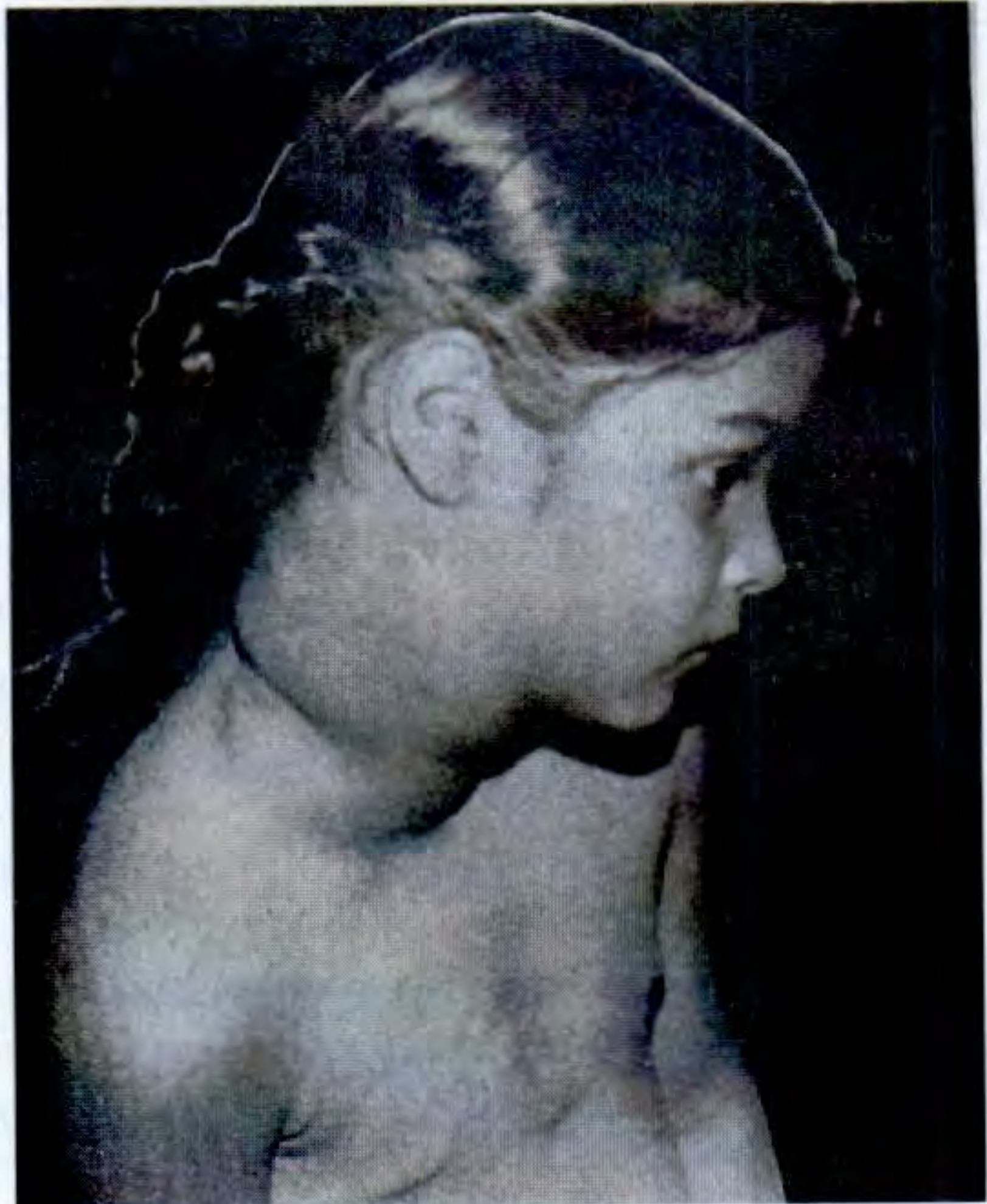
Tuberculous Lymph Nodes (S. Das)
- Commonest cause of cervical LN swelling in the Indian subcontinent
- Young patient, often with BCG scar
- Initially: firm, discrete nodes (lymphadenitis stage)
- Then: periadenitis - nodes become matted together
- Then: central caseation - cold abscess forms (fluctuant, NOT hot, NOT acutely tender)
- Late stage: "collar-stud abscess" - deep fascia perforated, two-level fluctuance
- Finally: sinus formation (discharging sinus)
- History of TB contact, cough, evening rise of temperature, night sweats
Carcinomatous (Secondary) Lymph Nodes (S. Das)
- Usually elderly (>50 years), except papillary thyroid Ca (younger)
- Men more often affected
- Painless, hard/stony hard consistency
- Surface: nodular
- Grows relatively fast; new lumps appear
- Deep to anterior edge of sternomastoid
- May fix to skin and deeper structures late
- Find the primary: examine entire head/neck, oral cavity, larynx, thyroid, lung, breast, abdomen
Branchial Cyst
- Young adults (usually 2nd-3rd decade)
- Anterior triangle, at the anterior border of upper 1/3 sternomastoid
- Soft, fluctuant, non-tender, smooth, transilluminates (partially)
- May suddenly enlarge after an URTI (wall lined with lymphoid tissue)
Thyroglossal Cyst
- Midline, at or near hyoid bone
- Smooth, soft, cystic
- DIAGNOSTIC TEST: Moves up on protruding the tongue
- Moves up with swallowing
- If infected: becomes painful, red, tender
Carotid Body Tumour (Paraganglioma)
- At the bifurcation of common carotid (level of hyoid bone/thyroid cartilage)
- Transmitted pulsation + splaying of carotid arteries (Lyre sign on angiography)
- Moves laterally but NOT vertically
- Bruit may be audible
Red Flags in Neck Swelling History
| Red Flag | Action |
|---|---|
| Painless, hard, progressively enlarging node in a smoker/drinker >40 yrs | Suspect metastatic SCC - urgent FNAC + panendoscopy |
| Hoarseness + neck swelling | Laryngeal/thyroid malignancy |
| Referred otalgia + neck node | Hypopharyngeal carcinoma |
| Unilateral serous otitis media + neck node in adult | Nasopharyngeal carcinoma (NPC) |
| B-symptoms (fever, night sweats, weight loss) + bilateral nodes | Lymphoma |
| Supraclavicular node (Virchow's/Troisier's sign) | Abdominal/thoracic malignancy |
| Dysphagia + post-cricoid web + iron deficiency | Plummer-Vinson - risk of post-cricoid Ca |
| Collar-stud abscess | TB - do not incise, aspirate and send for AFB/culture |
| Rapidly expanding neck swelling + stridor | Airway emergency |
Summary Statement for Viva / Long Case
"In summary, this is a [age]-year-old [sex], [smoker/non-smoker], presenting with a [site - midline/lateral, right/left] neck swelling of [duration], which is [painless/painful], [progressive/static], associated with [constitutional/local symptoms]. The swelling [does/does not] move with swallowing or tongue protrusion. Based on the history, the leading differential diagnosis is ____."
Sources: S. Das A Manual on Clinical Surgery 13th Ed; Scott-Brown's Otorhinolaryngology Head & Neck Surgery Vol 2; Cummings Otolaryngology Head & Neck Surgery
Local examination of anterior neck swelling
Finding Sources
Finding Sources
Finding Sources
Finding Sources
Reading File
Finding Sources
Reading File
Finding Sources
Reading File
Finding Sources
Now let me get the key chapter 3 "Examination of a swelling/lump" from S. Das, which is the foundational text for examining any swelling:
Finding Sources
Finding Sources
Reading File
Excellent content. Let me fetch the anatomy diagram and get the remaining palpation section:
Loading Image
Reading File
I now have comprehensive textbook material. Here is the complete, structured response:
Local Examination of Anterior Neck Swelling
Local examination follows the classic surgical sequence: Inspection → Palpation → Percussion → Auscultation, with special tests specific to the neck.
POSITION AND PREPARATION
- Patient sits upright on a stool/chair, neck slightly extended, good lighting
- Examiner stands in front and then behind the patient
- Expose the neck fully from the chin to the clavicles, with shoulders relaxed
- Ensure adequate lighting from the front
A. INSPECTION
1. Site / Position of the Swelling
Identify the anatomical triangle:
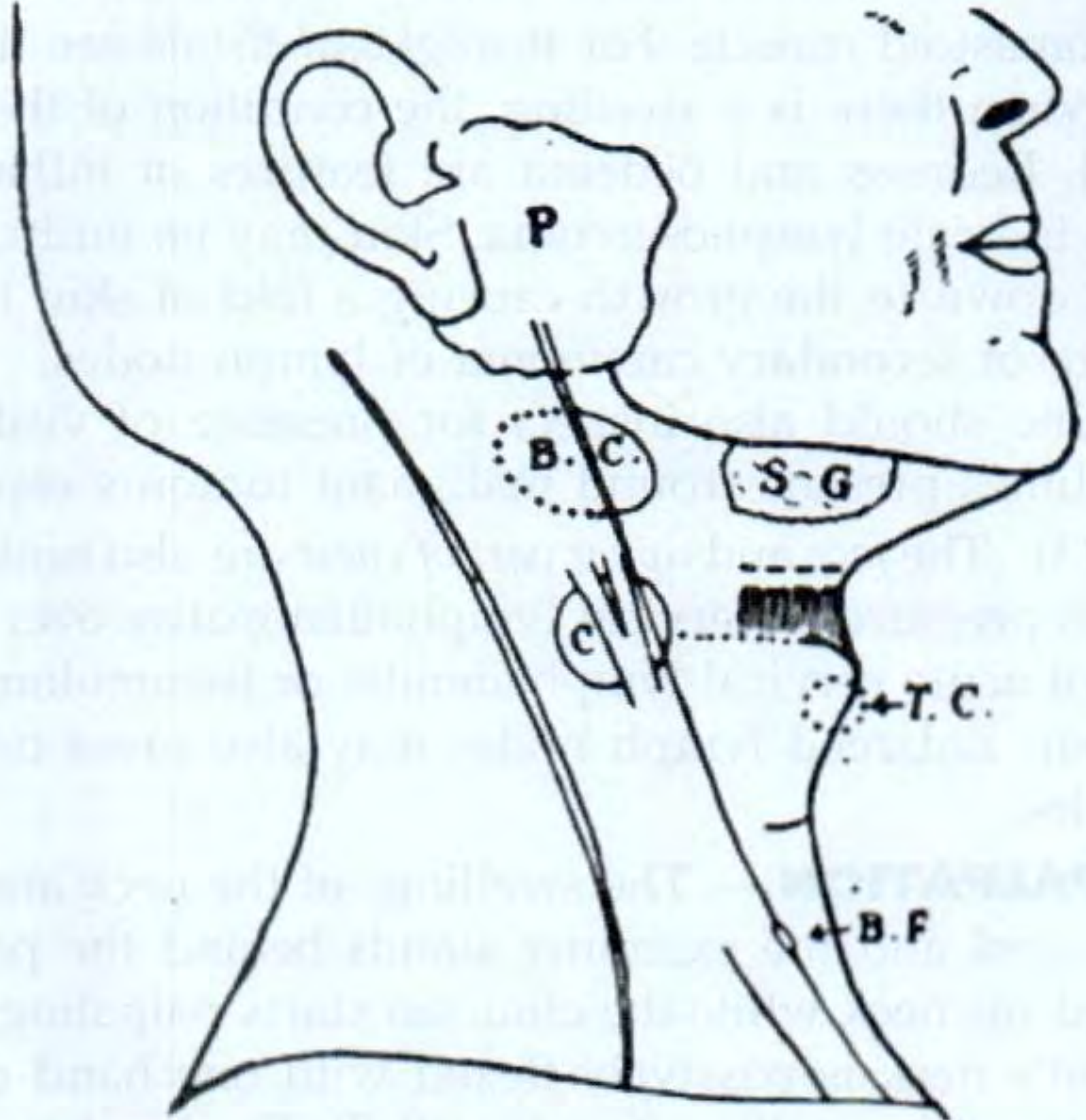
| Site | Likely Swelling |
|---|---|
| Midline, between chin and sternal notch | Thyroid, thyroglossal cyst, dermoid, subhyoid bursa |
| Anterior triangle (below jaw, medial to SCM) | LN, submandibular gland, parotid tail, branchial cyst |
| At/below angle of mandible | Parotid, submandibular gland, jugulodigastric LN |
| Along anterior border of SCM | Branchial cyst, LN |
| At SCM level, at thyroid cartilage | Carotid body tumour |
| Posterior triangle | LN, cystic hygroma, cervical rib swelling |
2. Number
- Single vs. multiple swellings
- Discrete vs. matted (matted = TB periadenitis, very characteristic)
3. Size
- Estimate in cm (length × width × height) - compare to a common object (e.g., walnut, hen's egg)
4. Shape
- Oval, spherical, irregular, lobulated
5. Surface
- Smooth vs. irregular/nodular
- Smooth: benign LN, cyst, thyroid nodule
- Nodular surface: malignant LN, multinodular goitre, lymphoma
6. Skin Over the Swelling (S. Das)
| Skin appearance | Diagnosis |
|---|---|
| Red, oedematous, brawny, warm | Acute lymphadenitis / abscess |
| Normal overlying skin | Benign/chronic swelling |
| Cold, normal to touch (not inflamed) | Tuberculous cold abscess (cold = "cold" abscess) |
| Tense, shining, dilated subcutaneous veins | Rapidly growing lymphosarcoma |
| Fixed to skin at late stage | Secondary carcinoma (malignant LN) |
| Scar / puckering | Previous TB sinus or previous surgery |
| Discharging sinus | TB sinus (undermining edge), actinomycosis (multiple sinuses) |
| Red, glossy, about to burst | TB cold abscess pointing to surface |
7. Movement with Deglutition (Swallowing) - DO AT INSPECTION
- Ask the patient to swallow a sip of water and observe:
- Moves up on swallowing: Thyroid swelling, thyroglossal cyst, subhyoid bursitis (attached to larynx/trachea)
- Does NOT move: Lymph node, branchial cyst, parotid swelling, carotid body tumour
- Exception: tuberculous/malignant LN fixed to trachea will also move
8. Movement with Tongue Protrusion
- Ask the patient to protrude the tongue:
- Moves up: Thyroglossal cyst (attached to hyoid via thyroglossal tract - PATHOGNOMONIC)
- Other swellings: do not move
9. Pressure Effects on Inspection
- Venous engorgement of neck/face (superior vena caval obstruction from large LN mass)
- Visible tracheal deviation (large thyroid or compressive LN)
- Stridor (audible from across the room = critical airway compromise)
- Unequal pupils / Horner's syndrome (sympathetic chain involvement)
- Swelling of upper limb (axillary LN)
- Dilated neck veins
B. PALPATION
Always approach from behind the patient for thyroid and deep neck structures.
1. Temperature
- Use the dorsum of fingers (more sensitive to temperature)
- Warm/hot: acute inflammation, abscess
- Normal temperature: benign chronic swelling, TB cold abscess (characteristically cold)
2. Tenderness
- Tender: acute lymphadenitis, abscess, thyroiditis
- Non-tender: malignancy, TB (usually non-tender), thyroid swelling
3. Number and Situation
- Palpate all cervical LN groups systematically - from below upward:
- Supraclavicular
- Posterior triangle nodes
- Jugulo-omohyoid
- Jugulodigastric (tonsillar node)
- Submandibular
- Submental
- Preauricular
- Occipital
4. Size
- Measure in cm (length × breadth)
5. Surface and Margin
- Smooth vs. irregular
- Well-defined vs. ill-defined margins (ill-defined = infiltrating, malignant)
6. Consistency (S. Das)
Palpate with palmar aspect of three fingers, rolling them gently against the swelling:
| Consistency | Diagnosis |
|---|---|
| Soft / fluctuant | Cold abscess, cystic hygroma, branchial cyst, thyroglossal cyst |
| Elastic and rubbery | Hodgkin's lymphoma (CLASSIC) |
| Firm, discrete, shotty | Syphilitic lymphadenopathy |
| Firm, matted | Tuberculous lymphadenitis (periadenitis stage) |
| Hard (stony hard) | Secondary (metastatic) carcinoma |
| Variable (soft + firm + hard areas) | Lymphosarcoma (non-Hodgkin's lymphoma) |
| Firm, smooth, solitary | Reactive lymphadenitis, early TB |
7. Mobility / Fixity
- Mobile in all planes (skin free, deeper structures free): Benign reactive LN, early TB
- Matted but mobile from deep structures: TB periadenitis
- Fixed to skin only: TB cold abscess about to burst, late malignancy
- Fixed to skin AND deeper structures: Late malignant lymphadenopathy (beyond surgical cure)
- Restricted to lateral movement only (not vertical): Carotid body tumour (tethered to vessels)
8. Relation to Sternocleidomastoid (SCM) Muscle (S. Das)
- Ask patient to turn head to the opposite side - this makes the SCM taut
- If the swelling is deep to SCM: disappears completely or partially under the taut muscle (e.g., branchial cyst - posterior half disappears)
- If the swelling is superficial to SCM: becomes more prominent and mobile over the contracted muscle
- If fixed to SCM: moves with the muscle - sternomastoid tumour (fibrosis of SCM in infants)
9. Pulsatility
- Place two fingers on the swelling and assess:
- Expansile pulsation (pushes fingers apart in two planes): Carotid artery aneurysm
- Transmitted pulsation (fingers pushed in one direction only): Carotid body tumour, malignant LN overlying carotid artery
- Non-pulsatile: Lymph node, cyst, thyroid (unless hypervascular primary toxic goitre)
10. Fluctuation Test
- Two-finger technique in two perpendicular planes
- Positive (cystic): Cystic hygroma, branchial cyst, thyroglossal cyst, cold abscess, dermoid cyst, pharyngeal pouch
- Negative (solid): Lymph node, solid thyroid nodule, carotid body tumour
11. Transillumination
- In a dark room, torch pressed firmly behind the swelling
- Brilliantly transilluminant (bright light transmission): Cystic hygroma (DIAGNOSTIC)
- Partially transilluminant: Branchial cyst, cold abscess (NOT brilliant)
- Non-transilluminant: Solid swellings (LN, carcinoma)
12. Compressibility and Impulse on Coughing
- Compress the swelling - does it reduce?
- Compressible and refills: Cystic hygroma, haemangioma (blood/lymph can be pushed out)
- Ask the patient to cough - does the swelling enlarge?
- Impulse on coughing: Pharyngeal pouch (fills with air on coughing/Valsalva), laryngocele
13. Movement with Tongue Protrusion (confirm on palpation)
- Place finger on swelling, ask patient to protrude tongue
- Thyroglossal cyst: felt to move upward against the palpating finger
14. Involvement of Adjacent Structures
- Ask patient to protrude tongue: deviation to one side = hypoglossal nerve (CN XII) involvement by upper deep cervical LN (secondary carcinoma or Hodgkin's)
- Tracheal position: palpate trachea at suprasternal notch - deviation away from large thyroid lobe or towards a collapsing/fibrotic lobe
- Laryngeal crepitus: Grasp the larynx and move it side to side - loss of crepitus ("lost laryngeal crepitus") indicates post-cricoid malignancy with loss of laryngo-vertebral space
15. Berger's Sign (for Carotid Body Tumour)
- Swelling can be moved laterally (side to side) but not vertically
C. PERCUSSION
- Percussion over the manubrium sterni and upper chest
- Dull note on sternal percussion: Retrosternal extension of thyroid goitre or large lymph node mass (normally resonant)
- Limited use compared to inspection and palpation in the neck
D. AUSCULTATION
Always auscultate over a neck swelling with the bell of the stethoscope:
| Finding | Diagnosis |
|---|---|
| Systolic bruit (blowing murmur) | Carotid body tumour, arteriovenous malformation, primary toxic goitre (thyroid bruit), carotid artery aneurysm |
| Continuous machinery murmur | AV fistula |
| No bruit | Most LN, cysts (benign/TB/malignant) |
Summary: Special Tests Quick Reference
| Test | How to do | Positive in |
|---|---|---|
| Deglutition test | Patient swallows water | Thyroid, thyroglossal cyst |
| Tongue protrusion test | Patient protrudes tongue | Thyroglossal cyst (moves up) |
| SCM taut test | Head turned to opposite side | Differentiates deep vs. superficial to SCM |
| Fluctuation test | Two fingers, two planes | Any cystic swelling |
| Transillumination | Torch in dark room | Cystic hygroma (brilliant) |
| Pulsation test | Two fingers on swelling | Expansile = aneurysm; transmitted = carotid body tumour |
| Compressibility test | Compress and release | Cystic hygroma, haemangioma |
| Impulse on coughing | Patient coughs | Pharyngeal pouch, laryngocele |
| Laryngeal crepitus | Rock larynx side to side | Lost in post-cricoid Ca |
| Hypoglossal test | Tongue protrusion, watch deviation | CN XII involvement by malignant LN |
| Percussion over sternum | Percuss manubrium | Dull = retrosternal thyroid/LN |
| Auscultation | Bell of stethoscope | Bruit = carotid body tumour, toxic goitre |
After Local Examination - Examine Drainage Area
Following palpation of a cervical LN, always examine the primary source:
| LN Group | Drain from - examine |
|---|---|
| Submental | Chin, central lower lip, tip of tongue, floor of mouth |
| Submandibular | Lateral lower lip, cheek, gum, anterior tongue, submandibular gland |
| Jugulodigastric (tonsillar) | Tonsil, posterior pharynx, base of tongue |
| Jugulo-omohyoid | Tongue (especially tip) |
| Upper deep cervical | Entire head and neck |
| Supraclavicular (left = Virchow's) | Abdomen (stomach, colon), thorax (lung, breast), left side of body |
| Posterior triangle | Scalp, nasopharynx, thyroid |
Sources: S. Das A Manual on Clinical Surgery 13th Ed; Scott-Brown's Otorhinolaryngology Head & Neck Surgery; Cummings Otolaryngology Head & Neck Surgery
This is a shared conversation. Sign in to Orris to start your own chat.