

b4f37535-5825-4cea-9ee4-d76a996099c2.jpeg
Explain this question with images
The answer is (A) Radial artery. The radial artery passes through the anatomical snuff box as it travels from the wrist to the dorsum of the hand.
Searching sources...
Reading File
Finding Sources
Searching the Web
anatomical snuff box radial artery anatomy diagram
Finding Sources
Finding Sources
Reading File
Reading File
Loading Image
Loading Image
Now let me also fetch the snuff box palpation image from Bailey and Love for completeness:
Loading Image
Q.1572 - Artery in the Anatomical Snuff Box
Answer: (A) Radial artery ✓
What is the Anatomical Snuff Box?
The anatomical snuff box is a triangular depression on the dorsolateral aspect of the wrist, visible when the thumb is fully extended and abducted. It gets its name from the old practice of placing powdered tobacco (snuff) in this hollow before sniffing it.
Boundaries
| Boundary | Structure |
|---|---|
| Radial (anterior) border | Tendons of Abductor Pollicis Longus (APL) + Extensor Pollicis Brevis (EPB) |
| Ulnar (posterior) border | Tendon of Extensor Pollicis Longus (EPL) |
| Proximal (lateral) wall | Radial styloid process |
| Floor | Scaphoid + Trapezium bones |
| Roof | Skin + cephalic vein + radial nerve (superficial branch) |
The Radial Artery in the Snuff Box
The first image below (from Fischer's Mastery of Surgery) directly shows the radial artery in the snuff box, labeled clearly on the dissection:
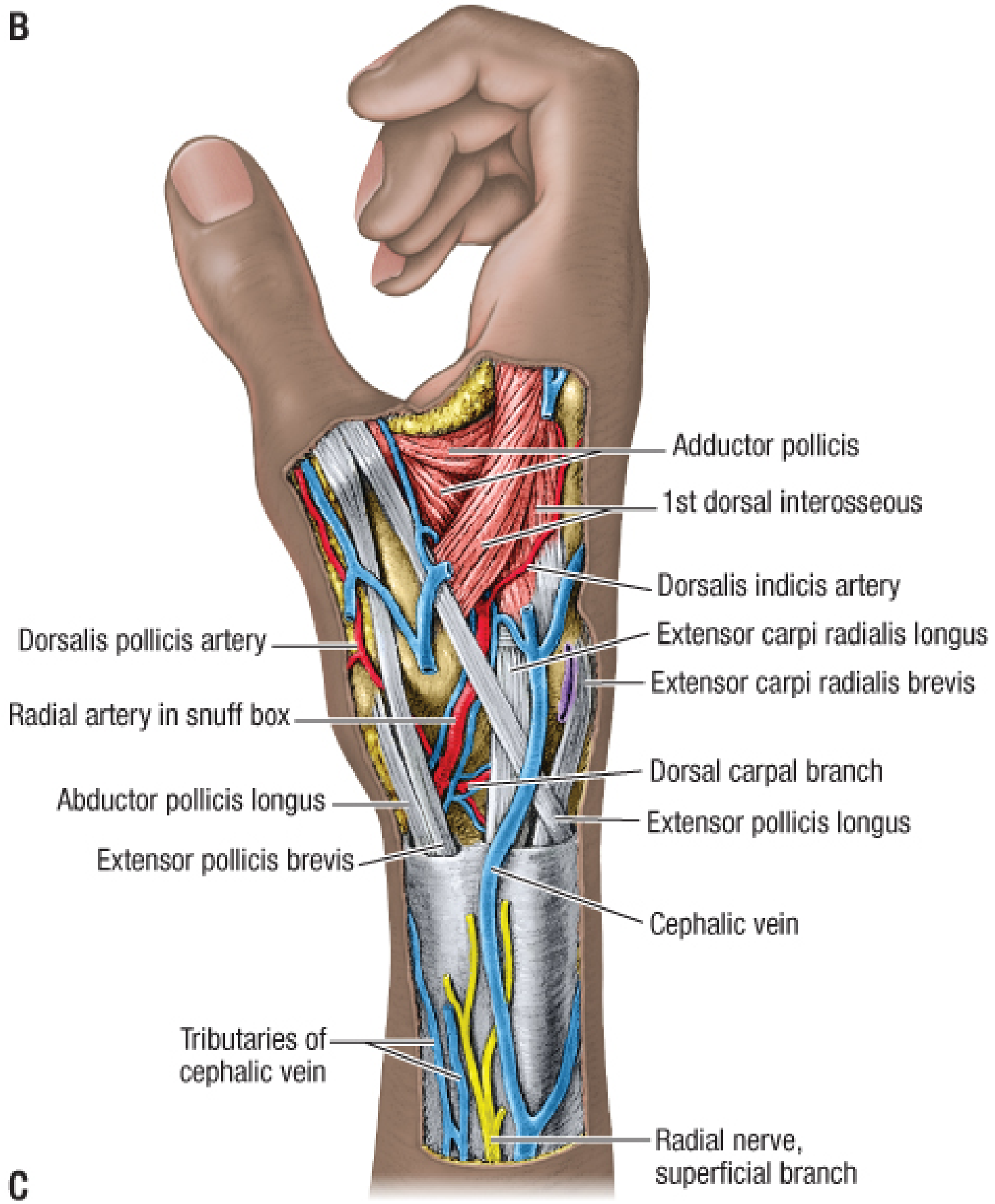
Fig. 258.2 C: Radial artery in the anatomical snuff box, with surrounding tendons, cephalic vein, and radial nerve visible - Fischer's Mastery of Surgery, 8th ed.
Course of the Radial Artery
- The radial artery descends along the radial side of the forearm.
- At the wrist, it wraps around the lateral aspect of the wrist, crossing the scaphoid bone in the floor of the anatomical snuff box.
- It then passes dorsally through the snuff box (this is the key testable point).
- At the base of the 1st intermetacarpal space, it dives deep between the muscles to enter the palm.
- It forms the deep palmar arterial arch, which is its major continuation.
(Fischer's Mastery of Surgery, 8th ed., p. 6988)
Clinical Importance of the Snuff Box
Radial pulse: The radial pulse is most commonly felt at the wrist, but the artery can also be palpated in the snuff box - useful when the wrist pulse is weak.
Scaphoid fracture: Tenderness in the anatomical snuff box after a fall on an outstretched hand is the classic sign of a scaphoid fracture (the scaphoid forms part of the floor of the snuff box). This image shows palpation of the snuff box:
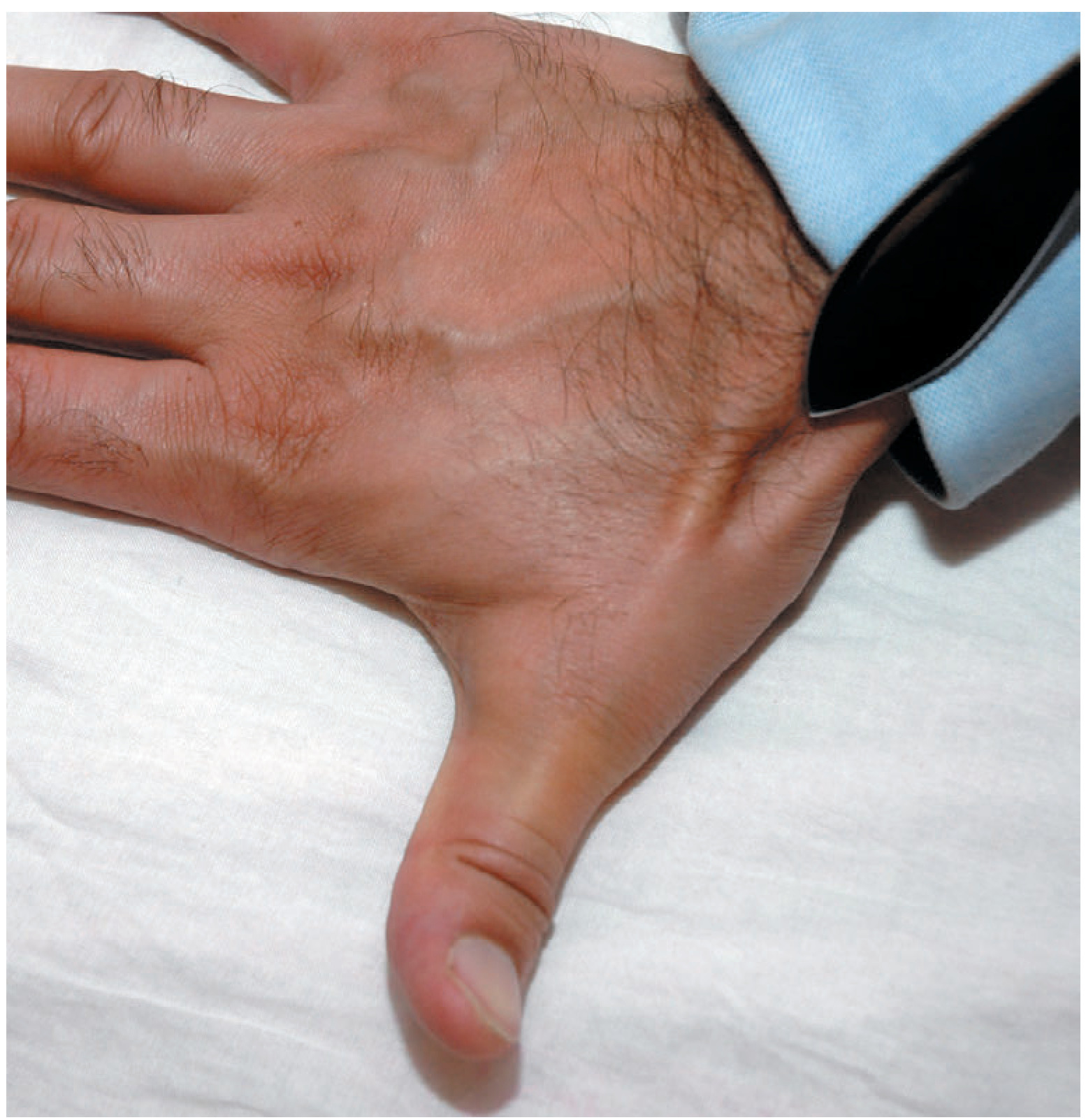
Palpating the anatomical snuff box between EPL and APB tendons - Bailey and Love's Short Practice of Surgery, 28th ed.
Why Not the Other Options?
| Option | Why Wrong |
|---|---|
| (B) Brachial | Runs in the arm (upper limb), bifurcates at the elbow - never enters the snuff box |
| (C) Ulnar | Runs on the medial side of the forearm; passes through Guyon's canal (not snuff box) at the wrist |
| (D) Interosseous | Anterior and posterior interosseous arteries run between the radius and ulna in the forearm - they do not pass through the snuff box |
Memory tip: The radial artery "takes a detour" dorsally through the snuff box before diving into the palm to form the deep palmar arch. This is why radial pulse can be felt both at the wrist AND in the snuff box.
This is a shared conversation. Sign in to Orris to start your own chat.