
Lets understand tkr in hinglish
Reading File
Searching sources...
Finding Sources
Finding Sources
Finding Sources
Reading File
Reading File
Finding Sources
Reading File
Reading File
Reading File
Ab main aapko TKR ke baare mein Hinglish mein samjhata hoon - textbooks se padh ke saari important information nikal li hai.
🦴 TKR - Total Knee Replacement (Ghutne ka Operation)
TKR Kya Hota Hai?
TKR ek resurfacing procedure hai - matlab ghutne ki kharab articular surface ko replace karna. Pura ghutna nahi nikalte, sirf upar ki surface (covering) badal dete hain:
- Femur (thigh bone) ka nichla hissa - dhatu (metal) se cover karte hain
- Tibia (shin bone) ka upar ka hissa - ek metal baseplate + plastic (polyethylene) insert lagaate hain
- Patella (ghutni ki taraf wali haddi) - bhi plastic se resurface karte hain
Sochiye aise - jaise ek damaged tile ke upar naya tile chipka diya, poori zameen nahi badli.
Kab Karna Padta Hai? (Indications)
TKR tab kiya jaata hai jab:
- Ghutne ka arthritis bilkul end-stage ho - matlab dono haddiyan ek doosre se directly ghis rahi hon
- Conservative treatment fail ho gaya ho - dawai, physiotherapy, injections sab try ho chuke hon
- Teeno compartment (medial, lateral, patellofemoral) mein problem ho
Note: Agar sirf ek compartment mein bimari ho to UKR (Unicompartmental Knee Replacement) hota hai, pura TKR nahi.
Ghutne ki Anatomy - Jaldi Samjhe
       FEMUR (thigh)
          |
   [Medial | Lateral]  ← 2 tibiofemoral compartments
          |
       TIBIA (leg)

  Aage: PATELLOFEMORAL compartment (ghutni ke saamne)
Arthritis teeno jagah aayi = TKR chahiye
Arthritis sirf ek jagah = UKR kafi hai
Operation Kaisa Hota Hai?
Incision (Chira)
- Medial parapatellar approach - patella ke medial side se, upar 5 cm aur neeche tibial tubercle tak
- Patella ko side mein dislocate (hatate) hain taaki andar dekh sakein
Bone Cuts (Haddi Kaatna)
- Preoperative templating (naap-jaokh) ke basis par cuts lagate hain
- Cutting guides use hoti hain
- Mechanical axis ke saath align karte hain
Components (Kitne Parts Lagte Hain)
| Part | Material | Location |
|---|---|---|
| Femoral component | Metal (cobalt-chrome) | Distal femur par cap |
| Tibial baseplate | Metal | Tibia par flat tray |
| Polyethylene insert | Plastic | Tibial tray mein bearing surface |
| Patellar button | Polyethylene | Patella resurface |
Cement
- Zyaadatar PMMA cement (bone cement) se fix hota hai
- Kuch uncemented designs bhi hain jo bone ingrowth par depend karte hain
CR vs PS - Do Types
1. Cruciate Retaining (CR)
- PCL (Posterior Cruciate Ligament) ko bacha ke rakhte hain
- Normal knee structure preserve hoti hai
- Bone loss kam hoti hai
2. Posterior Stabilized (PS)
- PCL sacrifice kar dete hain
- Components mein ek box-cam mechanism hoti hai jo PCL ka kaam karti hai
- Results dono mein equal hain
Alignment Kyun Zaruri Hai?
TKR ka goal:
- ✅ Deformity correct karo
- ✅ Leg ko mechanical axis ke saath align karo
- ✅ Joint line ground ke parallel rakho
- ✅ Collateral ligaments balanced rakho
- ✅ Patellofemoral tracking normal rakho
Agar alignment galat hua to: early wear, loosening, instability, pain, stiffness - sab problems aa sakti hain.
Complications (Dikkatein)
Operation ke Dauraan (Intraoperative)
- Implant ki galat positioning
- Nerve ya blood vessel injury
- Haddi toot jaana (fracture)
- Patellar tendon avulsion
- Fat embolism
Operation ke Baad (Postoperative)
- 🦠 Infection (sabse badi takleef)
- 🩸 DVT / PE (khoon ka thakka)
- 😣 Dard aur stiffness
- ⚡ Instability
- 🔩 Component loosening
- Osteolysis (haddi pighal jaana)
Results Kitne Achhe Hain?
- 95%+ implants 10-15 saal tak theek rehte hain
- 82% implants 20 saal tak survive karte hain
- Revision (dobara operation) rate: sirf 2-6% in 10 years
- Pehle kuch saalon mein revision most commonly infection ya instability se
- 10 saal baad revision most commonly aseptic loosening se
💡 Hip replacement ke mukable TKR mein patient satisfaction thoda kam hota hai - ghutna ek complex joint hai!
UKR vs TKR - Quick Comparison
| UKR | TKR | |
|---|---|---|
| Kitna replace | 1 compartment | Teeno compartment |
| Recovery | Jaldi | Thodi der |
| Hospital stay | Kam | 2-4 din |
| Infection risk | Kam | Zyaada |
| 10-yr revision | 6-12% | 2-6% |
| Function | Acha (natural feel) | Thoda kam natural |
Robot aur Computer Navigation
Modern TKR mein aajkal robotic/computer-assisted systems use hote hain jo:
- Intraoperatively real-time feedback dete hain
- Component placement aur bone cuts zyaada accurate hoti hain
- Disadvantage: costly, time zyaada lagta hai
Sources: Bailey & Love's Short Practice of Surgery 28th Ed, Schwartz's Principles of Surgery 11th Ed, Campbell's Operative Orthopaedics 15th Ed 2026, Miller's Review of Orthopaedics 9th Ed
Smjhao
"Smjhao" se exactly kya chahiye aapko? Thoda clarify karo taaki main sahi cheez explain kar sakoon.
Asking for Preferences
TKR ke baare mein kya aur detail mein samjhna hai?
Total knee replacement
Bilkul! Main TKR ko ekdum simple, step-by-step Hinglish mein samjhata hoon - jaise ek dost explain kare.
Searching sources...
Reading File
Reading File
Loading Image
Loading Image
Chalo, ekdum zero se aur simple language mein samjhte hain - jaise ek story!
🦴 Total Knee Replacement (TKR) - Poori Kahani
📖 Pehle Samjho - Problem Kya Hoti Hai?
Ghutne mein 2 hadiyan milti hain:
- Upar se Femur (jaangh ki haddi)
- Neeche se Tibia (paon ki haddi)
- Aage Patella (ghutni/kneecap)
Dono hadiyon ke beech mein ek cartilage hoti hai - yeh ek cushion ki tarah kaam karti hai, jaise joote mein sole hota hai.
Arthritis mein kya hota hai?
Yeh cartilage dheere dheere ghis jaati hai. Phir haddi seedha haddi se ragad khane lagti hai. Sochiye - bina ghee ke chakki chalana. Dard, sujan, akadahat - yahi hoti hai OA (Osteoarthritis).
Yeh X-ray dekho - severe arthritis ka:
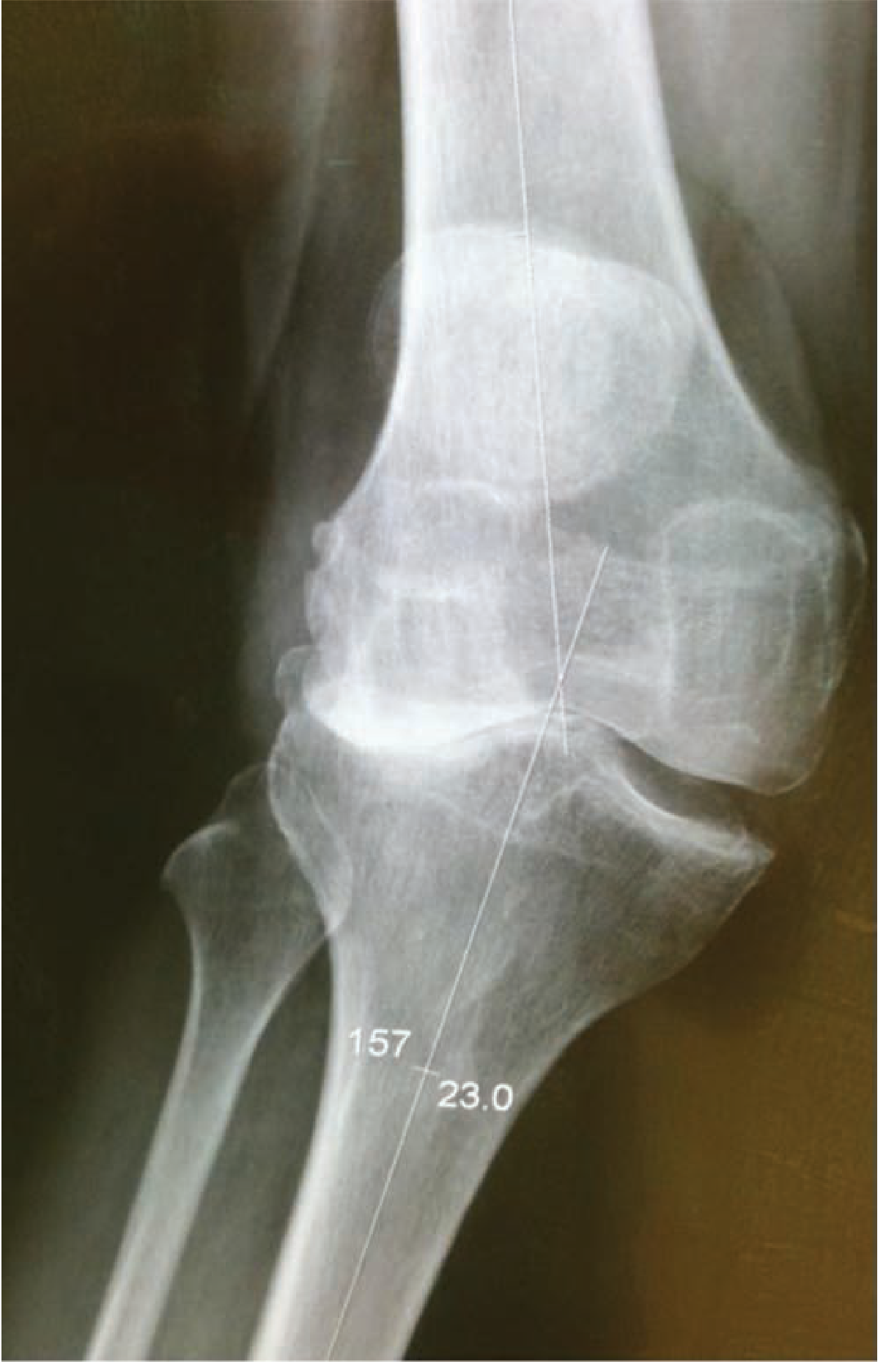
Dekho - haddiyon ke beech space bilkul khatam ho gaya hai, aur ghutna andar ki taraf tedha ho gaya (valgus deformity)
🤔 TKR Kab Karte Hain?
Seedha rule:
"Jab sab kuch fail ho jaaye, tab TKR"
| Pehle try karo | Agar yeh fail ho |
|---|---|
| Dawai (painkillers, anti-inflammatory) | ✅ Tab sochte hain surgery |
| Physiotherapy | ✅ |
| Weight loss | ✅ |
| Injections (steroid, PRP) | ✅ |
| Walking stick | ✅ |
Aur condition bhi serious honi chahiye - sirf dard nahi, end-stage arthritis - matlab cartilage poori tarah khatam.
🔧 TKR Aslam Mein Kya Hai?
TKR = Ghutne ki surface badalna, poora ghutna nahi!
Iska ek aur naam hai - "Resurfacing"
Analogy: Socho ghar ki purani zameen (floor) ghis gayi. Aap poori neenv nahi todenge - sirf upar wali tiles badal denge. Bilkul wahi kaam TKR karta hai.
3 parts replace hote hain:
       FEMUR
    ___________
   | METAL CAP |  ← Femoral Component (metal)
   |___________|
         |
   [Plastic pad] ← Polyethylene Insert (cushion)
   ___________
   | METAL    |  ← Tibial Baseplate (metal)
   |  TRAY    |
       |||
     TIBIA

   + Patella (ghutni) = Plastic button
Simple words mein:
- Femur par ek metal ki topi (cap) lagti hai
- Tibia par ek metal ki thaali (baseplate) lagti hai
- Beech mein plastic ka cushion (polyethylene) hota hai jo real cartilage ki jagah kaam karta hai
- Patella par bhi plastic button lagta hai
Yeh X-ray dekho - TKR ke baad ka:
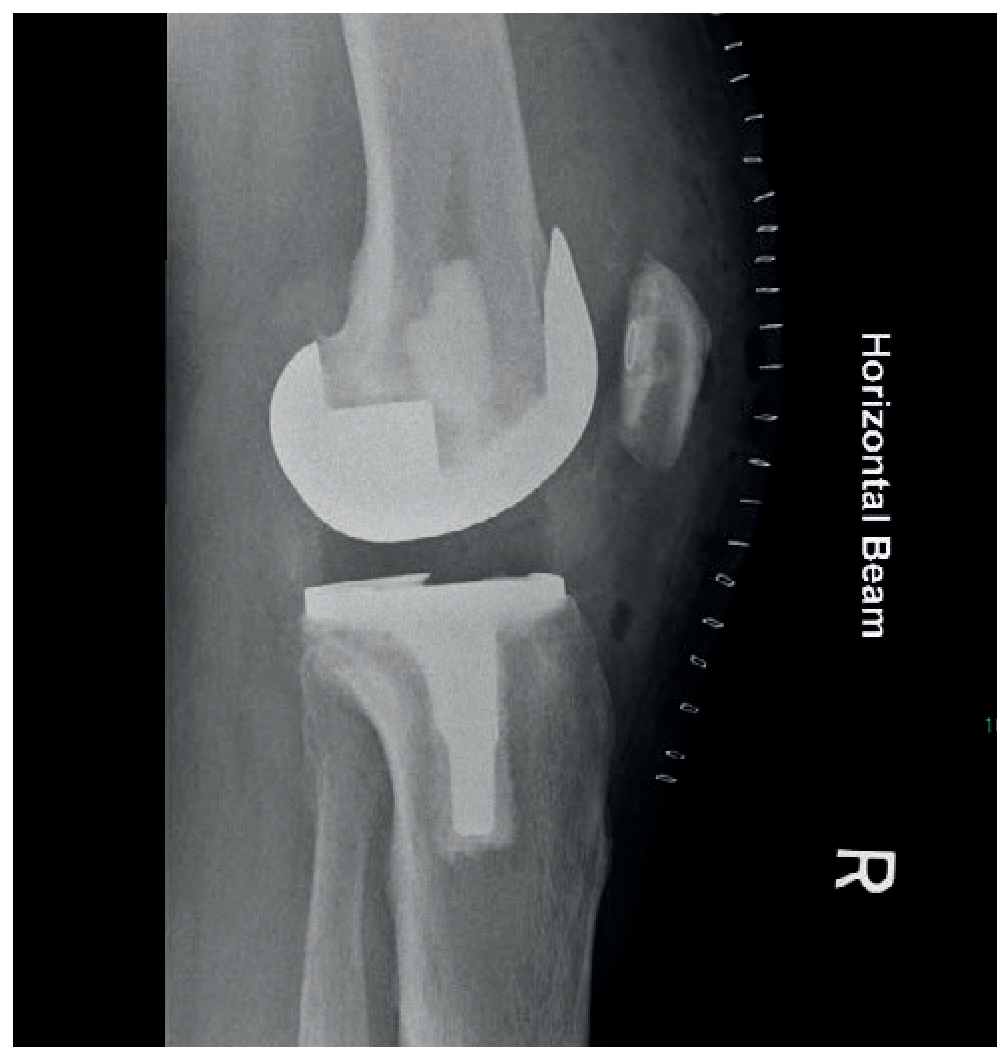
Lateral view mein dekho - upar femur ka metal component aur neeche tibia ka T-shape metal tray clearly dikh raha hai
🏥 Operation Kaise Hota Hai? (Step by Step)
Step 1 - Anesthesia
General ya spinal anesthesia - patient so jaata hai ya neeche se sab kuch numb ho jaata hai.
Step 2 - Chira lagana (Incision)
- Medial parapatellar approach - ghutne ke aage, patella ke thoda andar ki side se
- Upar 5 cm patella se aur neeche tibial tubercle tak ek seedi line mein chira
Step 3 - Ghutne ke andar jaana
- Patella ko side mein dislocate karte hain (hataate hain)
- Ab teeno compartments clearly dikh jaate hain
Step 4 - Kharab surface kaatna
- Jitni kharab cartilage + thodi si haddi hai - usse cutting guides se precisely kaata jaata hai
- Preoperative planning se exact naap-jaokh pehle se tayaar hoti hai
Step 5 - Implant lagana
- Femur par metal cap
- Tibia par metal tray
- Beech mein plastic insert
- Patella par plastic button
- Sab kuch PMMA cement (bone cement) se chipkaya jaata hai - jaise tiles lagaane mein grout use hota hai
Step 6 - Balance check karna
- Flexion aur extension mein gaps check karte hain
- Ligaments balanced hain ya nahi dekhte hain
- Patella track kar rahi hai ya nahi check karte hain
Step 7 - Band karna
- Wounds close karte hain
- Drain lagaate hain
- Bandage
⚖️ CR vs PS - Do Types of TKR
Ghutne mein ek ligament hoti hai - PCL (Posterior Cruciate Ligament). TKR mein iske saath kya karna hai - iske basis par 2 types hain:
| CR (Cruciate Retaining) | PS (Posterior Stabilized) | |
|---|---|---|
| PCL ka kya hoga? | Bacha lete hain | Kaat dete hain |
| Kyun? | Natural structure preserve | Instability ho to safer |
| Result | Dono ka result equal hai! |
😰 Complications - Kya Kya Ho Sakta Hai?
Operation ke dauraan:
- Implant galat position mein lag gaya
- Nerve ya blood vessel cut ho gaya
- Haddi toot gayi
- Patellar tendon ukhad gaya
- Fat embolism
Operation ke baad:
- 🦠 Infection - sabse dreaded complication
- 🩸 DVT/PE - khoon ka thakka (isliye baad mein jaldi chalna karvate hain!)
- 😣 Dard aur stiffness - physiotherapy zaroori
- 🔩 Loosening - implant hilne lagta hai
- Osteolysis - plastic ke ghiste particles se haddi pighal jaati hai
📊 Results Kitne Achhe Hain?
TKR ek bahut successful surgery hai:
✅ 95%+ implants → 10-15 saal tak theek
✅ 82% implants  → 20 saal tak survive
✅ Revision rate → sirf 2-6% in 10 years
✅ Dard mein → significant relief
✅ Chal phir sakein → improvement in mobility
Ek interesting baat - hip replacement ke patients zyaada satisfied hote hain TKR ke mukable. Kyunki ghutna ek complex joint hai, 100% natural feel nahi aata artificial ghutne mein.
🆚 TKR vs UKR - Kab Kya?
| TKR | UKR | |
|---|---|---|
| Kab? | Teeno compartment kharab | Sirf ek compartment kharab |
| Kitna replace? | Poora ghutna resurface | Ek side only |
| Recovery | 2-4 din hospital | Jaldi, kabhi to same day |
| Natural feel | Thoda kam | Zyaada natural |
| 10-year revision | 2-6% | 6-12% |
| Infection risk | Zyaada | Kam |
🏃 Recovery Kaisi Hoti Hai?
- Same day / next day - physiotherapist chalna sikhata hai
- 2-4 din - hospital mein rehna
- 6 hafton mein - normal ghar ka kaam
- 3 mahine mein - zyaadatar normal
- 1 saal mein - poora result pata chalta hai
Sources: Bailey & Love's Short Practice of Surgery 28th Ed | Schwartz's Principles of Surgery 11th Ed | Campbell's Operative Orthopaedics 15th Ed 2026
This is a shared conversation. Sign in to Orris to start your own chat.