
image of advantage and disadvantage of Glass ionomer cement
A clean, professional medical/dental infographic showing advantages and disadvantages of Glass Ionomer Cement (GIC). Split into two columns: LEFT column (green header) lists advantages: fluoride release, adhesion to tooth structure, biocompatibility, thermal expansion similar to tooth, anticariogenic, moisture tolerance, no need for acid etching. RIGHT column (red header) lists disadvantages: low fracture toughness, poor wear resistance, sensitivity to moisture during setting, low tensile strength, not suitable for high stress areas, surface roughness, limited esthetics. Include a small illustration of a tooth with cement at the top center. Use a clean white background with dental clinic style.
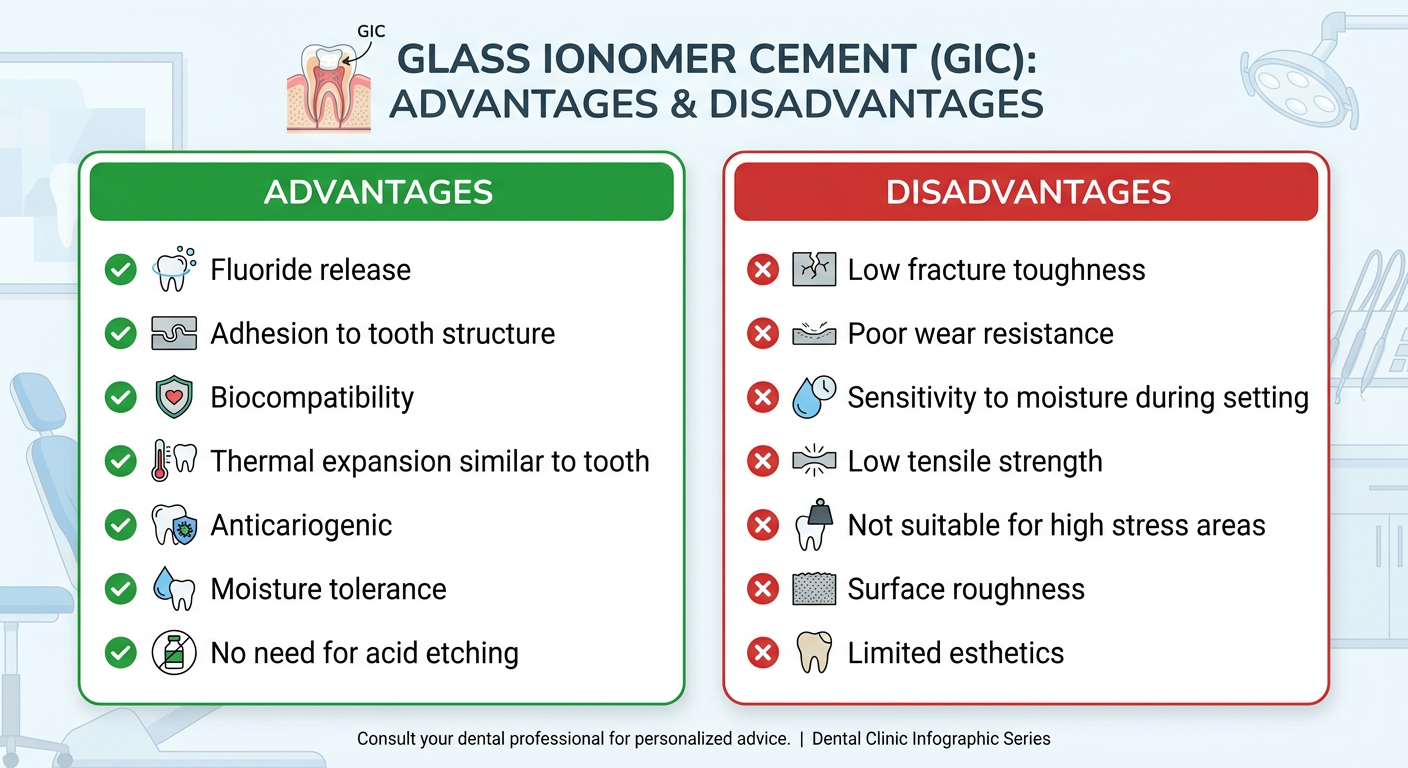
- Releases fluoride - helps prevent secondary caries
- Bonds chemically to enamel and dentine (no acid etching needed)
- Biocompatible with pulp tissue
- Thermal expansion coefficient close to natural tooth
- Anticariogenic effect due to ion exchange with tooth
- Tolerates some moisture during placement
- Good for class III/V restorations and luting cements
- Low fracture toughness and tensile strength
- Poor wear resistance - not suitable for load-bearing areas (class I/II)
- Sensitive to moisture contamination and desiccation during initial setting
- Surface can become rough over time
- More opaque than composite resin - limited esthetic use in anterior teeth
- Short working time in some formulations