
Use of NSAIDS drugs
Reading File
Now let me search the medical library and PubMed in parallel for comprehensive NSAIDs content.
Finding Sources
Searching PubMed
"NSAIDs" AND "clinical use"
Finding Sources
Searching PubMed
"nonsteroidal anti-inflammatory drugs" AND "adverse effects"
Now let me search for a dedicated pharmacology textbook section on NSAIDs and read the GI textbook's comprehensive NSAIDs section:
Finding Sources
Reading File
Finding Sources
Finding Sources
Reading File
Reading File
Reading File
Reading File
Finding Sources
Finding Sources
Reading File
Finding Sources
I now have comprehensive information from multiple authoritative textbooks. Let me compile the complete answer.
NSAIDs (Non-Steroidal Anti-Inflammatory Drugs) — A Comprehensive Overview
1. What Are NSAIDs?
NSAIDs are a chemically diverse group of drugs that share a common mechanism: inhibition of cyclooxygenase (COX) enzymes, blocking prostaglandin synthesis. They produce analgesic, antipyretic, and anti-inflammatory effects. — Miller's Anesthesia, 10e; Morgan & Mikhail's Clinical Anesthesiology, 7e
2. Mechanism of Action
The COX pathway is central to understanding NSAIDs:
| Enzyme | Nature | Key Functions |
|---|---|---|
| COX-1 | Constitutive (always present) | Gastric mucosal protection, platelet aggregation, hemostasis, renal perfusion |
| COX-2 | Inducible (upregulated by inflammation) | Pain, fever, inflammation; also vascular endothelial function |
- Non-selective NSAIDs (e.g., ibuprofen, naproxen, diclofenac, ketorolac, indomethacin) block both COX-1 and COX-2
- Selective COX-2 inhibitors (coxibs) (e.g., celecoxib, etoricoxib) preferentially block COX-2, sparing platelets and gastric mucosa
- Aspirin is unique: it irreversibly acetylates a serine residue on COX-1, causing platelet effects that last ~7–10 days (the lifespan of the platelet)
NSAIDs also exert analgesic effects via spinal COX inhibition, providing central as well as peripheral analgesia. — Miller's Anesthesia, 10e
COX inhibitors bind the active site of the enzyme. The COX-2 binding site is larger, allowing bulkier selective molecules (heterocyclics like celecoxib) to fit only there. — Morgan & Mikhail's Clinical Anesthesiology, 7e
3. Classification and Examples
| Class | Examples |
|---|---|
| Salicylic acids | Aspirin |
| Propionic acid derivatives | Ibuprofen, naproxen, ketoprofen |
| Acetic acid derivatives | Diclofenac, indomethacin, ketorolac |
| Oxicams | Piroxicam, meloxicam |
| Selective COX-2 inhibitors | Celecoxib, etoricoxib, parecoxib |
4. Pharmacokinetics
- Absorption: Most reach peak plasma concentrations within < 3 hours of oral dosing. Some are available as topical gels (joint/eye drops) or IV formulations (ketorolac, ibuprofen, diclofenac).
- Distribution: Highly bound to plasma proteins (mainly albumin). Lipid-soluble — penetrate the blood-brain barrier and joint spaces readily.
- Metabolism: Primarily hepatic biotransformation.
- Excretion: Renally eliminated after biotransformation. — Morgan & Mikhail's Clinical Anesthesiology, 7e
5. Clinical Indications
| Indication | Notes |
|---|---|
| Mild-to-moderate pain | Postoperative, musculoskeletal, dental, headache |
| Moderate-to-severe pain | Adjunct to opioids (opioid-sparing effect) |
| Fever | Antipyresis via COX inhibition |
| Inflammation | Arthritis (OA, RA), tendinitis, bursitis, gout |
| Dysmenorrhea | Highly effective |
| Pericarditis | NSAIDs (esp. ibuprofen + colchicine) are first-line (JAMA 2024) |
| Closure of PDA | IV indomethacin or ibuprofen in neonates |
| Cardiovascular prophylaxis | Low-dose aspirin only (irreversible COX-1 inhibition → anti-platelet) |
| Perioperative multimodal analgesia | Part of ERAS protocols — reduces opioid requirements |
Meta-analyses confirm that NSAIDs added to IV-PCA opioids significantly reduce nausea, vomiting, and sedation — without meaningful increases in pain scores. — Miller's Anesthesia, 10e
Relative Analgesic Efficacy (NNT for >50% pain relief in moderate–severe postoperative pain):
| Drug | NNT |
|---|---|
| Diclofenac 100 mg | 1.9 |
| Diclofenac 50 mg | 2.3 |
| Ibuprofen 600 mg | 2.4 |
| Ketorolac 10 mg | ~2.6 |
| Aspirin 1000 mg | 4.0 |
— Miller's Anesthesia, 10e, Table 77.2
6. Adverse Effects
A. Gastrointestinal (most common)
- Inhibition of COX-1 → reduced prostaglandin-mediated mucin/bicarbonate secretion, reduced mucosal blood flow → gastric and duodenal ulcers
- NSAIDs cause a 3–4× higher risk of peptic ulcer disease (PUD), independent of H. pylori
- NSAID-induced ulcers are more common in the stomach (Type V gastric ulcer = any location, associated with long-term NSAID use)
- NSAID enteropathy: small intestinal increased permeability, mucosal breaks, diaphragm-like strictures — seen in up to 70% of chronic NSAID users on capsule endoscopy
- Can cause iron-deficiency anemia, hypoalbuminemia, perforation, obstruction — Sabiston Surgery, 5e; Sleisenger & Fordtran's GI, 10e
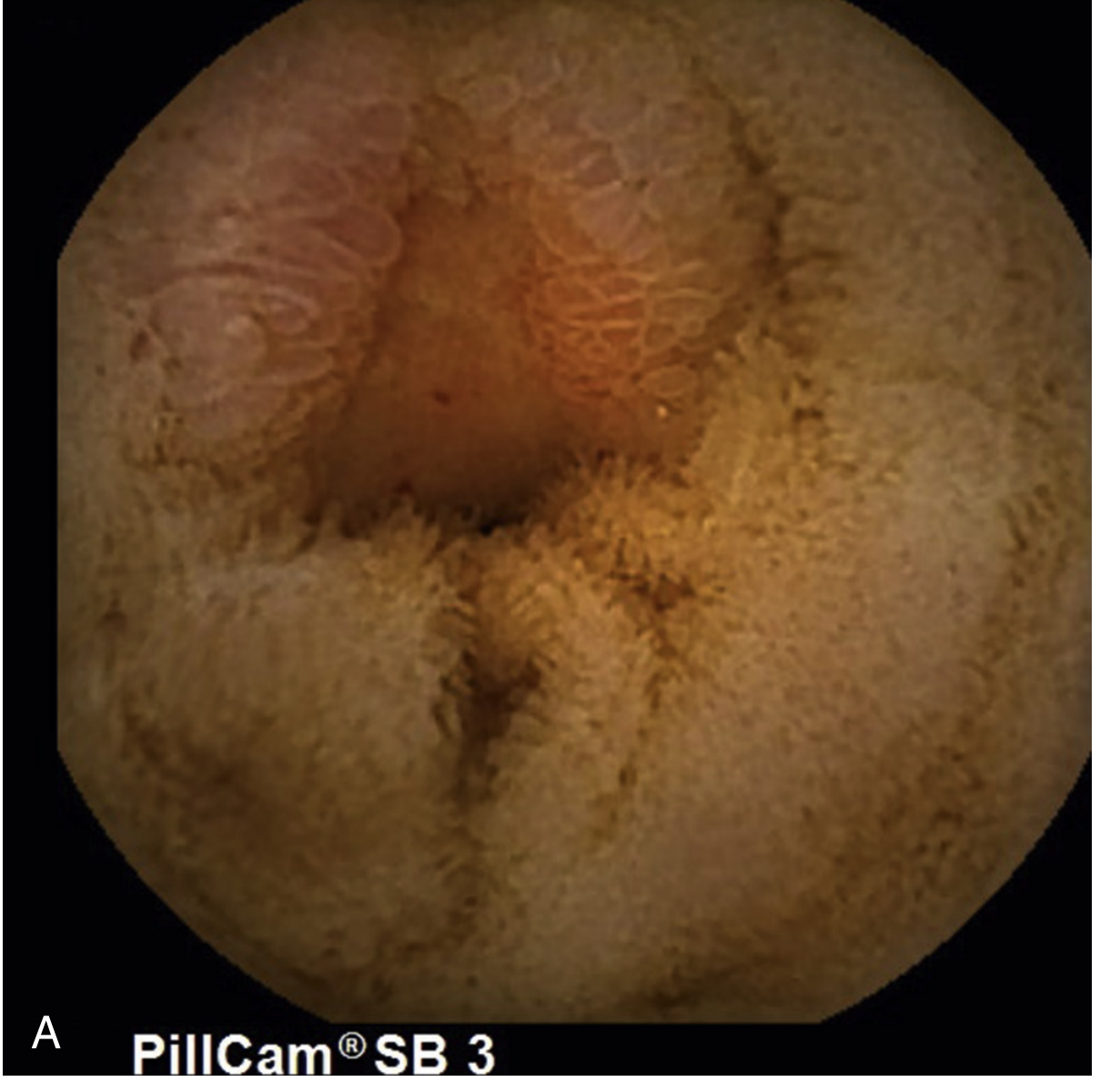
GI protection strategies:
- Add a proton pump inhibitor (PPI) or misoprostol in high-risk patients
- Use selective COX-2 inhibitors when GI protection is needed without antiplatelet effects
B. Cardiovascular
- All NSAIDs except low-dose aspirin increase risk of MI, stroke, and thrombosis
- Selective COX-2 inhibitors carry the highest CV risk: unchecked inhibition of vascular endothelial COX-2 → reduced prostacyclin (vasodilator/antiplatelet) while platelet thromboxane A2 (COX-1-mediated) is unaffected → pro-thrombotic state
- Aspirin paradox: low-dose aspirin is uniquely cardioprotective via irreversible COX-1 inhibition in platelets — Barash Clinical Anesthesia, 9e; Morgan & Mikhail, 7e
C. Renal
- NSAIDs block prostaglandin-mediated afferent arteriole vasodilation → reduced GFR
- High-risk groups: hypovolemia, heart failure, cirrhosis, diabetic nephropathy, pre-existing CKD, hypercalcemia
- Can precipitate acute kidney injury, sodium/water retention, hypertension
- Rarely: membranous glomerulopathy (nephrotic syndrome) — Morgan & Mikhail, 7e; Brenner & Rector's The Kidney
D. Platelet / Hematologic
- Non-selective NSAIDs: reversible platelet inhibition (resolves when drug clears)
- Aspirin: irreversible — hold 7–10 days before elective surgery
- Selective COX-2 inhibitors: no significant platelet effect (safe perioperatively)
E. Respiratory
- Aspirin-exacerbated respiratory disease (AERD): triad of asthma, nasal polyps, aspirin/NSAID sensitivity
- At therapeutic doses, no direct respiratory effects
F. Hepatic
- Generally mild; rare hepatotoxicity with some agents (e.g., diclofenac)
7. Contraindications
| Contraindication | Reason |
|---|---|
| Active peptic ulcer / GI bleeding | Worsens mucosal injury |
| Severe CKD or AKI | Loss of prostaglandin-dependent renal perfusion |
| Severe heart failure | Sodium retention, AKI risk |
| Aspirin-exacerbated respiratory disease | Bronchospasm risk |
| Third trimester of pregnancy | Premature ductus arteriosus closure, delayed labor; oligohydramnios |
| Perioperative period (selected surgeries) | Bleeding risk (non-selective agents) |
| Anticoagulant use | Additive bleeding risk |
2024 EULAR guidelines updated recommendations for antirheumatic drugs (including NSAIDs) in reproduction and pregnancy — NSAIDs should be avoided after 20 weeks gestation (PMID 40287311).
8. Drug Interactions
| Drug | Interaction |
|---|---|
| Warfarin / anticoagulants | Increased bleeding risk |
| ACE inhibitors / ARBs | Blunt antihypertensive effect; AKI in vulnerable patients |
| Diuretics | Blunt diuretic effect; sodium retention |
| Corticosteroids | Additive GI toxicity |
| Lithium | NSAIDs reduce lithium clearance → toxicity |
| Methotrexate | Reduced elimination → toxicity |
9. Selective COX-2 Inhibitors vs. Non-Selective NSAIDs
| Feature | Non-Selective NSAID | COX-2 Inhibitor |
|---|---|---|
| GI protection | ❌ Less protective | ✅ Better GI safety |
| Platelet effect | ❌ Inhibits platelet aggregation | ✅ No platelet effect |
| CV risk | Moderate | ⚠️ Higher (esp. rofecoxib, withdrawn) |
| Perioperative use | Use with caution | Safe (no bleeding risk) |
| Cost | Lower | Higher |
10. Topical NSAIDs
- Diclofenac gel/solution: useful for localized OA (knee) with minimal systemic absorption
- Reduced GI and cardiovascular risks compared to oral administration
Key Summary
NSAIDs are highly effective analgesics, anti-inflammatories, and antipyretics acting via COX inhibition. Their clinical use is limited by a well-characterized adverse effect profile:
- GI toxicity (ulcers, enteropathy) — use PPIs or COX-2 inhibitors to mitigate
- Cardiovascular risk — avoid in high CV risk; use lowest effective dose for shortest duration
- Renal impairment — avoid in CKD, hypovolemia, heart failure
- Aspirin stands apart: irreversible COX-1 inhibition makes it uniquely anti-platelet and cardioprotective at low doses
In perioperative settings, NSAIDs are a cornerstone of multimodal (opioid-sparing) analgesia, reducing opioid requirements and opioid-related side effects. — Miller's Anesthesia, 10e; Morgan & Mikhail's Clinical Anesthesiology, 7e; Sabiston Surgery, 5e; Sleisenger & Fordtran's GI Disease, 10e
This is a shared conversation. Sign in to Orris to start your own chat.