
Make a notes on opthalmology notes for mbbs on topic conjunctivitis
Reading File
Now let me search the medical library for comprehensive conjunctivitis content.
Finding Sources
Finding Sources
I have two dedicated ophthalmology books. Let me search for conjunctivitis in Kanski's and Wills Eye Manual, and also in Tintinalli's (comprehensive study).
Finding Sources
Finding Sources
Finding Sources
Excellent content found. Now let me read the key sections from Kanski's (the gold standard ophthalmology textbook) and Wills Eye Manual in parallel.
Reading File
Reading File
Reading File
Excellent content. Let me now read more from Kanski's block1 (bacterial treatment) and block2 (allergic conjunctivitis) and also from Tintinalli's.
Reading File
Reading File
Reading File
Good content flowing in. Now let me read allergic conjunctivitis subtypes (vernal, AKC) from Kanski's block2 and the bacterial/gonococcal section from Wills Eye Manual.
Reading File
Reading File
Reading File
Excellent. Let me read the remaining critical content - VKC treatment, AKC, and chlamydial/trachoma sections from Kanski's.
Reading File
Reading File
I now have comprehensive content. Let me fetch a couple of the most clinically relevant images to include in the notes.
Loading Image
Loading Image
I now have comprehensive content from Kanski's Clinical Ophthalmology and Wills Eye Manual. Let me compile the complete MBBS notes on conjunctivitis.
Conjunctivitis - Ophthalmology Notes for MBBS
Sources: Kanski's Clinical Ophthalmology 10th Ed., The Wills Eye Manual, Tintinalli's Emergency Medicine
1. Definition
Conjunctivitis is inflammation of the conjunctiva - the transparent mucous membrane covering the anterior sclera and inner eyelid surface. It is one of the most common ocular conditions encountered in clinical practice. Acute conjunctivitis has a duration of <4 weeks; beyond that it is termed chronic conjunctivitis.
2. Classification
Conjunctivitis is broadly classified as:
| Type | Major Subtypes |
|---|---|
| Bacterial | Acute, Hyperacute (Gonococcal), Chronic, Chlamydial (Inclusion), Trachoma, Neonatal |
| Viral | Adenoviral (EKC, PCF), HSV, Enteroviral (Hemorrhagic), Molluscum-associated |
| Allergic | Acute, Seasonal/Perennial, Vernal Keratoconjunctivitis (VKC), Atopic Keratoconjunctivitis (AKC), Giant Papillary |
| Other | Toxic/Medicamentosa, Parinaud Oculoglandular, Chemical |
3. Key Diagnostic Features: Papillae vs. Follicles
Understanding this distinction is fundamental to diagnosis:
| Feature | Papillae | Follicles |
|---|---|---|
| Structure | Vascular core with surrounding inflammatory cells | Lymphoid aggregates with vessels at periphery |
| Appearance | Flat-topped, red, polygonal | Pale, dome-shaped, avascular center |
| Location | Any conjunctival surface | Inferior fornix, palpebral conjunctiva |
| Causes | Bacterial, allergic, toxic, chlamydial (chronic) | Viral, chlamydial (acute), toxic |
| Slit lamp | Central vessel seen | Central vessel absent |
4. Bacterial Conjunctivitis
4a. Acute Bacterial Conjunctivitis
Causative organisms:
- Staphylococcus aureus (most common in adults)
- Streptococcus pneumoniae
- Haemophilus influenzae (most common in children)
- Moraxella catarrhalis
Clinical features:
- Acute onset redness, grittiness, burning, mucopurulent discharge
- Usually bilateral (second eye affected 1-2 days later)
- Eyelids stuck together on waking (lids glued = hallmark)
- Vision is usually normal
- Papillary reaction on tarsal conjunctiva
- Discharge: watery early → mucopurulent rapidly
- Lymphadenopathy usually absent (key distinguishing feature from viral)
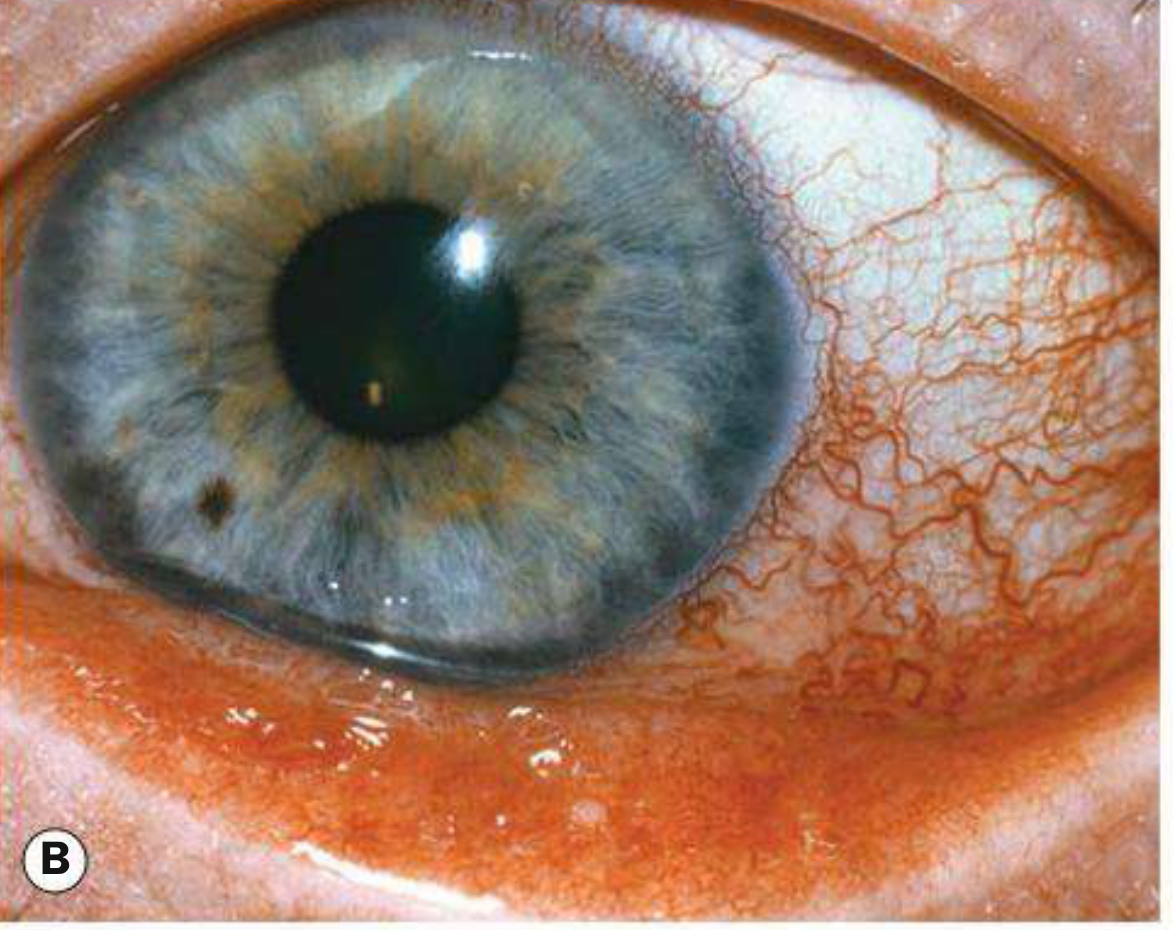
Treatment:
- ~60% resolve within 5 days without treatment
- Topical antibiotics (4x/day for up to 1 week): chloramphenicol, gentamicin, tobramycin, ciprofloxacin, ofloxacin, azithromycin, erythromycin, fusidic acid
- Ointments/gels provide higher concentration but cause blurred vision - use at night
- Contact lens wear: discontinue until 48h after complete resolution
4b. Hyperacute (Gonococcal) Conjunctivitis
Causative organism: Neisseria gonorrhoeae
Key features:
- Profuse, copious purulent discharge - a medical emergency
- Marked eyelid edema and erythema
- Palpable preauricular lymphadenopathy
- Can rapidly invade intact corneal epithelium → perforation risk
- Usually sexually transmitted; bilateral involvement common
- Meningococcal conjunctivitis is a rare but serious alternative
Investigations:
- Gram stain: Gram-negative intracellular diplococci (kidney-shaped)
- Culture: Chocolate agar or Thayer-Martin medium
Treatment:
- Topical: Quinolone or gentamicin 1-2 hourly
- Systemic: Ceftriaxone (3rd generation cephalosporin) IM/IV; quinolones or macrolides as alternatives
- Seek genitourinary specialist input
- Profuse copious irrigation of the conjunctival sac
4c. Chlamydial (Inclusion) Conjunctivitis
Causative organism: Chlamydia trachomatis serovars D-K
Pathogenesis: Oculo-genital infection; autoinoculation from genital secretions; eye-to-eye spread ~10%; incubation ~1 week
Urogenital associations:
- Males: Non-gonococcal urethritis (most common cause), epididymitis, may trigger Reiter syndrome
- Females: Urethritis → pelvic inflammatory disease → risk of infertility; Fitz-Hugh-Curtis syndrome (perihepatitis, 5-10% of PID cases)
Ocular features:
- Subacute onset; usually unilateral or bilateral redness, watering, discharge
- Large follicles in inferior fornix (most prominent)
- Tender preauricular lymphadenopathy
- Superficial punctate keratitis
- Perilimbal subepithelial corneal infiltrates (after 2-3 weeks)
- Mild conjunctival scarring + superior corneal pannus in chronic cases
Investigations:
- Tarsal conjunctival scrapings: Giemsa stain (basophilic intracytoplasmic inclusion bodies)
- PCR/NAAT - most sensitive
- Direct immunofluorescence: ~90% sensitivity/specificity
- Enzyme immunoassay for antigen detection
Treatment:
- Oral azithromycin 1g single dose (treatment of choice)
- Alternative: Doxycycline 100 mg BD x 7 days; erythromycin 500 mg QID x 7 days
- Treat sexual partners; refer to genitourinary clinic
4d. Trachoma (Chlamydial)
Causative organism: Chlamydia trachomatis serovars A, B, Ba, C
Epidemiology: Most common preventable infectious cause of blindness worldwide; endemic in sub-Saharan Africa, Middle East, Asia
WHO SAFE Strategy:
- Surgery (for trichiasis)
- Antibiotics
- Facial cleanliness
- Environmental improvement
MacCallan's classification:
| Stage | Features |
|---|---|
| Trachoma I (TI) | Immature follicles, upper tarsal conjunctiva |
| Trachoma II (TII) | Mature follicles + papillary hypertrophy |
| Trachoma III (TIII) | Cicatricial (scarring) - Arlt's line (horizontal scar in upper tarsus) |
| Trachoma IV (TIV) | Healed/inactive trachoma |
WHO simplified grading:
- TF: Trachomatous inflammation-Follicular (≥5 follicles on upper tarsus)
- TI: Trachomatous inflammation-Intense
- TS: Trachomatous Scarring
- TT: Trachomatous Trichiasis
- CO: Corneal Opacity
Complications: Entropion, trichiasis, corneal scarring/opacity → blindness; Herbert's pits (limbal follicle scars)
Treatment:
- Azithromycin 20 mg/kg (up to 1 g) single dose - treatment of choice
- Erythromycin 500 mg BD x 14 days or doxycycline 100 mg BD x 10 days
- Topical 1% tetracycline ointment (less effective than oral)
- Surgery for entropion/trichiasis: bilamellar tarsal rotation
4e. Ophthalmia Neonatorum (Neonatal Conjunctivitis)
Definition: Conjunctival inflammation in the first month of life; most common infection in neonates (up to 10%)
Causes and timing of onset:
| Cause | Timing of Onset |
|---|---|
| Chemical (prophylaxis drops) | First few days |
| N. gonorrhoeae | First week (usually day 2-5) |
| Staphylococci, other bacteria | End of 1st week |
| Herpes simplex virus (HSV-2) | 1-2 weeks |
| Chlamydia trachomatis | 1-3 weeks |
Key points:
- N. gonorrhoeae: previously responsible for 25% of childhood blindness; profuse purulent discharge, risk of corneal perforation
- C. trachomatis: most common cause of moderate-severe neonatal conjunctivitis
- Systemic complications: HSV (encephalitis, skin vesicles), Chlamydia (pneumonitis, rhinitis, otitis), Gonococcal (disseminated gonococcal infection)
- Prophylaxis: Erythromycin 0.5% ointment or povidone-iodine 2.5% drops at birth
5. Viral Conjunctivitis
5a. Adenoviral Conjunctivitis (Most Common - 90%)
Transmission: Contact with respiratory/ocular secretions; fomites (survive on dry surfaces for weeks); highly contagious before symptoms appear
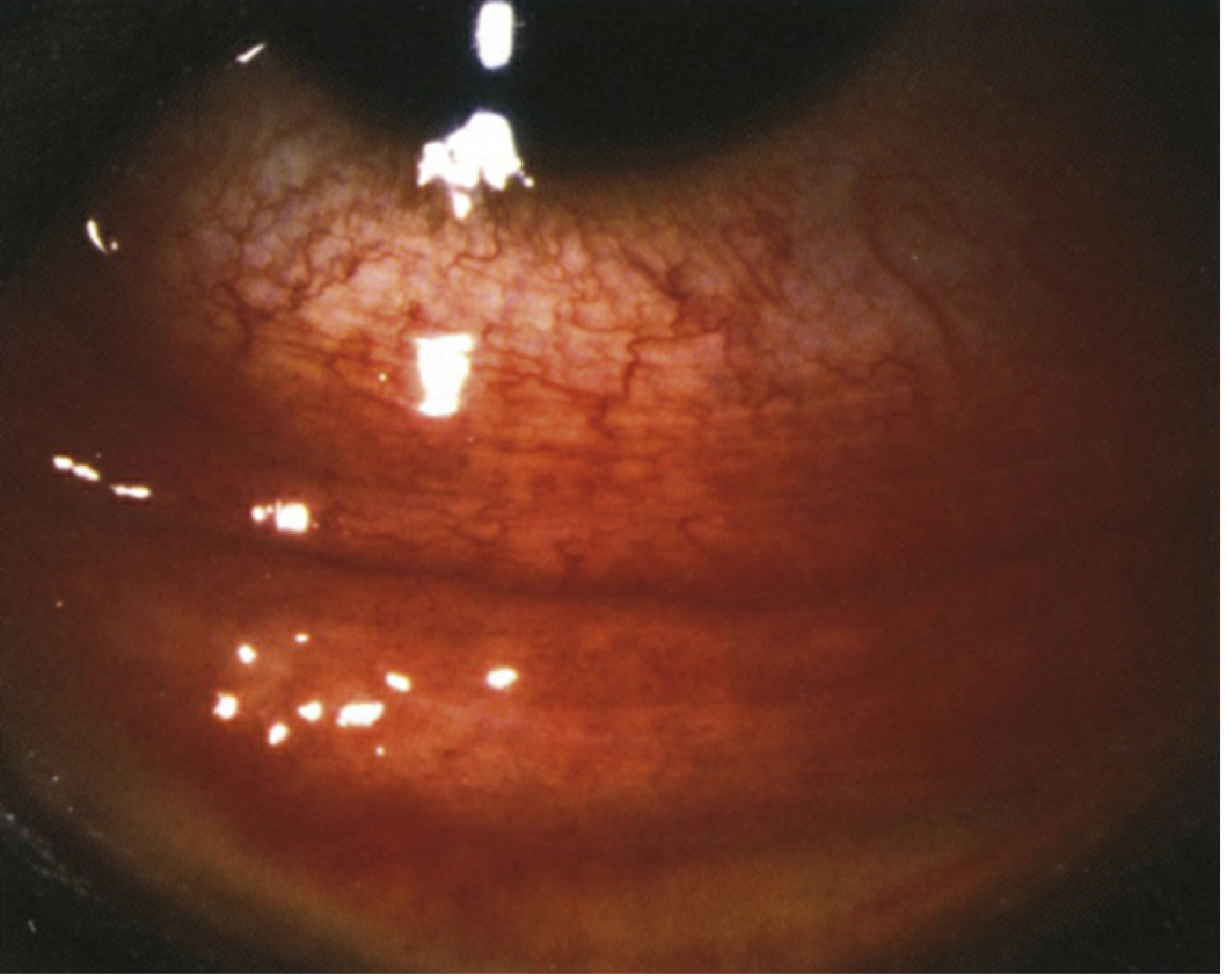
Clinical forms:
| Form | Serotypes | Key Features |
|---|---|---|
| Non-specific follicular conjunctivitis | Various | Mild; watery discharge, follicles; self-limiting |
| Pharyngoconjunctival Fever (PCF) | 3, 4, 7 | Follicular conjunctivitis + sore throat + fever; keratitis in 30% |
| Epidemic Keratoconjunctivitis (EKC) | 8, 19, 37 | Severe; keratitis in 80%; subepithelial infiltrates (SEIs); membrane/pseudomembrane; most severe form |
| Acute hemorrhagic conjunctivitis | Enterovirus, Coxsackievirus A24 | Rapid onset; subconjunctival hemorrhage prominent; tropical |
Critical signs of viral conjunctivitis:
- Inferior palpebral conjunctival follicles (hallmark)
- Tender palpable preauricular lymph node (key distinguishing sign)
- Watery (serous) discharge
- Red, edematous eyelids
- Pinpoint subconjunctival hemorrhages
- Pseudomembranes (in severe EKC)
- Subepithelial infiltrates (SEIs) appear 1-2 weeks after onset - can reduce vision
Treatment:
- Self-limiting (2-3 weeks); may last longer with corneal involvement
- Preservative-free artificial tears 4-8x/day
- Cool compresses several times/day
- Topical steroids ONLY if: membrane/pseudomembrane present, or SEIs reduce vision/cause photophobia
- Membrane/pseudomembrane: peel gently with cotton-tip or smooth forceps
- Contagious for 10-12 days from onset - strict hygiene, restrict school/work
- Antibiotics NOT routinely indicated (only if corneal erosions or mucopurulent discharge)
5b. Herpes Simplex Virus (HSV) Conjunctivitis
- Usually primary infection; unilateral, often with history of perioral cold sores
- Follicular conjunctival reaction + palpable preauricular node
- Occasional herpetic skin vesicles on eyelid margin/periocular skin
- Treatment: Topical acyclovir 3% ointment 5x/day; oral acyclovir in severe cases
5c. Molluscum Contagiosum-Associated Conjunctivitis
- Poxvirus (double-stranded DNA); peak incidence ages 2-4 years
- Chronic follicular conjunctivitis due to shedding of viral particles from eyelid lesion
- Always examine eyelash line in chronic follicular conjunctivitis - look for umbilicated nodule
- Treatment: Excision or cryotherapy of molluscum lesion resolves conjunctivitis
6. Allergic Conjunctivitis
Mechanism: Type I (immediate) hypersensitivity - IgE-mediated mast cell degranulation; some forms have Type IV component
Comparison Table
| Type | Age/Sex | Allergen | Seasonality | Key Features | Treatment |
|---|---|---|---|---|---|
| Acute allergic | Children | Pollen | Spring/Summer | Dramatic chemosis, itching, watering | Self-limiting; cool compresses; adrenaline 0.1% drop |
| Seasonal allergic (SAC) | Any | Tree/grass pollen | Spring/Summer | Mild papillary reaction, chemosis, sneezing | Artificial tears, antihistamines, mast cell stabilizers |
| Perennial allergic (PAC) | Any | Dust mites, animal dander, fungi | Year-round (worse autumn) | Milder, persistent | As SAC |
| Vernal Keratoconjunctivitis (VKC) | Boys 5-20 yrs | Environmental | Spring/Summer (perennial in tropics) | Giant papillae (cobblestones), Horner-Trantas dots, shield ulcer | Steroids, CsA, mast cell stabilizers |
| Atopic Keratoconjunctivitis (AKC) | Adults 20-50 yrs | Multiple | Perennial | Severe; associated with atopic dermatitis; risk of cataracts, KCN | Steroids, CsA, systemic antihistamines |
| Giant Papillary (GPC) | Contact lens users | Lens protein | Any | Giant papillae upper tarsus, lens intolerance | Discontinue lens; mast cell stabilizers |
6a. Vernal Keratoconjunctivitis (VKC) - High Yield for MBBS
Epidemiology: Boys > girls; ages 5-20; 95% remit by late teens; common in warm/dry climates (Mediterranean, sub-Saharan Africa, Middle East)
Classification:
- Palpebral VKC: Upper tarsal conjunctiva involved; significant corneal disease due to close apposition
- Limbal VKC: Typically affects Black and Asian patients; gelatinous limbal papillae
- Mixed VKC: Features of both
Symptoms: Intense itching (cardinal symptom), lacrimation, photophobia, foreign body sensation, burning, thick ropy/mucoid discharge, increased blinking
Signs:
- Giant papillae (>1 mm) - cobblestone appearance on upper tarsal conjunctiva
- Macropapillae (<1 mm) - flat-topped, polygonal
- Horner-Trantas dots - white cellular collections at limbus (eosinophil/epithelial cell aggregates)
- Limbal gelatinous papillae
Corneal complications:
- Superior punctate epithelial erosions
- Vernal (shield) ulcer - oval, sterile, upper cornea; due to toxic effect of eosinophil granule proteins
- Corneal plaque (calcified mucus deposits in shield ulcer)
- Superior subepithelial scarring
Investigations: Conjunctival scrapings: eosinophils (diagnostic); serum IgE elevated
Treatment (stepwise):
- Avoid triggers; cold compresses
- Topical mast cell stabilizers (sodium cromoglicate, lodoxamide, nedocromil)
- Topical antihistamines / dual-action agents (olopatadine, ketotifen, azelastine)
- Topical corticosteroids (short course for acute exacerbations)
- Topical cyclosporine A (CsA) 0.05-2% - steroid-sparing; for moderate-severe cases
- Systemic: oral antihistamines; CsA in recalcitrant cases
- Shield ulcer: remove plaque under topical anaesthesia + bandage contact lens + topical steroid + antibiotic cover
- Supratarsal steroid injection in resistant cases
7. Differential Diagnosis of Red Eye (Key Distinctions)
| Feature | Viral Conj. | Bacterial Conj. | Allergic Conj. | Anterior Uveitis | Acute Angle Closure |
|---|---|---|---|---|---|
| Discharge | Watery | Mucopurulent | Watery/mucoid | None/minimal | None |
| Itching | Mild | Absent | Prominent | Absent | Absent |
| Pain | Mild/none | Mild/none | None | Aching | Severe |
| Vision | Normal | Normal | Normal | May decrease | Decreased |
| Pupil | Normal | Normal | Normal | Small, irregular | Mid-dilated, fixed |
| Preauricular node | Present | Absent | Absent | Absent | Absent |
| Cornea | May have SEIs | Usually clear | Clear | Keratic precipitates | Hazy/edematous |
| IOP | Normal | Normal | Normal | Normal/low | Very high |
8. Summary of Discharge Types
| Type of Discharge | Suggests |
|---|---|
| Serous/Watery | Viral, early bacterial, allergic |
| Mucopurulent | Bacterial (acute) |
| Purulent/Copious | Gonococcal (hyperacute) - emergency |
| Ropy/Stringy mucoid | Allergic (especially VKC) |
| Membranous/Pseudomembranous | Streptococcal, gonococcal, diphtheria, viral EKC |
9. Important Exam High-Yield Points
| Mnemonic/High Yield | Fact |
|---|---|
| Viral conjunctivitis hallmark | Follicles + preauricular lymphadenopathy |
| Bacterial conjunctivitis hallmark | Papillae + mucopurulent discharge + lids stuck on waking |
| VKC hallmark | Giant papillae (cobblestones) + Horner-Trantas dots + shield ulcer |
| Trachoma blind cause | Most common preventable infectious blindness worldwide |
| Trachoma scar | Arlt's line (horizontal scar, upper tarsus) |
| Neonatal gonorrhea timing | Day 2-5 of life |
| Neonatal chlamydia timing | 1-3 weeks of life |
| Gonococcal gram stain | Gram-negative intracellular kidney-shaped diplococci |
| Chlamydia giemsa | Basophilic intracytoplasmic inclusion bodies |
| SAFE strategy | Surgery, Antibiotics, Facial cleanliness, Environmental improvement |
| Contagious period of viral | 10-12 days from onset |
| EKC serotypes | Adenovirus 8, 19, 37 |
| PCF serotypes | Adenovirus 3, 4, 7 |
| Molluscum tip | Examine eyelash line for umbilicated nodule |
| Acute allergic hallmark | Dramatic chemosis |
| Neonatal prophylaxis | Erythromycin 0.5% ointment or povidone-iodine 2.5% drops |
| Azithromycin dose (trachoma) | 20 mg/kg (up to 1g) single dose |
| Chlamydial conjunctivitis Rx | Oral azithromycin 1g single dose (first line) |
10. Management Summary Flowchart
Conjunctivitis (Red Eye + Discharge)
|
Duration?
/ \
<4 weeks >4 weeks → Chronic (trachoma, chlamydial, AKC)
|
Discharge type?
|
Watery → Viral / Allergic
- Viral: follicles + preauricular node → supportive Rx
- Allergic: itching + chemosis + papillae → antihistamines / mast cell stabilizers
|
Mucopurulent → Bacterial
- Topical antibiotics ± systemic
- If copious purulent → Gonococcal EMERGENCY → systemic ceftriaxone + irrigation
|
Ropy mucoid → VKC → mast cell stabilizers + steroids + CsA
References: Kanski's Clinical Ophthalmology 10th Edition (ISBN 9780443110993), The Wills Eye Manual (ISBN 9781975160753), Tintinalli's Emergency Medicine
Surgery for mbbs exam import topic and strategy to top in exam
Reading File
Now let me search the library for surgery books and key MBBS surgery topics simultaneously.
Finding Sources
Searching the Web
MBBS surgery important topics exam high yield 2024 frequently asked questions
I have Bailey and Love's (the gold standard for MBBS surgery) and S Das Manual in the library. Let me search the TOC of Bailey and Love's for all major chapters, plus look up high-yield topics.
Finding Sources
Finding Sources
Let me search for the key high-yield surgery topics directly in Bailey and Love's and S Das.
Finding Sources
Finding Sources
Finding Sources
Finding Sources
Finding Sources
Finding Sources
Now let me read the core content from wound healing, appendicitis, hernia, and burns sections from Bailey and Love's in parallel.
Reading File
Reading File
Reading File
Reading File
I have good foundational content. Let me read the Burns chapter properly and also get more data on key topics - appendicitis clinical features, hernia types, and thyroid surgery.
Finding Sources
Finding Sources
Finding Sources
Reading File
Reading File
Reading File
Excellent. Now let me get burns management, DVT, and varicose veins data:
Finding Sources
Finding Sources
Finding Sources
Reading File
Reading File
Finding Sources
I now have substantial content from Bailey and Love's. I have enough to compile a thorough, well-structured MBBS Surgery guide. Let me now compile everything into the comprehensive notes with study strategy.
Surgery for MBBS - Important Topics & Exam Strategy
Source: Bailey and Love's Short Practice of Surgery 28th Ed., S Das Manual of Clinical Surgery, Sabiston, Schwartz's Principles of Surgery
PART 1: EXAM STRATEGY - HOW TO TOP IN SURGERY
Understanding the MBBS Surgery Exam Pattern
Written (Theory):
- Long answers (10-15 marks): Detailed clinical topics
- Short notes (5 marks): Specific pathologies, signs, investigations
- Spot questions: Identify instruments/specimens
Practical/Clinical:
- Long case: Full history, examination, diagnosis, management
- Short case: Focused clinical signs
- Viva: Rapid-fire factual recall
- OSCE stations
The 4-Step Topping Strategy
Step 1 - Know the Weightage
These topics appear EVERY year in some form:
- Wound healing + complications
- Hernia (inguinal/femoral)
- Acute appendicitis
- Burns management
- Thyroid surgery
- Breast disease
- Peptic ulcer disease + complications
- Intestinal obstruction
- Deep vein thrombosis + pulmonary embolism
- Varicose veins
Step 2 - Build a Framework, Not Facts
For every topic learn: Definition → Classification → Pathogenesis → Clinical features → Investigations → Treatment → Complications. This structure never changes and covers long answers, short notes, and viva.
Step 3 - Surgical Signs and Eponyms
Examiners specifically ask for these. Keep a running list (covered below).
Step 4 - Clinical Approach
Practice presenting a surgical case out loud. The examiner notices flow - not just isolated facts.
Time Allocation in Exam
| Question Type | Time |
|---|---|
| 10-mark long answer | 20-25 minutes |
| 5-mark short note | 10 minutes |
| Always attempt all questions | - |
| Introduction: 1 sentence definition | Always start here |
PART 2: HIGH-YIELD TOPIC NOTES
TOPIC 1 - WOUND HEALING (Ultra-High Yield)
Stages of Wound Healing (Bailey and Love's):
| Phase | Timing | Key Events |
|---|---|---|
| Haemostasis | Immediate | Platelet plug; coagulation cascade; fibrin scaffold; growth factor release (TGF-β, PDGF, FGF, EGF, VEGF) |
| Inflammation | Days 1-4 | Day 1-2: Neutrophils (bacterial killing); Day 2-3: Macrophages (phagocytosis, growth factor release for fibroblast proliferation & angiogenesis) |
| Proliferation | Day 3 - 2-4 weeks | Fibroblasts produce collagen + ground substance (GAGs + proteoglycans); granulation tissue formation; angiogenesis; re-epithelialisation |
| Remodelling | Weeks to 2 years | Type III collagen → Type I collagen; max tensile strength 80% of original; scar maturation |
Key cell - Macrophage: Primary driver of wound healing; phagocytic + cytokine factory; wound healing fails without it.
Types of wound healing:
- Primary intention: Clean surgical wound, edges apposed
- Secondary intention: Open wound, heals by granulation
- Tertiary (delayed primary): Wound left open, closed after 4-5 days (contaminated wounds)
Abnormal Wound Healing:
| Problem | Description |
|---|---|
| Hypertrophic scar | Raised, stays within wound margins; regresses spontaneously |
| Keloid | Extends beyond wound margins; more common in dark-skinned patients; sternum, deltoid, earlobes; does NOT regress |
| Wound dehiscence | Burst abdomen; day 7-10 post-op; serosanguinous discharge (warning sign) |
| Contracture | Excessive wound contraction restricting function (burns, joints) |
| Sinus | Persistent epithelial-lined tract to surface |
| Fistula | Abnormal communication between two epithelial surfaces |
Factors impairing wound healing:
- Local: Infection, foreign body, ischaemia, radiation, tension, dead space
- Systemic: Malnutrition, vitamin C/zinc/A deficiency, diabetes, steroids, immunosuppressants, jaundice, uraemia, anaemia, old age
TOPIC 2 - HERNIA (High Yield)
Definition: Abnormal protrusion of an organ or tissue through an opening in the layer that normally confines it (Bailey and Love's).
Components of a hernia:
- Sac - peritoneal lining
- Sac contents - omentum, bowel, bladder, ovary
- Coverings - layers of abdominal wall
Types of inguinal hernia:
| Feature | Indirect | Direct |
|---|---|---|
| Path | Through deep inguinal ring → inguinal canal → superficial ring → scrotum | Through posterior wall of inguinal canal (Hesselbach's triangle) |
| Relation to inferior epigastric artery | Lateral | Medial |
| Cause | Failure of processus vaginalis to close (congenital) | Weakness of posterior wall (acquired) |
| Age | Any age (commoner in young) | Middle-aged to elderly |
| Coverings | 3 layers (ext spermatic fascia, cremasteric, int spermatic fascia) | 2 layers |
| Reducibility | May be irreducible | Usually reducible |
| Strangulation risk | Higher | Lower |
Hesselbach's triangle (boundaries of direct hernia):
- Medial: Lateral border of rectus abdominis
- Lateral: Inferior epigastric artery
- Below: Inguinal ligament
Femoral hernia:
- Passes through femoral canal (medial compartment of femoral sheath)
- More common in women (but inguinal still commoner overall even in women)
- Highest risk of strangulation of all groin hernias
- Boundaries of femoral canal: NAVY from lateral to medial - Nerve, Artery, Vein, Y-lymphatics (empty space = canal)
Hernia complications:
- Reducible - contents return to abdomen
- Irreducible/Incarcerated - cannot be reduced
- Obstructed - bowel lumen obstructed but vasculature intact
- Strangulated - blood supply cut off → ischemia → gangrene (emergency)
- Richter's hernia - only part of bowel wall caught in defect; no obstruction but strangulation risk
- Maydl's hernia - W-shaped loop; intervening loop is strangulated while both limbs are in abdomen
Special hernias:
| Name | Location/Feature |
|---|---|
| Hiatus hernia | Stomach through oesophageal hiatus (sliding 85%, rolling/para-oesophageal 15%) |
| Umbilical hernia | Through umbilical cicatrix; common in infants |
| Para-umbilical hernia | Through linea alba just above/below umbilicus; adult obesity |
| Incisional hernia | Through scar of previous surgical incision |
| Epigastric hernia | Through linea alba between xiphoid and umbilicus |
| Spigelian hernia | At lateral edge of rectus abdominis at semi-lunar line |
| Obturator hernia | Through obturator canal; elderly women; Howship-Romberg sign |
| Lumbar hernia | Grynfeltt's (superior) or Petit's (inferior) triangle |
| Internal hernia | Paraduodenal, epiploic foramen |
TOPIC 3 - ACUTE APPENDICITIS (High Yield)
Classic pain sequence (Bailey and Love's):
- Periumbilical/central colicky pain (visceral, via T10)
- Anorexia + nausea/vomiting
- Pain shifts to Right Iliac Fossa (somatic, parietal peritoneum irritated)
- Low-grade pyrexia (37.2-37.7°C), pulse 80-90 bpm
(Note: Classic sequence present in only ~50% of cases)
Signs of acute appendicitis:
| Sign | Description |
|---|---|
| McBurney's point | 1/3 from ASIS to umbilicus - point of max tenderness |
| Rovsing's sign | Pressure in LIF causes pain in RIF (positive = peritoneal irritation) |
| Psoas sign | Pain on passive hip extension - retrocaecal appendix |
| Obturator sign | Pain on internal rotation of flexed right hip - pelvic appendix |
| Rebound tenderness | Blumberg's sign - peritonitis |
| Dumphy's sign | Increased RIF pain on coughing |
| Aaron's sign | RIF pain on pressure at McBurney's point referred to epigastrium |
Scoring systems:
- Alvarado score (MANTRELS):
- M - Migration of pain to RIF (1)
- A - Anorexia (1)
- N - Nausea/vomiting (1)
- T - Tenderness in RIF (2)
- R - Rebound tenderness (1)
- E - Elevated temperature (1)
- L - Leukocytosis (2)
- S - Shift of WBC to left (1)
- Score ≥7: Likely appendicitis; Score 5-6: Borderline; ≤4: Unlikely
Investigations:
- FBC: Leukocytosis (75% of cases)
- Urinalysis (exclude UTI)
- Pregnancy test (females, exclude ectopic pregnancy)
- USS: Thick-walled non-compressible appendix >6mm diameter
- CT abdomen: Most accurate (sensitivity 98%)
- CRP elevated
Position of appendix: Retrocaecal (65%) > Pelvic (30%) > Pre-ileal, Post-ileal, Sub-hepatic (rare)
Complications:
- Appendix mass (Phlegmon) - conservative initially (Ochsner-Sherren regimen), interval appendicectomy at 6 weeks
- Appendicular abscess - drainage + interval appendicectomy
- Perforation → peritonitis
- Portal pyaemia (rare)
Treatment: Appendicectomy (open or laparoscopic). Grid-iron incision (McBurney's incision) for open approach.
Differential diagnosis:
- Female: Ectopic pregnancy, ovarian cyst torsion, PID (most important)
- Children: Mesenteric adenitis (fever >38.5°C with normal WBC)
- All ages: Crohn's disease, Meckel's diverticulitis, caecal carcinoma, ureteric colic
TOPIC 4 - BURNS (High Yield)
Classification by depth:
| Degree | Layers | Features | Healing |
|---|---|---|---|
| Superficial (1st) | Epidermis only | Erythema, pain, no blistering (sunburn) | Heals without scarring |
| Superficial partial (2nd) | Epidermis + superficial dermis | Blisters, moist, pink, painful, capillary refill present | Heals in 14-21 days, minimal scar |
| Deep partial (2nd) | Epidermis + deep dermis | Pale/blotchy, less painful, mottled | 21-28 days or requires grafting |
| Full thickness (3rd) | All skin layers | Leathery, white/brown/black, painless (nerve destruction), no blisters | Requires grafting |
| 4th degree | Muscle/bone/tendon | Charred, no sensation | Amputation often needed |
TBSA (Total Body Surface Area) - Rule of Nines:
| Area | Adult TBSA |
|---|---|
| Head + Neck | 9% |
| Each upper limb | 9% (18% total) |
| Anterior trunk | 18% |
| Posterior trunk | 18% |
| Each lower limb | 18% (36% total) |
| Perineum | 1% |
| Total | 100% |
Lund and Browder chart: More accurate, especially in children (head = 19% at birth)
Palm method: Patient's palm (fingers together) = 1% TBSA - useful for scattered burns
Indications for hospital admission:
- TBSA >10% in children/elderly, >15% in adults
- Full thickness burns
- Burns to face, hands, feet, genitalia, perineum, major joints
- Inhalation injury
- Circumferential burns
- Chemical/electrical burns
Fluid resuscitation (Parkland Formula):
4 ml × body weight (kg) × % TBSA burned = Volume of Ringer's lactate in first 24 hours
- Give 50% in first 8 hours (from time of burn, not from time of admission)
- Give 50% in next 16 hours
- Only for burns >20% TBSA (some use >15%)
Monitoring: Urine output 0.5-1 ml/kg/hr (gold standard for adequacy of resuscitation)
Inhalation injury signs: Singed nasal/facial hair, carbonaceous sputum, stridor, hoarseness, burns in enclosed space - secure airway early before oedema develops.
Escharotomy: For circumferential full-thickness burns causing compartment syndrome (limbs) or restrictive breathing (chest).
Burn wound management:
- Clean wounds, apply silver sulfadiazine cream (antimicrobial)
- Skin grafting for deep partial and full thickness burns (Split-thickness skin graft = STSG preferred)
- Donor site: Thigh, buttock
TOPIC 5 - PEPTIC ULCER DISEASE (High Yield)
Aetiology (Bailey and Love's):
- H. pylori infection - most important cause
- NSAIDs - second most important
- Gastrinoma (Zollinger-Ellison syndrome) - excess gastrin → massive acid secretion
- Smoking, stress, alcohol (predisposing factors)
Duodenal ulcer (DU) vs Gastric ulcer (GU):
| Feature | Duodenal Ulcer | Gastric Ulcer |
|---|---|---|
| Site | 1st part duodenum (D1) | Lesser curve (most common) |
| Pain | Relieved by food | Food may worsen |
| Night pain | Common | Less common |
| Weight | Maintained or gained | Often lost |
| Acid | High | Normal or low |
| Malignancy risk | Rare | Must biopsy to exclude |
| H. pylori | ~95% | ~70% |
Johnson's classification of gastric ulcers:
- Type I: Lesser curve, body (most common, low acid)
- Type II: Body + DU (high acid)
- Type III: Prepyloric (high acid, like DU)
- Type IV: Near gastroesophageal junction
- Type V: NSAIDs anywhere
Complications of PUD:
- Perforation - sudden severe generalised abdominal pain; board-like rigidity; Erect CXR: air under diaphragm; Treatment: Resuscitation + emergency laparotomy (Graham's patch repair)
- Haemorrhage - Haematemesis/melaena; Rockall score (risk stratification); Treatment: OGD + endoscopic haemostasis; surgical if fails
- Pyloric stenosis - Projectile vomiting; succussion splash; hypochloraemic hypokalaemic metabolic alkalosis; Treatment: Correction of electrolytes then surgery (Ramstedt's pyloromyotomy in infants/pyloplasty in adults)
- Malignant transformation - Only gastric ulcer risk (DU does NOT turn malignant)
H. pylori eradication (Triple therapy): PPI + Clarithromycin + Amoxicillin (or Metronidazole) × 7-14 days
TOPIC 6 - INTESTINAL OBSTRUCTION (High Yield)
Types:
- Mechanical - physical blockage
- Paralytic ileus - bowel stops functioning without physical obstruction
Mechanical causes:
| Intraluminal | Mural | Extraluminal |
|---|---|---|
| Bezoar, gallstone ileus, foreign body | Carcinoma, Crohn's, stricture, intussusception | Adhesions (most common), hernia, volvulus |
Most common cause overall: Adhesions (postoperative)
Most common in children: Intussusception (3 months - 6 years; ileocaecal junction; "redcurrant jelly" stool)
Most common in elderly: Carcinoma of colon / hernia
Classic features:
- ABCD: Abdominal pain (colicky), Bloating/distension, Constipation (absolute = no flatus OR stool), Distension, vomiting
- Vomiting early in small bowel obstruction
- Vomiting late (faeculent) in large bowel obstruction
- Bowel sounds: High-pitched tinkling (early) → absent (late peritonitis)
X-ray findings:
- Small bowel: Central, valvulae conniventes (cross entire bowel width), ladder pattern
- Large bowel: Peripheral, haustra (do not cross entire width), "picture frame" pattern
- Volvulus: Coffee bean sign (sigmoid), omega sign (sigmoid), bird-beak sign (caecal)
Management:
- Drip and suck (IV fluids + NG tube decompression)
- Urgent surgery if: Strangulation, closed-loop obstruction, no improvement in 24-48h
- Closed-loop obstruction = danger zone (both ends blocked; rapid ischaemia)
Strangulation features: Constant severe pain (not colicky), fever, tachycardia, peritonitis
TOPIC 7 - DEEP VEIN THROMBOSIS (DVT) & PULMONARY EMBOLISM (PE)
Virchow's Triad (Causes of DVT):
- Stasis of blood
- Hypercoagulability
- Endothelial damage
Wells Score for DVT:
| Criterion | Points |
|---|---|
| Active cancer | 1 |
| Paralysis/paresis/recent plaster cast of lower limb | 1 |
| Recently bedridden >3 days or major surgery <12 weeks | 1 |
| Local tenderness along deep venous system | 1 |
| Entire leg swollen | 1 |
| Calf swelling >3 cm asymmetry | 1 |
| Pitting oedema (symptomatic leg) | 1 |
| Collateral superficial veins | 1 |
| Previously documented DVT | 1 |
| Alternative diagnosis at least as likely | -2 |
- Score ≥2: DVT likely; <2: DVT unlikely
Clinical features of DVT:
- Calf pain, swelling, redness, warmth
- Homans' sign: Pain on passive dorsiflexion of foot (non-specific, now discouraged)
- Pratt's sign: Calf tenderness on squeezing
Investigations:
- D-dimer (high sensitivity, low specificity; useful to rule out if negative)
- Compression duplex ultrasonography (investigation of choice)
- CT pulmonary angiography (CTPA) for PE - gold standard
Treatment (Bailey and Love's):
- LMWH (initial rapid anticoagulation)
- NOACs (rivaroxaban, apixaban - factor Xa inhibitors; dabigatran - direct thrombin inhibitor) - at least 3 months
- IVC filter if anticoagulation contraindicated
- Thrombolysis/catheter-directed therapy for massive PE or iliofemoral DVT
Prophylaxis (surgical patients):
- TED stockings (graduated compression stockings)
- LMWH (enoxaparin) subcutaneously
- Early mobilisation
- Intermittent pneumatic compression devices
TOPIC 8 - VARICOSE VEINS
Definition: Dilated, tortuous, elongated superficial veins due to valvular incompetence
Aetiology:
- Primary: Familial; defective vein wall/valves (most common)
- Secondary: DVT (post-thrombotic), pregnancy, pelvic tumour, AV fistula
Long saphenous vein (LSV) anatomy:
- Originates at medial aspect of foot; joins femoral vein at saphenofemoral junction (SFJ) in groin
- Tributaries at SFJ: SCIPE - Superficial Circumflex Iliac, Superficial Epigastric, Pudendal veins (these must be ligated in surgery)
Short/small saphenous vein (SSV): Posterior leg; joins popliteal vein at saphenopopliteal junction (SPJ)
Clinical features:
- Dilated, tortuous, prominent veins (long LSV distribution - medial thigh/calf)
- Aching, heaviness, itch, cramps, cosmetic concern
- Trendelenburg test (tourniquet test): identifies SFJ incompetence
- Tap test (Schwartz test): Impulse transmitted along vein
Complications of varicose veins:
- Bleeding (can be severe, especially skin erosion)
- Thrombophlebitis
- Chronic venous insufficiency: Lipodermosclerosis (hard, fibrotic skin), Atrophie blanche (white scar)
- Venous ulcer - gaiter area (medial lower leg, above medial malleolus); flat edges, sloughy, shallow
- Eczema (varicose/stasis eczema)
Investigation: Duplex ultrasound scanning (gold standard preoperatively)
Treatment:
- Conservative: Compression stockings, weight loss, elevation
- Foam sclerotherapy
- Endovenous thermal ablation (laser EVLA / radiofrequency RFA) - first-line surgical treatment
- Open surgery: Trendelenburg operation (flush ligation at SFJ) + stripping of LSV
- CEAP classification: Used to grade venous disease (C0-C6)
TOPIC 9 - THYROID SURGERY (High Yield)
Indications for thyroid surgery:
- Malignancy (confirmed or suspected)
- Toxic nodule/goitre not responding to medical treatment
- Compressive symptoms (dysphagia, stridor)
- Cosmetic
- Suspicion on FNAC
Investigations (Triple assessment for thyroid mass):
- Clinical (history + examination)
- FNAC (Fine needle aspiration cytology) - Bethesda classification
- Imaging (USS ± CT ± RNI - radio-nuclide imaging)
Bethesda classification of thyroid FNAC:
| Category | Description | Malignancy Risk |
|---|---|---|
| I | Non-diagnostic | Repeat FNAC |
| II | Benign | 0-3% |
| III | AUS/FLUS | 5-15% |
| IV | Follicular neoplasm | 15-30% |
| V | Suspicious for malignancy | 60-75% |
| VI | Malignant | 97-99% |
Thyroid cancers (by frequency):
- Papillary (most common ~80%): Mixed/nuclear/Orphan Annie eye nuclei; psammoma bodies; spreads via lymphatics; excellent prognosis
- Follicular (~10%): Capsular + vascular invasion; spreads haematogenously (lungs, bone); FNAC cannot distinguish from adenoma
- Medullary (~5%): From C-cells (parafollicular); secretes calcitonin (tumour marker); associated with MEN 2A and 2B
- Anaplastic (<5%): Most aggressive; rapid growth; poor prognosis; average survival <6 months
Surgical procedures:
- Total thyroidectomy: For malignancy (bilateral disease)
- Hemithyroidectomy (lobectomy): For solitary nodule, unilateral disease
- Near-total thyroidectomy: Leaves <1g tissue
Complications of thyroidectomy:
| Complication | Notes |
|---|---|
| Hypocalcaemia/Hypoparathyroidism | Most common serious complication; tingling, Chvostek's, Trousseau's sign; treat with calcium + vitamin D |
| Recurrent laryngeal nerve injury | Unilateral: Hoarseness; Bilateral: Stridor, respiratory obstruction (emergency) |
| Haemorrhage | Wound haematoma → airway compromise; open wound immediately |
| Thyroid storm | Hyperpyrexia, tachycardia, delirium post-op - propranolol + Lugol's iodine + PTU + hydrocortisone |
| Hypothyroidism | After total thyroidectomy - lifelong thyroxine needed |
TOPIC 10 - BREAST DISEASE (High Yield)
Triple Assessment:
- Clinical examination (history + palpation)
- Imaging (mammography >35 years; USS <35 years)
- Pathology (FNAC or core biopsy)
ANDI classification of benign breast disease:
Aberrations of Normal Development and Involution
| Phase | Normal process | Aberration | Disease |
|---|---|---|---|
| Reproductive | Lobular development | Fibroadenoma | Giant fibroadenoma |
| Reproductive | Stromal development | Cyclical mastalgia | |
| Involution | Lobular involution | Cysts, sclerosing adenosis | Epithelial hyperplasia with atypia |
Fibroadenoma:
- Most common benign breast lump in young women (<35 years)
- Smooth, firm, mobile, non-tender - "breast mouse"
- Resolves in ~30% cases; surgical excision if >3 cm or anxiety
Breast Carcinoma:
- Most common cancer in women worldwide
- Risk factors: Age, family history (BRCA1/2), OCP, HRT, nulliparity, early menarche/late menopause, obesity, alcohol, radiation
Staging (TNM) - simplified:
- T: Tumour size (T1 ≤2cm, T2 2-5cm, T3 >5cm, T4 skin/chest wall involvement)
- N: Lymph node involvement
- M: Metastasis
Surgical management:
- Wide local excision (lumpectomy) + sentinel lymph node biopsy ± axillary clearance + radiotherapy
- Mastectomy: For large tumours, multifocal disease, patient preference
- Modified radical mastectomy (Patey's): Mastectomy + axillary clearance
- Reconstruction: Immediate or delayed
Adjuvant therapy:
- Chemotherapy: Anthracycline + taxane regimens
- Hormonal: Tamoxifen (pre-menopausal ER+); Aromatase inhibitors (post-menopausal ER+)
- Targeted: Trastuzumab (Herceptin) for HER2-positive tumours
- Radiotherapy post-lumpectomy
PART 3: SURGICAL SIGNS AND EPONYMS (Viva Gold)
| Sign/Eponym | Disease | Description |
|---|---|---|
| McBurney's point | Appendicitis | 1/3 from ASIS on ASIS-umbilicus line |
| Rovsing's sign | Appendicitis | LIF pressure → RIF pain |
| Psoas sign | Retrocaecal appendicitis | Pain on right hip extension |
| Obturator sign | Pelvic appendicitis | Pain on right hip internal rotation |
| Cullen's sign | Acute pancreatitis | Periumbilical bruising |
| Grey Turner's sign | Acute pancreatitis | Flank bruising |
| Chvostek's sign | Hypocalcaemia | Facial muscle twitch on tapping facial nerve |
| Trousseau's sign | Hypocalcaemia | Carpal spasm on BP cuff inflation |
| Courvoisier's law | Obstructive jaundice | Palpable gallbladder + jaundice = unlikely stones (likely malignancy) |
| Virchow's triad | DVT | Stasis + hypercoagulability + endothelial damage |
| Murphy's sign | Acute cholecystitis | Arrest of inspiration on right hypochondrial palpation |
| Homans' sign | DVT | Calf pain on dorsiflexion (unreliable) |
| Trendelenburg test | Varicose veins | SFJ incompetence |
| Battle's sign | Basal skull fracture | Post-auricular bruising |
| Howship-Romberg sign | Obturator hernia | Inner thigh pain |
| Carnett's sign | Abdominal wall pain | Pain increases on tensing abdominal muscles |
| Sister Mary Joseph nodule | Intra-abdominal malignancy | Umbilical metastatic nodule |
| Virchow's node | Gastric/abdominal malignancy | Left supraclavicular lymphadenopathy |
| Troisier's sign | Same | Palpable Virchow's node |
PART 4: IMPORTANT SHORT NOTES (Common 5-Markers)
| Topic | Key Points |
|---|---|
| Gangrene types | Dry (arterial, mummification), Wet (venous/infected, septic), Gas (Clostridium perfringens) |
| Fistula-in-ano | Goodsall's rule: Posterior openings → curved to posterior midline; Anterior → straight to anal canal |
| Pilonidal sinus | Hair-containing sinus in natal cleft; midline pits; treat with excision |
| Fournier's gangrene | Necrotising fasciitis of perineum/genitalia; emergency wide debridement |
| Meckel's diverticulum | Rule of 2s: 2% of population, 2 feet from ileocaecal valve, 2 inches long, 2 types of ectopic mucosa (gastric, pancreatic), presents by age 2 |
| Intussusception | Ileocaecal; peak 3m-6y; redcurrant jelly stool; USS: target/doughnut sign; Rx: air/hydrostatic enema reduction |
| Volkmann's ischaemic contracture | Compartment syndrome → ischaemia → flexion contracture of wrist/fingers; complication of supracondylar fracture |
| Testicular torsion | Young males; sudden severe pain; high-riding testis; absent cremasteric reflex; USS Doppler; surgical emergency within 4-6 hours |
| Hydrocele | Fluid in tunica vaginalis; primary or secondary; transillumination positive; Rx: operative if large |
| Lymphoedema | Primary (Milroy's disease - congenital) vs Secondary (filariasis - elephantiasis; post-surgery/radiation) |
PART 5: INSTRUMENTS AND SPECIMENS (Spot Identification)
Common surgical instruments asked in practicals:
| Instrument | Use |
|---|---|
| Kocher's forceps | Thyroid surgery, grasping tissue |
| Babcock's forceps | Grasping bowel without damaging |
| Allis forceps | Grasping fascia/breast tissue |
| Potts' scissors | Vascular surgery |
| McIndoe scissors | Dissection scissors |
| Hagedorn needle | Skin suturing |
| Lloyd-Davies stirrups | Lithotomy position |
| Proctoscope | Anorectal examination |
| Sigmoidoscope | Sigmoid colon/rectum |
| Bard-Parker handle + blade | Surgical knife |
| Foley catheter | Urinary catheterisation |
PART 6: REVISION SCHEDULE TEMPLATE
If you have 3 months:
| Week | Topics |
|---|---|
| 1-2 | Wound healing, surgical anatomy, pre/post-op care |
| 3-4 | Hernia, acute abdomen (appendicitis, cholecystitis) |
| 5-6 | Burns, trauma, fractures |
| 7-8 | GI surgery (PUD, intestinal obstruction, colorectal) |
| 9-10 | Breast, thyroid, parathyroid, endocrine surgery |
| 11 | Vascular (DVT, varicose veins, arterial disease, AAA) |
| 12 | Urology, head & neck, revision + past papers |
Daily Study Routine:
- Morning (2h): Read one full topic (Bailey and Love's / S Das)
- Afternoon (1h): Write short notes from memory
- Evening (1h): Clinical signs/eponyms + past paper MCQs
- Night (30 min): Rapid revision of the day's topic
Most important single action: Solve the last 10 years of university exam questions. Patterns repeat almost every year.
Sources: Bailey and Love's Short Practice of Surgery 28th Edition, S Das Manual of Clinical Surgery 13th Edition, Schwartz's Principles of Surgery 11th Edition, Sabiston Textbook of Surgery
This is a shared conversation. Sign in to Orris to start your own chat.