
VIT D synthesis
Vitamin D synthesis metabolism pathway biochemistry
Harrison's Principles of Internal Medicine, Twenty First Edition
Page 1691
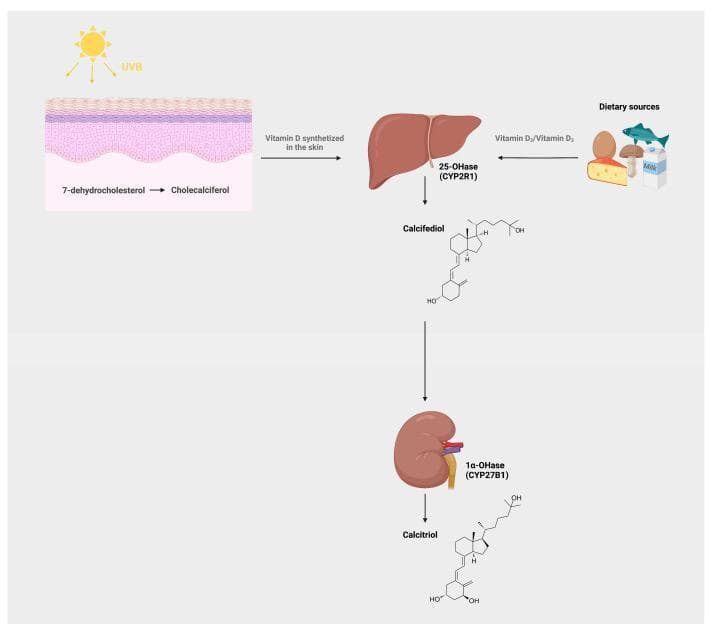
Vitamin D Synthesis
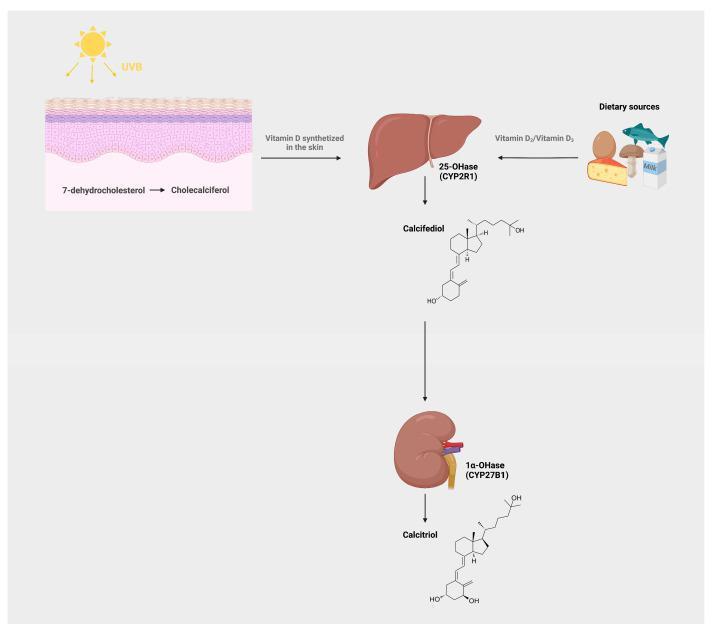
Overview
Step-by-Step Pathway
| Step | Location | Substrate → Product | Enzyme/Mechanism |
|---|---|---|---|
| 1 | Skin | 7-dehydrocholesterol → Pre-vitamin D₃ | UV-B photolysis |
| 2 | Skin | Pre-vitamin D₃ → Vitamin D₃ (cholecalciferol) | Temperature-dependent isomerization |
| 3 | Liver | Vitamin D₃ → 25(OH)D₃ (calcifediol) | 25-hydroxylase (CYP2R1) |
| 4 | Kidney | 25(OH)D₃ → 1,25(OH)₂D₃ (calcitriol) | 1α-hydroxylase (CYP27B1) |
Details at Each Step
1 & 2 — Skin (Photosynthesis)
- Epidermal 7-dehydrocholesterol absorbs UV-B radiation (280–315 nm) and is photolyzed to pre-vitamin D₃.
- Pre-vitamin D₃ then undergoes spontaneous thermal isomerization to form the stable vitamin D₃.
- Vitamin D₃ diffuses into dermal capillaries and enters systemic circulation.
Key point: Prolonged UV exposure does NOT cause vitamin D toxicity — excess pre-vitamin D₃ and vitamin D₃ are degraded by UV light into inactive photoproducts (lumisterol, tachysterol).
3 — Liver (First Hydroxylation)
- Vitamin D₃ (from skin or diet) is hydroxylated at C-25 to form calcifediol (25-hydroxyvitamin D₃).
- This is the major circulating form and the standard lab test for vitamin D status.
- The reaction is largely unregulated — serum 25(OH)D reflects body stores/input.
4 — Kidney (Second Hydroxylation — Rate-Limiting Step)
- Calcifediol is hydroxylated at C-1α to form calcitriol (1,25-dihydroxyvitamin D₃) — the biologically active form.
- CYP27B1 (1α-hydroxylase) is tightly regulated:
- ↑ by: PTH, low serum calcium, low serum phosphate, prolactin, growth hormone
- ↓ by: calcitriol itself (negative feedback), FGF-23, high calcium/phosphate
Dietary Sources (Exogenous Pathway)
- Vitamin D₂ (ergocalciferol): from plant sources (UV-irradiated fungi/yeast)
- Vitamin D₃ (cholecalciferol): from animal sources (fatty fish, egg yolk, fortified milk)
- Both enter the same hepatic and renal hydroxylation pathway.
Physiological Effects of Calcitriol (1,25(OH)₂D₃)
| Target | Action |
|---|---|
| Small intestine | ↑ calcium & phosphate absorption |
| Kidney | ↑ calcium & phosphate reabsorption |
| Bone | Promotes mineralization (indirectly via Ca/Pi) |
| Parathyroid gland | Suppresses PTH synthesis |
| Immune cells | Immunomodulation (anti-inflammatory) |
| Skin (keratinocytes) | Inhibits proliferation, promotes differentiation |
Clinical Relevance
- Deficiency causes: rickets (children), osteomalacia (adults), secondary hyperparathyroidism
- Factors reducing synthesis: dark skin (melanin blocks UV-B), high latitude/winter, sunscreen, aging (↓ skin 7-dehydrocholesterol), chronic kidney disease (↓ CYP27B1), liver disease (↓ CYP2R1)
- Toxicity: almost always from supplementation, not sun exposure; causes hypercalcemia
Blood products and uses
blood products types indications transfusion
Bailey and Love's Short Practice of Surgery 28th Edition
Page 42
blood products components transfusion chart
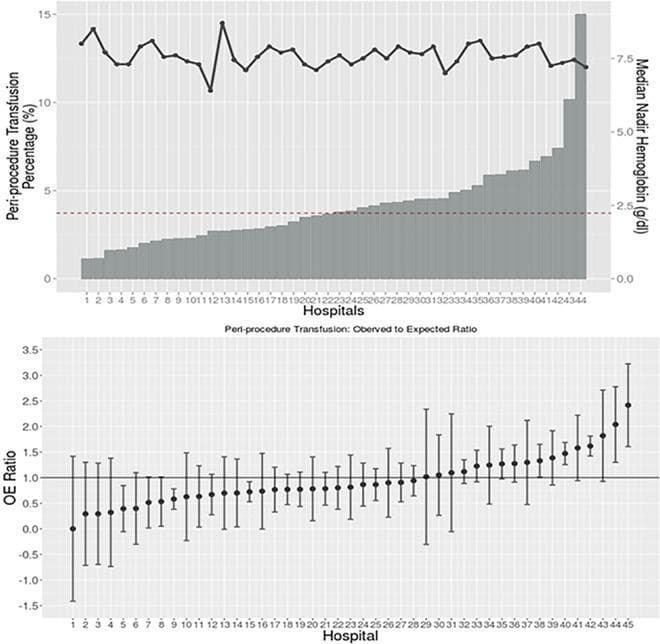
Hugging Face pmc clinical VQA raw
Page 0
packed red blood cells platelets fresh frozen plasma cryoprecipitate indications dosing
Selected Topics in Mechanical Circulatory Support
Page 10
transfusion reactions complications blood products
Blood Products and Their Uses
Overview of Major Blood Products
| Product | Derived From | Key Contents | Storage |
|---|---|---|---|
| Packed Red Blood Cells (pRBCs) | Whole blood (plasma removed) | RBCs, Hb | 2–6°C, up to 42 days |
| Fresh Frozen Plasma (FFP) | Whole blood (plasma fraction) | All clotting factors, fibrinogen | −18°C, up to 1 year |
| Platelets | Whole blood or apheresis | Platelets | 20–24°C (agitated), 5–7 days |
| Cryoprecipitate | FFP (cold precipitation) | Fibrinogen, Factor VIII, vWF, Factor XIII, fibronectin | −18°C, up to 1 year |
| Whole Blood | Unfractionated | All components | 2–6°C, up to 35 days |
| Albumin | Pooled plasma | Albumin (4–5% or 20–25%) | Room temp, 3–5 years |
| Prothrombin Complex Concentrate (PCC) | Pooled plasma | Factors II, VII, IX, X | Lyophilized, room temp |
| Factor Concentrates | Pooled plasma / recombinant | Specific factors (e.g., VIII, IX) | Varies |
1. Packed Red Blood Cells (pRBCs)
- Acute blood loss — to restore circulating volume and oxygen delivery
- Perioperative anaemia — maintaining adequate O₂ delivery during surgery
- Symptomatic chronic anaemia — without haemorrhage or impending surgery
| Clinical Setting | Trigger Hb |
|---|---|
| Stable, non-cardiac inpatient | < 7 g/dL |
| Perioperative / cardiovascular disease | < 8 g/dL |
| Active ACS / symptomatic | < 10 g/dL |
| ICU (stable, mechanically ventilated) | < 7 g/dL |
Restrictive transfusion strategies are preferred — transfuse to symptoms, not numbers alone.
2. Fresh Frozen Plasma (FFP)
- PT or aPTT > 1.5× the reference range with active bleeding or prior to invasive procedure
- Massive transfusion protocol (MTP) — typically given in 1:1:1 ratio with pRBCs and platelets
- Reversal of warfarin (when PCC unavailable)
- TTP (Thrombotic Thrombocytopenic Purpura) — as plasma exchange fluid
- Liver disease with coagulopathy and bleeding
3. Platelets
- Therapeutic: Active bleeding with platelet count < 50,000/µL, or platelet dysfunction (e.g., aspirin, uremia)
- Prophylactic: Platelet count < 20,000/µL in stable patients; < 50,000/µL pre-procedure; < 100,000/µL pre-neurosurgery or ophthalmologic surgery
4. Cryoprecipitate
- Fibrinogen deficiency: fibrinogen < 100 mg/dL (some guidelines use < 150–200 mg/dL in active bleeding)
- Disseminated Intravascular Coagulation (DIC)
- Haemophilia A and von Willebrand disease (when specific concentrates unavailable)
- Massive hemorrhage / obstetric hemorrhage
5. Albumin
| Concentration | Indication |
|---|---|
| 4–5% (iso-oncotic) | Volume expansion in sepsis, SBP (spontaneous bacterial peritonitis), post-large-volume paracentesis |
| 20–25% (hyperoncotic) | Hypoalbuminaemia with oedema, hepatorenal syndrome |
6. Prothrombin Complex Concentrate (PCC)
- 4-factor PCC: Rapid reversal of warfarin (preferred over FFP — faster, lower volume)
- 3-factor PCC: Factors II, IX, X (less Factor VII)
- Also used for reversal of direct oral anticoagulants (DOACs) in life-threatening bleeding
Massive Transfusion Protocol (MTP)
- Standard ratio: pRBCs : FFP : Platelets = 1:1:1
- Consider Tranexamic acid (TXA) early (within 3 hours of injury)
- Monitor with thromboelastography (TEG/ROTEM) for targeted therapy
- Correct hypothermia, acidosis, hypocalcaemia (the "lethal triad")
Transfusion Reactions
| Reaction | Onset | Mechanism | Features |
|---|---|---|---|
| Acute Haemolytic | During/< 24h | ABO incompatibility (clerical error) | Fever, flank pain, haemoglobinuria, shock |
| Febrile Non-Haemolytic (FNHTR) | During transfusion | Cytokines from donor leukocytes | Fever, chills — no haemolysis |
| Allergic / Anaphylaxis | Minutes | IgE-mediated (donor plasma proteins) | Urticaria → bronchospasm, hypotension |
| TRALI (Transfusion-Related Acute Lung Injury) | < 6 hours | Donor anti-HLA antibodies | Acute hypoxia, bilateral pulmonary infiltrates |
| TACO (Transfusion-Associated Circulatory Overload) | During/< 6h | Volume overload | Pulmonary oedema, hypertension, dyspnoea |
| Delayed Haemolytic | 3–10 days | Anamnestic antibody response | Falling Hb, jaundice |
| Septic | During transfusion | Bacterial contamination (esp. platelets) | High fever, rigors, shock |
Special Modifications of Blood Products
| Modification | Purpose | Indication |
|---|---|---|
| Leukoreduced | Remove WBCs | Reduce FNHTR, CMV transmission, HLA alloimmunization |
| Irradiated | Prevent donor T-cell engraftment | Immunocompromised patients, HLA-matched products |
| CMV-negative | Reduce CMV transmission | CMV-seronegative immunocompromised patients |
| Washed | Remove plasma proteins | IgA deficiency, severe allergic reactions |
Cut off time for neck of femur fracture replacement
neck of femur fracture surgery timing cutoff hemiarthroplasty total hip replacement
Management of Hip Fractures in Older Adults
Page 65
hip fracture surgical delay outcomes mortality guidelines
Management of Severe Peri-Operative Bleeding
Page 38
femoral neck fracture 48 hours 36 hours surgery timing avascular necrosis internal fixation young patient
Timing of Surgery for Neck of Femur (NOF) Fracture
The Core Principle: "As Soon As Medically Safe"
Key Guideline Recommendations
| Guideline | Recommended Timing |
|---|---|
| NICE (UK, NG124) | Within 36 hours of admission (or injury if admitted same day) |
| AAOS / American Geriatrics Society | Within 48 hours of admission |
| SIGN (Scottish) | Within 24–48 hours |
| BOA (British Orthopaedic Association) | Within 36 hours |
| AO Foundation | Within 24–48 hours |
Bottom line: Most major guidelines target < 36–48 hours. The UK NICE guideline specifically sets 36 hours as the benchmark for audit purposes.
Why Timing Matters
| Consequence of Delay | Evidence |
|---|---|
| ↑ 30-day and 1-year mortality | Each 10-hour delay associated with measurable mortality increase |
| ↑ Pressure ulcer risk | Immobility in elderly |
| ↑ Venous thromboembolism (DVT/PE) | Prolonged bed rest |
| ↑ Pneumonia / delirium | Especially in elderly |
| ↑ Hospital length of stay | Functional decline |
| Avascular necrosis (AVN) | Critical in displaced fractures in young patients — see below |
Special Case: Young / Active Patient with Displaced Femoral Neck Fracture
- The femoral head blood supply (mainly via medial femoral circumflex artery) is disrupted by displacement.
- Urgent reduction and internal fixation within 6–12 hours is traditionally recommended to restore blood flow and prevent AVN.
- Some evidence supports emergency surgery (< 6 hours) in young patients to preserve the native femoral head.
- In practice, many centres aim for < 24 hours even in young patients if logistics delay emergency fixation.
| Patient Group | Fracture Type | Preferred Procedure | Timing Goal |
|---|---|---|---|
| Young (< 60) | Displaced | Reduction + internal fixation (cannulated screws) | < 6–12 hours (urgent) |
| Elderly (> 60–65), active | Displaced (Garden III/IV) | Total Hip Replacement (THR) | < 36–48 hours |
| Elderly, low-demand / comorbid | Displaced | Hemiarthroplasty | < 36–48 hours |
| Any age | Undisplaced (Garden I/II) | Cannulated screws | < 48 hours (elective urgent) |
Does Accelerated Surgery (< 6 hours) Help in Elderly?
Acceptable Reasons to Delay Beyond 36–48 Hours
- Uncontrolled anticoagulation (warfarin: wait for INR < 2; DOACs: guidance varies — delay not clearly beneficial)
- Severe electrolyte disturbance
- Decompensated heart failure or uncontrolled arrhythmia
- Active chest infection requiring treatment
- Unstable angina / recent MI
Delay is NOT justified for: mild anaemia alone, diet-controlled diabetes, stable chronic conditions, or out-of-hours timing (meta-analysis shows no difference in outcomes for daytime vs. after-hours surgery) (Management of Severe Peri-Operative Bleeding, p. 38).
Summary
| Scenario | Cut-off |
|---|---|
| Standard elderly NOF fracture | 36–48 hours from admission |
| Young patient, displaced NOF | 6–12 hours (emergency) |
| Medically unstable (correctable cause) | Delay until safe, ideally < 72 hours |
| Daytime vs. after-hours | No difference in outcomes — operate when ready |