
Sore throat
Asking for Preferences
What would you like to know about sore throat?
Reading File
Finding Sources
Searching PubMed
"pharyngitis"[MeSH Terms] AND "diagnosis"[Subheading]
Searching the Web
sore throat causes treatment guideline strep throat when to see doctor
Reading File
Sore Throat (Pharyngitis)
Causes
Viral - by far the most common cause (colds, flu, adenovirus, mononucleosis/EBV, COVID-19). Usually accompanied by cough, runny nose, hoarseness, or conjunctivitis.
Bacterial - most notably Streptococcus pyogenes (Group A Strep, "strep throat"), accounting for roughly 20-40% of pediatric cases and 5-15% of adult cases. Peak incidence is in children aged 5-15. Presents with abrupt-onset fever, pain on swallowing, and swollen submandibular lymph nodes, typically without cough or hoarseness. On exam: swollen uvula, enlarged tonsils, palatal petechiae, and a red pharynx with patchy or confluent white exudate (Goldman-Cecil Medicine, ch. 269).
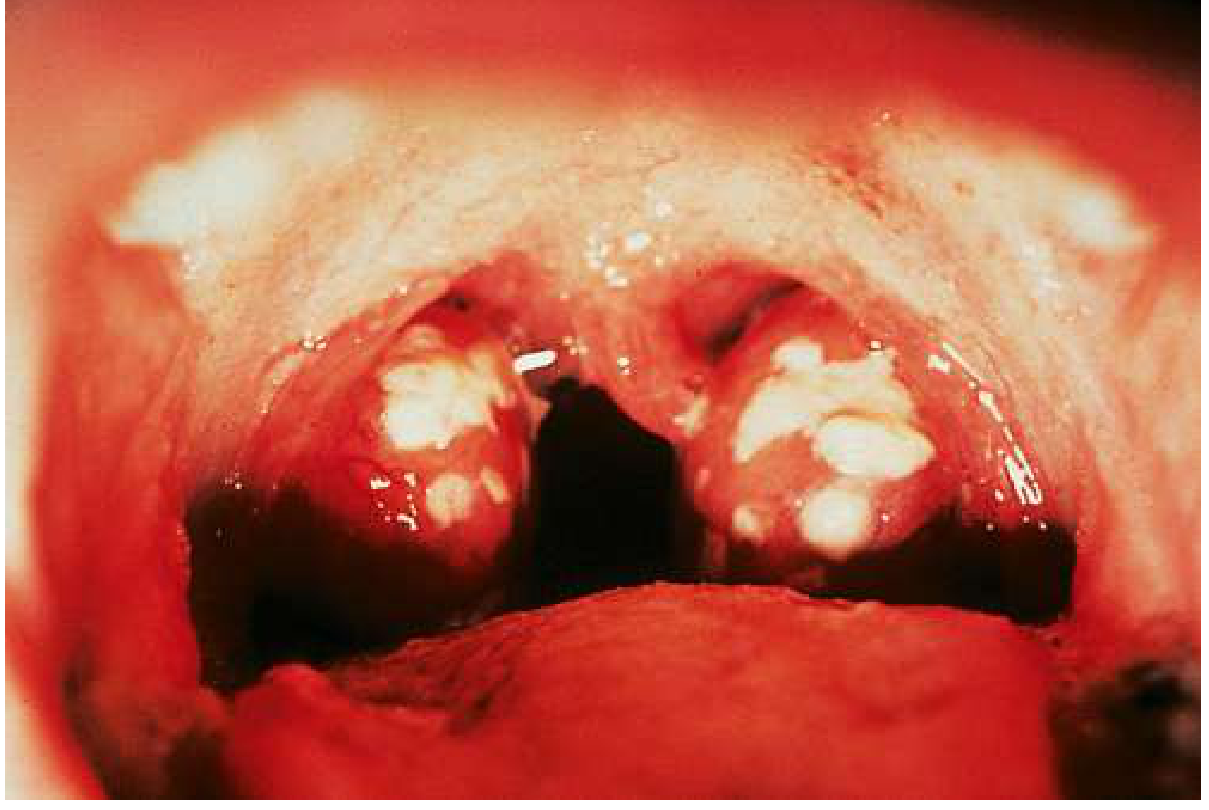
Other causes: allergies, postnasal drip, dry/irritated air, acid reflux, smoking, and (rarely) peritonsillar abscess or epiglottitis.
Diagnosis: distinguishing viral from strep
Because clinical impression alone is correct only about 75% of the time even with classic findings, clinicians use the modified Centor score (age, tonsillar exudate, tender anterior cervical nodes, fever, absence of cough) to decide who needs a rapid strep test or throat culture. A score of 0-1 generally means testing/antibiotics can be skipped; higher scores warrant testing - Goldman-Cecil Medicine, p. 174-176.
Recent evidence note: A 2024 systematic review/meta-analysis (Kanagasabai et al., PMID 38182052) found the Centor and McIsaac scores have only moderate accuracy for predicting strep positivity in secondary-care settings, reinforcing that confirmatory testing (rapid antigen test or culture) remains preferred over clinical scoring alone. A 2025 pediatric meta-analysis (PMID 39331273) likewise found imperfect correlation between clinical findings and strep test positivity - so a clinician's exam should guide testing, not replace it.
Treatment
- Viral sore throat: self-limited (3-6 days even for untreated strep, similar for most viral causes); manage with fluids, salt-water gargles, throat lozenges, warm liquids, humidified air, and analgesics/antipyretics (acetaminophen or ibuprofen). Antibiotics do not help.
- Strep throat: treated with antibiotics (penicillin or amoxicillin first-line) both to shorten symptoms and, importantly, to prevent complications such as rheumatic fever, post-streptococcal glomerulonephritis, peritonsillar abscess, or (rarely) streptococcal toxic shock syndrome.
When to see a doctor (red flags)
- Severe or worsening sore throat lasting more than a week
- High fever (especially >101°F/38.3°C), especially with no cough/cold symptoms
- Difficulty breathing or swallowing, drooling (in children), or a muffled "hot potato" voice
- Pus/exudate on tonsils, rash, or swollen/tender neck glands
- Blood in saliva or phlegm
- Recurrent episodes
Most sore throats resolve on their own within a week regardless of cause; the main reason to seek care is to rule out strep or a more serious process (e.g., abscess, epiglottitis, mononucleosis) that needs specific treatment.
If you're dealing with a sore throat yourself right now and want guidance on your specific symptoms (duration, fever, other symptoms), let me know and I can help narrow down whether it sounds viral or warrants a strep test.
Azithromycin moa
Finding Sources
Finding Sources
Azithromycin — Mechanism of Action
Target: bacterial protein synthesis (50S ribosomal subunit)
Azithromycin is a macrolide antibiotic that inhibits bacterial protein synthesis by binding reversibly to the 50S ribosomal subunit, specifically at domain V of the 23S rRNA (the same general binding region used by erythromycin and clarithromycin) - Jawetz, Melnick & Adelberg's Medical Microbiology, 28e, p. 1624.
Steps in the mechanism:
- Binding - Azithromycin binds near the peptidyl transferase center of the 50S subunit.
- Blocks translocation - It prevents the translocation step, i.e., the movement of the peptidyl-tRNA from the ribosomal A site to the P site after peptide bond formation, halting the elongation of the growing polypeptide chain (Basic Medical Biochemistry, 6e, p. 1522-1530; Goodman & Gilman's Pharmacological Basis of Therapeutics).
- May also block initiation - It can interfere with the formation of initiation complexes for new peptide chains.
- Net effect - Ribosomal stalling and release of incomplete/nonfunctional peptides, arresting bacterial growth.
Bacteriostatic (mostly), not bactericidal: Because it only halts protein synthesis rather than destroying existing bacterial cell components, azithromycin is primarily bacteriostatic — with the notable exception of enhanced killing activity against Streptococcus pneumoniae (Goldman-Cecil Medicine, ch. 267).
Pharmacologic advantages over erythromycin (relevant to why azithromycin is preferred clinically):
- Greater acid stability and tissue penetration, with a very long tissue half-life allowing short-course/once-daily dosing
- Broader gram-negative coverage (e.g., H. influenzae, Legionella, Chlamydia, Moraxella) due to better outer-membrane penetration
- Fewer drug interactions with CYP3A4 compared to erythromycin/clarithromycin, since it does not inhibit hepatic metabolism significantly
Resistance: Bacteria evade this mechanism mainly through ribosomal methylation (erm genes altering the 23S rRNA binding site) or efflux pumps (mef genes), both of which reduce macrolide binding affinity.
This mechanism underlies azithromycin's clinical use in respiratory tract infections (including atypical pathogens like Mycoplasma, Chlamydia, Legionella), STIs (chlamydia), and its immunomodulatory/anti-inflammatory effects used in chronic conditions like bronchiectasis and COPD exacerbation prevention.
This is a shared conversation. Sign in to Orris to start your own chat.