


IMG_20260602_202218_857.jpg
IMG_20260602_202204_356.jpg
I patient has came with this rash on his back
Reading File
Looking at the images carefully before searching. The rash shows clustered erythematous papules/vesicles in a grouped pattern on the back - this morphology is highly characteristic.
Searching sources...
Finding Sources
Finding Sources
Searching the Web
grouped vesicular rash back dermatomal herpes zoster diagnosis treatment
Reading File
Reading File
Loading Image
Reading File
Likely Diagnosis: Herpes Zoster (Shingles)
The clinical images are highly consistent with early herpes zoster (shingles). Here is a full breakdown:
What the Images Show
The rash on the back demonstrates:
- Clustered erythematous papules and small vesicles on an erythematous base
- Grouped arrangement (not scattered/diffuse)
- Unilateral distribution, appearing to follow a dermatomal pattern on the back/flank
- Multiple satellite smaller clusters nearby - the classic "shotgun" grouping of zoster
Compare with the textbook image of confirmed herpes zoster:
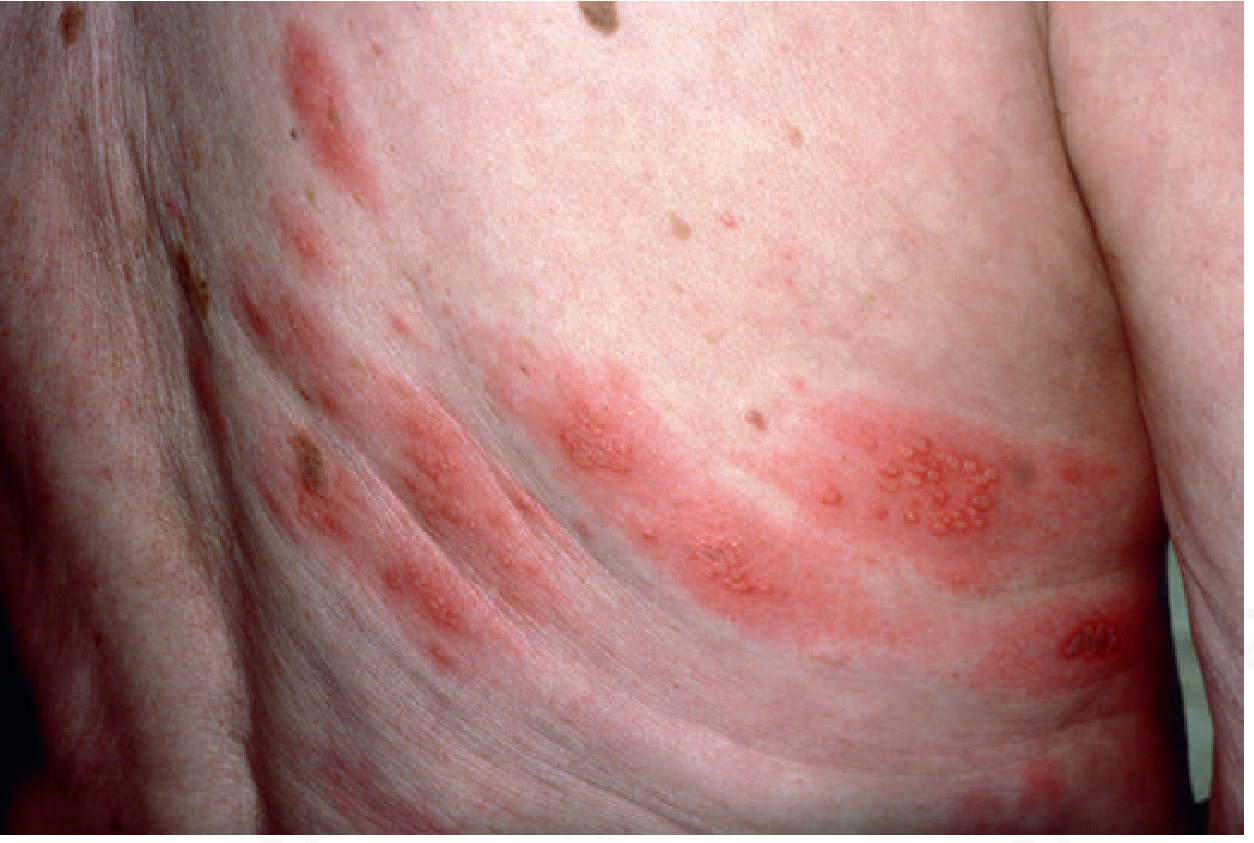
The morphology closely matches Fig. 19.16 from Andrews' Diseases of the Skin.
Pathophysiology
Herpes zoster results from reactivation of varicella-zoster virus (VZV), which lies dormant in dorsal root ganglion cells after primary chickenpox infection. Triggers include age-related immune decline, immunosuppression (HIV, TNF inhibitors, JAK inhibitors, malignancy, steroids), diabetes, and autoimmune disease. The virus travels down the sensory nerve to the skin.
Key Diagnostic Features
| Feature | This Patient |
|---|---|
| Grouped vesicles/papules | Present |
| Erythematous base | Present |
| Unilateral, dermatomal | Appears unilateral on back |
| Back/thoracic dermatome | Yes (thoracic is most common - 55%) |
Ask the patient about:
- Prodromal burning, stinging, or shooting pain/itching in that area (1-5 days before rash)
- Prior chickenpox history
- Fever, malaise, headache
- Whether rash crosses the midline (it should not in typical zoster)
- Age and immune status (HIV, malignancy, immunosuppressive medications)
Differential Diagnosis
| Diagnosis | Against it here |
|---|---|
| Herpes simplex (HSV) | Less common on trunk/back, no prodromal dermatomal pain pattern |
| Contact dermatitis | Would not have grouped vesicles, not dermatomal |
| Insect bites | Usually more scattered, urticarial |
| Impetigo | Honey-crusted, not grouped vesicles on erythematous base |
Management
Antiviral therapy - start within 72 hours of rash onset (benefits still possible up to 7 days):
| Drug | Dose (Adults) | Duration |
|---|---|---|
| Valacyclovir (preferred) | 1000 mg TID | 7 days |
| Famciclovir | 500 mg TID | 7 days |
| Acyclovir | 800 mg 5x/day | 7-10 days |
Pain control: Acetaminophen, NSAIDs, or opioids if severe. Cool compresses for local relief.
Watch for red flags requiring urgent referral:
- Rash near the eye (ophthalmic branch V1) or tip of nose (Hutchinson sign) - ophthalmology emergency
- More than 20 lesions outside the dermatome (disseminated zoster - needs IV acyclovir)
- Immunocompromised patient - consider IV acyclovir
- Motor weakness
Postherpetic Neuralgia (PHN) Prevention
PHN (pain persisting >1 month after healing) occurs in up to 40% of patients over 60 years old, but <10% under 60. Early antiviral treatment reduces both severity and PHN incidence.
Vaccination
Recombinant zoster vaccine (Shingrix) is recommended for adults 50+ years old - it reduces zoster incidence by ~90%. If this patient hasn't been vaccinated, counsel on vaccination after the acute episode resolves.
Disclaimer: This analysis is for clinical decision support. Confirm with full history, physical exam, and clinical judgment. In atypical cases, consider viral PCR or Tzanck smear for confirmation.
Sources: Andrews' Diseases of the Skin, 13e; Textbook of Family Medicine, 9e
Take history please for it
Here is a structured clinical history for this suspected herpes zoster case. Ask the patient the following:
📋 Clinical History — Suspected Herpes Zoster
1. Presenting Complaint
- Where exactly is the rash? Does it go around to the front of the body or stay on one side only?
- When did the rash first appear?
- Is it getting worse, better, or staying the same?
2. History of Presenting Complaint
About the rash:
- Did you have any pain, burning, itching, or tingling in that area before the rash appeared? If yes, how many days before?
- Is the rash painful now? How would you rate the pain (0-10)?
- Is the pain burning, stabbing, shooting, or aching in character?
- Is the skin sensitive to touch or clothing (allodynia)?
- Have the blisters burst or crusted over yet?
- Have new spots been appearing, or has it stopped spreading?
Associated symptoms:
- Fever or chills?
- Headache?
- Fatigue or feeling generally unwell?
- Any pain or redness in the eyes? Any blurred vision?
- Any weakness in the arms, legs, or face?
- Any ear pain, hearing changes, or facial droop (Ramsay Hunt syndrome)?
3. Past Medical History
- Have you ever had chickenpox in the past?
- Have you ever had shingles before?
- Do you have any of the following:
- Diabetes mellitus?
- HIV or any immune deficiency?
- Any cancer (especially blood cancers like lymphoma, leukemia)?
- Kidney disease / dialysis?
- Autoimmune disease (lupus, rheumatoid arthritis, etc.)?
- Asthma or COPD?
4. Medication History
- Are you currently on any medications? Specifically:
- Steroids (prednisolone, dexamethasone)?
- Chemotherapy or cancer treatment?
- Biologics (TNF inhibitors like adalimumab, infliximab; JAK inhibitors)?
- Immunosuppressants (methotrexate, azathioprine, cyclosporine)?
- Any recent new medications or vaccines?
- Any known drug allergies?
5. Surgical / Trauma History
- Any recent surgery near that area of the back? (Zoster can reactivate along surgical scars)
- Any recent injury or procedure in that region?
6. Family History
- Has anyone in your family had shingles? (Family history increases risk)
7. Social History
- Age?
- Occupation - any exposure to sick or immunocompromised individuals?
- Smoking, alcohol, or substance use?
- Recent significant stress or illness? (Stress is a known trigger for reactivation)
- Recent travel?
8. Vaccination History
- Have you received the shingles vaccine (Shingrix / Zostavax)?
- Are your childhood vaccinations (including varicella) up to date?
9. Review of Systems (to screen for dissemination/complications)
- Any difficulty breathing or chest pain? (pulmonary involvement)
- Any abdominal pain, nausea, vomiting? (visceral dissemination)
- Any confusion, stiff neck, or sensitivity to light? (CNS involvement)
- Count of lesions - are they confined to one side, or are there more than 20 spots scattered elsewhere on the body? (disseminated zoster)
Key Red Flags to Screen For
| Red Flag | Implication |
|---|---|
| Eye pain / visual change | Herpes zoster ophthalmicus - urgent ophthalmology |
| Tip of nose vesicles (Hutchinson sign) | Eye involvement in 76% of cases |
| Ear pain + facial droop + hearing loss | Ramsay Hunt syndrome |
| >20 lesions outside dermatome | Disseminated zoster - needs IV acyclovir |
| Immunocompromised patient | More aggressive treatment needed |
| Confusion / neck stiffness | CNS involvement |
Once you have the history, share the patient's answers and I can help you complete the assessment, formulate a management plan, and advise on antiviral dosing.
This is a shared conversation. Sign in to Orris to start your own chat.