
Right lower eyelid fluctuating
Reading File
Searching for information on a fluctuating right lower eyelid mass/swelling — this could represent several conditions including chalazion, hordeolum, or other eyelid lesions.
search_medical_text
fluctuating eyelid swelling mass lower lid
Bailey and Love's Short Practice of Surgery 28th Edition
Page 746
search_medical_image
lower eyelid swelling fluctuating chalazion hordeolum
Hugging Face pmc clinical VQA raw
Page 0
GradeResponse
GradeResponse
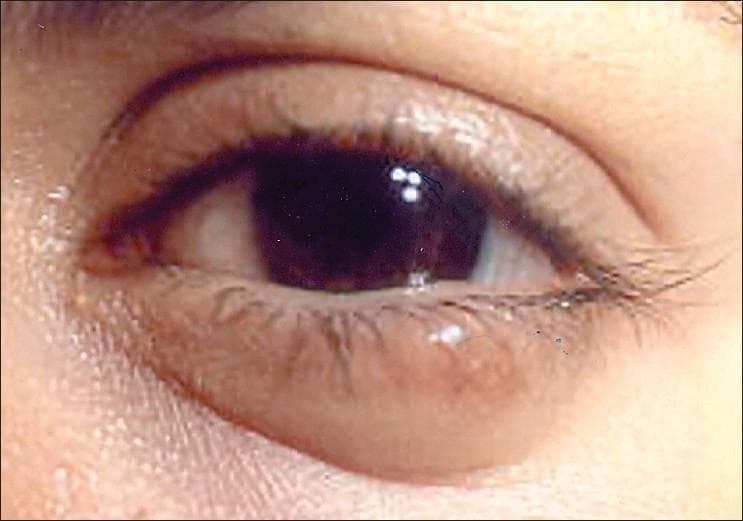
Right Lower Eyelid Fluctuating Swelling
A fluctuating (fluid-filled, compressible) swelling of the lower eyelid is a key clinical sign that helps narrow the differential diagnosis. Here is a structured approach:
Most Likely Diagnosis: Acute Hordeolum (Stye) — Internal or External
A fluctuating swelling indicates pus collection, most characteristic of an internal hordeolum (infected meibomian gland) or external hordeolum (infected Zeis/Moll gland at the lid margin).
| Feature | External Hordeolum | Internal Hordeolum |
|---|---|---|
| Location | At the lid margin | Within the tarsal plate |
| Gland involved | Zeis or Moll | Meibomian gland |
| Fluctuation | Yes — points to skin surface | Yes — may point to conjunctival surface |
| Pain | Tender, acute | Tender, may be more deep-seated |
| Organism | Staphylococcus aureus (most common) | S. aureus |
Differential Diagnosis
| Condition | Fluctuation | Key Distinguishing Features |
|---|---|---|
| Internal Hordeolum | ✅ Yes | Acute, painful, red, tender; may discharge pus |
| Chalazion (Meibomian cyst) | ❌ Usually firm | Chronic, painless, non-tender granuloma; smooth, rubbery on palpation against the tarsal plate (Bailey & Love, p. 746) |
| Periorbital/Preseptal Cellulitis | ❌ Usually diffuse | Diffuse swelling, erythema, warmth; no discrete fluctuant mass; may be post-traumatic or post-infective |
| Dacryocystitis | ✅ Yes (medial) | Medial canthal swelling, overlies lacrimal sac; epiphora; pressure regurgitates pus through punctum |
| Eyelid Abscess | ✅ Yes | Discrete pus-filled cavity, may follow trauma or infected wound |
| Schwannoma / Benign Lid Tumor | ❌ No | Firm, well-circumscribed, chronic, non-tender; rare |
Clinical Assessment
History to ask:
- Duration and onset (acute = infection; chronic = cyst/granuloma)
- Pain and tenderness (infection vs. cyst)
- Fever or systemic symptoms (preseptal/orbital cellulitis)
- Previous episodes (recurrent hordeolum/chalazion)
- Vision changes or proptosis (orbital involvement — red flag)
Examination:
- Evert the eyelid — look for the pointing of an internal hordeolum on the conjunctival surface
- Assess the eyelid margin for sebaceous gland involvement
- Check for preauricular lymphadenopathy
Management
Internal/External Hordeolum:
- Warm compresses — 4x/day for 10–15 minutes; facilitates drainage
- Topical antibiotics (e.g., chloramphenicol or fusidic acid ointment) — if secondary conjunctivitis
- Incision & drainage (I&D) — if pointing or not resolving; internal hordeolum is drained from the conjunctival surface (vertical incision); external from the skin
- Oral antibiotics (e.g., flucloxacillin) — only if spreading cellulitis
Chalazion (if the fluctuation was misleading and it becomes chronic/firm):
- Intralesional triamcinolone injection or
- Surgical curettage from the conjunctival side
Red Flags — Refer Urgently
- Proptosis or restricted eye movements → suspect orbital cellulitis
- Vision loss or diplopia
- Fever + periorbital swelling in a child → preseptal/orbital cellulitis requiring IV antibiotics
- Recurrent chalazion in same site in an older patient → rule out sebaceous gland carcinoma (biopsy required)
The most common cause of a fluctuating lower eyelid swelling is an acute internal hordeolum. Initial management with warm compresses is appropriate; if not improving in 1–2 weeks or if there is concern for a pointing abscess, I&D is indicated.
This is a shared conversation. Sign in to Orris to start your own chat.