
Methotrexate complication in buccal mucosa
Reading File
Finding Sources
Searching PubMed
methotrexate AND oral ulcer
Searching the Web
methotrexate toxicity oral mucositis buccal mucosa ulceration management leucovorin
Reading File
Reading File
Methotrexate complications in the buccal mucosa
The main complication is oral mucositis or stomatitis. It shows up as erosions and ulcers of the buccal mucosa, and it is often the first visible sign of methotrexate (MTX) toxicity.
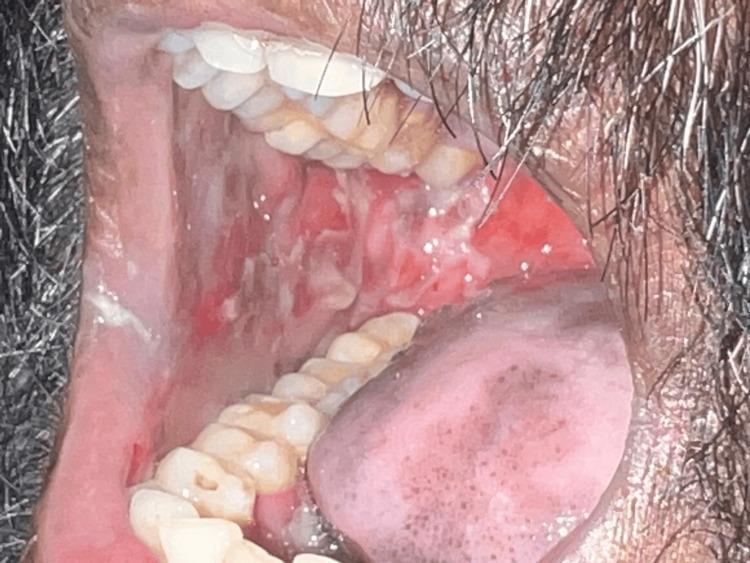
Why it happens
- MTX inhibits dihydrofolate reductase, which depletes folate and impairs DNA synthesis. At low doses it also inhibits AICAR transformylase and thymidylate synthase.
- Rapidly dividing cells are hit hardest, including the basal epithelium of the oral and GI mucosa and the bone marrow.
- The non-keratinized buccal mucosa has high epithelial turnover, so it breaks down early.
- Nausea and stomatitis are the most common MTX toxicities. Leukopenia, anemia, GI ulceration and alopecia also come from inhibited cell proliferation (- Katzung's Basic and Clinical Pharmacology, 16th Ed, p. 1021).
- Henry's lists ulceration, glossitis and stomatitis among the GI effects, alongside bone marrow suppression (- Henry's Clinical Diagnosis and Management by Laboratory Methods, Methotrexate).
- Dermatology 5e names MTX as a cytotoxic cause of oral ulceration (- Dermatology 2-Volume Set 5e, Mucosal ulcerations).
Clinical features
- Painful erosions or ulcers on the buccal mucosa, lateral tongue and lips. They have ill-defined erythematous borders and often a whitish-yellow fibrinous base.
- Burning and soreness may come first, along with erythema and glossitis.
- Pain can cause dysphagia and poor oral intake.
- Secondary infection is possible, including candidiasis, HSV reactivation and bacterial infection, especially if neutropenic.
Red flag: oral ulcers as a sign of toxicity
New oral ulcers in a patient on MTX should prompt a check for overdose or impaired clearance. Common causes are:
- Daily instead of weekly dosing. This is a classic error.
- Renal impairment. MTX is cleared mainly by the kidney.
- Interacting drugs, such as trimethoprim-sulfamethoxazole, NSAIDs, PPIs and penicillins.
- Missed folic acid supplementation.
Mucosal ulceration can come with pancytopenia, AKI, hepatotoxicity and skin necrosis. A recent case report of severe MTX toxicity described mucocutaneous ulcers, myelosuppression and nephropathy. Up to 55% of low-dose MTX users reported oral mucositis over 90 months of follow-up in the studies cited there.
Management
- Hold MTX and review the dosing schedule.
- Check CBC, creatinine/eGFR, LFTs, and an MTX level if overdose is suspected.
- Folinic acid (leucovorin) rescue for toxicity or overdose. The case above used 100 mg IV three times daily for 5 days. Dosing depends on the MTX level and renal function.
- Folic acid supplementation for prevention. It reduces stomatitis and GI and liver test abnormalities, though it may reduce efficacy by about 10-18% (- Katzung, p. 1021).
- Local care:
- bland saline or bicarbonate rinses
- topical anesthetic rinses (e.g. lidocaine)
- topical corticosteroid mouthwash (e.g. betamethasone)
- chlorhexidine
- treat any candidiasis or HSV
- Supportive care: hydration, nutrition and analgesia. Ulcers usually heal in about 3 weeks after the drug is stopped.
- Long term: reduce the dose, switch to subcutaneous dosing, increase folate, or change drug if mucositis recurs.
Differential diagnosis
- Aphthous ulcers
- Other drug-induced ulcers (NSAIDs, nicorandil, bisphosphonates)
- HSV or CMV infection
- Lichen planus
- Pemphigus
- SJS/TEN
- Underlying disease (SLE, Behçet's)
A recent PubMed check (last 2 years, systematic reviews) found nothing that contradicts the points above. The results were about oral versus subcutaneous MTX efficacy and did not address buccal mucosal toxicity.
I can go into leucovorin dosing by MTX level, or into oral manifestations of MTX in a specific setting such as RA, psoriasis or oncology, if that would help.
This is a shared conversation. Sign in to Orris to start your own chat.