
Stye
Reading File
A stye (hordeolum) is an acute bacterial infection of the eyelid glands - most commonly caused by Staphylococcus aureus. It presents as a painful, red, swollen lump on the eyelid margin (external) or inside the eyelid (internal). Treatment is usually warm compresses; antibiotics are used when infection spreads.
Searching sources...
Finding Sources
Searching the Web
stye hordeolum treatment clinical overview 2024
Reading File
Reading File
Reading File
Loading Image
Here is a thorough clinical overview of a stye (hordeolum):
Stye (Hordeolum)
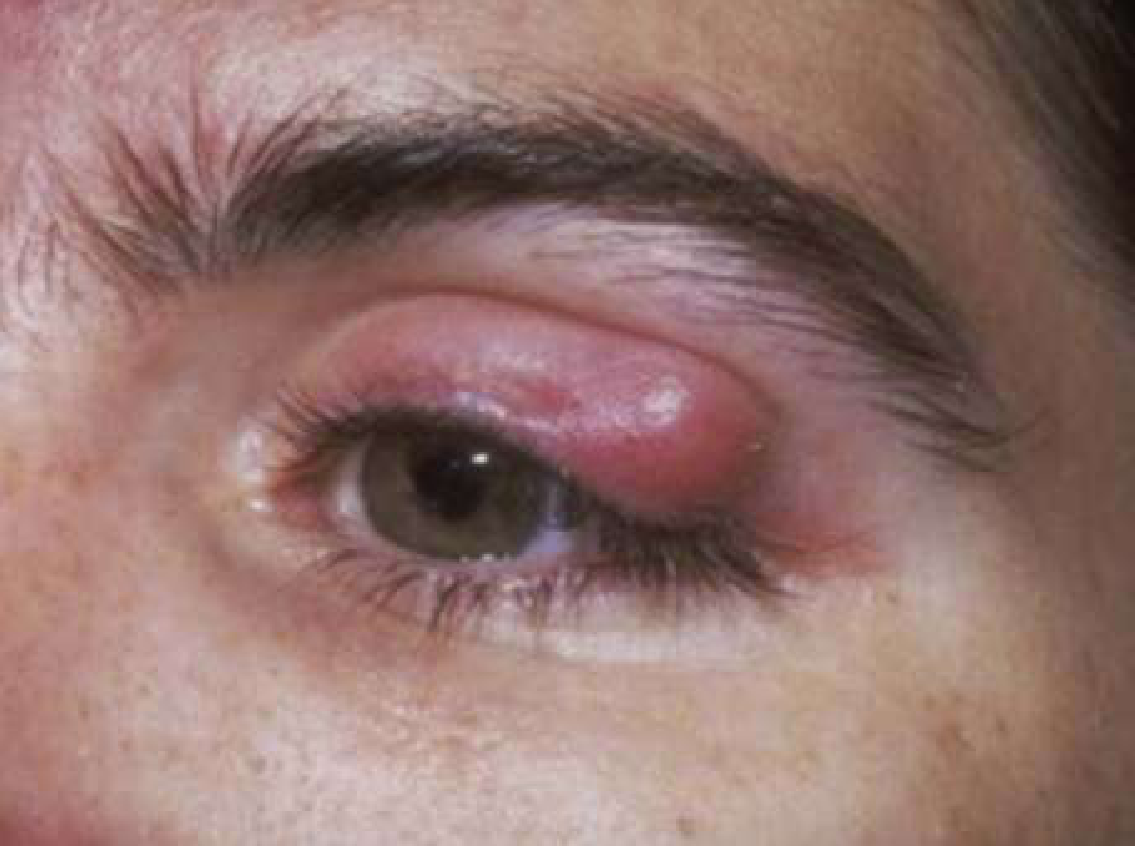
Definition
A hordeolum (stye) is an acute, tender infection of the oil glands of the eyelid. There are two types:
| Type | Gland affected | Location |
|---|---|---|
| External hordeolum | Gland of Zeis (sebaceous) or Moll (sweat) at the eyelash follicle | Eyelid margin |
| Internal hordeolum | Meibomian gland | Posterior tarsal surface (inside eyelid) |
It is distinct from a chalazion, which is a chronic, sterile, granulomatous blockage of a meibomian gland - usually non-tender and located in the body of the eyelid rather than the margin. A chalazion can evolve from an untreated hordeolum.
- The Wills Eye Manual, p. 381-382
- Rosen's Emergency Medicine, p. 893
Pathophysiology
Obstruction of the gland orifice leads to stasis of secretions, followed by bacterial invasion and localized purulent (pyogenic) inflammation. The most common causative organism is Staphylococcus aureus. The infection can occasionally progress to preseptal cellulitis.
Clinical Features
- Acute onset painful, red, swollen lump on the eyelid
- Localized tenderness and erythema
- May point and discharge mucopurulent material
- Associated eyelid swelling; sometimes associated blepharitis
Internal hordeolum presents similarly but with pain and erythema visible on the posterior (conjunctival) surface of the eyelid when it is everted.
Differential Diagnosis
| Condition | Key distinguishing feature |
|---|---|
| Chalazion | Nontender, chronic nodule in lid body, not at margin |
| Preseptal cellulitis | Diffuse eyelid erythema/edema, fever; may spread from hordeolum |
| Sebaceous carcinoma | Recurrent "chalazia," older patient, madarosis (lash loss) - must biopsy |
| Pyogenic granuloma | Fleshy red conjunctival lesion, often post-inflammatory |
| Forniceal foreign body | History of trauma or contact lens use |
Workup
Diagnosis is clinical. No lab tests or imaging are typically needed.
- Palpate the eyelid for a nodule
- Evert the lid to assess the posterior surface (for internal hordeolum)
- Slit lamp: evaluate meibomian glands, check for madarosis/ulceration to exclude malignancy in atypical or recurrent cases
- Look for associated rosacea or blepharitis
Treatment
First-line (medical)
- Warm compresses - at least 10 minutes, 4 times daily, with gentle massage over the lesion. This is the cornerstone of treatment and encourages drainage.
- Eyelid hygiene - lid scrubs to reduce bacterial colonization.
- Topical antibiotics (for active hordeolum or if draining):
- Bacitracin, tobramycin, or erythromycin ointment b.i.d. for 1-2 weeks
- Topical antibiotic/steroid combination (e.g., neomycin/polymyxin B/dexamethasone) may be used for chalazion component
- If the lesion is centered around a lash follicle, epilation of the lash can enhance drainage.
Oral antibiotics
- Add oral antibiotics if there is surrounding cellulitis or systemic signs
- Doxycycline 20-50 mg daily (low dose, for anti-inflammatory effect) for recurrent lesions or associated meibomitis/ocular rosacea
Refractory or worsening cases
- Incision and drainage (I&D) under local anesthesia:
- External hordeolum: incision through skin and orbicularis
- Internal hordeolum: incision through the tarsal conjunctiva
If it evolves into a chalazion (chronic, after 3-4 weeks)
-
Intralesional steroid injection: triamcinolone 40 mg/mL mixed 1:1 with 2% lidocaine with epinephrine (0.2-1.0 mL). Note: risk of skin depigmentation/atrophy (especially in darker skin) and rare retrograde arterial infiltration - discuss with patient.
-
Incision and curettage: send all excised tissue for pathology, especially recurrent or atypical lesions.
-
The Wills Eye Manual, p. 382-383
Complications
- Chalazion - chronic granuloma if hordeolum doesn't resolve
- Preseptal (periorbital) cellulitis - diffuse spread anterior to orbital septum
- Orbital (post-septal) cellulitis - rare; more sinister: proptosis, ophthalmoplegia, pain on eye movement, visual loss - requires urgent imaging and IV antibiotics
Follow-up
- Routine follow-up is not needed if the lesion responds to warm compresses.
- Return if no improvement after 1-2 weeks, or sooner if worsening (especially if signs of spreading cellulitis develop).
- Recurrent or atypical lesions in older patients warrant biopsy to exclude sebaceous cell carcinoma.
Key takeaway: Most styes resolve with warm compresses alone. Topical antibiotics are added for active infection or drainage; I&D is reserved for large or non-responding lesions. Any recurrent or atypical eyelid lesion should raise concern for malignancy.
This is a shared conversation. Sign in to Orris to start your own chat.