
Approach to Upper GI bleed history taking and examination detail approach with investigation and enlist all possible differential from standard textbook for consultant
Reading File
Finding Sources
Finding Sources
Searching PubMed
"upper gastrointestinal bleeding" AND management
Reading File
Reading File
Reading File
Reading File
Reading File
Reading File
Reading File
Reading File
Reading File
Reading File
Reading File
Finding Sources
Loading Image
I now have all the information needed. Let me compile a comprehensive consultant-level reference.
Upper Gastrointestinal Bleeding - Complete Consultant Reference
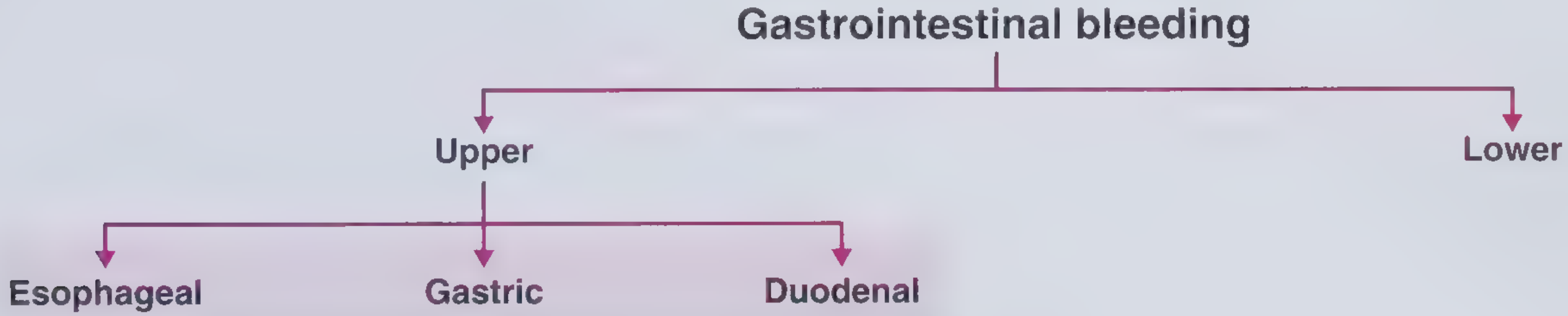
Definition: Upper GI bleeding (UGIB) is any hemorrhage originating proximal to the ligament of Treitz - encompassing esophageal, gastric, and duodenal sources.
1. HISTORY TAKING
A. Presenting Complaint - Characterize the Bleed
Hematemesis
- Fresh red blood vs. coffee-ground material (digested blood indicates slower or stopped bleeding)
- Volume: estimate in cups/liters; number of episodes
- Presence of clots (suggests significant arterial hemorrhage)
- Association with retching or vomiting before the bleed (Mallory-Weiss tear)
Melena
- Black, tarry, offensive-smelling stool - confirms upper GI source in most cases
- Age <50 with melena more strongly suggests UGIB even without hematemesis
- Duration and number of episodes
Hematochezia
- Bright red per rectum - typically lower GI, but ~14-15% of hematochezia cases originate from an upper GI source (usually massive UGIB)
- If hematochezia + hemodynamic instability - always consider upper GI source
Important mimics to exclude:
- Iron or bismuth ingestion simulates melena (stool guaiac negative)
- Red-dyed liquid medications and beets simulate hematochezia (guaiac negative)
- Swallowed blood from epistaxis, dental procedures, or haemoptysis
B. Associated Symptoms
| Symptom | Clue |
|---|---|
| Epigastric pain relieved by food/antacids | Peptic ulcer disease |
| Epigastric pain radiating to back | Posterior duodenal ulcer eroding gastroduodenal artery |
| Nausea, vomiting, retching BEFORE hematemesis | Mallory-Weiss tear |
| Dysphagia, odynophagia, weight loss | Oesophageal/gastric malignancy, severe oesophagitis |
| Heartburn, regurgitation (GORD history) | Oesophagitis, Barrett's erosions |
| Jaundice, abdominal swelling, ankle oedema | Portal hypertension, variceal bleeding |
| Pulsatile abdominal mass, prior aortic graft | Aortoenteric fistula (must not be missed) |
| Right upper quadrant pain + bleeding | Haemobilia (biliary source) |
| Episodic flushing, diarrhoea | Carcinoid with hepatic metastases |
C. Haemodynamic Symptoms (Severity Assessment)
- Syncope or pre-syncope (significant volume loss >15-20%)
- Dizziness on standing (orthostatic symptoms)
- Palpitations, chest pain (cardiac ischaemia secondary to bleeding)
- Confusion, restlessness (cerebral hypoperfusion)
- Oliguria, anuria
D. Past Medical History
- Previous GI bleeding - prior episodes, their source, prior endoscopy findings and interventions (banding, injection sclerotherapy, clips)
- Peptic ulcer disease or dyspepsia
- Liver disease, hepatitis B/C, alcohol cirrhosis
- Inflammatory bowel disease
- Coagulopathy or haematological disorders
- Renal failure (uraemia causes platelet dysfunction; raised BUN:Cr ratio can indicate UGIB itself)
- Cardiovascular disease (relevant for transfusion threshold)
- Prior abdominal surgery or aortic aneurysm repair (aortoenteric fistula)
- Malignancy (known gastric, oesophageal, hepatic, or pancreatic cancer)
- Varices - known, previously banded, TIPS procedure
E. Drug History (Critical)
- NSAIDs and aspirin - most important risk factor for peptic ulcer bleeding; 57% of gastric ulcer bleeds and 53% of duodenal ulcer bleeds are associated with NSAID/aspirin use
- Anticoagulants - warfarin, DOACs (rivaroxaban, apixaban, dabigatran), heparin
- Antiplatelet agents - clopidogrel, ticagrelor, prasugrel (especially dual antiplatelet therapy)
- Corticosteroids - especially combined with NSAIDs (synergistic ulcer risk)
- SSRIs - inhibit platelet serotonin, impair haemostasis
- Bisphosphonates - pill-induced oesophagitis
- Tetracyclines, iron, potassium chloride - oesophageal/gastric erosions
- Thrombolytics - iatrogenic haemorrhage
- PPI/H2RA use - may partially mask symptoms
F. Social History
- Alcohol use - quantity and pattern (alcoholic cirrhosis, erosive gastritis, Mallory-Weiss)
- Smoking (impairs mucosal defense, NSAID use risk)
- Overseas travel (portal hypertension from schistosomiasis in endemic areas)
- Occupation and stress levels
G. Family History
- Hereditary haemorrhagic telangiectasia (HHT/Osler-Weber-Rendu)
- Peutz-Jeghers syndrome
- Familial polyposis
- Gastric malignancy
2. PHYSICAL EXAMINATION
A. Immediate Assessment - Haemodynamic Status
Vital Signs (assess severity and shock)
| Finding | Significance |
|---|---|
| HR >100 bpm | Moderate-severe blood loss (>15-20% volume) |
| SBP <100 mmHg | Significant haemodynamic compromise |
| Postural hypotension (>20 mmHg SBP drop on standing) | 15-20% volume depletion |
| Paradoxical bradycardia | Can occur even in profound hypovolemia (vasovagal) |
| Tachypnoea | Tissue hypoperfusion, lactic acidosis |
| Reduced pulse pressure | Early compensated shock |
| Temperature | Fever may suggest infectious aetiology, sepsis |
Important caveat: Beta-blockers prevent tachycardia; patients with baseline hypertension may have "normal" blood pressure despite significant volume loss. Younger patients compensate better - vital signs may remain normal until >30% volume loss.
B. General Inspection
- Pallor (anaemia)
- Diaphoresis, cold clammy skin (shock)
- Agitation, confusion (cerebral hypoperfusion)
- Jaundice (liver disease)
- Cachexia (malignancy)
- Nutritional status
C. Skin and Peripheral Signs
| Sign | Diagnosis suggested |
|---|---|
| Spider naevi (>5), palmar erythema | Chronic liver disease/cirrhosis |
| Jaundice, caput medusae | Portal hypertension |
| Gynaecomastia, testicular atrophy | Cirrhosis |
| Petechiae, purpura, ecchymoses | Coagulopathy, thrombocytopenia, vasculitis |
| Telangiectasias on lips, oral mucosa, fingertips | HHT (Osler-Weber-Rendu) |
| Perioral pigmentation (lips, buccal mucosa) | Peutz-Jeghers syndrome |
| Dermal neurofibromas, cafe-au-lait spots | Neurofibromatosis |
| Acanthosis nigricans | Gastric adenocarcinoma (paraneoplastic) |
| Virchow's node (L supraclavicular) | Gastric malignancy |
| Sister Mary Joseph nodule (umbilical) | Intra-abdominal malignancy |
Ear, Nose and Throat Exam
- Exclude epistaxis, posterior nasal bleeding as source of swallowed blood producing coffee-ground emesis - this accounted for 2.2% of UGIB in the UCLA CURE database
D. Cardiovascular Examination
- Signs of heart failure (JVP, pulmonary oedema) - relevant for fluid resuscitation and Blatchford score
- Peripheral vascular disease (may coexist with aortic pathology)
E. Abdominal Examination
- Inspection: Scars (previous surgery, aortic repair), distension, visible peristalsis, caput medusae
- Palpation:
- Epigastric tenderness (peptic ulcer, gastritis)
- Hepatomegaly (cirrhosis, hepatic malignancy)
- Splenomegaly (portal hypertension, haematological disorder)
- Abdominal mass (gastric/pancreatic malignancy, lymphoma)
- Pulsatile epigastric mass (AAA - risk of aortoenteric fistula)
- Ascites (cirrhosis, malignancy)
- Percussion: Shifting dullness (ascites), liver dullness
- Auscultation: Bowel sounds (hyperactive in UGIB due to blood in intestine acting as cathartic)
F. Rectal Examination
- Examine stool colour: bright red (hematochezia), maroon, or black tarry (melena)
- Guaiac (FOB) testing of stool
- Assess for rectal masses, haemorrhoids
G. Nasogastric Aspirate (Bedside Procedure)
- Positive aspirate (bloody, maroon, or coffee-ground): confirms UGIB; high-risk lesions more likely
- Negative clear aspirate: does NOT exclude UGIB - intermittent bleeding, pyloric spasm, or oedema can prevent duodenal blood reflux; only positive in ~23% of patients with occult UGIB without hematemesis
- Bilious aspirate: suggests pylorus is patent; duodenal source is less likely if no blood
- Visual inspection is more reliable than guaiac testing of aspirate (traumatic insertion causes false positives)
- Note: No evidence that NG tube passage provokes variceal bleeding
3. INVESTIGATIONS
A. Immediate Bloods (Resuscitation Phase)
| Test | Rationale |
|---|---|
| FBC/CBC | Hb, Hct (may be normal initially due to haemoconcentration - not a reliable acute indicator), WCC, platelets |
| Group and Screen / Cross-match | Single most important test; order 4-6 units PRBCs |
| Coagulation (PT/INR, APTT) | Especially if on anticoagulants or known liver disease; correct if INR elevated or platelets <50,000 |
| Urea and Electrolytes | BUN:Cr ratio - a ratio ≥30 strongly suggests upper GI source (digested Hb raises BUN) |
| Liver Function Tests | Bilirubin, albumin, transaminases - assess for chronic liver disease |
| Glucose | Hypoglycaemia in liver failure |
| Calcium | Hypercalcaemia associated with Zollinger-Ellison syndrome |
| Serum lactate | Rising lactate = severe illness and predictor of in-hospital mortality |
| ABG | Metabolic acidosis, base deficit - assessment of tissue perfusion |
| ECG | Exclude silent myocardial ischaemia precipitated by blood loss, especially in elderly or known CAD |
| Blood cultures | If sepsis suspected |
Key Biochemical Clue:
Digested blood is absorbed as urea, raising the BUN level. A BUN:Cr ratio ≥30 suggests an upper GI source even when the presentation is atypical. - Frameworks for Internal Medicine
B. Imaging
| Investigation | Indication | Notes |
|---|---|---|
| Chest X-ray | Free air (perforation), aspiration pneumonia, cardiac size | Limited routine value; not needed absent specific indication |
| Plain abdominal X-ray | Perforation, obstruction | Limited; contraindicated if EGD planned |
| Barium studies | Contraindicated | Barium impairs subsequent endoscopy and angiography |
| CT Abdomen/Pelvis with contrast | Suspected aortoenteric fistula, malignancy, complications | High sensitivity for active bleeding if rate >0.3 ml/min; helps plan intervention |
| CT Angiography (CTA) | Active bleeding not controlled by endoscopy; identifies source before formal angiography | |
| Mesenteric Angiography | Failed endoscopy; active arterial bleeding; allows therapeutic embolization | Detects bleeding at >0.5 ml/min; CO2 + contrast used |
| Tagged RBC Scintigraphy | Intermittent/obscure bleeding; detects at >0.1 ml/min | Does not allow immediate therapy |
| Ultrasound abdomen | Liver size, portal hypertension, ascites, masses | |
| Portal venous pressure studies | HVPG for portal hypertension quantification |
C. Endoscopy - The Gold Standard
Upper GI Endoscopy (EGD/OGD)
- Diagnostic and potentially therapeutic
- Perform within 24 hours of presentation after adequate fluid resuscitation in most patients with overt bleeding
- Earlier (within 12 hours) for high-risk patients (haemodynamic instability, suspected varices)
- Allows Forrest classification of peptic ulcer lesions
Forrest Classification (peptic ulcer - endoscopic risk stratification):
| Class | Appearance | Rebleed Risk |
|---|---|---|
| Ia | Active arterial spurting | ~90% |
| Ib | Active oozing | ~10-20% |
| IIa | Non-bleeding visible vessel (NBVV) | ~50% |
| IIb | Adherent clot | ~33% |
| IIc | Flat pigmented spot | ~5-10% |
| III | Clean base ulcer | ~<5% |
Prokinetic pre-treatment: Erythromycin 250 mg IV or metoclopramide 10 mg IV 20-120 minutes before endoscopy improves gastric visualization by promoting gastric emptying of blood/clots.
Endoscopic hemostasis options:
- Injection therapy: adrenaline (epinephrine) 1:10,000; tissue adhesives (cyanoacrylate for varices)
- Mechanical: hemoclips, band ligation (varices and Mallory-Weiss)
- Thermal contact: electrocoagulation, thermocoagulation (heater probe)
- Thermal non-contact: argon plasma coagulation (APC), laser photocoagulation
D. Scoring Systems
Blatchford Score (Pre-endoscopy - guides need for intervention):
| Variable | Points |
|---|---|
| BUN ≥6.5 mmol/L | 2-6 |
| Hb (men) | 1-6 |
| Hb (women) | 1-6 |
| SBP <110 mmHg | 2 |
| SBP 100-109 mmHg | 1 |
| Pulse ≥100/min | 1 |
| Melena | 1 |
| Syncope | 2 |
| Liver disease | 2 |
| Heart failure | 2 |
Score 0 = low risk for intervention needed (safe for outpatient management)
AIMS65 Score (Pre-endoscopy mortality):
- Albumin <3.0 g/dL
- INR >1.5
- Mental status altered
- SBP <90 mmHg
- Age >65 years Score ≥2 associated with higher mortality, longer stay, greater cost
Complete Rockall Score (Post-endoscopy):
| Variable | Score |
|---|---|
| Age <60 | 0; 60-79 = 1; ≥80 = 2 |
| Shock: none; tachycardia; hypotension | 0/1/2 |
| Comorbidities: none; cardiac failure/IHD; renal/liver/metastatic cancer | 0/2/3 |
| Endoscopic diagnosis | 0-2 |
| Endoscopic SRH (stigmata of recent haemorrhage) | 0 or 2 |
Score 0-2: low risk (safe early discharge); Score ≥5: high risk (close monitoring needed)
4. DIFFERENTIAL DIAGNOSIS - COMPLETE ANATOMICAL CLASSIFICATION
(From Sleisenger & Fordtran's, Goldman-Cecil Medicine, Tintinalli's Emergency Medicine, and Yamada's Textbook of Gastroenterology)
ESOPHAGEAL CAUSES
Variceal
- Oesophageal varices - portal hypertension; most common variceal source; accounts for ~22% of severe UGIB overall; variceal bleeding is cause of UGIB in cirrhotic patients 59% of the time
- Gastro-oesophageal varices type 1 (GOV1) - extend along lesser curve
- Gastro-oesophageal varices type 2 (GOV2) - extend along greater curve toward fundus
Mucosal/Inflammatory
4. Reflux oesophagitis (erosive) - GORD-related; 4-13% of UGIB
5. Pill-induced oesophagitis - NSAIDs, bisphosphonates, tetracyclines, iron, potassium, quinidine
6. Infectious oesophagitis - Candida, CMV, HSV, HIV-related
7. Radiation oesophagitis
8. Caustic/chemical oesophagitis - alkali ingestion
Mechanical/Structural
9. Mallory-Weiss tear - longitudinal mucosal laceration at gastro-oesophageal junction; classic: vomiting/retching before hematemesis; 4% of severe UGIB; associated with alcoholic binge, DKA, chemotherapy, Valsalva (cough, seizure)
10. Boerhaave syndrome - full-thickness oesophageal perforation (rare but life-threatening)
Neoplastic
11. Oesophageal carcinoma (squamous cell or adenocarcinoma) - smoking, alcohol, Barrett's oesophagus, GORD
Vascular
12. Oesophageal Dieulafoy lesion - calibre-persistent submucosal artery (rare but catastrophic)
GASTRIC CAUSES
Ulcers/Erosions
13. Gastric ulcer (peptic) - ~38% of all severe UGIB; NSAIDs, H. pylori, aspirin
14. Gastric erosions/erosive gastritis - NSAIDs, alcohol, stress, salicylates, radiation
15. Stress-related mucosal disease (SRMD) - critically ill patients: sepsis, trauma, burns (Curling's ulcer), CNS injury (Cushing's ulcer), mechanical ventilation
16. Cameron ulcers/erosions - linear erosions on the crest of gastric folds in a hiatus hernia; often occult; associated with large sliding hiatal hernias
Variceal/Portal Hypertensive
17. Gastric varices - fundal varices particularly dangerous (large calibre, high-pressure); isolated gastric varices (IGV1, IGV2)
18. Portal hypertensive gastropathy (PHG) - mosaic snake-skin mucosal pattern; diffuse oozing
19. Gastric antral vascular ectasia (GAVE) / Watermelon stomach - parallel red stripes radiating from pylorus; associated with cirrhosis, systemic sclerosis, bone marrow transplant
Vascular
20. Dieulafoy lesion - calibre-persistent artery in gastric submucosa; 70% occur within 6 cm of gastro-oesophageal junction on lesser curve; 3.2% of severe UGIB; recurrent, often massive, difficult to find endoscopically
21. Gastric angiodysplasia/Angioectasia - 4% of severe UGIB; associated with Heyde's syndrome (aortic stenosis + angiodysplasia), chronic renal failure, von Willebrand disease
Neoplastic
22. Gastric adenocarcinoma - weight loss, anorexia, dysphagia, Virchow's node
23. Gastric lymphoma (MALT/DLBCL) - H. pylori associated
24. Gastrointestinal stromal tumour (GIST) - submucosal, may erode and bleed
25. Carcinoid tumour (neuroendocrine tumour) - rare gastric carcinoids
26. Leiomyoma/leiomyosarcoma - submucosal
Iatrogenic/Post-procedure
27. Post-polypectomy bleeding
28. Post-endoscopic mucosal resection (EMR) / ESD bleeding
29. Post-gastrostomy tube bleeding
30. Post-bariatric surgery - anastomotic ulcers (marginal ulcers) at gastrojejunostomy
Systemic/Infiltrative
31. Amyloidosis - gastric mucosal infiltration
32. Eosinophilic gastroenteritis
33. Ménétrier disease - hyperplastic gastropathy with protein-losing enteropathy
DUODENAL CAUSES
- Duodenal ulcer (peptic) - most common single cause; posterior DU erodes gastroduodenal artery causing catastrophic haemorrhage
- Duodenal erosions/duodenitis - NSAIDs, H. pylori, Crohn's disease
- Duodenal Dieulafoy lesion - less common than gastric; affects 2nd/3rd part of duodenum
- Duodenal angiodysplasia/Angioectasia
- Duodenal carcinoma - periampullary carcinoma
- Ampullary carcinoma
- Duodenal GIST/stromal tumour
SPECIAL/RARE CAUSES
Biliary/Pancreatic
41. Haemobilia - bleeding into biliary tree; causes: hepatic artery pseudoaneurysm (post-trauma, post-biopsy, post-ERCP), hepatic artery aneurysm, cholangiocarcinoma, gallbladder malignancy; classic Quincke's triad: RUQ colic + jaundice + haematemesis/melaena
42. Haemosuccus pancreaticus (Wirsungorrhagia) - bleeding into the pancreatic duct; causes: splenic artery aneurysm, pseudocyst erosion, pancreatitis; bleeds intermittently through ampulla of Vater
Vascular
43. Aortoenteric fistula (AEF) - primary (AAA eroding into duodenum) or secondary (post-aortic graft reconstruction - 3rd part of duodenum most common site); presents with "herald bleed" followed by catastrophic haemorrhage; must always be considered in patient with prior aortic surgery
44. Splenic artery aneurysm - rare; may rupture into stomach
45. Hepatic artery aneurysm - ruptures into bile duct (haemobilia)
Systemic/Haematological
46. Coagulopathy - anticoagulant therapy, DIC, haemophilia, von Willebrand disease
47. Thrombocytopenia - ITP, TTP, drug-induced, hypersplenism
48. Vasculitis - Henoch-Schonlein purpura, polyarteritis nodosa
Hereditary Vascular
49. Hereditary haemorrhagic telangiectasia (HHT) / Osler-Weber-Rendu syndrome - autosomal dominant; telangiectasias on lips, buccal mucosa, nasal mucosa, GI tract; can cause massive UGIB
50. Blue rubber bleb naevus syndrome - cutaneous + GI haemangiomas
Genetic/Syndrome-related
51. Peutz-Jeghers syndrome - hamartomatous polyps; perioral pigmentation
52. Gardner's syndrome - colorectal and upper GI polyposis
53. Zollinger-Ellison syndrome (gastrinoma) - hypersecretory state; multiple, refractory peptic ulcers in atypical locations (distal duodenum, jejunum); hypercalcaemia (MEN1)
Swallowed Blood (Pseudohaematemesis)
54. Epistaxis (posterior nasal bleeding) - 2.2% of apparent UGIB
55. Oropharyngeal/dental bleeding
56. Haemoptysis - swallowed blood from pulmonary/bronchial source
5. FREQUENCY SUMMARY (UCLA CURE Database - Sleisenger & Fordtran's)
| Cause | Frequency |
|---|---|
| Peptic ulcer (gastric/duodenal) | 35-40% |
| Oesophageal/gastric varices | 16-22% |
| Portal hypertension-related lesions | 4.6% |
| Oesophagitis (erosive) | 4.6-13% |
| Angioectasia/angiodysplasia | 4-6% |
| Mallory-Weiss tear | 4% |
| Dieulafoy lesion | 3.2% |
| GI tract neoplasm | 3.1-7% |
| Epistaxis/swallowed blood | 2.2% |
| Gastric/duodenal erosions | 1.2-4% |
| No cause found | 7-8% |
| Other (Cameron ulcers, AEF, haemobilia) | ~9% |
6. KEY CLINICAL PEARLS FOR THE CONSULTANT
-
Melena is an upper GI bleed until proved otherwise - even without hematemesis, melena in a patient <50 is more likely upper GI than lower.
-
15% of hematochezia has an upper GI source - any patient with hematochezia + haemodynamic instability needs urgent OGD.
-
Always ask about aortic surgery - an aortoenteric fistula classically presents with a "herald bleed" followed by exsanguination. This diagnosis cannot be missed.
-
BUN:Cr ratio ≥30 is a biochemical pointer to UGIB from intraluminal digestion of haemoglobin.
-
Initial haematocrit is unreliable - acute haemorrhage has not had time to equilibrate; haematocrit falls only after haemodilution with IV fluids or extravascular fluid shift.
-
Beta-blockers mask tachycardia; antihypertensives mask hypotension - do not use vital signs alone in these patients to estimate haemorrhage severity.
-
Blatchford score 0 - patient may be safely managed as outpatient with early elective OGD.
-
Forrest Ia/Ib/IIa - require endoscopic hemostasis (combination therapy preferred: injection + mechanical or thermal).
-
PPI infusion - 80 mg bolus then 8 mg/hr continuous infusion for 72 hours post-endoscopic therapy in high-risk ulcers; reduces rebleeding and need for surgery.
-
Octreotide/terlipressin - splanchnic vasoconstriction for suspected variceal bleeding; start empirically while awaiting endoscopy (octreotide: 50 mcg bolus then 25-50 mcg/hr infusion; terlipressin: 2 mg IV 6-hourly).
-
Transfusion threshold - Hb ≤7 g/dL in most patients; ≤9 g/dL in elderly or those with cardiac comorbidities. Restrictive transfusion policy (Hb 7-8 target) is associated with better outcomes than liberal policy in peptic ulcer bleeding.
-
H. pylori testing - test all patients with peptic ulcer bleeding (rapid urease test at endoscopy or stool antigen); eradication reduces 1-year rebleeding rate from ~33% to <5%.
-
Prokinetics before endoscopy - erythromycin 250 mg IV 20-90 minutes before endoscopy improves visualisation significantly; should be used routinely when blood is suspected in the stomach.
-
Rising lactate in hospital = clear predictor of in-hospital mortality; monitor dynamically.
Sources: Sleisenger and Fordtran's Gastrointestinal and Liver Disease (9780323609623); Goldman-Cecil Medicine (9780323930345); Tintinalli's Emergency Medicine (9781260019933); Yamada's Textbook of Gastroenterology (9781119600169); Frameworks for Internal Medicine (9781496359308)
Recent evidence update: A 2025 systematic review (PMID 39093247) assessed prognostic scores for UGIB in the ED, confirming the continued value of Blatchford and AIMS65; a 2025 meta-analysis (PMID 40029534) on tranexamic acid found no mortality benefit for acute GI bleeding, consistent with the HALT-IT trial, and it is not routinely recommended.
This is a shared conversation. Sign in to Orris to start your own chat.